
The Contributions of Ancient Indian Women Mathematicians to the Field

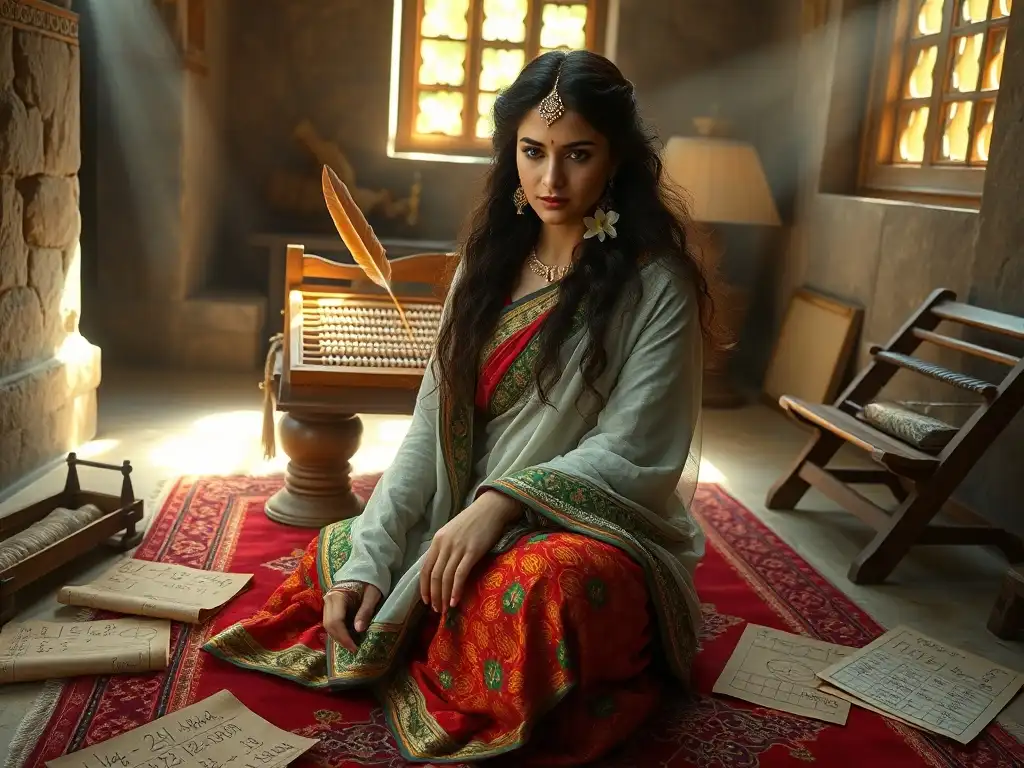
Welcome to Ancient India History, where we embark on an enlightening journey through the rich tapestry of ancient Indian civilizations. Today, we delve into the remarkable contributions of ancient Indian women mathematicians, whose brilliance has often been overshadowed in the annals of history. As we uncover their groundbreaking achievements and the societal context that shaped their intellectual pursuits, you'll discover a world where women's intellect flourished, challenging the norms of their time. Prepare to be intrigued and inspired as we explore the profound impact these mathematicians had on the field, beckoning you to read on and uncover their stories!
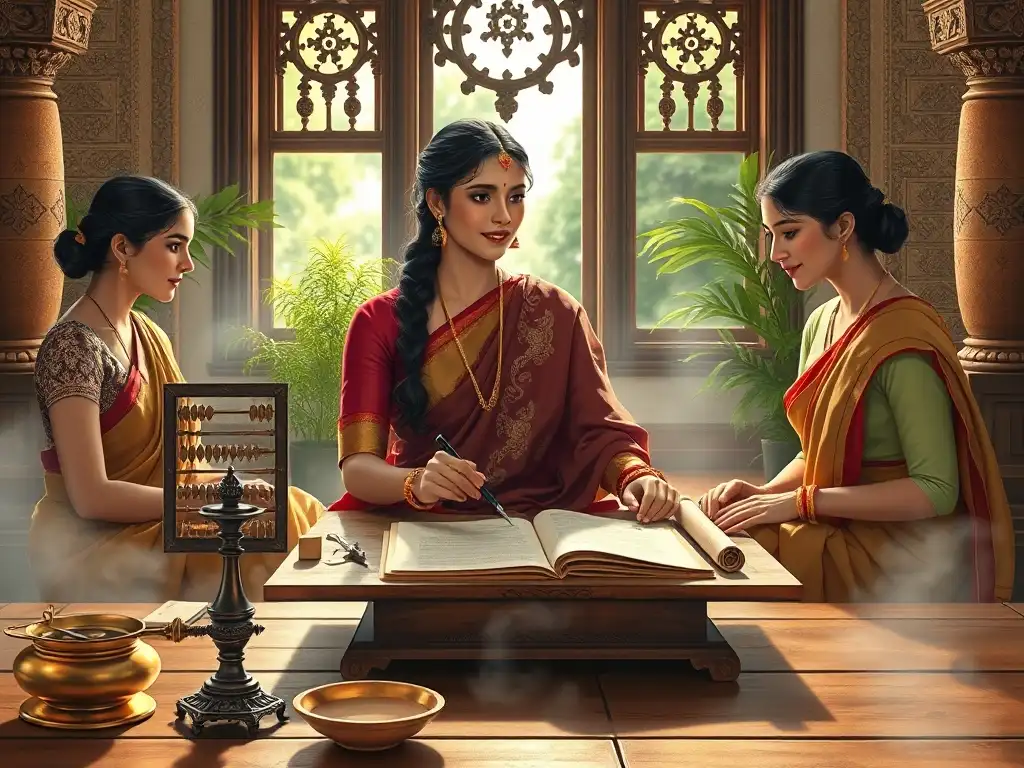
Introduction to Ancient Indian Women Mathematicians
The rich tapestry of ancient Indian history is woven with the remarkable contributions of women, particularly in the field of mathematics. Despite the historical overshadowing of their achievements, ancient Indian women mathematicians made significant strides that influenced not only the local culture but also the global mathematical landscape. Their work spanned diverse areas, including arithmetic, geometry, and algebra, laying the groundwork for future developments in mathematics. This article aims to shed light on the invaluable contributions of these women and the socio-cultural contexts that shaped their pursuits.
Overview of Women's Role in Ancient Indian Mathematics
In ancient India, mathematics was not solely a male domain; women played a pivotal role in its advancement. From the Vedic period through the Gupta Empire, women engaged in mathematical practices, often linked to religious and societal duties.
- Vedic Texts: Women contributed to the formulation of mathematical concepts within Vedic texts, where they were involved in rituals that required precise calculations.
- Notable Figures: Figures like Gargi and Vishaka were not only philosophers but also contributed to mathematical discussions that highlighted their analytical skills.
The presence of women in mathematical discussions indicates an inclusive intellectual environment, albeit constrained by societal norms. This environment fostered a sense of inquiry and exploration among women, allowing them to engage in mathematical thought.
Importance of Recognizing Contributions of Women in Mathematics
Recognizing the contributions of ancient Indian women mathematicians is crucial for several reasons:
- Historical Accuracy: Understanding the full scope of mathematical history includes acknowledging the roles women played, which have often been overlooked or forgotten.
- Inspiration: Highlighting these contributions serves as an inspiration for contemporary women in mathematics and other STEM fields, demonstrating that women have historically excelled in these areas.
- Cultural Significance: Women's contributions reflect the rich cultural and intellectual traditions of ancient India, showcasing a diverse mathematical heritage that is essential for a comprehensive understanding of the subject.
Historical Context of Women in Mathematics in Ancient India
To appreciate the contributions of ancient Indian women mathematicians, it is essential to understand the historical backdrop against which they operated. This context reveals the complexities of their experiences and the societal frameworks that both supported and restricted their mathematical pursuits.
Socio-Cultural Environment for Women Mathematicians
The socio-cultural environment for women in ancient India was multifaceted. While certain periods allowed for more freedom and intellectual engagement, others imposed strict limitations.
- Education: Women in certain families, especially those belonging to higher castes, had access to education, which included mathematical instruction.
- Patronage: Wealthy patrons sometimes supported female scholars, enabling them to pursue their mathematical interests.
However, societal expectations regarding marriage and domestic responsibilities often curtailed formal education and participation in scholarly activities, which presents a paradox in the historical narrative of women mathematicians.
Significant Periods: From Vedic to Gupta Era
The evolution of women's roles in mathematics can be segmented into significant periods:
- Vedic Period: During this era, women were active participants in intellectual discussions, often associated with the creation of mathematical texts and religious rituals requiring mathematical knowledge.
- Buddhist and Jain Influences: The emergence of Buddhist and Jain philosophies allowed for greater educational opportunities for women, leading to notable female intellectuals who contributed to mathematics.
- Gupta Era: This period is often regarded as a golden age of mathematics. Women like Aryabhata's contemporaries made notable advancements, although their names often remain unrecorded in historical texts.
The contributions of ancient Indian women mathematicians are an essential aspect of the broader narrative of mathematics. Recognizing their roles not only enriches our understanding of the field but also illuminates the significant cultural and intellectual heritage of ancient India.
Notable Ancient Indian Women Mathematicians
Ancient India was home to numerous influential women who made significant contributions to mathematics, often overshadowed by their male counterparts. Among the notable figures, Gargi Vachaknavi stands out, known for her philosophical and mathematical prowess. She was a scholar in the Vedic tradition and is often cited as one of the earliest female philosophers in India.
Another prominent figure is Lilavati, who is credited with a comprehensive treatise on mathematics, which not only included mathematical principles but also featured poetic elements that made the subject more accessible. The works of these women illustrate that despite societal constraints, ancient Indian women mathematicians played a crucial role in advancing mathematical thought.
Aryabhata's Influence on Female Mathematicians
Aryabhata, one of the most renowned mathematicians and astronomers of ancient India, had a lasting impact on female scholars in the field. His work, especially in the area of numeral systems and the introduction of the concept of zero, provided a foundational framework that women mathematicians later built upon.
Aryabhata's texts, particularly the Aryabhatiya, were studied by scholars of both genders, thereby inspiring women like Lilavati to delve deeper into the world of mathematics. The methodologies and innovations introduced by Aryabhata not only advanced mathematical understanding but also encouraged women to engage with complex mathematical concepts, paving the way for their contributions in the field.
Bhaskara II and His Influence on Women Scholars
Bhaskara II, another significant figure in ancient Indian mathematics, made remarkable contributions to number theory and calculus. His work in the Lilavati and Bijaganita provided practical applications of mathematics that were accessible to a broader audience. These texts, particularly Lilavati, were instrumental in educating women, as they were often tasked with managing household finances and measurements.
Bhaskara's encouragement of practical mathematics allowed women to apply mathematical principles in real-life situations, fostering an environment where women could pursue mathematical study and scholarship. This legacy of practical application has inspired generations of women mathematicians, emphasizing that mathematics can be both useful and beautiful.
Mathematicians: Gargi Vachaknavi and Lilavati
Gargi Vachaknavi and Lilavati are emblematic of the contributions made by women in ancient Indian mathematics. Gargi, mentioned in the Brahmanas, was known for her profound knowledge of Vedic texts and her ability to engage in philosophical debates, often incorporating mathematical reasoning in her discussions. Her legacy serves as a testament to the intellectual capabilities of women in ancient India.
Conversely, Lilavati is celebrated for her mathematical treatise that addresses a variety of mathematical problems through engaging narratives and poetic verses. This dual approach not only made mathematics more relatable but also ensured that her work reached a wider audience, including women. Together, they symbolize the diverse contributions of ancient Indian women mathematicians.
Key Contributions of Ancient Indian Women Mathematicians
The contributions of ancient Indian women mathematicians are multifaceted and significant, often interwoven with the broader narrative of Indian mathematics. They played vital roles in developing mathematical concepts, engaging in astronomical studies, and influencing future generations of scholars.
Innovations in Mathematical Concepts
Ancient Indian women mathematicians contributed notably to the development of mathematical concepts, such as arithmetic and geometry. The poetic form of Lilavati's work allowed complex mathematical ideas to be expressed in an accessible manner, facilitating understanding among learners. Furthermore, women like Gargi utilized mathematical reasoning in philosophical discussions, contributing to the broader discourse around logic and mathematics. This innovative approach helped to integrate mathematical thought into various aspects of society, highlighting the intellectual capabilities of women in a traditionally male-dominated field.
Contributions to Astronomy and Mathematics
The intersection of astronomy and mathematics in ancient India provided fertile ground for women mathematicians to thrive. Their contributions often included calculating celestial events, which required advanced mathematical knowledge. For instance, women scholars would have engaged with Aryabhata's astronomical principles to understand the movements of celestial bodies. This engagement not only enhanced their mathematical skills but also positioned them as key figures in the field of astronomy, where precise calculations were essential. The work of these women in astronomy exemplifies their critical role in advancing both mathematics and science during ancient times.
Influence on Later Generations of Mathematicians
The contributions of ancient Indian women mathematicians have had a lasting influence on subsequent generations. Their works laid the groundwork for future scholars, demonstrating that women could excel in mathematics and inspire others to follow suit. The educational frameworks established through texts like Lilavati promoted the idea that mathematics is not only for men but is a field open to all.
As these ideas permeated through cultures and generations, they fostered a more inclusive view of mathematics, encouraging future women mathematicians to pursue their interests and contribute to the discipline. The legacy of these pioneering women continues to resonate today, underscoring the importance of diversity in mathematical thought and education.
Theoretical and Practical Impacts

The contributions of ancient Indian women mathematicians have had profound theoretical and practical impacts on both mathematics and various applied fields. Their work not only advanced mathematical knowledge but also laid the groundwork for future scholars. Women like Aryabhata's contemporaries and those who followed exhibited remarkable insight into mathematical concepts, including geometry, arithmetic, and algebra.
Their mathematical frameworks often integrated cultural practices, illustrating how mathematics was intertwined with daily life, commerce, and astronomy. For instance, women mathematicians provided solutions to practical problems such as land measurement, architecture, and timekeeping, demonstrating their ability to apply abstract mathematical principles in tangible ways. The blend of theory and practice highlights the dual nature of their contributions, where abstract ideas were not merely theoretical musings but were applied to enhance the efficiency and sophistication of ancient Indian society.
Practical Applications of Their Mathematical Discoveries
Ancient Indian women mathematicians played a crucial role in the practical application of mathematics across various domains. Their contributions can be seen in:
- Agriculture: Developing methods for measuring land and optimizing crop yields through geometric principles.
- Architecture: Employing mathematical concepts in the design and construction of temples and public structures, ensuring structural integrity and aesthetic appeal.
- Astronomy: Formulating calculations for celestial events, enabling precise calendar-making and navigation.
- Commerce: Innovating in trade mathematics, including methods for calculating profit margins, taxes, and currency exchange.
For example, the Brahmagupta's rules, which included insights from women mathematicians, were pivotal in establishing foundational practices for dealing with zero and negative numbers, essential for accurate financial transactions. The practical applications of their discoveries not only facilitated daily activities but also contributed to the advancement of Indian civilization.
Theoretical Foundations Laid by Women Mathematicians
The theoretical contributions of ancient Indian women mathematicians are significant in their own right, establishing concepts that would influence generations of scholars. They explored areas such as:
- Number Theory: Developing early concepts of prime numbers and arithmetic operations that laid the groundwork for future mathematical explorations.
- Geometry: Contributing to geometric theories, including the principles of shapes and volumes, which formed the basis for later developments in both mathematics and engineering.
- Algebra: Pioneering early algebraic thinking, including the use of symbols and the formulation of equations, which would be crucial for the evolution of algebra as a discipline.
Notably, the works of Vijayanandi and others provided insights into the relationships between different mathematical concepts, anticipating ideas that would emerge in later mathematical discourse. Their theoretical frameworks not only advanced mathematics but also influenced fields such as physics and engineering, showing the depth and breadth of their intellectual legacy.
Recognition and Legacy of Ancient Indian Women Mathematicians
The legacy of ancient Indian women mathematicians is increasingly being recognized, shedding light on their essential contributions to mathematics and society. Their historical significance has often been overshadowed, but recent scholarship has begun to highlight their achievements and the impact they had on mathematical thought.
Historical Documentation and Recognition
Despite their contributions, historical documentation of ancient Indian women mathematicians remains sparse. Many of their achievements were recorded in texts authored predominantly by male scholars, leading to a lack of acknowledgment of women’s roles. However, texts like the Aryabhatiya and works by Bhāskara II contain references to their contributions.
Research efforts are underway to uncover and document the works attributed to these mathematicians, emphasizing their roles in various mathematical advancements. Scholars are increasingly recognizing figures like Mira Bai and Lilavati, whose mathematical prowess is being revisited in contemporary studies, allowing for a more comprehensive understanding of their contributions.
Modern Perspectives on Their Contributions
In modern times, the contributions of ancient Indian women mathematicians are being reassessed and celebrated for their ingenuity and significance. Women in mathematics are now recognized not only for their historical roles but also for their influence on contemporary mathematical practices.
Modern mathematicians and educators emphasize the importance of including diverse voices in the narrative of mathematics, advocating for the recognition of women mathematicians from ancient times. Initiatives to promote awareness of these figures have led to increased interest in their works, with educational programs aiming to inspire future generations of female mathematicians. This renewed focus on ancient Indian women mathematicians not only enriches the history of mathematics but also serves as a powerful reminder of the importance of inclusivity and diversity in the field.
Conclusion: The Importance of Ancient Indian Women Mathematicians in Mathematics
The contributions of ancient Indian women mathematicians are a testament to the rich intellectual heritage of India. While often overshadowed by their male counterparts, these women played a crucial role in advancing mathematical thought and education during their time. Their work not only contributed to the mathematical knowledge of their era but also laid the groundwork for future generations of mathematicians, both in India and around the world. Recognizing and celebrating their achievements is essential for understanding the full tapestry of mathematical history.
Summary of Contributions and Their Lasting Impact
Ancient Indian women mathematicians made significant strides in various branches of mathematics, including arithmetic, geometry, and astronomy. Figures such as Aryabhata's contemporary, who is often cited as an anonymous mathematician, contributed crucial concepts that would reverberate through time. Their mathematical texts often included innovative approaches to problem-solving and calculations, which were ahead of their time.
The impact of their contributions can still be felt today. For instance, the methods developed for calculating square roots and the understanding of zero as a numeral have roots in the works attributed to women of this era. Furthermore, their contributions to astronomy influenced later astronomical studies, emphasizing the interconnectedness of mathematics and science. In recognizing these contributions, we not only honor these women's legacies but also inspire future generations to pursue mathematics, regardless of gender.
Call to Further Explore the Contributions of Women in Mathematics
The journey of uncovering the contributions of ancient Indian women mathematicians is far from over. More research is needed to highlight their roles and to ensure that their stories are included in the broader narrative of mathematical history. Scholars and enthusiasts alike are encouraged to delve deeper into historical texts, manuscripts, and oral traditions that may shed light on these remarkable figures.
Engaging with this topic can take many forms, from academic research to public outreach. Institutions and educational platforms can play a pivotal role in promoting awareness of the achievements of women in mathematics through workshops, lectures, and exhibitions. By fostering an environment that celebrates these contributions, we can encourage a more inclusive approach to the study of mathematics, inspiring a diverse range of mathematicians for the future.
The legacy of ancient Indian women mathematicians deserves recognition and study, offering valuable insights into the historical development of mathematics and the essential role women have played in shaping this field.
- Introduction to Ancient Indian Women Mathematicians
- Historical Context of Women in Mathematics in Ancient India
- Notable Ancient Indian Women Mathematicians
- Key Contributions of Ancient Indian Women Mathematicians
- Theoretical and Practical Impacts
- Recognition and Legacy of Ancient Indian Women Mathematicians
- Conclusion: The Importance of Ancient Indian Women Mathematicians in Mathematics
- What were the contributions of ancient Indian women mathematicians?
- Who are some notable ancient Indian women mathematicians?
- How did cultural factors influence the work of women in mathematics during ancient India?
- What was the role of education for women in ancient India regarding mathematics?
- How does the study of ancient Indian women mathematicians impact modern perceptions of women in STEM?
Frequently Asked Questions
What were the contributions of ancient Indian women mathematicians?
Ancient Indian women mathematicians contributed significantly to mathematical concepts and theories, including contributions to geometry, algebra, and astronomy.
Who are some notable ancient Indian women mathematicians?
Notable figures include Lilavati, known for her work in arithmetic and geometry, and Vagbhata, who contributed to mathematical treatises and medical texts.
How did cultural factors influence the work of women in mathematics during ancient India?
Cultural factors such as patriarchy and societal norms often limited opportunities for women; however, some were able to pursue education and make significant contributions despite these challenges.
What was the role of education for women in ancient India regarding mathematics?
Education for women in ancient India was often restricted, but those who received it, especially in noble families, were able to engage in mathematical studies and contribute to the field.
How does the study of ancient Indian women mathematicians impact modern perceptions of women in STEM?
The study highlights the historical contributions of women in mathematics, challenging the notion that STEM fields were male-dominated, and encourages a broader recognition of women's roles in science and mathematics throughout history.
Final Reflection: Celebrating the Legacy of Ancient Indian Women Mathematicians
The contributions of ancient Indian women mathematicians are not just historical footnotes; they are vital threads in the rich tapestry of mathematics that continue to resonate today. As we explore the groundbreaking work of these remarkable women, we uncover a narrative that challenges the conventional perception of gender roles in science and mathematics. Their achievements remind us that brilliance knows no gender and that the pursuit of knowledge is a universal endeavor.
The influence of these ancient mathematicians extends beyond their time, shaping the cultural and intellectual landscape of mathematics as we know it today. Their legacies inspire a new generation of scholars and thinkers, encouraging women to pursue careers in STEM fields. As we reflect on their contributions, we are reminded of the words of mathematician Ada Lovelace: That brain of mine is something more than merely mortal; as time will show.
This quote encapsulates the timeless nature of intellectual contributions, urging us to recognize and celebrate the brilliance of those who came before us.
As we move forward, let us take a moment to reflect on our own roles in honoring and amplifying the voices of women in mathematics and science. Consider how you can contribute to this legacy—whether through education, mentorship, or simply sharing the stories of these pioneering women. By acknowledging their contributions, we not only enrich our understanding of mathematics but also pave the way for future generations to thrive in a more inclusive and equitable world.
Thank you for taking the time to explore the incredible contributions of ancient Indian women mathematicians. Their groundbreaking work laid the foundation for many modern mathematical principles we rely on today. Now it’s your turn to celebrate this legacy and inspire others!
Here are some actionable steps you can take:
- Dive deeper: Explore the biographies and works of notable mathematicians such as **Lilavati** and **Brahmagupta**. Choose one to research further and share your findings with friends or colleagues.
- Start a conversation: Engage with a community—either online or in person—by sharing what you’ve learned about these inspiring figures. Consider organizing a book club or discussion group focused on the achievements of women in mathematics.
- Create a tribute: Develop a blog post or a social media update that highlights the remarkable achievements of these mathematicians. Your perspective can help elevate their stories and inspire others to learn more!
What aspect of ancient Indian women mathematicians’ contributions inspires you the most, and how do you plan to honor their legacy?