
How Ancient Indian Mathematicians Approached Geometry


Welcome to Ancient India History, where we embark on a fascinating journey through the rich tapestry of India's past! Dive into the world of Ancient Indian geometry techniques, a captivating exploration of how brilliant mathematicians shaped the field of geometry long before it became a staple in modern education. Did you know that their innovative approaches not only influenced mathematics in India but also left a lasting impact on the global stage?
Unravel the secrets of their methods and discover how ancient wisdom continues to resonate in today's mathematical practices. Join us as we delve deeper into this remarkable legacy!
- Introduction to Ancient Indian Geometry Techniques
- Key Ancient Indian Mathematicians and Their Contributions
- Fundamental Concepts of Ancient Indian Geometry Techniques
- Methods and Approaches to Geometry in Ancient India
- Comparison of Ancient Indian Geometry Techniques with Other Civilizations
- Legacy of Ancient Indian Geometry Techniques
- Conclusion: The Significance of Ancient Indian Geometry Techniques
-
Frequently Asked Questions
- What were some key geometry techniques used by ancient Indian mathematicians?
- How did ancient Indian geometry influence other civilizations?
- What role did the Sulbasutras play in ancient Indian geometry?
- Were there any prominent figures in ancient Indian geometry?
- How is ancient Indian geometry relevant today?
- Final Reflection: The Enduring Legacy of Ancient Indian Geometry Techniques
- Unlock the Secrets of Ancient Geometry!
Introduction to Ancient Indian Geometry Techniques
Ancient Indian geometry techniques are a testament to the profound intellectual contributions of Indian civilizations, which made significant strides in the field of mathematics. From the meticulous measurements of land in the Indus Valley Civilization to the sophisticated geometric theories developed during the Gupta Empire, ancient Indian mathematicians displayed an impressive understanding of geometric concepts. This article delves into the innovative methods and principles employed by these mathematicians, highlighting their contributions and the impact they had on both contemporary and future mathematical thought.
Overview of Mathematics in Ancient India
Mathematics in ancient India was characterized by its rich diversity and depth, contributing to various fields including astronomy, architecture, and engineering. Indian mathematicians approached mathematics not merely as a set of calculations but as a holistic discipline intertwined with philosophy and spirituality.
- Key Contributions:
- Development of the decimal system and place value notation.
- Introduction of zero as a number, a revolutionary concept that transformed mathematical calculations.
- Establishment of algebraic principles that intersected with geometric theories.
Prominent texts such as Aryabhatiya by Aryabhata and Brahmasphutasiddhanta by Brahmagupta encapsulated the knowledge of geometry and its applications in practical scenarios. These texts served as foundational works that influenced mathematicians not only in India but across the globe.
Importance of Geometry in Ancient Indian Culture
Geometry played a pivotal role in various aspects of ancient Indian culture, influencing art, architecture, and rituals. The precise geometric designs found in temples and monuments reflect the mathematical sophistication of the time.
- Cultural Significance:
- Architecture: Temples were often constructed using intricate geometric patterns, which were believed to embody cosmic principles.
- Art: Geometric motifs in ancient art illustrated a deep understanding of symmetry and proportion, underlying the aesthetics of Indian craftsmanship.
- Astronomy: Geometric techniques were essential for astronomical observations, allowing ancient Indian astronomers to create accurate calendars and predict celestial events.
The integration of geometry into these cultural dimensions underscores its importance beyond mere calculations, affirming its status as a vital component of ancient Indian civilization's intellectual legacy.
In exploring these ancient Indian geometry techniques, we uncover a wealth of knowledge that continues to inspire modern mathematical thought and practice.
Key Ancient Indian Mathematicians and Their Contributions
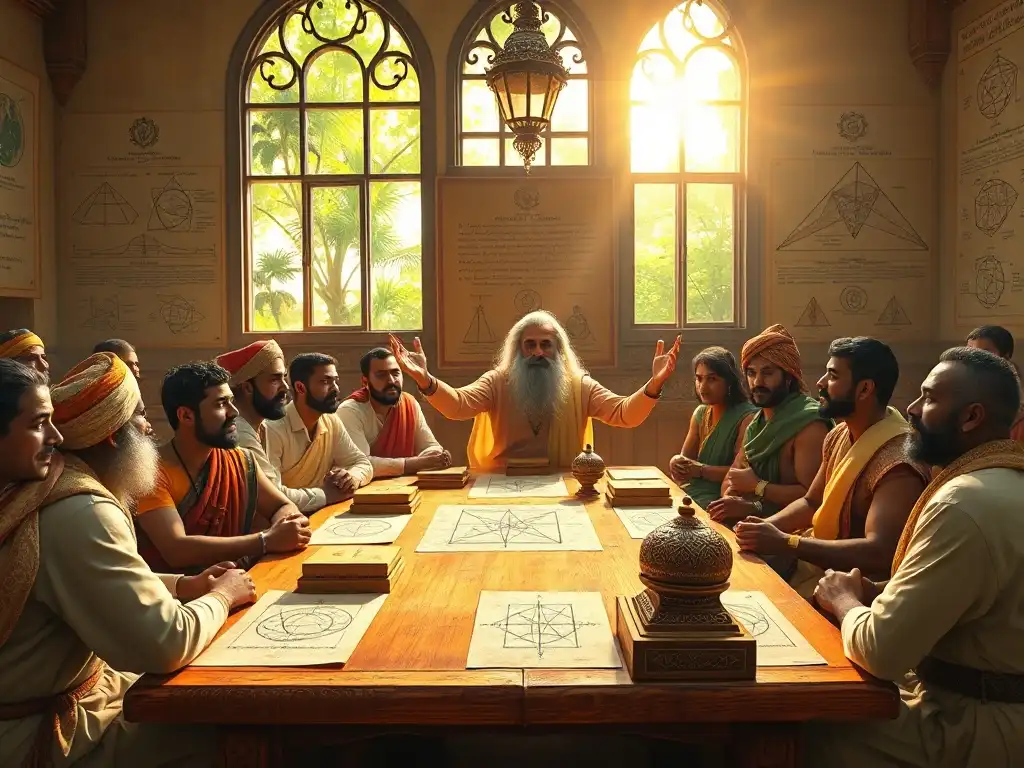
Aryabhata: The Pioneer of Indian Mathematics
Aryabhata, one of the most renowned mathematicians and astronomers of ancient India, made significant contributions to the field of mathematics in the 5th century CE. His seminal work, the Aryabhatiya, is a cornerstone of Indian mathematics, encapsulating various techniques, including those related to geometry.
Aryabhata's approach to geometry was revolutionary for its time. He introduced concepts such as the calculation of the area of a triangle using the formula:
\[
\text{Area} = \frac{1}{2} \times \text{base} \times \text{height}
\]
In addition to his work on triangles, he also explored the properties of cyclic quadrilaterals. His formula for calculating the area of a cyclic quadrilateral was a precursor to what would later be popularized in modern geometry. Aryabhata's focus on practical applications of geometry, particularly in astronomy, set a precedent in ancient Indian geometry techniques.
Key Contributions:
- Formulated the area of triangles and cyclic quadrilaterals.
- Emphasized practical applications of geometry in astronomy.
- Introduced the concept of zero, which is fundamental in mathematics.
Brahmagupta: Innovations in Geometry
Brahmagupta, who lived in the 7th century CE, further advanced the study of geometry, expanding upon Aryabhata's foundational work. His treatise, Brahmasphutasiddhanta, is notable for its comprehensive examination of geometric principles, particularly in relation to both practical and theoretical applications.
One of Brahmagupta’s significant contributions was his innovative approach to solving problems involving squares and rectangular areas. He provided methods for calculating the area of a rectangle and the diagonal of a square, as well as the area of a triangle. His work included the famous formula:
\[
\text{Area} = \sqrt{s(s-a)(s-b)(s-c)}
\]
where \(s\) is the semi-perimeter of the triangle, and \(a\), \(b\), and \(c\) are the sides of the triangle. This formula, known as Heron's formula, highlights Brahmagupta's influence on both Indian and global mathematics.
Key Contributions:
- Developed methods for calculating areas of different geometric shapes.
- Introduced formulas that are still relevant in modern geometry.
- Emphasized the importance of geometric calculations in astronomy.
Bhaskara I and II: Advancements in Geometric Theorems
Bhaskara I and II, who lived in the 7th and 12th centuries respectively, made remarkable contributions to the field of geometry. They built upon the works of previous mathematicians, including Aryabhata and Brahmagupta, while introducing their own advancements.
Bhaskara I
Bhaskara I is best known for his commentaries on Aryabhata’s work, which included detailed explanations of geometric concepts. He focused on the sine function and its geometric applications, laying the groundwork for trigonometry in ancient Indian mathematics. His work on the sine of angles directly influenced the understanding of circular geometry.
Bhaskara II
Bhaskara II, often regarded as one of the greatest mathematicians of ancient India, made significant strides in the understanding of geometric theorems. His book, Lilavati, contains numerous problems involving geometric shapes and their properties. One of his notable contributions was the exploration of the relationships between different geometric figures, including the Pythagorean theorem, which he presented in a manner that was accessible and practical for his audience.
Key Contributions:
- Bhaskara I introduced trigonometric concepts that enhanced the understanding of geometry.
- Bhaskara II expanded on geometric theorems and applied them to practical problems.
- Both mathematicians emphasized the interconnectedness of geometry with other mathematical disciplines.
The rich contributions of these ancient Indian mathematicians laid the foundation for future developments in geometry, influencing not only Indian mathematics but also the broader field of mathematics globally. Their innovative approaches and techniques continue to resonate in modern mathematical practices.
Fundamental Concepts of Ancient Indian Geometry Techniques
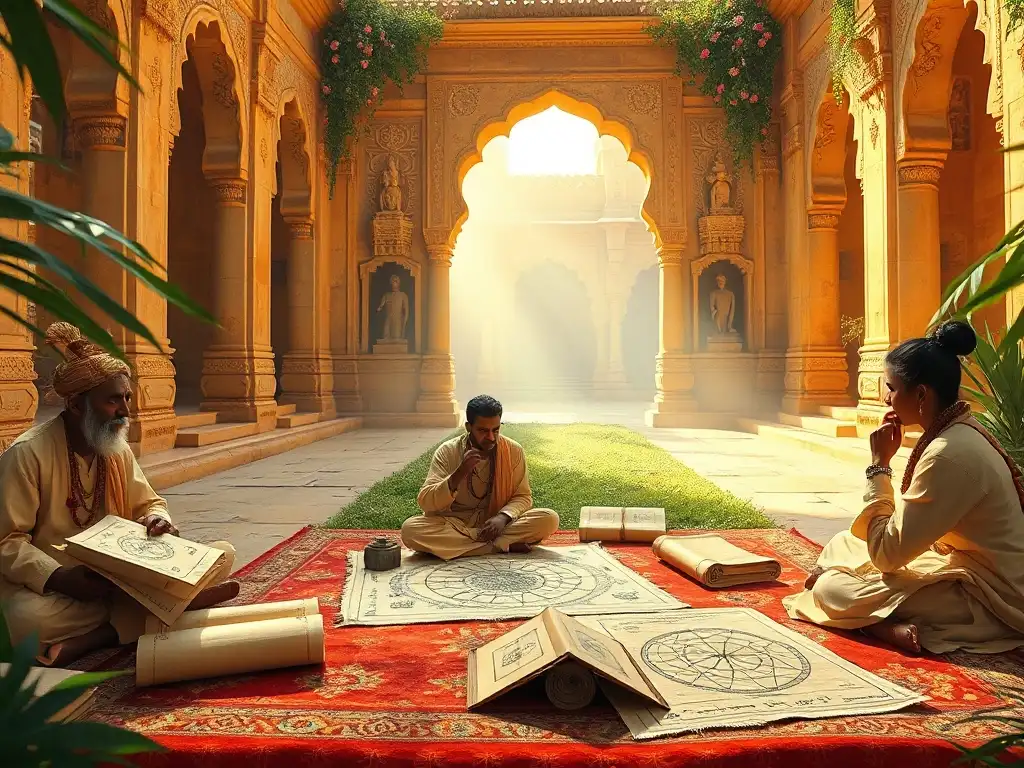
Ancient Indian geometry techniques represent a sophisticated understanding of geometric principles, deeply intertwined with the cultural and practical aspects of Indian civilization. These techniques were not merely theoretical; they had profound implications for various domains, including agriculture, architecture, and astronomy.
The Basics of Geometric Shapes and Figures
Ancient Indian mathematicians, particularly during the Vedic period, explored geometric shapes and figures extensively. The foundational concepts included:
- Triangle: Known for its properties in land measurement, triangles were used in constructing precise boundaries and in rituals.
- Square and Rectangle: These shapes were essential in various applications, from agricultural plots to temple designs.
- Circle: The circle held significant symbolism in religious contexts and was utilized in astronomical calculations.
One of the earliest texts that highlight these geometric principles is the Shulba Sutras, which outlines the rules for constructing altars. For instance, the sutras detail how to create geometric figures such as squares and rectangles, emphasizing the relationship between the sides and areas. A notable example from the text is:
“A square altar is to be constructed; its area shall be equal to the product of its sides.”
The emphasis on precision in measurements illustrates the advanced understanding of geometry that existed during this era.
Measuring Land: The Role of Geometry in Agriculture
Geometry played a critical role in land measurement, which was vital for agriculture in ancient India. The agrarian society required accurate land division to optimize farming practices. Techniques employed included:
- Land Surveying: Ancient surveyors used ropes and stakes to create geometric shapes that defined property boundaries. They often relied on right angles and proportional relationships to ensure fairness in land distribution.
- Area Calculation: Formulas for calculating the area of various shapes became essential. For example, for a rectangular plot, the area was calculated as length × breadth, a technique that reflects the geometric understanding of the time.
Additionally, ancient texts such as the Aryabhatiya by Aryabhata provided insights into the mathematical principles used in these calculations. Aryabhata emphasized the significance of accurate measurements for agricultural success, stating:
“Measure the land by considering its length and width, for a well-measured land yields a prosperous harvest.”
This connection between geometry and agriculture underscores how ancient Indian geometry techniques were not merely academic but were integral to sustaining life.
Architectural Applications: Geometry in Ancient Indian Structures
The application of geometry in architecture is one of the most prominent aspects of ancient Indian geometry techniques. Structures such as temples, stupas, and forts exhibit a remarkable understanding of geometric principles, characterized by:
- Symmetry and Proportion: The design of many ancient structures relied heavily on symmetrical proportions, creating visually appealing and harmonious buildings. The famous Brihadeeswarar Temple is an exemplary model, showcasing intricate carvings and geometrically sound designs.
- Geometric Patterns: Decorative motifs often incorporated complex geometric patterns, reflecting both aesthetic sensibility and the mathematicians' understanding of symmetry. The use of mandalas, for instance, demonstrates a blend of spirituality and geometry.
- Structural Integrity: Engineers applied geometric knowledge to ensure the stability of large structures. Techniques such as the arch and dome were developed, utilizing principles of force distribution and balance.
The Vastu Shastra, an ancient Indian treatise on architecture, encapsulates these geometric principles. It describes the ideal proportions and orientations for constructing buildings, emphasizing harmony with the environment.
The rich tapestry of ancient Indian geometry techniques is evident not only in theoretical texts but also in the practical applications that shaped the civilization's agricultural practices and architectural marvels. The legacy of these techniques continues to influence modern mathematical and architectural thought.
Methods and Approaches to Geometry in Ancient India
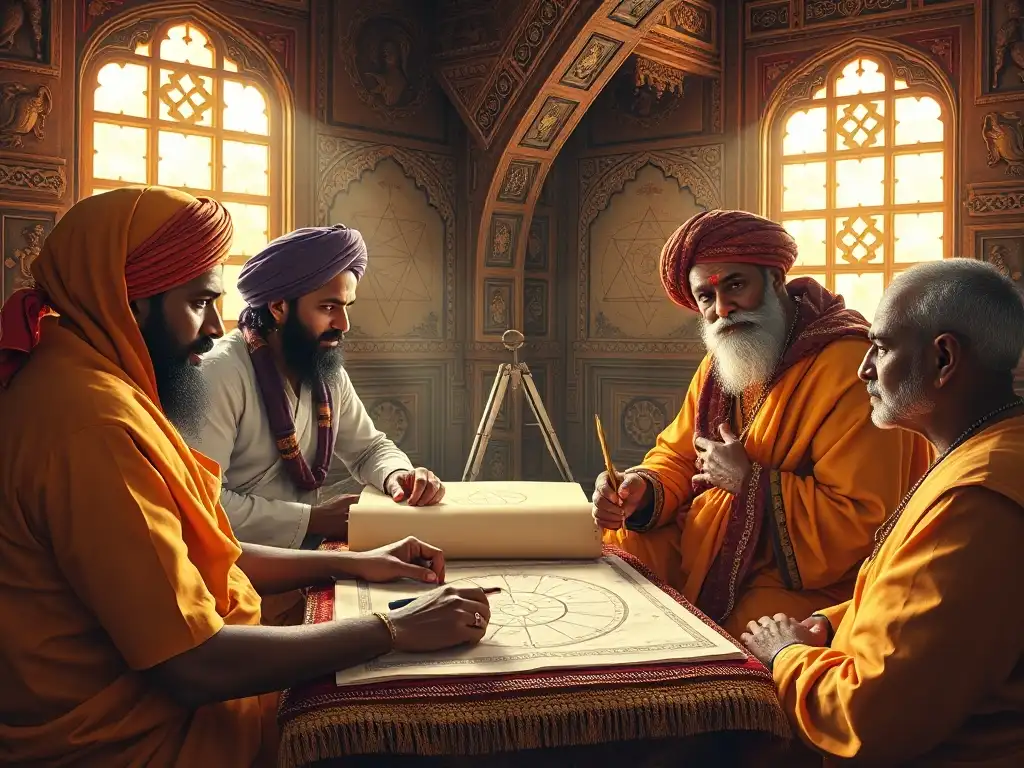
The Use of Sulba Sutras in Geometric Construction
The Sulba Sutras, dating back to around 800 BCE to 200 BCE, represent some of the earliest texts that outline geometric principles in ancient India. These texts were primarily concerned with the construction of altars and ritual spaces, which were integral to Vedic traditions. The Sulba Sutras are credited with introducing various geometric techniques and concepts that were ahead of their time.
One of the notable features of the Sulba Sutras is their systematic approach to geometry, which includes:
- Pythagorean Theorem: The texts contain early formulations of the Pythagorean theorem, specifically through the construction of right-angled triangles. For example, the Sulba Sutras state that a square constructed on the hypotenuse is equal in area to the sum of the squares constructed on the other two sides.
- Geometric Shapes: The Sutras detail methods for constructing various geometric shapes, including squares, rectangles, and circles. They provided step-by-step guidelines for creating these shapes using simple tools like ropes and pegs.
- Ritual Geometry: The primary purpose of these constructions was for religious rituals, where precise geometric shapes were required to create altars (yajña) that adhered to specific dimensions. The correct proportions were believed to hold spiritual significance, illustrating the intertwining of geometry and spirituality in ancient Indian culture.
The Sulba Sutras not only demonstrate advanced geometric knowledge but also highlight the practical applications of these techniques in ancient Indian society.
Practical Applications of Geometry in Rituals and Astronomy
Geometry in ancient India extended beyond mere theoretical exploration; it had practical implications in rituals and astronomical observations. The meticulous nature of geometry was critical in various aspects, including:
- Rituals: The construction of altars and sacrificial sites required precise geometric measurements. The Sulba Sutras provided detailed instructions on how to create these sacred spaces, ensuring that they met the necessary spiritual and ritualistic requirements. The altars were often constructed with specific geometric shapes, each holding unique significance.
- Astronomy: Ancient Indian astronomers utilized geometric techniques to chart celestial bodies and predict astronomical phenomena. The Aryabhatiya, authored by Aryabhata in the 5th century CE, illustrates how geometry was applied in astronomical calculations. Aryabhata's work included spherical geometry, which was crucial for understanding the movements of celestial bodies and for creating accurate calendars.
- Architecture: The principles derived from ancient Indian geometry were also applied in architecture, particularly in temple construction. The layout and design of temples adhered to strict geometric principles, aligning with astronomical events, which reflected the civilization's deep reverence for the cosmos.
These applications demonstrate how ancient Indian geometry techniques were integral to both daily life and the spiritual practices of the time.
Influence of Philosophy on Geometric Thought
The philosophical underpinnings of ancient Indian culture significantly influenced geometric thought. Indian philosophy, particularly the schools of Nyaya and Samkhya, emphasized logic, reasoning, and the nature of reality, which directly impacted mathematical reasoning.
- Metaphysical Concepts: The philosophical inquiry into the nature of space and form prompted mathematicians to explore geometric concepts more deeply. For instance, the idea of space (akasha) in Samkhya philosophy encouraged the exploration of dimensions and shapes, which influenced geometric constructions.
- Logical Reasoning: The Nyaya school’s focus on logic and epistemology cultivated a rigorous approach to mathematical proofs and reasoning. This logical framework allowed ancient Indian mathematicians to develop systematic methods for geometric constructions, leading to more sophisticated techniques over time.
- Integration with Arts: The interconnection between geometry, music, and aesthetics in ancient Indian philosophy led to a holistic understanding of geometric principles. This fusion is evident in the designs and patterns used in traditional arts and crafts, which often reflect geometric symmetry and proportion.
The influence of philosophy on geometric thought in ancient India illustrates how deeply interconnected various fields of knowledge were, contributing to the richness of mathematical development in the civilization.
Comparison of Ancient Indian Geometry Techniques with Other Civilizations
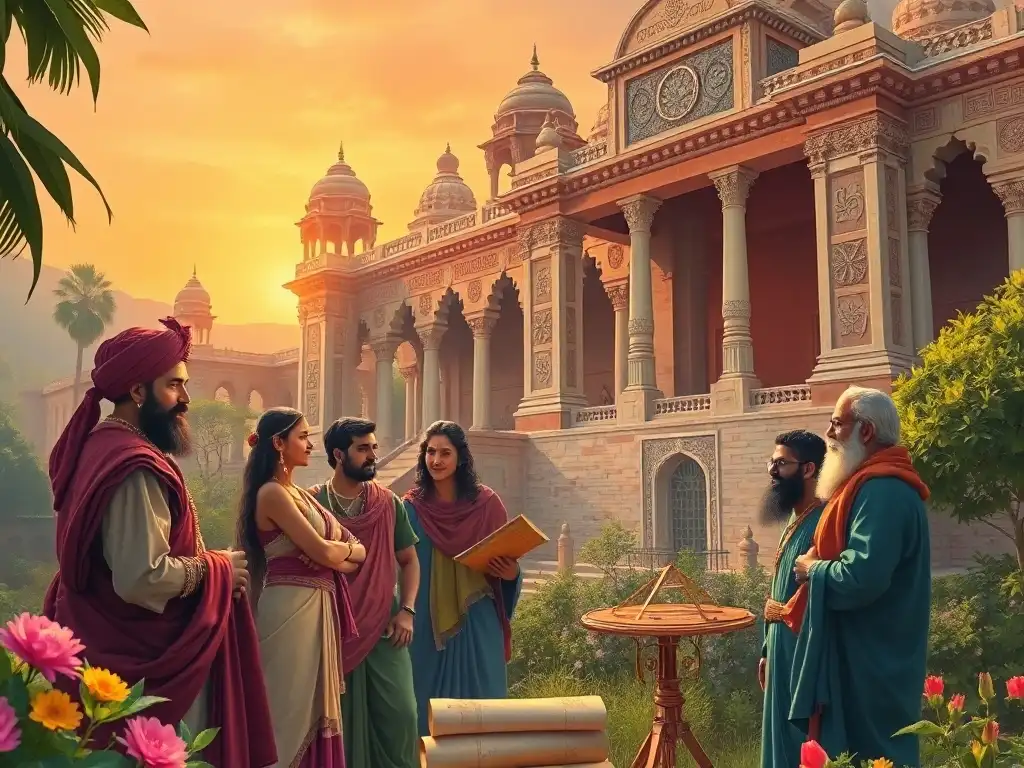
Similarities with Greek Geometry
Ancient Indian geometry techniques share several similarities with those developed in ancient Greece, highlighting a mutual pursuit of mathematical understanding across cultures. Both civilizations placed a significant emphasis on the properties of shapes, particularly triangles and circles, and the relationships between them.
- Theorems and Proofs: Like the Greeks, Indian mathematicians, such as Aryabhata and Brahmagupta, formulated geometric theorems and provided proofs. Aryabhata's work in the Aryabhatiya includes methods that are reminiscent of Euclidean principles, particularly in the focus on systematic reasoning and logical deductions.
- Geometric Construction: Both cultures utilized geometric construction techniques to solve practical problems. For instance, the Greek construction of geometric figures using compass and straightedge mirrors the Indian approach, where tools were also employed for intricate designs, particularly in temple architecture.
- Trigonometry Foundations: Each civilization developed trigonometric concepts for astronomical calculations. Indian mathematicians introduced sine (jya) and cosine (kotijya) functions, paralleling the work done by Greek mathematicians with chords of circles. This foundational work in trigonometry illustrates a shared commitment to understanding the mathematical fabric of the universe.
Unique Features of Indian Geometric Methods
While there are striking similarities between ancient Indian and Greek geometry, certain unique features distinguish Indian geometric methods:
- Emphasis on Practical Applications: Indian geometry was often applied to real-world problems, such as land measurement, architecture, and astronomy. For example, the Shulba Sutras, ancient texts that date back to around 800 BCE, detail the geometric principles necessary for constructing altars and other ritualistic structures. This practical approach is less emphasized in Greek texts, which were more theoretical.
- Use of Algebraic Methods: Ancient Indian mathematicians uniquely combined geometric concepts with algebraic methods. This integration is evident in the works of mathematicians like Brahmagupta, who used algebraic equations to solve geometric problems, showcasing a holistic approach to mathematics that was less common in contemporary Greek practices.
- Innovative Representations: Indian mathematicians developed unique representations for geometric figures, including the use of diagrams to depict complex relationships. This visual methodology facilitated a deeper understanding of geometric principles, allowing for easier manipulation of shapes and figures.
The Influence of Ancient Indian Geometry on Later Mathematical Developments
The contributions of ancient Indian geometry techniques have had a lasting influence on later mathematical developments, both in India and beyond:
- Transmission to the Islamic World: As ancient Indian mathematics spread through the Silk Road and other trade routes, it significantly influenced Islamic mathematicians during the medieval period. Scholars such as Al-Khwarizmi built upon Indian techniques, incorporating them into their works and furthering the development of algebra and geometry in the Islamic Golden Age.
- Impact on European Mathematics: The transmission of Indian geometrical knowledge through Arabic texts eventually reached Europe, significantly impacting the Renaissance. The concepts introduced by Indian mathematicians laid foundational principles for European mathematicians, contributing to the resurgence of interest in geometry during this period.
- Modern Mathematics: The legacy of ancient Indian geometry continues to resonate in modern mathematical education and theory. Techniques from Indian geometry, such as the use of zero and decimal systems, form the basis of contemporary mathematical practices, showing the timeless nature of these ancient contributions.
The rich tapestry of ancient Indian geometry techniques not only reveals a sophisticated understanding of mathematical principles but also underscores the interconnectedness of global mathematical traditions. The unique features of Indian geometry, coupled with its influence on later developments, illustrate the profound impact of these ancient scholars on the evolution of mathematics.
Legacy of Ancient Indian Geometry Techniques
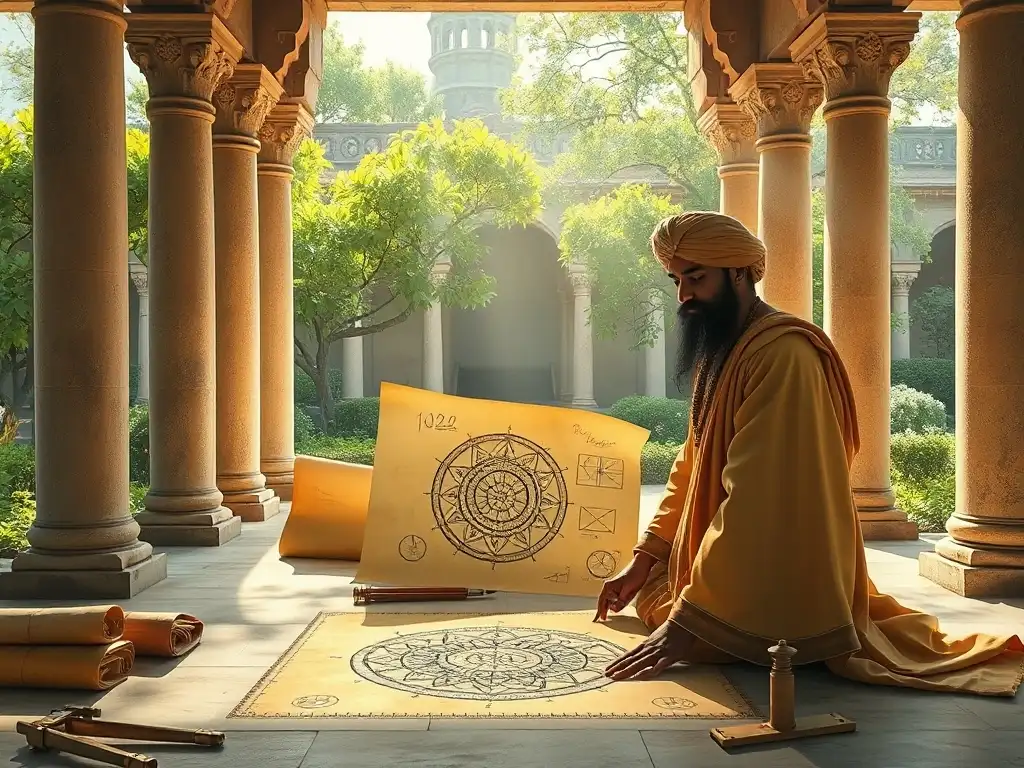
Impact on Modern Mathematics and Geometry
The legacy of ancient Indian geometry techniques has had a profound impact on modern mathematics and geometry. One of the most significant contributions is the concept of zero, which was formalized by Indian mathematicians such as Brahmagupta and later expanded by Bhaskara II. This foundational element has allowed for more complex geometric calculations and has revolutionized mathematical thought worldwide.
Moreover, ancient Indian texts like the Sulba Sutras provide detailed insights into geometric constructions, particularly in relation to altars and ritualistic architecture. These texts describe techniques for constructing various geometric shapes, such as squares, rectangles, and circles, using simple tools. For instance, the method for constructing a circle with a given radius or the Pythagorean theorem (though known in the West much later) was articulated in ancient India long before it became commonplace in European mathematics.
In contemporary mathematics, the principles derived from these ancient techniques are not only acknowledged but actively utilized in fields such as civil engineering, architecture, and even computer graphics. The formulas and methods outlined in the Sulba Sutras are still relevant today, as they provide a framework for understanding spatial relationships and dimensions.
Preservation of Ancient Knowledge in Modern Education
The preservation of ancient Indian geometry techniques is crucial for understanding the evolution of mathematical thought. Many educational institutions today are beginning to incorporate these ancient concepts into their curricula, recognizing their importance in the history of mathematics. This initiative includes studying texts like the Aryabhatiya by Aryabhata and the Brahmasphutasiddhanta by Brahmagupta, both of which contain valuable geometric principles.
In recent years, there has been a growing interest in integrating ancient Indian mathematics into STEM education. Programs that focus on traditional methods of teaching geometry, such as using physical tools like ropes and sticks to create geometric figures, have been introduced. These techniques not only engage students but also enhance their understanding of fundamental geometric principles.
Additionally, workshops and seminars dedicated to ancient Indian mathematics are being organized to raise awareness and appreciation for these techniques. Scholars and educators collaborate to explore how ancient knowledge can inform modern practices, ensuring that the rich heritage of ancient Indian geometry techniques is preserved and celebrated in contemporary education.
By embracing these ancient teachings, modern education can foster a deeper understanding of mathematics while honoring the contributions of ancient Indian mathematicians who laid the groundwork for future generations.
Conclusion: The Significance of Ancient Indian Geometry Techniques
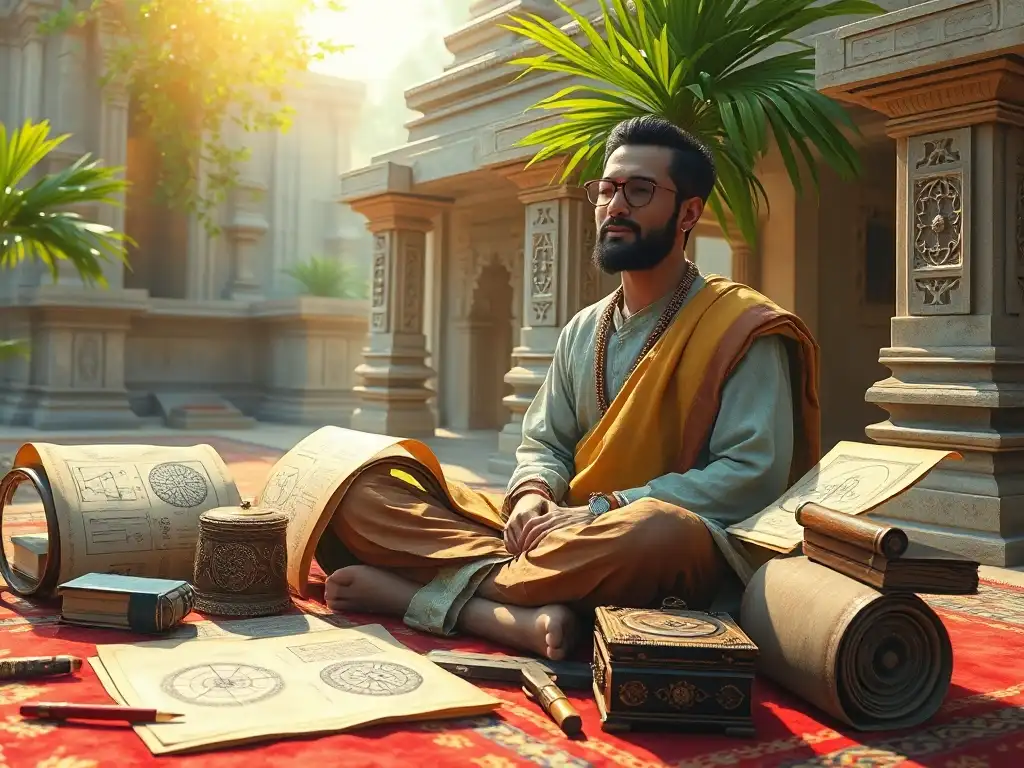
The significance of ancient Indian geometry techniques lies not only in their mathematical precision but also in their profound influence on various aspects of science, technology, and culture throughout history. These techniques, developed by brilliant mathematicians such as Aryabhata, Brahmagupta, and Bhaskara, have shaped the way geometry is understood and applied, both in ancient times and in contemporary mathematical studies.
Reflection on the Contributions of Ancient Indian Mathematicians
Ancient Indian mathematicians made remarkable advancements in geometry, demonstrating a sophisticated understanding of mathematical concepts. For example:
- Aryabhata (476–550 CE): He introduced the concept of the "zero" and developed a place-value system, which laid the foundation for modern mathematics. His work in geometry included calculating the area of a triangle and the volume of a sphere, employing techniques that predated similar discoveries in other cultures.
- Brahmagupta (598–668 CE): He is renowned for his contributions to both algebra and geometry. His treatise, Brahmasphutasiddhanta, includes rules for calculating areas of cyclic quadrilaterals and the properties of various geometric shapes, emphasizing the application of geometry in real-world scenarios.
- Bhaskara II (1114–1185 CE): Often referred to as Bhaskara the Great, he further refined geometric principles, providing methods for solving complex geometric problems. His text, Lilavati, serves not only as a mathematical manual but also as a cultural artifact, reflecting the integration of mathematics into daily life.
These mathematicians fostered a rich mathematical tradition that integrated geometry with astronomy, architecture, and engineering, influencing subsequent generations of scholars across the globe.
Future Research Directions in Ancient Indian Mathematics
As interest in ancient Indian geometry techniques continues to grow, several promising research directions emerge:
- Interdisciplinary Studies: Exploring the intersections of ancient Indian mathematics with other fields, such as astronomy, architecture, and art, could yield new insights into how geometry was applied in various cultural contexts.
- Comparative Analyses: Conducting comparative studies between ancient Indian and other ancient mathematical traditions (such as those from Greece, China, and the Islamic world) can highlight unique approaches and shared concepts, enriching our understanding of global mathematical development.
- Digitization and Preservation: Efforts to digitize ancient texts and manuscripts that contain geometric knowledge will facilitate access for scholars worldwide, encouraging further analysis and interpretation of these invaluable resources.
- Education and Curriculum Development: Integrating ancient Indian geometry techniques into modern mathematical education can enhance students' appreciation for historical contributions and cultivate a deeper understanding of geometric principles.
The exploration of ancient Indian geometry techniques is a vast and promising field, ripe for further investigation and appreciation. As scholars continue to uncover and analyze these techniques, they will not only illuminate the intellectual heritage of ancient India but also inspire future generations of mathematicians and enthusiasts alike.
Frequently Asked Questions
What were some key geometry techniques used by ancient Indian mathematicians?
Ancient Indian mathematicians employed various geometry techniques, including the use of theorems, constructive methods, and the development of geometric proofs that laid the groundwork for modern geometry.
How did ancient Indian geometry influence other civilizations?
The geometry techniques from ancient India significantly influenced other cultures, particularly through texts like the Sulbasutras, which were integrated into Hellenistic and later Islamic mathematical traditions.
What role did the Sulbasutras play in ancient Indian geometry?
The Sulbasutras are ancient texts that provide rules for constructing altars and other structures, showcasing practical applications of geometry and demonstrating the advanced understanding of geometric principles in ancient India.
Were there any prominent figures in ancient Indian geometry?
Yes, prominent figures like Aryabhata and Brahmagupta made significant contributions to geometry, with Aryabhata introducing concepts of trigonometry and Brahmagupta addressing area calculations for various geometric shapes.
How is ancient Indian geometry relevant today?
Ancient Indian geometry is relevant today as it forms the basis for many modern mathematical concepts and techniques, showcasing the rich heritage of ancient civilizations in contributing to the field of mathematics.
Final Reflection: The Enduring Legacy of Ancient Indian Geometry Techniques
The exploration of ancient Indian geometry techniques reveals not only the brilliance of mathematicians from centuries past but also their profound relevance in today's world. As we navigate a landscape increasingly defined by technology and innovation, the foundational principles laid down by these scholars continue to shape our understanding of space, structure, and design. Their work serves as a reminder that the pursuit of knowledge transcends time and culture, echoing through the ages with an urgency that is as relevant now as it was then.
Cultural and social landscapes are deeply influenced by the mathematical advancements of ancient civilizations, particularly in India. The techniques developed by these mathematicians have permeated various fields, from architecture to computer science, illustrating a rich tapestry of interconnected ideas that continue to inspire modern thinkers. As we reflect on their contributions, we are reminded of the words of the great mathematician Srinivasa Ramanujan: An equation for me has no meaning unless it represents a thought of God.
This perspective invites us to see mathematics not merely as numbers and formulas, but as a language that connects us to the universe and our shared human experience.
As we close this exploration of ancient Indian geometry techniques, I invite you to reflect on how these timeless principles can inform your own life and work. Consider the ways in which you can apply the lessons learned from these mathematicians—whether in problem-solving, creativity, or the pursuit of knowledge. Let their legacy inspire you to embrace curiosity and innovation, reminding you that the quest for understanding is a journey worth undertaking, one that can lead to profound discoveries both within and around us.
Unlock the Secrets of Ancient Geometry!
Thank you for diving into the fascinating world of ancient Indian mathematicians and their approach to geometry! You've gained valuable insights into the intricate methods and discoveries that have shaped the mathematical landscape. Now, it’s time to take that curiosity further!
Here’s how you can explore the wonders of ancient geometry:
- Dive deeper into ancient texts: Find and read significant works such as the "Aryabhatiya" and the "Brahmasphutasiddhanta" to uncover original ideas and concepts.
- Join online forums or local study groups: Engage in discussions with fellow enthusiasts who share your passion for ancient mathematics and geometry.
- Share your learnings: Start a blog or create social media posts to highlight your favorite discoveries and invite others to join the conversation!
What aspect of ancient Indian geometry do you find most inspiring, and how do you think it influences modern mathematics?