
The Ingenious Inventions: Unraveling Ancient India's Numerical Systems


Welcome to Ancient India History, your gateway to the fascinating tapestry of civilizations that shaped one of the world's oldest cultures. Here, we delve into the ingenious inventions that emerged from the heart of ancient India, with a spotlight on the astounding numerical systems that laid the groundwork for modern mathematics. As you journey through this captivating exploration, you'll uncover how these early innovations influenced not only their contemporary society but also the world at large. Prepare to be amazed by the brilliance of ancient Indian thinkers and their lasting contributions—let's unravel the mysteries together!
Introduction to Ancient Indian Numerical Systems
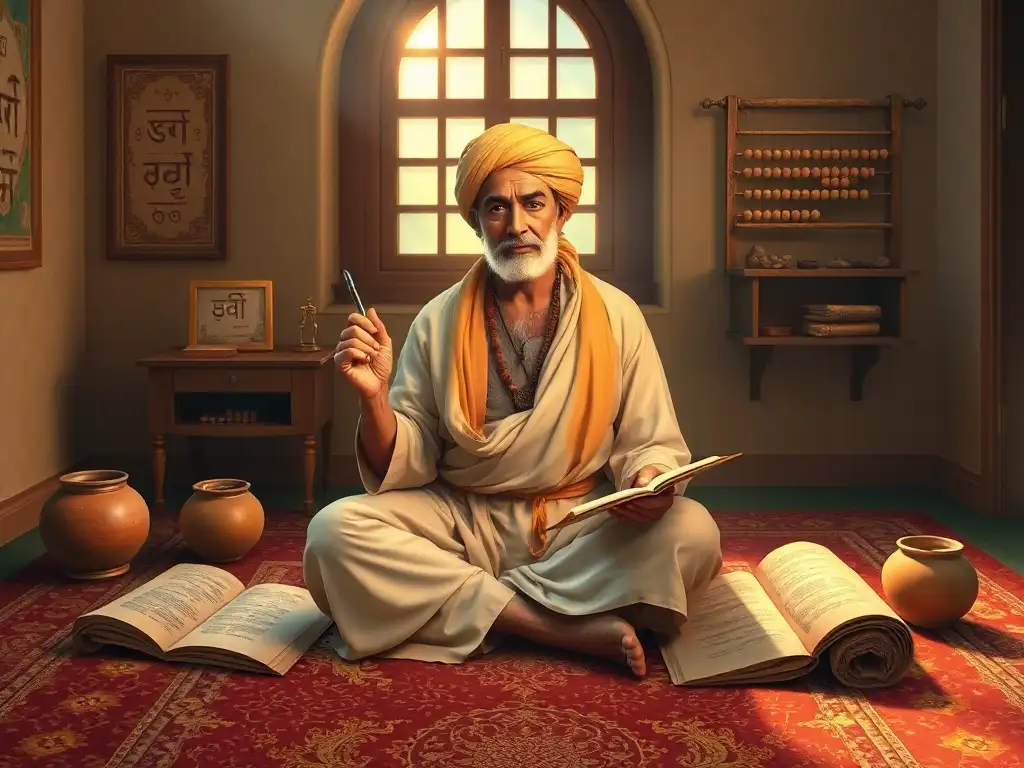
The ancient Indian numerical systems represent a remarkable facet of human ingenuity and intellectual evolution. From the sophisticated calculations of the Indus Valley Civilization to the advanced mathematical concepts developed during the Gupta Empire, ancient India was a cradle of mathematical innovation. This article delves into the intricate world of ancient Indian numerical systems, exploring their origins, significance, and the profound impact they had on mathematics and science globally. By understanding these systems, we uncover not only the contributions of ancient Indian scholars but also the cultural and philosophical underpinnings that influenced their development.
Overview of Ancient Indian Mathematics
Ancient Indian mathematics is characterized by its originality and breadth, encompassing various fields such as arithmetic, geometry, and astronomy. The earliest known numerical system can be traced back to the Indus Valley Civilization (circa 2500-1900 BCE), where evidence of standardized weights and measures suggests a sophisticated understanding of mathematics.
Key texts like the Sulbasutras and Aryabhatiya highlight the systematic approach to mathematical problems, with notable advancements in algebra, trigonometry, and even calculus. The concept of zero as a numeral, developed by Indian mathematicians, revolutionized the way numbers were represented and manipulated, paving the way for future innovations in mathematics.
Importance of Numerical Systems in Ancient India
The numerical systems of ancient India were not merely academic exercises; they played a critical role in various aspects of life. From trade and commerce to astronomy and religious rituals, the ability to quantify and calculate was essential.
- Trade and Commerce: Merchants relied on mathematical calculations for transactions, inventory management, and pricing.
- Astronomy: Accurate numerical systems allowed astronomers to predict celestial events, influencing agricultural practices and religious observances.
- Architecture and Engineering: Architectural feats, such as the construction of temples and public works, required precise calculations and measurements.
The development of these numerical systems reflects a profound understanding of mathematics as a tool for practical application, showcasing the ingenuity of ancient Indian civilizations.
Historical Context of Numerical Systems in Ancient India
The historical backdrop of ancient Indian numerical systems provides insight into their evolution and significance. The journey of mathematics in India is marked by a series of transformative phases influenced by various civilizations and cultural exchanges.
The Evolution of Mathematics in Ancient India
The evolution of mathematics in ancient India can be viewed through several key periods:
- Indus Valley Civilization (circa 2500-1900 BCE): Early evidence of mathematical practices, including the use of weights and measures.
- Vedic Period (circa 1500-500 BCE): The emergence of the Sulbasutras, which contained geometric principles used in altar constructions.
- Classical Period (circa 500-1200 CE): The golden age of mathematics, marked by the work of legendary mathematicians like Aryabhata, Brahmagupta, and Bhaskara.
These periods collectively showcase an ongoing quest for knowledge, with each era building upon the foundations laid by its predecessors.
Key Civilizations Contributing to Numerical Systems
Several key civilizations contributed to the development of numerical systems in ancient India:
- Indus Valley Civilization: Established one of the earliest forms of measurement and numerical representation.
- Vedic Civilization: Advanced mathematical concepts through texts that combined religious and practical applications.
- Gupta Empire: A pinnacle of mathematical achievement, where scholars made groundbreaking advancements in number theory, algebra, and astronomy.
Understanding the contributions of these civilizations not only highlights their individual achievements but also illustrates the interconnectedness of knowledge across time and space in ancient India.
Key Features of Ancient Indian Numerical Systems
Ancient Indian numerical systems are characterized by several innovative features that laid the foundation for modern mathematics. These systems were not only practical for commerce and trade but also deeply intertwined with philosophical and astronomical studies. Among the most notable aspects are:
- Decimal System: The base ten system was widely used, which allowed for easier calculations and record-keeping.
- Positional Notation: This system enabled the representation of large numbers efficiently by assigning value based on the position of digits.
- Use of Symbols: Ancient Indians developed specific symbols to represent numbers, which contributed to the evolution of numerals used today.
- Integration with Astronomy: Numerical systems were often applied in astronomical calculations, showcasing their complexity and depth.
These features collectively highlight the sophistication of ancient Indian mathematical thought and its influence on subsequent cultures.
Base Systems: Understanding Base Ten and Beyond
The base ten system, or decimal system, is perhaps the most well-known aspect of ancient Indian numerical systems. This system is based on ten digits (0-9) and was revolutionary in its simplicity and efficiency. However, ancient Indian mathematicians also explored other bases, such as:
- Base Two (Binary): While not as commonly used, binary representations were sometimes employed in specific contexts, especially in logic and computation.
- Base Sixty (Sexagesimal): Influenced by earlier civilizations, this base was often used in astronomy and timekeeping, where 60 seconds make a minute and 60 minutes make an hour.
The versatility of these base systems demonstrates the adaptability and innovation in ancient Indian mathematics, reflecting a deep understanding of numerical relationships.
The Concept of Zero: A Revolutionary Idea
The introduction of zero as a numerical concept is one of the most significant contributions of ancient Indian mathematics. Unlike in many other cultures, where the absence of a quantity was often neglected, Indian scholars recognized zero as a standalone numeral, leading to profound implications:
- Placeholder Value: Zero allowed for the distinction between numbers such as 10 and 100, enhancing the clarity of numerical representation.
- Mathematical Operations: The inclusion of zero facilitated more complex operations, including the formulation of equations and algorithms.
- Philosophical Implications: The concept of nothingness, represented by zero, influenced philosophical discourse, bridging mathematics and metaphysics.
This revolutionary idea not only transformed mathematics in India but also had a lasting impact on mathematics worldwide.
Place Value System in Ancient Indian Mathematics
The place value system employed in ancient India was a key element that enabled advanced calculations and the representation of large numbers. This system works on the principle that the value of a digit is determined by its position within a number. Key features include:
- Hierarchical Structure: Each position in a number holds ten times the value of the position to its right, allowing for efficient calculations.
- Clarity in Representation: Through this system, large numbers could be expressed succinctly, enhancing readability and understanding.
- Facilitation of Arithmetic Operations: The place value system simplified addition, subtraction, multiplication, and division, making calculations more accessible.
This methodical approach to numerical representation highlights the ingenuity of ancient Indian mathematicians and their contributions to the field.
Major Texts and Treatises on Numerical Systems
Ancient Indian scholars produced various texts and treatises that systematically documented their mathematical knowledge, including numerical systems. These works serve as crucial resources for understanding the evolution of mathematics in India.
Sulbasutras: Geometry and Numerical Applications
The Sulbasutras, ancient texts on geometry, are among the earliest mathematical manuscripts in India. They primarily focus on the construction of altars and rituals, but they also encompass significant numerical applications, including:
- Geometric Principles: The texts detail various geometric shapes and their properties, linking numerical calculations with physical constructions.
- Pythagorean Theorem: The Sulbasutras present early forms of the Pythagorean theorem, showcasing advanced understanding of relationships between sides of right triangles.
- Practical Applications: Instructions for constructing altars illustrate the practical application of mathematical concepts in religious and cultural practices.
These works reveal the integral role of mathematics in ancient Indian society, intertwining it with spirituality and community life.
Aryabhata's Contributions to Mathematics
Aryabhata, a prominent mathematician and astronomer of ancient India, made groundbreaking contributions that shaped the landscape of mathematics. His major works include:
- Aryabhatiya: This seminal text covers arithmetic, algebra, and astronomy, introducing concepts such as the approximation of π (pi) and rules for calculating square roots.
- Trigonometry: Aryabhata’s work laid the groundwork for trigonometric functions, essential for astronomical calculations.
- Place Value System: He effectively utilized the place value system in his computations, further emphasizing its significance in ancient Indian mathematics.
Aryabhata’s contributions not only advanced mathematical thought in India but also influenced subsequent generations of scholars worldwide.
Brahmagupta's Rules on Arithmetic and Algebra
Brahmagupta, another illustrious figure in ancient Indian mathematics, significantly advanced arithmetic and algebra. His major contributions are encapsulated in his text, Brahmasphutasiddhanta, which includes:
- Rules for Operations: Brahmagupta outlined specific rules for addition, subtraction, multiplication, and division, including operations involving zero and negative numbers.
- Algebraic Equations: He introduced methods for solving linear and quadratic equations, laying the groundwork for algebraic thinking.
- Practical Applications: His work also addressed practical problems in commerce and land measurement, illustrating the utility of mathematics in everyday life.
Brahmagupta's innovations reflect the rich tradition of mathematical inquiry in ancient India and its relevance to various fields of study.
Comparisons with Other Ancient Numerical Systems
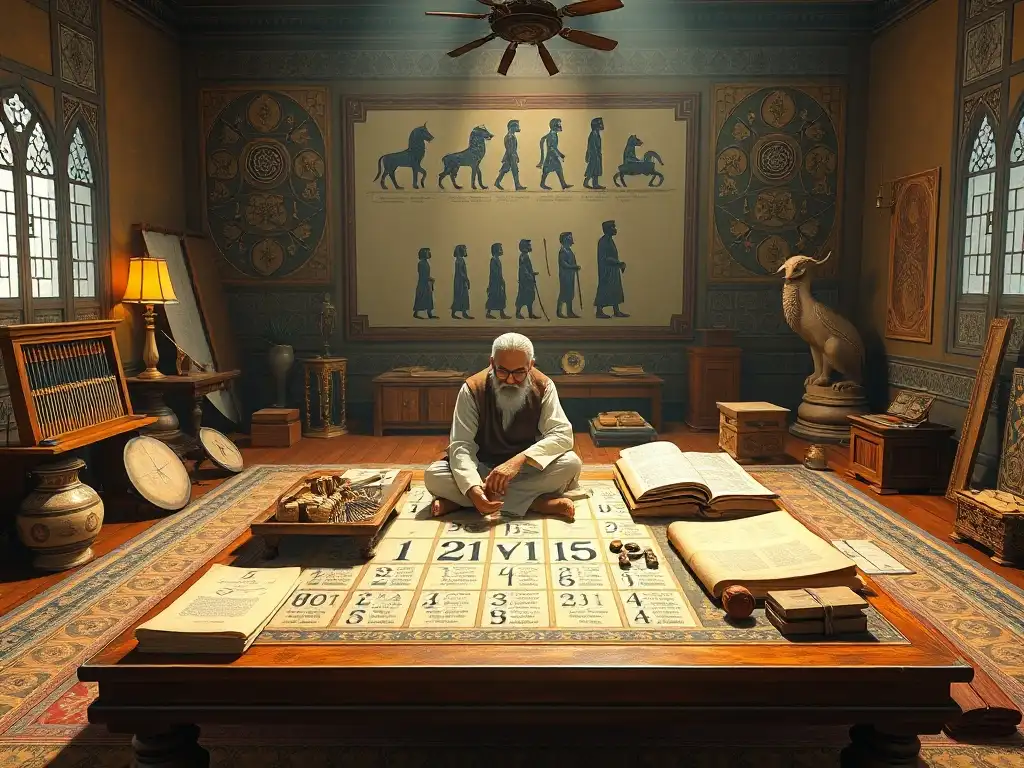
The study of ancient numerical systems reveals intriguing parallels and contrasts that reflect the cultural contexts and mathematical approaches of different civilizations. Ancient Indian numerical systems, particularly the decimal system and the use of zero, stand out when compared to other ancient systems. By examining these comparisons, we can appreciate the unique contributions of ancient India to the broader tapestry of mathematical history.
Ancient Indian Numerical Systems vs. Ancient Egyptian Systems
Ancient Indian numerical systems employed a positional decimal system that was notably more advanced than the additively structured system used by the ancient Egyptians. The Egyptians utilized hieroglyphs for their numbers, which included distinct symbols for each power of ten (1, 10, 100, etc.) but lacked a concept of zero, making calculations cumbersome. In contrast, ancient Indian mathematicians introduced the concept of zero as a placeholder, which allowed for more sophisticated arithmetic operations and computations.
For example, while the Egyptian system could represent large numbers such as 1,000 with a series of symbols (𓏙 for 1,000, 𓎆 for 100, and so on), the Indian system could achieve the same with a simple notation, significantly simplifying calculations. The adoption of the decimal system in ancient India laid the groundwork for more complex mathematical concepts and calculations, showcasing a remarkable leap in numerical understanding.
Contrasting Ancient Indian Systems with Babylonian Mathematics
Babylonian mathematics, characterized by its sexagesimal (base-60) system, also provides a contrast to ancient Indian numerical systems. The Babylonians utilized a cuneiform script to denote numbers, which allowed for the representation of fractions and a variety of mathematical operations. However, their system was less efficient for representing large numbers compared to the positional decimal system developed in ancient India.
One of the significant differences lies in the absence of a symbol for zero in Babylonian mathematics, which made their calculations more challenging. The Indian system, with its clear representation of zero and positional value, enabled more complex arithmetic and algebraic concepts to flourish. This distinction highlights how ancient Indian numerical systems not only facilitated advancements in mathematics but also influenced the development of more efficient calculation methods worldwide.
Influence of Ancient Indian Numerical Systems on Other Cultures
The influence of ancient Indian numerical systems extended beyond its geographical boundaries, impacting several cultures around the world. The introduction of the decimal system and the concept of zero traveled through trade routes to the Middle East and Europe, where they were adopted and adapted over time.
Notably, Arab mathematicians played a crucial role in preserving and disseminating Indian mathematical knowledge. The translation of Indian texts into Arabic during the Islamic Golden Age allowed for the integration of these advanced numerical concepts into the broader European mathematical tradition. This cross-cultural exchange significantly influenced the development of mathematics in the medieval period, ultimately leading to the mathematical revolution of the Renaissance.
The Legacy of Ancient Indian Numerical Systems
The legacy of ancient Indian numerical systems is profound, with lasting impacts on mathematics and science that resonate to this day. Their innovations have shaped modern mathematical practices and continue to inspire new generations of mathematicians.
Impact on Modern Mathematics
Ancient Indian numerical systems have left an indelible mark on modern mathematics, particularly through the widespread use of the decimal system and the concept of zero. These innovations are foundational to contemporary arithmetic, algebra, and calculus.
The positional notation system introduced by ancient Indian mathematicians allows for efficient calculation methods and has become a standard in mathematical education worldwide. Furthermore, the mathematical treatises from ancient India, such as the "Bakhshali Manuscript" and works by scholars like Aryabhata and Brahmagupta, continue to be studied for their advanced approaches to mathematical problems, including the rules of arithmetic and algebra.
Preservation and Revival of Ancient Indian Mathematical Knowledge
Efforts to preserve and revive ancient Indian mathematical knowledge have gained momentum in recent years, with scholars and institutions recognizing the value of these contributions. Research initiatives aim to translate and digitize ancient texts, making them accessible to a broader audience.
Educational programs are increasingly incorporating the history of Indian mathematics into curricula, emphasizing the importance of these early innovations in shaping the mathematical landscape. This revival is not only about preserving history but also about inspiring future mathematicians and fostering a deeper appreciation for the rich heritage of mathematical thought in ancient India.
Global Recognition of Ancient Indian Contributions to Mathematics
In recent decades, there has been a growing global recognition of ancient Indian contributions to mathematics. Institutions worldwide are acknowledging the significance of Indian numerical systems in the development of mathematical thought.
Conferences, publications, and academic discussions increasingly highlight the sophistication of Indian mathematics, positioning it alongside other ancient systems such as Greek and Chinese mathematics. This recognition serves to enhance the understanding of mathematics as a global endeavor, celebrating the diverse contributions that have shaped the discipline into what it is today. The acknowledgment of ancient Indian numerical systems not only honors the past but also promotes a more inclusive view of the history of mathematics.
Conclusion: The Enduring Influence of Ancient Indian Numerical Systems
Ancient Indian numerical systems represent a remarkable chapter in the history of mathematics, showcasing the ingenuity and intellectual advancement of early Indian civilizations. From the sophisticated numeral systems developed during the Indus Valley Civilization to the innovative concepts of zero and the decimal system later refined during the Gupta Empire, these contributions have had a lasting impact on mathematical thought worldwide.
The interplay of culture, philosophy, and science within ancient Indian society fostered an environment ripe for mathematical innovation. The numerical systems not only facilitated trade and commerce but also influenced various fields such as astronomy, engineering, and even philosophy. The legacy of these systems continues to shape modern mathematics, underlining the importance of ancient Indian scholarship in the global narrative of mathematical development.
Summary of Key Points
- Innovative Numeral Systems: Ancient India introduced significant numeral systems, including the famous decimal system and the concept of zero, which are foundational to modern mathematics.
- Cultural Context: The development of these systems was deeply intertwined with the societal needs, trade practices, and philosophical inquiries of the time.
- Influence on Global Mathematics: The mathematical concepts and systems developed in ancient India were instrumental in the evolution of mathematics across cultures and eras, influencing mathematicians in the Islamic Golden Age and beyond.
- Preservation and Transmission: The works of early Indian mathematicians were preserved and translated, allowing their ideas to permeate into European mathematics during the Renaissance.
The Ongoing Importance of Studying Ancient Indian Mathematics
Studying ancient Indian mathematics is crucial for several reasons. Firstly, it provides insight into the intellectual achievements of one of the world's oldest civilizations. Understanding these numerical systems enhances our appreciation of the mathematical techniques that predate modern methods, revealing the depth of human thought in addressing complex problems.
Secondly, the examination of ancient Indian mathematics can inspire contemporary mathematical education and research. By integrating historical perspectives into the curriculum, educators can cultivate a richer understanding of mathematics as a cumulative human endeavor. Furthermore, recognizing the contributions of diverse cultures in the development of mathematics promotes inclusivity and encourages a broader scope of inquiry in mathematical studies today.
References and Further Reading on Ancient Indian Numerical Systems
Recommended Books and Articles
-
"The History of Mathematics: A Brief Course" by Roger L. Cooke
This book provides a comprehensive overview of the development of mathematics, including significant contributions from ancient India.
-
"Mathematics in India" by Kim Plofker
A detailed exploration of the evolution of mathematical ideas in India, this work highlights the unique contributions of various mathematicians and their influences.
-
"The Hindu-Arabic Numerals" by Carl B. Boyer
This article delves into the origins and spread of the numeral system, tracing its roots back to ancient Indian innovations.
Online Resources for Exploring Ancient Indian Mathematics
-
The Indian Mathematical Society
This organization offers a wealth of resources, including journals and publications focused on the history and development of mathematics in India.
-
The MacTutor History of Mathematics Archive
A valuable resource that provides biographies and historical context for key figures in Indian mathematics, along with detailed entries on numerical systems.
-
Ancient India: An Overview (website)
This site features sections dedicated to various aspects of ancient Indian culture, including mathematics, providing accessible information for both students and researchers.
By engaging with these resources, readers can deepen their understanding of ancient Indian numerical systems and their significance in the broader landscape of mathematical history.
- Introduction to Ancient Indian Numerical Systems
- Historical Context of Numerical Systems in Ancient India
- Key Features of Ancient Indian Numerical Systems
- Major Texts and Treatises on Numerical Systems
- Comparisons with Other Ancient Numerical Systems
- The Legacy of Ancient Indian Numerical Systems
- Conclusion: The Enduring Influence of Ancient Indian Numerical Systems
- References and Further Reading on Ancient Indian Numerical Systems
- What are the ancient Indian numerical systems?
- How did ancient Indian civilizations contribute to mathematics?
- What is the significance of the decimal system in ancient India?
- How did ancient Indian scholars impact the global understanding of numbers?
- Are there any surviving texts that detail ancient Indian numerical systems?
Frequently Asked Questions
What are the ancient Indian numerical systems?
Ancient Indian numerical systems refer to the mathematical frameworks developed in India, including the decimal system and the concept of zero, which significantly influenced mathematics worldwide.
How did ancient Indian civilizations contribute to mathematics?
Ancient Indian civilizations made profound contributions by introducing concepts like zero, place value, and algebra, laying the groundwork for modern mathematical thought.
What is the significance of the decimal system in ancient India?
The decimal system, which uses base ten, was innovatively developed in ancient India and is crucial for calculations, facilitating advancements in commerce and science.
How did ancient Indian scholars impact the global understanding of numbers?
Scholars like Aryabhata and Brahmagupta shared their knowledge through texts that spread across Asia and later reached Europe, profoundly shaping the global understanding of numbers.
Are there any surviving texts that detail ancient Indian numerical systems?
Yes, texts such as the Aryabhatiya by Aryabhata and the Brahmasphutasiddhanta by Brahmagupta provide invaluable insights into the numerical systems and mathematical practices of ancient India.
Final Reflection: The Enduring Legacy of Ancient Indian Numerical Systems
The exploration of ancient Indian numerical systems reveals their profound influence on mathematics and science today. These ingenious inventions not only laid the groundwork for modern arithmetic but also demonstrate the remarkable intellectual achievements of ancient civilizations. As we navigate an increasingly complex world, understanding these historical contributions becomes essential in appreciating the foundations of contemporary knowledge.
The impact of ancient Indian numerical systems extends far beyond their time, shaping cultural and educational landscapes across the globe. From the introduction of the concept of zero to the development of place value, these innovations have transformed how we perceive and interact with numbers. As mathematician Carl Friedrich Gauss once said, "> Mathematics is the queen of the sciences and number theory is its crown jewel." This sentiment underscores the significance of ancient Indian contributions, reminding us that the roots of our current mathematical understanding are deeply intertwined with the past.
As we reflect on the lessons from ancient Indian numerical systems, let us embrace the spirit of innovation and curiosity that characterized these early thinkers. I invite you to explore the beauty of mathematics in your own life, recognizing that every calculation and equation is a link to a rich history of human thought. By engaging with these concepts, we not only honor the legacy of our ancestors but also inspire future generations to continue the journey of discovery and innovation.
Unveil the Secrets of Ancient India's Numerical Ingenuity!
Thank you for diving into the fascinating world of Ancient India's numerical systems! Your curiosity has brought you closer to understanding how these ingenious inventions shaped mathematical thought. Now, let’s take the next step in exploring these remarkable contributions.
Here are some actionable steps you can take to deepen your knowledge and engage with this topic further:
- Explore related ancient texts or modern analyses by visiting your local library or an online database to discover deeper insights into the significance of these inventions.
- Share this article with friends or fellow history enthusiasts on social media to spark discussions about the impact of these numerical systems on the development of modern mathematics.
- Join an online forum or community that focuses on ancient history to connect with others who share your interest and exchange ideas about India's rich mathematical heritage.
Which aspect of Ancient India's numerical systems intrigues you the most? Consider how these groundbreaking inventions have influenced our current understanding of mathematics.