
How Ancient Indian Numerical Systems Reshaped the Understanding of Mathematics


Welcome to Ancient India History, where we embark on a fascinating journey through the rich tapestry of ancient Indian civilizations. From the remarkable Indus Valley to the illustrious Gupta Empire, each epoch has contributed to a legacy that continues to shape our world today.
In our featured article, "How Ancient Indian Numerical Systems Reshaped the Understanding of Mathematics," we delve into the ingenious numerical systems developed in ancient India, revealing the profound impact they had on mathematical thought across cultures. Prepare to uncover the secrets of these mathematical marvels and their lasting significance—your adventure into the heart of ancient knowledge begins now!
- Introduction to Ancient Indian Numerical Systems
- Historical Context of Ancient Indian Numerical Systems
- Key Features of Ancient Indian Numerical Systems
- Major Contributions of Ancient Indian Numerical Systems
- Comparative Analysis of Ancient Indian Numerical Systems
- Impact of Ancient Indian Numerical Systems on Modern Mathematics
- Conclusion: The Lasting Influence of Ancient Indian Numerical Systems
-
Frequently Asked Questions
- What are ancient Indian numerical systems?
- How did ancient Indian numerical systems influence mathematics?
- What is the significance of the concept of zero in ancient Indian mathematics?
- What civilizations contributed to the development of numerical systems in ancient India?
- How did ancient Indian numerical systems compare to those of other cultures?
- Final Reflection: The Enduring Legacy of Ancient Indian Numerical Systems
- Unveil the Secrets of Ancient Numbers!
Introduction to Ancient Indian Numerical Systems
The numerical systems developed in ancient India represent a profound legacy that significantly shaped not only the mathematical practices of the region but also contributed to the global understanding of mathematics as we know it today. From the sophisticated techniques of the Indus Valley Civilization to the groundbreaking concepts introduced during the Gupta Empire, these numerical systems were instrumental in facilitating trade, astronomy, and various scientific endeavors.
As we delve into the intricacies of ancient Indian numerical systems, we uncover a rich tapestry of innovation that highlights the intellectual prowess of these civilizations. This exploration will provide insight into how these systems laid the groundwork for modern mathematics and influenced cultures far beyond the Indian subcontinent.
Overview of Ancient Indian Mathematics
Ancient Indian mathematics is characterized by its remarkable achievements, many of which were documented in texts such as the Sulbasutras and Aryabhata's Aryabhatiya. These texts reveal a deep understanding of numbers and their applications.
- Key Contributions:
- Decimal System: The use of a base-10 system, which is foundational to modern mathematics.
- Zero Concept: The introduction of zero as a numeral, a revolutionary idea that advanced calculations and mathematical theories.
- Algebra and Geometry: Extensive work in algebraic equations and geometric constructions, particularly for religious rituals and architecture.
The evolution of these concepts illustrates the advanced level of intellectual inquiry in ancient India, showcasing mathematicians who were not only practical problem solvers but also great thinkers who explored the philosophical implications of numbers.
Importance of Numerical Systems in Mathematical Development
The numerical systems developed in ancient India were pivotal in transforming mathematical thought and practice. Their significance can be understood through several key aspects:
- Facilitating Trade and Commerce:
- The establishment of a standardized numerical system allowed for more efficient trade, enabling merchants to calculate profits, losses, and inventory with accuracy.
- Advancement of Scientific Knowledge:
- Ancient Indian scholars applied their numerical systems to astronomy, enabling accurate predictions of celestial events and improving navigation techniques.
- Influence on Global Mathematics:
- As these numerical systems spread through trade routes, they influenced mathematical practices in other cultures, particularly during the Islamic Golden Age, leading to the broader adoption of concepts like the decimal system and the use of zero.
Ancient Indian numerical systems were not merely a collection of methods for calculation; they were a cornerstone of intellectual achievement that reshaped the understanding of mathematics, contributing to advancements that resonate to this day.
Historical Context of Ancient Indian Numerical Systems

The Origins of Numerical Concepts in Ancient India
The origins of numerical concepts in ancient India can be traced back to early civilizations, where the need for counting and measurement arose from practical activities such as trade, agriculture, and astronomy. The use of tally marks and simple counting systems laid the groundwork for more sophisticated numerical systems. Evidence suggests that numerical concepts were employed as early as 3300 BCE, during the Indus Valley Civilization, where seals and weights indicate an understanding of quantification.
This early numerical understanding was primarily utilitarian, focusing on trade and commerce. The ancient Indians developed counting systems using decimal (base-10) principles, which were later reflected in their mathematical texts. The evolution of numerical concepts in India was not an isolated phenomenon; it interacted with other ancient cultures, leading to a rich exchange of ideas.
Influence of the Indus Valley Civilization on Mathematics
The Indus Valley Civilization (c. 3300–1300 BCE) significantly influenced the development of mathematics in ancient India. Archaeological findings, such as the Mohenjo-Daro weights and measuring rods, indicate a sophisticated understanding of measurement and standardization.
- Weights and Measures: The Indus Valley people utilized a binary system of weights, which was likely based on the decimal system. This standardization facilitated trade and economic activities.
- Town Planning: The meticulous planning of cities, including the use of grid patterns, demonstrates an advanced understanding of geometry and spatial awareness.
Additionally, artifacts with inscriptions suggest early forms of numerical notation. The script remains undeciphered, but its existence hints at the use of symbols to represent numerical values, paving the way for future numerical systems in India.
Contributions of Vedic Texts to Numerical Systems
The Vedic texts, composed between 1500 and 500 BCE, mark a pivotal period for the evolution of numerical systems in ancient India. These texts, including the Rgveda, Yajurveda, and Atharvaveda, encompass a wealth of mathematical knowledge that reflects the culture's intellectual advancements.
- Decimal System: The Vedic texts introduced a clear articulation of the decimal system, which is foundational to modern mathematics. This system allowed for the representation of large numbers and facilitated calculations.
- Astronomical Calculations: Vedic scholars were adept at astronomical observations, leading to the development of numerical methods for calculating time and celestial events. This practice influenced later astronomical texts, such as the Surya Siddhanta.
- Mathematical Riddles: Vedic literature also includes mathematical riddles and problems, showcasing a playful yet profound engagement with numbers. These riddles often required advanced reasoning and problem-solving skills.
The combination of these contributions illustrates how ancient Indian numerical systems were not merely functional but also deeply embedded in the cultural and intellectual fabric of the time. As such, they played a crucial role in shaping the future of mathematics, both in India and beyond.
Key Features of Ancient Indian Numerical Systems
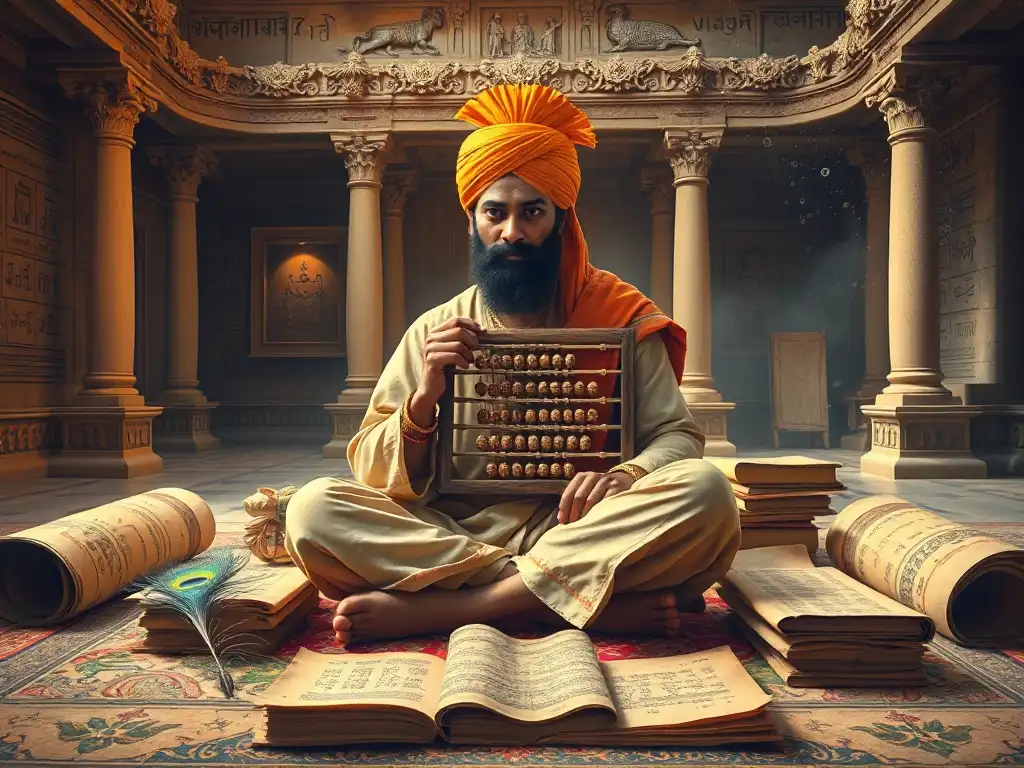
Base Number Systems: Decimal and Beyond
Ancient Indian numerical systems were primarily based on a decimal system, which utilized ten symbols to represent numbers. This base-10 system, known as the Hindu-Arabic numeral system, laid the groundwork for modern mathematics. The adoption of this system was not merely a numerical convenience but a profound advancement in the way calculations were performed.
- Decimal Structure:
- The numbers were represented using the symbols 0-9, which allowed for simple and efficient calculation.
- Each digit's position represented a different power of ten, enabling complex arithmetic operations.
- Alternative Bases:
- While the decimal system was predominant, there are indications of other bases being used for specific applications, such as base 60 in astronomical calculations.
- This versatility highlights the adaptability of ancient Indian mathematicians in utilizing various numerical systems for different contexts.
- Mathematical Texts:
- Ancient texts like the Bakhshali Manuscript and contributions from mathematicians such as Brahmagupta and Bhaskara II showcase the use of these numerical systems and the sophistication of calculations performed.
The implications of these base systems extended far beyond mere calculations; they facilitated advancements in various fields such as astronomy, commerce, and engineering, thereby reshaping the understanding of mathematics in the ancient world.
Unique Symbols and Notations in Ancient Indian Mathematics
The ancient Indian numerical systems are characterized by a range of unique symbols and notations that played a crucial role in mathematical representation and communication. These symbols went beyond mere numbers, embodying a rich tapestry of mathematical thought.
-
Brahmi and Kharosthi Scripts:
The earliest forms of writing numbers can be traced back to the Brahmi and Kharosthi scripts. These scripts featured distinct symbols for digits and laid the foundation for numeral systems in subsequent cultures.
-
Notation Systems:
Ancient Indian mathematicians employed various notational systems to enhance mathematical clarity:
- Subscripts and Superscripts: Used to indicate operations such as multiplication and exponentiation.
- Place Value System: Allowed for the representation of larger numbers by denoting their positional significance.
-
Mathematical Operations:
Notations were also developed for specific mathematical operations, such as:
- Addition and Subtraction: Indicated through simple symbols or by arranging numbers in specific patterns.
- Multiplication and Division: Utilized unique symbols that facilitated quick calculations.
This innovative approach to symbols and notations significantly contributed to the efficiency of mathematical computations and the transmission of knowledge, influencing later cultures and civilizations.
The Concept of Zero and Its Significance
One of the most revolutionary contributions of ancient Indian numerical systems is the concept of zero (0). This concept transformed mathematics, not only within India but across the globe.
- Origins of Zero:
- The earliest recorded use of zero as a numeral can be found in the Bakhshali Manuscript, dating back to the 3rd or 4th century CE.
- It was represented by a dot (•) initially, which evolved into the symbol we recognize today.
- Mathematical Implications:
- Zero's introduction allowed for the representation of empty values, vastly improving calculations and the overall numerical system.
- It facilitated operations such as addition and subtraction, where the absence of a quantity could be effectively denoted.
- Philosophical and Cultural Impact:
- The concept of zero transcended its mathematical utility, influencing philosophy, spirituality, and the understanding of nothingness in Indian culture.
- It inspired discussions on the nature of existence and the void, showcasing the interplay between mathematics and metaphysics.
The significance of zero cannot be overstated; it was not merely a number but a pivotal concept that redefined mathematical practices and paved the way for future discoveries in mathematics, science, and technology.
Major Contributions of Ancient Indian Numerical Systems

Ancient Indian numerical systems have significantly influenced mathematical thought and practice, laying the groundwork for many modern concepts. The most notable contributions include the development of the decimal place value system, the introduction of zero, and advancements in various branches of mathematics such as arithmetic, algebra, and geometry. These innovations not only transformed local mathematical practices but also had a profound impact on mathematics globally.
Advancements in Arithmetic and Algebra
The ancient Indians made remarkable strides in arithmetic and algebra, which are foundational to modern mathematics. One of the key contributions was the formalization of the decimal system, which is based on ten symbols (0-9). This system allowed for efficient calculation and representation of large numbers.
- Place Value: The concept of place value is crucial for understanding the significance of digits in a number. For instance, in the number 345, the '3' represents 300, the '4' represents 40, and the '5' represents 5. This innovation simplified calculations and made it easier to perform operations such as addition, subtraction, multiplication, and division.
- Zero: The introduction of zero as a numeral was a revolutionary concept. It provided a means to denote the absence of a quantity and was essential for developing a comprehensive numerical system. The use of zero in calculations allowed for more complex mathematical operations and paved the way for advanced algebraic concepts.
- Algebraic Techniques: Indian mathematicians, such as Brahmagupta, developed methods for solving quadratic equations and understanding the rules of arithmetic operations. Brahmagupta's work, "Brahmasphutasiddhanta," provided systematic approaches to problems involving fractions, negative numbers, and geometric calculations.
The Role of Ancient Indian Mathematicians
Ancient Indian mathematicians played a crucial role in the evolution of numerical systems. They not only contributed to theoretical mathematics but also applied their knowledge to practical problems in astronomy, architecture, and commerce.
- Aryabhata: One of the most renowned mathematicians, Aryabhata, made significant contributions in the 5th century CE. His work focused on the place value system, trigonometry, and the approximation of pi. Aryabhata's mathematical principles influenced subsequent scholars across different cultures.
- Brahmagupta: As mentioned earlier, Brahmagupta's contributions were pivotal. His rules for arithmetic operations and equations laid the foundation for algebra as we know it today. He also addressed the concepts of negative numbers and their use in calculations, which were groundbreaking at the time.
- Bhaskara II: In the 12th century, Bhaskara II expanded on previous works, focusing on calculus, and developed techniques for solving various types of equations. His book "Lilavati" is particularly famous for addressing practical problems through mathematical solutions, showcasing the applicability of numerical systems in daily life.
Translation and Transmission of Knowledge to the West
The advancements made by ancient Indian mathematicians were not confined to the Indian subcontinent; they played a significant role in the global exchange of knowledge.
- Arab Scholars: The translation of Sanskrit mathematical texts into Arabic during the medieval period facilitated the dissemination of Indian numerical systems. Scholars like Al-Khwarizmi, who was influenced by Indian mathematics, further developed these concepts in the Islamic Golden Age, leading to the spread of the decimal system across Europe.
- European Renaissance: The introduction of Indian numerical systems to Europe during the Renaissance marked a turning point in mathematical development. The use of the decimal system and zero transformed European mathematics, allowing for more complex calculations and advancements in science.
- Legacy: Today, the contributions of ancient Indian numerical systems are recognized worldwide. The principles established by Indian mathematicians remain integral to modern mathematics, emphasizing the lasting impact of their work on global mathematical practices.
The rich heritage of ancient Indian numerical systems continues to be a testament to the ingenuity and foresight of its mathematicians, whose ideas have shaped the mathematical landscape we know today.
Comparative Analysis of Ancient Indian Numerical Systems
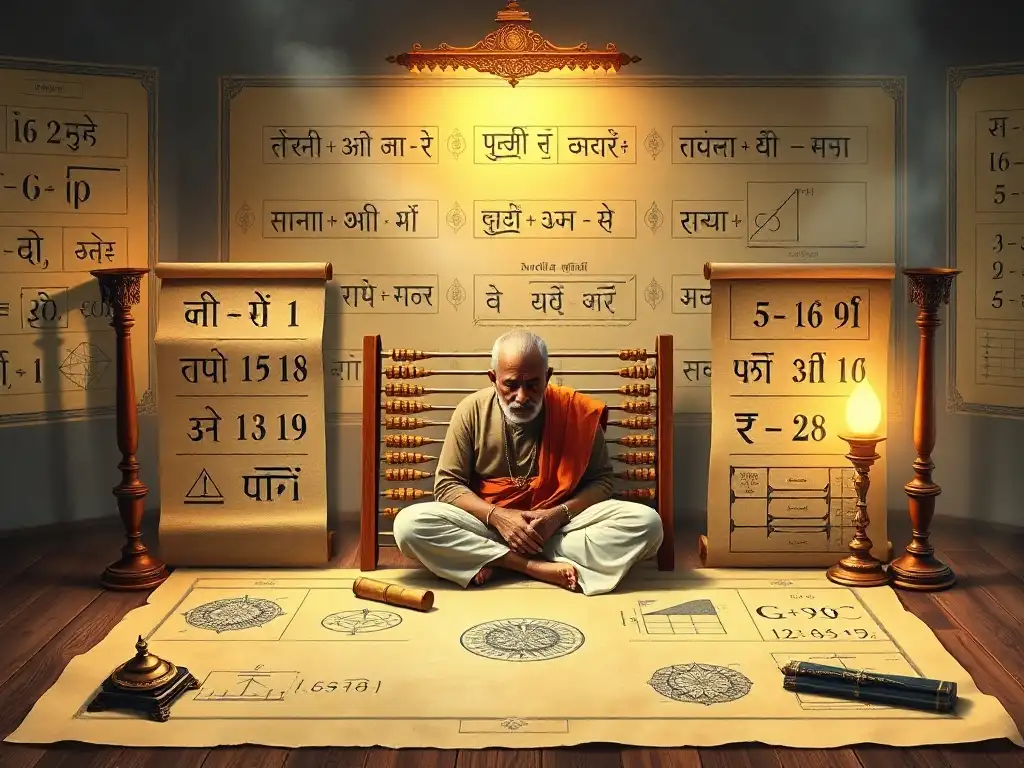
Comparison with Other Ancient Numerical Systems
Ancient Indian numerical systems possess unique features that set them apart from other numerical systems of the ancient world. A few key comparisons can be made with notable ancient systems such as the Babylonian, Egyptian, and Chinese numeral systems.
1. Base System:
- Ancient Indian Numerical Systems: Primarily utilized a base-10 (decimal) system, which is evident in the development of the place-value system.
- Babylonian Numerical System: Employed a base-60 (sexagesimal) system, which complicated arithmetic operations due to the lack of a true zero and a reliance on position for value.
- Egyptian Numerical System: Utilized a non-positional system based on hieroglyphs, making it cumbersome for complex calculations.
- Chinese Numerical System: Initially used a base-10 system, but its representation differed significantly, employing special characters for larger numbers.
2. Zero Concept:
- Ancient Indian Numerical Systems: The concept of zero (shunya) was a groundbreaking innovation, allowing for the representation of nothingness and facilitating operations like addition and subtraction more efficiently.
- Babylonian System: Although they had a symbol for an empty place, it was not a true zero and did not serve the same function.
- Egyptian System: Lacked a concept of zero, which limited their ability to express large numbers or perform complex calculations.
- Chinese System: Did not have a symbol for zero until later adaptations from Indian systems.
3. Notation and Representation:
- Ancient Indian Numerical Systems: Employed a combination of symbols that represented both numbers and their place values, leading to an efficient notation system that evolved into the modern numeral system.
- Babylonian System: Used cuneiform script, which was less efficient for mathematical operations due to its complexity.
- Egyptian System: Used distinct symbols for each number, leading to lengthy representations for larger quantities.
- Chinese System: Initially used counting rods and later developed a written notation that was less streamlined than the Indian system.
Influence on Global Mathematical Practices
The influence of ancient Indian numerical systems on global mathematical practices is profound and multifaceted. Key contributions include:
1. Transmission of Knowledge:
- Ancient Indian mathematicians, such as Aryabhata and Brahmagupta, played significant roles in the dissemination of mathematical knowledge. Their works were translated into Arabic and later into Latin, impacting European mathematics during the Renaissance.
2. The Decimal System:
- The adoption of the decimal system, including the concept of place value and zero, revolutionized mathematics worldwide. This system became the foundation for modern arithmetic, allowing for more straightforward calculation methods.
3. Algebra and Arithmetic:
- The methods developed in ancient India for solving quadratic equations and calculating square and cube roots laid the groundwork for algebra. These practices were later integrated into Islamic mathematics and subsequently into European mathematical traditions.
The enduring legacy of ancient Indian numerical systems continues to shape mathematical thought and practices around the world, demonstrating the pivotal role that these early innovations played in the evolution of mathematics as we know it today.
Impact of Ancient Indian Numerical Systems on Modern Mathematics
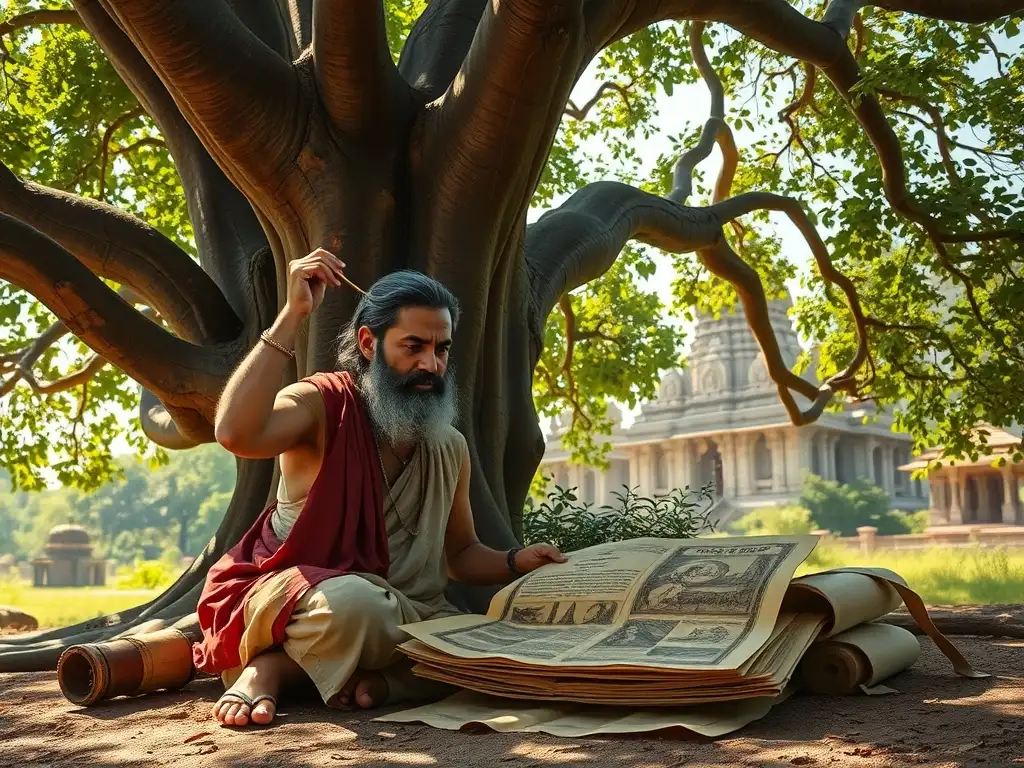
Legacy of Ancient Indian Mathematics in Contemporary Education
The influence of ancient Indian numerical systems permeates contemporary education, particularly in mathematics. One of the most significant contributions is the introduction of the decimal system, which originated in India around the 6th century CE. This system, which utilizes ten symbols (0-9) to represent all numbers, revolutionized mathematics by simplifying calculations and promoting efficiency.
In modern curricula, students are taught the decimal place value system, which is foundational for understanding basic arithmetic operations. The concept of zero as a number, which was first documented in Indian mathematics, allows for the representation of large numbers and facilitates calculations involving subtraction and addition without confusion. This fundamental principle is taught from early education levels and is critical for developing numerical fluency.
Additionally, the use of mathematical texts, such as Aryabhata's Aryabhatiya and Brahmagupta's Brahmasphutasiddhanta, continues to be incorporated into educational syllabi. These texts not only provide historical context but also present advanced mathematical concepts that challenge students to explore deeper mathematical principles.
Continued Relevance of Ancient Concepts in Modern Mathematical Problems
Ancient Indian numerical systems remain relevant in solving contemporary mathematical problems. The methods developed by ancient mathematicians, such as algebraic solutions and geometric interpretations, are still applicable today. For instance, the techniques for solving quadratic equations, as articulated by Brahmagupta, are taught in modern algebra courses and are essential for various scientific applications.
Furthermore, the concept of approximation and the use of infinite series, which were explored by mathematicians like Madhava of Sangamagrama, have laid the groundwork for calculus and mathematical analysis used in modern engineering and physics. The idea of approaching a solution through iterative methods resonates in current computational techniques, such as numerical simulations and algorithm design.
The ancient Indian practice of mathematical astronomy has also found its place in modern-day applications. For example, the positional notation and calculations for celestial movements, as developed by Indian astronomers, are foundational for contemporary astronomical research and satellite technology.
The rich heritage of ancient Indian numerical systems not only reshaped the understanding of mathematics in its time but continues to serve as a vital resource for contemporary mathematical education and problem-solving strategies. The legacy of these systems is a testament to the ingenuity of ancient Indian scholars and their enduring impact on the field of mathematics.
Conclusion: The Lasting Influence of Ancient Indian Numerical Systems

The legacy of ancient Indian numerical systems extends far beyond their historical context, influencing mathematical thought and practices across various cultures and epochs. The innovations introduced by these systems laid the groundwork for modern arithmetic and algebra, showcasing the brilliance of ancient Indian scholars and their profound contributions to mathematics.
Summary of Key Contributions to Mathematics
Ancient Indian numerical systems made several pivotal contributions that reshaped mathematical understanding. Below are some of the most significant:
- The Concept of Zero: The introduction of zero as a number was a groundbreaking advancement. It not only served as a placeholder in positional numeral systems but also represented the idea of 'nothingness.' This concept was crucial for the development of calculus and other mathematical disciplines.
- Positional Value System: The use of a base-10 positional numeral system allowed for the efficient representation and manipulation of large numbers. This system, which we still use today, significantly simplified arithmetic operations.
- Decimal System: The decimal system's emphasis on place value facilitated complex calculations. Ancient mathematicians, like Aryabhata, utilized this system to produce accurate astronomical calculations, influencing both Indian and Islamic scholars.
- Algebraic Innovations: Ancient Indian mathematicians contributed to algebra through methods of solving equations and understanding mathematical relationships. This laid the groundwork for future developments in algebraic theories.
- Mathematical Texts: Works such as the "Bakhshali Manuscript" and "Lilavati" not only documented numerical systems but also provided practical applications of mathematics in everyday life, from trade to astronomy.
Reflections on the Importance of Preserving Ancient Knowledge
The preservation of ancient Indian numerical systems is essential not only for historical accuracy but also for enriching contemporary mathematical understanding. By studying these systems, we gain insight into the innovative thinking and problem-solving approaches of ancient scholars.
Moreover, the revival and appreciation of ancient knowledge can inspire modern education systems to integrate historical perspectives into the curriculum, fostering a deeper understanding of mathematics among students. This holistic approach underscores the notion that mathematics is a cumulative discipline, shaped by the contributions of diverse cultures over millennia.
Ancient Indian numerical systems are not merely relics of the past; they are foundational elements that continue to influence mathematics today. Recognizing and preserving these contributions is vital for honoring the intellectual heritage of ancient civilizations and for inspiring future generations of mathematicians.
Frequently Asked Questions
What are ancient Indian numerical systems?
Ancient Indian numerical systems refer to the counting and mathematical methods developed in India, including the decimal system and the use of zero, which significantly influenced global mathematics.
How did ancient Indian numerical systems influence mathematics?
The contributions from ancient Indian numerical systems reshaped mathematics by introducing concepts such as place value and the concept of zero, which became foundational for modern arithmetic.
What is the significance of the concept of zero in ancient Indian mathematics?
The concept of zero was revolutionary, enabling more complex calculations and a clearer representation of numbers, thus greatly enhancing mathematical understanding in ancient civilizations and beyond.
What civilizations contributed to the development of numerical systems in ancient India?
Key civilizations include the Indus Valley Civilization and later the Gupta Empire, both known for their advancements in mathematics and contributions to the evolution of numerical systems.
How did ancient Indian numerical systems compare to those of other cultures?
Ancient Indian numerical systems were unique, particularly in their use of base ten and the concept of zero, setting them apart from other cultures such as the Babylonians and Greeks, who used different counting methods.
Final Reflection: The Enduring Legacy of Ancient Indian Numerical Systems
The exploration of ancient Indian numerical systems is not merely a historical inquiry; it is a testament to the profound impact these systems have on our modern understanding of mathematics. Today, as we navigate a world increasingly driven by technology and data, the foundational concepts introduced by ancient Indian mathematicians resonate more than ever. The elegance and sophistication of these numerical systems remind us that the pursuit of knowledge is a timeless endeavor, bridging the past with the present.
Cultural and social landscapes have been significantly shaped by the principles established in ancient Indian mathematics. The contributions of scholars like Aryabhata and Brahmagupta have laid the groundwork for mathematical concepts that are still in use today, influencing everything from computer science to engineering. Their work exemplifies the idea that knowledge transcends time and geography. Mathematics is the language with which God has written the universe.
— Galileo Galilei. This quote encapsulates the essence of how ancient Indian numerical systems have contributed to a universal language of mathematics, fostering a deeper understanding of the world around us.
As you reflect on the insights gained from this exploration, consider how the principles of ancient Indian numerical systems can inspire your own journey in mathematics and beyond. Embrace the curiosity that drives inquiry and innovation, and let the wisdom of the past guide your future endeavors. Whether you are a student, educator, or simply a lifelong learner, take a moment to appreciate the rich tapestry of knowledge that has shaped our understanding of mathematics and challenge yourself to contribute to this ongoing legacy.
Unveil the Secrets of Ancient Numbers!
Thank you for exploring the fascinating world of Ancient Indian numerical systems with us! By delving into the rich mathematical heritage of India, you’ve unlocked a deeper understanding of how these early concepts continue to influence modern mathematics.
Now, it's time to take action and further your journey into this captivating topic:
- Dive deeper: Investigate the significant mathematical advancements from Ancient India that contributed to global knowledge—consider focusing on renowned mathematicians such as Aryabhata and Brahmagupta.
- Share the knowledge: Discuss your newfound insights with friends or on social media to spark conversations about the importance of history in shaping our understanding of mathematics.
- Join the community: Subscribe to our newsletter for more intriguing articles about Ancient Indian mathematics, where you can connect with fellow enthusiasts and expand your knowledge!
What intriguing aspect of Ancient Indian mathematics will you explore next, and how do you think it can enhance your understanding of modern mathematical concepts?