
Courts of Ancient India: The Pillars of Justice in Early Civilizations

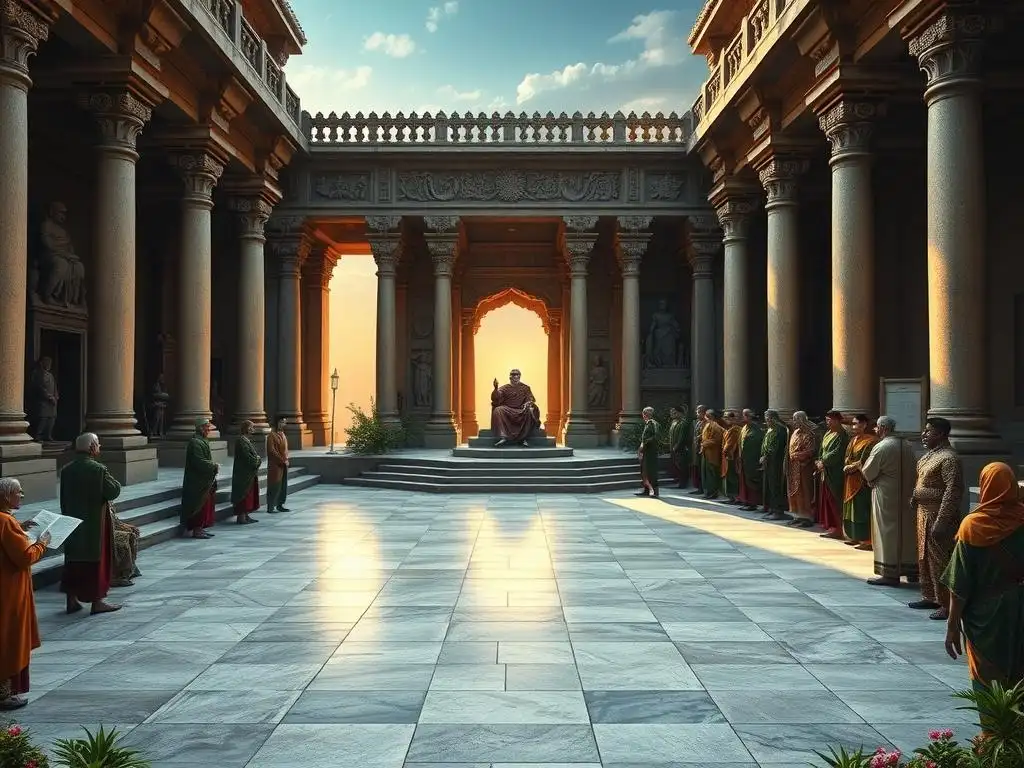
Welcome to Ancient India History, where we embark on a fascinating journey through the rich tapestry of India’s past. In our featured article, "Courts of Ancient India: The Pillars of Justice in Early Civilizations," we delve into the intricate legal systems that governed societies from the Indus Valley to the Gupta Empire. Discover how justice was administered in ancient Indian courts, and uncover the profound impact these early legal frameworks had on culture and society. Join us as we unravel the mysteries of ancient jurisprudence and explore the legacies that continue to shape our understanding of law today.
- Introduction to Ancient Indian Courts and Justice
- Historical Context of Ancient Indian Courts
- Types of Courts in Ancient India
- Key Features of Ancient Indian Courts
- Prominent Legal Texts and Codes
- Case Studies of Notable Ancient Indian Legal Cases
- Comparison of Ancient Indian Courts with Contemporary Legal Systems
- Conclusion: The Legacy of Ancient Indian Courts and Justice
- Frequently Asked Questions
- Final Reflection: The Enduring Legacy of Ancient Indian Courts and Justice
- Unveil the Legacy of Justice: Take Action Today!
Introduction to Ancient Indian Courts and Justice
The concept of justice has been an integral part of human civilization, shaping societies and their legal frameworks throughout history. In ancient India, courts served as the cornerstone of judicial systems, reflecting the values, norms, and cultural practices of the time. From the sophisticated legal structures of the Indus Valley Civilization to the nuanced judicial practices during the Gupta Empire, ancient Indian courts played a vital role in maintaining order and resolving disputes. This article delves into the multifaceted nature of ancient Indian courts and justice, exploring their evolution, significance, and contributions to the broader tapestry of legal systems.
Overview of Judicial Systems in Ancient India
Ancient Indian judicial systems were complex and varied considerably across different regions and time periods. The foundation of these systems can be traced back to the Vedic texts, where the principles of dharma (righteousness) and karma (action) laid the groundwork for justice.
- Key Features of Judicial Systems:
- Decentralization: Local village assemblies, known as panchayats, often handled minor disputes, allowing for a community-based approach to justice.
- Formal Courts: Larger towns and cities established formal courts, presided over by appointed judges, known as rajukas or dharma-adhikaranas, who were responsible for interpreting laws and delivering justice.
- Legal Texts: Ancient texts like the Manusmriti and Yajnavalkya Smriti provided guidelines on legal procedures, rights, and duties, thereby formalizing judicial practices.
The structure and function of these courts varied, but they all aimed to uphold social order and provide equitable resolutions to conflicts.
Significance of Courts in Early Civilizations
The courts of ancient India were not merely venues for legal disputes; they were pivotal in shaping societal norms and values. Their significance can be highlighted in several key areas:
- Social Order and Stability: By addressing grievances and conflicts, courts played a crucial role in maintaining harmony within communities. This contributed to the stability of early civilizations and fostered trust among citizens.
- Cultural Reflection: The decisions made in these courts often reflected the prevailing cultural and ethical values of the society. They were instrumental in codifying practices and ensuring adherence to societal norms.
- Legal Evolution: The evolution of ancient Indian courts influenced subsequent legal systems and practices. Many principles, such as the importance of evidence and the right to a fair hearing, have their roots in these early judicial systems.
- Inclusivity in Justice: While there were limitations, some courts sought to include diverse voices in the judicial process, highlighting the progressive aspects of ancient Indian society.
The courts of ancient India were fundamental in establishing a framework for justice that resonated throughout the ages, influencing not only their contemporaries but also future generations. Understanding these systems provides invaluable insight into the historical context of legal practices and societal values in ancient Indian civilizations.
Historical Context of Ancient Indian Courts

The Evolution of Legal Practices in Ancient India
The evolution of legal practices in ancient India can be traced back to the early civilizations, particularly during the Indus Valley period (approximately 2500–1900 BCE), where evidence suggests the existence of some form of dispute resolution mechanisms. Archaeological findings, such as seals and inscriptions, indicate that a sophisticated society engaged in trade and commerce required regulations to manage conflicts and ensure fairness.
As we move towards the Vedic period (1500–500 BCE), the legal framework began to be more structured, influenced heavily by the Vedas, which included not only spiritual teachings but also guidelines for societal conduct. The Dharma Shastras, particularly the Manusmriti, emerged as significant texts that laid down the principles of justice, social order, and legal responsibilities. These texts addressed various aspects of law, including family matters, property rights, and criminal offenses.
Key features of the legal practices during this period included:
- Customary Laws: Local customs played a crucial role in the administration of justice, often superseding codified laws.
- Role of Elders and Community Leaders: Disputes were often settled by local elders or village leaders, who acted as mediators and judges.
- Oral Traditions: Legal proceedings were predominantly oral, with a focus on testimonies rather than written evidence.
As time progressed into the Maurya Empire (322–185 BCE), a more centralized judicial system emerged. King Ashoka, in particular, advocated for a justice system based on ethical principles, promoting the idea of Dharma, which emphasized fairness and morality in governance. The establishment of courts with appointed judges marked a significant shift towards a more formal judicial structure.
Influence of Ancient Indian Philosophies on Justice
Ancient Indian philosophies, particularly those rooted in Hinduism and Buddhism, significantly shaped the concept of justice and the functioning of courts in ancient India. The philosophical underpinnings of justice were deeply intertwined with spiritual beliefs and societal values, leading to a unique legal culture.
- Hindu Philosophy and Justice:
- The concept of Dharma (duty, law, righteousness) was central to Hindu philosophy. It dictated not only individual behavior but also the administration of justice. Courts were expected to uphold Dharma, ensuring that judgments were made in alignment with moral and ethical principles.
- The idea of Karma (action and consequence) also influenced legal practices, as individuals were held accountable for their actions, both in this life and in future reincarnations.
- Buddhist Contributions:
- Buddhism introduced ideas of compassion and non-violence into the legal framework. The emphasis was on restorative justice rather than punitive measures. This philosophical shift encouraged mediatory practices and reconciliation over strict penalties.
- Texts such as the Dhammapada provided ethical guidelines that influenced the conduct of judicial proceedings, promoting fairness and the well-being of all parties involved.
- Integration of Diverse Philosophies:
- The syncretism of various philosophical ideas, including Jainism and the teachings of local traditions, enriched the landscape of justice. This blending of ideologies facilitated a more holistic approach to legal matters, emphasizing inclusive and equitable justice systems.
The courts of ancient India were not merely institutions of law; they were reflections of the rich tapestry of philosophical thought, cultural practices, and societal values. The evolution of legal practices and the influence of ancient philosophies on justice laid the groundwork for the complex legal systems that would follow in later Indian history.
Types of Courts in Ancient India

Royal Courts: The Apex of Justice
In ancient India, royal courts represented the pinnacle of the judicial system, reflecting the authority and power of the ruling monarch. These courts were often presided over by the king himself or a high-ranking official appointed by the king, such as a minister. The decisions made in royal courts were final and binding, establishing a precedent for justice throughout the realm.
Key Features of Royal Courts:
- Authority: Royal courts had the ultimate authority to interpret laws, resolve disputes, and enforce justice. The king's word was law, and his decisions were considered divinely inspired.
- Structure: Typically, royal courts were structured hierarchically, with various levels of officials, including judges, clerks, and advisors, assisting in the legal process.
- Documentation: Cases were documented meticulously, often inscribed on palm leaves or stone tablets, ensuring a historical record of judicial proceedings.
The royal courts served not only as a venue for justice but also as a means for the king to demonstrate his benevolence and maintain social order. Many inscriptions from this period highlight the king's role in upholding dharma (righteousness) through fair judgment.
Village Courts: Community-Based Justice Systems
In contrast to the centralized royal courts, village courts played a crucial role in administering justice at the grassroots level. These courts were often informal, consisting of community elders or respected individuals who were tasked with resolving disputes among villagers.
Characteristics of Village Courts:
- Local Authority: Village courts operated on the principle of local governance, allowing communities to address their unique issues without interference from higher authorities.
- Consensus-Based Decisions: Decisions in village courts were often reached through consensus, reflecting the community's values and customs. This participatory approach fostered a sense of ownership over justice among villagers.
- Flexibility and Adaptability: The informal nature of village courts allowed for flexibility in procedures, enabling them to adapt to the specific context and needs of the community.
Village courts exemplified the importance of social harmony and collective responsibility in ancient Indian society. They were instrumental in resolving conflicts, maintaining order, and reinforcing community bonds.
Religious Courts: Intersection of Law and Religion
Religious courts in ancient India were integral to the judicial landscape, as they intertwined legal matters with spiritual beliefs. These courts were often governed by religious leaders or scholars, who interpreted sacred texts to resolve disputes.
Aspects of Religious Courts:
- Divine Authority: Decisions made in religious courts were believed to be guided by divine principles, which added a layer of legitimacy to their rulings. The outcomes were often viewed as reflections of cosmic order.
- Focus on Morality: Unlike secular courts, religious courts emphasized moral and ethical considerations in their judgments, often drawing from texts like the Manusmriti or Dharmashastras, which provided guidelines for righteous living.
- Dispute Resolution: Common cases included marriage disputes, inheritance issues, and offenses against religious norms. The resolution process aimed to restore not only justice but also spiritual harmony within the community.
Religious courts were vital in shaping the moral compass of society, highlighting the deep connection between law and religion in ancient Indian civilizations. They played a crucial role in maintaining societal norms and fostering a sense of spirituality intertwined with daily life.
Key Features of Ancient Indian Courts

Procedures and Protocols in Ancient Indian Judicial Practices
Ancient Indian courts were characterized by a complex set of procedures and protocols designed to uphold justice and ensure fair trials. These judicial practices varied across different regions and periods, but several core elements remained consistent.
- Court Assemblies: Courts were typically convened in public spaces, often under trees or in open areas, allowing for community participation. This helped ensure transparency and accountability in judicial proceedings.
- Legal Codes: The Manusmriti and other texts laid down specific rules and guidelines that governed legal practices. These codes addressed various aspects of law, including civil disputes, criminal offenses, and the roles of different parties involved in a trial.
- Formal Procedures: Legal proceedings followed a structured process:
- Filing a Complaint: The aggrieved party would present their case before the court, often with the assistance of a legal practitioner.
- Summoning Witnesses: Witnesses were summoned to provide their testimonies, and their credibility was crucial for the case's outcome.
- Presentation of Evidence: Both parties were allowed to present evidence, which could include documents, witness statements, and physical proof.
- Community Involvement: In many instances, the community played a vital role in the judicial process. Local leaders or elders often acted as mediators, promoting reconciliation before formal court proceedings commenced.
Through these structured procedures, ancient Indian courts aimed to maintain justice and order, reflecting the societal values of the time.
Role of Judges and Legal Practitioners in Ancient Courts
Judges and legal practitioners held significant responsibilities in ancient Indian courts, shaping the course of justice through their expertise and authority.
- Judges' Responsibilities: Judges, often referred to as Dharmasthas, were tasked with interpreting laws and delivering verdicts. Their roles included:
- Impartiality: They were expected to be unbiased and fair, weighing evidence and arguments from both sides.
- Legal Interpretation: Judges had the authority to interpret complex legal codes, ensuring that justice was served according to the established laws.
- Dispute Resolution: They also facilitated negotiations and mediation, helping parties reach amicable settlements when possible.
- Legal Practitioners' Roles: Legal practitioners, known as Vidyadhara, played a crucial role in guiding litigants through the judicial process. Their duties included:
- Advising Clients: They provided counsel on legal rights and obligations, helping clients understand the intricacies of the law.
- Representation in Court: Legal practitioners represented their clients during trials, presenting arguments and evidence effectively.
- Drafting Legal Documents: They also prepared necessary legal documents, such as complaints and appeals, ensuring compliance with procedural requirements.
- Training and Knowledge: Both judges and legal practitioners were often well-educated in law and philosophy, drawing from ancient texts and traditions. This extensive knowledge equipped them to handle diverse legal matters and ensure justice was administered appropriately.
The influence of judges and legal practitioners in ancient Indian courts was pivotal in establishing a legal framework that balanced authority with fairness.
Evidence and Testimonies: Standards of Proof in Ancient India
The standards of proof in ancient Indian courts were meticulously defined, emphasizing the importance of credible evidence and testimonies in judicial proceedings.
- Types of Evidence: Ancient Indian courts recognized various forms of evidence, including:
- Oral Testimony: The testimonies of witnesses were paramount. The credibility of witnesses was assessed based on their character, reputation, and relationship to the parties involved.
- Documentary Evidence: Written documents, such as contracts and agreements, played a crucial role in substantiating claims.
- Physical Evidence: Material evidence, such as objects or artifacts, could also be presented to support a case.
- Standards of Proof: The legal system emphasized the need for substantial evidence to establish guilt or liability. The concepts of "sambhavana" (probability) and "praman" (proof) were vital in evaluating the strength of the evidence presented.
- Witness Examination: Witnesses were subjected to thorough examination, where their statements were scrutinized for consistency and reliability. The process often involved:
- Cross-Examination: Adversarial questioning aimed to expose inconsistencies or biases in witness testimonies.
- Character Assessment: The character and background of witnesses were evaluated to ascertain their credibility.
- Judicial Discretion: Judges had the discretion to determine the weight of the evidence based on its relevance and reliability. This flexibility allowed for a nuanced approach to justice, accommodating the complexities of each case.
The standards of proof in ancient Indian courts were rooted in a combination of rigorous procedures and a deep understanding of human behavior, striving for a balanced approach to justice.
Prominent Legal Texts and Codes

The foundation of ancient Indian courts and justice can be traced back to a rich corpus of legal texts that not only guided judicial practices but also shaped the moral and ethical framework of society. These texts served as pillars for the administration of justice, influencing the functioning of courts and the perception of law in ancient India.
Manusmriti: The Foundation of Ancient Indian Law
The Manusmriti, often referred to as the "Laws of Manu," is one of the earliest and most significant texts in the context of ancient Indian law. Compiled between 200 BCE and 200 CE, this text encompasses a wide array of topics, including social order, morality, and legal principles.
- Structure and Content: The Manusmriti is divided into twelve chapters, addressing various aspects of law and social norms. It outlines the duties and responsibilities of individuals based on their caste (varna) and stage of life (ashrama).
- Principles of Justice: The text emphasizes the importance of dharma (righteousness) in the administration of justice. It promotes the idea that laws should be in harmony with moral and ethical standards, ensuring that justice serves the greater good of society.
- Judicial Procedures: The Manusmriti details judicial procedures and the roles of judges, specifying qualifications and ethical obligations. It also includes provisions for penalties and compensations, reflecting a structured approach to justice.
- Impact on Society: The influence of the Manusmriti extended beyond legal practices; it shaped societal norms and values, reinforcing the hierarchical structure of ancient Indian society.
Dharmashastras: Guidelines for Justice and Morality
The Dharmashastras are a collection of ancient texts that elaborate on the principles of dharma, guiding both personal conduct and judicial practices. These texts, which include the Manusmriti as well as others like the Yajnavalkya Smriti, serve as critical resources for understanding ancient Indian courts and justice.
- Dharma and its Importance: Central to the Dharmashastras is the concept of dharma, which encompasses duty, morality, and law. The texts argue that adherence to dharma is essential for the well-being of individuals and society.
- Legal Principles: The Dharmashastras outline various legal principles such as the rights of individuals, property laws, and family law, including marriage and inheritance. These principles were essential for maintaining social order.
- Judicial Authority: The texts also define the authority of judges and the legal responsibilities of individuals within society. They stress the need for impartiality and fairness in legal proceedings, highlighting the moral obligations of those in positions of power.
- Cultural Legacy: The Dharmashastras have left a lasting legacy on Indian legal thought and continue to influence contemporary discussions about law and morality in India.
Arthashastra: Political Philosophy and Legal Administration
The Arthashastra, attributed to the ancient scholar Kautilya (Chanakya), offers a unique perspective on the intersection of politics, economics, and law in ancient India. Written around the 4th century BCE, it provides insights into the governance and legal administration of the Maurya Empire.
- Political Framework: The Arthashastra presents a pragmatic approach to governance, advocating for the use of law as a tool for political stability and economic prosperity. It emphasizes the importance of a strong state to maintain order and justice.
- Legal Administration: Kautilya discusses the organization of courts and the appointment of judges, stressing the importance of legal training and expertise. He provides detailed guidelines on how to effectively administer justice and manage legal disputes.
- Strategies for Justice: The text outlines various strategies for conflict resolution, including negotiation and diplomacy, showcasing a sophisticated understanding of human behavior and societal dynamics.
- Influence on Governance: The principles laid out in the Arthashastra have had a profound impact on Indian political thought, influencing not only ancient governance but also the evolution of legal systems in later periods.
The prominent legal texts and codes of ancient India, including the Manusmriti, Dharmashastras, and Arthashastra, collectively laid the groundwork for the development of courts and the administration of justice. Their enduring influence continues to resonate in contemporary legal practices and ethical considerations in India.
Case Studies of Notable Ancient Indian Legal Cases

In the context of ancient Indian courts and justice, numerous cases stand out as pivotal in shaping the legal landscape of the time. These cases not only reflect the intricacies of judicial practices but also highlight the moral and ethical standards upheld within ancient societies. Below are some significant case studies that illustrate the functioning of ancient Indian legal systems.
Landmark Judgments in Ancient Indian Courts
One of the most notable aspects of ancient Indian courts was their ability to adapt to the complexities of societal norms and individual circumstances. Landmark judgments emerged from various texts and historical accounts, providing insight into the principles of justice that prevailed.
-
The Case of King Harishchandra:
This legendary king is often cited as an epitome of truth and justice. According to the narratives, King Harishchandra was compelled to sell his kingdom and even his wife and son to uphold his vow of truthfulness. The moral of this tale emphasizes the significance of integrity in judicial proceedings. His unwavering commitment to justice set a precedent for future rulers.
-
The Trial of Chanakya and the Nandas:
Chanakya, a renowned philosopher and strategist, played a crucial role in the downfall of the Nanda Dynasty. His cunning legal maneuvers in the court are documented in Kautilya's Arthashastra. This case exemplifies the use of legal acumen to challenge tyranny, showcasing the power dynamics between rulers and their subjects.
-
The Dispute of the Brahmin and the Kshatriya:
A fascinating account from the Manusmriti narrates a dispute between a Brahmin and a Kshatriya over property rights. The resolution indicated that the Kshatriya was to compensate the Brahmin, thus highlighting the court's role in balancing caste dynamics while ensuring justice was served.
-
Judgment by Panchayat:
In many ancient Indian villages, local disputes were settled by a panchayat (a council of elders). One notable case involved a woman who claimed her husband had abandoned her. The panchayat ruled in her favor, emphasizing community involvement in legal decisions and the importance of social justice.
These landmark judgments not only established precedents but also reflected the cultural ethos of ancient Indian societies, underscoring the courts' role in maintaining order and fairness.
The Role of Kings in Upholding Justice
Kings in ancient India were not merely rulers; they were seen as the ultimate arbiters of justice. Their role in the judicial system was paramount, as they were expected to uphold dharma (moral law) and ensure that justice prevailed for their subjects.
-
Divine Right and Responsibility:
Kings were often viewed as divinely appointed figures responsible for maintaining cosmic order (Rta). This belief reinforced their authority in judicial matters. They were expected to act as protectors of the weak and enforcers of law.
-
Judicial Oversight:
Many ancient texts, such as the Arthashastra, outline the king's responsibilities in overseeing judicial processes. The king was not only a participant but also a supervisor of legal proceedings, ensuring that justice was administered fairly and efficiently.
-
Direct Involvement in Cases:
Historical accounts suggest that kings personally intervened in significant cases, especially those involving moral dilemmas or widespread societal concern. Their direct involvement reinforced the perception of justice as a royal prerogative.
-
Establishment of Legal Codes:
Kings played a pivotal role in codifying laws. The Manusmriti and other Dharmashastras were often endorsed by kings, providing a framework for legal practices. This codification helped standardize justice across vast territories.
The role of kings in ancient Indian courts was crucial in shaping the legal framework and ensuring that justice was not a mere concept but a practiced reality within their realms. The intricate relationship between kingship and justice illustrates how governance and legal systems were intertwined in ancient Indian society.
Comparison of Ancient Indian Courts with Contemporary Legal Systems

Similarities and Differences in Judicial Practices
The judicial practices of ancient Indian courts exhibit both similarities and differences when compared to contemporary legal systems. One of the most notable similarities is the emphasis on fairness and justice. Ancient Indian legal texts, such as the Manusmriti, laid down principles that aimed to ensure a just society. These texts advocated for:
- Equality before the Law: Just as modern legal systems strive to treat all individuals equally, ancient laws emphasized that all citizens, regardless of caste or status, should have access to justice.
- Due Process: Ancient courts often followed procedures that included gathering evidence and witness testimonies, resembling the procedural fairness observed in today's judicial practices.
However, there are key differences that set ancient Indian courts apart:
- Informal Nature: Many ancient disputes were resolved in village assemblies (panchayats) or local councils, where decisions were often based on communal consensus rather than formal legal frameworks.
- Role of Religion: Ancient Indian courts were heavily influenced by religious texts and customs. The integration of Dharma (moral law) into legal decisions differs significantly from the secular nature of most contemporary legal systems.
Influence of Ancient Indian Justice on Modern Legal Frameworks
The foundations of ancient Indian courts have left a lasting impact on modern legal systems, particularly in South Asia. The principles and practices established in ancient times continue to resonate in various aspects of contemporary law. Key areas of influence include:
- Legal Concepts: Many modern legal concepts, such as restitution and compensation for wrongs, can be traced back to ancient Indian jurisprudence. For instance, the idea of dandana (punishment) in ancient texts parallels modern penal codes.
- Mediation and Arbitration: The ancient practice of dispute resolution through mediation and arbitration has persisted into modern legal frameworks, particularly in alternative dispute resolution mechanisms. This reflects a continuous emphasis on resolving conflicts amicably without resorting to formal litigation.
- Community Involvement: The role of local councils in ancient India has evolved but is still evident in contemporary restorative justice practices, where community input is valued in the judicial process.
While ancient Indian courts and contemporary legal systems exhibit both similarities and differences in their judicial practices, the influence of ancient justice principles remains significant in shaping modern legal frameworks. The rich heritage of ancient Indian justice continues to inform and inspire legal thought and practice today.
Conclusion: The Legacy of Ancient Indian Courts and Justice
The legacy of ancient Indian courts and justice systems is profound, shaping not only the legal frameworks of subsequent eras but also influencing modern judicial practices in India and beyond. The intricate structures and philosophies developed during the period of ancient Indian civilizations laid the groundwork for a nuanced understanding of justice, equity, and societal order.
Lasting Impact on Modern Indian Judiciary
Ancient Indian courts established foundational principles that continue to resonate in contemporary law. Key aspects include:
- Procedural Fairness: The emphasis on fair hearings and the right to present one’s case is reminiscent of the procedures practiced in ancient courts. This principle is deeply embedded in the modern Indian judiciary, ensuring that justice is accessible to all.
- Codification of Laws: The various ancient law codes, such as the Manusmriti, provided a structured approach to legal principles that informed later codifications. Today, India operates under a codified legal system that echoes these early practices.
- Restorative Justice: Unlike punitive systems, ancient Indian courts often favored resolutions that restored social harmony. This restorative approach is increasingly relevant in modern legal systems, advocating for mediation and reconciliation.
- Inclusivity in Justice: Ancient courts, although not perfect, made strides towards inclusivity by allowing representation from different societal strata. Modern Indian law continues to strive for inclusivity, addressing the rights of marginalized communities.
The influence of ancient Indian courts extends beyond legal principles; it encompasses the ethical dimensions of justice, promoting a balance between individual rights and societal responsibilities. The philosophical underpinnings of justice from ancient texts still guide contemporary discussions on law and morality.
Reflection on the Importance of Justice in Civilization
Justice has always been a cornerstone of civilization, serving as a mechanism to maintain order, resolve disputes, and protect the rights of individuals. In ancient India, the courts played a crucial role in:
- Upholding Moral Values: The courts often acted as arbiters of moral conduct, emphasizing the importance of dharma (righteousness). This role cultivated a societal framework where justice was not merely a legal concept but a moral obligation.
- Promoting Social Cohesion: By resolving conflicts and addressing grievances, ancient courts contributed to social stability. The communal aspect of justice promoted harmony, reducing the likelihood of revenge and retaliation.
- Fostering Development: A stable system of justice encouraged trade, commerce, and cultural exchange. The assurance that disputes could be fairly resolved led to economic growth and societal progress.
- Influencing Governance: The principles of justice established in ancient courts influenced the governance models of various kingdoms. Rulers who prioritized justice often gained legitimacy and respect from their subjects.
The courts of ancient India were not merely judicial institutions; they were vital components of a complex societal fabric that emphasized justice as a fundamental human right. Their legacy continues to inspire and guide contemporary judicial practices, underscoring the enduring significance of justice in human civilization. As we reflect on these ancient practices, it becomes evident that the principles of fairness, equity, and moral responsibility remain relevant in our pursuit of a just society today.
Frequently Asked Questions
What were the main functions of ancient Indian courts?
Ancient Indian courts served as dispute resolution forums, where judges interpreted law and ensured justice was upheld in society.
Who were the judges in ancient Indian courts?
Judges, often referred to as Dharmasthas or Rajukas, were typically knowledgeable in law and religion, ensuring they could make fair decisions based on custom and tradition.
How did ancient Indian courts handle criminal cases?
Criminal cases were addressed through a combination of evidence, witness testimony, and customary laws, allowing for a comprehensive examination of the facts before reaching a verdict.
Were there any appeal processes in ancient Indian justice systems?
Yes, ancient Indian legal systems often provided for an appeal process, enabling parties to seek higher authorities if they believed a judgment was unjust.
How did the concept of justice in ancient India compare to today's systems?
The concept of justice in ancient India emphasized moral and ethical considerations, while modern systems focus more on legal frameworks and codified laws.
Final Reflection: The Enduring Legacy of Ancient Indian Courts and Justice
The exploration of ancient Indian courts and justice reveals a profound connection between the legal systems of the past and the principles that govern our societies today. As we navigate a world increasingly defined by legal complexities and social justice movements, the foundational concepts established by these early courts serve as a reminder of the timeless quest for fairness and equity. The wisdom embedded in these ancient practices continues to resonate, urging us to reflect on the evolution of justice and its critical role in maintaining societal harmony.
The influence of ancient Indian courts extends far beyond their historical context; they have shaped the cultural and social landscape of modern India and beyond. These courts were not merely institutions of law but were also reflections of societal values and ethics. They laid the groundwork for a justice system that emphasized the importance of community involvement and moral responsibility. As Mahatma Gandhi once said, An unjust law is itself a species of violence.
This sentiment echoes the need for justice systems to evolve in alignment with the ethical standards of the society they serve, a principle that remains ever relevant in our contemporary discourse on justice.
As we conclude this exploration, I invite you to reflect on the lessons learned from the courts of ancient India and consider how they can inform our actions today. How can we embody the principles of fairness, equity, and community responsibility in our own lives? Let us strive to be advocates for justice, drawing inspiration from the past to create a more just and equitable future for all. Your engagement in this journey is crucial, as each of us has the power to contribute to the ongoing narrative of justice in our communities.
Unveil the Legacy of Justice: Take Action Today!
Thank you for diving into the fascinating world of Ancient Indian Courts! You've explored how these systems shaped early civilizations and established pillars of justice that resonate even today. Now, let’s transform that knowledge into action!
Here’s how you can engage deeper with this remarkable heritage:
- Explore Local History: Visit your local museum or library to discover more about ancient legal systems and their impacts on modern law.
- Share Your Insights: Discuss what you’ve learned with friends or on social media. Start a conversation about how historical justice systems influence contemporary practices.
- Join a Community: Connect with history enthusiasts or participate in online forums focused on ancient civilizations to broaden your understanding and share perspectives.
What aspect of ancient justice intrigues you the most, and how do you think it shapes our current legal frameworks?