
How the Maurya Empire Balanced Tradition and Innovation in Governance


Welcome to Ancient India History, where we embark on a fascinating journey through the vibrant tapestry of India’s past. Here, we delve into the Maurya Empire's governance innovations, a remarkable period that masterfully blended tradition with progressive ideas. What secrets did the Mauryan rulers unveil to create a system that stood the test of time? Join us as we uncover the intricate strategies and philosophies that shaped one of ancient history's most influential civilizations, inviting you to explore the interplay between legacy and innovation. Prepare to be captivated by the stories that await you!
- Introduction to the Maurya Empire Governance Innovations
- The Historical Context of the Maurya Empire
- Traditional Governance Structures in the Maurya Empire
- Innovations in Maurya Empire Governance
- Balancing Tradition and Innovation in Governance
- The Role of Religion and Philosophy in Governance Innovations
- Legacy of Maurya Empire Governance Innovations
- Conclusion: The Maurya Empire’s Unique Governance Approach
- References and Further Reading
-
Frequently Asked Questions
- What were some key governance innovations of the Maurya Empire?
- How did the Maurya Empire maintain balance between tradition and innovation?
- Who was the most notable ruler of the Maurya Empire known for governance innovations?
- What role did the Kautilya's Arthashastra play in governance innovations?
- How did the Maurya Empire influence later Indian governance?
- Final Reflection: The Timeless Dance of Tradition and Innovation in Governance
- Unveil the Secrets of Effective Governance!
Introduction to the Maurya Empire Governance Innovations
The Maurya Empire, one of the most influential and powerful empires in ancient India, serves as a fascinating study in the realm of governance. This period, which spanned from approximately 322 to 185 BCE, was marked by significant achievements in administration and statecraft that integrated traditional practices with innovative approaches.
The governance innovations of the Maurya Empire not only facilitated the efficient management of a vast and diverse territory but also set a precedent for future Indian administrations. As we explore how the Maurya Empire balanced tradition and innovation in governance, we will delve into the empire's historical context, the significance of its governance strategies, and the lasting impact these innovations had on subsequent civilizations.
Overview of the Maurya Empire
The Maurya Empire was founded by Chandragupta Maurya, who united the fragmented territories of northern India. Under his rule, and later under the famed Ashoka the Great, the empire expanded to encompass a vast region that included parts of present-day Afghanistan, Bangladesh, and India. The Maurya Empire was characterized by its centralized government, a sophisticated bureaucracy, and an extensive network of communication and trade.
Key features of the Maurya Empire include:
- Centralized Authority: The emperor held supreme power, supported by a council of ministers and various provincial governors.
- Bureaucratic Structure: A hierarchical administrative system was established to ensure efficient governance across the empire.
- Legal Framework: The Mauryan rulers implemented codified laws, promoting justice and order within society.
This blend of strong leadership and innovative governance strategies allowed the Maurya Empire to thrive and maintain stability for centuries.
Importance of Governance in Ancient Civilizations
Governance has always played a critical role in the development and sustainability of ancient civilizations. In the case of the Maurya Empire, effective governance was essential for maintaining order, facilitating trade, and promoting cultural integration among diverse populations. The governance innovations introduced during this era not only improved administrative efficiency but also fostered a sense of unity and identity among the empire's subjects.
Some of the key aspects of governance in ancient civilizations include:
- Law and Order: Establishing a legal system to uphold justice and protect citizens' rights.
- Infrastructure Development: Investing in roads, irrigation, and public works to enhance economic activities and connectivity.
- Cultural Integration: Promoting shared values and practices to unify various ethnic and cultural groups within the empire.
By understanding the importance of governance in ancient civilizations, we can appreciate how the Maurya Empire's innovations contributed to its success and enduring legacy.
Purpose of the Article: Balancing Tradition and Innovation
The purpose of this article is to explore the dynamic interplay between tradition and innovation in the governance of the Maurya Empire. We will examine specific governance innovations that emerged during this period and how they were influenced by longstanding traditions. By analyzing these elements, we aim to uncover the strategies that allowed the Maurya Empire to effectively manage a diverse territory while preserving its cultural heritage.
Through this exploration, readers will gain insights into:
- The specific governance innovations implemented by the Maurya rulers.
- How these innovations were rooted in traditional practices.
- The impact of Mauryan governance on subsequent Indian administrations and its relevance in the study of ancient civilizations.
In doing so, we hope to highlight the sophisticated nature of Maurya Empire governance and its significance in the broader context of ancient Indian history.
The Historical Context of the Maurya Empire

The Maurya Empire, which flourished from 322 to 185 BCE, marked a significant turning point in the governance and administration of ancient India. It emerged in the wake of the fragmented political landscape following the decline of the Nanda Empire. The rise of the Maurya Empire is attributed to a combination of strategic leadership, military prowess, and a vision for unifying the Indian subcontinent under a centralized authority.
The empire's establishment also coincided with the spread of trade networks, which facilitated economic prosperity and cultural exchanges across vast regions. This environment provided an ideal backdrop for governance innovations that would shape the administrative practices of the empire. The Maurya Empire is often celebrated for its sophisticated governance structures, which balanced traditional Indian practices with innovative strategies tailored to address the needs of a diverse population.
Rise of the Maurya Empire
The rise of the Maurya Empire can be traced back to Chandragupta Maurya, who capitalized on the political instability of the time. With the guidance of his mentor, Chanakya (also known as Kautilya), Chandragupta developed a formidable army and began his campaign against the Nanda rulers. His successful conquest of the Nanda Empire in 322 BCE laid the foundation for what would become one of the largest empires in ancient India.
Chandragupta adopted various strategies to consolidate power. He implemented an efficient taxation system that ensured a steady revenue stream for the empire while also promoting agricultural development. His reign set the stage for the subsequent innovations in governance that would be further developed under his grandson, Ashoka the Great.
Key Figures in Maurya Governance
The governance of the Maurya Empire was significantly influenced by its key figures, whose contributions shaped its policies and administrative practices. Among these, Chandragupta Maurya and Ashoka the Great stand out as pivotal leaders whose legacies continue to resonate in discussions of ancient Indian governance.
Chandragupta Maurya: The Founder
Chandragupta Maurya's leadership was characterized by his pragmatic approach to governance. He recognized the importance of both tradition and innovation in establishing a stable administration. His strategies included:
- Centralization of Power: Chandragupta established a centralized system of governance, which allowed for efficient decision-making and implementation of policies across the vast empire.
- Bureaucratic Structure: He instituted a bureaucratic hierarchy composed of appointed officials to oversee various regions, ensuring that local governance aligned with imperial policies.
- Military Strategy: Recognizing the need for a powerful military, he expanded the army and employed it not only for defense but also for enforcing law and order within the empire.
These innovations in governance laid the groundwork for the Maurya Empire's stability and set a precedent for future rulers.
Ashoka the Great: The Innovator
Ashoka, the grandson of Chandragupta, is often regarded as one of the most enlightened rulers in history. His reign (268 to 232 BCE) is marked by significant governance innovations that emphasized moral leadership and welfare for the populace. Key aspects of his governance include:
- Dhamma Philosophy: Ashoka embraced the principles of Dhamma (moral law) as a guiding framework for governance. He sought to promote justice, non-violence, and compassion, reflecting a departure from the militaristic focus of his predecessors.
- Public Welfare Initiatives: Under Ashoka’s reign, various public works were initiated, including the construction of hospitals, roads, and irrigation systems, aimed at improving the quality of life for all citizens.
- Decentralized Administration: While maintaining centralized authority, Ashoka also empowered local governors to make decisions reflecting the needs of their communities, which fostered a sense of responsibility and responsiveness in governance.
These governance innovations not only transformed the Maurya Empire but also left a lasting impact on the administration of subsequent Indian civilizations. Ashoka’s emphasis on ethical governance continues to serve as a reference point for discussions on leadership and administration in India.
Traditional Governance Structures in the Maurya Empire

The Maurya Empire, which thrived from 322 to 185 BCE, represented a significant evolution in governance within ancient India. Building upon the foundations laid by earlier Indian kingdoms, the Maurya Empire integrated traditional governance structures with innovative practices that enhanced administrative efficiency and state control.
Influence of Earlier Indian Kingdoms on Governance
The governance systems of the Maurya Empire were heavily influenced by earlier Indian kingdoms, particularly the Nanda dynasty and various regional states. These earlier systems had established a framework of governance characterized by:
- Centralized Authority: Many early kingdoms operated under a centralized model where the king wielded significant power, supported by a council of ministers. This practice continued in the Maurya Empire, where the emperor was considered the ultimate authority.
- Regional Administration: The division of territories into provinces (janapadas) was a common practice. The Maurya Empire expanded upon this by appointing governors (upapradhārikas) to oversee these regions, ensuring that local governance aligned with imperial policies.
- Legal Codification: The pre-Mauryan era saw the development of various legal codes, often based on customary law. The Mauryas further formalized these laws, promoting a sense of justice and order throughout the empire.
This synthesis of traditional practices provided a strong foundation for the Maurya Empire's governance innovations, enabling it to manage a vast and diverse territory effectively.
Core Administrative Practices and Policies
The Maurya Empire is distinguished by its sophisticated administrative practices and policies that melded tradition with innovation. Key features included:
- Bureaucratic Expansion: The Mauryan administration established a vast bureaucracy, employing thousands of officials to manage various aspects of governance, from tax collection to law enforcement. This enabled efficient state management, crucial for the empire's stability.
- Standardized Taxation: The empire implemented a standardized taxation system, where taxes were categorized into various types—agricultural, trade, and wealth taxes. This not only streamlined revenue collection but also ensured fairness, as clear guidelines were established for tax rates.
- Public Works and Infrastructure: The Maurya Empire invested in extensive infrastructure projects, including roads, irrigation systems, and urban planning. These developments facilitated trade and communication, enhancing economic productivity and integrating diverse regions.
- Diplomatic Relations: The Mauryan rulers recognized the importance of diplomacy. They established relations with neighboring states and kingdoms, often employing marriage alliances and treaties to maintain peace and expand influence.
- Focus on Welfare: The Mauryan administration also emphasized the welfare of its citizens. Initiatives included the establishment of hospitals, rest houses, and educational institutions, reflecting a commitment to public welfare that was rooted in traditional values.
These core practices exemplified the Maurya Empire’s ability to innovate within a traditional framework, ensuring effective governance across its expansive territory.
Role of Kautilya’s Arthashastra in Governance
One of the most significant contributions to Maurya Empire governance innovations was Kautilya's Arthashastra, a treatise on statecraft, economic policy, and military strategy. Composed by the scholar Chanakya, the Arthashastra provided a comprehensive framework for governance that shaped Mauryan policies in several ways:
- Realpolitik Approach: Kautilya advocated for a pragmatic and often ruthless approach to governance, emphasizing the importance of power and strategy in maintaining state control. This realpolitik mindset allowed the Mauryan rulers to navigate complex political landscapes effectively.
- Economic Management: The Arthashastra offered detailed insights into state economics, including taxation, trade regulation, and resource management. This emphasis on economic prosperity was pivotal in establishing a stable and flourishing empire.
- Intelligence and Espionage: Kautilya emphasized the use of spies and intelligence networks to gather information about rivals and maintain internal security. This innovative approach to governance ensured that the Mauryan rulers remained informed and proactive in addressing potential threats.
- Administrative Organization: The treatise outlined a structured administrative framework, detailing the roles and responsibilities of various officials. This organization facilitated efficient governance and accountability within the imperial bureaucracy.
- Legal Framework: Kautilya's work also contributed to the legal foundations of the Maurya Empire, advocating for justice and the rule of law, which were essential for maintaining order in such a vast and diverse realm.
Kautilya’s Arthashastra was instrumental in shaping the governance innovations of the Maurya Empire, blending traditional principles with strategic insights that enabled the empire to thrive during its peak.
Innovations in Maurya Empire Governance

Overview of Governance Innovations
The Maurya Empire, which spanned from 322 to 185 BCE, is often celebrated for its remarkable innovations in governance that played a pivotal role in its expansion and stability. Under the leadership of Chandragupta Maurya and his grandson Ashoka, the empire implemented a range of administrative strategies that balanced traditional practices with new, progressive ideas. This blend not only facilitated efficient governance but also laid the groundwork for future Indian empires.
Key innovations in governance during the Maurya Empire include:
- Centralized Authority: The Mauryan rulers established a strong central government that exerted control over vast territories. This centralization allowed for consistent policies and laws to be enforced across diverse regions.
- Bureaucratic Systems: A well-structured bureaucratic framework was developed, characterized by various departments responsible for finance, military, and public welfare. This system ensured efficient administration at all levels.
- Legal Reforms: The Maurya Empire introduced codified laws that helped standardize legal practices, promoting justice and equality among the populace.
These innovations not only enhanced governance but also contributed to the social and economic prosperity of the empire.
Centralized Administration and Bureaucratic Structures
The Maurya Empire's centralized administration was one of its most significant governance innovations. The empire was divided into provinces, known as Mahajanapadas, each overseen by a governor or Uparika. This hierarchical structure allowed for effective management of resources and law enforcement across the empire.
Key features of the bureaucratic structures included:
- Divisions of Labor: The administration was divided into specialized departments, each tasked with specific functions, such as tax collection, infrastructure development, and military affairs.
- Merit-Based Appointments: Officials were often chosen based on merit rather than lineage, which was a progressive approach for that era. This practice encouraged efficiency and accountability within the administrative framework.
- Standardized Taxation: The Mauryan regime implemented a standardized tax system that facilitated revenue collection and ensured the empire's financial stability. Taxes were levied on agricultural produce, trade, and even professions.
This centralized bureaucratic model allowed the Maurya Empire to maintain control and foster development across its vast territories.
Use of Spies and Intelligence in Governance
An intriguing aspect of the Maurya Empire's governance was its sophisticated use of spies and intelligence networks. This innovative approach enabled the rulers to gather critical information about the state of the empire, potential threats, and public sentiment.
Key elements of this intelligence strategy included:
- Espionage Networks: The Mauryan rulers established extensive spy networks to monitor the activities of local leaders, merchants, and even their own officials. This information was crucial in maintaining order and addressing grievances before they escalated.
- Public Welfare through Intelligence: Spies were not solely concerned with military threats; they also reported on the welfare of the populace. This feedback loop allowed the government to address issues affecting the common people, contributing to social stability.
- Strategic Military Insights: Intelligence gathering played a vital role in military campaigns and defense strategies. By understanding enemy movements and alliances, the Maurya Empire could effectively protect its borders and maintain its territorial integrity.
The innovative use of intelligence not only strengthened the empire's governance but also exemplified the Mauryan rulers' commitment to a proactive and responsive administration.
Legal Reforms and the Development of Law Codes
The Maurya Empire, one of the most influential empires in ancient Indian history, made significant strides in the realm of governance, particularly through its legal reforms and the development of comprehensive law codes. Under the rule of Emperor Ashoka, the empire not only expanded its territory but also sought to create a more organized and just society through the establishment of a legal framework that was both innovative and reflective of traditional values.
The Edicts of Ashoka
One of the most remarkable contributions to governance during the Maurya Empire was the promulgation of the Edicts of Ashoka. These inscriptions, carved on rocks and pillars throughout the empire, served as a means of communicating laws and moral guidelines to the populace. The edicts emphasized principles such as non-violence, tolerance, and justice, thereby integrating ethical considerations into the legal framework. This approach not only reinforced the authority of the state but also aimed to foster a sense of communal harmony among the diverse populations of the empire.
Codification of Laws
The Maurya Empire saw the codification of laws, which was a significant innovation in governance. Unlike earlier, more fragmented legal practices, the Mauryan legal system sought to unify various customary laws across different regions. The Dharmashastra, a genre of Sanskrit texts, emerged during this period, providing guidelines on moral conduct, social duties, and governance. This codification allowed for a more consistent application of laws, which helped to reduce arbitrariness in judicial decisions.
Integration of Local Customs
While the Maurya Empire introduced standardized legal codes, it also recognized the importance of local customs and traditions. The governance model was not purely top-down; rather, it allowed for the incorporation of local legal practices into the broader framework. This integration helped in maintaining social order and respect for local traditions, which was crucial in an empire as diverse as the Maurya. By balancing standardization with local customs, the Maurya Empire ensured that its legal reforms were both effective and culturally sensitive.
Judicial Administration
The Maurya Empire also established a structured judicial administration, which was critical for the implementation of its legal reforms. Courts were set up to resolve disputes and administer justice at various levels, from local village councils to higher courts in the capital. This hierarchical judicial system provided citizens with access to legal recourse, thereby enhancing the rule of law. Additionally, the appointment of judges and legal officials was often based on merit, which further contributed to the integrity of the judicial process.
Impact on Future Governance Models
The legal reforms and law codes developed during the Maurya Empire laid the groundwork for future governance models in India. The emphasis on codification, ethical governance, and respect for local customs influenced subsequent dynasties, including the Gupta Empire. The Mauryan model of governance demonstrated that effective administration could be achieved by blending traditional practices with innovative approaches, a lesson that resonates in governance discussions even today.
The Maurya Empire's legal reforms and the development of law codes represented a pivotal moment in the evolution of governance in ancient India. By combining ethical principles with practical legal frameworks, the empire not only strengthened its authority but also aimed to create a more just and harmonious society.
Balancing Tradition and Innovation in Governance
The Maurya Empire is renowned for its sophisticated governance system that effectively balanced traditional practices with innovative strategies. This dual approach not only ensured stability and continuity in administration but also paved the way for significant advancements in governance. By blending established customs with new ideas, the Maurya Empire was able to create a resilient and efficient governing framework that addressed the needs of its diverse population.
How Traditional Practices Facilitated Innovations
Traditional practices played a crucial role in the Maurya Empire's governance innovations. The empire inherited a rich tapestry of cultural and administrative legacies from earlier Indian civilizations, particularly the Vedic and pre-Mauryan states. These traditions included concepts of dharma (duty/righteousness), centralized authority, and local governance systems, which laid the groundwork for effective administration.
- Centralized Authority: The Maurya rulers, particularly Chandragupta Maurya, recognized the importance of a strong central authority. By consolidating power, they were able to implement innovative policies without facing significant opposition from local rulers. This centralization also facilitated the standardization of laws and tax systems across the empire, promoting efficiency and coherence.
- Dharma and Ethical Governance: The concept of dharma was integral to Maurya governance. By integrating ethical principles into their policies, rulers could justify their decisions and gain public support. This approach was particularly evident under Ashoka, who emphasized moral governance, which in turn encouraged innovative administrative practices that prioritized welfare and justice.
- Utilization of Local Leaders: The Maurya Empire capitalized on existing local governance structures by incorporating local leaders into the administrative framework. This practice not only preserved traditional governance but also allowed for innovative local solutions to emerge, addressing specific community needs while maintaining overall imperial coherence.
Examples of Successful Integration of Tradition and Innovation
The Maurya Empire provides several examples where tradition and innovation coexisted harmoniously, leading to effective governance:
- Taxation Reforms: The Maurya rulers implemented a structured taxation system that drew from traditional practices of tribute collection. Innovations included standardized tax rates and a systematic approach to revenue collection, which improved economic stability and increased state revenues.
- Legal System: While the empire maintained traditional laws derived from the Dharmashastras, it also introduced a codified legal system that streamlined judicial processes. Innovations included the establishment of courts and the appointment of judges, ensuring that justice was accessible and efficient.
- Infrastructure Development: The Maurya Empire invested in infrastructure, such as roads and irrigation systems, which were informed by traditional agricultural practices. Innovations in engineering and planning, however, transformed these systems to enhance trade and agricultural productivity.
Case Study: Ashoka’s Edicts and Their Impact on Governance
Ashoka, one of the most celebrated rulers of the Maurya Empire, exemplifies the successful integration of tradition and innovation in governance through his edicts. These inscriptions, carved on rocks and pillars across the empire, reflect a profound commitment to ethical governance and public welfare.
- Promotion of Dharma: Ashoka's edicts emphasized the importance of dharma, advocating for non-violence, tolerance, and respect for all living beings. This moral framework represented a significant innovation in governance, as it sought to align state policies with ethical principles rather than mere legalism.
- Public Welfare Initiatives: The edicts outlined various welfare measures, including the establishment of hospitals, the planting of trees, and the construction of wells. These initiatives were rooted in traditional community support practices but were expanded innovatively to benefit a broader population.
- Communication and Engagement: Ashoka used his edicts as a means of direct communication with his subjects, which was an innovative approach at the time. By disseminating his policies and values publicly, he fostered a sense of inclusion and accountability within governance, encouraging subjects to participate in the moral and civic responsibilities of the empire.
The Maurya Empire's governance innovations were deeply intertwined with traditional practices. This balance not only enabled effective administration but also enhanced the empire's ability to adapt and respond to changing circumstances, ensuring its legacy as one of the most influential civilizations in ancient Indian history.
The Role of Religion and Philosophy in Governance Innovations
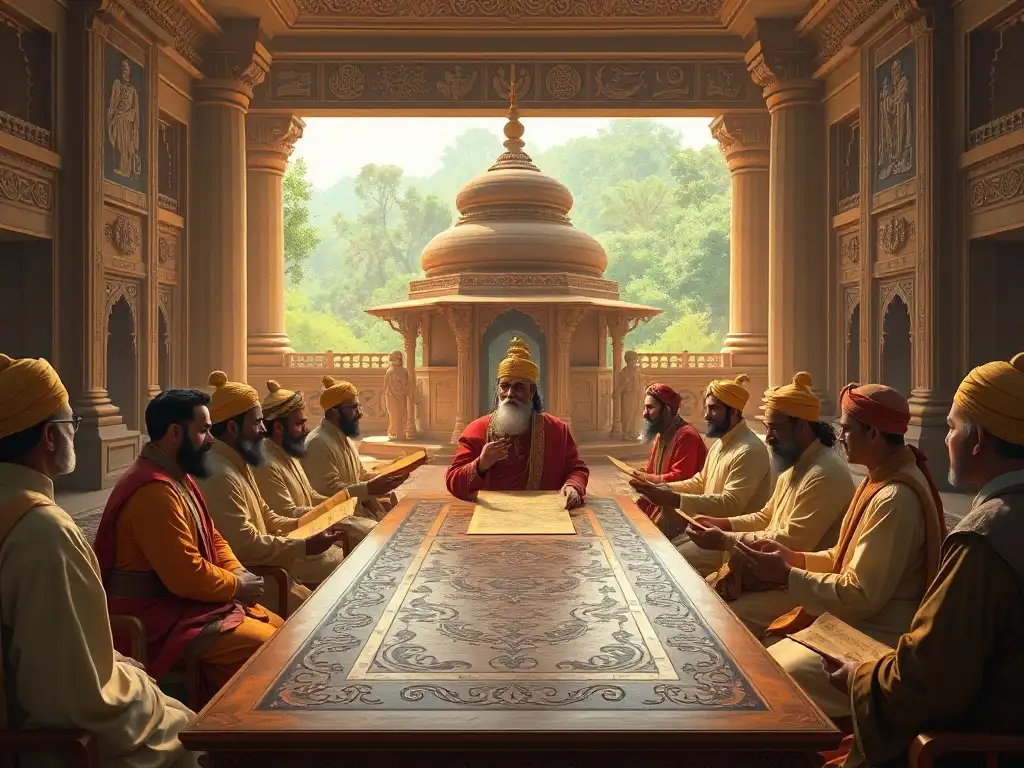
The governance innovations of the Maurya Empire were significantly influenced by the prevailing religious and philosophical ideologies of the time. As the Mauryan rulers navigated the complexities of unifying a vast and diverse empire, they adeptly integrated various spiritual practices and beliefs into their administration. This melding of religion and statecraft not only shaped their policies but also provided a moral foundation for their governance, ultimately contributing to the stability and prosperity of the empire.
Influence of Buddhism on Maurya Administration
Buddhism emerged as a powerful force during the reign of Emperor Ashoka, the third Mauryan ruler, who played a critical role in propagating its ideals throughout the empire. Ashoka's conversion to Buddhism following the Kalinga War marked a turning point in Mauryan governance, as he sought to implement the principles of ahimsa (non-violence) and compassion in his administration.
- Edicts of Ashoka: One of the most notable innovations was the issuance of the Edicts of Ashoka, inscribed on pillars and rocks across the empire. These edicts communicated rules and moral precepts to the populace, emphasizing ethical behavior and social welfare. The edicts served not only as a means of governance but also as a tool for fostering a shared identity among the diverse subjects of the empire.
- Promotion of Welfare Programs: Ashoka's commitment to Buddhism led to the establishment of welfare programs aimed at improving the lives of his subjects. Initiatives such as the construction of hospitals, planting of trees for shade, and the provision of safe drinking water were grounded in Buddhist principles of compassion and care for all living beings.
- Integration of Buddhist Monastic Institutions: The Maurya administration also embraced Buddhist monastic communities as partners in governance. Monasteries became centers of learning and moral guidance, influencing public policy and education. This collaboration with Buddhist leaders helped legitimize Ashoka's rule and fostered loyalty among the populace.
The Concept of Dharma in Governance
The concept of dharma, or righteousness, was another cornerstone of Mauryan governance innovations. Rooted in ancient Indian philosophy, dharma represents the moral and ethical duties that individuals must uphold within society.
- Moral Imperative for Rulers: Mauryan rulers viewed themselves as protectors of dharma, with the obligation to govern justly and ethically. This perspective encouraged leaders to prioritize justice and fairness over mere power and control. The emphasis on dharma refined the nature of governance, steering it towards a more humane and equitable approach.
- Legal Framework: The Maurya Empire developed a legal framework influenced by dharma. Laws were designed not only to maintain order but also to promote social justice and welfare. The idea that rulers should be accountable for their actions helped cultivate a sense of responsibility within the administration, leading to more responsive governance.
- Judicial Practices: The integration of dharma in judicial practices ensured that justice was administered in accordance with moral principles. Courts were often staffed by judges who were well-versed in religious texts, ensuring that rulings aligned with both legal and ethical standards.
Balancing Secular and Religious Governance Approaches
The Maurya Empire's governance innovations were characterized by a delicate balance between secular authority and religious influence. This multifaceted approach allowed the empire to maintain stability while accommodating the diverse beliefs of its subjects.
- Civic Policies vs. Religious Norms: While the Mauryan rulers incorporated religious teachings into their governance, they also established secular policies that addressed practical concerns. This duality ensured that governance was not solely dictated by religious doctrine, allowing for flexibility and adaptability in administration.
- Inclusivity in Governance: The Maurya administration recognized the necessity of inclusivity, granting religious freedom to various sects. This approach not only mitigated religious tensions but also reinforced loyalty among various communities. The ability to practice one's faith freely was an essential innovation that contributed to the empire's cohesion.
- Cultural Integration: The Mauryas actively promoted cultural integration through the arts, architecture, and education, which blended secular and religious themes. This cultural syncretism facilitated a shared sense of identity across the empire, further strengthening governance.
The Maurya Empire's ability to innovate within its governance structures—by interweaving religion and philosophy—played a pivotal role in its administration. The influence of Buddhism, the concept of dharma, and the balance between secular and religious governance approaches collectively contributed to the empire's legacy as a model of effective and compassionate rule.
Legacy of Maurya Empire Governance Innovations

The Maurya Empire, which thrived from 322 to 185 BCE, is renowned for its groundbreaking governance innovations that laid the foundation for subsequent Indian political systems. Under the leadership of Chandragupta Maurya and his grandson Ashoka, the empire developed a complex administrative framework that balanced tradition with innovative practices. These governance innovations not only ensured the stability and prosperity of the Maurya Empire but also left a lasting legacy that influenced later Indian empires and modern governance structures.
Long-term Impact on Subsequent Indian Empires
The governance innovations of the Maurya Empire had a profound long-term impact on subsequent Indian empires. The systematic approach to administration, characterized by a well-defined bureaucracy, tax collection systems, and law enforcement, became a model for future rulers. Notable aspects include:
- Centralized Administration: The Mauryan system of centralized governance established a precedent for later empires, such as the Gupta Empire, which adopted similar administrative practices.
- Regional Autonomy: The Maurya Empire's delegation of authority to local governors (known as Uparikas) allowed for effective regional governance, which was mirrored in later dynasties to maintain local stability while ensuring loyalty to the central authority.
- Legal Framework: The codification of laws under Ashoka, exemplified by the Edicts of Ashoka, influenced legal practices across subsequent states, promoting a culture of justice and moral governance.
These innovations set a standard for administrative efficiency and ethical governance that resonated through centuries, reflecting the Maurya Empire's significant role in shaping the political landscape of India.
Influence on Modern Governance in India
The governance innovations of the Maurya Empire continue to echo in modern Indian governance. The concepts introduced during this period, particularly under Ashoka, have influenced contemporary political practices in various ways:
- Decentralization: The idea of local governance, akin to the Panchayati Raj system in modern India, emphasizes the importance of local self-governance, a principle that can be traced back to Mauryan practices.
- Public Welfare: Ashoka's commitment to Dhamma—a moral code promoting non-violence and welfare—can be seen in modern policies focusing on social justice and community well-being.
- Legal Reforms: The Maurya Empire's early legal codifications laid the groundwork for India's current legal system, which emphasizes justice, equity, and the rule of law.
In essence, the Maurya Empire's governance innovations have not only shaped historical governance structures but also inform the principles of modern governance in India, promoting a blend of tradition and innovation.
The Maurya Empire as a Model for Governance Innovations
The Maurya Empire serves as a compelling model for governance innovations due to its adaptive approaches to administration and policy-making. Key elements include:
- Meritocracy: The reliance on skilled bureaucrats rather than solely on noble lineage marked a significant shift towards merit-based governance, encouraging competence and efficiency.
- Infrastructure Development: The establishment of extensive road networks, irrigation systems, and trade routes facilitated economic growth and integration, showcasing the importance of infrastructure in governance.
- Cultural Integration: The Maurya Empire promoted cultural diversity and tolerance, recognizing the value of integrating various traditions and practices to foster unity within a vast and diverse empire.
These innovations highlight the Maurya Empire's forward-thinking approach, providing valuable lessons for contemporary governance. The balance between tradition and innovation, as exemplified by the Mauryan rulers, remains relevant as modern states grapple with similar challenges in governance and administration.
The governance innovations of the Maurya Empire not only shaped its era but also provided a lasting framework that has influenced both historical and modern governance in India, illustrating the empire's enduring legacy.
Conclusion: The Maurya Empire’s Unique Governance Approach

Summary of Key Innovations and Their Significance
The Maurya Empire, renowned for its extensive territorial expanse and influence, implemented a series of governance innovations that were pivotal in shaping its administrative framework. Here are some of the key innovations and their significance:
- Centralized Bureaucracy: The Maurya Empire established a centralized bureaucracy that enabled efficient governance across vast territories. This structure ensured that policies were uniformly applied and that local administrations adhered to central directives.
- Use of Spies: Under the guidance of Chanakya, the empire utilized a network of spies to gather intelligence, which was critical in maintaining internal security and preventing revolts. This innovation was significant as it allowed the central authority to stay informed about local conditions and dissent.
- Standardized Taxation: The introduction of a standardized taxation system facilitated revenue collection, which in turn supported the empire's military and infrastructural needs. This system was crucial for maintaining economic stability and funding public works.
- Legal Reforms: The Mauryan legal system was notable for its emphasis on justice and fairness, incorporating aspects of both local customs and overarching imperial laws. This dual approach helped in legitimizing the authority of the empire while respecting regional traditions.
- Infrastructure Development: The empire invested heavily in infrastructure, including roads and irrigation systems, which not only improved trade and communication but also demonstrated the government's commitment to the welfare of its citizens.
These innovations collectively contributed to the stability, efficiency, and longevity of the Maurya Empire, setting a precedent for future governance models in Indian history.
Final Thoughts on Tradition and Innovation in Governance
The Maurya Empire exemplifies a remarkable balance between tradition and innovation in governance. By integrating traditional practices with innovative administrative strategies, the empire was able to maintain control over a diverse population while fostering economic and cultural development. This dual approach allowed the Maurya Empire to adapt to changing circumstances and challenges, ensuring its resilience over time.
The legacy of the Maurya Empire's governance innovations continues to resonate in contemporary discussions on effective governance. The emphasis on centralized authority, legal uniformity, and infrastructure development are principles that remain relevant today. By studying the governance innovations of the Maurya Empire, modern policymakers can glean valuable insights into the importance of balancing tradition with progress to achieve sustainable governance.
The Maurya Empire’s unique approach to governance serves as a testament to the power of innovation rooted in tradition, paving the way for a rich legacy that has influenced the course of Indian history.
References and Further Reading
Suggested Books on Maurya Empire Governance
-
"The Maurya Empire: A Historical and Cultural Overview"
This comprehensive book explores the political, social, and economic aspects of the Maurya Empire, providing insights into its governance innovations. It is an essential read for anyone interested in understanding the complexities of Mauryan administration.
-
"Kautilya's Arthashastra: A Treatise on Statecraft"
Written by Chanakya, a key figure in Mauryan governance, this ancient text discusses strategies for effective administration, warfare, and economics. It remains a crucial reference for understanding the principles behind Maurya Empire governance innovations.
-
"The Mauryan Legacy: Politics and Culture in Ancient India"
This book delves into the impact of Mauryan governance on subsequent Indian dynasties and its cultural ramifications. The author provides a detailed analysis of how tradition and innovation were balanced to create a stable empire.
-
"From the Indus to the Mauryas: An Overview of Ancient Indian Civilizations"
This work traces the evolution of governance in ancient India, highlighting the transition from the Indus Valley Civilization to the innovations introduced by the Maurya Empire. It provides context for the governance strategies employed during this transformative period.
-
"The Age of the Mauryas"
Focusing specifically on the Maurya Empire, this book examines the administrative structures and innovations that characterized its governance. It includes case studies and examples that illustrate the empire's effective management of diverse populations.
Articles and Journals for In-depth Study
-
"Governance in Ancient India: The Mauryan Model"
This academic article analyzes the governance frameworks developed during the Maurya Empire, emphasizing its unique blend of traditional practices and innovative approaches. The author discusses how these strategies led to administrative efficiency.
-
"Kautilya's Influence on Mauryan Governance"
This journal article explores the role of Kautilya's philosophies in shaping the governance innovations of the Maurya Empire. It provides a critical examination of the key concepts presented in the Arthashastra and their practical applications.
-
"Statecraft and the Maurya Empire: A Historical Perspective"
This paper offers a historical overview of the Maurya Empire's administration, detailing the innovations in governance that emerged during its rule. It contextualizes these developments within the broader framework of ancient Indian statecraft.
-
"Balancing Tradition and Innovation: The Governance of the Maurya Empire"
Published in a leading historical journal, this article discusses the dual approach of the Maurya Empire in maintaining traditional values while implementing innovative governance techniques. It includes a comparative analysis with other ancient empires.
-
"The Mauryan Administrative System: Continuity and Change"
This scholarly article examines the continuity of administrative practices from earlier civilizations and the changes introduced during the Maurya Empire. The author highlights the innovative aspects of governance that set the Maurya Empire apart.
These resources provide a wealth of information for those interested in the governance innovations of the Maurya Empire, offering both foundational knowledge and in-depth analysis for further study.
Frequently Asked Questions
What were some key governance innovations of the Maurya Empire?
The Maurya Empire implemented several innovations such as a centralized administration, an extensive network of roads, and a legal system that promoted trade and communication across the empire.
How did the Maurya Empire maintain balance between tradition and innovation?
The Maurya Empire preserved traditional governance practices while introducing new administrative techniques, thereby ensuring stability and efficiency within the empire.
Who was the most notable ruler of the Maurya Empire known for governance innovations?
Ashoka the Great is the most notable ruler, recognized for his administrative reforms and promotion of Buddhism, which influenced governance and social welfare.
What role did the Kautilya's Arthashastra play in governance innovations?
Kautilya's Arthashastra provided strategic insights on politics, economics, and military tactics, serving as a foundational text for the Maurya Empire's administrative policies.
How did the Maurya Empire influence later Indian governance?
The governance innovations of the Maurya Empire laid the groundwork for future Indian dynasties, demonstrating a blend of traditional values and innovative practices that continued to evolve.
Final Reflection: The Timeless Dance of Tradition and Innovation in Governance
The exploration of the Maurya Empire's governance innovations reveals a profound truth: the balance between tradition and innovation is not just a historical lesson, but a vital principle that resonates in today's world. As we navigate the complexities of modern governance, the Maurya Empire stands as a testament to how effective leadership can harmonize age-old customs with progressive ideas, creating a resilient and adaptable society. This balance is essential now more than ever, as we face unprecedented challenges that require both respect for our roots and the courage to innovate.
Culture and governance are inextricably linked, and the Maurya Empire exemplifies how this relationship continues to shape our social landscape. The innovations in governance during this period not only transformed the empire but also laid foundational principles that influence contemporary political systems. As we reflect on this legacy, we are reminded of the words of Mahatma Gandhi: A nation's greatness is measured by how it treats its weakest members.
This quote underscores the importance of governance that is both innovative and rooted in compassion, a principle that remains relevant as we strive for inclusive and effective leadership today.
As we conclude this exploration, I invite you to reflect on how the lessons from the Maurya Empire can be applied in your own life and community. Consider how you can embrace tradition while also championing innovation in your personal and professional endeavors. Whether it's advocating for progressive policies that honor cultural heritage or fostering an environment that encourages new ideas, each of us has the power to contribute to a balanced approach to governance. Let the Maurya Empire's legacy inspire you to find your own equilibrium between honoring the past and embracing the future.
Unveil the Secrets of Effective Governance!
Thank you for exploring how the Maurya Empire achieved a remarkable balance between tradition and innovation in governance. Your interest in this topic enriches our understanding of historical practices that can still inspire us today. Now, let's channel this knowledge into actionable steps!
- Dive Deeper: Research specific governance techniques used by the Maurya Empire to see how they can be applied to contemporary challenges.
- Share Your Insights: Engage in discussions with colleagues or participate in online forums to explore how this ancient wisdom could influence modern leadership.
- Explore More: Visit additional resources on Ancient Indian history to uncover further intriguing stories of governance, culture, and innovation.
How can you incorporate lessons from the Maurya Empire into your own decision-making processes today?