
The Maurya Empire’s Legacy in Modern Governance Systems in India


Welcome to Ancient India History, where we embark on an enthralling journey through the rich tapestry of ancient Indian civilizations. In this vibrant exploration, we delve into the Maurya Empire's governance influence, a cornerstone of India's historical narrative that continues to shape modern governance systems. What remarkable principles and practices emerged from this powerful dynasty, and how do they resonate in today's political landscape? Join us as we uncover the profound legacy of the Maurya Empire, igniting your curiosity and inviting you to discover the depths of India’s past.
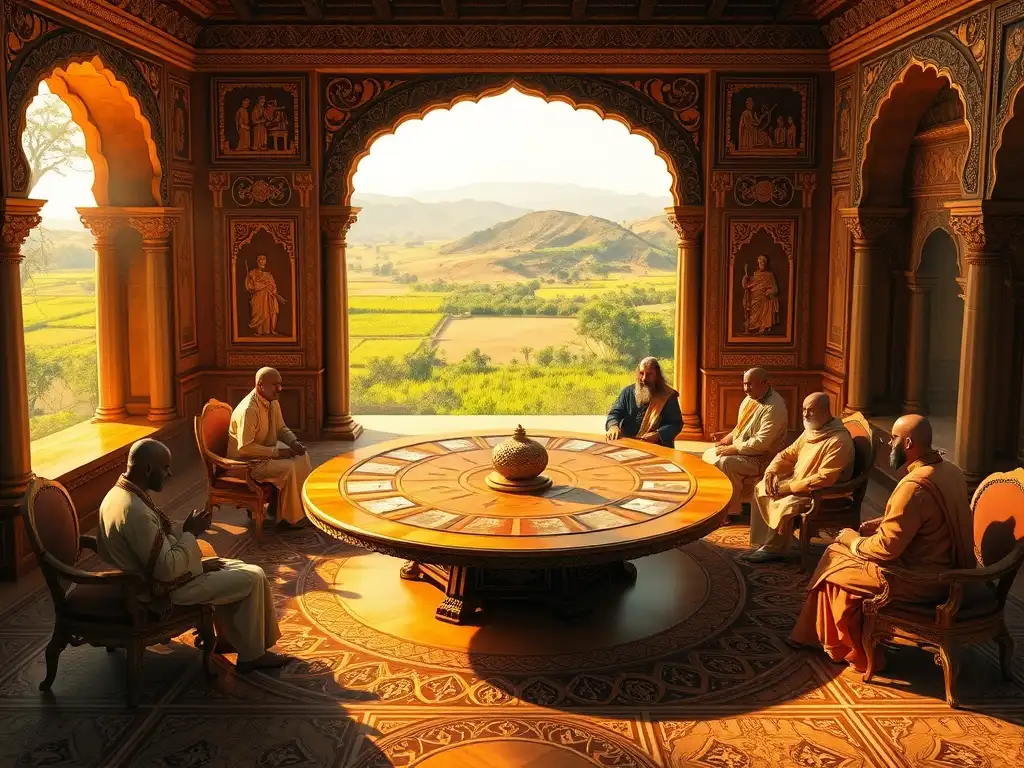
Introduction to the Maurya Empire and Its Governance
The Maurya Empire, which thrived from 322 to 185 BCE, stands as a monumental chapter in the history of ancient India. Renowned for its vast territorial expanse and sophisticated governance structures, the Maurya Empire laid the groundwork for many aspects of modern governance in India. The empire was established by Chandragupta Maurya and later expanded significantly under the reign of his grandson, Ashoka the Great.
This period was marked by significant advancements in administration, law, and public welfare, which continue to resonate in the governance systems of contemporary India. Understanding the Maurya Empire governance influence is essential to grasping how these ancient practices have shaped modern political frameworks and bureaucratic systems.
Overview of the Maurya Empire’s Historical Context
The Maurya Empire emerged in a time of political fragmentation in the Indian subcontinent, following the decline of the Nanda Dynasty. Chandragupta Maurya, with the guidance of his mentor Chanakya (Kautilya), unified various states and established one of the largest empires in ancient India. This unification was not merely military; it also involved sophisticated diplomatic strategies and alliances. The historical context of the Maurya Empire showcases its role as a precursor to structured governance, where the administration was centralized, and resources were systematically allocated to support the vast empire.
Importance of Governance in Ancient Indian Civilizations
Governance in ancient Indian civilizations was crucial for maintaining order and facilitating economic and cultural growth. The Maurya Empire exemplified the significance of organized governance, which provided stability and supported trade, agriculture, and infrastructure developments. The empire's governance model influenced subsequent Indian states and has left a lasting legacy in the realms of administration, law, and public policy. Understanding this ancient framework is essential for analyzing how these systems have evolved and how they continue to inform modern governance in India today.
Key Features of Maurya Empire Governance
The governance of the Maurya Empire was characterized by several key features that set it apart from its predecessors and successors. These elements contributed significantly to the efficiency of its administration and the welfare of its citizens.
Centralized Administration and Its Impact
One of the hallmark features of the Maurya Empire was its centralized administration, which allowed for effective control over its vast territories. The empire was divided into provinces, each governed by appointed officials who reported directly to the emperor. This structure ensured uniformity in governance and allowed for swift decision-making. The centralized model facilitated the implementation of policies such as taxation and resource distribution, which were crucial for the empire's economic stability.
Role of Bureaucracy in the Maurya Empire
The Maurya Empire boasted a sophisticated bureaucratic system, which played a pivotal role in its governance. The bureaucracy was organized into various departments, each responsible for specific functions such as agriculture, trade, defense, and public works. This division of responsibilities ensured that the administration was efficient and could respond effectively to the needs of the empire's diverse population. The emphasis on meritocracy in appointments further strengthened the bureaucratic framework, fostering a culture of professionalism and accountability.
Legal Systems and Justice Mechanisms
The legal systems established during the Maurya Empire were advanced for their time, incorporating a blend of customary laws and codified regulations. Ashoka, in particular, is noted for his efforts to promote justice and ethical governance, famously inscribing his edicts on pillars throughout the empire. These edicts outlined principles of justice, non-violence, and moral conduct, reflecting a governance philosophy that prioritized the welfare of the people. Such legal frameworks not only maintained social order but also laid the foundation for future legal systems in India.
By exploring these aspects of Maurya Empire governance, one gains insight into how ancient practices have influenced contemporary governance systems in India, showcasing a legacy that endures to this day.
The Maurya Empire Governance Influence on Modern India
The Maurya Empire, which thrived from 322 to 185 BCE, is often regarded as one of the most significant empires in ancient Indian history. Its governance system, characterized by centralized authority and extensive bureaucracy, laid foundational principles that resonate within modern Indian governance.
The Mauryan approach to administration introduced innovative methods for governance, such as the use of spies for intelligence, the establishment of a vast network of officials, and a legal system that aimed for justice and order. This influence is evident in various facets of contemporary governance systems in India, where the principles of efficiency, accountability, and social welfare, rooted in Maurya practices, continue to shape the administrative landscape.
Continuity of Administrative Practices from the Maurya Empire
The administrative practices established during the Maurya Empire have shown remarkable continuity throughout India's history. The centralized bureaucracy that Emperor Ashoka implemented was designed to manage a vast empire effectively, which included a detailed hierarchy of officials responsible for different regions. This model has evolved but persists in modern India’s administrative structure, where the Indian Administrative Service (IAS) plays a crucial role in governance.
Moreover, the Mauryan emphasis on local governance through village assemblies (Gram Sabha) has influenced modern panchayati raj institutions, ensuring that local self-governance remains a fundamental aspect of India's democratic framework. Such continuity underscores how ancient practices have been adapted to meet contemporary needs while preserving their core principles of administration and community involvement.
Influence on Modern Political Structures and Institutions
The political structures initiated by the Maurya Empire have had a lasting impact on India's governance system. The centralized authority established by the Mauryas has parallels in modern India's federal structure, where the central government maintains significant power while allowing states to operate with a degree of autonomy.
Additionally, the Maurya Empire's focus on welfare and public works has influenced the establishment of various governmental schemes aimed at social development, such as the Mahatma Gandhi National Rural Employment Guarantee Act (MGNREGA). The Mauryan governance model serves as a historical precedent for balancing authority with public welfare, a principle that remains critical in contemporary Indian politics.
The Role of Mauryan Legal Principles in Contemporary Laws
The legal principles that emerged during the Maurya Empire, particularly under Ashoka, have influenced modern legal systems in India. Ashoka's Edicts, which emphasized moral and ethical governance, laid the groundwork for the concept of dharma (righteousness) in law. This fundamental principle resonates in contemporary laws, advocating for justice, equality, and the welfare of citizens.
Moreover, the Mauryan legal framework, which included provisions for the protection of the environment and animal rights, finds echoes in modern legislation aimed at environmental conservation and animal welfare. The integration of these principles into contemporary laws illustrates the enduring legacy of Maurya governance in shaping India's legal landscape.
Case Studies of Maurya Empire Governance Influence
Example 1: The Structure of the Indian Administrative Service (IAS)
The Indian Administrative Service (IAS) can trace its roots back to the administrative structures established during the Maurya Empire. The IAS embodies the principles of a centralized bureaucracy, where officials are appointed based on merit and trained to manage a wide range of governmental functions. This mirrors the Mauryan practice of employing qualified individuals to oversee various administrative tasks, ensuring efficiency and accountability in governance.
Example 2: The Parliamentary System of India
The parliamentary system of India, which operates on principles of representation and accountability, has its antecedents in the deliberative councils of the Maurya Empire. These councils, composed of advisors and officials, provided a platform for governance that emphasized collective decision-making. The Mauryan influence is evident in the way modern Indian parliament functions, where debates, discussions, and consensus-building are crucial for legislative processes.
Example 3: The Influence on the Indian Penal Code
The Indian Penal Code (IPC), established in the 19th century, shows traces of the legal principles propagated during the Maurya Empire. The emphasis on justice and ethical conduct in Mauryan law laid a foundation for the IPC, which seeks to uphold societal order and protect individual rights. The Mauryan legal tradition, which included measures for social justice and ethical governance, continues to serve as a guiding force in formulating and interpreting laws in modern India.
The Maurya Empire's governance influence is a testament to the enduring legacy of ancient Indian civilization, showcasing how historical practices continue to shape modern governance systems in India.
Comparisons: Maurya Empire Governance vs. Modern Governance Systems
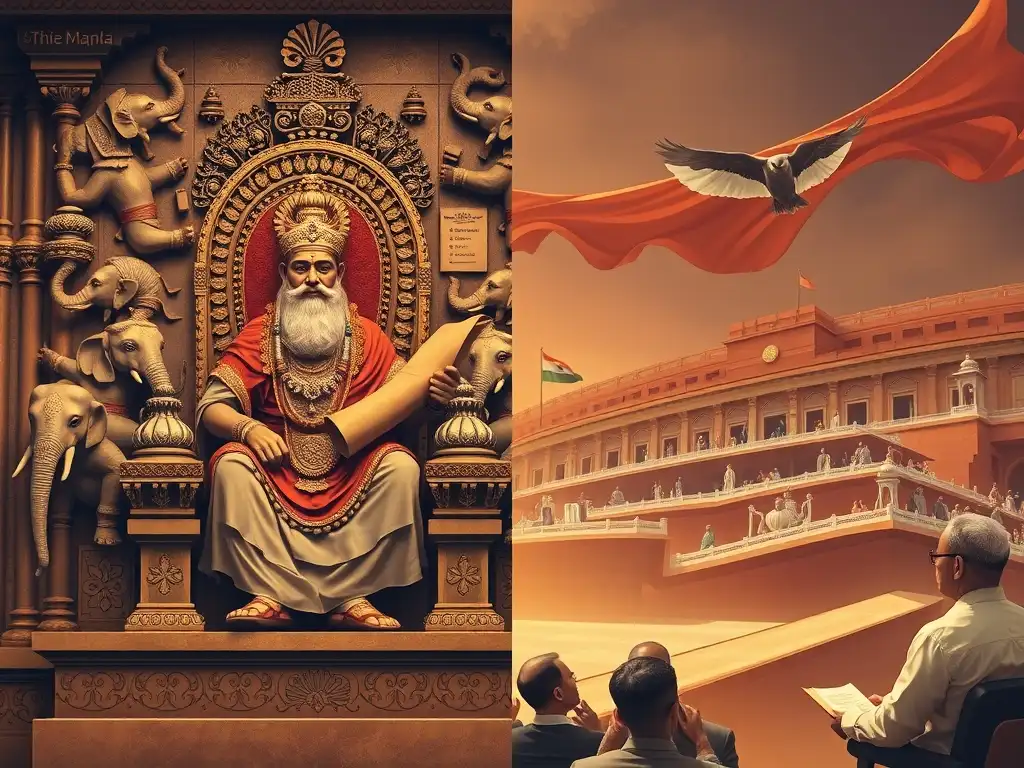
The governance systems of the Maurya Empire, which thrived from 322 to 185 BCE, laid foundational principles that can be identified in modern governance frameworks in India. This comparison reveals both enduring similarities and distinct differences that highlight the evolution of administrative practices over time.
Similarities in Governance Approaches
The Maurya Empire, particularly under the leadership of Emperor Ashoka, emphasized the importance of a centralized authority while also considering the welfare of its citizens. This focus on the welfare state mirrors modern governance principles where the government is expected to ensure the well-being and rights of its populace. Key similarities include:
- Centralized Bureaucracy: Both systems feature a structured bureaucracy where officials are appointed to manage various administrative functions. In the Maurya Empire, the emperor was supported by a council of ministers, while modern governance employs a range of departments and ministries to oversee governance.
- Legal Frameworks: The Mauryan administration introduced legal codes and regulations to maintain order, similar to contemporary legal systems that govern societal behavior through laws and regulations.
- Emphasis on Public Welfare: The Mauryan rulers, especially Ashoka, promoted policies that aimed to improve the quality of life for their subjects, paralleling modern-day governance which prioritizes social justice, healthcare, and education.
Differences in Governance Methods and Policies
While there are notable similarities, significant differences exist between Mauryan governance and modern systems. These differences include:
- Administrative Scope: The Maurya Empire was primarily a monarchy, where power was concentrated in the hands of a single ruler. In contrast, modern governance systems in India are democratic, involving elected representatives and multiple political parties.
- Citizen Participation: The Mauryan governance structure did not allow for broad public participation in decision-making processes. Modern governance emphasizes democratic principles, encouraging citizen engagement and representation through elections.
- Technological Influences: The tools and technologies available during the Maurya Empire were limited compared to today’s advanced technologies. Modern governance utilizes information technology for data management, communication, and public service delivery, enhancing transparency and efficiency.
Challenges and Critiques of Maurya Governance Influence
Despite the significant contributions of the Maurya Empire to governance, there are challenges and critiques regarding its influence on contemporary systems. These critiques often stem from the limitations of Mauryan governance practices when applied to modern contexts.
Limitations of Mauryan Governance in Modern Context
The governance strategies of the Maurya Empire face criticism for their applicability in today's diverse and dynamic society. Some of these limitations include:
- Lack of Inclusivity: The Mauryan Empire's governance was primarily focused on the elite and did not adequately represent marginalized communities. Modern governance strives for inclusivity, aiming to amplify the voices of all societal segments, including women, lower castes, and minorities.
- Rigid Hierarchical Structures: The strict hierarchical nature of Mauryan governance may not suit contemporary governance, which favors more flexible and collaborative approaches, allowing for adaptability in policy-making and administration.
- Ethical Implications: Although Ashoka’s principles emphasized morality and ethics, the methods of enforcement were often authoritarian. In modern governance, democratic values and human rights play a crucial role in legitimizing authority and ensuring accountability.
Misinterpretations of Mauryan Principles in Contemporary Governance
Misinterpretations of Mauryan governance principles can lead to challenges in implementing policies inspired by this ancient system. Key issues include:
- Overemphasis on Centralization: Some modern interpretations advocate for a return to highly centralized governance, neglecting the importance of decentralized systems that empower local governments and communities.
- Misunderstanding of Ashoka’s Edicts: Ashoka’s edicts, which promoted dharma (righteousness), are sometimes misinterpreted as endorsing a singular moral path, contrasting with the pluralistic nature of modern Indian society that celebrates diverse beliefs and practices.
- Neglecting Socioeconomic Factors: The Mauryan governance model did not fully address the complexities of socioeconomic disparities. Modern governance must consider a multitude of factors, including economic policies and social justice, to effectively address the needs of a diverse population.
Through understanding both the legacies and limitations of the Maurya Empire’s governance influence, contemporary India can better navigate its path toward effective governance that honors its rich historical roots while embracing modern democratic values.
Conclusion: The Enduring Legacy of Maurya Empire Governance
The Maurya Empire, which flourished from the 4th to the 2nd centuries BCE, laid foundational principles that resonate in contemporary governance systems in India. The empire's sophisticated administrative framework, which emphasized centralized control and efficient bureaucratic practices, has left a lasting influence on how modern Indian governance is structured and functions. Aspects such as the implementation of a structured justice system, the development of trade regulations, and the promotion of social welfare can all trace their roots back to Mauryan practices.
Moreover, the Mauryan emphasis on moral and ethical governance, as exemplified by the edicts of Ashoka, continues to inspire modern leaders in their pursuit of just governance. The principles of Dharma, which guided Ashoka’s rule, reflect a commitment to ethical governance that remains relevant as contemporary India grapples with issues of justice and civic responsibility.
Summary of Key Influences on Modern Indian Governance
The Maurya Empire's governance legacy can be distilled into several key influences that are still recognizable in modern Indian governance systems:
- Centralized Administration: The Mauryan model of a centralized bureaucracy established a framework for governance that allows for uniformity in law and policy implementation across diverse regions. This system has had a significant impact on the structure of modern Indian administrative services.
- Legal Frameworks: The codification of laws during the Maurya period set a precedent for the establishment of a formal legal system. Ashoka's edicts, inscribed on rocks and pillars, served as a means to communicate laws and ethical guidelines, a practice that can be seen in contemporary legal notifications and public policies.
- Taxation and Economic Policies: The Mauryan Empire developed a sophisticated taxation system that facilitated trade and agriculture. This early example of economic policy forms the backbone of India’s modern tax system, influencing revenue collection and economic planning.
- Public Welfare Programs: The Maurya Empire's focus on social welfare, including the establishment of hospitals and infrastructure for public use, is mirrored in modern initiatives aimed at improving public health and social services.
- Diplomatic Relations: The empire's approach to diplomacy, including the use of emissaries and treaties, has shaped modern India's foreign relations strategies, emphasizing negotiation and collaboration.
Final Thoughts on the Relevance of Ancient Governance Systems Today
The governance systems established during the Maurya Empire have not only shaped the political landscape of ancient India but continue to resonate in today's governance practices. As India navigates the complexities of a rapidly changing world, the principles of effective administration, ethical governance, and social responsibility rooted in Mauryan ideals are more relevant than ever.
In an era marked by challenges such as corruption, inequality, and environmental issues, revisiting the governance philosophies of the Maurya Empire can provide valuable insights. The emphasis on Dharma and public welfare can guide contemporary leaders in fostering a more equitable and just society. Reflecting on these ancient systems encourages a dialogue about integrating historical wisdom into modern governance, ensuring that the legacy of the Maurya Empire remains a vital part of India's evolving narrative.
- Introduction to the Maurya Empire and Its Governance
- Key Features of Maurya Empire Governance
- The Maurya Empire Governance Influence on Modern India
- Case Studies of Maurya Empire Governance Influence
- Comparisons: Maurya Empire Governance vs. Modern Governance Systems
- Challenges and Critiques of Maurya Governance Influence
- Conclusion: The Enduring Legacy of Maurya Empire Governance
- What was the Maurya Empire known for in terms of governance?
- How did the Maurya Empire influence modern Indian governance?
- Who were the key figures in the governance of the Maurya Empire?
- What role did the Maurya Empire play in legal reforms?
- How did the Maurya Empire contribute to cultural integration in governance?
Frequently Asked Questions
What was the Maurya Empire known for in terms of governance?
The Maurya Empire is renowned for its centralized administration, legal reforms, and bureaucratic efficiency, which laid the groundwork for modern governance in India.
How did the Maurya Empire influence modern Indian governance?
The governance structures established during the Maurya Empire have significantly influenced contemporary political systems, emphasizing law, order, and public welfare.
Who were the key figures in the governance of the Maurya Empire?
Chandragupta Maurya and his advisor Chanakya (Kautilya) were pivotal in formulating policies and strategies that shaped the administrative practices of the empire.
What role did the Maurya Empire play in legal reforms?
The Maurya Empire implemented a codified legal system, which emphasized justice and fairness, influencing the development of legal principles in modern Indian law.
How did the Maurya Empire contribute to cultural integration in governance?
The Maurya Empire promoted cultural diversity and tolerance, which fostered a sense of national identity and cohesion that remains essential in modern governance frameworks.
Final Reflection: The Enduring Influence of the Maurya Empire on Modern Governance
The legacy of the Maurya Empire is not merely a chapter in history; it is a foundational pillar that continues to shape the governance systems in India today. As we explore the intricate frameworks established during the Maurya period, we uncover principles of administration, justice, and societal organization that resonate deeply within contemporary governance. The echoes of this ancient empire remind us that effective governance is timeless, transcending the boundaries of eras and cultures.
The Maurya Empire's influence is palpable in the very fabric of India's political landscape. From the emphasis on centralized authority to the promotion of welfare policies, the principles laid down by leaders like Ashoka have fostered a sense of unity and purpose that still guides modern governance. As Mahatma Gandhi once said, “A nation’s greatness is measured by how it treats its weakest members.” This sentiment reflects the Mauryan commitment to social justice and public welfare, which remains a cornerstone of India's democratic ethos today.
As we reflect on the lessons from the Maurya Empire, let us consider how we can embody these principles in our own lives and communities. How can we advocate for justice, inclusivity, and effective governance in our daily actions? The legacy of the Maurya Empire challenges us to not only acknowledge the past but to actively engage in shaping a future where governance serves all members of society. Embrace this call to action, and let the wisdom of history guide your contributions to a more equitable world.
Unveil the Lessons of the Maurya Empire!
Thank you for diving into the fascinating legacy of the Maurya Empire and its profound impact on modern governance in India. Your interest in understanding these historical connections is the first step toward appreciating how history shapes our present and future.
Ready to take action? Here are a few ways you can further explore this intriguing topic:
- Dive deeper into the governance principles of the Maurya Empire by reading historical texts or researching its influence on contemporary Indian politics.
- Share your insights with friends or on social media! Start a discussion about how ancient practices are reflected in today’s governance.
- Join a local history group or online forum to exchange ideas and learn from others who share your passion for ancient civilizations.
Which aspect of the Maurya Empire's governance do you believe has had the most significant impact on modern India?