
How the Indus Valley Civilization Influenced the Development of Astronomy

Welcome to Ancient India History, where we embark on a fascinating journey through the rich tapestry of ancient Indian civilizations. Discover how the Indus Valley Civilization, often celebrated for its remarkable urban planning and culture, laid the groundwork for profound advancements in various fields, including astronomy. In our featured article, "How the Indus Valley Civilization Influenced the Development of Astronomy," we will delve into the celestial insights and innovations that emerged from this ancient society. Get ready to explore how their legacy continues to shape our understanding of the cosmos today—an adventure awaits just beyond the horizon!
- Introduction to Indus Valley Civilization and Astronomy
- The Role of Astronomy in Indus Valley Civilization
- Indus Valley Astronomy Influence on Later Civilizations
- Techniques and Tools Used in Indus Valley Astronomy
- Case Studies of Astronomical Practices in the Indus Valley
- Conclusion: The Lasting Legacy of Indus Valley Astronomy Influence
-
Frequently Asked Questions
- What is the Indus Valley Civilization known for in terms of astronomy?
- How did the Indus Valley astronomy influence later cultures?
- What tools or methods did the Indus Valley use for astronomical observations?
- Were there any astronomical texts from the Indus Valley?
- How does the Indus Valley's influence manifest in modern astronomy?
- Final Reflection: The Enduring Legacy of Indus Valley Astronomy
- Unveil the Wonders of Ancient Astronomy!
Introduction to Indus Valley Civilization and Astronomy
The Indus Valley Civilization, one of the world's oldest urban cultures, flourished around 2500 BCE in what is now modern-day Pakistan and northwest India. Renowned for its advanced city planning, architecture, and social organization, this civilization also made significant strides in various scientific fields, including astronomy.
Understanding the Indus Valley astronomy influence provides critical insights into how this ancient civilization shaped astronomical knowledge and practices that would echo through history. This article delves into the intricate relationship between the Indus Valley Civilization and astronomy, exploring its foundational role in the development of celestial understanding and its lasting impact on subsequent cultures.
Overview of the Indus Valley Civilization
The Indus Valley Civilization, often referred to as the Harappan Civilization, was a remarkable society that thrived along the fertile banks of the Indus River. It is characterized by several key features:
- Urban Planning: Cities like Harappa and Mohenjo-Daro featured advanced urban designs, including grid layouts, drainage systems, and standardized fired-brick construction.
- Trade and Economy: The civilization engaged in extensive trade networks with neighboring regions, facilitating the exchange of goods such as textiles, metals, and agricultural products.
- Writing System: Although still undeciphered, the Indus script indicates a sophisticated means of communication, reflecting a complex society with administrative and cultural depth.
- Art and Culture: The civilization produced intricate seals, pottery, and jewelry, showcasing their artistic skills and cultural values.
Despite its eventual decline around 1900 BCE, the legacy of the Indus Valley Civilization continues to influence modern societies, particularly in areas like urban planning and trade practices.
Importance of Astronomy in Ancient Cultures
Astronomy has played a pivotal role in the development of various ancient cultures worldwide. Its significance can be summarized as follows:
- Navigation and Agriculture: Knowledge of celestial bodies was crucial for navigation and agricultural practices. Ancient societies relied on the stars and lunar cycles to determine planting and harvesting times.
- Calendrical Systems: Many civilizations developed calendars based on celestial observations, which were vital for religious and agricultural festivals.
- Cultural Significance: Astronomy often intertwined with mythology and religion, influencing art, literature, and societal norms.
- Scientific Inquiry: The study of astronomy spurred advancements in mathematics and science, laying the groundwork for future explorations in these fields.
Understanding astronomy's role in shaping ancient cultures highlights its universal importance and underscores the contributions of civilizations like the Indus Valley.
The Connection Between Indus Valley Civilization and Astronomy
The Indus Valley Civilization's connection to astronomy is evident in several aspects:
- Astronomical Alignments: Archaeological evidence suggests that some Indus Valley sites were carefully aligned with celestial events. For instance, the layout of cities appears to reflect an understanding of solar and lunar cycles.
- Artifacts and Seals: Various artifacts, including seals depicting celestial motifs, indicate that the people of the Indus Valley were likely engaged in astronomical observations and had a symbolic interpretation of celestial phenomena.
- Trade and Knowledge Exchange: The Indus Valley's extensive trade networks may have facilitated the exchange of astronomical knowledge with contemporary civilizations, such as Mesopotamia, which had developed sophisticated astronomical systems.
These connections illustrate that the Indus Valley Civilization not only contributed to the foundations of astronomy but also influenced the broader development of astronomical knowledge across ancient cultures.
The Role of Astronomy in Indus Valley Civilization
The Indus Valley Civilization (IVC), flourishing between approximately 3300 and 1300 BCE, displayed remarkable advancements in various fields, including astronomy. The influence of Indus Valley astronomy can be seen in their agricultural practices, urban planning, and cultural beliefs. By understanding their astronomical knowledge, we can gain insight into how these early civilizations integrated celestial observations into daily life and societal structures.
Agricultural Practices and Calendar Systems
Agriculture was the backbone of the Indus Valley Civilization, and astronomy played a crucial role in agricultural practices. The inhabitants relied on celestial cycles to determine the optimal times for planting, harvesting, and other agricultural activities.
- Lunar Calendar: The Indus Valley people likely utilized a lunar calendar, which was essential for tracking the phases of the moon. This calendar helped them anticipate seasonal changes and agricultural cycles.
- Solar Observations: The sun's position was significant for determining the best times to plant crops. The solstices and equinoxes marked key points in the agricultural calendar, indicating when to sow and reap.
- Flood Predictions: The civilization's proximity to the Indus River necessitated an understanding of its seasonal flooding patterns. Astronomical observations would have aided in predicting these events, allowing for better planning and resource management.
Table: Key Astronomical Events Influencing Agriculture
| Event | Significance | Timing |
|---|---|---|
| New Moon | Start of planting season | Monthly |
| Full Moon | Harvest time | Monthly |
| Summer Solstice | Peak daylight, longest day | June 21st |
| Winter Solstice | Shortest day, winter preparations | December 21st |
Architectural Alignments and Urban Planning
The urban planning of IVC cities, such as Mohenjo-Daro and Harappa, reflects a sophisticated understanding of astronomy. The alignment of structures and city layouts indicates that celestial observations influenced architectural designs.
- Orientation of Buildings: Many structures were oriented according to the cardinal directions, which suggests that the ancient architects considered the sun's path and its seasonal variations.
- Public Bathing Areas: The Great Bath of Mohenjo-Daro, a central feature of the city, may have been designed to align with solar events, reflecting the importance of celestial bodies in societal rituals and community gatherings.
- Grid Layouts: The precise grid layout of Indus cities may have been influenced by astronomical knowledge, as the systematic organization of space could relate to celestial cycles and observations.
Religious and Cultural Significance of Celestial Events
Celestial events held profound religious and cultural significance in the Indus Valley Civilization. The stars, planets, and other celestial phenomena were likely revered and integrated into various aspects of life.
- Mythology and Cosmology: The IVC may have had a rich cosmological framework that included deities associated with celestial bodies. These beliefs would shape their understanding of the universe and their place within it.
- Festivals and Rituals: Significant astronomical events, such as eclipses and solstices, likely influenced the timing of festivals and rituals. These occasions provided opportunities for communal gatherings and the reinforcement of cultural identity.
- Cave Art and Inscriptions: Some archaeological findings, including seals and pottery, suggest that celestial motifs were integral to the artistic expressions of the time. This artistic representation indicates the importance of astronomy in their cultural heritage.
The Indus Valley astronomy influence is evident across various aspects of their civilization, from agriculture to urban planning and cultural practices. By studying these influences, we gain a deeper appreciation of the sophisticated understanding of the cosmos that existed in ancient India.
Indus Valley Astronomy Influence on Later Civilizations
The Indus Valley Civilization (IVC), known for its advanced urban planning and social organization, also made significant contributions to the field of astronomy. This influence can be traced through various aspects of later Indian civilizations, particularly in the realms of Vedic astronomy and broader scientific thought. Understanding how the IVC shaped these domains provides insight into the continuity and evolution of astronomical knowledge in ancient India.
How Indus Astronomy Shaped Vedic Astronomy
The astronomical practices of the Indus Valley Civilization laid the foundational concepts for what would later evolve into Vedic astronomy. Archaeological evidence suggests that the IVC had a sophisticated understanding of celestial bodies, as indicated by the alignment of structures and artifacts that demonstrate astronomical knowledge.
- Celestial Alignments:
- Several IVC sites, such as Mohenjo-Daro and Harappa, feature structures that may indicate alignment with celestial events, suggesting an early form of observational astronomy.
- The orientation of these structures towards significant solar and lunar events reflects a systematic approach to observing celestial phenomena.
- Calendar Systems:
- The IVC likely employed lunar calendars based on their observations of the moon’s phases, which became integral to Vedic society’s timekeeping and agricultural practices.
- The transition from lunar to solar calendars in later Vedic texts can be traced back to these early lunar observations.
- Cultural Integration:
- The integration of celestial observations into religious rituals is evident in Vedic texts, where deities associated with celestial bodies are prominent.
- This blending of astronomical knowledge with spirituality can be linked back to the IVC, which likely held the cosmos in high regard.
Impact on Ancient Indian Scientific Thought
The astronomical influence of the Indus Valley Civilization can be seen in the broader context of ancient Indian scientific thought. Scholars and scientists in later periods built upon the foundations laid by the IVC, leading to significant advancements in various fields.
- Mathematics and Geometry:
- The need for precise astronomical calculations fostered the development of mathematics in ancient India, with concepts such as zero and the decimal system emerging during this time.
- Knowledge of geometry was crucial for creating accurate calendars and understanding celestial movements, showcasing a direct lineage from IVC practices.
- Astrology and Cosmology:
- The IVC’s emphasis on celestial observation paved the way for the growth of astrology and cosmology in Indian society.
- Texts like the “Surya Siddhanta” reflect how early astronomical observations were codified and expanded upon, demonstrating the lasting impact of IVC astronomy.
- Scientific Methodology:
- The emphasis on observation and recording of celestial phenomena in the IVC contributed to a scientific approach that would characterize later Indian scholars.
- This methodology can be seen in the works of notable astronomers like Aryabhata, who built upon the astronomical knowledge inherited from the IVC.
Influence on Neighboring Civilizations and Cultures
The astronomical knowledge developed during the Indus Valley Civilization did not remain confined to India; it had a ripple effect on neighboring civilizations and cultures.
- Cultural Exchange:
- Trade routes established during the IVC facilitated the exchange of knowledge, including astronomical concepts, with Mesopotamia and Persia.
- This interchange likely influenced the development of astronomical practices in these regions, highlighting the IVC’s role as a hub of early scientific thought.
- Legacy in Southeast Asia:
- As the IVC’s influence spread, its astronomical knowledge reached Southeast Asia, where it was integrated into local cultures and practices.
- For example, the alignment of temples in ancient Khmer civilization reflects the understanding of celestial movements that can be traced back to Indus practices.
- Global Impact:
- The innovations and methodologies from the Indus Valley eventually contributed to the broader field of astronomy globally, influencing civilizations as far as Greece and beyond.
- This underscores the IVC’s significance not only in Indian history but also in the development of scientific thought worldwide.
The Indus Valley astronomy influence is a critical aspect of understanding the evolution of scientific thought in ancient India and beyond. The legacy of this civilization continues to resonate, showcasing the importance of astronomical knowledge in shaping cultural and scientific advancements.
Techniques and Tools Used in Indus Valley Astronomy
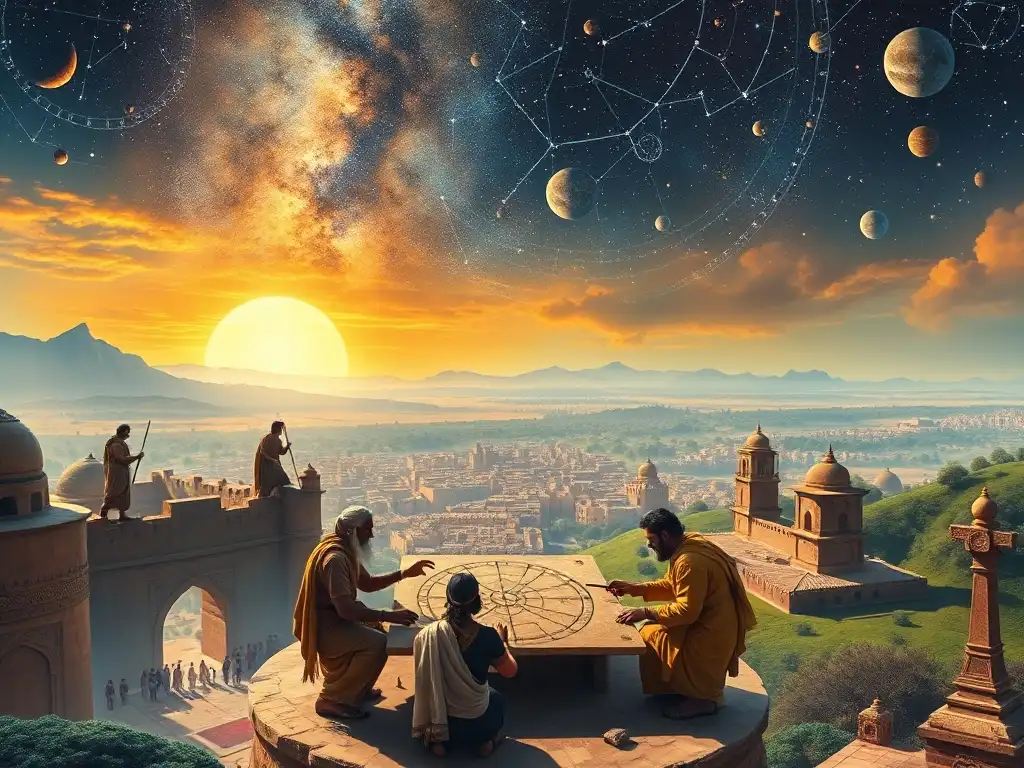
The Indus Valley Civilization (IVC), recognized for its advanced urban planning and sophisticated culture, also displayed remarkable achievements in the field of astronomy. Their techniques and tools laid foundational elements that influenced subsequent astronomical practices.
Observation Methods of Celestial Bodies
The astronomers of the Indus Valley Civilization employed several methods to observe celestial bodies. Primarily, they relied on naked-eye observations due to the lack of advanced optical instruments. This method involved:
- Direct Observation: The ancient astronomers meticulously recorded the positions of stars, planets, and other celestial phenomena by observing them at different times of the year.
- Lunar Phases: They tracked the phases of the moon, which were critical for agricultural planning and festivals. The accuracy of their lunar calendars is evident from archaeological findings that suggest they could predict lunar eclipses.
- Seasonal Changes: The alignment of celestial bodies with terrestrial events marked the importance of celestial observation in understanding seasonal changes, which were essential for agriculture.
These methods highlight the IVC’s integration of astronomy into daily life, significantly impacting agricultural cycles and religious practices.
Although the Indus Valley Civilization did not leave behind sophisticated astronomical instruments like later civilizations, several artifacts suggest their understanding of astronomy:
- Weights and Measures: The uniformity in weights and measures indicates a sophisticated level of mathematical understanding, which is crucial for astronomical calculations.
- Sun and Moon Symbols: Artifacts with carvings of solar and lunar symbols suggest that celestial bodies held significant cultural and possibly religious importance.
- The Great Bath: Some researchers propose that the Great Bath of Mohenjo-Daro may have been used for celestial observation, serving as an early form of an observatory.
These artifacts provide insight into how the IVC integrated their understanding of astronomy into their material culture.
Integration of Astronomy with Other Sciences
The influence of Indus Valley astronomy extended beyond mere observation; it was intricately woven into other scientific fields:
- Mathematics: The need to calculate time and celestial movements led to advancements in mathematics, particularly in geometry and arithmetic.
- Agriculture: Astronomical knowledge directly influenced agricultural practices, helping farmers determine the best times for planting and harvesting by observing celestial events.
- Urban Planning: The orientation of cities and structures often reflected astronomical alignments. Evidence suggests that cities were planned with astronomical considerations, enhancing their cultural and civic significance.
This interdisciplinary approach underscores the integral role of astronomy in the broader scientific and cultural framework of the Indus Valley Civilization, demonstrating an early understanding of how celestial phenomena can influence earthly activities.
Case Studies of Astronomical Practices in the Indus Valley
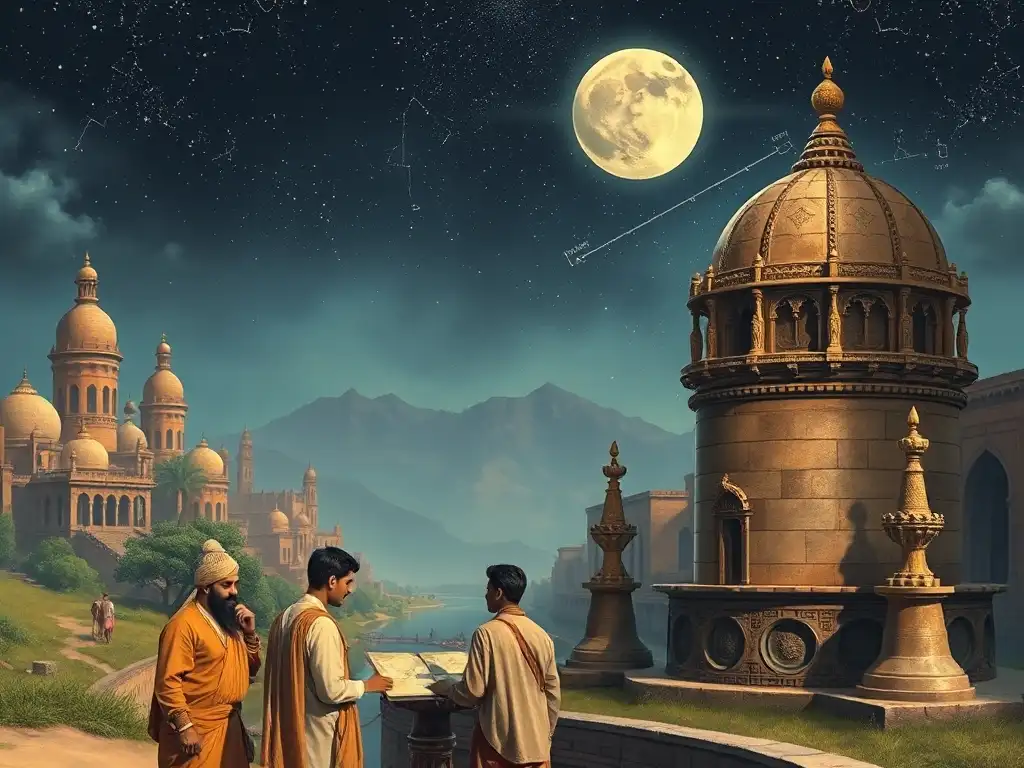
The Indus Valley Civilization (IVC), known for its advanced urban planning and sophisticated societal structure, also contributed significantly to the field of astronomy. Through various archaeological findings, we can identify specific sites and practices that highlight the IVC's understanding of celestial phenomena. This section delves into selected case studies that illustrate the astronomical practices prevalent in this ancient civilization.
Analysis of Specific Sites and Findings
Several sites within the IVC have yielded artifacts and structures indicative of astronomical knowledge.
- Dholavira:
- Water Management and Astronomical Alignment: The layout of Dholavira, specifically its intricate water reservoirs, is believed to be aligned with astronomical events. The positioning of these structures may have been influenced by the need to track seasonal changes, crucial for agriculture.
- Solar Observations: Archaeological evidence suggests that the inhabitants of Dholavira may have observed solar movements. The orientation of buildings and the placement of windows could reflect a sophisticated understanding of the sun's path.
- Kalibangan:
- Fire Altars: Excavations at Kalibangan revealed fire altars that align with the cardinal directions. This alignment indicates a possible ritualistic use associated with celestial worship, reflecting the significance of astronomy in their spiritual practices.
- Astronomical Symbols: Artifacts with engravings resembling celestial bodies have been discovered, suggesting that the people of Kalibangan might have had a symbolic representation of astronomical events.
- Harappa and Mohenjo-Daro:
- Urban Planning: The grid-like layout of cities like Harappa and Mohenjo-Daro may also hint at an astronomical influence, as the orientation of streets and structures could have been designed to observe celestial events.
- Standardized Weights and Measures: The use of standardized weights and measures in these cities is likely linked to astronomical observations, particularly in predicting agricultural cycles and trade.
Comparison with Contemporary Civilizations
When comparing the astronomical practices of the Indus Valley Civilization with those of contemporary civilizations such as Mesopotamia and Ancient Egypt, several similarities and differences emerge:
- Commonalities:
- Calendrical Systems: Like the Mesopotamians, the IVC likely developed a calendrical system based on lunar and solar cycles, aiding in agricultural planning.
- Celestial Worship: Both cultures placed significant importance on celestial bodies, integrating them into their spiritual and daily lives.
- Differences:
- Material Evidence: While Mesopotamia has extensive written records detailing astronomical observations, the IVC lacks such documentation. Most of their astronomical knowledge is inferred from architectural alignments and artifacts.
- Technological Integration: The focus of the IVC on urban planning and water management, as opposed to the more temple-centric astronomical practices seen in Egypt, indicates a unique approach to astronomy that was closely tied to pragmatism in daily life.
Lessons Learned from Indus Valley Astronomy Practices
The astronomical practices of the Indus Valley Civilization offer valuable insights into the relationship between science and society:
- Integration of Astronomy and Agriculture:
- The use of astronomical knowledge to inform agricultural practices underscores the practical application of science to enhance productivity. This relationship highlights the importance of celestial observations in supporting livelihoods.
- Urban Development Influenced by Celestial Events:
- The alignment of urban structures in relation to celestial bodies suggests that astronomy played a role in city planning. This practice can inspire modern urban planners to consider natural phenomena when designing cities.
- Cultural Significance of Astronomy:
- The intertwining of astronomy with spiritual and cultural practices demonstrates how ancient civilizations viewed the cosmos as integral to their identity. Understanding this can lead to a greater appreciation of how societies relate to the universe.
The Indus Valley astronomy influence is evident in its practical applications and cultural significance, providing a rich foundation for understanding how ancient civilizations perceived and interacted with the cosmos.
Conclusion: The Lasting Legacy of Indus Valley Astronomy Influence
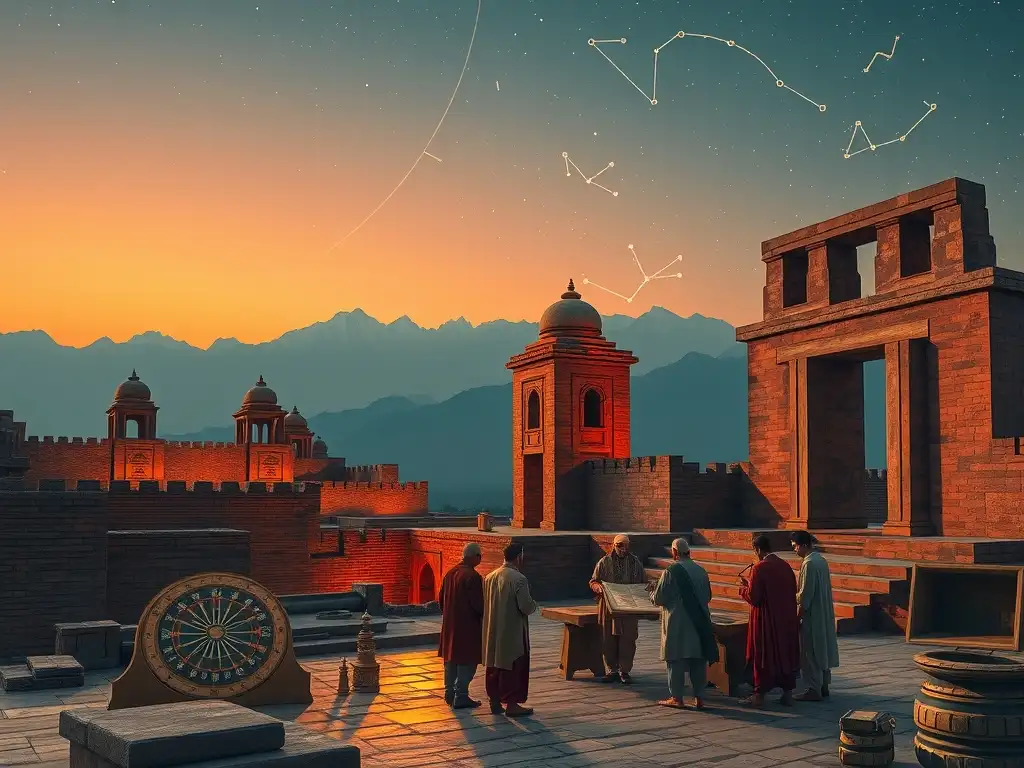
The Indus Valley Civilization, flourishing around 2500 BCE to 1900 BCE, laid the groundwork for astronomical knowledge that would resonate through subsequent Indian cultures. The sophisticated urban planning, advanced mathematics, and systematic record-keeping practices of the Indus Valley people suggest they had a keen interest in celestial observations. This legacy of Indus Valley astronomy influence is evident in various aspects of later Indian civilizations, particularly regarding agricultural calendars, religious practices, and architectural alignments.
Summary of Key Contributions
The contributions of the Indus Valley Civilization to the domain of astronomy can be summarized as follows:
- Astronomical Alignments: Archaeological evidence suggests that some structures were aligned with celestial bodies, indicating a sophisticated understanding of the cosmos.
- Lunar Calendar: The civilization likely utilized a lunar calendar, which would have been crucial for agricultural planning and ritual observances.
- Mathematical Foundations: The development of early mathematical concepts, such as geometry and measurement, were essential for astronomical calculations.
- Cultural Integration: The integration of astronomical observations into cultural and religious contexts, as seen in later texts like the Vedas, shows the enduring impact of their early practices.
These foundational elements not only reflect the advanced nature of Indus Valley society but also highlight how their astronomical knowledge influenced later Indian civilizations.
The Importance of Preserving Ancient Knowledge
Preserving the astronomical knowledge of ancient civilizations like the Indus Valley is crucial for several reasons:
- Cultural Heritage: Understanding the astronomical practices of the Indus Valley enhances our appreciation of ancient Indian culture and its contributions to global knowledge.
- Scientific Inquiry: Studying ancient astronomy can provide insights into early scientific methods and their evolution over time, contributing to modern scientific discourse.
- Educational Value: Incorporating ancient knowledge into contemporary education can inspire new generations to explore the intersections of history, science, and culture.
Efforts to preserve this knowledge involve archaeological studies, documentation of findings, and public outreach to raise awareness about the significance of ancient astronomical practices.
Future Research Directions in Indus Valley Astronomy
Future research in the realm of Indus Valley astronomy influence can take several promising directions:
- Interdisciplinary Approaches: Collaborative studies combining archaeology, history, and astronomy can yield richer insights into the practices of the Indus Valley Civilization.
- Technological Advances: Utilizing modern technology such as satellite imaging and 3D modeling can uncover new archaeological sites and provide more context for existing findings.
- Cross-Cultural Comparisons: Examining parallels between Indus Valley astronomy and that of contemporary civilizations, such as Mesopotamia and Egypt, can illuminate the exchange of ideas and practices across cultures.
Pursuing these research avenues will contribute to a deeper understanding of how the Indus Valley Civilization shaped the evolution of astronomical knowledge and its relevance in today's world.
Frequently Asked Questions
What is the Indus Valley Civilization known for in terms of astronomy?
The Indus Valley Civilization is known for its advanced urban planning and evidence of astronomical observations that influenced later astronomical practices in ancient India.
How did the Indus Valley astronomy influence later cultures?
The astronomical principles developed during the Indus Valley period were foundational, laying the groundwork for future Indian astronomical literature and practices in subsequent civilizations.
What tools or methods did the Indus Valley use for astronomical observations?
The Indus Valley Civilization utilized tools such as shadow clocks and gnomons, which helped them track celestial movements and calendar cycles effectively.
Were there any astronomical texts from the Indus Valley?
While there are no specific astronomical texts from the Indus Valley, archaeological findings suggest a sophisticated understanding of celestial phenomena that would later be documented in ancient Indian texts.
How does the Indus Valley's influence manifest in modern astronomy?
The astronomical techniques and concepts from the Indus Valley have persisted in various forms and continue to be studied, illustrating the long-lasting impact of this ancient civilization on modern astronomy.
Final Reflection: The Enduring Legacy of Indus Valley Astronomy
The exploration of the Indus Valley Civilization's contributions to astronomy reveals a profound connection between ancient knowledge and modern scientific understanding. Today, as we navigate the complexities of our universe, the insights gleaned from this remarkable civilization remind us that the quest for knowledge transcends time and culture. The Indus Valley astronomy influence serves as a testament to humanity's enduring curiosity and the foundational role that ancient civilizations play in shaping our contemporary worldview.
Cultural and social landscapes are continually shaped by the wisdom of our ancestors, and the Indus Valley is no exception. The astronomical practices and observations of this civilization not only laid the groundwork for future astronomical studies but also fostered a sense of wonder and inquiry that resonates with us today. As we reflect on their achievements, we are reminded of the words of Carl Sagan: We are made of star-stuff. We are a way for the universe to know itself.
This sentiment encapsulates the idea that our understanding of the cosmos is deeply rooted in the legacies of those who came before us, urging us to honor and build upon their discoveries.
As you contemplate the lessons from the Indus Valley Civilization, I invite you to embrace the spirit of inquiry that they exemplified. Consider how you can apply their legacy of observation and exploration in your own life. Whether through stargazing, studying the sciences, or simply fostering a sense of wonder about the universe, let the influence of Indus Valley astronomy inspire you to seek knowledge and understanding in your own journey. Remember, the stars are not just distant points of light; they are a connection to our past and a guide for our future.
Unveil the Wonders of Ancient Astronomy!
Thank you for diving into the captivating world of the Indus Valley Civilization and its pivotal role in the evolution of astronomy. Your curiosity opens the door to new insights about our cosmic history! Now, let’s harness that inspiration and take some next steps.
- Explore ancient texts and artifacts that illuminate the astronomical knowledge of the Indus Valley; consider visiting local museums or online collections dedicated to ancient civilizations.
- Share your newfound knowledge with friends or fellow history enthusiasts—post an interesting fact on social media, or spark a conversation with someone who shares your passion.
- Join a community group that focuses on ancient studies or astronomy to connect with like-minded individuals and deepen your understanding through engaging discussions and events.
What aspect of ancient astronomy intrigues you the most, and how will you delve deeper into it this week?