
The Connection Between Zero and the Decimal System in Ancient India


Welcome to Ancient India History, where we delve into the rich and diverse tapestry of ancient Indian civilizations! Prepare to embark on a journey that uncovers the fascinating contributions of these remarkable societies, from the enigmatic Indus Valley to the illustrious Gupta Empire. In our featured article, "The Connection Between Zero and the Decimal System in Ancient India," we unravel the significance of the ancient Indian numeral system and its profound impact on mathematics as we know it today.
Discover how the concept of zero transformed numerical representation and sparked a revolution in mathematical thought, inviting you to explore the nuances of this groundbreaking achievement. Are you ready to uncover the secrets behind ancient India's mathematical legacy? Dive in and let your curiosity lead the way!

The ancient Indian numeral system represents one of the most significant advancements in the realm of mathematics, particularly with its introduction of the concept of zero and the establishment of the decimal system. These innovations not only transformed mathematical calculations in India but also had a profound influence on mathematics around the globe.
By exploring the connection between zero and the decimal system, we delve into a pivotal moment in ancient history that illustrates the ingenuity and intellectual prowess of Indian civilizations. This article seeks to illuminate the remarkable contributions of ancient Indian mathematicians, highlighting how their innovations laid the groundwork for modern numerical systems and shaped the way we comprehend mathematics today.
Introduction to the Ancient Indian Numeral System
The ancient Indian numeral system, developed around the 6th century CE, is a remarkable achievement that has shaped mathematical practices worldwide. This system introduced the use of nine digits (1-9) along with a unique symbol for zero, creating a base-10 positional system that enabled more efficient calculations and representations of numbers.
Overview of Ancient Indian Mathematics
Ancient Indian mathematics was characterized by its sophisticated approach to arithmetic, geometry, and algebra. Notable texts such as the "Bakhshali Manuscript" and works by mathematicians like Aryabhata and Brahmagupta laid the foundation for complex mathematical concepts. The emphasis on practical applications, such as astronomy and commerce, propelled the development of mathematical theories and techniques, which were often documented in detailed treatises.
- Key Features of Ancient Indian Mathematics:
- Positional Notation: The arrangement of digits based on their value (units, tens, hundreds).
- Algebraic Concepts: Introduction of equations and methods for solving them.
- Geometric Principles: Exploration of shapes and volumes, leading to early forms of calculus and trigonometry.
Importance of the Decimal System in Ancient Civilizations
The decimal system revolutionized mathematics by simplifying calculations and enabling the representation of large numbers. Its adoption allowed for:
- Enhanced Calculation Efficiency: The use of place value reduced the complexity of arithmetic operations.
- Standardization of Numerical Representation: Facilitated trade and communication among various cultures.
- Foundation for Future Innovations: Provided a basis for advanced mathematical theories and discoveries.
The Concept of Zero in Ancient India
Zero is often regarded as one of the greatest mathematical inventions, and its origins can be traced back to ancient India. The concept of zero encompasses both a numeral and a concept representing the absence of quantity, which transformed mathematical thought.
Historical Context of Zero in Mathematics
The earliest recorded use of a symbol for zero dates back to the 5th century CE in Indian texts. Mathematicians like Brahmagupta recognized zero not just as a placeholder but also as a number in its own right, leading to groundbreaking advancements in arithmetic and algebra.
- Significant Milestones:
- Brahmagupta's Rules (628 CE): Established the fundamental rules for arithmetic involving zero, including addition, subtraction, and its role in division.
- Influence on Global Mathematics: The concept of zero was transmitted to the Islamic world and later to Europe, fundamentally altering mathematical practices.
Zero as a Placeholder in the Ancient Indian Numeral System
In the ancient Indian numeral system, zero served a crucial role as a placeholder, allowing for the differentiation between numbers such as 10 and 100. This innovation enabled the representation of large numbers and complex calculations with ease.
- Examples of Zero's Functionality:
- Positional Value: In the number 205, the zero indicates that there are no tens, enhancing clarity in numerical representation.
- Facilitation of Arithmetic Operations: Simplified calculations in both addition and subtraction by providing a clear framework for operations involving large numbers.
Through these innovations, ancient Indian mathematicians established a robust numeral system that not only advanced mathematical thought but also laid the groundwork for future mathematicians around the world. The connection between zero and the decimal system stands as a testament to the intellectual achievements of ancient Indian civilizations, showcasing their contributions to the field of mathematics that continue to resonate today.
Development of the Decimal System
The decimal system, also known as the base-10 system, is one of the most significant contributions of ancient Indian mathematicians to the world. This numeral system is characterized by its use of ten digits (0-9) and a positional notation that allows for efficient calculation and representation of large numbers. The origins of the decimal system can be traced back to the early civilizations of India, particularly during the period of the Gupta Empire, which flourished from approximately 320 to 550 CE.
The development of the decimal system was gradual, evolving from earlier counting methods that relied on physical objects or tally marks. Ancient Indian mathematicians recognized the need for a more efficient way to represent numbers, leading to the adoption of a positional notation system. This system not only simplified arithmetic operations but also laid the foundation for the modern numeral systems used today. The introduction of the concept of zero as a placeholder was pivotal, allowing for the representation of large numbers without ambiguity.
How the Decimal System Evolved in Ancient India
The evolution of the decimal system in ancient India can be understood through several key phases. Initially, the use of counting rods and physical objects defined the numerical representation. However, as trade and commerce expanded, the need for a more sophisticated system became apparent.
- Early Numeration: The earliest forms of numeration in India involved simple counting systems, often based on the human body or natural objects. This was common in the Indus Valley Civilization (c. 3300–1300 BCE).
- Positional Value: By the time of the Vedic period (c. 1500–500 BCE), scholars began to explore concepts of numerical value based on the position of digits. This laid the groundwork for more complex mathematical operations.
- Introduction of Zero: The introduction of zero as both a number and a concept was a revolutionary step. It allowed for the representation of nothingness and acted as a placeholder in the decimal system, enabling the clear distinction between numbers like 10 and 100.
- Standardization: During the Gupta Empire, mathematicians like Aryabhata and Brahmagupta further refined the decimal system, standardizing its use across various texts and practical applications in astronomy and mathematics.
Influence of Ancient Indian Scholars on the Decimal System
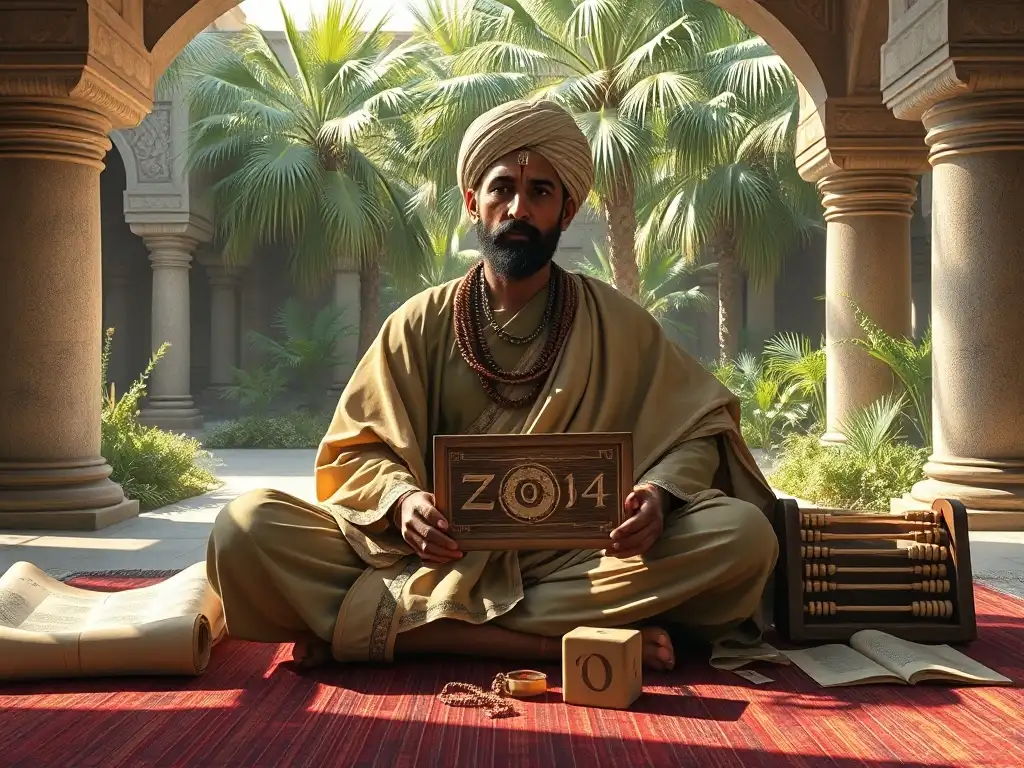
Ancient Indian scholars played a crucial role in formalizing and disseminating the decimal system. Their contributions influenced mathematical thought not only in India but across the globe. The works of these scholars emphasized the significance of zero and the base-10 positional system, which became foundational to mathematics as we know it today.
- Cultural Exchange: The trade routes established during ancient times facilitated the exchange of ideas between Indian mathematicians and their counterparts in the Middle East and beyond. This interaction helped in the spread of the decimal system.
- Mathematical Texts: Indian scholars authored numerous texts that formalized the principles of the decimal system. These texts served as educational resources that informed future generations of mathematicians.
- Astronomy and Mathematics: The application of the decimal system in astronomical calculations demonstrated its efficacy and versatility. Scholars utilized the system for precise calculations, thus enhancing its legitimacy and acceptance.
Contributions of Ancient Indian Mathematicians
Ancient Indian mathematicians made significant strides in the development and application of the decimal system. Their contributions laid the groundwork for subsequent advancements in mathematics and science.
Notable Mathematicians and Their Works
Some of the most notable mathematicians from ancient India include:
- Aryabhata (c. 476–550 CE): His seminal work, the Aryabhatiya, introduced concepts such as the place value system and the approximation of pi. Aryabhata's contributions to astronomy also highlighted the practical applications of the decimal system.
- Brahmagupta (c. 598–668 CE): In his text Brahmasphutasiddhanta, Brahmagupta elaborated on arithmetic operations involving zero and negative numbers, setting the stage for future mathematical developments.
- Bhaskara I (c. 600–680 CE): He is known for his work in translating and expanding Aryabhata’s ideas. His contributions to trigonometry and the decimal system were pivotal in furthering mathematical knowledge.
Key Texts that Discussed Zero and the Decimal System
Several key texts from ancient India provide insight into the understanding and application of zero and the decimal system:
- Aryabhatiya: This text is crucial for understanding the early use of the decimal system and the concept of zero. Aryabhata's methods of calculation laid down a foundation for future mathematicians.
- Brahmasphutasiddhanta: Brahmagupta's work is instrumental in the formal treatment of zero and the rules for arithmetic operations, highlighting its significance in mathematical calculations.
- Lilavati: Written by Bhaskara II in the 12th century, this text includes a variety of problems that utilize the decimal system, showcasing its application in practical scenarios.
The rich mathematical heritage of ancient Indian scholars not only advanced the understanding of zero and the decimal system but also influenced global mathematics, making their contributions invaluable to the history of mathematics.
The Impact of the Ancient Indian Numeral System on the World
The ancient Indian numeral system, particularly its incorporation of zero and the decimal system, has had a profound influence on mathematics and science globally. This system was revolutionary because it introduced a positional notation that efficiently represented numbers, allowing for complex calculations and advanced mathematical concepts. The foundational idea of zero as a number rather than merely a placeholder enabled mathematicians to perform operations that were previously cumbersome or impossible.
The impact of the ancient Indian numeral system is visible in various cultures that adopted these concepts. By the 7th century, Indian mathematicians like Brahmagupta were not only using but also formalizing the rules around arithmetic involving zero and negative numbers, which greatly enhanced the mathematical landscape. This innovation laid the groundwork for the development of algebra, marking a significant shift in mathematical thought.
Moreover, the clarity and efficiency of the decimal system allowed for easier computation and record-keeping, making it an attractive choice for trade, astronomy, and engineering. As a result, the ancient Indian numeral system became a cornerstone of mathematical practice across continents, influencing a myriad of fields such as commerce, navigation, and scientific research.
Spread of the Decimal System Beyond India
The spread of the decimal system beyond India can be traced through trade routes and cultural exchanges, particularly during the medieval period. One of the most significant conduits for this diffusion was the Silk Road, where traders and scholars travelled between India, the Middle East, and Europe. As Indian mathematicians interacted with Persian scholars, the numeral system began to evolve and adapt, leading to its incorporation into Islamic mathematics.
By the 10th century, the decimal system had reached the Arab world, where it was further refined and documented by mathematicians such as Al-Khwarizmi. His seminal work, "Al-Kitab al-Mukhtasar fi Hisab al-Jabr wal-Muqabala," introduced the principles of algebra and popularized the use of Indian numerals, including zero. This not only facilitated mathematical discourse within the Islamic Golden Age but also laid the groundwork for the eventual introduction of these concepts to Europe.
The transition to Europe was marked by the Latin translations of Arabic mathematical texts in the 12th century. Prominent figures like Fibonacci played a crucial role in promoting the use of the decimal system in Europe through his influential book, "Liber Abaci," published in 1202. This work highlighted the efficiency of the Hindu-Arabic numeral system compared to the Roman numeral system, prompting wider adoption across Europe.
Legacy of Ancient Indian Mathematics in Modern Numeration
The legacy of ancient Indian mathematics is evident in modern numeration systems that utilize the principles established centuries ago. The adoption of the decimal system, characterized by its base-10 structure and the inclusion of zero, has become the worldwide standard for numerical representation. This system's simplicity and logical coherence have made it indispensable in various fields, including finance, science, engineering, and technology.
Moreover, the contributions of ancient Indian mathematicians are reflected in contemporary mathematical terminology and symbols. The symbols for numbers 1 through 9, as well as zero (0), trace their origins back to the ancient Indian numeral system. Additionally, concepts such as place value and positional notation, which are essential for arithmetic operations today, stem from the innovations of ancient Indian scholars.
Educational systems worldwide now rely heavily on these foundational principles, which underscores the enduring impact of ancient Indian mathematics. The sophistication and depth of the ancient numeral system continue to inspire mathematicians and scholars, affirming its significance in the evolution of mathematical thought.
Conclusion: The Significance of Zero and the Decimal System in Ancient Indian Numeral System
The significance of zero and the decimal system in the ancient Indian numeral system cannot be overstated. These innovations revolutionized mathematics by providing a framework that facilitated complex calculations and a deeper understanding of numerical relationships. The introduction of zero as a number allowed for the development of advanced mathematical concepts and the establishment of a coherent numerical system that transcended cultural boundaries.
The implications of this system extend beyond mathematics into various fields, reflecting the interconnectedness of knowledge and innovation. The ancient Indian numeral system serves as a reminder of the rich intellectual heritage of India and its contributions to global civilization.
Reflecting on the Contributions to Global Mathematics
Reflecting on the contributions of ancient Indian mathematics reveals a tapestry of ideas that have shaped the mathematical landscape across cultures. The integration of zero and the decimal system has not only transformed arithmetic but has also influenced other areas such as astronomy, engineering, and even philosophy. The ability to conceptualize and manipulate numbers in a systematic way was a leap forward that facilitated scientific advancements and economic growth.
Modern mathematics owes a great debt to these early innovations, as they laid the foundation for contemporary mathematical practices. The global acknowledgment of ancient Indian contributions serves to honor this legacy and inspire future generations of mathematicians and scholars.
Future Research Directions on Ancient Indian Mathematics
Future research on ancient Indian mathematics holds immense potential for uncovering further insights into its development and influence. Scholars can explore various aspects such as the transmission of mathematical knowledge across cultures, the role of ancient Indian mathematicians in the evolution of mathematical theories, and the social and economic impacts of these innovations.
Additionally, examining the interplay between mathematics and other disciplines in ancient India could provide a richer understanding of how this civilization approached knowledge. Investigating the manuscripts, inscriptions, and artifacts from this period may also yield new findings that reinforce the significance of the ancient Indian numeral system in the history of mathematics.
As we continue to explore and appreciate the contributions of ancient Indian mathematics, we pave the way for a deeper understanding of its role in shaping the modern mathematical framework.
- Introduction to the Ancient Indian Numeral System
- The Concept of Zero in Ancient India
- Development of the Decimal System
- How the Decimal System Evolved in Ancient India
- Influence of Ancient Indian Scholars on the Decimal System
- Contributions of Ancient Indian Mathematicians
- The Impact of the Ancient Indian Numeral System on the World
- Conclusion: The Significance of Zero and the Decimal System in Ancient Indian Numeral System
- What is the significance of the Ancient Indian numeral system?
- How did the concept of zero develop in ancient India?
- What role did the Gupta Empire play in mathematics?
- How did the Ancient Indian numeral system influence other cultures?
- What are some key texts that discuss the ancient Indian numeral system?
Frequently Asked Questions
What is the significance of the Ancient Indian numeral system?
The Ancient Indian numeral system is significant because it introduced the concept of zero and a place-value system, which laid the foundation for modern mathematics.
How did the concept of zero develop in ancient India?
The concept of zero developed in ancient India as a placeholder, evolving from the use of empty space in calculations to being recognized as a number in its own right, significantly impacting mathematics.
What role did the Gupta Empire play in mathematics?
The Gupta Empire was crucial in advancing mathematics by promoting the use of the decimal system and further developing the ancient Indian numeral system, influencing future generations worldwide.
How did the Ancient Indian numeral system influence other cultures?
The Ancient Indian numeral system influenced other cultures, particularly through trade and the spread of ideas along the Silk Road, leading to the adoption of these numerals in Arabic and subsequently in European systems.
What are some key texts that discuss the ancient Indian numeral system?
Key texts like the Aryabhatiya by Aryabhata and Brahmasphutasiddhanta by Brahmagupta provide insights into the ancient Indian numeral system and its mathematical principles, showcasing the intellectual achievements of ancient India.
Final Reflection: The Enduring Legacy of Ancient Indian Numerals
The connection between zero and the decimal system in ancient India is not just a historical footnote; it is a cornerstone of modern mathematics. In an age where technology and data drive our world, understanding the origins of these concepts reminds us of the profound intellectual achievements of ancient civilizations. The innovations of ancient Indian mathematicians have laid the groundwork for the numerical systems we rely on today, proving that the past continues to shape our present.
The influence of the ancient Indian numeral system extends far beyond its mathematical applications; it has woven itself into the very fabric of global culture and knowledge. The introduction of zero as a number revolutionized calculations and paved the way for advancements in science, commerce, and philosophy. As the mathematician and philosopher Bhaskara II once said, “Mathematics is the queen of the sciences.” > This quote encapsulates the idea that the numerical innovations of ancient India are not merely academic; they are essential to the progress of human thought and civilization.
As we reflect on the significance of the ancient Indian numeral system, let us embrace the lessons it imparts about innovation, collaboration, and the pursuit of knowledge. I invite you to explore how these ancient concepts can inspire your own journey in understanding mathematics and its applications in everyday life. Whether you are a student, a professional, or simply a curious mind, consider how the legacy of zero and the decimal system can empower you to think critically and creatively in a world that is constantly evolving.
Unveil the Mysteries of Ancient India’s Numerical Innovations!
Thank you for diving into the fascinating world of ancient India’s contribution to our modern numerical system. You’ve uncovered how the concept of zero transformed mathematics and shaped the decimal system! Now, it's time to take this knowledge further and explore the legacy of these remarkable innovations.
Here are some actionable steps you can take:
- Explore more: Visit our extensive archives on ancient Indian inventions to deepen your understanding of their historical significance.
- Share your insights: Discuss what you've learned with friends or on social media to spark conversations about the importance of these mathematical advancements.
- Join our community: Sign up for our newsletter to receive updates on the latest articles and events that celebrate India's rich historical contributions.
As you reflect on these innovations, consider this: How do you think the invention of zero has influenced our modern understanding of mathematics and technology? Let's start a discussion in the comments below!