
The Mauryan Army: Chandragupta's Military Innovations and Strategies

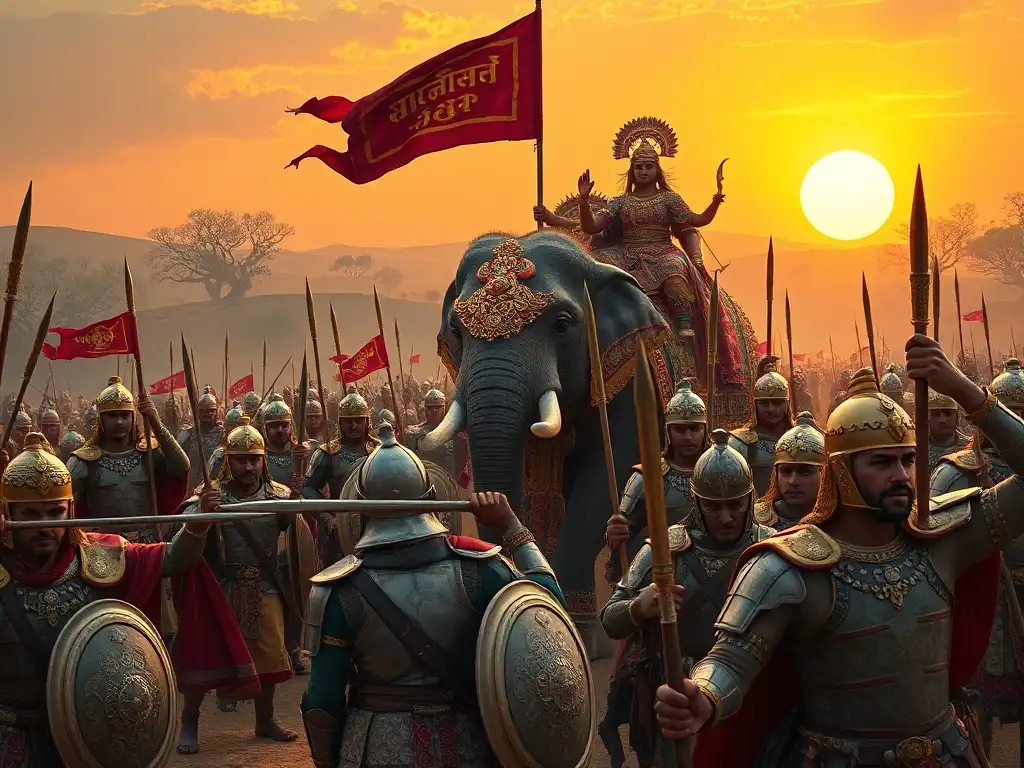
Welcome to Ancient India History, where we embark on a fascinating journey through the vast tapestry of ancient Indian civilizations. Delve into the remarkable era of the Mauryan Empire, as we uncover Chandragupta's military innovations and strategies that not only shaped his reign but also left a lasting impact on the course of history. What were the secrets behind the strength and resilience of the Mauryan army?
Join us as we explore these intriguing military tactics and innovations that revolutionized warfare in ancient India, and prepare to be captivated by the stories that have stood the test of time. Your adventure through history starts here!
Introduction to the Mauryan Empire
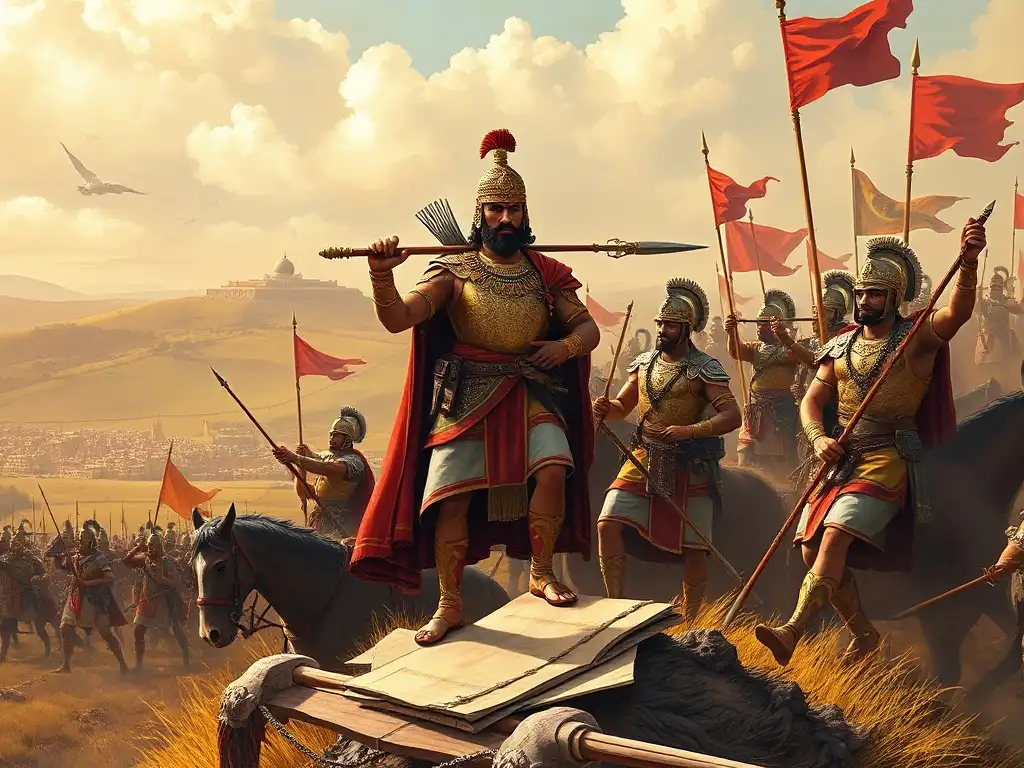
The Mauryan Empire, established in 322 BCE, marked a significant turning point in ancient Indian history. Under the leadership of Chandragupta Maurya, this empire not only united a vast territory but also laid the foundational principles of governance and military strategy that would influence subsequent generations. The Mauryan military was a formidable force, characterized by its innovative strategies and diverse tactics that allowed it to expand and maintain control over a vast region, from the northern plains to the southern tip of the Indian subcontinent.
Chandragupta's military innovations were instrumental in shaping the dynamics of warfare during this period, showcasing an integration of traditional practices with novel approaches. As we delve into the intricacies of the Mauryan military strategies and innovations, we uncover how they contributed to the empire's success and stability, establishing a legacy that would resonate through the ages.
Overview of the Mauryan Empire
The Mauryan Empire is often recognized as one of the largest empires in ancient India, reaching its zenith under the rule of Chandragupta and later, his grandson Ashoka. Covering a vast expanse of territory, it included regions that are now part of modern-day India, Pakistan, and Afghanistan. The empire was marked by its sophisticated administrative system, economic prosperity, and cultural advancements, making it a powerhouse of the ancient world.
Chandragupta, with the guidance of his mentor Chanakya, also known as Kautilya, established a centralized government that effectively managed the empire's resources and military forces. This centralization allowed for efficient tax collection and the mobilization of troops, which were crucial in maintaining power over diverse and often challenging terrains.
Significance of Chandragupta Maurya in Ancient India
Chandragupta Maurya is hailed as a pivotal figure in ancient Indian history due to his role in founding the Mauryan Empire. His leadership qualities, strategic acumen, and vision for a unified empire transformed the political landscape of India. He not only defeated the Nanda dynasty but also established a governance model that balanced power and justice, laying the groundwork for future rulers.
His engagement with military tactics and strategies was not just about conquest; it was also about fostering stability and unity among varied cultural groups within the empire. Chandragupta's legacy is preserved not only in historical texts but also through the governance principles that influenced subsequent Indian rulers, making him a key historical figure worthy of study.
The Evolution of Mauryan Military Strategies
Historical Context of Military Practices in Ancient India
Before the rise of the Mauryan Empire, military practices in ancient India were largely influenced by regional dynasties, tribal warfare, and the use of traditional tactics. Cavalry, infantry, and chariots were the primary components of Indian armies, with a heavy reliance on local warriors and mercenaries. However, the fragmented political landscape often led to inconsistent military practices and the inability to unify under a single banner.
Chandragupta's emergence as a leader coincided with the decline of the Nanda dynasty and the influence of Alexander the Great in the region. This period of transition called for a reevaluation of military strategies, as the need for a more organized and disciplined army became evident. Chandragupta's innovations marked a significant departure from traditional practices, introducing new methodologies that would redefine warfare in ancient India.
Key Innovations Introduced by Chandragupta Maurya
Chandragupta Maurya was not only a skilled military leader but also an innovator who understood the importance of strategy in warfare. Some of his key innovations included:
- Centralized Command Structure: Establishing a clear hierarchy within the military allowed for better coordination and effective communication during battles.
- Use of War Elephants: The incorporation of war elephants into the army provided a psychological advantage and enhanced the combat capabilities against rival forces.
- Intelligence and Espionage: Chandragupta emphasized the role of intelligence gathering, employing spies to gather crucial information about enemy movements and strategies.
- Innovative Tactics: He utilized tactics such as guerilla warfare and ambush strategies, adapting to the terrain and the strengths of his forces.
- Training and Discipline: A focus on rigorous training and discipline ensured that troops were well-prepared, leading to a more cohesive and effective fighting force.
These innovations not only contributed to the military successes of Chandragupta but also laid the groundwork for future military strategies in the Indian subcontinent, highlighting the importance of adaptability and organization in warfare.
Structure of the Mauryan Army
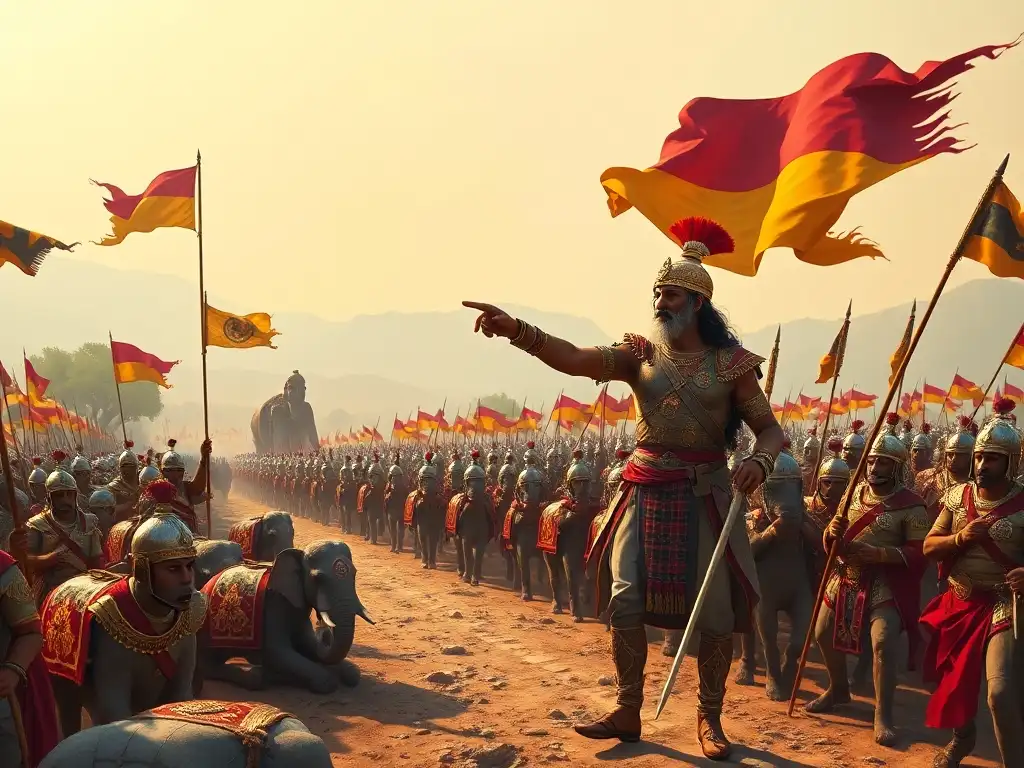
The Mauryan Army was a highly organized and sophisticated military force that played a crucial role in the expansion and consolidation of Chandragupta Maurya's empire. Its structure was designed to enable efficient command and control, allowing for effective deployment and coordination of various military units. The army was divided into several key components, each specializing in different aspects of warfare.
The overall hierarchy of the Mauryan military included a central command led by Chandragupta himself, supported by a council of generals and advisors. These leaders were responsible for strategic planning and making critical decisions on the battlefield. Below them were various units comprising infantry, cavalry, and war elephants, all of which had distinct roles in combat situations.
Composition of the Mauryan Army
The Mauryan Army was primarily composed of three main branches: infantry, cavalry, and war elephants. Each of these branches played a vital role in the army's effectiveness and contributed to its reputation as one of the most formidable military forces of its time.
- Infantry: The backbone of the Mauryan military, the infantry consisted of foot soldiers equipped with a variety of weapons such as swords, spears, and bows. They were organized into units called "padas," and their training emphasized discipline and endurance.
- Cavalry: The cavalry provided mobility and speed in battle, allowing for rapid flanking maneuvers and pursuit of fleeing enemies. Cavalry units were composed of well-trained horsemen who utilized horses bred for strength and agility.
- War Elephants: One of the most distinctive features of the Mauryan Army was its use of war elephants. These majestic creatures were armored and trained for battle, serving both as a means of transport and as a powerful force in combat. War elephants could create significant psychological impact on the enemy and were often employed to charge enemy lines, disrupt formations, and cause chaos.
Role of Infantry, Cavalry, and War Elephants
The integration of infantry, cavalry, and war elephants allowed the Mauryan Army to execute a variety of military tactics effectively.
- Infantry units formed the primary fighting force, engaging the enemy head-on and creating a solid frontline. Their role was crucial in holding ground and engaging in close combat.
- Cavalry units facilitated mobility on the battlefield. They were often deployed to outflank enemy positions, chase down retreating foes, or reinforce infantry lines during critical moments of battle.
- War elephants served as both tanks and morale boosters. Their sheer size and strength could break through enemy lines, while their presence instilled fear in opposing troops. Additionally, they were used strategically to protect key leaders and command units during conflicts.
The effective combination of these branches enabled the Mauryan Army to adapt to different combat scenarios and maintain dominance over rival states.
The Importance of Logistics in Mauryan Military Operations
Logistics played a pivotal role in the success of the Mauryan military operations. The ability to supply and transport troops, weapons, and provisions was essential for maintaining combat readiness. Chandragupta Maurya understood the significance of logistics in sustaining long campaigns and ensuring that his army was well-equipped.
- Supply Lines: The Mauryan Army established extensive supply routes that facilitated the movement of food, ammunition, and other essential resources. These supply lines were critical during long sieges and campaigns far from the empire's heartland.
- Transportation: The use of carts, pack animals, and boats helped in transporting troops and supplies across the diverse terrains of ancient India, ensuring that the army could mobilize quickly when necessary.
- Infrastructure: Chandragupta invested in the development of roads, bridges, and depots to enhance the logistics of the army. This infrastructure not only supported military movements but also improved trade and communication across the empire.
Overall, the logistical innovations implemented during the Mauryan period laid the groundwork for efficient military operations and contributed significantly to the army's success.
Chandragupta's Military Strategies
Chandragupta Maurya was not only a formidable military leader but also a strategic thinker. His approach to warfare was characterized by innovative strategies that helped him to expand and consolidate his empire.
Tactical Approaches in Warfare
Chandragupta's tactical approaches were multifaceted, often involving a combination of direct assaults and strategic maneuvers. He emphasized the importance of intelligence and reconnaissance to understand enemy positions and strengths before engaging in battle.
- Flanking Maneuvers: Utilizing the mobility of his cavalry, Chandragupta often executed flanking tactics to catch enemies off guard and disrupt their formations. This approach allowed his forces to strike from unexpected angles, maximizing the impact of their attacks.
- Coordinated Attacks: The synchronization of infantry, cavalry, and war elephants in battle was a hallmark of his military strategy. By coordinating attacks from multiple fronts, he was able to overwhelm adversaries and exploit weaknesses in their defenses.
- Psychological Warfare: Chandragupta also understood the value of psychological tactics. He would often spread disinformation about his forces or create the appearance of greater numbers, thus demoralizing enemy troops before engagements.
Use of Guerrilla Tactics and Deception
In addition to conventional warfare, Chandragupta employed guerrilla tactics and deception to gain an advantage over his enemies. These strategies were particularly effective against larger or more fortified foes.
- Hit-and-Run Tactics: His forces utilized hit-and-run tactics, striking swiftly at vulnerable targets and retreating before the enemy could mount a counterattack. This approach allowed them to harass larger armies and disrupt supply lines without engaging in full-scale battles.
- Ambushes: Chandragupta often set ambushes in favorable terrain, using the element of surprise to inflict severe damage on unsuspecting enemy forces. These tactics were particularly effective in the dense forests or mountainous regions of India.
- Deceptive Strategies: He would sometimes use decoys or feigned retreats to lure enemies into traps. Such tactics required a deep understanding of enemy psychology and battlefield dynamics, showcasing his strategic acumen.
Fortifications and Defensive Strategies
Chandragupta Maurya recognized the importance of fortifications in maintaining control over conquered territories and defending against invasions. His military strategies included establishing well-fortified cities and defensive structures.
- Construction of Forts: He ordered the construction of forts at strategic locations, equipped with walls, moats, and watchtowers. These forts served as military bases and hubs for controlling surrounding regions.
- Garrison Troops: Each fort was manned by garrison troops who were responsible for its defense and for repelling any incursions. This ensured that his territories were secure and that rapid responses could be mounted against threats.
- Strategic Retreats: In instances where facing overwhelming forces was unavoidable, Chandragupta employed strategic retreats to safe locations. This allowed him to preserve his army for future engagements instead of risking unnecessary losses.
Chandragupta's innovative military strategies and fortifications significantly contributed to the establishment and longevity of the Mauryan Empire, setting a precedent for military organization and tactics in ancient India.
Innovations in Weaponry and Technology
The Mauryan Empire, under the leadership of Chandragupta Maurya, marked a significant period in the evolution of military strategies and innovations in ancient India. The Mauryan army's advancements in weaponry and technology played a crucial role in establishing one of the most powerful empires of the time. These innovations not only enhanced the effectiveness of the Mauryan military but also set a precedent for future military developments in the region.
Development of Advanced Weaponry
Chandragupta's military innovations included the development of advanced weaponry tailored for both infantry and cavalry units. Prominent among these were:
- Cavalry Weapons: The use of composite bows and sturdy lances enhanced the striking power of cavalry units. These bows, made from a combination of wood and horn, offered greater range and strength compared to traditional bows.
- Infantry Arms: Swords, shields, and spears were refined and mass-produced, allowing for better protection and combat effectiveness on the battlefield. The introduction of specialized units wielding these weapons contributed to diverse combat strategies.
- Siege Weaponry: The Mauryan army also developed siege engines, including catapults and battering rams, which enabled them to breach fortified cities effectively. Such innovations showcased their tactical superiority, especially during extended sieges.
Introduction of New Military Technologies
In addition to weaponry, the Mauryan military embraced new technologies that revolutionized their warfare:
- Chariots and War Elephants: The integration of war elephants into their tactics was a game-changer. Elephants not only served as powerful symbols of strength but also provided significant advantages in terms of mobility and shock value during battles.
- Fortifications and Defensive Structures: The Mauryans constructed elaborate fortifications using advanced architectural techniques, which included sturdy walls and moats. These defenses were critical in protecting their territories from invasions and securing strategic locations.
- Military Logistics: Innovations in military logistics, including supply chains and communication methods, allowed the Mauryan army to mobilize quickly and sustain long campaigns. This organizational prowess was essential for coordinating large-scale military operations effectively.
Impact of Innovations on Mauryan Conquests
The innovations in weaponry and military technology had profound implications for the Mauryan conquests. The enhanced capabilities of the Mauryan army allowed them to undertake ambitious campaigns, resulting in the rapid expansion of their territory. Notable impacts included:
- Increased Battle Efficiency: The combination of advanced weaponry and tactics enabled the Mauryan forces to defeat larger armies, as evidenced in their campaigns against neighboring kingdoms.
- Psychological Warfare: The sight of war elephants and well-equipped soldiers instilled fear in opposing forces, often leading to quicker surrenders and less resistance.
- Unified Military Doctrine: The integration of diverse military technologies fostered a unified approach to warfare, which was critical in maintaining control over vast regions and diverse populations.
Case Studies of Major Battles
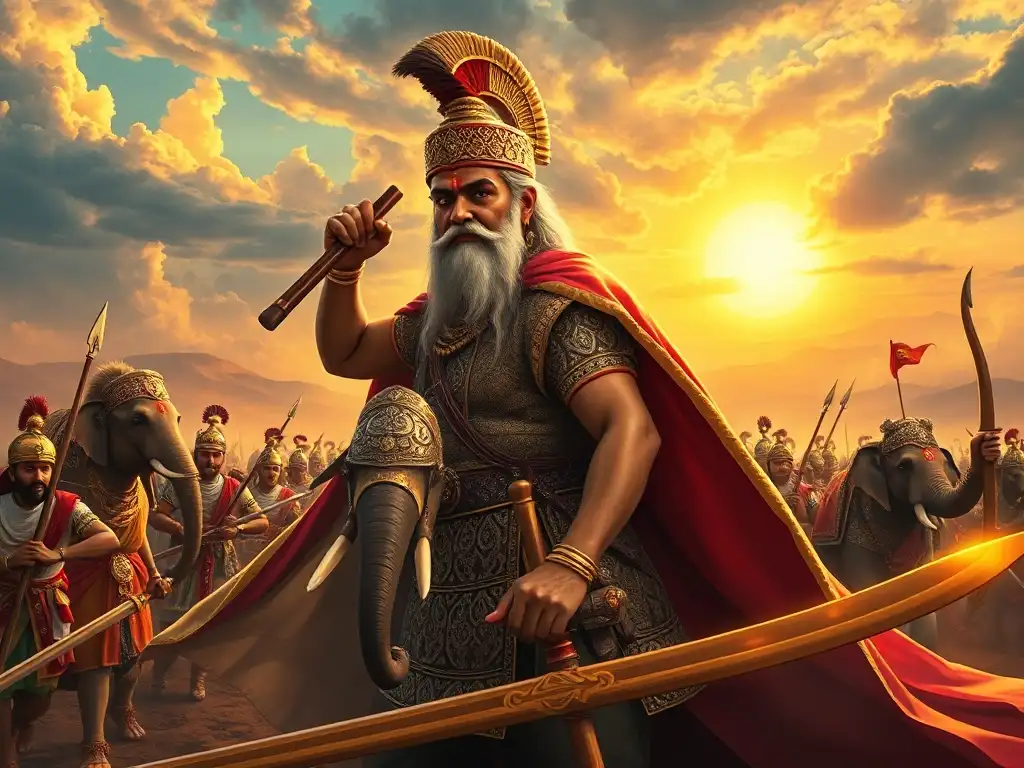
The application of Mauryan military innovations is best illustrated through key battles that shaped the empire's history. Each engagement revealed the effectiveness of Chandragupta's strategies and the technological advancements of his army.
The Conquest of Magadha: A Strategic Overview
The conquest of Magadha stands as a defining moment in Chandragupta's rise to power. Utilizing innovative military strategies, he leveraged both guerrilla tactics and conventional warfare to subdue the ruling Nandas. Key elements of this strategy included:
- Surprise Attacks: Chandragupta employed night raids and ambushes to catch the Nanda forces off guard, exploiting their overconfidence.
- Alliances with Local Rulers: By forging alliances with local chieftains discontent with Nanda rule, Chandragupta was able to weaken the enemy from within, gaining crucial intelligence and resources.
- Superior Logistics: Effective supply chain management allowed the Mauryan army to sustain prolonged engagements, which was pivotal in the decisive battles leading to the overthrow of the Nandas.
The Battle of the Narmada: Tactics and Outcomes
The Battle of the Narmada showcased the Mauryan army's tactical flexibility and innovation. Faced with a formidable coalition of regional powers, Chandragupta's forces demonstrated several key tactics:
- Flanking Maneuvers: The Mauryan troops executed flanking maneuvers to disrupt enemy formations, leveraging their cavalry's mobility.
- Use of Elephants: The deployment of war elephants created chaos within enemy lines, allowing Mauryan infantry to capitalize on the disruption and engage effectively.
- Psychological Advantage: The sheer presence of a well-organized and technologically advanced army led to demoralization among the opposition, contributing to the Mauryan victory.
The Campaign Against Alexander's Forces
Chandragupta's strategic innovations were also tested during the campaign against Alexander the Great's forces. While direct confrontation was not the primary strategy, the Mauryan military's preparedness and adaptability played crucial roles:
- Intelligence Gathering: Chandragupta's forces employed scouts to gather intelligence on Alexander's movements, allowing them to anticipate and respond to threats effectively.
- Defensive Posturing: Instead of engaging in a decisive battle, the Mauryan army utilized defensive tactics, fortifying key locations and leveraging the terrain to their advantage.
- Alliance Building: Chandragupta sought alliances with local rulers who opposed Alexander, effectively encircling his forces and creating a coalition that would challenge Alexander's advance.
Through these case studies, the effectiveness of Mauryan military strategies and innovations becomes evident, illustrating how Chandragupta Maurya established a formidable empire grounded in military prowess.
The Legacy of Mauryan Military Strategies
The Mauryan military strategies, particularly those implemented by Chandragupta Maurya, laid the groundwork for warfare in India for centuries. His innovative approaches included the integration of various military units, the effective use of spies and intelligence, and the establishment of a strong, centralized command structure. These strategies not only contributed to his successes in unifying the Indian subcontinent but also set a precedent for future military leaders.
One of the most significant aspects of the Mauryan military legacy is the emphasis on logistical support and supply chain management. Chandragupta understood that a well-fed and well-equipped army was essential for sustained campaigns. The Mauryan administration developed efficient systems for the procurement and distribution of resources, which became a hallmark of military operations in later Indian dynasties.
Additionally, the Mauryan army's diverse composition, which included infantry, cavalry, and war elephants, showcased the importance of versatility in military engagements. This combination of forces became a model for subsequent Indian rulers, who adopted similar structures in their own armies, thus perpetuating the Mauryan innovations throughout the region.
Influence on Subsequent Indian Dynasties
Chandragupta's military strategies significantly influenced various Indian dynasties that followed the Mauryan Empire. The success of the Mauryan army inspired rulers like the Shungas and the Satavahanas, who recognized the importance of a well-organized military structure and effective command strategies. The use of war elephants, a staple of the Mauryan military, became prevalent among these dynasties, enhancing their battlefield capabilities.
Moreover, the emphasis on intelligence and espionage that Chandragupta championed was adopted by later leaders, including the Gupta Empire, known for its military prowess. The Gupta rulers utilized similar tactics of gathering information and employing spies to outsmart their adversaries and maintain territorial integrity.
The Mauryan legacy also extended to the development of military texts and treatises that discussed strategy, formations, and tactics. These works served as foundational texts for military commanders throughout Indian history, ensuring that the principles established by Chandragupta remained relevant long after the fall of the Mauryan Empire.
Continuing Impact on Military Strategies in Ancient Warfare
The influence of Mauryan military strategies transcended the Indian subcontinent, impacting military tactics in neighboring regions. The integration of diverse military units, including cavalry and infantry, was mirrored by various ancient armies, showcasing the effectiveness of a multi-faceted approach to warfare.
Furthermore, Chandragupta's methods of psychological warfare and propaganda served as a valuable lesson on the importance of morale and public perception in military campaigns. This aspect of warfare would resonate through centuries, shaping how leaders approached conflicts in both India and beyond.
The Mauryan focus on establishing fortified cities and strategic locations also influenced military architecture and planning in later eras. The concept of securing vital geographical points, such as mountain passes and river crossings, became a critical component of military strategy, demonstrating the enduring nature of Mauryan innovations.
Conclusion
Summary of Chandragupta's Military Innovations
Chandragupta Maurya's military innovations were pivotal in shaping the course of Indian history. His strategies encompassed a comprehensive approach to warfare, integrating logistics, diverse troop formations, and intelligence gathering. This holistic view not only led to his success in unifying India but also served as a model for future military leaders.
Reflection on the Importance of Mauryan Military Strategies in History
The Mauryan military strategies remain a significant chapter in the history of warfare. They exemplify how effective leadership, innovative tactics, and organizational efficiency can lead to monumental achievements in statecraft and military success. The legacy of Chandragupta Maurya continues to resonate, highlighting the importance of strategic foresight and adaptability in military history, and serving as a reminder of the profound impact that one leader's vision can have on the future of a civilization.
- Introduction to the Mauryan Empire
- Overview of the Mauryan Empire
- Significance of Chandragupta Maurya in Ancient India
- The Evolution of Mauryan Military Strategies
- Structure of the Mauryan Army
- Chandragupta's Military Strategies
- Innovations in Weaponry and Technology
- Case Studies of Major Battles
- The Legacy of Mauryan Military Strategies
- Conclusion
- What were the key military innovations of the Mauryan Army under Chandragupta?
- How did the Mauryan military strategies contribute to the empire's expansion?
- What role did intelligence and espionage play in Mauryan military operations?
- How did the composition of the Mauryan army differ from earlier Indian armies?
- What impact did the Mauryan military innovations have on later Indian dynasties?
Frequently Asked Questions
What were the key military innovations of the Mauryan Army under Chandragupta?
Chandragupta implemented several innovations, including the use of war elephants, advanced infantry training, and sophisticated battle formations that enhanced the army's effectiveness in warfare.
How did the Mauryan military strategies contribute to the empire's expansion?
The Mauryan military strategies, particularly their use of guerrilla tactics and efficient logistics, allowed them to conquer vast territories, establishing one of the largest empires in ancient India.
What role did intelligence and espionage play in Mauryan military operations?
The Mauryan Empire placed a strong emphasis on intelligence and espionage, using spies to gather information about enemy movements, which was crucial for planning effective military campaigns.
How did the composition of the Mauryan army differ from earlier Indian armies?
The Mauryan army was more diverse, including various units such as infantry, cavalry, and war elephants, which provided a balanced and flexible force capable of adapting to different combat situations.
What impact did the Mauryan military innovations have on later Indian dynasties?
The military innovations and strategies developed by the Mauryan Empire laid the groundwork for future Indian dynasties, influencing their tactical approaches and organizational structures in warfare.
Final Reflection: The Enduring Legacy of Mauryan Military Innovations
The military strategies and innovations of the Mauryan Empire, particularly under Chandragupta, resonate profoundly in today's world. As we navigate complex geopolitical landscapes, the lessons from the Mauryan army remind us that effective leadership and strategic foresight are timeless virtues that can shape the course of history. The ingenuity displayed in their military tactics not only secured their empire but also laid the groundwork for future military doctrines across cultures.
The influence of the Mauryan military strategies extends beyond historical textbooks; they continue to inspire modern military and leadership practices. The ability to adapt and innovate in response to challenges is a hallmark of successful leadership, a principle that remains relevant in various fields today. In the midst of chaos, there is also opportunity.
– Sun Tzu. This quote encapsulates the essence of the Mauryan approach, where strategic innovation turned potential threats into opportunities for expansion and consolidation.
As you reflect on the lessons drawn from the Mauryan military innovations, consider how these principles can be applied in your own life. Embrace the spirit of adaptability and strategic thinking in your personal and professional endeavors. Whether you are leading a team, navigating challenges, or pursuing your goals, remember that the strategies of the past can guide your path forward. Let the legacy of Chandragupta's military brilliance inspire you to forge your own strategies for success in an ever-evolving world.
Unleash Your Inner Strategist and Explore Mauryan Innovations!
Thank you for diving into the fascinating world of the Mauryan Army and Chandragupta’s groundbreaking military strategies! You've uncovered key insights that not only highlight the ingenuity of ancient warfare but also inspire us to think critically about strategy and leadership in our own lives.
Now, it’s time to take action and deepen your understanding:
- Dive deeper: Explore the specifics of notable battles and the military tactics that defined the Mauryan Army. Check out our additional articles to expand your knowledge!
- Join the conversation: Engage with fellow history enthusiasts by sharing your thoughts on military strategy in ancient times on our community forum. Your insights could spark intriguing discussions!
- Innovate your strategy: Consider how one of Chandragupta’s strategies might be applied to a modern challenge you are facing. Whether in business or personal development, embrace the opportunity to experiment!
What contemporary challenges can you tackle using the strategic insights from Chandragupta’s military innovations? We would love to hear your thoughts in the comments!