
The Impact of Foreign Invasions on the Political Stability of the Maurya Empire

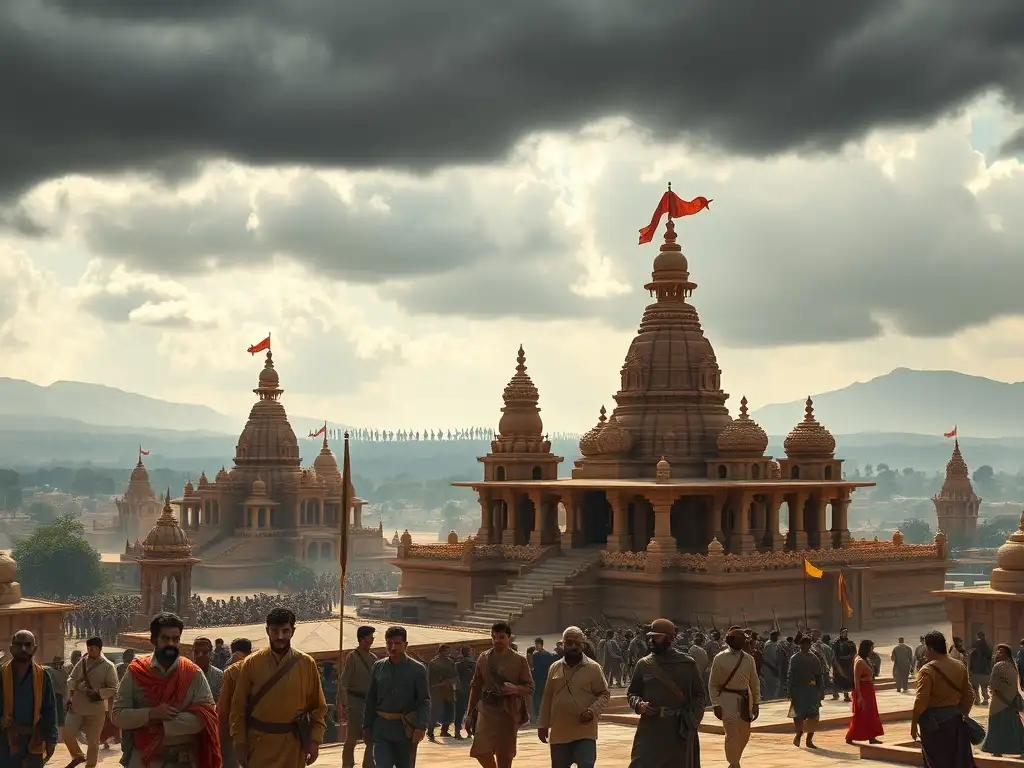
Welcome to Ancient India History, where we embark on an enlightening journey through the tapestry of time that wove together the remarkable civilizations of ancient India. From the enigmatic Indus Valley to the illustrious Gupta Empire, our exploration reveals the rich cultural heritage and profound contributions of this extraordinary region. In our featured article, "The Impact of Foreign Invasions on the Political Stability of the Maurya Empire," we delve into the turbulent forces that shaped one of the most significant empires in Indian history.
What were the lasting effects of these invasions on the Maurya Empire's stability? Join us as we uncover the intricate layers of history and culture that continue to influence us today.

The Maurya Empire, which flourished from 322 to 185 BCE, stands as one of the most significant ancient Indian civilizations, known for its remarkable political structure and vast territorial expanse. The empire reached its zenith under the rule of Emperor Ashoka, whose policies and contributions left an indelible mark on Indian history. However, this period of prosperity was not without challenges. One of the most critical factors influencing the political stability of the Maurya Empire was foreign invasions.
The incursions from outside forces not only threatened the integrity of the empire but also reshaped its political landscape. Understanding the effects of these invasions provides valuable insight into the vulnerabilities that the Maurya Empire faced and how these external pressures contributed to its eventual decline. This article delves into the various foreign invasions that impacted the Maurya Empire, examining their implications on its political stability and overall governance.
Introduction to the Maurya Empire and Foreign Invasions
The Maurya Empire is often celebrated for its sophisticated administrative systems, extensive trade networks, and cultural achievements. Established by Chandragupta Maurya, the empire unified a large portion of the Indian subcontinent and laid the groundwork for future dynasties. However, the stability of such a vast territory was perpetually under threat from foreign invasions. These incursions not only introduced military challenges but also cultural exchanges that could undermine established norms within the empire. Analyzing these invasions helps to illuminate the complexities of governance in ancient India and the ways in which external forces can impact political structures.
Overview of the Maurya Empire's Political Structure
The political structure of the Maurya Empire was characterized by a centralized administration that effectively managed its diverse population. Key features included:
- Monarchical Rule: The emperor held supreme power, supported by a council of ministers and administrators.
- Provincial Governance: The empire was divided into provinces, each governed by a viceroy, ensuring local issues were addressed while maintaining central authority.
- Bureaucratic System: A well-organized bureaucracy facilitated tax collection, law enforcement, and infrastructure development.
This robust political framework allowed the Maurya Empire to maintain control over vast territories, but it also made the empire vulnerable to external threats. The need for constant vigilance against foreign invasions was paramount in preserving the stability of its governance.
Significance of Foreign Invasions in Ancient Indian History
Foreign invasions in ancient India were not merely military events; they often heralded significant shifts in cultural, social, and political paradigms. The Maurya Empire's encounters with foreign powers illustrate several key points:
- Cultural Exchange: Invasions often led to the introduction of new ideas, technologies, and cultural practices, influencing the local populace.
- Political Realignment: The pressure from foreign powers could destabilize existing political alliances and provoke internal strife.
- Resistance and Unification: In many cases, foreign invasions galvanized regional powers to unite against a common enemy, redefining political boundaries.
Understanding these dynamics is crucial in appreciating the broader historical context of the Maurya Empire and its enduring legacy.
Types of Foreign Invasions Affecting the Maurya Empire
The Maurya Empire faced several foreign invasions that significantly impacted its political stability. The two most notable types of invasions were those led by Alexander the Great and subsequent threats from neighboring regions.
Alexander the Great: Initial Invasion and Its Consequences
Alexander the Great's invasion in 326 BCE marked a pivotal moment in the history of the Maurya Empire. His military campaign, although brief, had profound implications:
- Military Confrontation: The encounter at the Battle of the Hydaspes tested the military capabilities of the Maurya forces and prompted strategic reevaluations.
- Political Repercussions: The invasion weakened local rulers and destabilized regional governance, creating a power vacuum that the Maurya Empire sought to fill.
- Cultural Impact: Alexander's presence introduced Greek culture and ideas, influencing artistic and philosophical discourse in the region.
The aftermath of this invasion set the stage for further challenges to Mauryan authority.
Subsequent Invasions and Threats from Neighboring Regions
Following Alexander's incursion, the Maurya Empire faced ongoing threats from various neighboring regions. These included:
- Scythian Tribes: The incursions of Scythian tribes in northern India led to continuous skirmishes and demands for military readiness.
- Regional Rivals: Kingdoms such as the Indo-Greeks and later the Sakas posed significant challenges to Mauryan supremacy, leading to conflicts that strained resources.
- Internal Dissent: The pressure from external forces often exacerbated internal divisions, leading to revolts and weakening the central authority.
These subsequent invasions underscored the persistent vulnerabilities of the Maurya Empire and highlighted the intricate relationship between foreign threats and political stability.
Through the exploration of these themes, we can gain a deeper understanding of how foreign invasions shaped the Maurya Empire's political landscape and ultimately contributed to its historical narrative.
Effects of Foreign Invasions on the Political Stability of the Maurya Empire
The Maurya Empire, which flourished from 322 to 185 BCE, was significantly affected by foreign invasions throughout its existence. These invasions disrupted the political landscape, leading to a series of consequences that ultimately contributed to the empire's decline. The effects of these invasions can be categorized into several key areas, including governance, trade, and social dynamics.
Disruption of Governance and Administrative Structures
Foreign invasions often led to a breakdown of the established governance systems within the Maurya Empire. The intrusion of external forces, such as the incursions by the Greeks under Alexander the Great, created a climate of instability. Local rulers and provincial governors faced challenges in maintaining their authority, as they were either forced to negotiate with or fight against these invaders.
As a result, the central authority weakened, leading to fragmentation. The administrative structures that the Mauryan rulers had meticulously built to manage their vast empire became ineffective. This breakdown often resulted in power vacuums, where local leaders seized control, undermining the cohesion that the Maurya Empire had previously maintained.
Impact on Trade Routes and Economic Stability
The invasions also had a profound impact on the economy of the Maurya Empire, particularly through the disruption of trade routes. The empire was strategically positioned along major trade networks connecting India with the Mediterranean and Central Asia. However, the threat posed by foreign armies led to the closure of these vital channels.
Businesses suffered as merchants were unable to transport goods safely, leading to a decline in trade revenues. This economic downturn not only weakened the empire financially but also diminished its ability to maintain a strong military and administrative presence. Consequently, the economic instability further eroded political stability, creating a vicious cycle that was hard to break.
Social Unrest and Rebellion in Response to Invasions
The social fabric of the Maurya Empire was also affected by foreign invasions. As external pressures mounted, discontent among various social groups grew. Local populations often viewed foreign invaders as oppressors, leading to increased tensions and unrest.
The resulting social unrest sometimes manifested in open rebellion against both the invaders and the Mauryan leadership. Such revolts were particularly common in regions that felt most threatened or marginalized by the changes brought about by invasions. This internal strife weakened the empire further, as resources were diverted from governance and military defense to quelling rebellions.
Responses of the Maurya Empire to Foreign Invasions

In the face of these challenges, the Maurya Empire implemented a series of strategies and reforms aimed at mitigating the impact of foreign invasions. Their responses encompassed military, diplomatic, and structural adaptations that were essential for maintaining their hold on power.
Military Strategies Employed to Counter Invasions
To counter foreign invasions, the Maurya Empire employed various military strategies that showcased their tactical ingenuity. They developed fortified cities and strengthened their borders, creating formidable defenses against invading forces.
Additionally, the Mauryan military undertook training programs to enhance the skills of their soldiers, ensuring they were well-equipped to face external threats. Notably, the empire also engaged in guerilla warfare tactics, leveraging their knowledge of local terrain to launch surprise attacks on foreign troops, thereby disrupting their operations.
Diplomatic Efforts and Alliances Formed
Alongside military responses, the Maurya Empire recognized the importance of diplomacy in countering invasions. They sought to form alliances with neighboring kingdoms, creating a united front against common enemies.
These diplomatic efforts often involved negotiations, marriages, and treaties that aimed to secure peace and strengthen political ties. By fostering relationships with other regional powers, the Maurya Empire could divert attention from itself and create a buffer against potential invasions.
Reforms in Political Structure Post-Invasion
In the aftermath of invasions, the Maurya Empire also undertook significant reforms in its political structure. The need for a more resilient governance model became evident, leading to the decentralization of power.
Provincial governors were granted more autonomy, allowing them to respond more effectively to local threats. Additionally, there was an emphasis on integrating local leaders into the administrative framework, which helped to stabilize the regions affected by invasions. These reforms aimed to restore confidence in the central authority while addressing the unique challenges posed by a changing political landscape.
While foreign invasions presented significant challenges to the Maurya Empire, the responses implemented showcased the resilience and adaptability of its political structure. However, the cumulative effects of these invasions ultimately contributed to the empire's decline, marking a pivotal period in ancient Indian history.
Long-term Consequences of Foreign Invasions on the Maurya Empire
The foreign invasions during the Maurya Empire had far-reaching consequences that extended beyond immediate military conflicts. Firstly, these invasions contributed to significant shifts in the political landscape, leading to alterations in governance and administrative practices. As external threats, such as the incursions by Alexander the Great and subsequent rulers, prompted the Mauryan leadership to adopt more sophisticated strategies for defense and diplomacy, these adaptations had lasting impacts on political organization.
Moreover, the invasions initiated a cultural exchange that influenced local traditions and practices. The blending of foreign customs with indigenous culture not only enriched the social fabric of the Maurya Empire but also laid the groundwork for future interactions between various civilizations in the Indian subcontinent. This cultural amalgamation significantly shaped the identity of Indian society and its political structures in the centuries that followed.
Changes in Political Dynamics and Power Structures
The incursions faced by the Maurya Empire necessitated a reevaluation of its political dynamics. As foreign powers posed challenges to Mauryan authority, the empire had to reinforce its military and administrative frameworks. This led to the establishment of more centralized power structures, as the need for a unified response to invasions became paramount.
Additionally, the threat of foreign invasions catalyzed the rise of regional powers. Local rulers and governors, seeking to assert their autonomy, often capitalized on the instability created by external threats. This resulted in a fragmentation of power, where the central authority of the Maurya Empire began to weaken, ultimately leading to its decline. The shifting allegiances and power struggles among local rulers became a defining characteristic of the political landscape in the aftermath of these invasions.
Influence on Subsequent Indian Empires and Civilizations
The effects of foreign invasions during the Maurya Empire had a profound influence on the political trajectories of subsequent Indian empires. The Gupta Empire, for instance, emerged in a context shaped by the legacy of the Mauryan experience with foreign threats. The Gupta rulers adopted strategies that emphasized cultural cohesion and military preparedness, learning from the vulnerabilities exposed during the Maurya period.
Furthermore, the invasions prompted a sense of nationalism among various Indian states, leading to the formation of coalitions against foreign powers. This collective response to external threats became a recurring theme in Indian history, influencing the political ideologies of later empires. The emphasis on unity against foreign invasion was not merely a reaction but also a strategic framework that shaped political discourse in ancient India.
Legacy of Foreign Invasions in the Context of Indian History
The legacy of foreign invasions during the Maurya Empire is intricately woven into the broader narrative of Indian history. These invasions highlighted the vulnerabilities of even the most powerful empires, serving as cautionary tales for future rulers. The political instability that ensued fostered a culture of resilience and adaptation among Indian civilizations, which learned to navigate the complexities of foreign relations and internal governance.
Moreover, the cultural exchange resulting from these invasions enriched the Indian subcontinent, leading to advancements in trade, art, and philosophy. The influences of Hellenistic culture, for instance, can be seen in subsequent art forms and governance models. Thus, the legacy of these invasions extends beyond mere conflict; it encompasses a transformative process that shaped the evolution of Indian society and its political landscape.
Conclusion: The Integral Role of Foreign Invasions in Shaping the Maurya Empire's Political Stability
The exploration of foreign invasions and their effects on the Maurya Empire reveals a complex interplay of military conflict, political change, and cultural exchange. These invasions were not merely destructive forces; they served as pivotal moments that redefined the empire's political stability and laid the groundwork for future developments in Indian history.
Summary of Key Impacts and Historical Insights
The foreign invasions faced by the Maurya Empire significantly altered its political dynamics, leading to changes in governance, the rise of regional powers, and a legacy that influenced subsequent Indian empires. The need for unity against external threats became a defining characteristic of Indian political identity, shaping the responses of future civilizations.
Reflection on the Importance of Studying Foreign Invasions in Ancient India
Studying the impact of foreign invasions on the Maurya Empire is crucial for understanding the complexities of ancient Indian history. It highlights the resilience of Indian civilizations in the face of external challenges and emphasizes the fluidity of power dynamics throughout history. This examination not only enriches our knowledge of the Maurya Empire but also provides valuable insights into the broader patterns of interaction between different cultures and empires in the subcontinent. Understanding these historical contexts is essential for appreciating the intricate tapestry of India's past and its enduring legacy in the modern world.
- Introduction to the Maurya Empire and Foreign Invasions
- Types of Foreign Invasions Affecting the Maurya Empire
- Effects of Foreign Invasions on the Political Stability of the Maurya Empire
- Responses of the Maurya Empire to Foreign Invasions
- Long-term Consequences of Foreign Invasions on the Maurya Empire
- Conclusion: The Integral Role of Foreign Invasions in Shaping the Maurya Empire's Political Stability
- What were the major foreign invasions during the Maurya Empire?
- How did foreign invasions affect the political stability of the Maurya Empire?
- What were the long-term effects of foreign invasions on the Maurya Empire?
- Did foreign invasions lead to any cultural exchanges during the Maurya Empire?
- How did the Maurya Empire respond to the threat of foreign invasions?
Frequently Asked Questions
What were the major foreign invasions during the Maurya Empire?
The Maurya Empire faced several significant foreign invasions, notably by the Greeks under Alexander the Great, which impacted its political landscape and territorial integrity.
How did foreign invasions affect the political stability of the Maurya Empire?
Foreign invasions led to political instability by challenging the authority of the Maurya rulers, weakening central control, and creating opportunities for regional powers to assert their independence.
What were the long-term effects of foreign invasions on the Maurya Empire?
The long-term effects included changes in governance, the introduction of new cultures, and the eventual fragmentation of the empire, paving the way for subsequent dynasties.
Did foreign invasions lead to any cultural exchanges during the Maurya Empire?
Yes, foreign invasions facilitated cultural exchanges, including the spread of Hellenistic influences, which enriched the art, architecture, and philosophy of the Maurya period.
How did the Maurya Empire respond to the threat of foreign invasions?
The Maurya Empire employed various strategies, including diplomacy, military alliances, and strengthened defenses, to mitigate the impacts of foreign invasions and maintain its sovereignty.
Final Reflection: The Enduring Legacy of Foreign Invasions on the Maurya Empire
The exploration of foreign invasions and their effects on the political stability of the Maurya Empire reveals a profound truth about the resilience and adaptability of civilizations. In an era marked by constant upheaval, the Maurya Empire's ability to navigate the challenges posed by external forces not only shaped its own destiny but also set a precedent for future empires. The lessons learned from these historical encounters resonate today, reminding us that the impact of foreign invasions extends far beyond immediate conflict; it can redefine the very fabric of a society.
The influence of foreign invasions on the Maurya Empire is a testament to the complex interplay between conflict and cultural evolution. As we reflect on this historical narrative, we recognize that the scars of invasion often lead to significant transformations in governance, culture, and identity. The Maurya Empire, in its response to external threats, exemplified how adversity can forge unity and innovation. In the midst of chaos, there is also opportunity.
This quote encapsulates the essence of how the Maurya Empire turned challenges into stepping stones for growth, a lesson that continues to resonate in our contemporary world.
As we conclude this exploration, I invite you to reflect on the lessons from the Maurya Empire's experience with foreign invasions. Consider how the themes of resilience, adaptation, and unity can be applied in your own life and community. Embrace the challenges you face as opportunities for growth and transformation. By understanding the past, we can better navigate the complexities of our present and future, fostering a world that learns from history to build a more stable and harmonious society.
Unveil the Lessons of the Past!
Thank you for diving into the fascinating exploration of the foreign invasions that shaped the political landscape of the Maurya Empire! By understanding these historical dynamics, you've gained valuable insights into how external forces can influence governance and stability.
Now, it's time to put that knowledge into action! Here are some specific steps you can take:
- Dive deeper into the military strategies of the Maurya Empire by exploring a variety of resources, including books and documentaries on ancient Indian warfare.
- Share your thoughts with others! Engage in discussions on social media or within local history groups to ignite conversations about the implications of these invasions in today's world.
- Consider writing your own analysis or blog post that reflects on how the lessons from the Maurya Empire can be applied to contemporary challenges.
What do you think is the most significant lesson we can learn from the Maurya Empire about resilience in the face of external pressures?