
The Evolution of Sanskrit: From Ancient Roots to Modern Relevance


Welcome to Ancient India History, where we embark on a fascinating journey through the rich tapestry of India's past. In our featured article, "The Evolution of Sanskrit: From Ancient Roots to Modern Relevance," we delve into the intricate history of the Sanskrit language—a cornerstone of ancient Indian civilization that has shaped not only literature and philosophy but also cultural identity.
Join us as we uncover the remarkable evolution of this timeless language, exploring its significance and lasting impact. Prepare to be captivated by the stories that have shaped our understanding of the world, and let your curiosity guide you deeper into the wonders of ancient India's legacy.
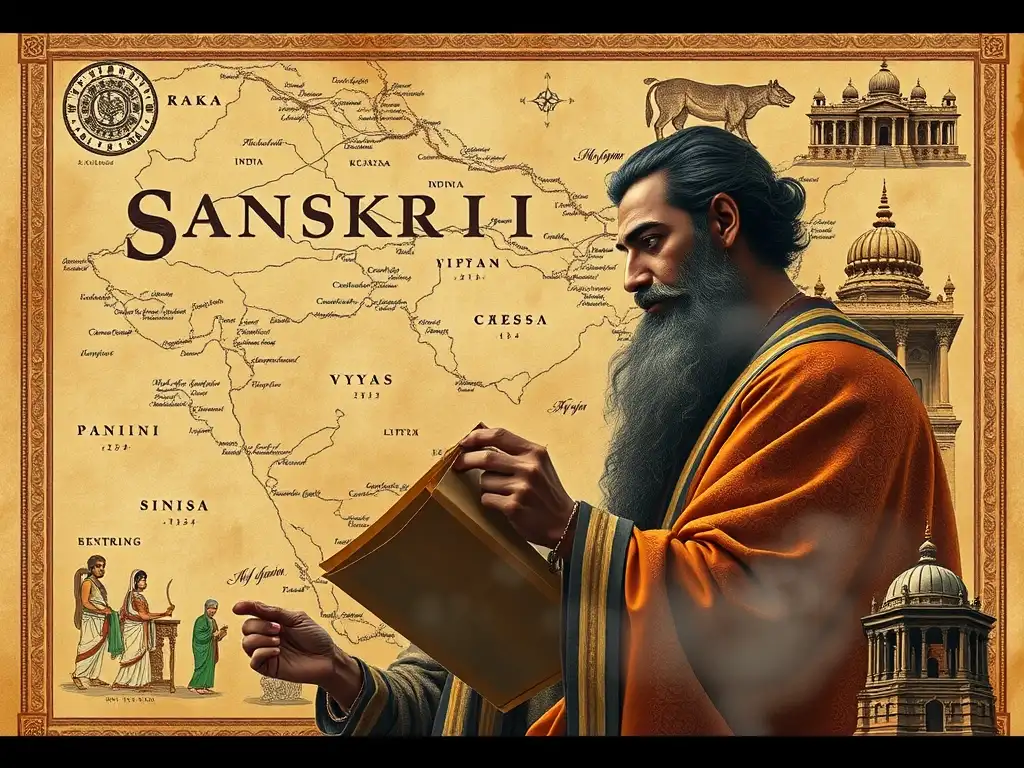
Introduction to the History of Sanskrit Language Evolution
The evolution of the Sanskrit language is a fascinating journey that encapsulates the profound cultural, philosophical, and literary heritage of ancient India. From its origins in the Vedic period to its contemporary relevance, Sanskrit has played a pivotal role in shaping the linguistic landscape of not only India but also the broader context of Indo-European languages.
Understanding the history of Sanskrit language evolution gives us insight into the intricate development of one of the oldest languages in the world, revealing how it has influenced modern languages and continues to resonate in various fields such as literature, religion, and philosophy. This article aims to explore the rich tapestry of Sanskrit's evolution, shedding light on its ancient roots, significant texts, and the unique linguistic features that have defined its journey through time.
Overview of Sanskrit as an Ancient Language
Sanskrit, often hailed as the "language of the gods," is more than just a means of communication; it is a repository of ancient wisdom and cultural identity. It emerged as a refined language around 1500 BCE, evolving from the earlier Indo-Aryan languages. The earliest forms of Sanskrit are found in the Vedas, a collection of sacred texts that outline the spiritual and cultural practices of early Indo-Aryans. Over centuries, Sanskrit has branched into various dialects and influenced numerous regional languages, showcasing its adaptability and resilience.
Importance of Studying Sanskrit's Evolution
Studying the evolution of Sanskrit is crucial for several reasons:
- Cultural Heritage: Sanskrit serves as a link to India's vast cultural heritage, encapsulating philosophical ideas, religious beliefs, and artistic expressions.
- Linguistic Insights: Analyzing Sanskrit's evolution aids in understanding the dynamics of language change, including phonetics, syntax, and semantics.
- Modern Relevance: In contemporary times, Sanskrit is experiencing a revival, with increasing interest in its literature, grammar, and philosophies, contributing to various academic and spiritual pursuits.
Ancient Roots of Sanskrit
The history of Sanskrit language evolution is deeply intertwined with the early civilizations of India. Its roots can be traced back to several key developments that shaped its character and usage.
Origins of the Sanskrit Language
The origins of Sanskrit can be linked to the Indo-European language family, with its ancestors believed to have migrated to the Indian subcontinent around 1500 BCE. Early forms of Sanskrit, known as Vedic Sanskrit, were primarily used in religious rituals and oral traditions. This period marked the beginning of the language's formalization, as it began to be documented in sacred texts.
The Role of Vedic Texts in Shaping Sanskrit
Vedic texts, including the Rigveda, Samaveda, Yajurveda, and Atharvaveda, played a critical role in shaping the Sanskrit language. These texts not only contributed to the vocabulary and grammar of Sanskrit but also established a literary and philosophical framework that would influence subsequent generations. The meticulous preservation of these texts ensured the continuity of linguistic and cultural traditions, allowing Sanskrit to flourish.
Linguistic Features of Early Sanskrit
Early Sanskrit is characterized by several distinctive linguistic features:
- Phonetic Precision: Sanskrit is known for its systematic phonetic structure, which includes a rich array of sounds and a precise syllabic system.
- Morphological Richness: The language exhibits a complex system of inflections, allowing for a high degree of expressiveness and nuance in meaning.
- Syntactic Flexibility: Sanskrit's flexible word order enables a variety of sentence structures, enhancing its poetic and rhetorical capabilities.
Understanding these features not only highlights the sophistication of Sanskrit as a language but also illustrates its adaptability and enduring legacy throughout history.
Classical Sanskrit: Development and Standardization
Classical Sanskrit emerged as a refined and standardized form of the language during the early centuries of the Common Era. This evolution marked a distinct shift from its earlier Vedic roots, characterized by a greater emphasis on grammar and literary style. The standardization process was crucial in shaping a language that not only facilitated the transmission of philosophical and religious texts but also served as the medium for a rich literary tradition. Classical Sanskrit became the preferred language of scholarship, culture, and administration in ancient India, influencing subsequent generations and maintaining its relevance throughout various epochs.
Transition from Vedic to Classical Sanskrit
The transition from Vedic to Classical Sanskrit is a pivotal moment in the history of the language. Vedic Sanskrit, used primarily in the ancient scriptures known as the Vedas, was characterized by its complex phonetics and syntax. Over time, as the socio-cultural landscape of India evolved, so did the language.
This transition involved simplifications in grammatical structure and the adoption of more consistent phonological rules. Key texts, including the Brahmanas and Upanishads, played a significant role in this transformation, as they began to reflect the changing linguistic patterns. The refinement of the language during this period led to the establishment of Classical Sanskrit as a tool for literary expression, philosophical discourse, and ritualistic practices.
Key Texts and Authors in Classical Sanskrit Literature
Classical Sanskrit literature boasts a plethora of significant texts and authors that have left an indelible mark on the cultural heritage of India. Among the most notable works are the epics, Mahabharata and Ramayana, which not only narrate epic tales but also delve into ethical and philosophical themes. Additionally, playwrights such as Kalidasa, whose works like Shakuntala and Meghaduta exemplify the poetic richness of the language, contributed immensely to its literary canon.
Other important texts include the Puranas, which provide insights into mythology and history, and the Dharmashastras, which offer guidance on law and ethics. These texts reflect the breadth and depth of Classical Sanskrit, showcasing its ability to convey complex ideas and emotions.
The Influence of Grammar: Panini and His Contributions
The grammar of Sanskrit underwent a significant transformation with the works of the ancient grammarian Panini, who is often regarded as the father of Sanskrit grammar. His seminal text, the Ashtadhyayi, systematically codified the rules of Sanskrit, providing a comprehensive framework for the language. Panini's approach emphasized the importance of phonetics, morphology, and syntax, establishing a scientific methodology for language study.
His influence extended beyond linguistics, impacting fields such as logic and philosophy. The precision and clarity introduced by Panini's grammatical rules allowed Classical Sanskrit to flourish as a literary and scholarly language, ensuring its continued relevance in various domains of knowledge.
The Decline of Sanskrit: Factors and Impacts

Despite its prominence in ancient India, Sanskrit faced a gradual decline beginning in the medieval period. Several factors contributed to this shift, which ultimately altered the linguistic landscape of the subcontinent. The decline of Sanskrit was not only a linguistic phenomenon but also reflected broader cultural, political, and social changes that affected Indian society.
Historical Context: Political and Cultural Changes
The decline of Sanskrit can be traced back to significant historical events, including the rise of regional kingdoms and the establishment of foreign rule. The political fragmentation of India led to the emergence of localized powers that favored vernacular languages over Sanskrit. Additionally, the cultural interactions brought about by invasions, trade, and the spread of religions such as Islam introduced new languages and literary traditions, further marginalizing Sanskrit. This period saw a shift in cultural patronage, as rulers began to promote regional languages, leading to a gradual erosion of Sanskrit's status as the lingua franca of scholarship and administration.
The Rise of Regional Languages and Dialects
With the decline of Sanskrit, regional languages and dialects began to flourish, becoming the primary modes of communication and literary expression. Languages such as Hindi, Bengali, Marathi, and Tamil gained prominence, reflecting the rich cultural diversity of India. This linguistic shift was accompanied by the emergence of local literary traditions, which often drew upon themes and motifs from Sanskrit literature while adapting them to resonate with contemporary audiences. The rise of regional languages not only democratized access to literature but also contributed to the preservation and evolution of cultural identities across the subcontinent.
Impact on Sanskrit Literature and Scholarship
The decline of Sanskrit had profound implications for its literature and scholarship. Many classical texts fell into obscurity, as the focus shifted to regional literatures, which were often more accessible to the general populace. However, the influence of Sanskrit persisted, as scholars continued to engage with its texts, albeit through translations and adaptations.
The loss of a standardized linguistic framework also led to variations in interpretation and understanding of classical works. Despite this decline, efforts to revive and preserve Sanskrit literature emerged in the 19th and 20th centuries, highlighting its enduring legacy and significance in the broader context of Indian culture and heritage.
Revival and Modern Relevance of Sanskrit
The revival of Sanskrit has been a significant cultural and linguistic movement, particularly in the last two centuries. This ancient language, once relegated to the realms of scholarly study and religious practices, has experienced a resurgence that highlights its relevance in modern society. The revival is not merely about preserving an ancient form of communication; it reflects a broader interest in reconnecting with cultural roots and understanding the foundational texts of Hindu philosophy, literature, and science.
The modern relevance of Sanskrit can be seen in various domains, including education, spirituality, and linguistics. Institutions dedicated to the study and promotion of Sanskrit have emerged, and its teachings have been integrated into curriculums around the world. Moreover, the language's grammatical precision and rich vocabulary have attracted the attention of linguists and philosophers, who explore its implications in contemporary discussions on language and thought.
The Sanskrit Renaissance in the 19th and 20th Centuries
The 19th century marked a pivotal point in the history of Sanskrit, known as the Sanskrit Renaissance. This period saw a renewed interest in ancient texts and practices, spurred by both colonial and indigenous scholarship. Key figures such as Raja Ram Mohan Roy and Dayananda Saraswati advocated for the use of Sanskrit in education and social reform, viewing it as a means to revive Indian culture and identity.
The establishment of institutions like the Benares Hindu University in 1916 played a crucial role in the promotion of Sanskrit studies. The university emphasized not only the preservation of ancient texts but also their practical application in modern contexts. Furthermore, the advent of printing technology facilitated the dissemination of Sanskrit literature, making it accessible to a broader audience.
In the 20th century, the revitalization of Sanskrit continued with movements aimed at integrating it into the national identity of India. The language was declared a classical language, acknowledging its historical significance and literary richness. This recognition spurred academic research and public interest, leading to a flourishing of Sanskrit literature, including poetry, drama, and philosophical texts.
Current Uses of Sanskrit in Education and Culture
Today, Sanskrit is experiencing a resurgence in educational institutions, both in India and internationally. Universities and schools are offering courses in Sanskrit, recognizing its value not just as a language but as a key to understanding ancient Indian civilization and philosophy. In India, initiatives like the "Sanskrit Week" and various Sanskrit-speaking competitions encourage students to engage with the language.
Culturally, Sanskrit is integral to various art forms, including music, dance, and theater. Traditional performances often incorporate Sanskrit verses, promoting its use in contemporary artistic expressions. Moreover, the language's role in Hindu rituals and ceremonies ensures its continued relevance in spiritual practices.
Organizations dedicated to preserving and promoting Sanskrit are also active in the digital realm, using technology to create resources and platforms for learners. Online courses, mobile applications, and social media groups are effectively reaching new audiences, demonstrating that Sanskrit can thrive in the modern digital landscape.
The Role of Sanskrit in Modern Linguistics and Philosophy
Sanskrit's structure and grammatical intricacies have garnered significant interest in the fields of linguistics and philosophy. Scholars have noted its complex syntax and phonetic richness, which offer insights into the evolution of language itself. The study of Sanskrit has contributed to theories in comparative linguistics, shedding light on the relationships between Indo-European languages.
In philosophy, Sanskrit texts such as the Vedas, Upanishads, and the works of philosophers like Adi Shankaracharya continue to influence contemporary thought. The examination of concepts like dharma, karma, and moksha in Sanskrit literature provides a unique perspective on ethical and metaphysical discussions today.
Furthermore, the revival of interest in Sanskrit has inspired interdisciplinary research, bridging gaps between linguistics, anthropology, and cognitive science. This exploration highlights the language’s potential to inform modern debates on language acquisition, cognitive development, and the nature of human thought.
Conclusion: The Ongoing Legacy of the History of Sanskrit Language Evolution
The evolution of Sanskrit is a testament to its enduring legacy and resilience as a language. Its journey from ancient texts to modern applications illustrates how language can adapt and thrive, reflecting the cultural and intellectual currents of its time. As we consider the history of Sanskrit language evolution, it becomes clear that this ancient language continues to play a vital role in shaping contemporary discourse.
Reflection on the Importance of Preserving Sanskrit
Preserving Sanskrit is essential not only for maintaining a connection to cultural heritage but also for fostering a deeper understanding of linguistic diversity. As globalization continues to homogenize languages, preserving Sanskrit ensures that we retain access to a wealth of knowledge embedded in its texts. Efforts to document and teach Sanskrit can combat language loss, enriching the tapestry of global linguistic heritage.
Future Prospects for Sanskrit in Global Contexts
Looking ahead, the future of Sanskrit appears promising. With ongoing efforts to integrate the language into educational systems, as well as its growing presence in digital platforms, Sanskrit is poised to reach new generations of learners. Additionally, its relevance in discussions on philosophy, ethics, and environmentalism positions it as a vital part of global intellectual discourse.
The promotion of Sanskrit as a classical language also opens avenues for international collaboration, allowing scholars from various backgrounds to engage with its rich literary and philosophical traditions. As the world increasingly values diversity and cultural heritage, Sanskrit stands as a beacon of ancient wisdom with modern significance.
- Introduction to the History of Sanskrit Language Evolution
- Ancient Roots of Sanskrit
- Classical Sanskrit: Development and Standardization
- The Decline of Sanskrit: Factors and Impacts
- Revival and Modern Relevance of Sanskrit
- Conclusion: The Ongoing Legacy of the History of Sanskrit Language Evolution
Frequently Asked Questions
What is the history of Sanskrit language evolution?
The history of Sanskrit language evolution traces its origins from ancient Indo-Aryan languages, showcasing its development through Vedic texts to its role in modern literature and linguistics.
How did Sanskrit influence other languages?
Sanskrit has had a significant impact on many Indian languages and even some Asian languages, contributing to their vocabulary, grammar, and syntax through centuries of cultural exchange.
What role did Sanskrit play in ancient Indian civilization?
Sanskrit served as the lingua franca of ancient Indian civilization, playing a crucial role in the religious, philosophical, and literary traditions, influencing Hinduism, Buddhism, and Jainism.
How is Sanskrit relevant in modern times?
Today, Sanskrit is studied for its cultural heritage and linguistic importance, with renewed interest in its classical literature and its applications in linguistics and computer science.
What are the key resources for studying Sanskrit?
Key resources include traditional texts like the Vedas, Upanishads, and Mahabharata, as well as modern grammars and dictionaries that facilitate the learning of this ancient language.
Final Reflection: The Timeless Journey of Sanskrit
The evolution of the Sanskrit language is not just a historical narrative; it is a testament to the enduring power of language in shaping culture and identity. Today, as we navigate an increasingly globalized world, the relevance of Sanskrit transcends its ancient roots, reminding us of the profound connections between language, philosophy, and human experience. The journey of Sanskrit from its early inscriptions to its modern-day revival reflects a broader story of resilience and adaptation that resonates deeply in our contemporary society.
Sanskrit has profoundly influenced various aspects of culture, philosophy, and spirituality, leaving an indelible mark on the social landscape of many communities. Its revival in educational institutions and spiritual practices highlights a growing appreciation for this ancient language. As Mahatma Gandhi once said, "> A language is something infinitely greater than grammar and philology.
It is the poetic testament of the genius of a race and culture, and the living embodiment of the thoughts and fancies that have moulded them." This observation underscores the ongoing relevance of Sanskrit, as it continues to inspire and connect people across generations and geographies.
As we reflect on the evolution of Sanskrit, let us embrace the lessons it offers about the importance of preserving our linguistic heritage and fostering cultural understanding. I invite you to explore your own relationship with language—consider how it shapes your identity and connects you to the world around you.
Whether through learning a new language, engaging with ancient texts, or simply appreciating the beauty of words, each of us has the power to contribute to the ongoing story of language evolution. Let us honor the past while looking forward to a future where the richness of our linguistic diversity continues to thrive.
Dive Deeper into the World of Sanskrit!
Thank you for joining us on this fascinating exploration of Sanskrit’s evolution! We hope you’ve discovered the rich tapestry of this ancient language and its profound relevance in today's world. Now, it’s time to take your interest further and engage with this incredible linguistic heritage.
Here are a few actionable steps to enhance your journey with Sanskrit:
- Enroll in a Sanskrit Course: Immerse yourself in learning this beautiful language, whether through an online platform or a local workshop, to deepen your understanding and appreciation.
- Visit Historical Sites: Consider planning a visit to ancient locations in India where Sanskrit significantly influenced culture and philosophy.
- Share Your Insights: Participate in discussion forums or social media groups focused on Sanskrit studies to exchange thoughts and insights with fellow enthusiasts.
What aspect of Sanskrit's evolution inspires you the most, and how do you envision contributing to its relevance in today's world?