
How Ancient Indian Economies Contributed to Global Trade Networks

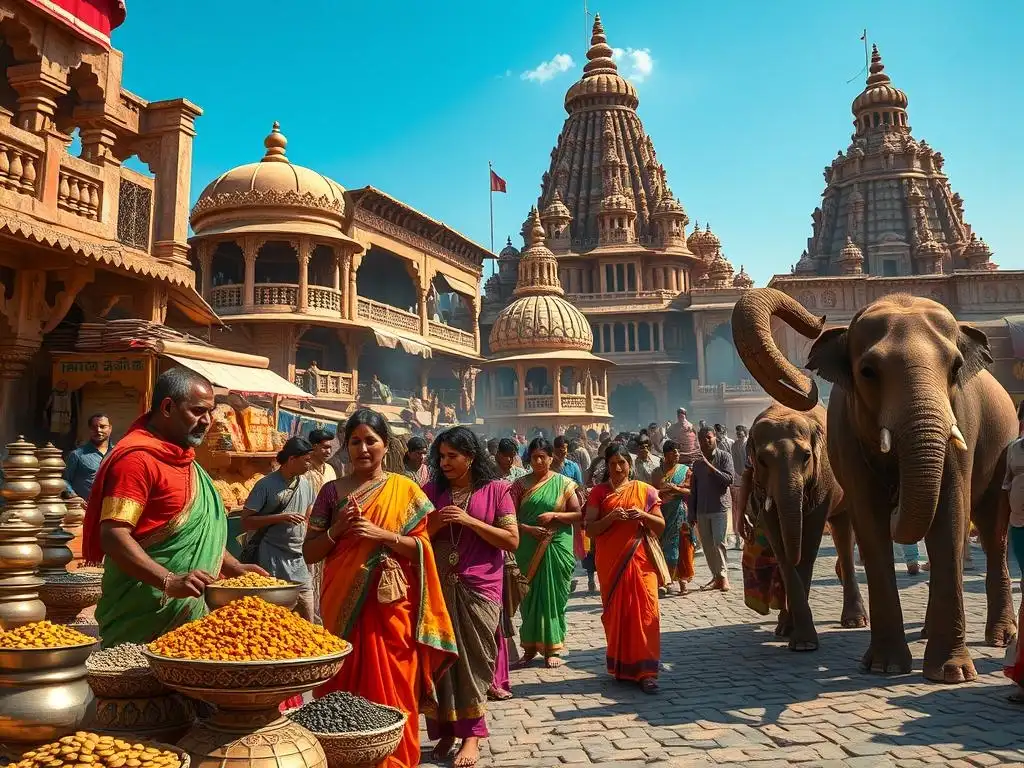
Welcome to Ancient India History, where we delve into the captivating tapestry of ancient civilizations that shaped the world. In our featured article, “How Ancient Indian Economies Contributed to Global Trade Networks,” we unravel the intricate connections between the thriving economies of ancient India and their pivotal role in global trade. Discover how the rich cultural heritage and innovative practices of the Indus Valley to the Gupta Empire laid the groundwork for commerce that transcended borders. Join us on this enlightening journey and ignite your curiosity about the legacies that continue to influence our world today!
- Introduction to Ancient Indian Economies and Trade
- The Foundation of Ancient Indian Economies
- Key Trade Routes and Networks
- Goods and Commodities in Ancient Indian Trade
- Cultural Exchanges Through Trade
- Case Studies of Ancient Indian Trade Centers
- Conclusion: Legacy of Ancient Indian Economies on Global Trade
- Further Reading on Ancient Indian Economies and Trade
- Frequently Asked Questions
- Final Reflection: The Enduring Legacy of Ancient Indian Economies in Global Trade
- Explore the Legacy of Ancient Trade!
Introduction to Ancient Indian Economies and Trade
The ancient Indian subcontinent was a cradle of civilization, known for its remarkable innovations, cultural richness, and economic prowess. Ancient Indian economies and trade were characterized by a complex web of agricultural practices, artisan crafts, and trade networks that not only supported local communities but also facilitated connections with distant lands.
This article delves into how various economic practices and systems emerged in ancient India, highlighting their contributions to global trade networks. From the bustling markets of the Indus Valley civilization to the flourishing trade routes established during the Mauryan and Gupta empires, ancient Indian economies played a pivotal role in shaping the economic landscape of the region and influencing cultures around the world.
Overview of Ancient Indian Economies
Ancient Indian economies were diverse and multifaceted, reflecting the geographical, cultural, and social complexities of the subcontinent.
- Agricultural Foundations: The backbone of the economy was agriculture, primarily based on the cultivation of crops such as rice, wheat, barley, and pulses. The fertile plains of the Ganges and the river valleys of the Indus facilitated intensive farming practices.
- Craftsmanship and Artisanal Production: Alongside agriculture, various crafts such as pottery, textile weaving, metallurgy, and jewelry-making flourished. Skilled artisans produced high-quality goods that were not only consumed locally but also traded extensively.
- Trade Networks: Ancient India was integrated into a broader network of trade routes, both overland and maritime. The Silk Road and the Indian Ocean trade routes enabled the exchange of goods, ideas, and culture with regions as far as the Mediterranean, Southeast Asia, and beyond.
- Currency and Trade Practices: The use of standardized weights, measures, and coins emerged as economies expanded. The introduction of currency facilitated trade transactions, leading to the establishment of vibrant marketplaces.
These economic elements not only supported the livelihoods of ancient Indian peoples but also contributed to a rich tapestry of interactions that shaped the region’s historical narrative.
Significance of Trade in Ancient India
Trade served as a crucial engine of economic growth and cultural exchange in ancient India. Its significance can be understood through several key aspects:
- Cultural Exchange: Trade routes acted as conduits for the exchange of ideas, philosophies, and religions. The spread of Buddhism and Hinduism across Asia can be largely attributed to the interactions facilitated by trade.
- Economic Prosperity: Prosperous trade relations with neighboring regions and empires led to increased wealth, allowing for advancements in infrastructure, urbanization, and cultural patronage. Cities like Pataliputra and Ujjain became bustling trade centers.
- Global Connections: Ancient Indian traders were known for their maritime skills, linking India with distant markets. Spices, textiles, and precious stones were highly sought after commodities that contributed to India's reputation as a significant player in global trade.
- Influence on Global Markets: The goods produced by ancient Indian economies influenced markets worldwide. For instance, Indian spices and textiles were integral to trade networks that connected Europe, Africa, and Asia.
The intricate network of trade and economic practices in ancient India not only enriched the local societies but also positioned India as a pivotal player in the global economic landscape of antiquity. This historical impact continues to resonate, reminding us of the enduring legacy of ancient Indian economies and their contributions to global trade networks.
The Foundation of Ancient Indian Economies
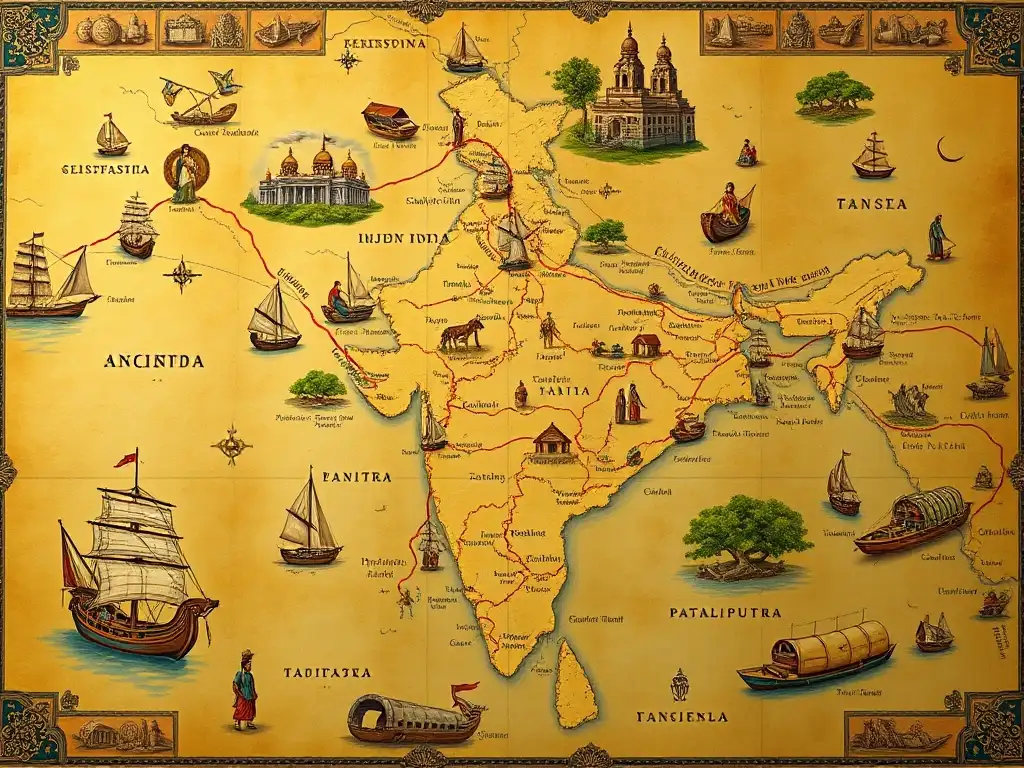
Ancient Indian economies were multifaceted and evolved over millennia, laying the groundwork for robust trade networks that spanned regions and cultures. The interplay between agriculture, craftsmanship, and urbanization created a dynamic economic landscape. This section delves into the components that formed the foundation of these ancient economies, highlighting their pivotal role in global trade networks.
Agricultural Practices and their Role in Trade
Agriculture was the cornerstone of ancient Indian economies, facilitating not only sustenance but also trade. The fertile plains of the Indus Valley and regions of the Gangetic Basin were ideal for cultivating a variety of crops, including:
- Rice
- Wheat
- Barley
- Millets
- Legumes
These agricultural products were not only consumed locally but also became significant trade commodities. The surplus produced allowed for the development of trade relationships with neighboring regions, including Mesopotamia and Persia.
Irrigation Techniques
The advancement of irrigation techniques played a crucial role in enhancing agricultural productivity. Ancient civilizations, particularly in the Indus Valley, employed sophisticated systems of canals and reservoirs, allowing cultivation even in arid regions. This innovation not only increased crop yields but also supported trade by ensuring a steady supply of goods.
“The agricultural abundance of ancient India was key in establishing trade routes that connected diverse cultures.”
Craftsmanship and Manufacturing in Ancient India
The craftsmanship of ancient India was renowned for its quality and diversity, contributing significantly to both local economies and international trade. Artisans specialized in various trades, producing goods that were highly sought after:
- Textiles: Cotton, silk, and woolen fabrics were produced in abundance, with the Indus Valley Civilization being one of the first to develop cotton textiles.
- Metallurgy: Ancient Indians excelled in metallurgy, creating intricate jewelry, tools, and weapons. The use of high-quality iron, particularly during the Vedic period, revolutionized agricultural practices and military equipment.
- Pottery and Terracotta: Craftsmanship in pottery, especially painted and glazed wares, was prevalent, with goods often exported to regions as far as Egypt and Greece.
The goods produced by skilled artisans not only catered to domestic markets but were also integral to trade networks. The Silk Road and maritime trade routes facilitated the exchange of Indian craftsmanship with other civilizations, enhancing cultural interactions and economic exchanges.
Urban Centers as Economic Hubs
Urban centers in ancient India, such as Harappa, Mohenjo-Daro, and later cities like Pataliputra, served as vital economic hubs. These cities were strategically located along trade routes, fostering commerce and cultural exchanges.
Features of Ancient Urban Centers
- Marketplaces: These cities had well-defined marketplaces where goods from various regions were exchanged. Artisans and farmers congregated to trade their products, creating a vibrant economic atmosphere.
- Administrative Systems: Urban centers had organized administrative structures that regulated trade, ensured fair practices, and collected taxes, facilitating economic stability.
- Cultural Melting Pots: The convergence of traders from diverse backgrounds contributed to the cities’ roles as cultural melting pots, influencing art, language, and technology.
The prosperity of these urban centers attracted traders from distant lands, contributing to the development of extensive trade networks. The economic activities in these cities not only bolstered local economies but also reinforced India's position in global trade dynamics.
The ancient Indian economies were intricate systems built upon agriculture, craftsmanship, and urbanization. These elements collectively formed the backbone of trade networks that extended beyond the subcontinent, influencing global commerce and cultural exchanges throughout history.
Key Trade Routes and Networks
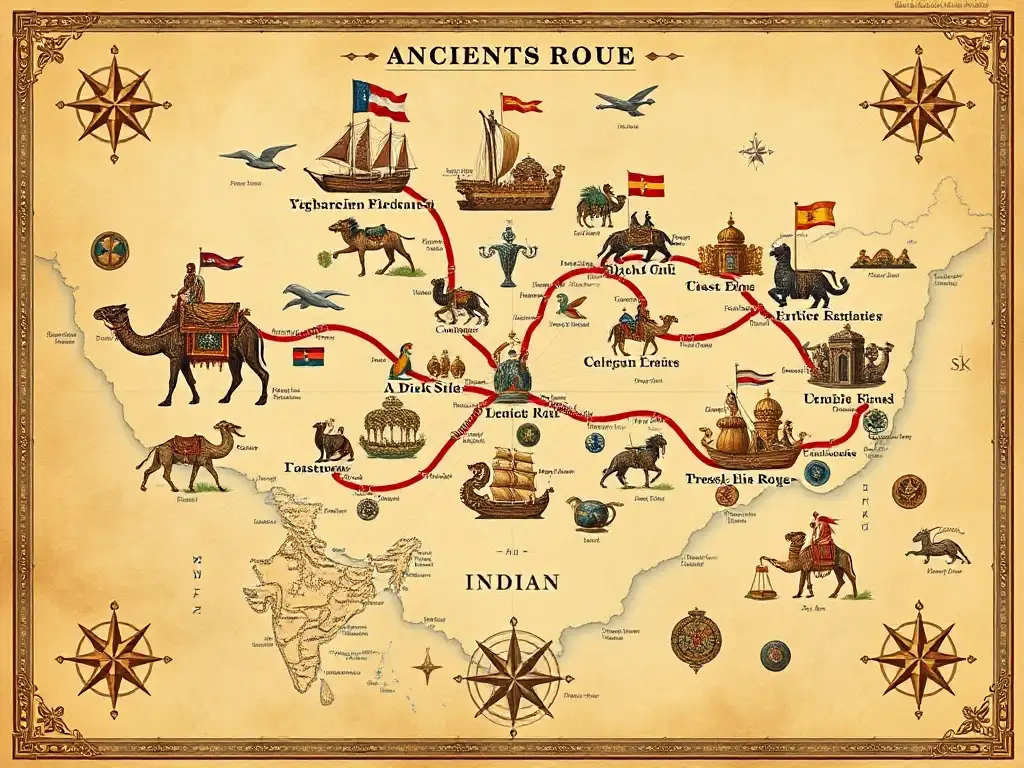
Major Trade Routes of Ancient India
Ancient Indian economies were intricately linked to a variety of trade routes that facilitated the exchange of goods, ideas, and culture. The most significant of these routes included overland paths and maritime channels that connected India to neighboring regions and far-off lands.
- Overland Trade Routes:
- Grand Trunk Road: This ancient highway extended from Bengal to the northwestern frontier, serving as a crucial artery for trade between the eastern and western parts of the subcontinent. It enabled the transport of spices, textiles, and precious stones to markets in Persia and beyond.
- Trade with Central Asia: Routes leading to Central Asia allowed for the exchange of goods such as silk and horses. Caravans traversed the harsh terrains of the Himalayas and the deserts, enhancing trade relationships with nomadic tribes and settled communities alike.
- Maritime Trade Routes:
- Indian Ocean Trade Network: Ancient Indian ports like Lothal, Sopara, and Bharukachchha were pivotal in maritime trade. These ports connected India with the Arabian Peninsula, East Africa, and Southeast Asia. Goods like ivory, silk, and spices were exported, while precious metals and textiles were imported.
The extensive network of trade routes not only stimulated economic activity but also facilitated cultural exchanges, leading to a rich amalgamation of traditions across regions.
The Role of the Silk Road in Connecting Economies
The Silk Road, a historic network of trade routes, played a vital role in linking the economies of ancient India with those of Central Asia, the Middle East, and Europe. This vast network allowed for the exchange of not only goods but also cultural and technological innovations.
- Economic Exchanges:
- Spices and Textiles: Indian merchants were known for their high-quality spices, textiles, and gems. These goods were highly sought after by traders along the Silk Road, who exchanged them for silk, ceramics, and precious metals from China and the West.
- Cultural Diffusion: The movement of traders along the Silk Road facilitated the spread of ideas, religions, and technologies. Buddhism, for example, spread from India to Central Asia and beyond, profoundly influencing cultures along the way.
- Strategic Importance:
- The strategic locations of Indian city-states along the Silk Road allowed them to become commercial hubs. Cities like Taxila and Pataliputra became melting pots of culture and commerce, thriving on the wealth generated from trade.
The Silk Road was not just a conduit for trade; it was a bridge that connected diverse civilizations, fostering economic growth and cultural exchange, with ancient Indian economies playing a crucial role in this dynamic network.
Maritime Trade and its Impact on Economic Growth
Maritime trade was a cornerstone of ancient Indian economies, significantly influencing economic growth and international relations. The strategic geographic location of India provided a natural advantage for engaging in maritime commerce.
- Trade in the Indian Ocean:
- Regional Trade: The Indian Ocean was a bustling hub of trade activity, where Indian merchants traded with countries like Arabia, China, and East Africa. Key exports included spices, textiles, and gemstones, while imports featured luxury items such as gold, silver, and exotic woods.
- Port Cities as Economic Centers: Ports like Calicut and Cochin emerged as major economic centers due to their thriving maritime trade. These cities not only facilitated the exchange of goods but also became cultural melting pots, attracting merchants from diverse backgrounds.
- Economic Implications:
- Wealth Generation: The revenue generated from maritime trade significantly boosted local economies, leading to the development of infrastructure and urbanization. Skilled artisans and craftsmen thrived in port cities, further enhancing economic diversity.
- Global Trade Networks: Ancient Indian maritime trade contributed to the establishment of global trade networks that laid the groundwork for future economic relations. The exchange of goods and ideas across oceans fostered interdependence among civilizations, shaping the economic landscape of the region.
The maritime trade practices of ancient Indian economies were instrumental in fostering economic growth, cultural exchanges, and the establishment of enduring trade networks that connected India to the wider world.
Goods and Commodities in Ancient Indian Trade
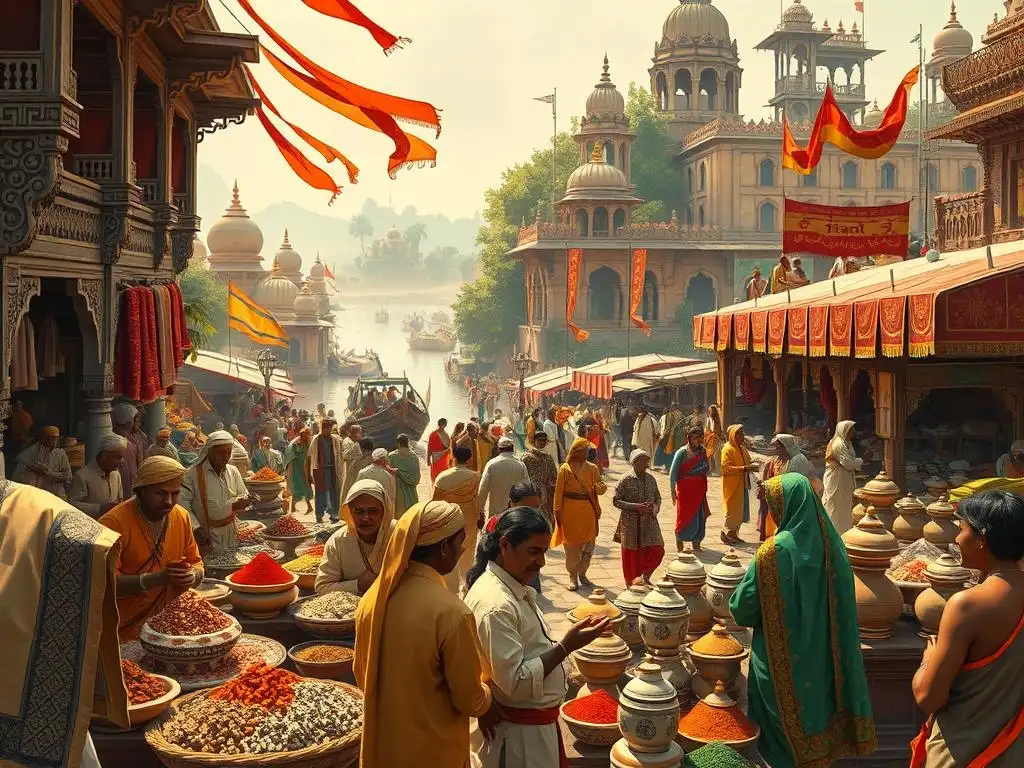
Exported Goods: Spices, Textiles, and Precious Stones
Ancient Indian economies were pivotal in shaping global trade, primarily through the export of a variety of goods that were highly sought after in international markets. Among these, spices emerged as one of the most significant commodities. India was known for its diverse range of spices, including black pepper, cardamom, and turmeric, which were not only used for culinary purposes but also for their medicinal properties. The demand for Indian spices stretched across various civilizations, making them a key export that contributed to trade networks.
Textiles also played a crucial role in ancient Indian trade. The subcontinent was renowned for its high-quality fabrics, particularly cotton and silk. The intricate designs and vibrant colors of Indian textiles attracted buyers from regions as far as the Roman Empire and later, the Islamic world. Indian weavers produced fabrics that blended artistry with craftsmanship, creating items such as muslin and brocade that were prestigious and luxurious.
In addition to spices and textiles, precious stones such as diamonds, rubies, and emeralds were exported from India. The country’s rich mineral resources and skilled artisans enabled it to be a leading supplier of gemstones, which were coveted by royalty and wealthy merchants around the globe. These exports not only fueled the economy but also established India as a central player in the global trade networks.
Imported Goods: Influence of Other Civilizations
While ancient Indian economies were strong exporters, they were also significant importers, influenced by various civilizations around them. Goods brought into India included luxury items, raw materials, and cultural artifacts that enriched Indian society.
One of the notable imports was metals, particularly gold and silver, which were essential for coinage and jewelry making. The trade routes connecting India to regions like Persia and the Mediterranean facilitated the flow of these precious metals, enhancing the wealth of Indian merchants and rulers.
Additionally, agricultural products such as olives and grapes were imported from regions like the Middle East. The introduction of these crops not only diversified the Indian agricultural landscape but also influenced local cuisines and farming practices.
The importation of cultural goods, including art and literature, played a significant role in shaping Indian civilization. The exchange of ideas through trade routes led to the adoption of various art forms and religious beliefs, which can be seen in the architecture and sculptures of the time.
The Role of Currency in Trade Transactions
The evolution of currency was a fundamental aspect of ancient Indian economies and trade. Initially, trade was conducted through bartering, where goods were exchanged directly. However, as trade networks expanded, the need for a standardized medium of exchange became evident.
Ancient India saw the introduction of metal coins, which significantly facilitated trade transactions. Coins made of gold, silver, and copper were minted in various regions, with distinct designs that often represented the ruling authority or deities. This standardization of currency allowed for easier and more efficient trade, both domestically and internationally.
Moreover, the use of coins enabled merchants to conduct transactions with greater confidence. The weight and purity of the coins were often regulated, ensuring fair trade practices. This system not only promoted commercial activities but also enhanced the economic stability of the region.
The ancient Indian economy was thus characterized by a complex interplay of goods, cultural influences, and an evolving currency system, all of which contributed to its significance in global trade networks.
Cultural Exchanges Through Trade
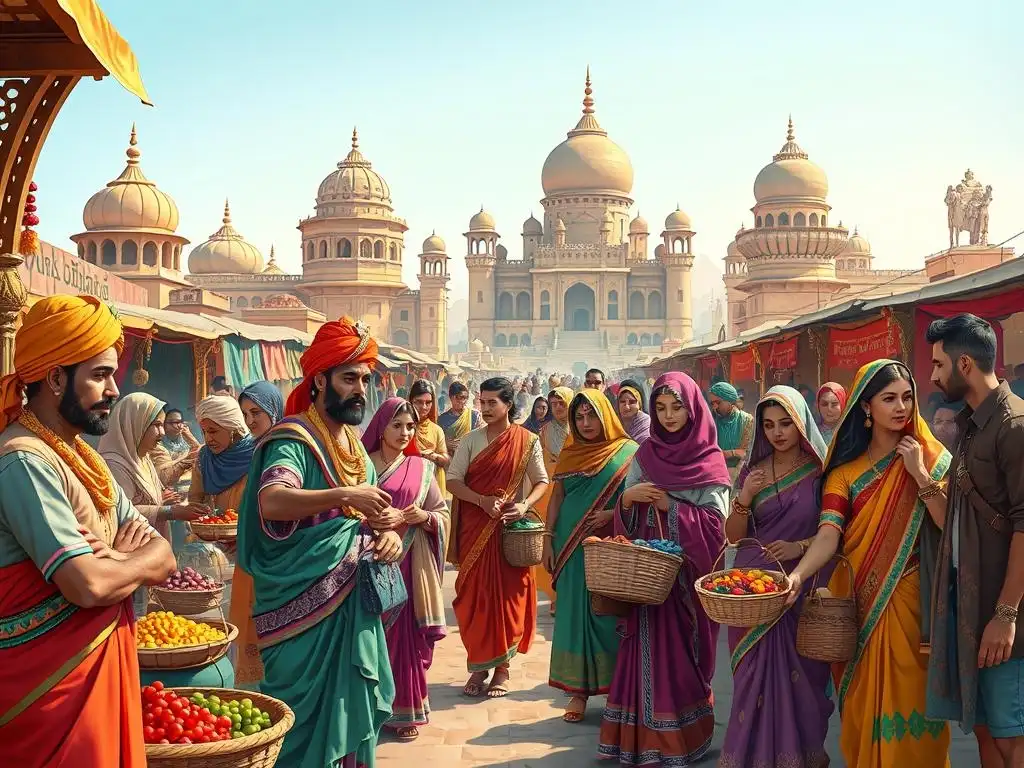
Ancient Indian economies and trade were not solely about the exchange of goods; they also fostered rich cultural exchanges that shaped societies. Trade routes crisscrossed the Indian subcontinent, linking it with regions as far as the Middle East, Africa, and Southeast Asia. This connectivity allowed for the sharing of ideas, art, and customs, creating a tapestry of cultural interactions that significantly influenced the development of civilizations.
The Impact of Trade on Cultural Interactions
The bustling markets of ancient India served as melting pots of diverse cultures. As merchants and traders traveled along the Silk Road and maritime routes, they brought with them not just commodities like spices, textiles, and precious stones, but also cultural practices and social norms. The transmission of art forms, culinary traditions, and social customs can be traced back to these interactions.
- Art and Architecture: Influences from foreign cultures led to the evolution of unique Indian art forms, including sculptures and paintings. For instance, Hellenistic influences can be seen in the Gandhara art style, which merged Greek artistic techniques with Buddhist themes.
- Trade Cities as Cultural Hubs: Cities like Taxila and Pataliputra became cosmopolitan centers where diverse communities interacted. These urban spaces facilitated cultural exchanges that enriched local traditions and promoted the spread of innovations.
The economic prosperity derived from trade provided the means for cultural patronage, which in turn supported various art and educational endeavors, ensuring that cultural exchanges were not only possible but flourished.
Religion and Philosophy: Spreading Ideas through Trade
Trade routes served as conduits for the spread of religious and philosophical ideas, significantly impacting ancient Indian societies. The movement of goods across borders was often accompanied by the exchange of beliefs, leading to the dissemination of major religions.
- Buddhism and Jainism: Merchants played a critical role in spreading Buddhism and Jainism beyond Indian borders. Silk Road caravanserais often served as resting places for monks, who shared philosophical teachings with travelers. This exchange helped establish Buddhism in Central Asia and even as far as China.
- Hinduism and Trade: Hindu traders also contributed to the spread of their beliefs. Temples and shrines were established along trade routes, fostering communities that practiced Hindu rituals and teachings. This cultural exchange helped solidify Hinduism’s presence in Southeast Asia, influencing local cultures.
The interaction between trade and religion led to a blending of beliefs and practices, creating unique syncretic traditions throughout the regions influenced by ancient Indian economies and trade.
Language and Literature: Influences of Trade Networks
The interconnectedness fostered by trade networks also had profound effects on language and literature. The movement of people and goods facilitated the exchange of linguistic and literary traditions, enriching the cultural fabric of ancient civilizations.
- Sanskrit and Trade Languages: As traders interacted with diverse populations, languages evolved. Sanskrit, the language of ancient India, became a lingua franca for trade, influencing the development of regional languages in the areas where Indian traders operated.
- Literary Exchange: Trade routes allowed for the sharing of texts and literary works. For instance, stories from the Panchatantra found their way to various cultures, leading to adaptations in different languages. These narratives not only entertained but also imparted moral lessons, influencing storytelling traditions worldwide.
Through these cultural exchanges, ancient Indian economies and trade did not merely contribute to commerce; they played an integral role in shaping the intellectual and cultural landscapes of various civilizations, laying the groundwork for future interactions and mutual influences.
Case Studies of Ancient Indian Trade Centers
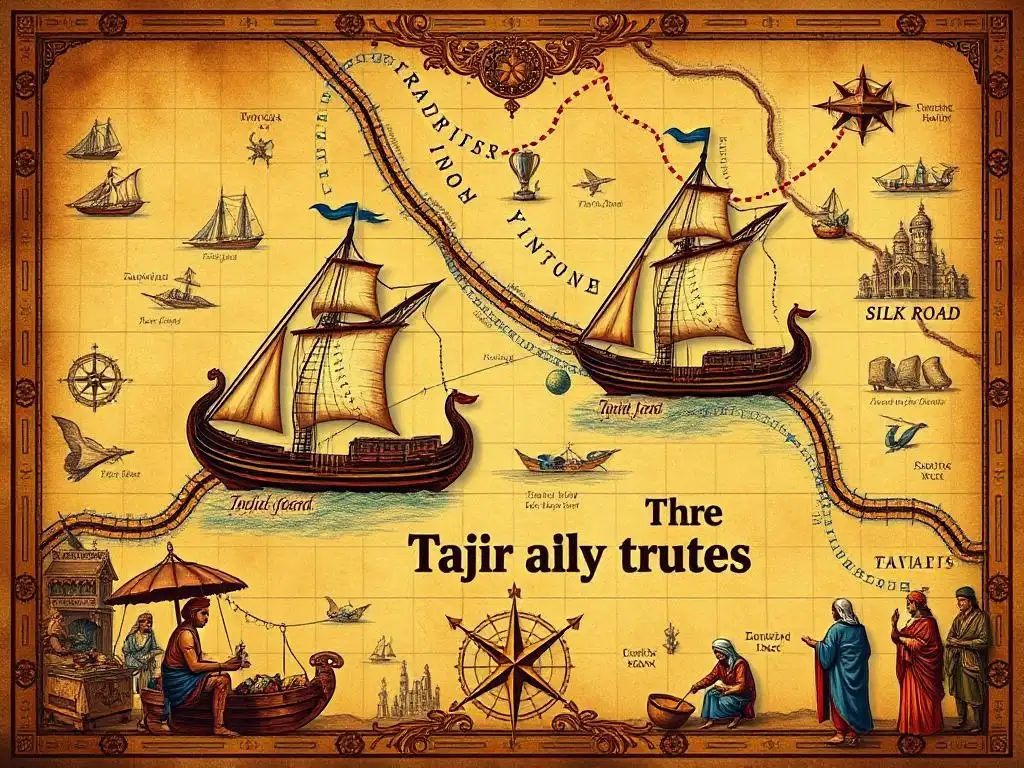
The Indus Valley Civilization: Early Trade Practices
The Indus Valley Civilization, flourishing around 3300–1300 BCE, is renowned for its sophisticated urban planning and advanced societal structure. One of the most significant aspects of this civilization was its early trade practices, which laid the groundwork for future economic activities in ancient India.
- Trade Routes: The Indus Valley people engaged in extensive trade with neighboring regions, including Mesopotamia, Persia, and the Arabian Peninsula. Evidence suggests that they utilized both land and maritime routes, significantly enhancing their economic interactions. The discovery of seals and weights indicates a standardized system for trade.
- Key Commodities: Major commodities traded by the Indus Valley included:
- Cotton textiles: The civilization is believed to be one of the first to cultivate cotton and produce textiles, which were highly sought after in foreign markets.
- Metals: Copper, bronze, and gold artifacts found in archaeological sites point to the importance of metalworking in their economy.
- Semi-precious stones: The trade of lapis lazuli, agate, and carnelian was prevalent, with evidence of bead-making workshops.
- Marketplaces: Archaeological discoveries, such as the Great Bath of Mohenjo-Daro, suggest the existence of designated marketplaces where goods were exchanged, indicating a structured economic system. These centers were not only places for trade but also served as social hubs for the community.
The Maurya Empire: Expansion of Trade Networks
The Maurya Empire, which existed from 322 to 185 BCE, marked a significant expansion in ancient Indian economies and trade. Under the reign of Chandragupta Maurya and his grandson Ashoka, trade networks expanded both regionally and internationally.
- Infrastructure Development: The Mauryan rulers invested in infrastructure, such as roads and ports, facilitating trade across the empire. Notable roads like the Grand Trunk Road connected the eastern and western parts of India, enabling easier movement of goods and people.
- Trade Goods: The Maurya Empire was notable for trading:
- Spices and textiles: India became a crucial player in the global spice trade, exporting valuable spices such as black pepper, which were in high demand in Rome and beyond.
- Luxury items: Precious stones, silk, and intricate jewelry were exported to foreign markets, enhancing India's reputation as a center of luxury goods.
- International Relations: The Mauryan Empire established strong diplomatic ties with other nations, such as the Seleucid Empire, facilitating trade. The exchange of ambassadors and merchants fostered economic relationships that enriched both cultures.
The Gupta Empire: Golden Age of Trade and Economy
The Gupta Empire (circa 320 to 550 CE) is often referred to as the Golden Age of ancient India, characterized by significant advancements in culture, science, and trade. This period saw the consolidation of trade networks both within India and with foreign lands.
- Cultural Exchange: The Gupta period was marked by a flourishing of art, literature, and science, which paralleled the expansion of trade. The Silk Road, in particular, became a vital link between India and other civilizations, promoting cultural as well as economic exchanges.
- Diverse Trade Goods: The Gupta Empire was known for exporting a wide variety of goods:
- Textiles: Cotton and silk textiles became integral to trade, with Indian fabrics being highly prized in markets across Asia and Europe.
- Medicinal products: The trade of herbs and medicinal plants flourished, showcasing India's contributions to traditional medicine.
- Economic Policies: The Gupta rulers implemented policies that encouraged trade, including tax incentives and the establishment of guilds. These guilds regulated trade practices and ensured quality control, fostering trust and reliability among traders.
The economic practices and systems of ancient Indian civilizations played a crucial role in shaping global trade networks. The Indus Valley, Maurya, and Gupta empires each contributed uniquely to the development of trade, establishing India as a significant player in the historical narrative of global commerce. The legacy of these ancient Indian economies and trade continues to resonate in contemporary economic practices.
Conclusion: Legacy of Ancient Indian Economies on Global Trade
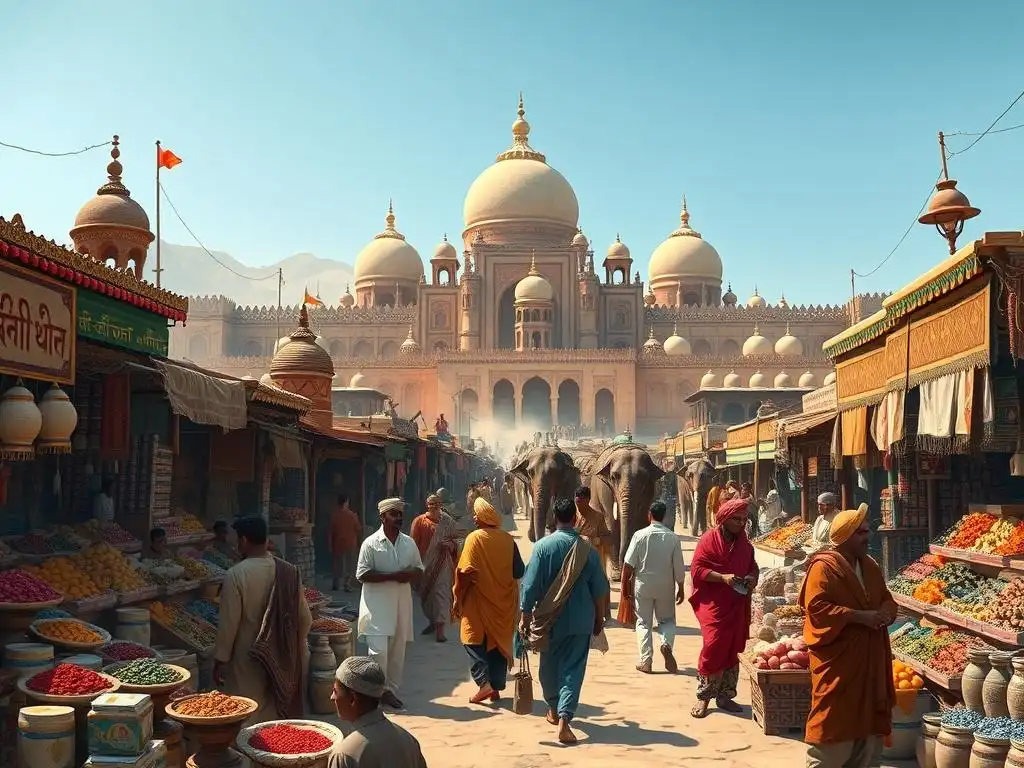
The legacy of ancient Indian economies is profound and far-reaching, impacting not only the subcontinent but also shaping trade practices across the globe. The intricate networks established by Indian traders facilitated the exchange of goods, ideas, and cultures, leaving an indelible mark on the development of commerce worldwide. As we reflect on these ancient systems, it becomes evident that their contributions were pivotal in establishing robust trade links that transcended geographical boundaries.
One of the most significant aspects of ancient Indian economies was their ability to adapt and evolve with changing circumstances. The sophistication of trade practices, including the use of standardized weights and measures, the establishment of trade guilds, and the integration of various forms of currency, laid the groundwork for future economic systems. This adaptability not only enriched local economies but also allowed Indian traders to remain competitive in an ever-changing global market.
Lasting Influences of Ancient Indian Trade Practices
Ancient Indian trade practices have had a lasting impact on global trade networks, influencing various aspects of commerce, culture, and social interactions.
- Cultural Exchange: The trade routes established by ancient Indian economies facilitated the exchange of not just goods but also philosophies, religions, and cultural practices. For instance, the spread of Buddhism along the Silk Road is a testament to how trade fostered cultural connections between India and other regions.
- Trade Materials: India was known for its rich resources, such as spices, textiles, and precious stones. The demand for these commodities in foreign markets contributed significantly to the growth of trade and left a lasting impression on global trade dynamics. The famous trade in spices, particularly black pepper, transformed culinary practices around the world.
- Merchant Networks: The establishment of extensive merchant networks created a framework for trade that included the use of maritime routes, which were essential for connecting the Indian subcontinent with distant markets in Africa, the Middle East, and Southeast Asia. These networks were often organized through guilds, which regulated trade practices and ensured fair dealings.
- Standardization: Ancient Indian economies introduced various standards in trade, including weights, measures, and currency. These innovations were crucial in promoting trust and efficiency in commerce, laying the groundwork for modern economic practices.
The Role of Ancient Indian Economies in Shaping Modern Trade Networks
Ancient Indian economies played a crucial role in shaping modern trade networks, and their influence can still be observed today.
- Globalization Roots: The early trade connections established by Indian merchants contributed to the early stages of globalization. By connecting disparate regions through commerce, ancient Indian economies helped create a more interconnected world, a trend that has only accelerated in contemporary times.
- Cultural and Economic Integration: Ancient Indian trade facilitated the integration of diverse cultures and economies, which is a hallmark of modern trade. The blending of various cultural practices and economic systems has influenced contemporary business practices and consumer behavior.
- Innovation in Trade Practices: The innovative practices introduced by ancient Indian economies, such as credit systems and early forms of banking, laid the foundation for modern financial systems. These developments have been essential in the evolution of global finance and trade.
- Continued Relevance: The principles of trade established by ancient Indian economies continue to resonate in today's markets. Concepts such as fair trade, sustainable practices, and ethical sourcing can trace their roots back to the practices of ancient Indian merchants who prioritized quality and integrity in their dealings.
The rich tapestry of ancient Indian economies and trade has left a legacy that continues to influence global trade networks. By understanding these historical foundations, we can appreciate the complexities of modern commerce and the enduring impact of ancient practices.
Further Reading on Ancient Indian Economies and Trade
Suggested Books and Articles
To gain a deeper understanding of Ancient Indian economies and trade, several books and articles stand out for their comprehensive analysis and insights into the economic practices of ancient civilizations. Here are some recommended readings:
-
"The Ancient Indian Economy" by K. N. Choudhury
This book provides a thorough examination of various economic systems in ancient India, exploring agricultural practices, trade routes, and the role of currency.
-
"Trade in Ancient India" by D. N. Jha
This work focuses on the trade relations between ancient India and other civilizations, detailing the exchange of goods, culture, and ideas.
-
"India's Economic Development: A Historical Perspective" by R. S. Sharma
Sharma's analysis offers insights into how ancient economies laid the foundation for modern economic systems in India, highlighting significant trade practices.
-
"The Economic History of India" by Romila Thapar
A seminal text that discusses the evolution of economies in ancient India, with a focus on trade networks and their impact on both local and global scales.
-
"From the Indus to the Gupta: The Economic Basis of Ancient Indian Society" by C. S. K. V. Rao
This article outlines the major economic transformations that occurred from the Indus Valley Civilization through the Gupta Empire, emphasizing trade mechanisms and regional influences.
Online Resources for Deeper Exploration
For those who prefer digital formats, a wealth of online resources is available to explore ancient Indian economies and trade more thoroughly:
-
Digital South Asia Library
This platform offers a collection of historical texts, maps, and resources related to ancient Indian trade practices and economic systems.
-
JSTOR
A digital library containing academic journal articles, books, and primary sources on various aspects of ancient Indian economies. Users can search for specific topics related to trade and economy.
-
India History Congress
This website hosts proceedings and papers from the annual congress, which often includes research on ancient Indian economic practices and trade routes.
-
The Indian Council of Historical Research (ICHR)
The ICHR provides access to a variety of research papers and publications focusing on the economic history of India, including ancient trade networks.
-
Open Library
A vast collection of books, where users can find texts related to ancient Indian economies and trade, often available for borrowing or reading online.
By engaging with these resources, readers can enhance their understanding of how ancient Indian economies were intricately woven into global trade networks, shaping the economic landscape of the time.
Frequently Asked Questions
What were the primary economies of ancient India?
The ancient Indian economies were primarily based on agriculture, trade, and craftsmanship. These sectors contributed significantly to the wealth and prosperity of various civilizations.
How did ancient Indian civilizations engage in trade?
Ancient Indian civilizations engaged in trade through established routes that connected them to regions in Africa, Asia, and beyond. They traded goods such as spices, textiles, and jewelry.
What role did the Indus Valley Civilization play in trade?
The Indus Valley Civilization was pivotal in establishing early trade networks. Its cities were well-planned and facilitated trade with Mesopotamia and other regions, highlighting their advanced economic systems.
How did the Gupta Empire influence global trade?
The Gupta Empire significantly influenced global trade by promoting cultural exchanges and establishing trade routes that connected India to countries like China and Rome, thus enhancing economic prosperity.
What goods were commonly traded in ancient Indian economies?
Common goods traded in ancient Indian economies included spices, cotton, silk, precious stones, and metals. These products were highly sought after in both domestic and international markets.
Final Reflection: The Enduring Legacy of Ancient Indian Economies in Global Trade
The intricate web of ancient Indian economies and trade continues to resonate in today's global marketplace. As we navigate an increasingly interconnected world, the historical significance of these economies reminds us of the foundational principles of trade, cultural exchange, and economic collaboration. The lessons learned from ancient practices are not merely relics of the past; they are vital components of our modern economic frameworks, emphasizing the importance of diversity, innovation, and sustainability.
The influence of ancient Indian trade routes is palpable in contemporary society, shaping our understanding of commerce and cultural exchange. The rich tapestry of goods, ideas, and traditions that flowed through these networks laid the groundwork for the global economy we experience today. As Mahatma Gandhi once said, "> The best way to find yourself is to lose yourself in the service of others." This sentiment echoes the spirit of ancient trade, where mutual benefit and cooperation were paramount, fostering relationships that transcended borders and cultures.
As we reflect on the lessons of ancient Indian economies, let us embrace the opportunity to apply these insights in our own lives. Consider how you can contribute to a more interconnected and equitable world. Whether through supporting local artisans, engaging in fair trade practices, or simply fostering understanding between cultures, each action can echo the legacy of those ancient traders. Together, we can honor the past while shaping a future that values collaboration, respect, and shared prosperity.
Explore the Legacy of Ancient Trade!
Thank you for diving into the fascinating world of ancient Indian economies! You've uncovered how these early systems laid the groundwork for global trade networks, showcasing the ingenuity and spirit of collaboration that defined their era. Now, let’s harness this knowledge and take meaningful steps forward.
- Dive deeper into ancient trade practices: Research a specific ancient Indian trade route and uncover its impact on modern commerce.
- Share your insights: Discuss this article with friends or on social media to keep the conversation about ancient economies alive!
- Join a community: Connect with local history groups or online forums that focus on ancient civilizations to participate in enriching discussions.
How do you think the principles of ancient trade can inspire our current economic practices?