
The Mathematical Wisdom Encoded in Ancient Indian Literature

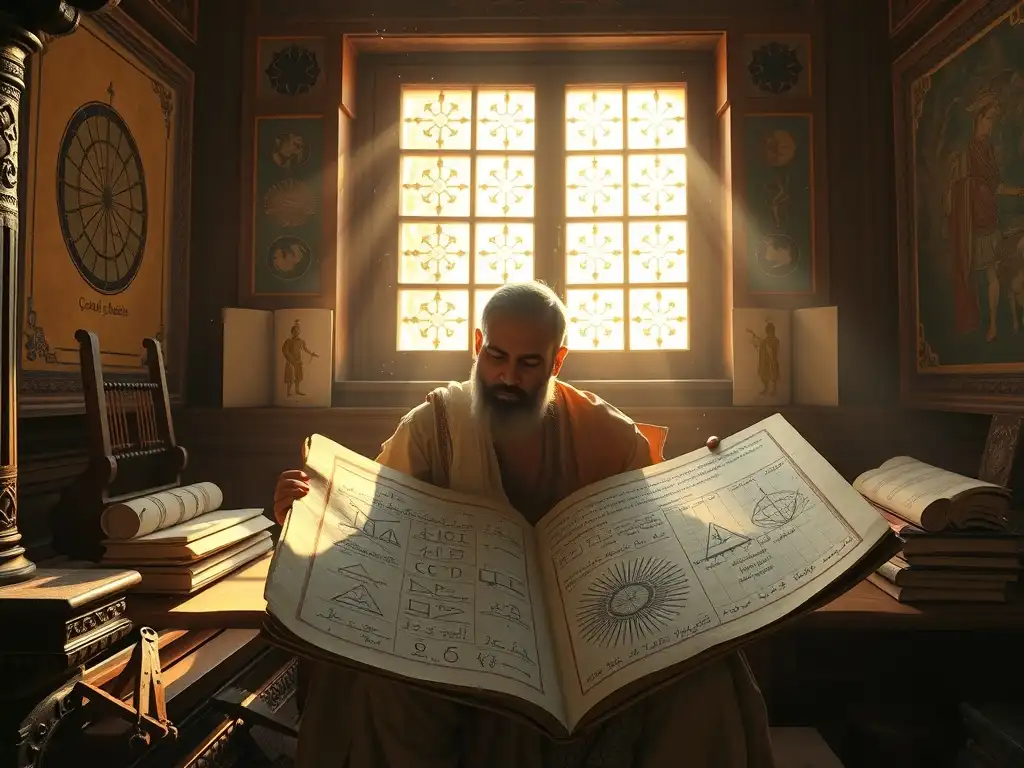
Welcome to Ancient India History, where we embark on a fascinating journey through the vibrant tapestry of ancient Indian civilizations. Dive deep into the remarkable contributions to mathematics that have shaped our understanding of the world today, as we unveil the secrets of ancient Indian mathematical texts.
From the intricate calculations of the Indus Valley to the profound insights of the Gupta Empire, each discovery invites you to explore the wisdom that has been encoded in literature for centuries. Get ready to unlock the mysteries of the past and see how they continue to influence our present—your adventure starts here!
- Introduction to Ancient Indian Mathematical Texts
- Historical Context of Mathematics in Ancient India
- Key Ancient Indian Mathematical Texts
- Mathematical Concepts in Ancient Indian Literature
- The Influence of Ancient Indian Mathematical Texts
- Conclusion: The Enduring Legacy of Ancient Indian Mathematical Texts
- Frequently Asked Questions
- Final Reflection: The Enduring Legacy of Ancient Indian Mathematical Texts
- Unlock the Secrets of Ancient Indian Mathematics!
Introduction to Ancient Indian Mathematical Texts
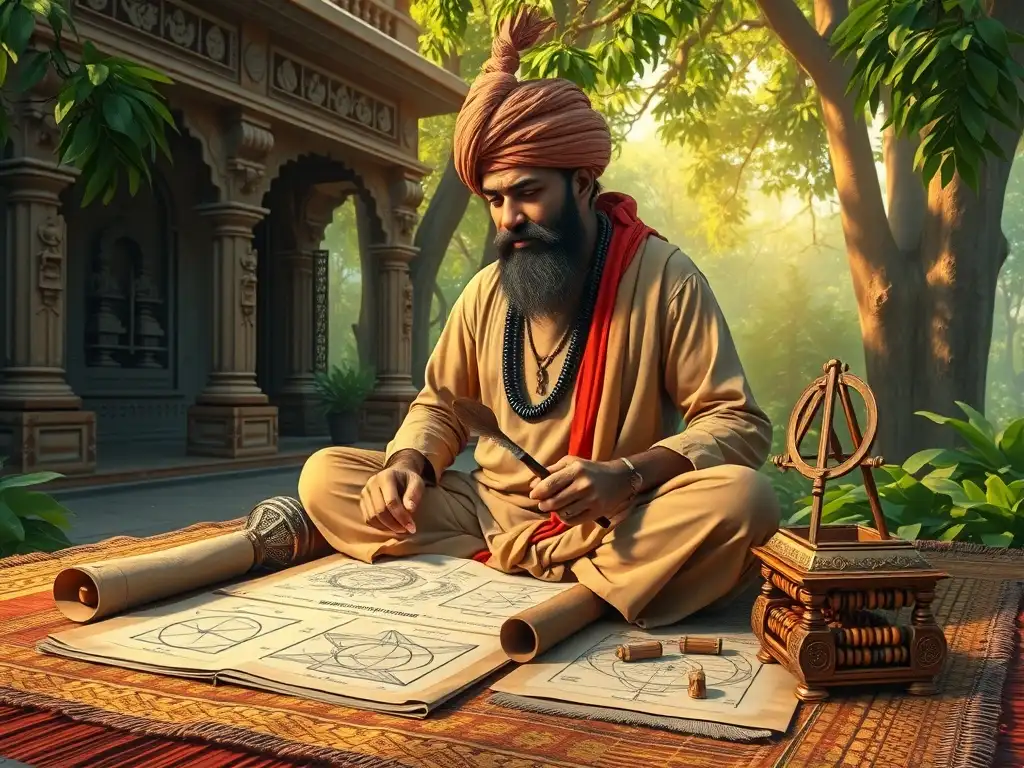
The mathematical wisdom encoded in ancient Indian literature represents a remarkable chapter in the history of mathematics. Spanning thousands of years, ancient Indian civilizations made significant contributions that not only enriched their own culture but also laid the groundwork for future mathematical advancements worldwide. The study of ancient Indian mathematical texts reveals a sophisticated understanding of various mathematical concepts such as arithmetic, geometry, and algebra, often intertwined with philosophical and astronomical insights. This article will delve into the rich tapestry of ancient Indian mathematical texts, exploring their historical context, key figures, and lasting impact on global mathematics.
Overview of Ancient Indian Mathematics
Ancient Indian mathematics can be traced back to the early civilizations of the Indus Valley, where evidence of mathematical practices has been found in archaeological sites, such as the use of weights and measures. However, it was during the classical period, particularly from around 500 BCE to 1200 CE, that Indian mathematics flourished, producing a wealth of texts that would influence scholars for centuries.
Key texts include:
- Sulbasutras: These texts provide rules for constructing altars and include geometric principles.
- Aryabhatiya: Written by the mathematician Aryabhata in 499 CE, this seminal work introduced concepts such as the place-value system and the calculation of square roots.
- Brahmagupta's Brahmasphutasiddhanta: This 7th-century text is notable for its rules on arithmetic operations and solutions to quadratic equations.
The mathematical insights from these texts often intertwined with astronomical observations, illustrating the holistic approach of ancient Indian scholars to science and mathematics.
Importance of Ancient Indian Mathematical Texts in World History
The significance of ancient Indian mathematical texts extends beyond their immediate cultural context. They played a pivotal role in the development of mathematics as a discipline, influencing both contemporaneous and later scholars from various regions.
Some key points illustrating their importance include:
- Foundation for Global Mathematics: Concepts such as the decimal system and zero, which originated in India, were pivotal in the evolution of mathematics globally.
- Transmission of Knowledge: The translation of Indian texts into Arabic during the medieval period facilitated the spread of mathematical knowledge to the Islamic world and eventually to Europe.
- Integration of Mathematics and Astronomy: Ancient Indian mathematicians significantly advanced astronomical calculations, demonstrating the essential link between these two disciplines.
Ancient Indian mathematical texts not only showcase the intellectual achievements of their time but also underscore their enduring influence on the development of mathematics and science across the globe.
Historical Context of Mathematics in Ancient India
The Indus Valley Civilization and Early Mathematical Concepts
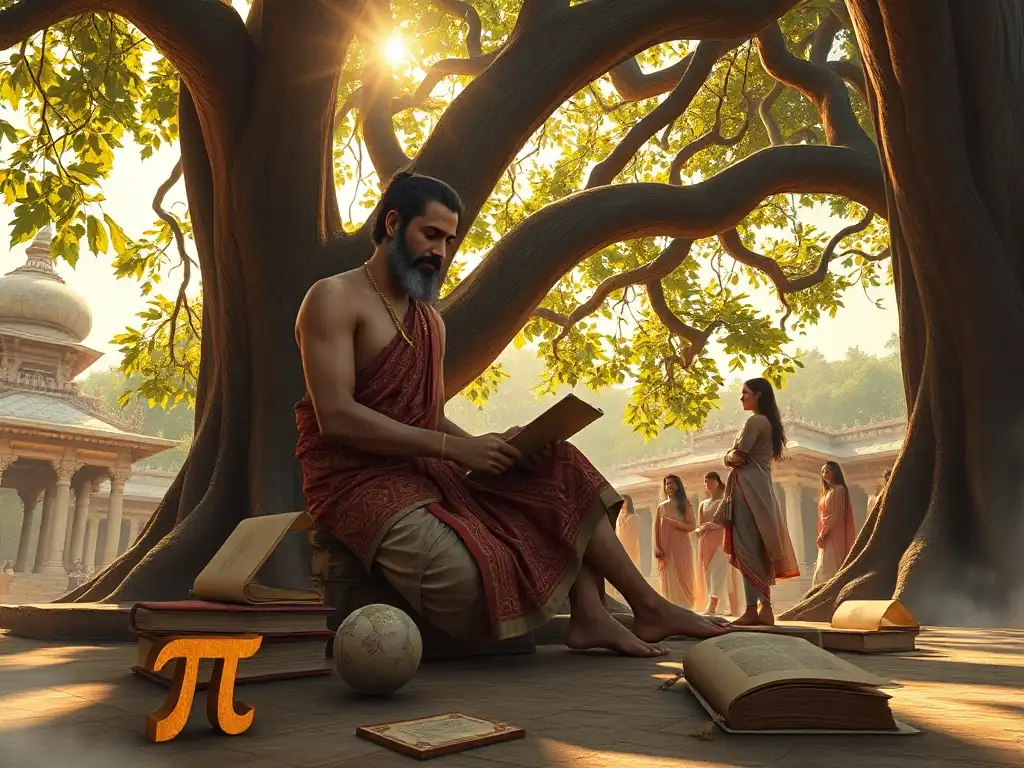
The Indus Valley Civilization (IVC), which thrived between 3300 and 1300 BCE, provides a foundation for understanding early mathematical concepts in ancient India. Archaeological discoveries in cities like Harappa and Mohenjo-Daro reveal a sophisticated society with a system of weights and measures, indicating an early understanding of mathematics.
- Weights and Measures: The IVC utilized standardized weights made of stone, showcasing their proficiency in arithmetic and commerce. These weights suggest a decimal system, as they ranged from 1 to 64 units.
- Urban Planning: The grid-like layout of cities demonstrates knowledge of geometry and spatial organization. The use of right angles and straight lines in construction reflects an understanding of geometric principles.
- Cultural Artifacts: Seals and pottery from this era often feature intricate designs and patterns, indicating an appreciation for symmetry and geometry. This artistic expression may have roots in mathematical concepts, showcasing the interconnectedness of art and mathematics.
Thus, the Indus Valley Civilization laid the groundwork for mathematical thought in ancient India, influencing subsequent periods with its innovative use of mathematics in daily life and urban planning.
The Vedic Period: Emergence of Mathematical Thought
The Vedic Period (approximately 1500 to 500 BCE) marked a significant evolution in mathematical thought, as evidenced by the ancient Indian mathematical texts derived from the Vedas. These texts reveal a burgeoning understanding of numbers, arithmetic, and geometry.
- Sanskrit and Numerical Systems: The Vedic texts, written in Sanskrit, introduced the concept of numbers and their representation. The numeral system used in these texts foreshadowed the modern decimal system, including the concept of zero, which was pivotal for mathematical advancements.
- Mathematical Poetry: The Sulba Sutras, composed during this period, are among the earliest mathematical texts in India. They employ poetic verses to explain geometric principles, particularly in relation to altar construction for rituals. These texts illustrate practical applications of mathematics, integrating spiritual and mathematical knowledge.
- Astronomy and Calendrical Calculations: Vedic scholars also engaged in astronomical observations, leading to precise calendrical calculations. The need to track celestial movements for agricultural purposes fostered mathematical advancements, including the development of sine and cosine functions.
The Vedic Period was thus a transformative era for ancient Indian mathematics, blending spirituality with mathematical inquiry and laying the foundation for future developments.
Contributions of the Maurya and Gupta Empires
The Maurya (322–185 BCE) and Gupta (c. 240–550 CE) Empires are crucial periods in ancient Indian history, marked by substantial contributions to mathematics that would influence both regional and global mathematical traditions.
- Aryabhata's Innovations: Aryabhata (476–550 CE), a renowned mathematician and astronomer during the Gupta Empire, made groundbreaking contributions. His work, the Aryabhatiya, discusses various mathematical concepts, including:
- Place Value System: He emphasized the importance of the place value system, which is fundamental to modern mathematics.
- Approximation of Pi: Aryabhata provided an approximation of π (pi) as 3.1416, a remarkable achievement for his time.
- Brahmagupta's Treatises: Another significant figure, Brahmagupta (598–668 CE), expanded on earlier mathematical concepts in his work, Brahmasphutasiddhanta. He introduced rules for arithmetic operations involving zero and negative numbers, which were revolutionary:
- Rules for Zero: Brahmagupta’s work on zero as a number and its operations laid the groundwork for future mathematical theories.
- Quadratic Equations: He also provided methods for solving quadratic equations, showcasing advanced algebraic thinking.
- Mathematical Texts and Influence: The period saw the proliferation of mathematical texts, including the Lilavati by Bhaskara II, which further popularized mathematical knowledge through engaging problems and solutions. These texts were not only educational but also served as reference points for mathematicians across cultures.
The Maurya and Gupta Empires were pivotal in the development of ancient Indian mathematical texts, which encoded complex mathematical ideas and influenced mathematical thought for centuries to come. The legacy of these contributions continues to resonate in contemporary mathematics, reflecting the enduring wisdom of ancient Indian scholars.
Key Ancient Indian Mathematical Texts
Overview of Notable Ancient Indian Mathematical Works
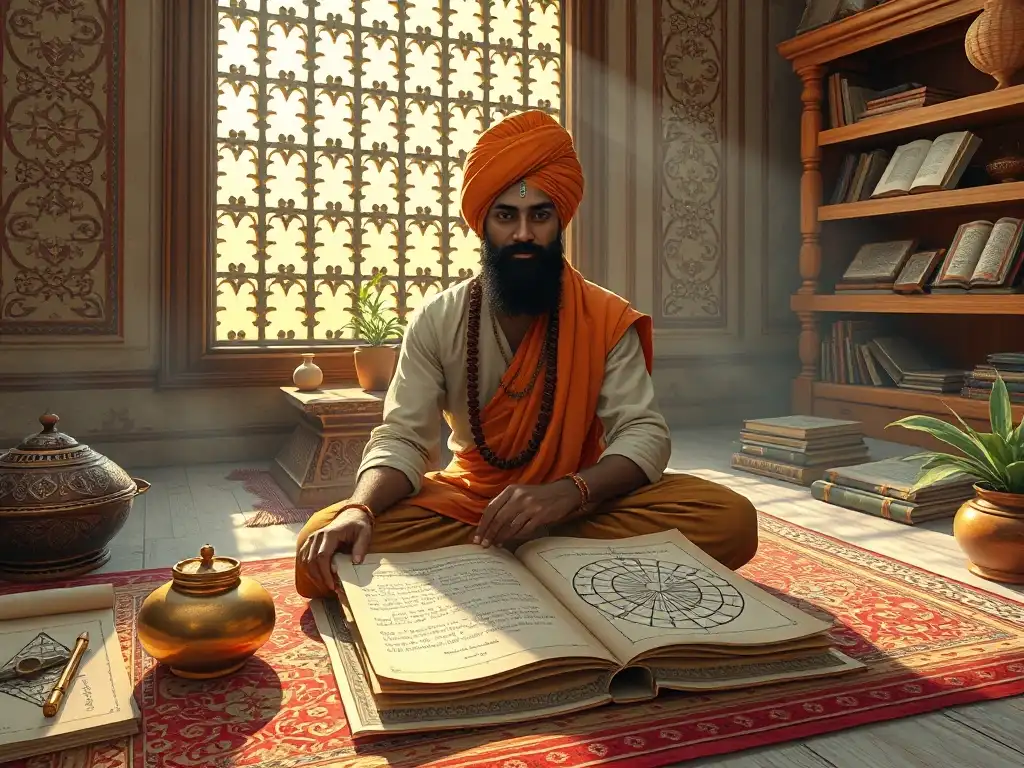
Ancient Indian mathematical texts provide a profound insight into the mathematical advancements achieved by Indian scholars. These works not only laid the foundation for various mathematical concepts but also influenced mathematical thought in other cultures. Among the most significant texts are:
- Sulbasutras: These texts primarily focus on geometry and the construction of altars, providing rules for measurements and shapes necessary for Vedic rituals.
- Aryabhatiya: Composed by Aryabhata in the 5th century CE, this work covers arithmetic, algebra, and astronomy, showcasing a systematic approach to mathematics.
- Brahmasphutasiddhanta: Authored by Brahmagupta in the 7th century CE, this text is pivotal for its contributions to arithmetic and geometry, including rules for operations with negative numbers.
- Ganita Sutras: Part of the larger text, "Brahmasphutasiddhanta," these sutras provide insights into algebraic concepts and the rules for solving equations.
These texts collectively highlight the depth and breadth of ancient Indian mathematical thought, showcasing a culture that revered knowledge and innovation.
Aryabhatiya: A Landmark in Mathematical Literature
The Aryabhatiya is a seminal work in the history of mathematics, authored by the mathematician Aryabhata around 499 CE. This text is divided into four sections: Gitika, Ganitaka, Kalakriya, and Grahaganita, each covering different aspects of mathematics and astronomy.
- Gitika: Discusses time and the rotation of the Earth, laying the groundwork for astronomical calculations.
- Ganitaka: This section primarily deals with arithmetic and algebra, introducing concepts such as:
- Place value system
- Methods for solving linear and quadratic equations
- Use of zero as a placeholder, which is a fundamental concept in mathematics.
- Kalakriya: Focuses on time and astronomical calculations, showcasing Aryabhata's innovative methods for predicting eclipses and planetary positions.
- Grahaganita: This section delves into the mathematics of celestial bodies, emphasizing the importance of geometry in understanding astronomical phenomena.
Aryabhatiya's influence extends beyond Indian borders, inspiring mathematicians in the Islamic Golden Age and later European scholars. Its systematic approach and innovative ideas laid the foundation for future mathematicians and astronomers.
Brahmasphutasiddhanta: Contributions of Brahmagupta
Brahmasphutasiddhanta, written by Brahmagupta in 628 CE, is another cornerstone of ancient Indian mathematics. This text is notable for its comprehensive treatment of arithmetic, algebra, and geometry, introducing several groundbreaking concepts.
Key Contributions:
- Rules for Operations with Negative Numbers: Brahmagupta was one of the first mathematicians to systematically outline rules for arithmetic involving positive and negative numbers, which was revolutionary for its time.
- Solutions to Quadratic Equations: He provided methods for solving quadratic equations, presenting them in a way that was accessible and practical for scholars of his era.
- Geometry: The text includes significant geometric propositions, particularly in relation to the properties of circles and rectangular shapes.
- Applications in Astronomy: Brahmagupta integrated mathematical principles with astronomical calculations, providing methods for predicting eclipses and understanding planetary motions.
The Brahmasphutasiddhanta remains a vital reference for historians of mathematics, as it encapsulates the mathematical wisdom of ancient Indian scholars and their contributions to the global mathematical landscape. It continues to be studied for its innovative approaches and foundational concepts that shaped future mathematical discourse.
Lilavati: The Mathematical Treatise by Bhaskara I
The Lilavati, authored by the renowned mathematician Bhaskara I in the 12th century, stands as one of the most significant ancient Indian mathematical texts. This treatise is not merely a collection of mathematical theories; it is a comprehensive guide that integrates mathematical concepts with practical applications in everyday life.
Bhaskara I's work is characterized by its clarity and pedagogical approach, making it accessible to students and scholars alike. The text is named after Bhaskara's daughter, Lilavati, whom he wrote it for, intending to help her overcome her challenges in mathematics. This personal touch adds a unique dimension to the text, blending personal narrative with academic rigor.
The Lilavati covers a variety of mathematical topics, which include:
- Arithmetic: The basics of numbers and operations, including addition, subtraction, multiplication, and division.
- Algebra: Introduction to solving equations, proportions, and the concept of zero.
- Geometry: Understanding shapes, areas, and volumes, illustrated through practical problems.
- Time and Calendar Calculations: Insights into calculating time intervals, lunar phases, and the structure of calendars.
One of the distinctive features of the Lilavati is its use of poetic verse to explain mathematical concepts, which serves both as a mnemonic device and a means to engage readers. This approach not only makes the content memorable but also demonstrates the rich cultural context of mathematics in ancient India.
Moreover, the text includes numerous problems and puzzles, encouraging readers to apply the concepts learned. For instance, one famous problem discusses the calculation of the quantity of grain needed for a certain number of cattle, reflecting the agricultural society in which Bhaskara lived.
The Lilavati has had a lasting impact on the study of mathematics in India and beyond. It has inspired generations of mathematicians and scholars, serving as a reference point for various mathematical principles and problems. Today, it is celebrated not only as a scholarly work but also as a testament to the innovative spirit of ancient Indian mathematicians and their contributions to the global mathematical heritage.
The Lilavati represents a significant milestone in ancient Indian mathematical literature, showcasing the intersection of practical mathematics, poetic expression, and cultural heritage. Its continued relevance and study underscore the depth of knowledge present in ancient Indian mathematical texts, asserting their place in the history of mathematics.
Mathematical Concepts in Ancient Indian Literature
Arithmetic and Number Theory in Ancient Texts
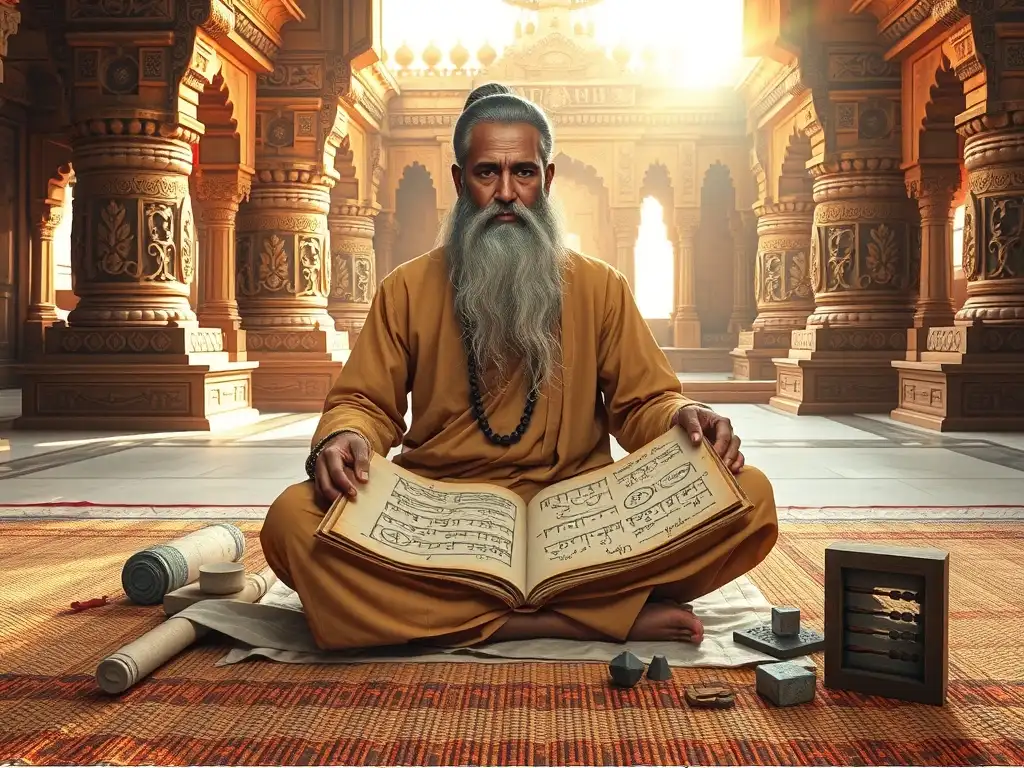
Ancient Indian mathematical texts, particularly the Sulbasutras and Aryabhatiya, provide profound insights into arithmetic and number theory. The Sulbasutras, composed between 800 and 500 BCE, primarily focus on geometry and construction but also delve into arithmetic operations, including addition, subtraction, multiplication, and division. Notably, these texts introduced the concept of zero and the decimal system, which fundamentally transformed numerical calculations.
The Aryabhatiya, authored by Aryabhata in the 5th century CE, further advanced arithmetic by introducing the concept of place value, which is crucial for modern numerical representations. Aryabhata's work included:
- Fractions: Detailed methods for computing with fractions, emphasizing their practical applications in astronomical calculations.
- Algorithms: Early algorithms for performing arithmetic operations, which laid the groundwork for future mathematical developments.
The development of number theory is evident in the Brahmasphutasiddhanta by Brahmagupta, who contributed significantly to understanding negative numbers and their operations. Brahmagupta's rules for arithmetic operations with negative numbers were groundbreaking and influenced later mathematicians.
Geometry and Trigonometry: Insights from Ancient Indian Mathematicians
Ancient Indian mathematicians made remarkable contributions to geometry and trigonometry, evident in texts like the Sulbasutras and the Aryabhatiya. These works not only provided geometric principles but also practical applications, particularly in the construction of altars and ritual sites.
- Geometric Construction: The Sulbasutras detail intricate geometric constructions using only a compass and a straightedge. They describe methods to construct squares, rectangles, and circles, emphasizing the Pythagorean theorem long before it was recognized in the West.
- Trigonometric Ratios: The Aryabhatiya is one of the earliest texts to systematically explore trigonometric functions. Aryabhata introduced the concept of the sine function (called “ardha-jya” in Sanskrit) and provided tables for sine values, which were crucial for astronomical calculations.
- Calculations of Areas and Volumes: Ancient texts included formulas for calculating areas of various geometries, such as triangles and circles, as well as volumes of solids. For example, the area of a triangle was calculated using the formula \( \frac{1}{2} \times base \times height \), showcasing an understanding of geometric principles that would later be formalized in Euclidean geometry.
Algebraic Principles in Ancient Indian Mathematical Works
Algebra in ancient Indian mathematical texts is characterized by a rich blend of theoretical and practical applications. Works such as the Brahmasphutasiddhanta and the Lilavati by Bhaskara II illustrate advanced algebraic concepts and problem-solving techniques.
- Equations: Brahmagupta's rules for solving linear and quadratic equations marked significant progress in algebra. He formulated rules for handling equations with multiple variables and provided systematic solutions to various types of equations.
- Word Problems: The Lilavati is particularly notable for its collection of word problems that incorporate algebraic reasoning. These problems often addressed real-life scenarios, requiring the application of algebra to find solutions, thus making mathematics accessible and practical.
- Negative and Irrational Numbers: Ancient Indian mathematicians were pioneers in dealing with negative numbers and providing methods for their use in calculations. They also explored irrational numbers, particularly in the context of geometric problems, which was a significant advancement at the time.
Through these mathematical texts, ancient Indian mathematicians established a foundation that would influence subsequent generations and other cultures, illustrating the depth and sophistication of their mathematical understanding.
The Influence of Ancient Indian Mathematical Texts
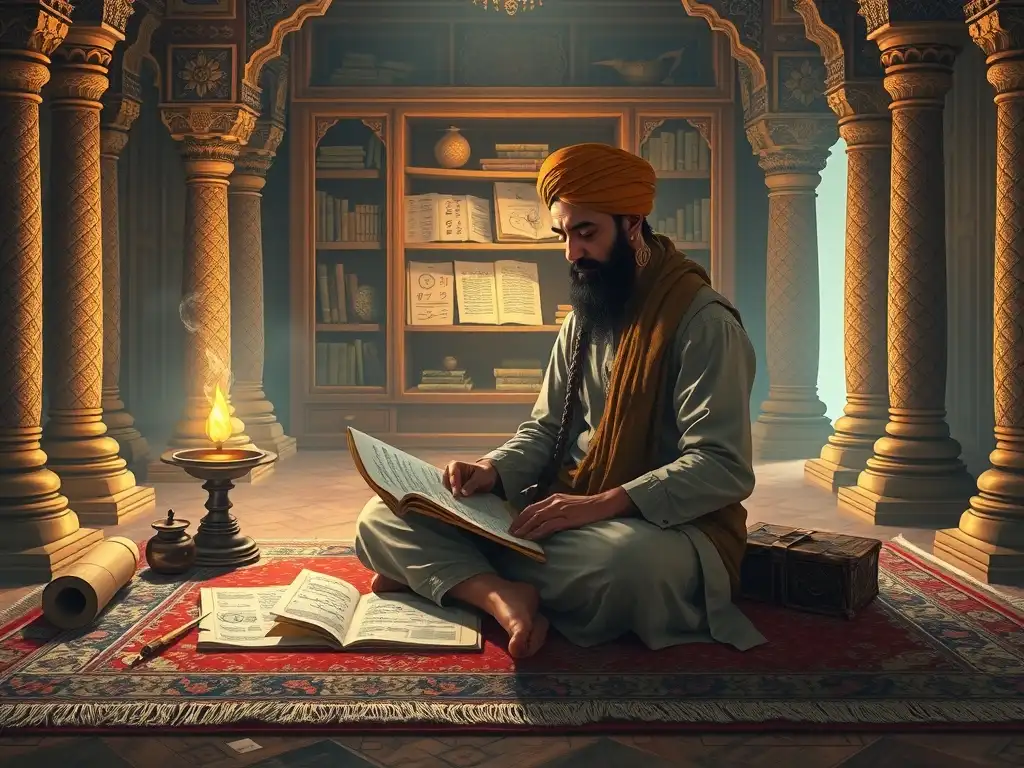
Ancient Indian mathematical texts are a treasure trove of knowledge that have significantly influenced both regional and global mathematical development. These texts, often written in Sanskrit, encompass a wide range of subjects including arithmetic, geometry, algebra, and even astronomy. They reflect the profound understanding of mathematical principles that ancient Indian scholars possessed, and their influence has been felt across cultures and epochs.
Impact on Later Mathematical Developments in India
The mathematical wisdom encoded in ancient Indian texts laid the groundwork for subsequent advancements in mathematics within the subcontinent. Notable works include:
- Sulbasutras: These texts, dating back to around 800–500 BCE, provide rules for constructing altars and are among the earliest documents demonstrating the use of geometric principles. They introduced concepts such as the Pythagorean theorem long before it was recognized in the West, showcasing the advanced understanding of geometry among Indian mathematicians.
- Aryabhatiya: Composed by Aryabhata in the 5th century CE, this seminal work includes methods for solving quadratic equations and calculating square and cube roots. Aryabhata's innovative approach to mathematics marked a departure from earlier traditions, emphasizing a more systematic method of problem-solving.
- Bakhshali Manuscript: This ancient text, which dates back to the 3rd or 4th century CE, contains one of the earliest known uses of zero and employs a decimal place value system. The manuscript is significant for its application of arithmetic and algebraic methods, influencing later mathematical thought in India.
These texts not only contributed to a more profound understanding of mathematics but also served as references for later mathematicians, paving the way for the Golden Age of Indian Mathematics during the Gupta period.
Contributions to Global Mathematics: How Ancient Indian Texts Influenced Other Cultures
The impact of ancient Indian mathematical texts extended beyond the borders of India, influencing various cultures around the world. Some key contributions include:
- Transmission of Numerical Concepts: The introduction of the numeral system, particularly the concept of zero and the place value system, from ancient India to the Arab world significantly altered mathematical practices. The Persian mathematician Al-Khwarizmi, in the 9th century, carried these ideas to the Islamic world, where they further evolved and spread to Europe.
- Astronomy and Trigonometry: The astronomical texts, such as the Surya Siddhanta, provided essential calculations for the position of celestial bodies, which were adopted by Arab astronomers. The sine function, first described in Indian texts, became foundational in Islamic and later European trigonometry.
- Algebraic Methods: Ancient Indian mathematicians developed methods for solving equations that were later adopted and refined in the Islamic Golden Age. The techniques showcased in texts like the Bakhshali Manuscript informed later scholars, including those in Europe, about the systematic approach to algebra.
This cross-cultural exchange highlights the significant role of ancient Indian mathematical texts in shaping not only Indian but also global mathematical thought.
The Legacy of Ancient Indian Mathematicians in Modern Mathematics
The legacy of ancient Indian mathematicians is evident in various aspects of modern mathematics, showcasing the enduring influence of their work. Key elements of this legacy include:
- Zero and the Decimal System: The concept of zero as a number and the decimal system form the foundation of modern mathematics. These innovations have revolutionized calculations and are integral to various fields, including computer science and engineering.
- Mathematical Notation: The symbolic representation and notation for numbers and operations have roots in ancient Indian practices. The clarity and efficiency of these notations are essential for contemporary mathematical communication.
- Problem-Solving Techniques: Many problem-solving techniques that originated in ancient Indian texts, such as systematic approaches to algebra and geometry, continue to be taught in modern curricula. The focus on logical reasoning and methodical proofs remains a cornerstone of mathematics education today.
The work of ancient Indian mathematicians not only contributed to the mathematical discourse of their time but also laid the groundwork for future generations, establishing principles that are still relevant and widely utilized in modern mathematics. The influence of their texts remains a vital part of the rich tapestry of mathematical history.
Conclusion: The Enduring Legacy of Ancient Indian Mathematical Texts

Summary of Key Contributions and Insights
Ancient Indian mathematical texts have served as a cornerstone in the development of mathematics as we know it today. From the Sulba Sutras, which provided geometrical principles for the construction of altars, to Aryabhata's works that introduced concepts of zero and place value, the contributions are vast and significant.
Some notable texts include:
- Aryabhatiya (by Aryabhata): Introduced the concept of zero and developed a place-value system that revolutionized arithmetic.
- Bakhshali Manuscript: An ancient text that provided early forms of algebra and arithmetic, showcasing techniques for solving linear and quadratic equations.
- Lilavati (by Bhaskara II): A comprehensive treatise that covered a wide range of mathematical topics, including arithmetic, geometry, and permutations.
These texts not only reflect advanced mathematical understanding but also reveal the cultural and philosophical context in which they were developed. They emphasize practical applications, such as astronomy, architecture, and trade, indicating a society deeply engaged with mathematical concepts.
The Relevance of Ancient Indian Mathematics in Today’s World
The principles found in ancient Indian mathematical texts continue to resonate in various fields today. Their influence can be seen in:
- Modern Mathematics: Concepts such as the decimal system and the use of zero are foundational to contemporary mathematics and computing.
- Computer Science: Algorithms and problem-solving techniques derived from ancient Indian texts are still relevant, particularly in areas like data analysis and cryptography.
- Education: The pedagogical approaches outlined in texts like Lilavati serve as inspiration for teaching methods that engage students with practical examples and real-world applications.
In addition, scholars and mathematicians continue to explore these ancient works, seeking insights that may contribute to advancements in mathematical theory and application. The enduring legacy of these texts not only highlights the advanced understanding of mathematics in ancient India but also underscores the importance of preserving and studying this rich heritage for future generations.
The exploration of ancient Indian mathematical texts reveals a profound legacy that has shaped the course of mathematics, making it a vital area of study for mathematicians, historians, and educators alike.
Frequently Asked Questions
What are ancient Indian mathematical texts?
Ancient Indian mathematical texts are historical documents that showcase the mathematical knowledge and theories developed in India. Notable examples include the Sulba Sutras and Aryabhata's Aryabhatiya.
How did ancient Indian mathematics influence the world?
Ancient Indian mathematics significantly contributed to the development of concepts like the decimal system and zero, which later spread to other cultures and formed the basis for modern mathematics.
Who were the prominent mathematicians in ancient India?
Prominent mathematicians included Aryabhata, who introduced algebraic concepts, and Brahmagupta, known for his work on quadratic equations and rules for arithmetic.
What role did religion play in the development of mathematics in ancient India?
Religion played a significant role by intertwining mathematics and rituals, notably in texts like the Sulba Sutras, which provided geometric principles for constructing sacred altars and structures.
How are ancient Indian mathematical texts studied today?
Ancient Indian mathematical texts are studied through historical analysis, translation, and comparison with contemporary mathematical practices, helping to uncover the rich intellectual heritage of ancient India.
Final Reflection: The Enduring Legacy of Ancient Indian Mathematical Texts
The mathematical wisdom encoded in ancient Indian literature is not merely a relic of the past; it is a profound testament to the intellectual achievements of a civilization that laid the groundwork for modern mathematics. Today, as we navigate an increasingly complex world driven by technology and data, the insights gleaned from these ancient texts remind us of the timeless nature of knowledge and the importance of understanding our roots. The brilliance of scholars like Aryabhata and Brahmagupta continues to resonate, demonstrating that the quest for knowledge transcends time and culture.
The influence of ancient Indian mathematical texts on contemporary thought is both profound and far-reaching. These texts not only contributed to the mathematical foundations of their time but also inspired generations of thinkers across the globe. Their teachings on zero, algebra, and geometry have shaped the very fabric of mathematics as we know it today. Mathematics is the language in which God has written the universe.
– Galileo Galilei. This quote encapsulates the essence of how ancient wisdom continues to illuminate our understanding of the universe, bridging the gap between past and present.
As we reflect on the lessons embedded in these ancient texts, let us embrace the call to explore and celebrate the rich tapestry of knowledge that has shaped our world. I invite you to delve deeper into the teachings of ancient Indian mathematics, to appreciate their relevance in our lives today, and to carry forward this legacy of inquiry and innovation. By doing so, we not only honor the past but also empower ourselves to contribute to the ongoing narrative of human understanding and discovery.
Unlock the Secrets of Ancient Indian Mathematics!
Thank you for exploring the profound mathematical wisdom rooted in ancient Indian literature with us! You've unearthed fascinating insights that can reshape your understanding of mathematics and its rich history. Now, let’s take this knowledge a step further and inspire our future by diving even deeper.
Here are some actionable steps you can take right now:
- Dive into an ancient text: Choose a classic work, such as the Aryabhatiya or the Lilavati, and begin exploring its mathematical concepts. You might be surprised at how relevant they are today!
- Start a study group: Invite friends or classmates to discuss and analyze these ancient works together. Sharing insights can lead to unexpected discoveries and a deeper appreciation of this rich knowledge.
- Engage with our community: Share your thoughts or findings about ancient mathematics on our forum at ancientindiahistory.com , and connect with others who share your passion!
As you embark on this journey, consider: How can the mathematical principles from ancient India influence modern problem-solving in your life or work? Let's keep the conversation going!