
How Ancient India Predicted Eclipses: The Math Behind the Science

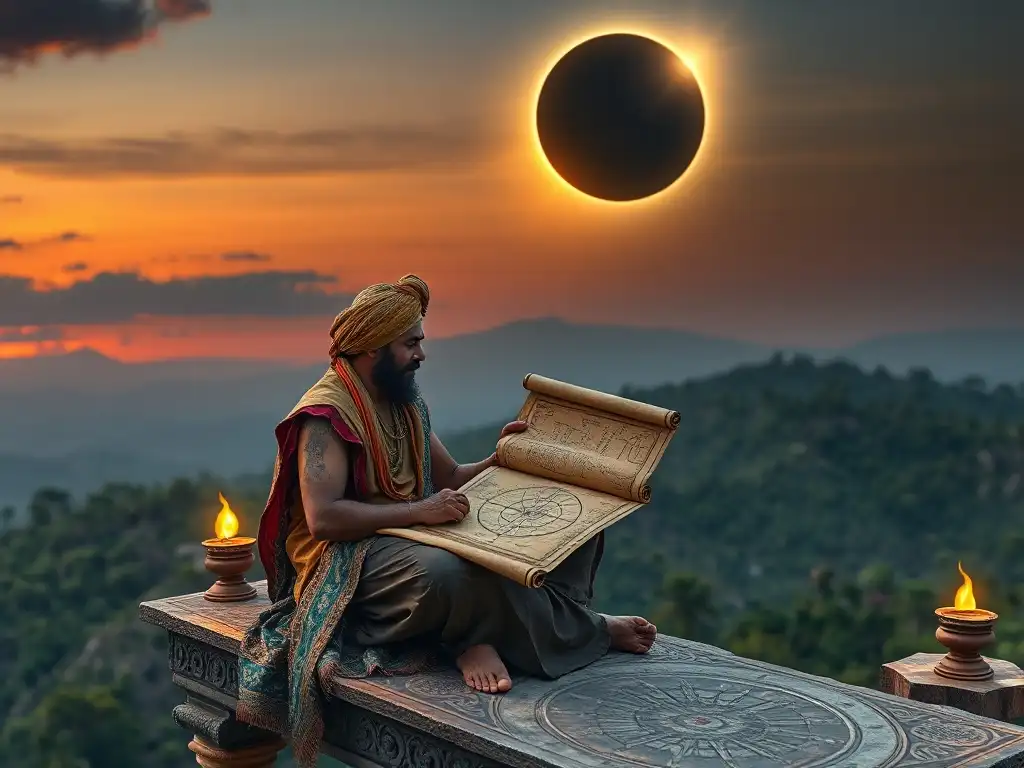
Welcome to Ancient India History, where we traverse the fascinating landscape of India's past, revealing the extraordinary contributions of ancient civilizations. Have you ever wondered how the scholars of Ancient India managed to predict eclipses with remarkable accuracy? In our featured article, “How Ancient India Predicted Eclipses: The Math Behind the Science,” we delve into the intricate mathematical principles that underpinned these celestial forecasts.
Join us on this enlightening journey as we unveil the secrets of ancient wisdom and its enduring legacy in the world of mathematics. Your adventure into the depths of history begins now—read on to discover more!

Introduction to Ancient India Eclipse Predictions
The ability to predict eclipses is a remarkable achievement that showcases the advanced understanding of astronomy and mathematics possessed by ancient civilizations. Among these, ancient India stands out for its sophisticated approaches to eclipse predictions, which were not only scientifically significant but also culturally integral. The ancient Indian scholars developed complex mathematical models and astronomical theories that allowed them to forecast solar and lunar eclipses with impressive accuracy. This article delves into the intriguing world of ancient Indian eclipse predictions, exploring the mathematical principles behind these forecasts and their profound impacts on both science and society.
Overview of Eclipse Predictions in Ancient Cultures
Eclipse predictions have fascinated civilizations throughout history, prompting various cultures to develop their own methods and interpretations.
- Mesopotamia: Astronomers in ancient Babylon meticulously recorded celestial events, leading to predictive models based on cycles.
- Maya Civilization: The Maya utilized a sophisticated calendar system to forecast solar and lunar eclipses, integrating these events into their religious and agricultural practices.
In comparison, ancient India’s approach to eclipse predictions was uniquely rich, influenced by a blend of scientific inquiry and philosophical thought. The detailed records found in texts such as the Surya Siddhanta reveal a deep understanding of the celestial mechanics at play.
Importance of Astronomy in Ancient Indian Civilization
Astronomy played a pivotal role in ancient Indian civilization, influencing various aspects of life, including religion, agriculture, and navigation.
- Religious Significance: Eclipses were often seen as omens, leading to rituals and celebrations that reflected the celestial phenomena.
- Agricultural Planning: Accurate predictions allowed farmers to align their planting and harvesting cycles with the lunar calendar, optimizing crop yields.
The integration of astronomy into daily life highlights the importance of mathematical principles in ancient Indian society, emphasizing the need for precise calculations in understanding the cosmos.
Historical Context of Eclipse Predictions in Ancient India
Understanding the historical context of eclipse predictions in ancient India involves examining the early records and contributions of key mathematicians who paved the way for advancements in this field.
Early Records of Eclipses in Indian Texts
Ancient Indian texts are replete with records of celestial phenomena, including eclipses.
- The Rigveda: Contains references to eclipses, illustrating the early awareness of celestial events.
- The Aryabhatiya: Authored by Aryabhata in the 5th century CE, this text includes significant mathematical formulations related to eclipses.
These early records not only document the occurrences of eclipses but also reflect the philosophical and scientific inquiries of the time, showcasing the intellectual rigor of ancient Indian scholars.
Contributions of Notable Ancient Indian Mathematicians
Several mathematicians significantly advanced the understanding of astronomy and eclipse predictions in ancient India.
- Aryabhata: His calculations regarding the timing of eclipses were groundbreaking, employing trigonometric methods to enhance accuracy.
- Brahmagupta: Known for his work in the 7th century, he provided rules for calculating eclipses and contributed to the understanding of planetary motions.
These mathematicians laid the groundwork for future astronomical studies, demonstrating the richness of ancient Indian contributions to the scientific community.
By exploring the mathematics behind these ancient eclipse predictions, we can appreciate the sophistication of Indian astronomical knowledge and its lasting legacy in the field of mathematics and science.
Mathematical Methods Used for Eclipse Predictions
The ancient Indian mathematicians utilized a combination of geometric principles and mathematical calculations to predict eclipses with remarkable accuracy. Their methods were deeply rooted in observational astronomy, where they meticulously tracked celestial bodies to understand their movements.
Understanding the Geometry of Eclipses
To predict eclipses, ancient Indian astronomers relied on a geometric understanding of the Earth, Moon, and Sun. They recognized that an eclipse occurs when the Earth or the Moon passes through the shadow of the other celestial body. This understanding led to the development of key geometric models:
- Shadow Cones: The concept of shadow cones was fundamental. The Earth casts a shadow that can be divided into three parts: the umbra, penumbra, and antumbra. The umbra is where total eclipses occur, while penumbral eclipses take place in the penumbra.
- Angular Measurements: Ancient astronomers used angular measurements to calculate the positions of celestial bodies. They employed tools like the gnomon and the armillary sphere to measure the angles between the Earth, Moon, and Sun.
- Spherical Geometry: The use of spherical geometry allowed mathematicians to compute distances and angles on the celestial sphere effectively. This was crucial for determining the alignment necessary for an eclipse.
Key Mathematical Concepts in Ancient Indian Astronomy
Several mathematical concepts were essential for the predictions made by ancient Indian astronomers:
- Sine and Cosine Functions: These trigonometric functions played a vital role in calculating the positions of the Moon and Sun concerning the Earth. The sine function, in particular, was used to determine the angular distance between celestial bodies.
- Cycles of Eclipses: Ancient Indian texts, such as the Surya Siddhanta, discussed the cyclic nature of eclipses. They established that eclipses occur in predictable cycles, primarily based on the Saros cycle, a period of approximately 18 years, 11 days, and 8 hours, after which the same pattern of eclipses repeats.
- Timekeeping and Calendars: The use of precise timekeeping was crucial. Indian astronomers developed sophisticated calendars that accounted for the lunar and solar cycles, enabling them to predict when eclipses would occur.
Significant Mathematicians and Their Contributions
The field of ancient Indian astronomy and mathematics was enriched by the contributions of several notable mathematicians who laid the foundation for eclipse predictions.
Aryabhata: The Pioneer of Indian Astronomy
Aryabhata (476–550 CE) is often regarded as the first significant mathematician and astronomer of ancient India. His seminal work, the Aryabhatiya, introduced groundbreaking concepts that revolutionized the understanding of astronomy:
- Heliocentric Theory: Aryabhata proposed that the Earth rotates on its axis, challenging the geocentric views of his time. This understanding of Earth's rotation was crucial for explaining the phenomena of day and night as well as the occurrence of eclipses.
- Eclipse Predictions: He provided methods to predict eclipses based on mathematical calculations involving the positions of the Sun and Moon. Aryabhata's work laid the groundwork for future astronomers in India and beyond.
- Mathematical Formulas: He introduced various mathematical formulas, including those for calculating the circumference of the Earth, which were instrumental in understanding the geometry of eclipses.
Brahmagupta: Advancements in Mathematical Astronomy
Brahmagupta (598–668 CE) made significant advancements in mathematical astronomy, contributing further to the methods of eclipse prediction:
- Rules for Eclipses: In his work Brahmasphutasiddhanta, he outlined clear rules for predicting solar and lunar eclipses. His systematic approach incorporated the use of sine and cosine calculations, enhancing the accuracy of predictions.
- Mathematical Innovations: Brahmagupta is credited with developing algorithms for calculating the positions of celestial bodies and for solving quadratic equations, which had implications for understanding cyclical events such as eclipses.
- Influence on Later Scholars: His work significantly influenced later astronomers in both India and the Islamic world, promoting the exchange of knowledge and the advancement of mathematical astronomy across cultures.
Through their pioneering work, mathematicians like Aryabhata and Brahmagupta not only enhanced the understanding of celestial phenomena but also laid the mathematical groundwork that allowed for the accurate predictions of eclipses, showcasing the rich mathematical heritage of ancient India.
The Role of Ancient Indian Texts in Eclipse Predictions
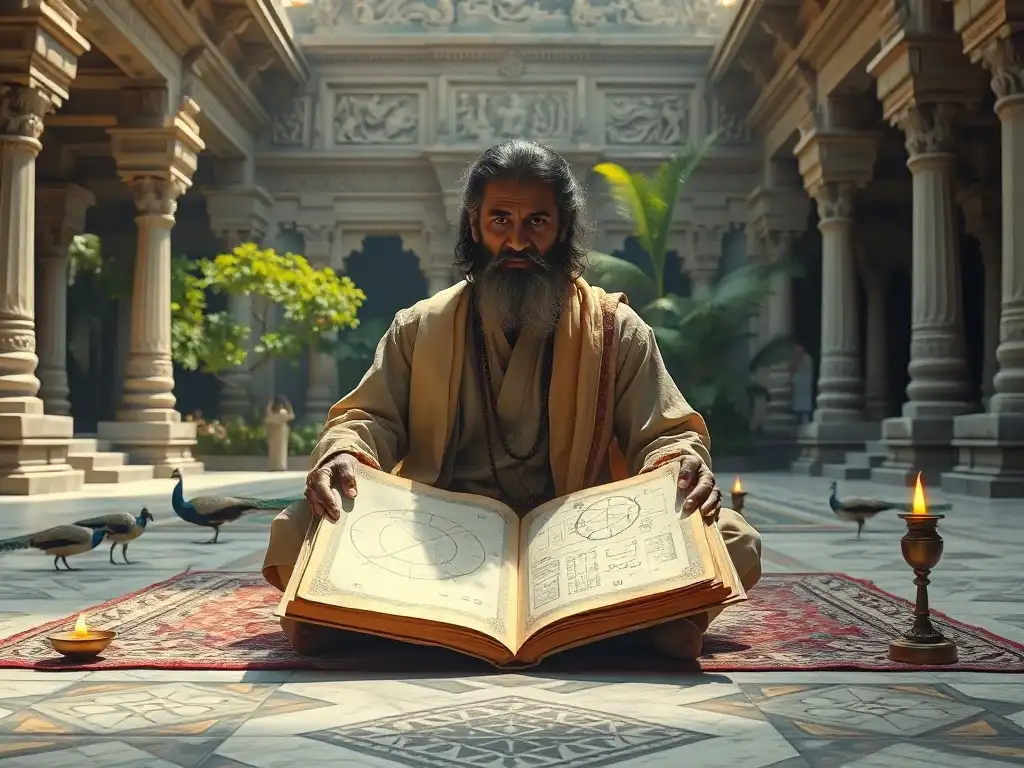
Ancient Indian scholars played a pivotal role in the understanding and prediction of celestial events, particularly eclipses. Their meticulous observations and mathematical calculations laid the groundwork for advanced astronomical knowledge that not only predicted eclipses but also contributed to the broader field of astronomy. Texts from this era reveal a sophisticated understanding of celestial mechanics, and they often emphasized the cyclical nature of celestial phenomena.
Indian astronomers utilized a range of techniques, including geometric calculations and trigonometric functions, to predict the timings and paths of eclipses. The texts often combined observational data with theoretical models, demonstrating an impressive integration of empirical observation and mathematical reasoning. These contributions were critical in establishing the credibility of ancient Indian astronomy, positioning it as a significant player in the global context of scientific inquiry.
The Surya Siddhanta: A Treatise on Astronomy
The Surya Siddhanta, composed around the 4th to 5th centuries CE, is one of the oldest and most influential texts in Indian astronomy. This treatise outlines various astronomical principles, including the calculation of eclipses, planetary positions, and the measurement of time. It provides formulas for predicting solar and lunar eclipses, emphasizing the importance of celestial alignments.
The text introduces the concept of the "sine" function, which was crucial for calculations involving angles in celestial mechanics. Its innovative approach to trigonometry allowed astronomers to create precise models of the heavens. The Surya Siddhanta also discusses the duration of eclipses and their visibility from different geographical locations, showcasing a comprehensive understanding of the phenomena.
Through rigorous mathematical formulations, the Surya Siddhanta has influenced both contemporary and later astronomical practices, making it a cornerstone of ancient Indian scientific literature.
Other Important Texts and Their Contributions
In addition to the Surya Siddhanta, several other texts contributed significantly to the field of astronomy and the prediction of eclipses in ancient India. Notable among these is the Aryabhatiya, authored by Aryabhata in the 5th century CE. This work introduced innovative methods for calculating the position of celestial bodies and offered valuable insights into the mechanics of eclipses.
Another important text is the Brahmasphutasiddhanta by Brahmagupta, which provided further advancements in astronomical calculations and established rules for solving quadratic equations, essential for understanding celestial movements. Brahmagupta's work also included discussions on lunar and solar eclipses, reinforcing the significance of these events in ancient Indian culture.
These texts collectively showcase the depth of astronomical knowledge in ancient India, reflecting a tradition that combined rigorous mathematical principles with a keen observational approach.
Comparing Ancient Indian Eclipse Predictions with Other Civilizations
The ancient Indian approach to eclipse predictions shares both similarities and differences with those of other civilizations, particularly the Greeks and later Islamic astronomers. This comparison highlights the unique contributions of Indian mathematicians while also illustrating the interconnectedness of ancient scientific advancements.
Similarities and Differences with Ancient Greek Astronomy
Ancient Indian and Greek astronomers both sought to explain celestial phenomena through observation and mathematical reasoning. However, the methodologies and underlying philosophies differed significantly. While Greek astronomers, such as Hipparchus and Ptolemy, focused on epicycles and deferents to explain the motion of celestial bodies, Indian astronomers offered a more geometrically intuitive approach.
For instance, the use of the sine function in Indian astronomy, as outlined in the Surya Siddhanta, provided a more direct means of calculating angles associated with celestial events. Additionally, Indian texts often emphasized predictive accuracy, whereas Greek texts were more inclined toward philosophical explanations of celestial mechanics.
Despite these differences, both traditions contributed to a richer understanding of astronomy, with Indian techniques influencing Greek thought in later centuries.
Influence of Ancient Indian Techniques on Islamic Astronomy
The mathematical techniques developed in ancient India significantly influenced Islamic astronomy during the Golden Age of Islam (8th to 14th centuries CE). Scholars such as Al-Khwarizmi and Al-Battani integrated Indian astronomical concepts into their own works, adapting and expanding upon the methods for predicting eclipses.
The introduction of the sine function from Indian mathematics into Islamic astronomy facilitated more accurate calculations of celestial events. Furthermore, texts like the Surya Siddhanta were translated into Arabic, ensuring that Indian knowledge was disseminated widely across the Islamic world.
This cross-pollination of ideas not only enhanced the accuracy of eclipse predictions but also laid the groundwork for the eventual development of modern astronomical principles. The legacy of ancient Indian eclipse predictions thus transcended geographical boundaries, influencing generations of astronomers across cultures.
Conclusion: Legacy of Ancient Indian Eclipse Predictions
The legacy of ancient Indian eclipse predictions stands as a testament to the advanced understanding of astronomy and mathematics possessed by the civilizations of the Indian subcontinent. Notably, the meticulous observations and calculations laid down by mathematicians and astronomers such as Aryabhata and Brahmagupta have not only contributed to the field during their time but also established a foundation for future explorations in both India and across the globe. Their work demonstrated an impressive grasp of celestial mechanics, which was pivotal for the development of accurate astronomical models.
These predictions were not merely academic; they played a crucial role in the daily lives of people. By understanding the timing of eclipses, ancient Indians were able to prepare for these celestial events, which were often viewed through a cultural and religious lens. This blend of science and culture illustrates how deeply intertwined astronomy was with the societal fabric of ancient India.
Impact on Modern Astronomy and Mathematics
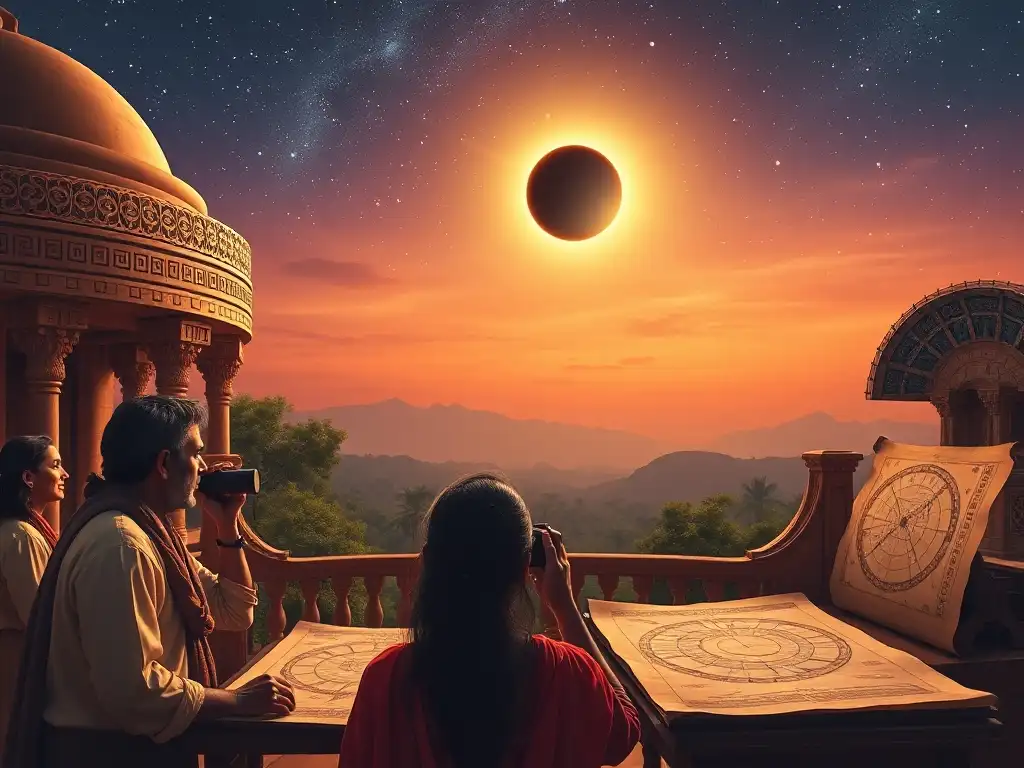
The mathematical frameworks and observational techniques developed by ancient Indian astronomers have had a lasting influence on modern astronomy and mathematics. Concepts such as the use of trigonometry and the understanding of spherical geometry found their roots in these early astronomical studies. For instance, Aryabhata's work on calculating the circumference of the Earth and the duration of a solar year reflects principles that are still relevant in contemporary studies.
Furthermore, the transmission of this knowledge to the Islamic world during the medieval period catalyzed significant advancements in both fields. Scholars such as Al-Khwarizmi and Al-Battani built upon Indian astronomical models, which ultimately contributed to the Renaissance in Europe. The ancient methods of eclipse prediction, characterized by their empirical rigor, continue to inform modern methods of celestial observation and are acknowledged by scholars globally.
Continuing Significance in Cultural Heritage
The predictions of eclipses in ancient India have transcended purely scientific realms to become an integral part of cultural heritage. Eclipses were often viewed as significant spiritual events, prompting rituals and festivities among various communities. This cultural significance is preserved in contemporary practices where eclipses are still celebrated, and rituals are performed, showcasing the enduring legacy of ancient astronomical knowledge.
Moreover, the integration of astronomy into religious practices reflects a holistic worldview that ancient Indians held, where science and spirituality coexisted harmoniously. The narratives and teachings about eclipses that emerged from ancient texts continue to inspire scholars and enthusiasts alike. This cultural heritage keeps alive the memory of ancient achievements, ensuring that future generations appreciate the intricate connections between science, culture, and belief systems.
References and Further Reading on Ancient Indian Eclipse Predictions
For those interested in delving deeper into the fascinating subject of ancient Indian eclipse predictions, a range of resources is available that explore the mathematical techniques and cultural implications of these celestial events.
Recommended Books and Articles
- "The History of Astronomy in India" by K. R. S. Iyengar – This book provides a comprehensive overview of the development of astronomical thought in ancient India, including eclipse predictions.
- "Aryabhata: The Astronomer and Mathematician": by R. C. Gupta – This text focuses on Aryabhata's contributions to mathematics and astronomy, highlighting his methods for predicting eclipses.
- "Indian Astronomical Instruments: A Historical Perspective": by Sunil Kumar – This article discusses the instruments used by ancient astronomers in India and their role in celestial observations.
Important Historical Documents and Manuscripts
- Aryabhatiya – Written by Aryabhata, this seminal work contains mathematical and astronomical principles, including methods for predicting eclipses.
- Brahmasphutasiddhanta – Authored by Brahmagupta, this text not only addresses eclipse calculations but also presents early concepts of zero and negative numbers.
- Surya Siddhanta – An ancient astronomical text that provides detailed calculations regarding celestial bodies, including lunar and solar eclipses.
These resources shed light on the rich mathematical and astronomical traditions of ancient India, offering insights into how they predicted eclipses and their lasting impact on both science and culture.
- Introduction to Ancient India Eclipse Predictions
- Historical Context of Eclipse Predictions in Ancient India
- Mathematical Methods Used for Eclipse Predictions
- Significant Mathematicians and Their Contributions
- The Role of Ancient Indian Texts in Eclipse Predictions
- Comparing Ancient Indian Eclipse Predictions with Other Civilizations
- Conclusion: Legacy of Ancient Indian Eclipse Predictions
- Impact on Modern Astronomy and Mathematics
- Continuing Significance in Cultural Heritage
- References and Further Reading on Ancient Indian Eclipse Predictions
- What methods did ancient Indian astronomers use to predict eclipses?
- How did the Indus Valley civilization contribute to astronomy?
- What role did the Gupta Empire play in the advancement of astronomy?
- Are there significant texts from ancient India that discuss eclipse predictions?
- How do ancient Indian eclipse predictions compare to modern techniques?
Frequently Asked Questions
What methods did ancient Indian astronomers use to predict eclipses?
Ancient Indian astronomers utilized complex mathematical calculations and observations of celestial bodies, which allowed them to accurately predict eclipses.
How did the Indus Valley civilization contribute to astronomy?
The Indus Valley civilization laid the groundwork for astronomical studies through their early observations of the night sky, influencing later Indian astronomers.
What role did the Gupta Empire play in the advancement of astronomy?
During the Gupta Empire, there was a proliferation of scientific knowledge, including refinements in mathematical methods, which greatly enhanced eclipse predictions.
Are there significant texts from ancient India that discuss eclipse predictions?
Yes, texts like the Surya Siddhanta and Aryabhatiya contain detailed astronomical theories and calculations related to eclipse predictions.
How do ancient Indian eclipse predictions compare to modern techniques?
While ancient Indian methods relied on observational astronomy and mathematical principles, modern techniques utilize advanced technology and satellite data for more precise predictions.
Final Reflection: The Timeless Wisdom of Ancient India in Eclipse Predictions
The remarkable mathematical insights of ancient Indian astronomers remind us that the pursuit of knowledge transcends time and culture. Today, as we navigate an era dominated by technology and rapid scientific advancements, the wisdom of our ancestors serves as a powerful reminder of the intellectual heritage that shapes our understanding of the cosmos. The ability of ancient Indian scholars to predict eclipses with astonishing accuracy not only showcases their mathematical prowess but also emphasizes the importance of curiosity and inquiry in the face of the unknown.
The legacy of ancient Indian eclipse predictions continues to resonate within our cultural and scientific landscapes. These early astronomers laid the groundwork for future generations, inspiring countless individuals to explore the mysteries of the universe. Their work exemplifies the profound connection between mathematics and astronomy, a relationship that remains vital in contemporary scientific endeavors. As Carl Sagan once said, "> We are made of star-stuff. We are a way for the universe to know itself." This sentiment encapsulates the enduring impact of ancient wisdom, reminding us that our quest for understanding is a shared journey across time.
As we reflect on the brilliance of ancient Indian eclipse predictions, I invite you to consider how this knowledge can inspire your own exploration of the world around you. Embrace the spirit of inquiry and challenge yourself to seek out the mysteries that lie beyond the surface. Whether through studying the stars, delving into mathematics, or simply fostering a sense of wonder in everyday life, let the lessons of the past guide you toward a brighter, more enlightened future. The universe is vast, and your journey of discovery is just beginning.
Unveil the Wonders of Ancient Astronomy!
Thank you for diving into the fascinating world of Ancient India's astronomical insights. You've just uncovered how innovative thinkers used mathematics to predict eclipses long before modern science. Now, it’s time to take your newfound knowledge and engage further!
Here are some inspiring actions to deepen your connection with this incredible topic:
- Explore the intriguing mathematical methods employed by ancient astronomers in your own research. Investigate the fundamentals of celestial navigation or delve into classic Indian texts on astronomy!
- Share this article with friends and family to spark conversations about the brilliance of ancient sciences. You might inspire others to view history in a whole new light!
- Join a local astronomy club or participate in online discussions to connect with fellow enthusiasts eager to learn and share knowledge about the universe!
What's one fascinating fact you would share about ancient astronomical practices with others? Let’s keep the conversation going!