
Women’s Roles in Jainism: Pioneers of Peace and NonViolence

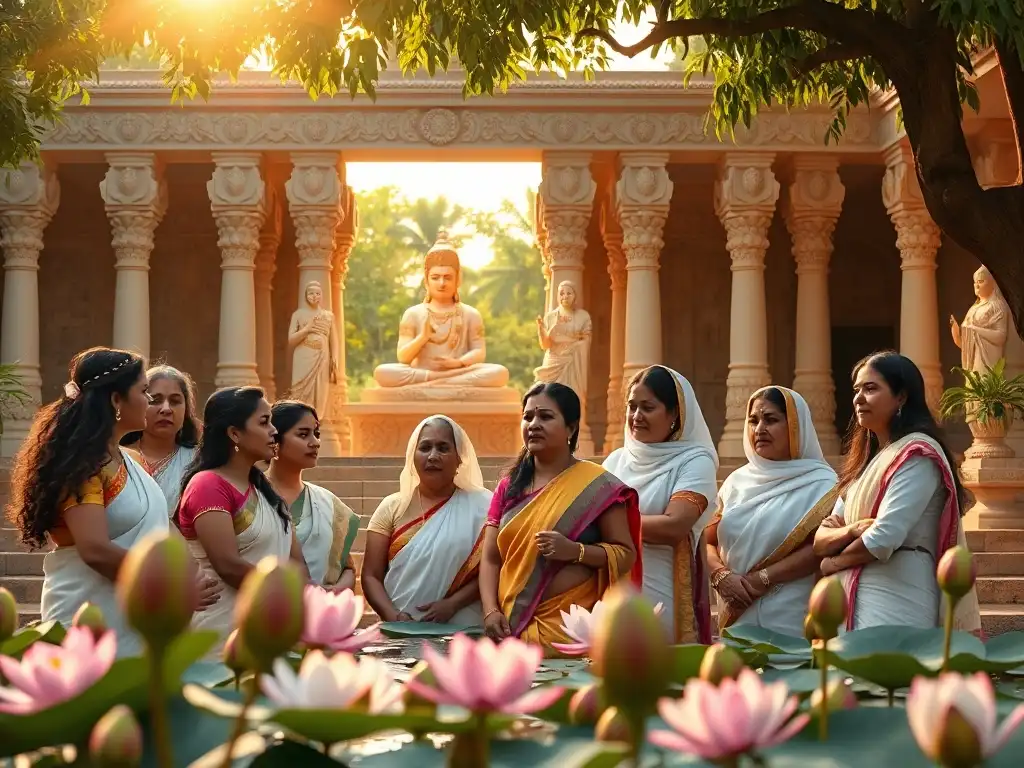
Welcome to Ancient India History, where we embark on a fascinating journey through the vibrant tapestry of ancient Indian civilizations. Today, we delve into the remarkable contributions of women in Jainism, exploring their pivotal roles as pioneers of peace and non-violence. Discover how these extraordinary figures not only shaped religious practices but also influenced the broader cultural landscape of their time. What insights will you uncover about their lives and legacies? Join us as we shed light on this captivating chapter of history that continues to resonate with us today.
-
Women in Jainism History: Pioneers of Peace and NonViolence
- Introduction to Women in Jainism History
- Historical Context of Women in Jainism
- Prominent Women Figures in Jainism
- Women’s Roles in Jain Society
- Jain Women as Pioneers of NonViolence
- Principles of Ahimsa in Jainism
- Women’s Role in Promoting Peace and NonViolence in Jain Communities
- Modern Perspectives on Women in Jainism
- Challenges Faced by Women in Jainism
- Conclusion: The Lasting Impact of Women in Jainism History
- Frequently Asked Questions
- Final Reflection: The Enduring Legacy of Women in Jainism History
- Embrace the Legacy of Jain Women: Take Action Today!
Women in Jainism History: Pioneers of Peace and NonViolence
Introduction to Women in Jainism History
The exploration of women's roles in Jainism unveils a profound narrative of empowerment, spirituality, and peace. Jainism, one of the oldest religions originating from India, is renowned for its strict principles of non-violence (Ahimsa) and truth. Within this framework, women have played pivotal roles, both as practitioners and as leaders, influencing the spiritual and social fabric of ancient Indian society.
Understanding the contributions of women in Jainism not only highlights their significance in religious practices but also showcases their impact on broader societal norms regarding peace and non-violence. This article delves into the rich history of women in Jainism, examining their roles, contributions, and the philosophical underpinnings that have shaped their standing in this ancient faith.
Importance of Women in Jainism
Women hold a unique position in Jainism, where they are often viewed as embodiments of compassion and non-violence. The religion promotes the idea that both men and women can achieve liberation (Moksha) through right knowledge, right faith, and right conduct. This inclusive approach underscores the belief that women's contributions are invaluable to the spiritual community. Notably, Jain texts and traditions celebrate female figures who have made significant strides in promoting the principles of Jainism, illustrating that their roles extend beyond mere followers to that of influential leaders and scholars.
- Key Aspects of Women's Importance in Jainism:
- Spiritual Leaders: Many women have served as spiritual guides, leading communities in their pursuit of enlightenment.
- Preservers of Tradition: Women have played a crucial role in preserving Jain rituals and teachings through generations.
- Promoters of Non-violence: Women in Jain communities have often been at the forefront of advocating for non-violent practices and ethical living.
Overview of Jain Philosophy and NonViolence
At the core of Jain philosophy lies the principle of Ahimsa, which advocates for non-violence in thought, word, and deed. This foundational tenet not only shapes personal conduct but also informs the social interactions within the Jain community. Jain philosophy emphasizes the interconnectedness of all living beings, fostering a deep respect for life.
- Core Principles of Jain Philosophy:
- Ahimsa (Non-violence): The utmost respect for all forms of life.
- Aparigraha (Non-possessiveness): Encouraging detachment from material possessions to foster peace.
- Satya (Truthfulness): Upholding truth in all aspects of life.
Women, embodying these principles, have historically played crucial roles in promoting peace and non-violence, both within and beyond their communities.
Historical Context of Women in Jainism
The historical context of women in Jainism reveals a rich tapestry of involvement and influence that spans centuries. From ancient texts to contemporary practices, women's roles have evolved but remain integral to the religion's core values.
Early Texts and References to Women
Ancient Jain scriptures and texts provide valuable insights into the roles of women within the religion. The Tattvartha Sutra, one of the key Jain texts, highlights the equality of men and women in the pursuit of spiritual knowledge and liberation.
- Key References:
- Female Ascetics: Early texts reference female ascetics (Sadhvis) who renounced worldly life to pursue spiritual goals.
- Mythological Figures: Stories of powerful female deities and historical figures in Jain mythology underline women's strengths and virtues.
These texts not only acknowledge women’s spiritual capabilities but also serve as a testament to their significant roles in the evolution of Jain thought.
Women’s Contributions in Ancient Jain Communities
The contributions of women in ancient Jain communities are manifold, spanning various aspects of social, cultural, and religious life. Women were not only practitioners but also educators, caregivers, and leaders, instrumental in preserving Jain customs and teachings.
- Notable Contributions:
- Educators and Scholars: Women have historically been involved in teaching Jain philosophy and ethics to younger generations.
- Community Leaders: Many women have taken on leadership roles within their communities, guiding others in spiritual practices.
- Cultural Preservation: Women have been key in maintaining rituals, festivals, and the overall cultural heritage of Jainism.
Through these contributions, women have significantly shaped the trajectory of Jainism, reinforcing its tenets of peace and non-violence while demonstrating the essential role that women play in the spiritual and communal life of the religion.
Prominent Women Figures in Jainism
Throughout the history of Jainism, several prominent women have emerged as significant figures, embodying the principles of peace and non-violence that are central to Jain philosophy. One of the most notable figures is Vimaladevi, who was celebrated for her unwavering commitment to the Jain path and her efforts in promoting the teachings of Mahavira, the last Tirthankara. Another figure is Siddhartha's mother, who is often revered in Jain texts for her virtuous qualities and her role in nurturing the spiritual journey of her son.
In addition to historical figures, contemporary Jain women have also made remarkable contributions to the religion. Figures like Venerable Aryika Vimalaprabha have played critical roles in promoting the teachings of Jainism through public discourse and educational initiatives. These women not only reflect the core values of Jainism but also inspire future generations to uphold and propagate its teachings.
Influential Jain Women Leaders
Influential Jain women leaders have made significant strides in various fields, advocating for social change while adhering to Jain principles. Aadya Jain, for example, is a modern advocate for environmental sustainability, intertwining Jain beliefs about non-violence towards all living beings with contemporary ecological concerns. Her initiatives focus on raising awareness about the impact of human actions on the environment, urging communities to adopt sustainable practices.
Moreover, historical leaders like Rajimati, a queen in ancient India, were pivotal in establishing Jain temples and supporting the monastic community. Their efforts in leadership roles demonstrate that women in Jainism have not only participated in religious life but have also led significant movements for social reform, education, and community welfare.
The Role of Women in Jain Religious Practices
Women play a vital role in Jain religious practices, often participating as practitioners, educators, and supporters of the faith. The rituals and ceremonies within Jainism are inclusive, allowing women to take active roles in both temple worship and family rituals. Women are often seen leading prayers, conducting rituals at home, and contributing to community events.
Furthermore, the tradition of Paryushana, an annual Jain festival, sees many women engaging in fasting and spiritual reflection, demonstrating their commitment to the principles of self-discipline and non-violence. This involvement highlights the integral part women play in maintaining and nurturing Jain devotional practices, influencing both family and community adherence to Jain values.
Women’s Roles in Jain Society
Women in Jain society have historically held roles that are both supportive and influential, shaping the community's ethical and spiritual foundations. Their participation is crucial in the propagation of Jain values and the nurturing of future generations in the faith.
Moreover, women’s networks within Jain communities often serve as platforms for social support, education, and activism. These networks empower women to engage in charitable activities, promote literacy, and advocate for social justice, effectively intertwining their spiritual lives with societal contributions.
Spiritual Leadership and Authority of Women
The spiritual leadership of women in Jainism is a significant aspect of their roles within the religion. Women have held positions of authority, particularly in monastic settings, where they serve as spiritual guides and mentors. The presence of female monks (Aryikas) in Jain monastic communities exemplifies this authority, as they lead spiritual discourses and rituals.
In addition, women are encouraged to pursue spiritual goals and can attain high levels of spiritual realization, akin to their male counterparts. This egalitarian aspect of spiritual leadership underscores the importance of women in shaping Jain philosophical thought and practice.
Women's Contributions to Jain Education and Scholarship
Women have made substantial contributions to Jain education and scholarship, often serving as educators, writers, and scholars. Historically, figures like Gupta period scholars have contributed to the preservation and dissemination of Jain texts, ensuring that the teachings of Jainism endure through generations.
In contemporary times, women have established educational institutions that focus on Jain philosophy, ethics, and culture, fostering an academic environment that encourages both men and women to explore Jain teachings. Their efforts not only enrich the Jain intellectual tradition but also empower future scholars to engage deeply with the religion's core tenets of peace and non-violence.
These contributions to education highlight the vital role women play in not only preserving Jainism's rich heritage but also in adapting its teachings to address modern challenges, ensuring the faith remains relevant in today's world.
Jain Women as Pioneers of NonViolence
Jain women have historically played a significant role in advocating for the principles of nonviolence (Ahimsa) that are central to Jain philosophy. From the earliest days of Jainism, women have embodied and promoted these values, often acting as catalysts for peace within their communities. Their contributions have ranged from spiritual leadership to social activism, challenging the norms of their times and inspiring future generations.
Throughout history, Jain women have engaged in various forms of activism, emphasizing the importance of compassion and empathy in their daily lives. For instance, many women have taken vows of asceticism, committing themselves to a life of simplicity and nonviolence, thus serving as role models for others. This dedication to Ahimsa has not only strengthened the Jain community but has also contributed to broader societal movements for peace and justice.
Principles of Ahimsa in Jainism
Ahimsa, or nonviolence, is one of the core tenets of Jainism. It extends beyond mere physical non-harm to encompass mental, emotional, and verbal nonviolence. Jains believe that all living beings possess a soul, and harming any creature, no matter how small, disrupts the cycle of karma and hinders spiritual development. This deep reverence for life shapes the ethical framework within which Jain women operate.
The principles of Ahimsa manifest in various ways:
- Dietary Practices: Many Jains adhere to strict vegetarianism, avoiding not only meat but also root vegetables to prevent harm to living organisms. Women have often been the primary custodians of these dietary traditions, educating their families and communities about the importance of nonviolence in their food choices.
- Nonviolent Communication: Jains emphasize the importance of speech that does not harm others. Women often take the lead in fostering peaceful dialogue and conflict resolution within their families and communities, embodying the Jain ideal of gentle communication.
- Community Service: Jain women have historically been involved in charitable activities that align with the principles of nonviolence, such as providing care for the sick and elderly, thereby promoting peace and compassion within society.
Women’s Role in Promoting Peace and NonViolence in Jain Communities
In Jain communities, women have taken on pivotal roles in promoting peace and nonviolence, often serving as spiritual leaders and educators. Their involvement in community activities has been instrumental in nurturing a culture of harmony and respect for all life forms.
- Spiritual Leadership: Many Jain women have become revered spiritual guides, leading prayers and rituals that emphasize nonviolence. Their influence extends to teachings that inspire followers to adopt peaceful practices in their daily lives.
- Educational Initiatives: Women have established and participated in educational programs aimed at teaching children and adults about the principles of Jainism, particularly Ahimsa. These initiatives often include workshops, seminars, and community discussions that highlight the significance of nonviolent living.
- Advocacy and Social Change: Jain women have been at the forefront of advocating for social justice issues, including animal rights and environmental conservation. Their efforts reflect the interconnectedness of nonviolence and broader humanitarian concerns.
Modern Perspectives on Women in Jainism
The modern landscape for women in Jainism is evolving, with new opportunities and challenges emerging. Contemporary Jain women are increasingly asserting their roles in religious, social, and political spheres, contributing to the narrative of Jainism as a progressive faith.
Contemporary Jain Women Leaders
In recent years, several Jain women have emerged as influential leaders in various fields, demonstrating the potential for women to shape the future of Jainism. These leaders are not only active within their communities but also engage with broader societal issues.
- Social Activists: Many Jain women activists focus on issues such as education, health care, and women’s rights, advocating for reforms that align with Jain values of compassion and nonviolence.
- Cultural Icons: Some contemporary Jain women have gained recognition in the arts and media, using their platforms to promote Jain philosophy and values, thereby reaching wider audiences.
- Political Figures: Increasingly, Jain women are stepping into political roles, advocating for policies that reflect the principles of Ahimsa and the Jain commitment to social justice.
The Evolution of Women's Roles in Modern Jain Society
The roles of women in modern Jain society have undergone significant changes, reflecting broader shifts in gender dynamics and societal expectations.
- Increased Participation: Women are now more actively involved in religious leadership positions and community decision-making processes, challenging traditional gender roles and expectations.
- Educational Advancements: With greater access to education, Jain women are pursuing higher education and professional careers. This shift not only empowers women but also enriches Jain communities with diverse perspectives and skills.
- Global Engagement: The Jain diaspora has facilitated global conversations about women's roles in Jainism, allowing for the exchange of ideas and practices that promote gender equality and empowerment.
The historical and contemporary contributions of women in Jainism highlight their essential roles as pioneers of peace and nonviolence. Their unwavering commitment to these principles continues to inspire and shape the Jain community today.
Challenges Faced by Women in Jainism
Women in Jainism have historically encountered a myriad of challenges that have shaped their roles within the religion. These challenges range from historical societal norms to contemporary issues that still affect Jain women today. Understanding these obstacles is essential to appreciate the resilience and contributions of women in Jainism history.
Historical Challenges and Societal Norms
Historically, Jain women faced significant societal constraints that limited their participation in religious and social life. Traditional norms often relegated women to domestic roles, restricting their access to education and spiritual leadership. For centuries, the patriarchal structure in Jain society emphasized male authority, often sidelining women in religious practices and decision-making processes.
Despite Jainism advocating non-violence and equality, the reality for women was often at odds with these principles. The emphasis on lineage and inheritance in many Jain communities meant that women's roles were primarily viewed through the lens of family and motherhood. As a result, their spiritual contributions were undervalued, and the opportunity for women to become ascetics or spiritual leaders was limited.
Moreover, the historical texts and scriptures of Jainism, while rich in philosophical insights, often reflect the biases of the time, which further perpetuated the marginalization of women. This legacy of exclusion has had lasting effects on women's roles in Jainism, necessitating a re-examination of their contributions and rights within the faith.
Current Issues and the Path Forward for Jain Women
In contemporary society, Jain women face ongoing challenges that echo historical norms. While some progress has been made, many women still encounter barriers related to educational and economic opportunities. In certain communities, traditional beliefs continue to influence gender roles, making it difficult for women to assert their rights and pursue leadership positions within the religion.
However, there is a growing movement among Jain women advocating for equality and greater representation in spiritual and community affairs. Initiatives aimed at empowering women through education and leadership training are gaining momentum, fostering a new generation of women who are poised to take on active roles in the Jain community.
The path forward involves addressing these challenges through community engagement and awareness campaigns. Encouraging dialogue about women's rights within Jainism and promoting inclusive practices can create a more equitable environment for future generations. By embracing the contributions of women in Jainism, the community can honor its values of peace and non-violence more fully.
Conclusion: The Lasting Impact of Women in Jainism History
The role of women in Jainism is a testament to their resilience and commitment to the principles of peace and non-violence. Despite facing numerous challenges throughout history, women have made significant contributions that have shaped the religion and its practices.
Summary of Key Contributions
Women in Jainism have played pivotal roles in preserving spiritual traditions, promoting community welfare, and advocating for ethical living. From revered figures in Jain history like Mallinath and their contributions to philosophy and social reform to contemporary activists pushing for gender equality, the impact of women is profound. Their commitment to non-violence extends beyond personal conduct, influencing the broader Jain ethos and encouraging compassionate living.
Future Directions for Women in Jainism and Their Role in Society
Looking ahead, the future for women in Jainism holds promise as they continue to challenge societal norms and assert their rights. Encouraging educational initiatives, fostering leadership opportunities, and promoting gender-sensitive interpretations of Jain teachings will be crucial in empowering women. By recognizing and celebrating the contributions of women in Jainism history, the community can inspire future generations to pursue roles that reflect the values of equality, compassion, and non-violence that are at the heart of Jain philosophy.
As Jain society evolves, it is essential to ensure that women's voices are not only heard but also respected and valued, creating a more inclusive and harmonious community.
Frequently Asked Questions
What roles did women play in Jainism throughout history?
Women in Jainism have been pioneers of peace and non-violence, actively participating in spiritual practices and community leadership, promoting the values of compassion and ahimsa.
How did Jainism empower women in ancient India?
Jainism provided women with religious autonomy, allowing them to pursue spiritual goals and engage in community activities, which was relatively progressive compared to other contemporary societies.
Are there notable women figures in Jainism history?
Yes, several women figures, such as Siddhartha's mother, Trishala, and various female ascetics, have made significant contributions to the faith, exemplifying commitment to Jain principles.
What impact did Jain women have on the broader Indian culture?
Jain women significantly influenced Indian culture by promoting ethical living and non-violence, shaping societal norms and values that emphasized harmony and respect for all living beings.
How is the role of women in Jainism perceived today?
Today, the role of women in Jainism is increasingly recognized, with ongoing efforts to highlight their historical contributions and ensure their active participation in religious and community affairs.
Final Reflection: The Enduring Legacy of Women in Jainism History
The exploration of women's roles in Jainism reveals a profound connection between their contributions and the principles of peace and non-violence that define this ancient tradition. In today's world, where discussions around gender equality and social justice are at the forefront, understanding the historical significance of women in Jainism serves as a powerful reminder of how their pioneering efforts have shaped not only religious practices but also broader societal values. The legacy of these women continues to resonate, urging us to recognize and celebrate their impact on both spiritual and secular fronts.
The influence of women in Jainism is not just a historical footnote; it is a vibrant thread woven into the fabric of contemporary Jain practice and ethics. Their dedication to non-violence and peace has inspired countless individuals and movements throughout history.
As we reflect on this, we can recall the words of Mahatma Gandhi, who said, "> The best way to find yourself is to lose yourself in the service of others." This sentiment echoes the essence of Jainism, where service and compassion are paramount, and women have been at the forefront of these ideals, advocating for harmony and understanding.
As we look to the future, let us take a moment to reflect on the lessons imparted by the women of Jainism. Consider how you can embody their spirit of peace and non-violence in your own life. Whether through acts of kindness, advocacy for justice, or simply by fostering understanding in your community, each of us has the power to contribute to a more harmonious world. Embrace the teachings of these remarkable women and allow their legacy to inspire your journey toward compassion and equity.
Embrace the Legacy of Jain Women: Take Action Today!
Thank you for exploring the profound contributions of women in Jainism and their pivotal roles as pioneers of peace and non-violence. Your interest in this vital aspect of history empowers you to delve deeper into the teachings and values that can inspire positive change today.
Now, let’s turn that inspiration into action! Here are a few steps to help you continue your journey:
- Dive Deeper: Read a book or watch a documentary focused on the lives of influential Jain women. Explore how their philosophies can be applied to modern life.
- Share Insights: Discuss what you’ve learned with friends or on social media. Let others know about the unique perspectives Jain women offer in fostering peace.
- Join a Community: Connect with local or online groups that celebrate or study Jain principles. Engage in discussions that will enhance your understanding and appreciation.
What impact do you believe the teachings of Jain women can have on today’s society? Share your thoughts below!