
The Spiritual Legacy of Women: Understanding Their Influence in Vedic Texts

Welcome to Ancient India History, where we embark on an enlightening journey through the rich tapestry of India's past. Here, we delve into the remarkable contributions and cultural nuances of ancient civilizations, with a spotlight on the profound influence of women in Vedic texts. In our featured article, "The Spiritual Legacy of Women: Understanding Their Influence in Vedic Texts," we unravel the intricate roles and reverence afforded to women in one of the most pivotal eras of Indian history.
Prepare to be captivated as we explore the legacies that shaped not just an era but the very essence of Indian culture. Dive deeper to discover how these ancient narratives continue to resonate today!
Introduction to Women in Vedic Texts
The Vedic texts, revered as some of the oldest scriptures in Hinduism, provide a profound insight into the spiritual and societal constructs of ancient India. Among the myriad themes explored within these texts, the role and significance of women stand out as a vital area of study, offering a unique perspective on the spiritual legacy they have left behind.
This article delves into the intricate portrayal of women within Vedic literature, highlighting their contributions and influence in shaping religious and philosophical thought. From the revered Rishikas (female sages) who composed hymns to the pivotal roles women played in rituals and family life, the Vedic texts reveal a multifaceted view of women's spiritual and societal positions. By exploring these aspects, we aim to underscore the essential place of women in the rich tapestry of Vedic culture and their enduring legacy in the history of ancient India.
Overview of Vedic Literature
The Vedic literature comprises a vast array of texts, including the four Vedas— Rigveda, Samaveda, Yajurveda, and Atharvaveda—along with the Brahmanas, Aranyakas, and Upanishads. These texts not only function as spiritual guides but also serve as historical documents that reflect the social nuances of the time.
- Rigveda: Contains hymns that praise deities, many authored by women.
- Samaveda: Focuses on melodies and chants, emphasizing the ritualistic aspects of spirituality.
- Yajurveda: Offers instructions for rituals, where the participation of women is acknowledged.
- Atharvaveda: Includes spells and incantations, showcasing women's roles in domestic and spiritual spheres.
Women are not merely passive figures in these texts; they are depicted as integral participants in spiritual practices and philosophical discourses.
Importance of Women in Ancient Indian Society
In ancient Indian society, women held significant positions that transcended mere domestic roles. They were not only caretakers of the household but also engaged in various intellectual and spiritual pursuits. The Vedic period recognized women's contributions to:
- Ritual Practices: Women participated actively in Vedic rituals, often leading ceremonies.
- Education: Many women were educated, with some even becoming teachers and philosophers.
- Social Status: The texts reflect a relatively favorable status for women, who could inherit property and were involved in decision-making processes.
This acknowledgment of women's roles provides a more comprehensive understanding of the societal structures in ancient India and the respect accorded to women within the Vedic tradition.
Historical Context of Women in Vedic Texts
The historical context of women in Vedic texts is essential for understanding their influence. The Vedic age is marked by a gradual evolution in the perception and roles of women, reflecting broader societal changes.
The Role of Women in Early Vedic Society
In early Vedic society, women enjoyed a degree of freedom and autonomy that was unique for their time. They were involved in various aspects of life, including:
- Spiritual Leadership: Certain women were recognized as Rishikas, capable of composing hymns and participating in sacred rituals.
- Family and Society: Women had significant roles within the family unit, often guiding moral and ethical teachings.
- Cultural Contributions: Their influence extended to arts, music, and dance, enriching the cultural fabric of the time.
The role of women during this period exemplifies a balance of power, with respect and reverence afforded to their contributions.
Key Texts Highlighting Women’s Contributions
Several key texts shed light on the contributions of women in the Vedic period, illustrating their pivotal roles in religion and philosophy:
- Rigveda: Features hymns by women such as Vishvavara, who is celebrated for her spiritual wisdom.
- Upanishads: Discuss the philosophical insights of female sages, emphasizing their intellectual contributions.
- Brahmanas: Document the participation of women in rituals, detailing their significance in spiritual practices.
These texts collectively highlight the spiritual legacy of women, emphasizing their integral role in shaping the Vedic worldview and the philosophical discourse of ancient India.
Spiritual Influence of Women in Vedic Texts
The Vedic texts, foundational to ancient Indian spirituality and philosophy, present a complex portrayal of women. Their spiritual influence is significant, showcasing how women were not merely passive figures but active participants in religious and philosophical discourses. Women in Vedic texts are often depicted as embodiments of power, wisdom, and grace. This spiritual legacy is reinforced through various narratives, hymns, and rituals that highlight their roles in both domestic and public spheres.
Women were not only worshippers but also conduits of divine knowledge and spiritual rites. The texts emphasize their contributions to rituals, which were essential for maintaining cosmic order and societal harmony. Furthermore, the philosophical discussions in the Vedas often reflect the significance of feminine qualities, such as compassion and nurturing, which were deemed vital for spiritual growth and community well-being.
Depictions of Female Deities in Vedic Literature
In Vedic literature, female deities are depicted with immense reverence and significance. Goddesses such as Saraswati, the goddess of knowledge, music, and arts, and Durga, the warrior goddess, embody various aspects of life and spirituality. These deities are not only central to worship but also symbolize the creative and nurturing forces of the universe.
The Rigveda, one of the oldest texts, illustrates the importance of these goddesses through hymns that invoke their blessings and protection. The portrayal of these deities reflects a deep respect for the feminine divine, showcasing how women in Vedic texts were seen as integral to both spiritual and material prosperity.
Additionally, the representation of goddesses often parallels the roles of women in society, signifying their connection to fertility, wisdom, and the sustenance of life. This duality reinforces the idea that women were revered not only as mothers and caregivers but also as spiritual leaders and guides.
The Contributions of Women Rishis and Seers
Women rishis, or sages, played a pivotal role in the spiritual landscape of ancient India, as evidenced in Vedic texts. Figures such as Gargi and Maitreyi are noted for their philosophical inquiries and contributions to spiritual discourse. Gargi, known for her profound wisdom, engaged in debates with male scholars and posed challenging questions about the nature of the universe and existence.
Maitreyi, another prominent figure, is celebrated for her unique perspective on the nature of self and reality, as articulated in the Brihadaranyaka Upanishad. Her dialogues reflect a deep understanding of metaphysics, showcasing that women were not only participants but also leaders in philosophical thought.
These women rishis exemplify the intellectual and spiritual capabilities of women during the Vedic period. Their contributions laid the groundwork for subsequent generations, demonstrating that the pursuit of knowledge and spiritual enlightenment was not confined to men.
Women as Custodians of Knowledge
Women in Vedic society acted as vital custodians of knowledge, preserving and transmitting spiritual wisdom through generations. Their roles in maintaining oral traditions and engaging in educational practices highlight their significance in the cultural and spiritual continuity of ancient India.
The Role of Women in Vedic Education
In Vedic education, women were not merely passive recipients of knowledge; they actively participated in the learning process. The presence of female students in Vedic schools, or Gurukuls, indicates their involvement in academic pursuits. Women learned Vedic texts, philosophy, arts, and sciences, showcasing their intellectual capabilities and aspirations.
The education of women was considered essential for nurturing future generations, as it was believed that educated mothers would raise knowledgeable and morally upright children. This understanding of education as a tool for societal improvement underscores the critical role women played in the spiritual and cultural development of ancient India.
Preservation of Oral Traditions and Texts
Women were instrumental in the preservation of oral traditions and texts, a vital practice in a society that relied heavily on oral transmission of knowledge. Their roles as storytellers and reciters ensured that sacred hymns, rituals, and teachings were passed down with accuracy and reverence.
This oral tradition fostered a communal bond, where women would gather to share and teach, thus cultivating a shared spiritual heritage. The dedication of women to preserving these texts contributed significantly to the continuity of Vedic teachings and practices, ensuring that the spiritual legacies of their ancestors remained alive and influential in subsequent generations.
The spiritual legacy of women as depicted in Vedic texts reveals their profound influence and integral roles in ancient Indian civilization. Their contributions as deities, rishis, educators, and preservers of knowledge have left an indelible mark on the spiritual landscape of India.
Rituals and Practices Involving Women
The Vedic period, spanning from approximately 1500 BCE to 500 BCE, is a significant era in ancient Indian history known for its spiritual and philosophical advancements. Women played a crucial role in various rituals and practices during this time, which were deeply intertwined with the socio-religious fabric of society. Their involvement was not merely passive; women actively participated in and sometimes even led rituals, showcasing their spiritual agency and influence.
The Vedic texts, particularly the Samhitas and Brahmanas, offer insights into the rituals that required the participation of women. For instance, rituals such as Soma Yajna and Purnahuti often included women, emphasizing their roles as vital contributors to religious ceremonies. Additionally, women were responsible for performing certain domestic rituals, which were believed to ensure the well-being of the household and the continuity of family traditions. This involvement underscores the integral part women played in maintaining the spiritual health of their families and communities.
Women's Participation in Vedic Rituals
In Vedic rituals, women were not mere spectators; they held significant positions that highlighted their importance in the spiritual domain. Texts such as the Rigveda mention women who were revered as scholars and practitioners of the Vedic knowledge. For example, Gargi Vachaknavi, a prominent philosopher and scholar, is often cited as a testament to women’s intellectual contributions within these rituals.
Moreover, the Grhya Sutras, which outline domestic rituals, reveal that women conducted various rites of passage, including marriage ceremonies and childbirth rituals. These practices were vital, as they not only reinforced familial bonds but also served to transmit spiritual knowledge and cultural values to future generations. The participation of women in these rituals illustrates their essential role in the preservation and evolution of Vedic traditions.
The Significance of Women in Sacrificial Offerings
Sacrificial offerings, a central aspect of Vedic rites, were another arena where women’s contributions were essential. Women were often involved in preparing offerings, which included cooking and presenting food items to deities during rituals. The Yajurveda emphasizes that the purity and intention behind these offerings were paramount, and women were seen as caretakers of these sacred tasks.
Furthermore, the involvement of women in sacrificial ceremonies was deeply symbolic. It represented the nurturing aspect of divinity, as women were viewed as embodiments of Shakti (divine energy). Their participation in these offerings not only highlighted their spiritual significance but also reinforced their role as mediators between the divine and the earthly realms. This sacred duty granted women a unique status within the ritualistic framework of Vedic society.
The Evolution of Women's Roles in Later Texts
As Vedic society transitioned into the later periods of Indian history, the roles of women began to evolve significantly. The transition from Vedic to post-Vedic literature reflects a shift in how women were perceived and their involvement in religious practices.
In texts such as the Upanishads and Puranas, the portrayal of women became more varied, showcasing both reverence and restrictions. While some women continued to be celebrated for their spiritual wisdom and contributions, others faced increasing limitations on their roles in religious and philosophical spheres. This duality in representation highlights the complexities of women's status in ancient Indian society.
Comparisons with Post-Vedic Literature
Post-Vedic literature provides a contrasting perspective on women’s roles compared to earlier Vedic texts. For instance, while women like Gargi and Maitreyi were celebrated in Vedic literature, later texts often depict women primarily in domestic roles, emphasizing their responsibilities as wives and mothers over their spiritual contributions.
Texts such as the Mahabharata and Ramayana illustrate these changing dynamics, focusing on women’s duties within the household and their moral virtues. The emergence of strong female characters like Draupadi and Sita reflects both reverence and the societal expectations placed upon women. Although these characters exhibit agency and strength, their narratives often highlight the tensions between personal desires and societal norms.
Changes in Perceptions of Women in Later Indian Texts
The evolution of women's roles in later Indian texts signifies a broader cultural shift in the perception of women in society. While earlier Vedic texts celebrated women's spiritual contributions and intellectual prowess, subsequent literature increasingly framed women within the confines of domesticity and moral responsibility.
This shift can be traced through various texts and philosophical writings that sought to define the ideal woman. The Dharma Shastras, for instance, emphasized the importance of women adhering to familial duties, often at the expense of their individual aspirations. Despite this, numerous texts still acknowledge the spiritual and philosophical capabilities of women, suggesting an underlying respect for their contributions that persisted even amid restrictive societal norms.
The journey of women in Vedic texts and beyond illustrates a rich tapestry of spiritual involvement, showcasing their significant, albeit evolving, roles in the religious and philosophical landscapes of ancient India.
Case Studies of Influential Women in Vedic Texts
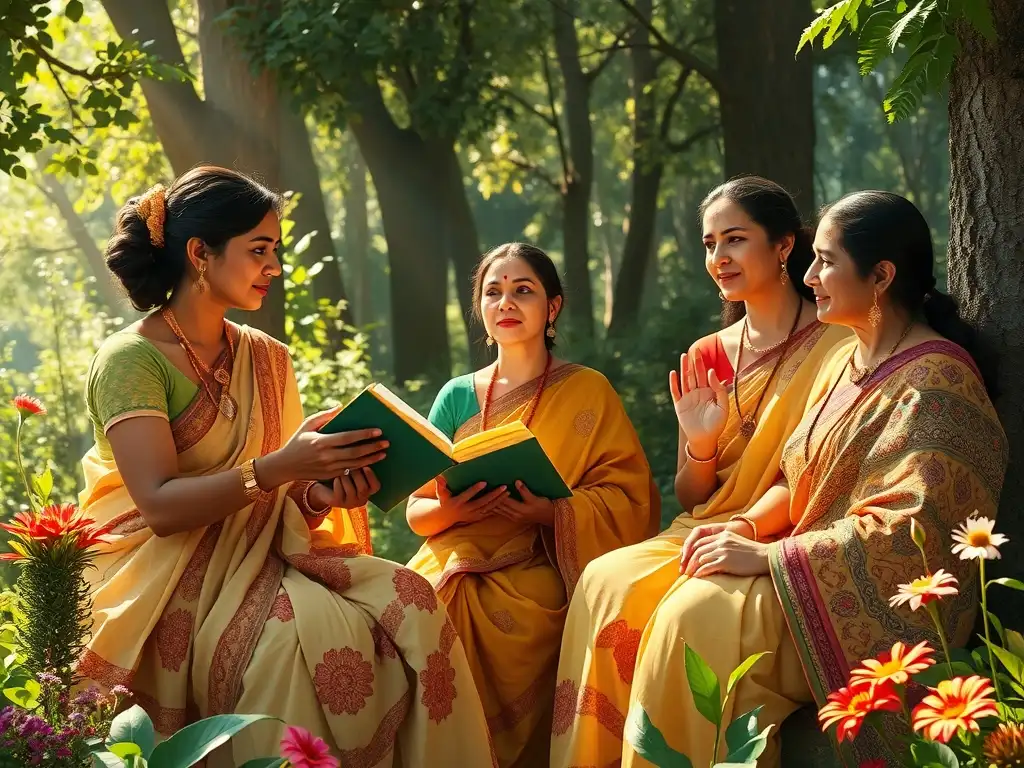
The Vedic texts, which form the foundation of Hindu philosophy and spirituality, reveal a rich tapestry of female figures who played significant roles in the spiritual landscape of ancient India. These women not only contributed to religious practices but also shaped philosophical thought through their wisdom and teachings. Some notable case studies include the revered sage Gargi, the poet and philosopher Maitreyi, and the wise Savitri. Each of these figures exemplifies the profound influence women had in Vedic society, serving as educators, philosophers, and spiritual leaders.
Examples of Notable Female Figures
- Gargi Vachaknavi: A prominent philosopher, Gargi is celebrated for her intellect and courage. She participated in philosophical debates at the royal court and challenged male scholars, showcasing that women had a voice in philosophical discourse. Her contributions to discussions on the nature of the universe, existence, and the ultimate reality are recorded in the Brahmanas.
- Maitreyi: Another significant figure, Maitreyi is best known for her dialogue with her husband, the sage Yajnavalkya, in the Brihadaranyaka Upanishad. She questioned the nature of immortality and the self, illustrating her quest for knowledge and understanding of the spiritual realm. Her inquiry reflects the philosophical depth that women brought to Vedic thought.
- Savitri: A legendary character from the Mahabharata, Savitri is known for her unwavering devotion and intelligence. She outwitted Yama, the god of death, to save her husband, Satyavan, demonstrating the power of love and determination. Her story transcends mere folklore, representing the resilience and strength of women in ancient narratives.
The Impact of Their Teachings and Actions
The teachings and actions of these influential women had a lasting impact on Vedic society and beyond. They challenged existing norms, expanded the scope of philosophical inquiry, and inspired generations to come. Gargi's debates encouraged the acceptance of diverse viewpoints, fostering an environment where philosophical exploration flourished. Maitreyi's profound questions about existence influenced later philosophical texts and discussions, emphasizing the importance of self-exploration.
Savitri's story illustrates the embodiment of virtues such as loyalty, courage, and intelligence. It has inspired countless retellings and adaptations across cultures, reinforcing the idea that women have always played a crucial role in shaping both spiritual and moral narratives. These examples reflect how women's contributions were not merely peripheral, but central to the spiritual and philosophical discourse of the time.
Conclusion: The Enduring Legacy of Women in Vedic Texts
The legacy of women in Vedic texts is a testament to their vital role in shaping spiritual and philosophical thought in ancient India. Their contributions continue to resonate today, reminding us of the importance of inclusivity in religious and philosophical dialogues.
Reflections on the Spiritual and Cultural Contributions
Women in Vedic texts were not just passive figures; they were active participants in the spiritual and cultural fabric of their society. Their teachings and philosophies enriched the Vedic tradition, providing insights that are still relevant. The emphasis on inquiry, debate, and the pursuit of knowledge exemplified by figures like Gargi and Maitreyi encourages contemporary society to recognize and value women's contributions in all fields.
The Relevance of Women in Vedic Texts Today
The relevance of women in Vedic texts extends into modern discourse about gender equality and empowerment. As we explore the spiritual legacy of these women, we find that their teachings advocate for a society that values diverse perspectives and fosters dialogue. By acknowledging the influence of women in Vedic texts, we not only honor their legacy but also pave the way for a more inclusive understanding of spirituality and philosophy today. Their stories serve as a reminder that women have always been—and continue to be—pivotal to the evolution of thought and culture in India and beyond.
Further Reading and Resources on Women in Vedic Literature
To gain a deeper understanding of the role and influence of women in Vedic texts, a range of scholarly works, cultural studies, and online resources are available. These texts not only illuminate the spiritual legacy of women but also contextualize their contributions within the broader scope of Indian history and philosophy. Below are some recommended readings and resources that offer valuable insights.
Recommended Texts and Authors
-
"Women in Vedic Literature" by V. R. Narayana Rao
This comprehensive study explores the position and portrayal of women in various Vedic texts, analyzing their roles as spiritual leaders and societal figures.
-
"The Rig Veda: A New Translation" by Wendy Doniger
Doniger's translation includes extensive commentary on the verses that refer to women, offering a contemporary interpretation of their significance in Vedic society.
-
"The Upanishads" translated by Eknath Easwaran
Easwaran’s translation delves into the philosophical aspects of the Upanishads, highlighting the contributions of female sages and their spiritual insights.
-
"Women and the Vedas" by R. M. D. S. Sharma
This text provides a detailed examination of the Vedic texts, emphasizing the roles of women in rituals, education, and spirituality.
-
"The Role of Women in Vedic Society" by K. K. Sharma
A focused analysis of the societal roles of women during the Vedic period, this work discusses their influence on religious practices and family life.
Online Resources for Exploring Women’s Roles in Ancient India
-
Digital Library of India
This repository contains a wealth of texts related to ancient Indian literature, including works that discuss the contributions of women in Vedic society.
-
Ancient History Encyclopedia
Offering articles and entries on various aspects of ancient Indian history, this resource includes sections dedicated to women's roles and contributions.
-
Sanskrit Documents
A collection of Sanskrit texts, which features translations and interpretations that highlight the literary contributions of women.
-
Academia.edu
This platform hosts numerous scholarly papers and articles focused on women in Vedic literature, providing insights from various researchers in the field.
-
ResearchGate
A network for researchers where many scholars share their findings related to women in Vedic texts, offering access to studies, articles, and discussions.
These resources will enhance your understanding of the significant spiritual legacy of women as recorded in Vedic texts and their lasting influence on Indian culture and philosophy.
- Introduction to Women in Vedic Texts
- Historical Context of Women in Vedic Texts
- Spiritual Influence of Women in Vedic Texts
- Women as Custodians of Knowledge
- Rituals and Practices Involving Women
- Women's Participation in Vedic Rituals
- The Significance of Women in Sacrificial Offerings
- The Evolution of Women's Roles in Later Texts
- Comparisons with Post-Vedic Literature
- Changes in Perceptions of Women in Later Indian Texts
- Case Studies of Influential Women in Vedic Texts
- Conclusion: The Enduring Legacy of Women in Vedic Texts
- Further Reading and Resources on Women in Vedic Literature
Frequently Asked Questions
What is the significance of women in Vedic texts?
The Vedic texts highlight the spiritual and social roles of women in ancient India, showcasing their influence in rituals, education, and family life.
How are women represented in the Vedic literature?
Women in the Vedic literature are often depicted as scholars, sages, and leaders, emphasizing their intellectual contributions and spiritual authority.
What roles did women play in Vedic society?
In Vedic society, women were involved in various roles, including household management, education, and participating in rituals, reflecting their importance in both family and society.
Were there any notable female figures mentioned in the Vedic texts?
Yes, texts mention several notable female figures, such as Gargi and Maitreyi, who were recognized for their wisdom and philosophical contributions.
How did the status of women in Vedic times compare to later periods in Indian history?
The status of women in Vedic times was relatively high compared to later periods, where social norms often restricted their freedom and rights, indicating a shift in societal values over time.
Final Reflection: The Enduring Influence of Women in Vedic Texts
The exploration of women's roles in Vedic texts reveals a profound and often overlooked truth: the spiritual legacy of women is not only significant but also essential to understanding the holistic nature of Vedic philosophy. In a world that continues to grapple with gender inequality, recognizing the contributions of women in ancient scriptures serves as a powerful reminder of their enduring influence and the need for their voices to be amplified in contemporary discourse.
The insights gleaned from Vedic texts illuminate the multifaceted roles women played as sages, scholars, and spiritual leaders, shaping the cultural and spiritual landscape of their time. This ongoing recognition of women's contributions invites us to reconsider our narratives and challenge the prevailing norms that have historically marginalized their voices. As the renowned feminist scholar, Vandana Shiva, once said, The future will be about the feminine, and the feminine will be about the earth.
This quote encapsulates the essence of our journey toward inclusivity and reverence for the feminine spirit that has always been integral to our spiritual heritage.
As we reflect on the lessons from the Vedic texts, let us commit to honoring and uplifting the voices of women in all spheres of life. I invite you to take a moment to consider how you can incorporate the wisdom of these ancient teachings into your own life. Whether through advocacy, education, or simply by sharing stories of women who inspire you, each action contributes to a more equitable future. Embrace the spiritual legacy of women, and let it guide you in fostering a world where every voice is valued and celebrated.
Unveil the Spiritual Legacy of Women Today!
Thank you for exploring the profound insights into the spiritual legacy of women in Vedic texts. By understanding their influence, you’ve taken an important step toward appreciating the invaluable contributions of women throughout history. Now, let's put that knowledge into action!
Here are some ways you can further engage with this rich topic:
- Dive deeper: Read additional Vedic texts or related materials to broaden your understanding of women's roles in ancient spirituality.
- Share your insights: Discuss this topic with friends or family— initiate a conversation that celebrates the achievements of these influential figures.
- Join a community: Consider participating in forums or workshops focused on Vedic studies to connect with others who share your interests.
How will you incorporate the wisdom of women from Vedic history into your own spiritual journey?