
The Decline of the Maurya Empire: Political Failures and Lessons Learned


Welcome to Ancient India History, where we embark on a captivating journey through the rich tapestry of ancient Indian civilizations. In our exploration, we delve deep into the intricacies of the Decline of the Maurya Empire, uncovering the political failures that led to its eventual downfall and the lessons that resonate even today. As we peel back the layers of history, prepare to be intrigued by the intertwining tales of power, culture, and transformation. Join us as we unveil the stories that shaped a nation and continue to inspire generations—your adventure into ancient wisdom begins here!
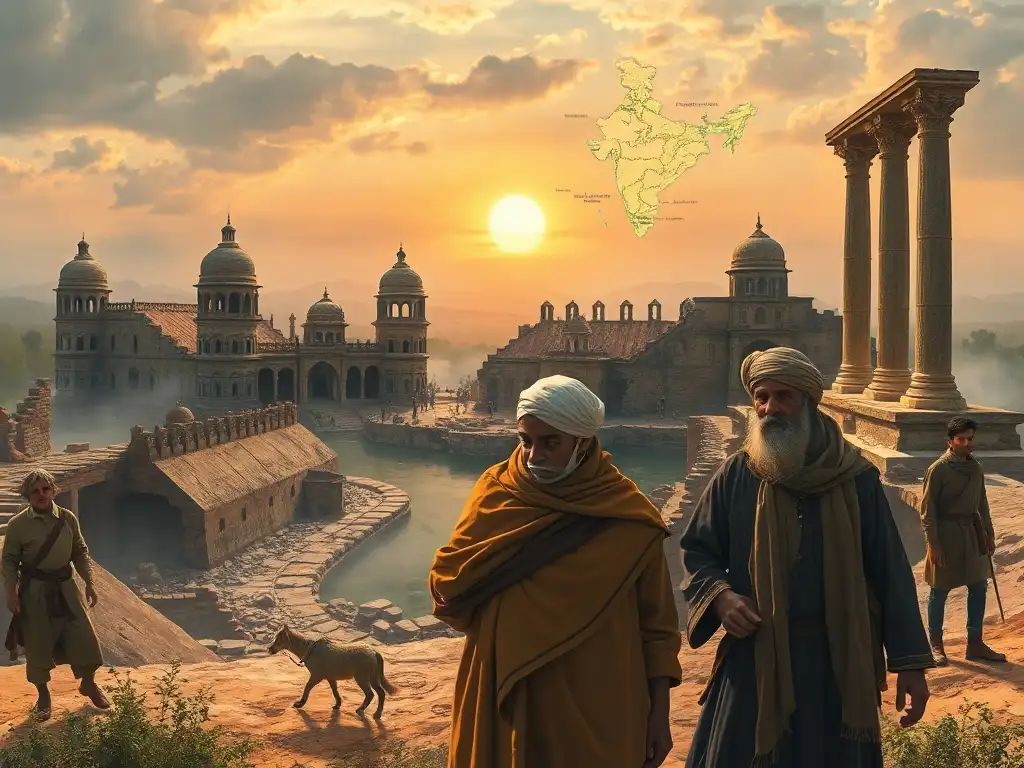
Introduction to the Decline of the Maurya Empire
The Decline of the Maurya Empire stands as a pivotal chapter in the saga of ancient Indian history, showcasing how political dynamics and governance can shape the fate of a civilization. Once a formidable empire that unified vast territories under a centralized rule, the Maurya Empire began to falter due to a combination of internal and external factors that ultimately led to its disintegration. Understanding the intricacies of this decline is not merely a historical endeavor; it provides critical insights into the complexities of political structures and the lessons that can be gleaned from them.
Overview of the Maurya Empire
The Maurya Empire, founded in 322 BCE by Chandragupta Maurya, is celebrated for its extensive reach and sophisticated administration. At its zenith, the empire encompassed much of the Indian subcontinent, fostering trade, culture, and governance. Under the leadership of Ashoka the Great, the empire further solidified its stature through the promotion of Buddhism and the establishment of a vast network of roads and communication. However, despite its grandeur, the empire faced challenges that eventually led to its decline, including power struggles, economic hardships, and social unrest.
Importance of Understanding Political Failures
Examining the political failures that contributed to the decline of the Maurya Empire is crucial for several reasons:
- Historical Insight: It allows us to understand how mismanagement and poor governance can undermine even the most powerful empires.
- Cultural Reflection: The Maurya Empire’s decline reflects the cultural and social dynamics that can lead to instability within a nation.
- Lessons for Future Generations: By analyzing these failures, contemporary leaders and scholars can draw lessons on effective governance, conflict resolution, and the importance of maintaining social harmony.
Factors Contributing to the Decline of the Maurya Empire
The decline of the Maurya Empire was not attributed to a single cause, but rather a confluence of several factors that eroded its foundations over time.
Internal Political Struggles
Internal power struggles played a significant role in the disintegration of the Maurya Empire. Following the death of Ashoka, a lack of strong leadership and political infighting led to fragmentation. Key issues included:
- Succession Disputes: Conflicts over the throne weakened the central authority.
- Noble Rivalries: Infighting among regional governors and nobles undermined the unity of the empire.
Economic Decline
The economic stability of the Maurya Empire was heavily reliant on trade and agriculture. However, the following factors contributed to its economic decline:
- Taxation Burden: Heavy taxes imposed on the populace led to discontent and reduced agricultural productivity.
- Trade Disruptions: The decline of trade routes due to external pressures diminished revenue and resources.
Social Unrest
Social factors also significantly influenced the decline of the Maurya Empire. The growing divide between the ruling elite and the common people fostered unrest:
- Class Disparities: The wealth gap resulted in social tensions, with the lower classes feeling marginalized.
- Religious Conflict: The shift in religious patronage and support during and after Ashoka's reign created divisions among different social groups.
By understanding these factors, we can gain a comprehensive view of how the Maurya Empire's decline serves as a cautionary tale of governance, reflecting the delicate balance between power, economy, and society.
Key Political Failures During the Decline
The decline of the Maurya Empire was marked by several key political failures that contributed to its eventual disintegration. These failures not only showcased the weaknesses within the empire's governance system but also highlighted the challenges posed by external and internal factors. Understanding these failures provides valuable insights into the complexities of maintaining a vast empire and the importance of adaptability in governance.
Loss of Central Authority
One of the primary reasons for the decline was the gradual erosion of central authority. The vastness of the Maurya Empire, which stretched from the northwestern frontiers of India to the southern tip, made effective governance increasingly challenging. As the empire expanded, local governors, or mahamatras, were given significant autonomy to administer their regions. This decentralization, while initially beneficial for local governance, ultimately led to a power struggle.
As the central authority weakened, regional leaders began to assert their independence, often disregarding directives from the imperial capital, Pataliputra. This fragmentation not only caused rifts within the empire but also made it vulnerable to external threats. The lack of cohesive leadership meant that the empire could not respond effectively to invasions or rebellions, leading to a further decline in political stability.
Inability to Adapt to Changing Circumstances
The Maurya Empire, at its zenith under Ashoka, was characterized by a progressive and enlightened approach to governance. However, this progressive framework became a double-edged sword during the later years. The inability of subsequent rulers to adapt to changing social, political, and economic realities proved detrimental.
For instance, after Ashoka's reign, there was a notable shift in policies. The empire struggled to maintain the same level of moral governance and social responsibility, leading to widespread discontent among various strata of society. Additionally, as trade routes shifted and external commerce began to decline, the Maurya leadership failed to implement strategies that could revitalize the economy. This stagnation contributed to unrest and dissatisfaction, further exacerbating the empire's decline.
Lessons Learned from the Decline of the Maurya Empire

The decline of the Maurya Empire offers critical lessons that remain relevant in the context of governance and political strategy. By analyzing the causes of its downfall, modern leaders can derive important insights into the dynamics of power and the necessity of adaptability.
Importance of Strong Leadership
The decline highlighted the essential role of strong, decisive leadership. The later Maurya rulers lacked the charisma and vision that characterized Ashoka’s rule. Effective leadership is vital in uniting diverse regions and populations under a single banner, particularly in a vast empire. Strong leaders can inspire loyalty, implement necessary reforms, and respond swiftly to crises, all of which are crucial for sustaining a large political entity.
Economic Resilience Strategies
Another critical lesson from the Maurya Empire's decline is the necessity for economic resilience. The empire faced significant challenges due to its inability to adapt its economic strategies in response to changing circumstances, such as trade disruptions. Future empires and governments can learn the importance of diversifying their economies, investing in infrastructure, and developing trade relationships to ensure stability and growth. Strategies that promote economic self-sufficiency can help withstand external shocks and internal strife.
Fostering Social Cohesion
Lastly, the decline of the Maurya Empire underscores the importance of fostering social cohesion among diverse cultural and religious groups. The Maurya rulers initially promoted policies of tolerance and inclusivity, which helped maintain harmony. However, as the empire weakened, regional factions began to emerge, leading to fragmentation. Ensuring that all groups feel represented and valued within a political framework is crucial for maintaining stability and unity. Political leaders today can take note of the value of social programs and policies that promote inclusivity, understanding, and collaboration among different communities.
Conclusion: Reflections on the Decline of the Maurya Empire
The decline of the Maurya Empire serves as a profound case study in the complexities of governance and the factors that can lead to the downfall of even the most powerful empires. The interplay of political mismanagement, administrative inefficiencies, and external pressures illustrates how internal cohesion is crucial for the longevity of a civilization. While the empire began with a robust structure under Chandragupta Maurya and reached its zenith under Ashoka, it ultimately succumbed to fragmentation and instability.
This reflection on the Maurya Empire invites us to consider the broader implications of its decline. The lessons learned from its political failures—such as the importance of maintaining strong central authority, the dangers of over-expansion, and the need for effective communication within the administrative framework—remain relevant today. Understanding these historical narratives not only enriches our knowledge of ancient Indian history but also provides valuable insights into contemporary governance challenges.
Summary of Key Points
- Political Fragmentation: The Maurya Empire struggled with internal divisions post-Ashoka, leading to weakened central authority.
- Succession Issues: The lack of a clear succession plan after Ashoka's reign caused power struggles and instability.
- Economic Strain: Overexpansion and military expenditures strained resources, impacting governance and public welfare.
- Cultural and Religious Conflicts: The diverse cultural landscape fostered tensions that contributed to political disunity.
- External Pressures: Invasions and competition from emerging powers further destabilized the empire.
These key points encapsulate the multifaceted reasons behind the decline of the Maurya Empire, highlighting the interconnectedness of political, economic, and social factors.
Relevance of Lessons Learned for Modern Governance
The decline of the Maurya Empire presents timeless lessons for modern governance. Today's leaders can draw from this historical example to understand the importance of:
- Central Authority: Maintaining a strong and decisive leadership structure is crucial for effective governance.
- Succession Planning: Clear protocols for succession can prevent power vacuums and maintain stability.
- Resource Management: Balancing military and economic expenditures is essential for sustainability and public welfare.
- Cultural Cohesion: Promoting unity in diversity can help mitigate internal conflicts and strengthen national identity.
- Adaptability: Being responsive to external threats and evolving political landscapes is vital for survival.
By integrating these lessons into contemporary governance frameworks, modern societies can enhance their resilience against potential declines and foster sustainable development.
References and Further Reading on the Maurya Empire
Suggested Books and Articles
-
"The Maurya Empire: A Historical Analysis" by R.S. Sharma
A comprehensive study of the political and cultural aspects of the Maurya Empire, detailing its rise and eventual decline.
-
"Ashoka: The Search for the Historical Buddha" by Charles Allen
This book explores the life of Ashoka and his impact on Indian history, including the empire's governance strategies and their long-term effects.
-
"The Decline of the Mauryan Empire" by J.C. Harle
Analyzes the factors contributing to the empire's decline with a focus on political fragmentation and administration challenges.
-
"Ancient India: From the Earliest Times to the Present" by Romila Thapar
Provides a broader context of Indian history, including the Mauryan era and its influence on subsequent civilizations.
Online Resources for Ancient Indian History
-
Ancient India History Online Archive
A digital repository featuring articles, documents, and primary sources related to ancient Indian civilizations, including the Maurya Empire.
-
Digital South Asia Library
Offers access to historical texts, maps, and resources focused on the subcontinent's history, including detailed studies on the Maurya Empire.
-
The Indian History Congress
Provides scholarly articles, research papers, and discussions on various aspects of Indian history, including the political structure of the Mauryan Empire.
-
Wikipedia: Maurya Empire
A general overview of the Maurya Empire, its history, key figures, and decline, with references for further reading.
By engaging with these resources, readers can deepen their understanding of the Maurya Empire and its historical significance in shaping ancient Indian history.
- Introduction to the Decline of the Maurya Empire
- Factors Contributing to the Decline of the Maurya Empire
- Key Political Failures During the Decline
- Lessons Learned from the Decline of the Maurya Empire
- Conclusion: Reflections on the Decline of the Maurya Empire
- References and Further Reading on the Maurya Empire
- What were the main causes of the decline of the Maurya Empire?
- How did the political failures contribute to the empire's decline?
- What lessons can be learned from the decline of the Maurya Empire?
- What role did economic factors play in the decline?
- How did the Gupta Empire differ from the Maurya Empire in terms of governance?
Frequently Asked Questions
What were the main causes of the decline of the Maurya Empire?
The decline of the Maurya Empire was primarily due to political failures, including weak leadership and internal strife, as well as economic challenges and external pressures from neighboring states.
How did the political failures contribute to the empire's decline?
Political failures led to a lack of cohesive governance, resulting in fragmentation of power and increased rebellions among local rulers, undermining the central authority of the empire.
What lessons can be learned from the decline of the Maurya Empire?
The decline of the Maurya Empire underscores the importance of strong leadership, effective governance, and maintaining unity among diverse groups to prevent fragmentation and ensure stability.
What role did economic factors play in the decline?
Economic factors such as heavy taxation, resource depletion, and trade disruptions weakened the empire's financial stability, making it difficult to maintain military and administrative functions.
How did the Gupta Empire differ from the Maurya Empire in terms of governance?
The Gupta Empire adopted a more decentralized approach to governance, allowing local leaders more autonomy, which fostered stability and cultural growth, contrasting sharply with the centralized model of the Maurya Empire.
Final Reflection: Lessons from the Decline of the Maurya Empire
The decline of the Maurya Empire serves as a poignant reminder of the fragility of political power and the consequences of leadership failures. In an era where political stability is paramount, understanding the factors that led to the disintegration of one of the greatest empires in ancient history is more relevant than ever. The lessons drawn from this historical narrative resonate in today's world, where the dynamics of governance and the importance of unity remain critical to the survival of nations.
The impact of the Maurya Empire's decline extends beyond mere historical analysis; it influences our cultural and social landscape by highlighting the importance of effective leadership and the dangers of internal discord. As we navigate through contemporary political challenges, the echoes of past empires remind us of the need for cohesive governance and the perils of neglecting the voices of the populace. History is not a burden on the memory but an illumination of the soul.
This quote encapsulates the essence of learning from the past, urging us to reflect on the decisions that shape our present and future.
As we conclude this exploration of the Maurya Empire's decline, I invite you to engage in a personal reflection on the lessons learned. Consider how the principles of leadership, unity, and accountability can be applied in your own life—whether in your community, workplace, or personal relationships. Let the story of the Maurya Empire inspire you to foster collaboration and resilience, ensuring that the mistakes of the past do not repeat themselves in our future.
Reflect on History: Embrace Change and Growth!
Thank you for taking the time to explore the fascinating yet complex story of the Maurya Empire. By understanding its rise and fall, you've gained valuable insights into the importance of strong leadership and the consequences of political failures. Now, it’s time to transform that knowledge into action that can inspire growth and resilience!
Here are some specific steps you can take:
- Dive deeper into history: Explore more articles on Ancient Indian history that detail other significant empires and their lessons. Your understanding of historical patterns can help shape your perspective on today’s world.
- Share your thoughts: Discuss your insights with friends or on social media. Engaging in conversations about historical lessons can foster meaningful connections and stimulate critical thinking.
- Join a community: Participate in a local book club or online forum dedicated to historical discussions. Collaborating with others can enhance your learning experience and provide diverse viewpoints.
What lessons from the Maurya Empire resonate with you the most, and how do you plan to apply them in your own life or community?