
The Connection Between Gupta Mathematics and Indian Philosophy


Welcome to Ancient India History, where we embark on a captivating journey through the rich tapestry of ancient Indian civilizations. In our featured article, “The Connection Between Gupta Mathematics and Indian Philosophy,” we delve into the profound interplay between these two realms of thought that shaped not only India but the world. Discover how the innovative mathematical concepts of the Gupta period harmonize with the philosophical ideals that continue to influence modern thought.
Are you ready to unlock the secrets of this golden age? Join us as we explore the legacy that continues to inspire and intrigue scholars and enthusiasts alike!

Introduction to Gupta Mathematics and Indian Philosophy
The Gupta Empire, often referred to as the "Golden Age of India," was a period marked by remarkable advancements in various fields, particularly in mathematics and philosophy. As we delve into the intricate relationship between Gupta mathematics and Indian philosophy, it becomes evident that these domains were not only independent but also deeply interwoven, reflecting the holistic approach of ancient Indian thought. This article explores how the mathematical innovations of the Gupta period were influenced by philosophical concepts, leading to a richer understanding of both disciplines.
Overview of the Gupta Empire's Contributions
The Gupta Empire, which thrived from approximately 320 to 550 CE, is celebrated for its extensive achievements across multiple domains including art, literature, and science. Notably, its contributions to mathematics laid the groundwork for future developments in the field. Scholars such as Aryabhata and Brahmagupta emerged during this period, introducing revolutionary ideas that would influence not just India, but the entire world.
- Key Contributions:
- Development of the decimal system
- Introduction of zero as a numeral
- Advancements in arithmetic and algebra
Importance of Mathematics in Ancient India
Mathematics in ancient India was not merely a tool for calculations but was deeply rooted in philosophical inquiry. The study of numbers and geometry was often linked to metaphysical concepts, illustrating the belief that mathematical truths could reveal greater cosmic realities. This perspective fostered a culture where mathematical study was viewed as a form of spiritual exploration.
- Key Aspects:
- Interplay between mathematics and cosmology
- Matrices of thought linking numerical concepts to philosophical ideas
Philosophical Foundations in Indian Thought
Indian philosophy, with its diverse traditions, has always emphasized the significance of knowledge and the pursuit of truth. Philosophers such as Adi Shankaracharya and Gautama Buddha laid the groundwork for understanding existence, which in turn influenced the mathematical theories developed during the Gupta period. The interrelation of logic, ethics, and metaphysics in Indian philosophy created a fertile ground for mathematical exploration.
- Philosophical Schools:
- Vedanta: Focus on the nature of reality and knowledge
- Nyaya: Emphasis on logic and reasoning
Historical Context of Gupta Mathematics

Key Mathematicians of the Gupta Period
During the Gupta Empire, several mathematicians made significant contributions that shaped the landscape of mathematics:
- Aryabhata: Known for his work "Aryabhatiya," he introduced concepts like place value and zero.
- Brahmagupta: Authored "Brahmasphutasiddhanta," which provided rules for arithmetic operations and solutions to quadratic equations.
Major Mathematical Texts and Treatises
Several critical texts emerged during the Gupta period, illustrating the advanced mathematical knowledge of the time:
| Text | Author | Key Contributions |
|---|---|---|
| Aryabhatiya | Aryabhata | Introduced trigonometric functions and algorithms. |
| Brahmasphutasiddhanta | Brahmagupta | Discussed rules for arithmetic and geometry. |
Mathematical Innovations during the Gupta Era
The Gupta period witnessed groundbreaking innovations that transformed mathematical thought:
- Decimal System: The adoption of the base-10 system revolutionized calculations.
- Algebra: Introduction of algebraic methods, including the use of symbols for unknowns.
- Astronomical Calculations: Development of techniques for calculating planetary positions and eclipses.
This exploration of the profound relationship between Gupta mathematics and Indian philosophy highlights the rich tapestry of knowledge woven during this remarkable era of ancient Indian civilization. The interplay between these fields not only enriched mathematical thought but also provided a philosophical framework that continues to influence modern perspectives.
Philosophical Underpinnings of Gupta Mathematics
The Gupta Empire, flourishing from approximately 320 to 550 CE, is often recognized as a golden age of scientific and mathematical advancements in ancient India. One of the remarkable aspects of this era was the deep interconnection between mathematics and philosophy. The mathematical discourse of the time was not merely a collection of techniques and formulas; it was heavily influenced by underlying philosophical principles that shaped the way mathematics was understood and applied. This relationship enriched both fields, leading to profound insights into the nature of reality, existence, and the cosmos.
Philosophy during the Gupta period was deeply rooted in the traditions of Hinduism, Buddhism, and Jainism, all of which offered diverse perspectives on knowledge and existence. Mathematicians like Aryabhata and Brahmagupta were not just mathematicians; they were also philosophers who sought to explore the universe's mysteries through numerical systems and mathematical reasoning. Their work reflects a holistic understanding of mathematics as a tool for comprehending the world, rather than as an isolated discipline.
The Role of Philosophy in Mathematical Thought
Philosophy played a crucial role in shaping the mathematical thought of the Gupta period. It provided a framework for understanding abstract concepts and encouraged critical thinking. The philosophical schools of thought, particularly the Nyaya and Vaisheshika schools, emphasized logic and reasoning, which were instrumental in developing mathematical proofs and methodologies.
Mathematical concepts were often discussed in philosophical contexts, where questions about the nature of numbers, space, and time were explored. For instance, the concept of mathematical proof was influenced by philosophical arguments, leading to a more rigorous approach to mathematics that sought to establish truths through logical deduction. This blend of philosophy and mathematics cultivated a culture of inquiry that allowed mathematicians to delve into complex problems with a broader perspective.
Concepts of Infinity and Zero in Indian Philosophy
One of the most significant contributions of Gupta mathematics to philosophy is the development of concepts such as infinity and zero. These ideas were not merely mathematical constructs; they were deeply philosophical as well. The notion of zero (śūnya) was revolutionary, representing not just a numerical value but also a philosophical concept associated with emptiness and the void. This duality illustrates how mathematics can encapsulate profound philosophical ideas about existence.
Similarly, the concept of infinity (ananta) found its philosophical roots in Indian thought, where it was often discussed in relation to the cosmos and the divine. The understanding of infinity allowed mathematicians to explore limits and sequences, leading to significant advancements in calculus long before it was formally developed in the West. This philosophical perspective on infinity encouraged mathematicians to approach problems that involved the infinite, thus expanding the horizons of mathematical inquiry.
Interplay between Logic and Mathematics in Ancient India
The interplay between logic and mathematics was a defining feature of Gupta scholarship. Indian philosophers developed sophisticated systems of logic that were applied to mathematical reasoning. The Nyaya school, for example, elaborated on the principles of inference and proof, which were essential for establishing mathematical truths.
Mathematics was often employed as a tool for logical reasoning, where mathematical arguments were structured similarly to philosophical debates. This relationship ensured that mathematical conclusions were not only based on empirical observations but also on sound logical principles. The rigorous standards set by philosophical inquiry elevated the quality of mathematical discourse and fostered an environment where innovative mathematical ideas could thrive.
Case Studies of Mathematical Concepts in Indian Philosophy
The Concept of Numbers and Their Philosophical Implications
The philosophical implications of numbers in Gupta mathematics reveal a profound understanding of reality. Numbers were not seen merely as quantities; they represented ideas and principles that extended into the metaphysical realm. For example, the use of numbers in rituals and cosmology illustrates their significance beyond mere calculation.
In texts like the Aryabhatiya, Aryabhata discusses numbers in a way that reflects their philosophical importance, linking them to concepts like time and space. This perspective highlights how numbers serve as a bridge between the physical and metaphysical, allowing for a deeper exploration of existence.
Geometry and Spatial Understanding in Philosophical Texts
Geometry during the Gupta period was intricately connected with philosophical inquiries about space and form. The study of shapes, angles, and dimensions was not only a mathematical endeavor but also a philosophical exploration of the nature of reality. The work of mathematicians like Brahmagupta illustrated how geometric principles were applied in architectural design and religious structures, reflecting the philosophical importance of space in the cultural context.
Philosophical texts often employed geometric concepts to discuss ideas about the universe, suggesting that the physical world could be understood through mathematical principles. This interplay between geometry and philosophy enriched both disciplines, leading to a more comprehensive understanding of the world.
The Influence of Vedic Thought on Mathematical Principles
Vedic thought significantly influenced Gupta mathematics, particularly in the areas of calculation and cosmology. The Vedas, ancient Indian scriptures, contained mathematical ideas that were integrated into later philosophical and mathematical discussions. Concepts such as the Pythagorean theorem and the use of fractions can be traced back to Vedic texts, which emphasized the importance of precision and order in both mathematics and spiritual practices.
Moreover, the cyclical nature of time found in Vedic philosophy resonated with mathematical concepts like recurrence and periodicity. This connection underscores the idea that mathematics was not merely a practical tool but a reflection of deeper philosophical beliefs about the universe's structure and functioning.
The connection between Gupta mathematics and Indian philosophy reveals a rich tapestry of ideas where both fields influenced and enhanced each other, contributing to a profound understanding of existence and the nature of knowledge.
The Legacy of Gupta Mathematics and Indian Philosophy
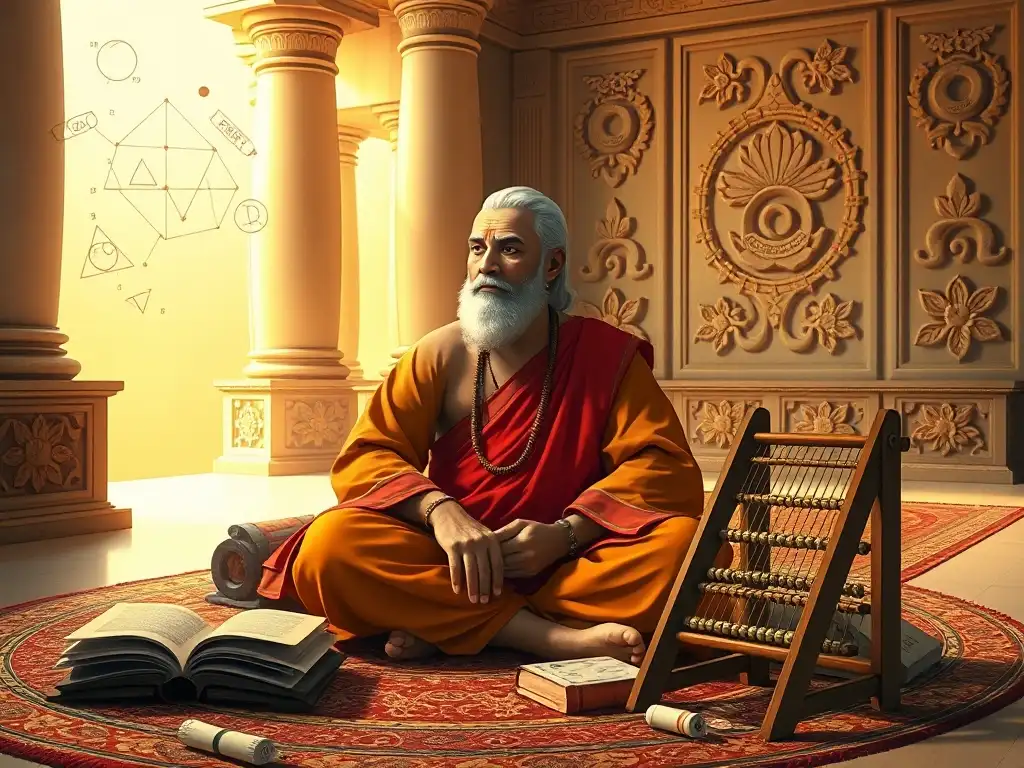
The Gupta Empire, flourishing from approximately 320 to 550 CE, is often hailed as a golden age of Indian culture, particularly in the realms of mathematics and philosophy. The mathematical advancements made during this period were not only innovative but were deeply intertwined with philosophical thought, reflecting the holistic nature of education and understanding in ancient India. Gupta mathematicians, such as Aryabhata and Brahmagupta, contributed significantly to number theory, algebra, and the decimal system. These contributions were not merely numerical; they were imbued with philosophical significance, illustrating a worldview that valued the interconnectedness of knowledge.
The philosophical inquiries of the time, influenced by schools such as Vedanta and Samkhya, emphasized the importance of reasoning and logic. This philosophical backdrop provided a fertile ground for mathematical exploration, where concepts like infinity and zero were not just abstract ideas but were rooted in deeper existential inquiries. The legacy of Gupta mathematics, therefore, extends beyond equations and theorems; it reflects a profound engagement with the nature of reality, existence, and the cosmos.
Lasting Impact on Later Indian Scholars
The impact of Gupta mathematics on subsequent Indian scholars cannot be overstated. The mathematical texts from this era laid the foundation for future developments in mathematics, influencing luminaries such as Bhaskara II and Madhava of Sangamagrama. The introduction of concepts like the place value system and zero fundamentally transformed mathematical practices and education in India.
Moreover, Indian philosophers and mathematicians continued to build upon Gupta ideas, integrating them with local traditions and emerging thoughts. For example, the works of later scholars often incorporated philosophical discussions about the nature of numbers and their relationship to reality. This continuity of thought illustrates how Gupta mathematics shaped not only mathematical understanding but also the philosophical discourse that surrounded it, ensuring its relevance for centuries.
Influence on Global Mathematical Thought
The contributions of Gupta mathematics reached far beyond the Indian subcontinent, influencing global mathematical thought. The knowledge disseminated through trade routes, including the Silk Road, introduced Gupta mathematical concepts to other cultures. The transmission of the decimal system and the concept of zero to the Islamic world during the medieval period played a crucial role in the development of mathematics in Europe.
In fact, the translation of Indian mathematical texts into Arabic during the 8th and 9th centuries facilitated a significant shift in mathematical practices. Scholars such as Al-Khwarizmi, who is often referred to as the father of algebra, drew from Gupta works, demonstrating the profound impact of Indian mathematics on the global stage. This cross-cultural exchange highlights the interconnectedness of knowledge and the importance of Gupta contributions in shaping the mathematical framework that would later influence Western mathematics.
Philosophical Reflections in Modern Mathematics
In contemporary discussions surrounding mathematics, the philosophical reflections that emerged from Gupta thought continue to resonate. Modern mathematicians and philosophers often engage with concepts of infinity, continuity, and the nature of mathematical truths, echoing ancient philosophical inquiries. The Gupta emphasis on logical reasoning and the quest for understanding the universe mirrors modern philosophical explorations in mathematics.
Moreover, the philosophical implications of mathematical discoveries, such as those involving fractals and chaos theory, find parallels in Gupta philosophical traditions that sought to understand complexity and order in the universe. This enduring dialogue between mathematics and philosophy not only enriches our understanding of both fields but also highlights the timeless nature of the questions posed by ancient Indian thinkers.
Conclusion: The Symbiotic Relationship between Gupta Mathematics and Indian Philosophy
The interplay between Gupta mathematics and Indian philosophy represents a rich tapestry of thought that has shaped not only Indian intellectual history but also the broader narrative of human understanding. As we explore this relationship, it becomes clear that the advancements in mathematics during the Gupta period were deeply influenced by philosophical inquiries and vice versa.
Summary of Key Connections
The key connections between Gupta mathematics and Indian philosophy are evident in the following ways:
- Interconnectedness of Knowledge: Gupta scholars viewed mathematics and philosophy as intertwined disciplines that informed one another.
- Influence on Future Generations: The mathematical innovations of the Gupta era laid the groundwork for future philosophical and mathematical thought in India and beyond.
- Global Impact: Gupta contributions reached a global audience, influencing mathematical practices in other cultures through trade and translation.
The Importance of Understanding this Relationship for Modern Scholarship
Understanding the relationship between Gupta mathematics and Indian philosophy is vital for modern scholarship as it provides insight into the holistic approach of ancient Indian civilizations. This perspective encourages contemporary scholars to appreciate the interconnectedness of various fields of knowledge and to recognize the historical significance of philosophical inquiry in shaping mathematical thought. By studying this relationship, we not only honor the legacy of the Gupta Empire but also pave the way for a more integrated understanding of knowledge that transcends disciplinary boundaries.
Further Reading and Resources on Gupta Mathematics and Indian Philosophy
Exploring the interrelation between Gupta mathematics and Indian philosophy opens a window into the profound intellectual traditions of ancient India. A variety of resources, both in print and online, can deepen understanding of this fascinating connection.
Recommended Texts and Authors
-
"Mathematics in Ancient India" by Kim Plofker
This comprehensive text delves into the mathematical achievements during the Gupta period, highlighting major contributions and their philosophical implications. Plofker's analysis provides a critical overview of how mathematics was not merely a tool but intertwined with broader philosophical concepts.
-
"The Philosophy of Mathematics Education" by Paul Ernest
This book addresses the philosophical underpinnings of mathematics, including historical perspectives. While not exclusively focused on Gupta mathematics, it offers insights into how ancient philosophical thought shaped mathematical development.
-
"Indian Philosophy: A Very Short Introduction" by Sue Hamilton
This introductory book provides a concise overview of Indian philosophical traditions, offering valuable context for understanding the philosophical principles that influenced Gupta mathematics.
-
"The History of Mathematics: A Brief Course" by Roger L. Cooke
Although broader in scope, Cooke's work includes significant discussions on Indian mathematics, including the Gupta period. It connects mathematical developments to philosophical inquiries prevalent in that era.
-
"Indian Mathematics: A Historical Perspective" by C. N. Srinath
This text focuses on the mathematical concepts originating from India, particularly during the Gupta Empire, and discusses their philosophical significance and applications.
Online Resources and Academic Journals
-
JSTOR
An invaluable repository of academic papers, JSTOR hosts numerous articles related to Gupta mathematics and Indian philosophy. Searching for terms like "Gupta mathematics" or "Indian philosophy" yields a wealth of peer-reviewed studies.
-
Project Gutenberg
This digital library offers free access to various classical texts, including works by ancient Indian mathematicians and philosophers. Users can explore original writings that form the backbone of this intellectual tradition.
-
Academia.edu
A platform where scholars share their research papers, Academia.edu provides access to contemporary studies on Gupta mathematics and its philosophical connections. It is a useful resource for finding cutting-edge research.
-
The Indian Journal of History of Science
This journal focuses on the history of science in India and often includes articles on mathematics during the Gupta period. It is an excellent source for scholarly articles that discuss the interplay between mathematical concepts and philosophical thought.
-
Google Scholar
Utilizing Google Scholar can lead to a plethora of academic papers and theses related to Gupta mathematics and Indian philosophy. It is a powerful tool for finding scholarly research across a wide range of topics.
By engaging with these texts and resources, readers can gain a deeper appreciation for the rich tapestry of thought that characterizes the connection between Gupta mathematics and Indian philosophy.
- Introduction to Gupta Mathematics and Indian Philosophy
- Overview of the Gupta Empire's Contributions
- Importance of Mathematics in Ancient India
- Philosophical Foundations in Indian Thought
- Historical Context of Gupta Mathematics
- Philosophical Underpinnings of Gupta Mathematics
- Case Studies of Mathematical Concepts in Indian Philosophy
- The Legacy of Gupta Mathematics and Indian Philosophy
- Conclusion: The Symbiotic Relationship between Gupta Mathematics and Indian Philosophy
- Further Reading and Resources on Gupta Mathematics and Indian Philosophy
- What is Gupta mathematics?
- How did Gupta mathematics influence Indian philosophy?
- What are some key contributions of Gupta mathematicians?
- How did the Gupta period impact education in mathematics and philosophy?
- What is the significance of the connection between Gupta mathematics and Indian philosophy today?
Frequently Asked Questions
What is Gupta mathematics?
Gupta mathematics refers to the advanced mathematical concepts and techniques developed during the Gupta Empire (circa 320-550 CE), which included place value, zero, and decimal systems.
How did Gupta mathematics influence Indian philosophy?
Gupta mathematics significantly contributed to Indian philosophy by providing a logical framework and numerical tools that aided in philosophical reasoning and metaphysical exploration.
What are some key contributions of Gupta mathematicians?
Key contributions include the introduction of zero as a number, the development of algebra, and advances in geometry, which collectively laid the foundation for future mathematical progress.
How did the Gupta period impact education in mathematics and philosophy?
The Gupta period saw the establishment of educational institutions where mathematics and philosophy were taught, promoting a culture of scholarship and encouraging intellectual discourse.
What is the significance of the connection between Gupta mathematics and Indian philosophy today?
The connection is significant as it illustrates the interdependence of mathematical and philosophical thought, influencing modern perspectives in various academic disciplines and fostering a deeper understanding of both fields.
Final Reflection: The Enduring Legacy of Gupta Mathematics and Indian Philosophy
The intricate relationship between Gupta mathematics and Indian philosophy remains profoundly relevant today, as it showcases how ancient wisdom can inform modern thought. In an era where we often seek answers through empirical data and scientific reasoning, the philosophical underpinnings of Gupta mathematics remind us that knowledge is not merely a collection of facts but a holistic understanding of the universe. The brilliance of this era lies not just in its mathematical achievements but in the philosophical inquiries that shaped those achievements, illustrating that the pursuit of knowledge is a deeply interconnected journey.
The influence of Gupta mathematics and Indian philosophy continues to resonate in contemporary discussions around education, ethics, and the nature of reality. As we navigate a world increasingly driven by technology and data, the philosophical insights from this period encourage us to reflect on the ethical implications of our advancements. Mathematics is the language with which God has written the universe,
said Galileo, and this sentiment echoes the Gupta era's belief that mathematics is not just a tool but a means to understand the divine order of existence. This connection highlights the importance of integrating philosophical thought into our understanding of mathematics, fostering a more profound appreciation of both disciplines.
As we conclude this exploration, I invite you to reflect on how the principles of Gupta mathematics and Indian philosophy can enrich your own life. Consider how you can apply the wisdom of interconnectedness and ethical reasoning in your daily decisions. Whether in your personal relationships, professional endeavors, or intellectual pursuits, let the legacy of this remarkable era inspire you to seek a deeper understanding of the world around you. Embrace the challenge of blending knowledge with wisdom, and allow the teachings of the past to guide your journey into the future.
Dive Deeper Into the Wisdom of Gupta Mathematics!
Thank you for exploring the fascinating interplay between Gupta mathematics and Indian philosophy. Your interest enriches our understanding of how these two fields shaped the intellect of ancient India. Now, it's your turn to further engage with this timeless knowledge!
Here are a few actions you can take:
- Explore the works of renowned mathematicians from the Gupta period to uncover their philosophical insights. Begin with the theories of Aryabhata and discover how they resonate with contemporary thought.
- Join our community by sharing your reflections on this topic in the comments section. Connect with others who share a passion for ancient Indian knowledge.
- Organize a discussion group or online forum to debate the implications of Gupta mathematics on modern philosophical thought. Engaging in such discussions is a rewarding way to deepen your understanding!
What unique connections between mathematics and philosophy have you discovered in your own studies? We invite you to share your insights!