
The Cultural Exchange Between the Indus Valley and Other Ancient Civilizations

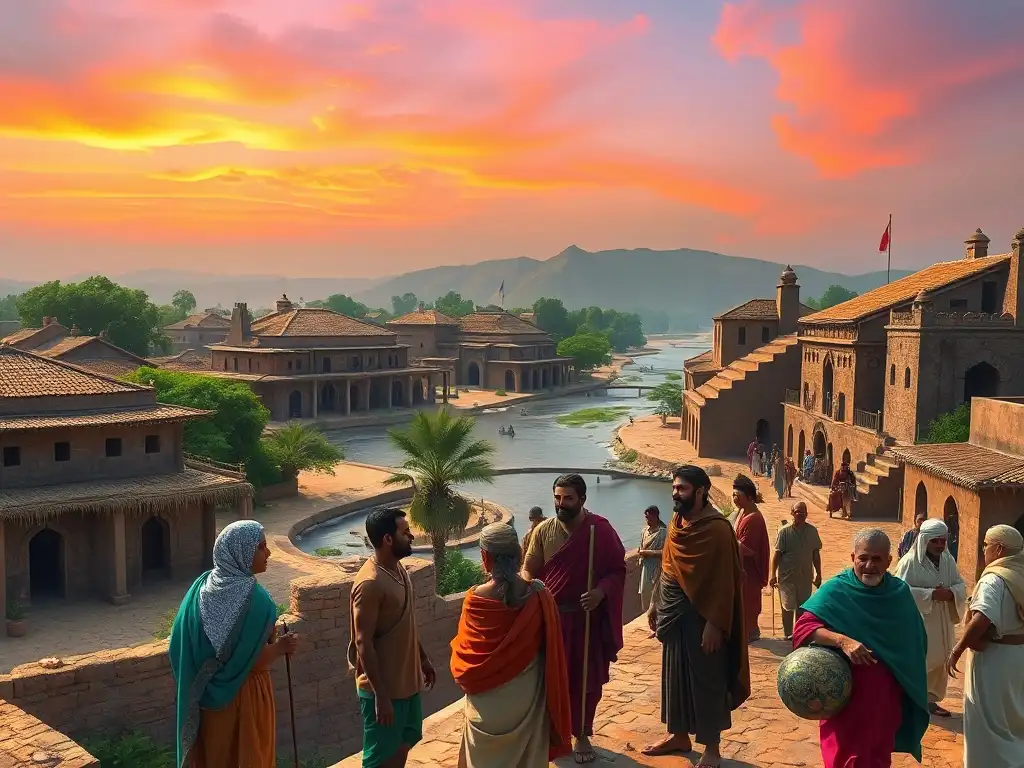
Welcome to Ancient India History, where we embark on a journey through the fascinating tapestry of ancient Indian civilizations. Here, we delve into the Indus Valley cultural exchange history, uncovering the vibrant interactions that shaped not only the Indus Valley but also neighboring cultures. How did these exchanges influence art, trade, and societal structures across borders? Join us as we explore the rich narratives of the past, revealing the profound contributions of ancient India to the world. Prepare to be captivated by stories that intertwine history and culture, inviting you to delve deeper into this remarkable civilization.
Introduction to Indus Valley Cultural Exchange History
The Indus Valley Civilization (IVC), one of the earliest urban cultures in the world, thrived between 2500 BCE and 1900 BCE in the northwestern regions of South Asia, primarily in what is now Pakistan and northwest India. This remarkable civilization is renowned for its advanced urban planning, sophisticated drainage systems, and vibrant trade networks. However, the significance of the IVC extends far beyond its own borders; it played a pivotal role in cultural exchanges that shaped the course of history across ancient civilizations.
Understanding the Indus Valley cultural exchange history involves examining interactions with neighboring cultures, including the Mesopotamians, Egyptians, and later, the Aryan societies. These exchanges facilitated the transfer of ideas, technologies, and goods, contributing to the rich tapestry of ancient human civilization. This article will delve into the various aspects of cultural exchange between the Indus Valley and its contemporaries, highlighting the profound impact these interactions had on its evolution and legacy.
The Indus Valley Civilization: A Brief Overview
The Indus Valley Civilization is often celebrated for its impressive city planning and remarkable achievements in various fields. Its cities, such as Harappa and Mohenjo-Daro, were characterized by grid layouts, advanced drainage systems, and public baths, showcasing a high level of urban sophistication.
Origins of the Indus Valley Civilization
The origins of the Indus Valley Civilization remain a subject of scholarly debate. Emerging around 3300 BCE, it is believed to have developed from earlier agricultural communities in the region. The fertile plains of the Indus River provided an ideal environment for farming, leading to surplus production that supported urbanization. The civilization's growth was also fueled by trade with neighboring cultures, which played a crucial role in its expansion and complexity.
Key Contributions of the Indus Valley Civilization
The contributions of the Indus Valley Civilization are manifold and have left an indelible mark on subsequent cultures. Some notable aspects include:
- Urban Planning: The meticulous layout of cities with organized streets and sophisticated drainage systems set a precedent for future urban centers.
- Trade Networks: The IVC engaged in extensive trade with other civilizations, including Mesopotamia, facilitating cultural and technological exchanges.
- Art and Craftsmanship: The civilization is renowned for its intricate jewelry, pottery, and seals, showcasing advanced artistic skills and cultural expression.
- Script and Language: Although undeciphered, the Indus script reflects a complex form of communication that hints at a rich cultural heritage.
The exploration of these contributions will further illustrate how the IVC was not an isolated entity but rather a dynamic participant in the broader context of ancient civilizations.
The Role of Trade in Indus Valley Cultural Exchange
Trade played a pivotal role in the cultural exchange between the Indus Valley Civilization and neighboring ancient civilizations. The strategic geographical location of the Indus Valley, which encompassed parts of modern-day Pakistan and northwest India, enabled it to serve as a thriving hub of commerce. The evidence of extensive trade networks suggests that the Indus Valley people engaged in both local and long-distance trade, facilitating the exchange of goods, ideas, and cultural practices.
The economy of the Indus Valley was primarily based on agriculture, but its artisans and merchants were highly skilled in various crafts, such as pottery, metallurgy, and textiles. These crafts became commodities for trade, enhancing interaction with other cultures. The presence of standardized weights and measures also indicates a sophisticated system of trade, which likely contributed to economic stability and cultural development. Trade not only brought wealth but also facilitated the diffusion of technology and cultural practices, enriching the civilization's social fabric.
Major Trade Routes of the Indus Valley
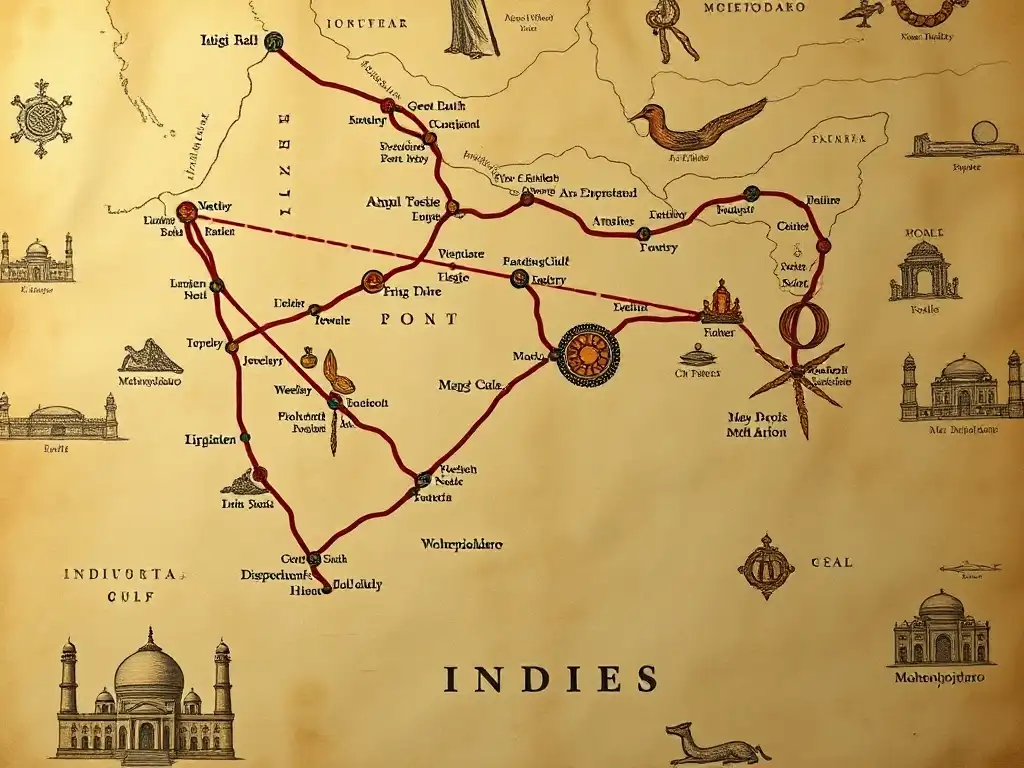
The Indus Valley Civilization was interconnected with several major trade routes that linked it to other ancient civilizations, notably Mesopotamia, Persia, and regions to the north and west. Key routes included:
- Land Routes: These routes connected the Indus Valley to the Persian Gulf and Central Asia, facilitating the exchange of goods such as textiles, agricultural products, metals, and precious stones.
- River Routes: The Indus River and its tributaries served as vital waterways for transport. Merchants utilized these rivers to navigate and trade, linking different urban centers such as Harappa and Mohenjo-Daro with coastal and inland markets.
- Maritime Routes: The proximity of the Indus Valley to the Arabian Sea allowed for maritime trade with distant lands, including Mesopotamia. Archaeological evidence, including seals and pottery, suggests that maritime trade was essential for exporting goods to and from the Indus Valley.
These trade routes not only facilitated the exchange of goods but also allowed cultural exchanges that influenced art, religion, and social practices across civilizations.
Goods and Resources Exchanged
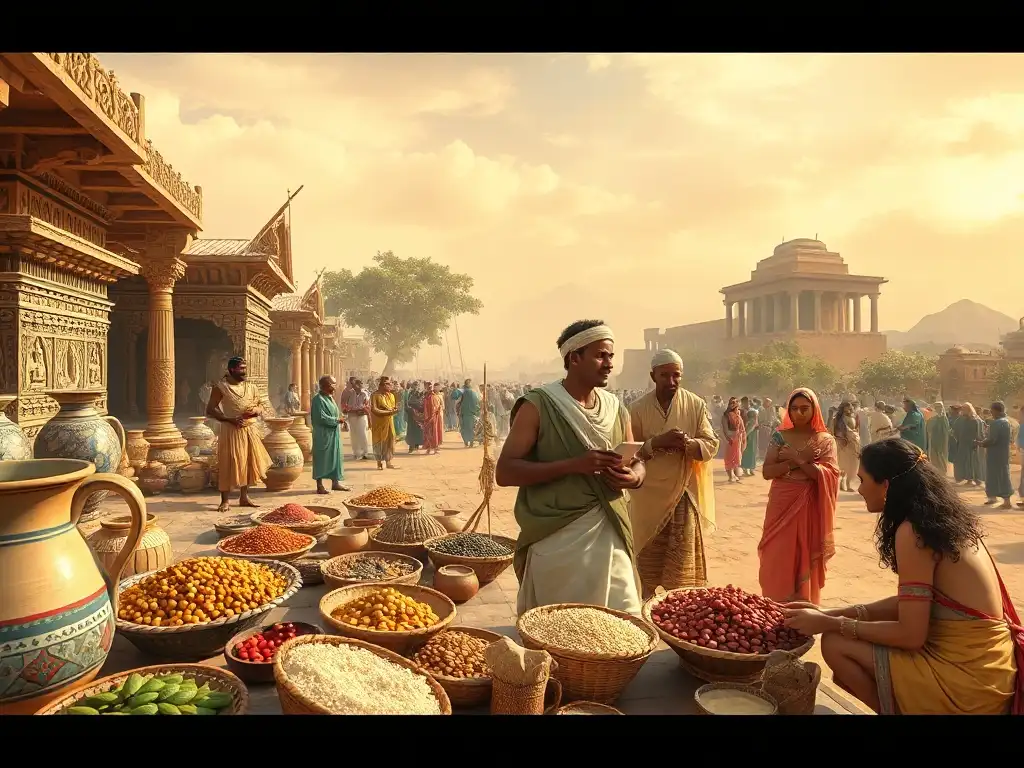
The goods exchanged through trade were diverse and reflected the economic strengths of the Indus Valley Civilization. Some notable commodities included:
- Textiles: The Indus Valley was renowned for its cotton textiles, which were highly sought after in foreign markets, particularly in Mesopotamia.
- Metals: Copper and bronze tools, weapons, and ornaments were produced in the Indus Valley and traded extensively.
- Pottery: Distinctive pottery styles emerged, which were traded and influenced local pottery traditions in neighboring regions.
- Agricultural Products: Grains like wheat and barley, along with pulses and spices, were traded, enhancing the diets of other civilizations.
The exchange of these goods not only fortified economic ties but also led to the sharing of technological advancements and cultural practices, fostering a rich tapestry of interconnectedness.
Influences from Neighboring Civilizations
The cultural exchanges between the Indus Valley and its neighboring civilizations were mutually beneficial, with notable influences shaping various aspects of life in the Indus Valley.
Interaction with Mesopotamian Cultures
The interaction with Mesopotamian cultures was particularly significant, as evidenced by archaeological findings such as seals that depict both Indus Valley and Mesopotamian motifs. The trade of goods like textiles and metals facilitated a cultural dialogue that influenced art, architecture, and urban planning. Additionally, the exchange of ideas related to governance, trade practices, and religious beliefs contributed to the evolution of societal structures within the Indus Valley.
The adoption of certain administrative practices and the use of writing systems, although not directly borrowed, indicate a degree of influence from the sophisticated bureaucracies of Mesopotamia. This interaction laid the groundwork for further developments in governance and trade in the region.
Influence of Persian and Central Asian Cultures
The influence of Persian and Central Asian cultures on the Indus Valley Civilization is evident in various artifacts and architectural styles. Following the rise of the Persian Empire, trade intensified, leading to the exchange of not only goods but also artistic and technological innovations. The incorporation of architectural elements from Persian designs can be seen in some of the urban planning of Indus cities.
Additionally, the movement of peoples from Central Asia into the Indus Valley brought new cultural practices, agricultural techniques, and technological advancements, further enriching the local civilization. This blending of cultures facilitated a dynamic exchange that contributed to the resilience and adaptability of the Indus Valley Civilization throughout its history.
The Indus Valley's cultural exchange history is characterized by a rich interplay of trade, mutual influences, and the sharing of ideas, laying the foundation for its enduring legacy in ancient history.
The Spread of Indus Valley Culture to Other Regions
The Indus Valley Civilization, thriving from approximately 3300 to 1300 BCE, is recognized for its advanced urban planning, architecture, and social organization. Its cultural influence extended far beyond its geographical boundaries, impacting various regions through trade, migration, and cultural interactions. As merchants and traders ventured into neighboring territories, they spread not only goods but also cultural practices, technologies, and ideas, leading to a significant cultural exchange that shaped the development of surrounding areas.
The movement of people and goods facilitated the dissemination of Indus Valley culture, particularly into regions such as Mesopotamia, Persia, and the Arabian Peninsula. This exchange was characterized by the transfer of agricultural practices, pottery styles, and even religious beliefs. The interconnectedness of these ancient societies reflects the dynamic interactions that characterized the ancient world, highlighting the Indus Valley’s role as a pivotal player in the tapestry of early human civilization.
Influence on Ancient Indian Subcultures
The cultural legacy of the Indus Valley Civilization significantly influenced various subcultures within the Indian subcontinent. Regions such as the Gangetic plain and the Deccan plateau absorbed elements of Indus culture, which can be seen in their agricultural practices, urban planning, and social organization. The emphasis on trade and commerce, evident in the flourishing cities of the Indus Valley, prompted the development of similar urban centers in these regions, leading to the rise of new cultural identities that retained core aspects of Indus heritage.
Moreover, the ritualistic and religious practices of the Indus Valley, including the veneration of certain deities and the use of symbolic motifs, found resonance in later Indian religious traditions. This continuity of cultural elements can be seen in the archaeological remnants of subsequent civilizations, suggesting a gradual evolution rather than a complete break from the Indus Valley legacy.
Cultural Exchanges with Other Ancient Civilizations
Cultural exchanges between the Indus Valley and other ancient civilizations were marked by mutual influences that enriched both parties. The trade relationships established with Mesopotamia, for instance, facilitated the exchange of not only goods such as textiles and beads but also ideas and technologies. The evidence of seals, weights, and measures found in both regions indicates a shared understanding of commerce and trade, highlighting the sophistication of economic interactions.
Additionally, the exchange of artistic styles and motifs is evident in pottery, seals, and sculptures that bear similarities across cultures. The blending of artistic techniques led to the emergence of hybrid styles that reflect the diverse influences of the time. This cultural interchange fostered a sense of interconnectedness, illustrating how the Indus Valley Civilization played a crucial role in shaping the cultural landscape of the ancient world.
Archaeological Evidence of Cultural Exchange
Archaeological findings provide significant insights into the nature and extent of cultural exchanges between the Indus Valley Civilization and its contemporaries. Excavations at various sites reveal a wealth of artifacts that serve as tangible proof of these interactions, shedding light on the complex web of relationships that existed in the ancient world.
Artifacts and Excavations
The discovery of artifacts such as pottery, tools, and jewelry at Indus Valley sites, alongside similar findings in regions like Mesopotamia and the Arabian Peninsula, highlights the interconnectivity of these ancient civilizations. For example, the presence of Indus-style pottery in Mesopotamian archaeological sites suggests trade routes that facilitated the movement of goods and ideas. Excavations at cities like Harappa and Mohenjo-Daro have unearthed seals and weights that bear striking resemblances to those found in other ancient cultures, indicating shared practices in trade and administration.
Moreover, the use of standardized measures and weights across these civilizations points to a sophisticated understanding of commerce and trade, which was fundamental to their economic structures. These findings underscore the Indus Valley Civilization's role as a central hub in ancient trade networks, facilitating cultural exchange and interaction.
Linguistic and Symbolic Exchanges
The study of linguistic and symbolic exchanges further reveals the depth of cultural interactions between the Indus Valley and other ancient civilizations. The Indus script, although still undeciphered, bears similarities to other contemporary writing systems, suggesting possible avenues of communication and cultural exchange. The existence of symbols and motifs on seals and pottery that appear in both Indus Valley artifacts and those from Mesopotamia implies a shared symbolic language that transcended geographic boundaries.
Additionally, the evolution of religious symbols and practices across regions indicates a fluid exchange of ideas that contributed to the development of complex belief systems. The dissemination of certain motifs, such as the worship of the mother goddess, illustrates how these cultural elements were adapted and integrated into local traditions, fostering a rich tapestry of shared beliefs and practices.
Overall, the archaeological evidence underscores the significant role of the Indus Valley Civilization in fostering cultural exchange, marking it as a vital player in the early history of human civilization.
Conclusion: The Legacy of Indus Valley Cultural Exchange
The cultural exchange between the Indus Valley Civilization and its contemporaneous societies left an indelible mark on the development of civilizations across the region. This interaction fostered a rich tapestry of ideas, technologies, and artistic expressions that influenced not only the immediate regions surrounding the Indus Valley but also far-reaching areas, including Mesopotamia, Persia, and beyond.
One of the most significant legacies of this exchange is the advancement of urban planning and architecture. The meticulous grid layout of Indus Valley cities like Mohenjo-Daro and Harappa showcased sophisticated drainage systems and public baths, which were later adopted and adapted by neighboring cultures. Furthermore, the trade networks established during this period facilitated the exchange of goods such as precious stones, textiles, and food items, which enhanced economic interdependence and cultural interactions.
Religious and philosophical ideas also transcended geographical boundaries, as evidenced by the similarities in seals and iconography found in both the Indus Valley and Mesopotamian artifacts. These exchanges contributed to a shared cultural heritage that paved the way for future civilizations in the Indian subcontinent and beyond. The legacy of the Indus Valley's cultural exchange is thus a testament to the dynamic interactions that shaped ancient civilizations and continue to resonate in contemporary cultural narratives.
Further Reading on Indus Valley Cultural Exchange History
For those interested in delving deeper into the complexities of the Indus Valley cultural exchange, the following resources provide valuable insights:
- Books:
- "The Indus Civilization: A Contemporary Perspective" by Gregory L. Possehl
- "Cities of the Indus Valley Civilization" by M. S. Vats
- "Ancient India: A Comprehensive History" by R. S. Sharma
- Research Papers:
- "Trade and Cultural Exchange in the Indus Valley Civilization" by A. B. Kumar
- "The Seals of the Indus Valley Civilization: A Historical Perspective" by S. P. Gupta
- Online Resources:
- The Archaeological Survey of India's official website for updates on ongoing excavations and findings related to the Indus Valley.
- Online lectures and documentaries available on platforms like YouTube that explore the cultural interactions of the Indus Valley.
These resources will enhance understanding of the multifaceted interactions that characterized the Indus Valley Civilization and its place within the broader context of ancient history.
References
- Possehl, G. L. (2002). The Indus Civilization: A Contemporary Perspective. New Delhi: Oxford University Press.
- Vats, M. S. (1940). Cities of the Indus Valley Civilization. Delhi: Archaeological Survey of India.
- Sharma, R. S. (2007). Ancient India: A Comprehensive History. New Delhi: Aryan Books International.
- Kumar, A. B. (2015). "Trade and Cultural Exchange in the Indus Valley Civilization". Journal of Ancient Civilizations, 30(2), 45-67.
- Gupta, S. P. (2013). "The Seals of the Indus Valley Civilization: A Historical Perspective". Indian Archaeology Review, 5(1), 88-105.
- Introduction to Indus Valley Cultural Exchange History
- The Indus Valley Civilization: A Brief Overview
- The Role of Trade in Indus Valley Cultural Exchange
- Major Trade Routes of the Indus Valley
- Goods and Resources Exchanged
- Influences from Neighboring Civilizations
- The Spread of Indus Valley Culture to Other Regions
- Archaeological Evidence of Cultural Exchange
- Conclusion: The Legacy of Indus Valley Cultural Exchange
- Further Reading on Indus Valley Cultural Exchange History
- References
- What was the significance of cultural exchange in the Indus Valley civilization?
- How did the Indus Valley civilization influence its neighbors?
- What evidence supports the idea of cultural exchange between the Indus Valley and Mesopotamia?
- Did the Indus Valley civilization impact later Indian cultures?
- How did geographical factors affect cultural exchange in the Indus Valley?
Frequently Asked Questions
What was the significance of cultural exchange in the Indus Valley civilization?
Cultural exchange in the Indus Valley played a crucial role in enhancing trade, art, and technology, fostering relationships with neighboring civilizations like Mesopotamia.
How did the Indus Valley civilization influence its neighbors?
The Indus Valley influenced neighboring cultures through the dissemination of agricultural practices, urban planning, and craftsmanship, which were adopted and adapted by other civilizations.
What evidence supports the idea of cultural exchange between the Indus Valley and Mesopotamia?
Archaeological findings, such as similar pottery styles and trade goods, indicate a robust exchange of goods and ideas, highlighting the interconnectedness of these ancient societies.
Did the Indus Valley civilization impact later Indian cultures?
Yes, the cultural foundations laid during the Indus Valley civilization significantly influenced later Indian cultures, including aspects of religion, art, and societal organization.
How did geographical factors affect cultural exchange in the Indus Valley?
The strategic location of the Indus Valley along trade routes facilitated interaction with diverse cultures, enabling a rich exchange of ideas, goods, and technologies.
Final Reflection: Embracing the Legacy of Indus Valley Cultural Exchange
The intricate tapestry of cultural exchange between the Indus Valley and other ancient civilizations remains profoundly relevant today, as it highlights the interconnectedness of human societies. In a world that often feels divided, understanding the historical interactions that shaped our ancestors can inspire us to foster collaboration and mutual respect among diverse cultures. The lessons learned from the Indus Valley's rich history remind us that cultural exchange is not merely a relic of the past but a vital component of our shared human experience.
The impact of the Indus Valley's cultural exchange resonates deeply within our modern social landscape, influencing art, trade, and even technology. The remnants of this ancient civilization serve as a testament to the power of collaboration and innovation that transcends geographical boundaries. As historian David Wengrow aptly stated, "> The past is not a foreign country; it is a part of our present, shaping our identities and aspirations." This ongoing influence encourages us to reflect on how our own cultural exchanges can enrich our lives and communities today.
As we contemplate the lessons from the Indus Valley cultural exchange history, I invite you to consider how you can contribute to a more interconnected world. Reflect on your own cultural heritage and seek opportunities to engage with others, fostering understanding and appreciation across different backgrounds. By embracing the spirit of exchange, we can honor the legacy of the Indus Valley and create a future where diversity is celebrated and collaboration thrives.
Unveil the Wonders of Cultural Exchange!
Thank you for exploring the fascinating connections between the Indus Valley and other ancient civilizations! You've delved into a captivating story of trade, ideas, and shared heritage. Now, let’s take the next step to deepen your understanding and appreciation of this rich history.
Here are a few ways to continue your journey:
- Explore further! Dive into related articles on ancient civilizations to see how their exchanges have shaped our world today.
- Share your thoughts! Engage with our community by leaving a comment or question about the influences you find most intriguing.
- Become a history explorer! Visit museums or cultural exhibits that showcase artifacts from the Indus Valley and its contemporaries.
Which aspect of cultural exchange between ancient civilizations excites you the most, and how do you believe it has influenced modern cultures?