
The Cultural Exchanges Between the Gupta Empire and the Mediterranean World


Welcome to Ancient India History, where we embark on a fascinating journey through the rich tapestry of ancient Indian civilizations. Today, we delve into the intriguing world of the Gupta Empire, a pivotal era that not only flourished in the heart of India but also engaged in vibrant cultural exchanges with the Mediterranean world. What were the influences that shaped this remarkable interaction, and how did it impact both regions?
Join us as we uncover the stories, art, and ideas that flowed across these ancient civilizations, sparking curiosity and inspiring innovation. Prepare to be captivated by the legacies of the past as we explore the profound connections that still resonate today!
Introduction to the Gupta Empire and its Global Context
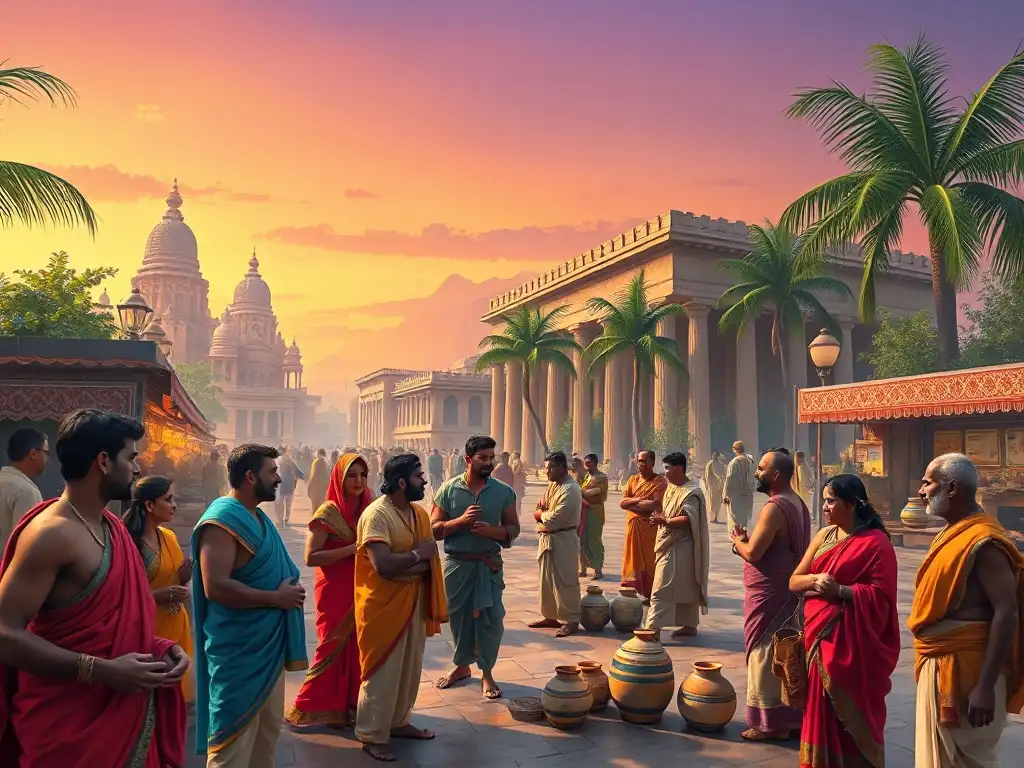
The Gupta Empire, often referred to as the Golden Age of India, flourished between approximately 320 to 550 CE. This era was marked by significant advancements in various fields, including science, mathematics, art, and philosophy. However, what makes the Gupta Empire particularly fascinating is its extensive cultural exchanges with the Mediterranean world. These interactions not only enriched Indian civilization but also facilitated the flow of ideas, goods, and technologies between distant regions. Understanding these exchanges provides insight into the interconnectedness of ancient civilizations and their shared legacies.
Overview of the Gupta Empire's Golden Age
During the Gupta period, India experienced remarkable achievements in literature, mathematics, and astronomy. Renowned scholars like Aryabhata and Kalidasa emerged, contributing to a cultural renaissance that would influence generations. The establishment of trade routes and the promotion of religious tolerance further fostered an environment conducive to cultural synthesis.
- Key Contributions:
- Mathematics: Development of the concept of zero and the decimal system.
- Literature: Flourishing of Sanskrit literature and dramatic arts.
- Art and Architecture: Creation of intricate sculptures and temples, reflecting Hindu and Buddhist influences.
The Gupta Empire's strategic location along vital trade routes facilitated not only economic prosperity but also cultural exchanges with the Mediterranean regions, which will be explored in detail.
Significance of Cultural Exchanges in Ancient Civilizations
Cultural exchanges played a pivotal role in shaping ancient civilizations. They allowed for the transfer of knowledge, technological innovations, and artistic influences. Through these interactions, societies could learn from each other, adapt new practices, and enrich their cultural landscapes.
- Impact of Cultural Exchanges:
- Trade of Goods: Spices, textiles, and precious stones exchanged for Mediterranean products like olive oil and wine.
- Religious Influences: The spread of Buddhism and Hinduism into the Mediterranean regions and the reciprocal influence of Greco-Roman philosophies.
- Artistic Inspirations: Fusion of artistic styles leading to unique creations in both regions.
These exchanges not only enriched the societies involved but also laid the groundwork for future interactions in the medieval period.
The Mediterranean World: An Overview
The Mediterranean region, characterized by its diverse cultures and civilizations, was a bustling hub of activity during the Gupta period. From the Roman Empire to the burgeoning Byzantine Empire, this region was marked by a tapestry of societies that engaged in trade, warfare, and cultural exchange.
Key Characteristics of Mediterranean Cultures
Mediterranean cultures were known for their dynamic interactions and rich traditions. They shared common elements, such as:
- Trade Networks: Extensive maritime routes facilitated commerce and cultural exchanges.
- Religious Diversity: A melting pot of beliefs, including paganism, early Christianity, and Judaism.
- Philosophical Thought: Influential schools of thought, particularly in Greece and Rome, that shaped intellectual discourse.
These characteristics fostered an environment ripe for interactions with the Gupta Empire, leading to significant cultural exchanges.
Major Civilizations in the Mediterranean Region during the Gupta Period
During the time of the Gupta Empire, several prominent civilizations thrived in the Mediterranean:
- Roman Empire: At its height, the Roman Empire was a dominant political and cultural force, influencing many aspects of life across Europe and North Africa.
- Byzantine Empire: The eastern continuation of the Roman Empire, which preserved and transformed classical knowledge and culture.
- Greek City-States: Renowned for their contributions to philosophy, art, and science, these city-states continued to exert influence even beyond their political decline.
The interactions between these civilizations and the Gupta Empire created a rich tapestry of cultural exchanges that would have lasting impacts on both regions.
Mechanisms of Cultural Exchange between the Gupta Empire and the Mediterranean
The Gupta Empire, often referred to as the Golden Age of India, thrived from approximately 240 to 550 CE. During this period, significant cultural exchanges occurred between the Gupta Empire and the Mediterranean world. These exchanges were facilitated by various mechanisms that enhanced interactions, including trade routes, diplomatic relations, and the movement of people.
The trade routes played a pivotal role in connecting the Gupta Empire with Mediterranean civilizations, allowing for the exchange of goods, ideas, and cultural practices. Additionally, diplomatic missions contributed to the establishment of alliances and the sharing of knowledge. The movement of scholars and merchants further enriched the cultural landscape of both regions, leading to a mutual influence that shaped the arts, philosophy, and religious beliefs.
Trade Routes Connecting the Gupta Empire and the Mediterranean
The trade networks established between the Gupta Empire and the Mediterranean were extensive and sophisticated. Key trade routes included the Silk Road and maritime routes across the Indian Ocean, which facilitated the exchange of commodities such as spices, textiles, precious stones, and metals.
- Overland routes: Merchants traveled land routes through Central Asia, connecting the Gupta Empire to regions such as Persia and the Hellenistic world.
- Maritime routes: The Indian Ocean trade routes linked Indian ports with the Mediterranean through the Red Sea and the Persian Gulf, enabling the exchange of goods and cultural ideas.
These routes not only facilitated trade but also acted as conduits for the movement of people and ideas, resulting in a rich tapestry of cultural interactions.
Diplomatic Relations: Envoys and Alliances
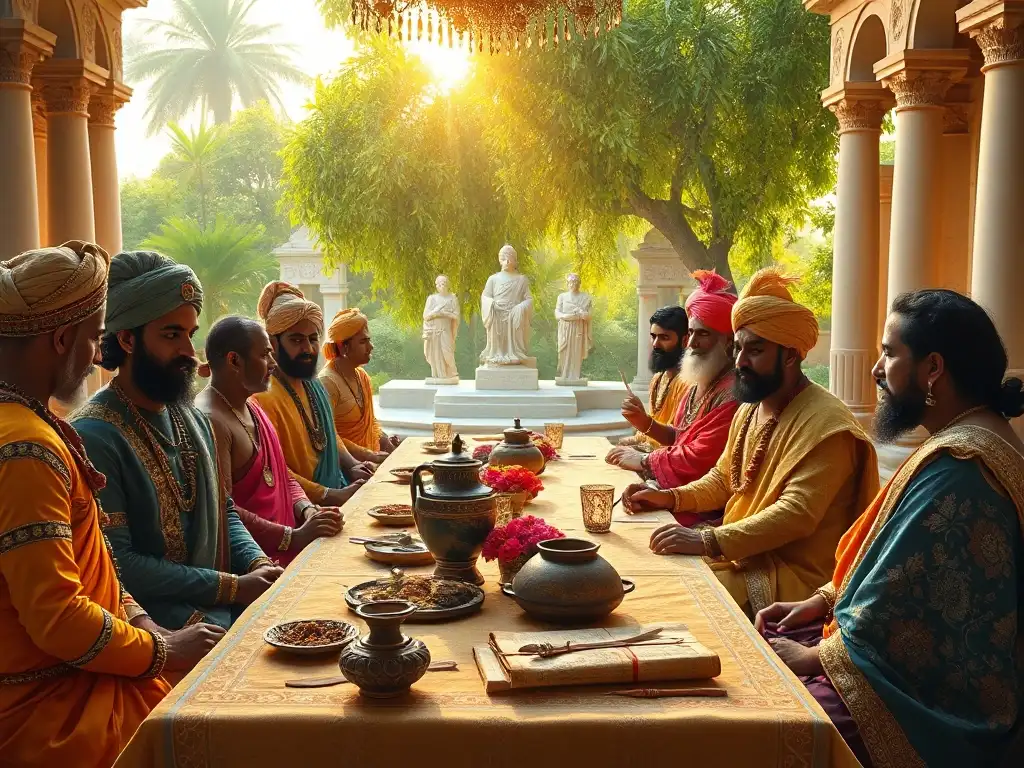
Diplomatic relations between the Gupta Empire and Mediterranean states were characterized by the sending of envoys and forming alliances. The Gupta rulers engaged in diplomatic missions to establish peaceful relations and promote trade.
- Envoys: The Gupta emperors, particularly Samudragupta, sent envoys to regions in the Mediterranean, including the Roman Empire. This exchange of envoys helped in forging alliances and mutual respect between cultures.
- Alliances: The Gupta Empire formed strategic alliances with various kingdoms, which further enhanced cultural exchanges. These alliances allowed for the sharing of knowledge in governance, military tactics, and cultural practices.
Such diplomatic efforts fostered a climate of cooperation and exchange, enriching both societies through shared understanding and collaboration.
Areas of Cultural Exchange
The cultural exchanges between the Gupta Empire and the Mediterranean world manifested in various areas, particularly in the realms of art and philosophy.
Artistic Influences: Sculpture, Architecture, and Painting
Artistic influences flowed between the Gupta Empire and Mediterranean cultures, evident in the realms of sculpture, architecture, and painting.
- Sculpture: Gupta art is renowned for its intricate sculptures, many of which were influenced by Hellenistic styles. The graceful figures and detailed depictions of deities showcase a synthesis of local and foreign artistic techniques.
- Architecture: The construction of stupas and temples during the Gupta period reflected both indigenous styles and influences from Greco-Roman architecture. The use of columns and decorative motifs displayed a blend of cultural elements.
- Painting: Murals in Gupta temples often depicted scenes from both Indian mythology and Greco-Roman narratives, illustrating how artistic themes crossed cultural boundaries.
These artistic exchanges not only enriched the visual culture of both civilizations but also demonstrated the interconnectedness of their artistic traditions.
Philosophical and Religious Exchanges
The Gupta Empire was a period of significant philosophical and religious development, which saw exchanges with Mediterranean thought.
- Philosophical ideas: There was an exchange of philosophical concepts, particularly between Indian philosophies such as Buddhism and Jainism and the Hellenistic schools of thought. The ideas of ethics, morality, and metaphysics found common ground, leading to enriched philosophical discourses.
- Religious influences: The spread of Buddhism into the Mediterranean and the interaction with Hellenistic religions facilitated a dialogue about spirituality and ethics. The syncretism of religious practices can be seen in the adoption of certain rituals and iconography.
These exchanges deepened the understanding of philosophical and religious principles, fostering a rich tapestry of thought that influenced both the Gupta Empire and Mediterranean societies.
Economic Impacts of Gupta Empire Mediterranean Cultural Exchanges
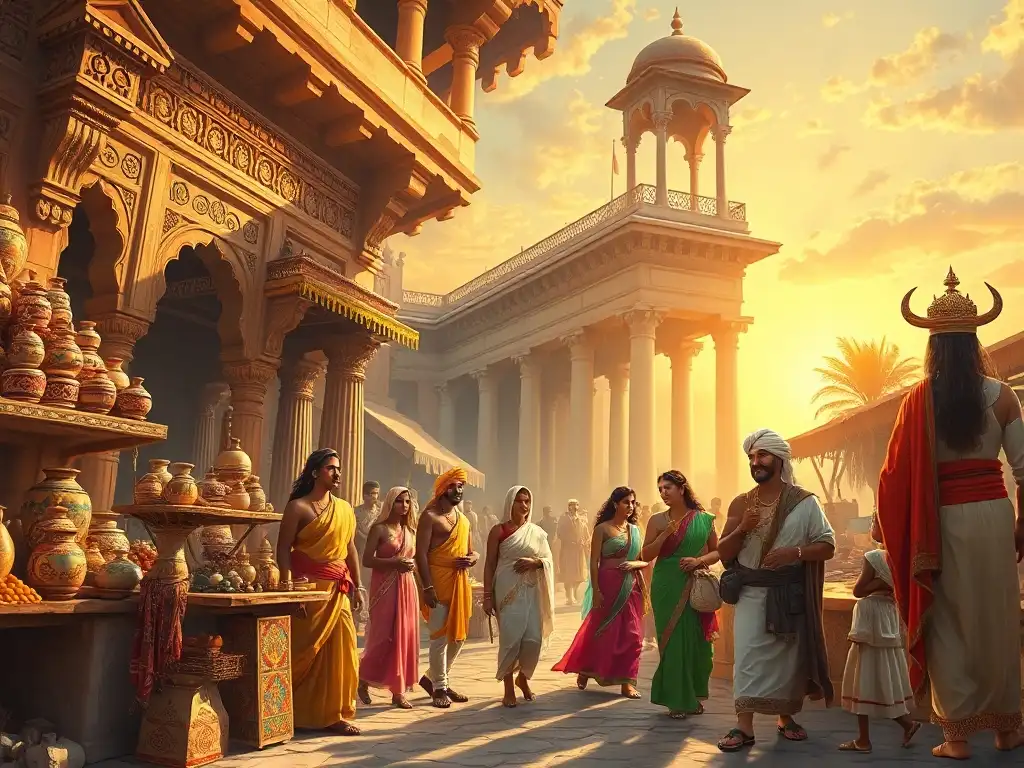
The Gupta Empire, often referred to as the Golden Age of India, thrived from approximately 240 to 590 CE, during which time it developed rich cultural and economic exchanges with the Mediterranean world. These exchanges played a pivotal role in enhancing trade, fostering economic prosperity, and facilitating cultural interactions between diverse civilizations. The flourishing trade routes not only stimulated the economy of the Gupta Empire but also created a dynamic flow of ideas, technologies, and goods, linking India with the broader Mediterranean region.
As trade intensified, the Gupta Empire established itself as a vital hub in the global economy. Goods such as spices, textiles, metals, and precious stones were exported to various Mediterranean markets, while luxury items like glassware, wine, and olive oil made their way into Indian society. This exchange of goods not only enriched the material culture of both regions but also contributed to the wealth of the Gupta rulers, allowing for further patronage of the arts, sciences, and education, which marked this period as one of significant cultural achievement.
Trade Goods: What was Exchanged?
The trade between the Gupta Empire and the Mediterranean world was characterized by a diverse array of goods. Key items exchanged included:
- From the Gupta Empire to the Mediterranean:
- Spices: Such as black pepper, cardamom, and cinnamon, which were highly sought after in Mediterranean cuisine.
- Textiles: Fine cotton and silk fabrics, renowned for their quality and craftsmanship.
- Metals: Gold, silver, and iron products, including tools and weapons.
- Jewelry: Intricately designed ornaments made from precious stones and metals.
- From the Mediterranean to the Gupta Empire:
- Glassware: Beautiful glass objects, which were a luxury in Indian markets.
- Wine and Olive Oil: Essential commodities that enriched the culinary practices of the Gupta elite.
- Artistic Goods: Statues, coins, and other artifacts that influenced local artistic styles.
This vast trade network not only facilitated the exchange of material goods but also encouraged the blending of artistic styles and techniques, enriching both cultures.
The Role of Merchants in Cultural Transmission
Merchants played a crucial role in the cultural exchanges between the Gupta Empire and the Mediterranean world. They were not merely traders; they were also cultural ambassadors who facilitated the movement of ideas, practices, and technology across regions. These merchants often traveled long distances, establishing trade networks that connected various cultures.
Through their interactions, merchants introduced new concepts, philosophies, and artistic expressions to both the Gupta Empire and the Mediterranean societies. They brought back stories, religious ideas, and scientific knowledge that enriched local traditions. The presence of these traders contributed to the cosmopolitan nature of Gupta cities, where diverse cultural influences coexisted, leading to a vibrant exchange of ideas and artistic styles.
Language and Literature: Bridging Cultures
The cultural exchanges between the Gupta Empire and the Mediterranean world also had a profound impact on language and literature. During this period, the Gupta Empire became a center for learning and scholarship, with Sanskrit emerging as a prominent literary language. The interaction with Mediterranean cultures influenced the development of language, literary forms, and intellectual pursuits.
Sanskrit and Its Influence on Mediterranean Languages
Sanskrit, the classical language of India, not only flourished within the Gupta Empire but also began to influence Mediterranean languages through trade and cultural interactions. Scholars and travelers who visited India often documented their experiences in their native tongues, leading to the incorporation of Sanskrit vocabulary and concepts into local languages.
The spread of Sanskrit literature, particularly through translated works, also contributed to the enrichment of Mediterranean literary traditions. Concepts such as philosophy, mathematics, and astronomy found their way into Greek and Latin texts, signifying a cross-pollination of ideas that would shape intellectual thought for centuries.
Literary Works Inspired by Cross-Cultural Interactions
Several literary works emerged during the Gupta Empire that reflected the influences of cross-cultural interactions. These texts often blended indigenous themes with ideas and narratives from Mediterranean traditions. Notable works, such as the "Panchatantra" and "Kamasutra," showcased storytelling techniques and moral lessons that resonated with both Indian and Mediterranean audiences.
Additionally, the narratives and allegories found in these texts often drew on common human experiences, allowing for a universal appeal that transcended cultural boundaries. The rich tapestry of literature produced during this period stands as a testament to the enduring legacy of the Gupta Empire's cultural exchanges with the Mediterranean world, highlighting the interconnectedness of ancient civilizations.
Scientific and Technological Exchanges
The Gupta Empire, often referred to as the Golden Age of India, was marked by significant advancements in various fields, including science and technology. This period witnessed a remarkable flow of knowledge and ideas between the Gupta Empire and the Mediterranean world. Such exchanges were facilitated by trade routes that connected these civilizations, allowing for the cross-pollination of innovative concepts and technologies.
Both the Gupta Empire and the Mediterranean regions were eager to learn from one another. Scholars, merchants, and travelers played crucial roles in the dissemination of knowledge. This sharing extended to various scientific disciplines, including mathematics, astronomy, medicine, and metallurgy. For instance, the use of the numeral system and advancements in mathematical theories were particularly noteworthy, demonstrating how these two cultures influenced each other profoundly.
Innovations in Mathematics and Astronomy
One of the most significant contributions of the Gupta Empire to the Mediterranean world was in the fields of mathematics and astronomy. Indian mathematicians, such as Aryabhata, made groundbreaking strides in understanding concepts like zero and the decimal system. These innovations revolutionized mathematical calculations and were eventually adopted by scholars in the Mediterranean region, enhancing their own mathematical practices.
In astronomy, Gupta scholars developed sophisticated models for understanding celestial bodies. They proposed theories about planetary motion and eclipses that were remarkably advanced for their time. The translation of these works into Greek and Latin allowed Mediterranean scholars to build upon Gupta astronomical knowledge, leading to enhanced navigation techniques and deeper understanding of the cosmos.
The Influence of Gupta Science on Mediterranean Scholarship
The scientific works emerging from the Gupta Empire had a profound impact on Mediterranean scholarship. Many texts, including works on mathematics, medicine, and astronomy, were translated into Greek and Arabic, allowing for the dissemination of Gupta knowledge across the Mediterranean. This intellectual exchange enriched the scientific community, enabling advancements that would shape the future of European scholarship during the Renaissance.
Prominent figures, such as the Greek philosopher and astronomer Ptolemy, were influenced by the mathematical concepts introduced by Indian scholars. The integration of Indian numeral systems into Mediterranean mathematics was particularly significant, as it streamlined calculations and record-keeping practices. The collaboration and exchange of ideas fostered a rich intellectual environment that benefitted both the Gupta Empire and the Mediterranean civilizations.
Conclusion: The Lasting Impact of Gupta Empire Mediterranean Cultural Exchanges
The cultural exchanges between the Gupta Empire and the Mediterranean world were not merely a historical footnote; they left a lasting legacy that shaped the development of various fields. The flow of knowledge in science, mathematics, and technology paved the way for future innovations and facilitated a richer understanding of the world.
Reflection on the Importance of Cultural Interactions
The interactions between the Gupta Empire and the Mediterranean underscore the importance of cultural exchanges in shaping human history. These exchanges enriched both civilizations, fostering a spirit of inquiry and collaboration that transcended geographical boundaries. Understanding this dynamic can provide insights into how knowledge evolves and spreads, ultimately contributing to societal advancements.
Future Research Directions on Gupta and Mediterranean Relations
As researchers continue to explore the Gupta Empire's connections with the Mediterranean world, several areas warrant further investigation. These include examining the specific routes of trade and travel that facilitated cultural exchanges, analyzing the impact of these interactions on local traditions, and exploring lesser-known figures who played crucial roles in this intellectual dialogue. By delving deeper into these aspects, scholars can gain a more comprehensive understanding of the Gupta Empire's influence on the Mediterranean and vice versa, enriching our knowledge of ancient civilizations and their interconnectedness.
- Introduction to the Gupta Empire and its Global Context
- The Mediterranean World: An Overview
- Mechanisms of Cultural Exchange between the Gupta Empire and the Mediterranean
- Trade Routes Connecting the Gupta Empire and the Mediterranean
- Diplomatic Relations: Envoys and Alliances
- Areas of Cultural Exchange
- Artistic Influences: Sculpture, Architecture, and Painting
- Philosophical and Religious Exchanges
- Economic Impacts of Gupta Empire Mediterranean Cultural Exchanges
- Language and Literature: Bridging Cultures
- Scientific and Technological Exchanges
- Conclusion: The Lasting Impact of Gupta Empire Mediterranean Cultural Exchanges
- What were the key features of the Gupta Empire?
- How did the Gupta Empire engage in cultural exchanges with the Mediterranean world?
- What were the impacts of these cultural exchanges?
- Can you give examples of specific cultural influences?
- Why is the study of Gupta Empire Mediterranean cultural exchanges important?
Frequently Asked Questions
What were the key features of the Gupta Empire?
The Gupta Empire was known for its cultural advancements, including achievements in literature, art, and science. It is often referred to as the Golden Age of India due to its significant contributions to various fields.
How did the Gupta Empire engage in cultural exchanges with the Mediterranean world?
The Gupta Empire engaged in trade and diplomatic relations, facilitating the flow of ideas and goods between India and the Mediterranean. This interaction enriched both cultures through shared philosophies, artistic styles, and knowledge.
What were the impacts of these cultural exchanges?
The cultural exchanges led to the fusion of artistic styles, the spread of scientific knowledge, and the expansion of religious beliefs. These interactions significantly influenced both the Gupta Empire and Mediterranean civilizations.
Can you give examples of specific cultural influences?
Examples include the spread of Buddhism into the Mediterranean and the influence of Greek artistic techniques on Indian sculpture. Such exchanges enriched the artistic and intellectual landscapes of both regions.
Why is the study of Gupta Empire Mediterranean cultural exchanges important?
Studying these exchanges helps us understand the interconnectedness of ancient civilizations and highlights the global influence of the Gupta Empire. It also sheds light on how cultural interactions shaped societal developments across regions.
Final Reflection: The Enduring Legacy of Gupta-Mediterranean Cultural Exchanges
The cultural exchanges between the Gupta Empire and the Mediterranean world are not merely historical footnotes; they are vital threads woven into the fabric of our global heritage. Today, as we navigate an increasingly interconnected world, understanding these exchanges illuminates how ideas, art, and philosophies transcend borders and time. The remarkable interactions of these ancient civilizations remind us that cultural dialogue is essential for growth and mutual understanding.
The influence of Gupta-Mediterranean exchanges continues to resonate in our contemporary cultural landscape. From the spread of scientific knowledge to the evolution of artistic styles, these interactions have laid the groundwork for many aspects of modern society. As we reflect on this rich tapestry of exchange, we can appreciate the words of historian Will Durant: Civilization exists by geological consent, subject to change without notice.
This observation underscores the importance of recognizing and nurturing our shared cultural heritage, as it shapes our identities and informs our future.
As we conclude our exploration of the Gupta Empire and its Mediterranean connections, I invite you to reflect on your own cultural exchanges. Consider how your interactions with diverse cultures enrich your life and broaden your perspective. Let the lessons from the past inspire you to engage in dialogues that celebrate diversity and foster understanding, ensuring that the legacy of these ancient exchanges continues to thrive in our modern world.
Unveil the Rich Tapestry of Cultural Exchange!
Thank you for diving into the fascinating world of the Gupta Empire and its connections with the Mediterranean! You've explored how diverse cultures intertwined, paving the way for vibrant development in art, philosophy, and trade. Now, it's time to take the next step in your journey of discovery!
Here are some actions you can take to deepen your understanding and engagement with this captivating topic:
- Explore further: Delve into additional resources or books about the Gupta Empire and its influence on global cultures.
- Join the conversation: Share your thoughts or findings on social media or in the comments below. Let's connect and discuss our insights!
- Create connections: Organize a local study group or a virtual discussion with friends who are interested in ancient cultures. Collaboration fosters deeper understanding!
What aspect of cultural exchange surprised you the most, and how do you think it continues to shape our world today?