
The Cultural Exchange Between the Maurya Empire and Hellenistic Greece

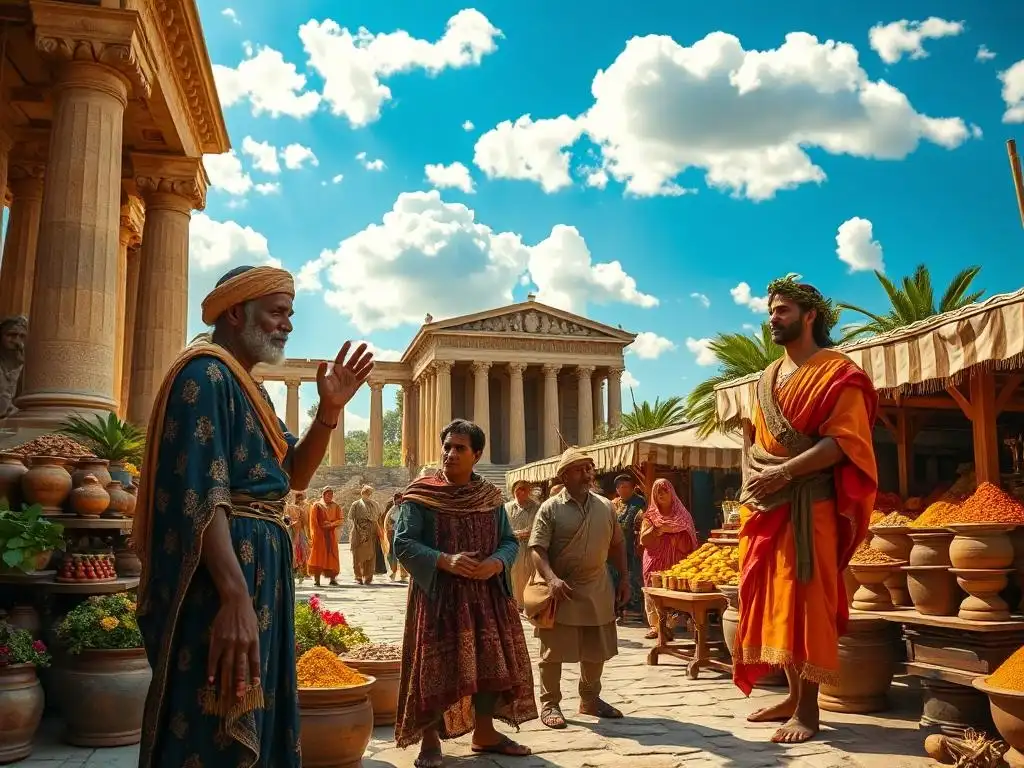
Welcome to Ancient India History, where we embark on a fascinating journey through the rich tapestry of ancient Indian civilizations. Today, we delve into the intriguing topic of cultural exchange between the Maurya Empire and Hellenistic Greece, a pivotal moment that shaped the artistic, philosophical, and scientific landscapes of both regions. What secrets lie within this crossroad of cultures? Join us as we unravel the complexities of this remarkable interaction, and discover how it influenced the course of history. Prepare to be captivated and inspired as you explore the profound contributions of the Mauryan era!

Introduction to Cultural Exchange Between the Maurya Empire and Greece
The cultural exchange between the Maurya Empire and Hellenistic Greece represents a significant chapter in the annals of ancient history. This interaction not only facilitated the dissemination of ideas, art, and technology but also fostered a unique blend of philosophies and practices that enriched both civilizations.
The Maurya Empire, known for its political unification of the Indian subcontinent, and Hellenistic Greece, a period marked by the spread of Greek culture following Alexander the Great's conquests, created a dynamic environment ripe for cultural interchange. This article delves into the intricacies of this exchange, highlighting how it shaped various aspects of society, from governance to religion, and left an indelible mark on both cultures.
Overview of the Maurya Empire and Its Significance
The Maurya Empire (322–185 BCE) stands as one of the largest and most influential empires in ancient India. Founded by Chandragupta Maurya, the empire reached its zenith under the reign of his grandson, Ashoka the Great. Ashoka's promotion of Buddhism and his efforts towards non-violence and moral governance significantly impacted Indian society and beyond. The empire was characterized by:
- Centralized Administration: The Maurya Empire developed a sophisticated bureaucratic system that managed vast territories, ensuring stability and order.
- Trade Networks: Extensive trade routes connected the empire with distant lands, facilitating the exchange of goods, ideas, and cultural practices.
- Cultural Flourishing: The period saw the emergence of remarkable advancements in art, architecture, and literature, with notable achievements such as the Ashoka Pillars and the Ajanta Caves.
The empire's significance lies not only in its territorial expanse but also in its role as a crucible of cultural and intellectual exchange.
Introduction to Hellenistic Greece and Its Influence
Hellenistic Greece emerged following the conquests of Alexander the Great (356–323 BCE), marking a period of profound cultural diffusion and innovation. This era witnessed the blending of Greek culture with those of the conquered regions, leading to significant developments in various fields:
- Philosophy: Philosophical schools, such as Stoicism and Epicureanism, flourished during this time, emphasizing ethics and the pursuit of happiness.
- Art and Architecture: The period is renowned for its advancements in sculpture and architecture, characterized by realism and emotional expression.
- Scientific Inquiry: The Hellenistic period laid the groundwork for future scientific advancements, with figures like Archimedes and Euclid making significant contributions.
The influence of Hellenistic Greece extended far beyond the Mediterranean, impacting regions as distant as India, thereby setting the stage for rich cultural interactions.
Historical Context of the Maurya Empire and Hellenistic Greece
Understanding the historical context of both the Maurya Empire and Hellenistic Greece is crucial to appreciating the nuances of their cultural exchange.
The Rise of the Maurya Empire: Key Figures and Events
The rise of the Maurya Empire can be attributed to several key figures and events that shaped its trajectory:
- Chandragupta Maurya: The founder, who, with the guidance of his mentor Chanakya, overthrew the Nanda Dynasty and established a centralized government.
- Ashoka the Great: His reign marked a transformative period for the empire, particularly after the Kalinga War, which led him to embrace Buddhism and advocate for ethical governance.
- Administration and Infrastructure: The establishment of a robust administrative framework and extensive road networks facilitated trade and communication.
These elements played a pivotal role in the expansion and consolidation of the Maurya Empire, allowing it to engage with foreign cultures, particularly during the Hellenistic period.
The Hellenistic Era: Expansion and Cultural Developments
The Hellenistic era was characterized by significant expansion and cultural developments that reverberated across the known world:
- Conquests of Alexander the Great: His campaigns not only spread Greek culture but also created new political entities that thrived on cultural exchange.
- Cultural Syncretism: The merging of Greek and local traditions led to a rich tapestry of cultural practices, evident in art, religion, and philosophy.
- Trade and Diplomacy: Increased trade routes and diplomatic missions facilitated interactions with regions such as India, promoting mutual influence.
This era set the stage for a vibrant exchange of ideas and cultural practices that would profoundly affect both the Maurya Empire and Hellenistic Greece, establishing connections that would resonate through history.
Mechanisms of Cultural Exchange Between the Maurya Empire and Greece
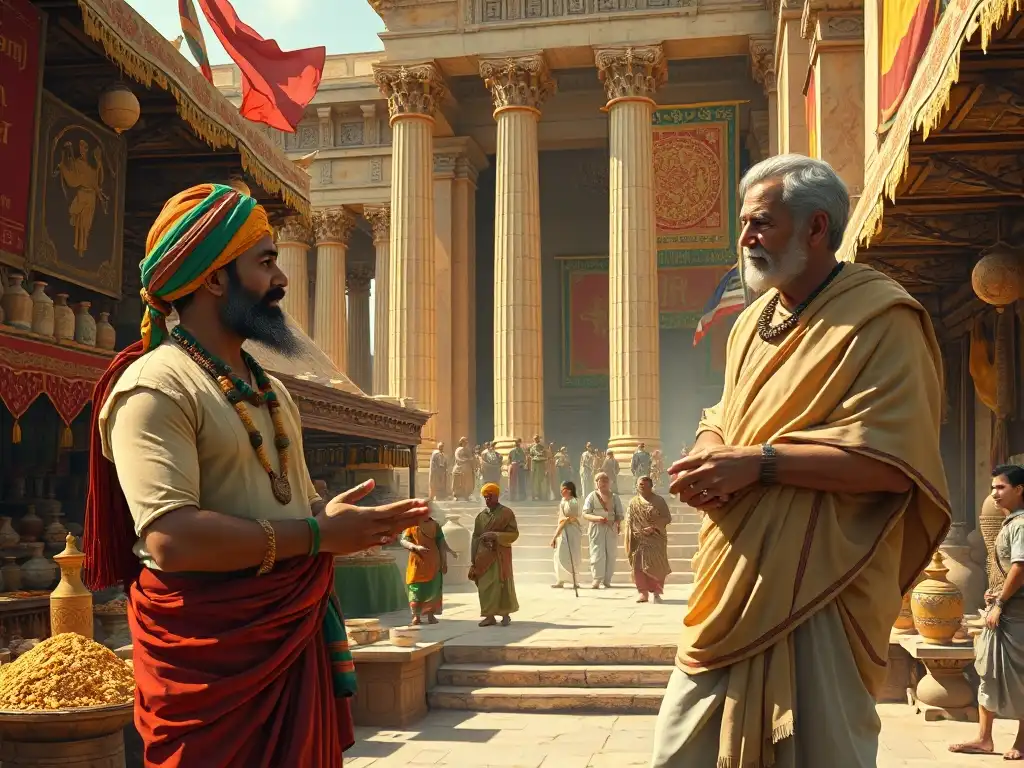
The cultural exchange between the Maurya Empire and Hellenistic Greece occurred through various mechanisms that facilitated the flow of ideas, goods, and people. This exchange was primarily driven by trade, diplomacy, and cultural interactions, which enriched both civilizations. The Maurya Empire, at its zenith, was known for its extensive trade networks and diplomatic ties that extended beyond the Indian subcontinent, reaching far into the territories influenced by Hellenistic culture.
Trade Routes and Economic Interactions
Trade routes were the backbone of the economic interaction between the Maurya Empire and Greece. The well-established Silk Road, along with maritime routes across the Indian Ocean, enabled merchants from both regions to exchange goods such as spices, textiles, and precious stones.
- Goods Exchanged:
- From India to Greece: Spices, silk, and gemstones
- From Greece to India: Olive oil, wine, and metalwork
The flourishing trade not only stimulated economic growth but also acted as a conduit for cultural ideas and practices. Greek merchants and traders, attracted by the wealth of the Maurya Empire, brought with them not just their goods but also their customs and traditions, leading to a fascinating blend of cultures.
Diplomatic Relations: Envoys and Alliances
Diplomatic relations played a crucial role in fostering cultural exchange. The Maurya Empire, under the reign of Chandragupta Maurya, sought alliances with various Hellenistic states, particularly after the conquests of Alexander the Great.
- Notable Envoys:
- Megasthenes: The Greek ambassador to the Maurya court, who provided detailed accounts of Mauryan society, governance, and culture in his work, "Indica."
- Diplomatic Missions: These missions facilitated not only political alliances but also cultural dialogues that introduced Greek administrative practices and philosophies to the Mauryan political system.
These diplomatic ties resulted in a mutual interest in understanding each other's cultures, leading to shared festivals, traditions, and governmental practices that were influenced by both civilizations.
Cultural Interactions: Art, Religion, and Philosophy
Cultural interactions between the Maurya Empire and Greece were not limited to trade and diplomacy; they extended into art, religion, and philosophy as well. The contact between these two cultures encouraged the fusion of artistic styles and religious beliefs.
- Art: The blending of Hellenistic artistic techniques with Indian styles led to unique forms of sculpture, particularly in the representation of the human figure and naturalism.
- Religion: The spread of Buddhism and its adoption by Greek rulers contributed to a shared spiritual dialogue. Greek influences can be seen in the representation of Buddhist icons and symbols.
- Philosophy: Greek philosophical thoughts, particularly Stoicism, began to permeate Indian philosophical discourse, leading to enriched philosophical inquiries and discussions.
This vibrant cultural interchange significantly shaped the intellectual landscape of the Maurya Empire, creating a rich tapestry of ideas and artistic expressions.
Key Areas of Cultural Exchange
Influence of Hellenistic Art on Maurya Sculpture
Hellenistic art made a profound impact on Maurya sculpture, particularly in the representation of figures and themes. The emphasis on naturalism, movement, and emotional expression characteristic of Hellenistic art found its way into Mauryan artistic practices.
- Sculptural Techniques: Mauryan artisans began to adopt techniques such as contrapposto and detailed drapery, enhancing the realism of their sculptures.
- Iconography: The introduction of Greek themes and motifs into Buddhist iconography resulted in hybrid forms, exemplified in the sculptures found at sites like Sanchi and Taxila.
This artistic convergence not only enriched Mauryan art but also provided a lasting legacy that influenced subsequent Indian art forms for centuries.
The Spread of Greek Philosophy in the Maurya Empire
Greek philosophy, particularly the teachings of the Stoics and Epicureans, began to resonate within the intellectual circles of the Maurya Empire. This exchange was largely facilitated by interactions between Greek philosophers and Indian scholars.
- Philosophical Dialogues: Greek philosophical texts were translated and discussed among Indian scholars, leading to unique interpretations of concepts such as ethics, logic, and metaphysics.
- Influence on Indian Thought: The ideas of individualism and civic responsibility from Greek philosophy found parallels in Indian philosophies, particularly in Buddhism and Jainism, promoting a rich discourse on morality and ethics.
This philosophical exchange laid the groundwork for a broader understanding of human experience within both cultures.
Exchange of Scientific Knowledge and Innovations
The cultural exchange between the Maurya Empire and Greece also encompassed the sharing of scientific knowledge and innovations, which had lasting implications for both societies.
- Astronomy and Mathematics: Greek advances in astronomy and mathematics influenced Indian scholars, who integrated these concepts into their own systems, leading to significant developments in calculations and celestial observations.
- Medicine: The exchange of medical knowledge, particularly through texts and practices, contributed to the evolution of Ayurvedic medicine, incorporating Greek medicinal principles and practices.
- Technology: Innovations in engineering and architecture, such as advanced building techniques and urban planning concepts, were shared between the two civilizations, leading to more sophisticated urban environments in the Maurya Empire.
This continuous flow of knowledge fostered a spirit of inquiry and innovation, allowing both cultures to evolve and adapt in response to each other's advancements.
Impact of Cultural Exchange on Both Civilizations
The cultural exchange between the Maurya Empire and Hellenistic Greece was a significant phenomenon that shaped both civilizations profoundly. This interaction led to the blending of ideas, philosophies, and practices, fostering a rich tapestry of cultural understanding. The exchange was not merely one-sided; rather, it involved reciprocal influences that transformed various aspects of life, from political structures to art and philosophy.
One of the most notable impacts was in the realm of trade and commerce, which flourished due to improved relationships. The Maurya Empire, known for its extensive trade networks, benefitted from the introduction of Greek goods, including textiles and metalwork, while the Greeks gained access to Indian spices, textiles, and precious stones. This economic interdependence facilitated the movement of people and ideas, leading to a more interconnected world.
Moreover, philosophical exchanges enriched both cultures. While the Greeks were introduced to Indian thought, particularly Buddhism and Jainism, Indian scholars and travelers were exposed to Hellenistic philosophies, such as Stoicism and Epicureanism. This intellectual cross-pollination encouraged the development of new schools of thought and contributed to the evolution of ethical and philosophical discourse in both empires.
Transformation of Mauryan Society and Culture
The Maurya Empire underwent significant transformations as a result of cultural exchanges with Hellenistic Greece. One notable influence was the introduction of new administrative concepts and governance practices. The Greeks brought different perspectives on statecraft, which inspired Mauryan rulers to adopt more systematic approaches to administration, taxation, and law enforcement.
Art and architecture also saw substantial changes. The fusion of Greek styles with indigenous Indian techniques led to the emergence of a unique artistic expression. Structures such as stupas and pillars began to incorporate Hellenistic elements, evidenced by the use of intricate relief sculptures and the depiction of human figures, which were less prevalent in traditional Indian art.
Religious practices were also subtly transformed. The interaction with Greek philosophies prompted some Mauryan thinkers to explore syncretic approaches to spirituality, blending elements of Buddhism and Hellenistic thought. This synthesis enriched the cultural landscape of the Maurya Empire, making it a more diverse and vibrant society.
Influence on Greek Understanding of Indian Culture
The Hellenistic world’s perspective on India was significantly shaped by the cultural exchanges with the Maurya Empire. Greek writers and historians, such as Megasthenes, who served as an ambassador in the Maurya court, provided detailed accounts of Indian society, governance, and culture. His work, "Indica," offered insights into the sophisticated political systems and the moral philosophy that underpinned Mauryan rule.
Greek philosophers and scholars began to appreciate the complexities of Indian religions and philosophies. The introduction of concepts like karma and dharma sparked interest among Greek thinkers, who compared these ideas with their own philosophical frameworks. This led to a more nuanced understanding of Indian culture in the Greek world, moving beyond mere stereotypes of exoticism.
Furthermore, Greek art and literature began to reflect influences from Indian themes and motifs, showcasing a growing fascination with the subcontinent. This cultural curiosity laid the groundwork for future interactions and a lasting legacy of mutual respect between the two civilizations.
Case Study: The Role of Chandragupta Maurya and Alexander the Great
The encounters between Chandragupta Maurya and Alexander the Great epitomize the cultural exchange between the Maurya Empire and Hellenistic Greece. Their interactions were pivotal in shaping the historical trajectory of both cultures.
Chandragupta’s Encounter with Hellenistic Culture
Chandragupta Maurya’s rise to power coincided with Alexander's campaigns in the northwest regions of India. The Mauryan leader seized the opportunity to observe Greek military tactics and governance styles. His engagement with Hellenistic culture was not merely military; it also encompassed philosophical and administrative learning.
After Alexander’s retreat, Chandragupta established a vast empire that adopted certain Greek administrative practices. He utilized Hellenistic ideas of statecraft to consolidate power, which included the incorporation of various regional leaders into his governance model, reflecting a more inclusive approach than previously seen in Indian states.
Alexander's Influence on Indian Political Structures
Alexander the Great’s brief incursion into India had lasting effects on the political landscape of the region. His campaigns introduced concepts of centralized governance and military organization that resonated with Indian rulers, including Chandragupta. The exposure to Greek military strategies and tactics prompted a reevaluation of local practices, leading to innovations in warfare and administration.
Additionally, Alexander’s establishment of Greek settlements in the regions he conquered contributed to the dissemination of Hellenistic culture, influencing local traditions and political structures. The presence of these communities strengthened trade routes and facilitated ongoing cultural exchanges, further intertwining the destinies of the Maurya Empire and Hellenistic Greece.
Overall, the cultural exchange between the Maurya Empire and Hellenistic Greece was a dynamic process that enriched both civilizations, laying the groundwork for future interactions and mutual influences.
Conclusion: Legacy of Cultural Exchange Between the Maurya Empire and Hellenistic Greece
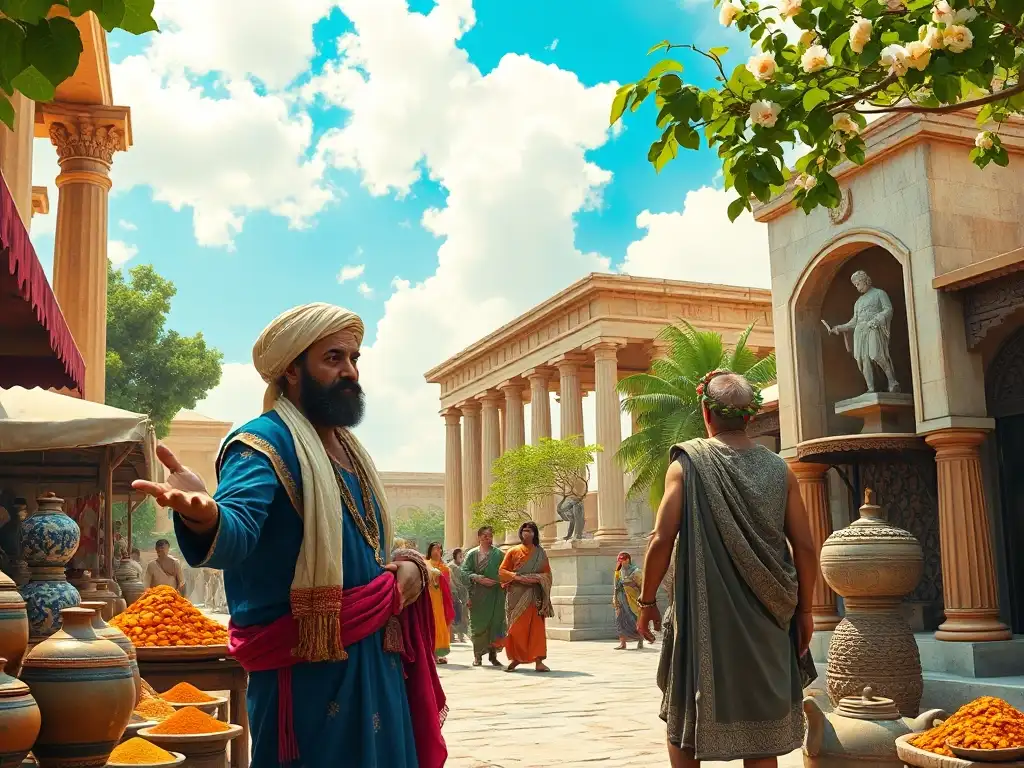
The cultural exchange between the Maurya Empire and Hellenistic Greece marked a significant chapter in ancient history, characterized by a blend of philosophical thought, artistic expression, and economic trade. This interaction was not merely a one-way influence; it involved mutual respect and curiosity that allowed both civilizations to evolve. As the Maurya Empire expanded, particularly under the leadership of Ashoka, it facilitated the dissemination of Indian culture, including Buddhism, which found resonance in Hellenistic society.
Moreover, the introduction of Greek art styles into Indian sculpture and architecture showcased how the Maurya leaders embraced foreign influences while maintaining their unique cultural identity. This legacy is evident in the intricate carvings of the Sanchi Stupa and the depiction of divine figures that reflect a fusion of Indian and Hellenistic artistic elements.
Lasting Effects on Future Indian Civilizations
The lasting effects of this cultural exchange can be seen in subsequent Indian civilizations, where the blend of ideas contributed to the rich tapestry of Indian culture. The philosophical dialogues initiated during this period influenced schools of thought like Buddhism and Jainism, which further evolved through interactions with various cultures in Asia.
Additionally, the adoption of Hellenistic artistic techniques in later Indian dynasties, such as the Gupta Empire, led to a flourishing of art and architecture. The advancements in science, mathematics, and astronomy were also propelled by this exchange, paving the way for India's contributions to the global knowledge base in these fields.
Reflection on Cross-Cultural Interactions in Ancient History
Reflecting on the cross-cultural interactions between the Maurya Empire and Hellenistic Greece reminds us of the importance of dialogue between civilizations. Such exchanges fostered an environment of learning and innovation, illustrating that cultural boundaries can be transcended through curiosity and appreciation for diversity.
This historical precedent highlights the potential for contemporary societies to engage in similar exchanges, learning from one another in a globalized world. The Maurya-Greece interaction serves as an enduring reminder of how cultural exchange can lead to mutual enrichment and understanding, elements that are crucial in today’s interconnected society.
References and Further Reading on Cultural Exchange Between the Maurya Empire and Greece
Suggested Books and Articles
- "India and the Hellenistic World" by J. W. McCrindle – This book provides an in-depth analysis of the interactions between India and Hellenistic cultures.
- "The Maurya Empire: A Historical Overview" by R. S. Sharma: – A comprehensive examination of the Maurya Empire's political, social, and cultural aspects.
- "Cultural Crossroads: The Exchange of Ideas Between India and Greece" by M. K. Dutta: – This article explores specific instances of cultural exchange in art, philosophy, and trade.
Online Resources for Further Exploration
- The Metropolitan Museum of Art: An online collection featuring artifacts from the Maurya Empire and Hellenistic Greece, offering insights into their artistic interplay.
- BBC History: Ancient India: This resource includes articles and timelines that detail the Maurya Empire's history and its interactions with neighboring cultures.
- Stanford Encyclopedia of Philosophy: Contains entries on Indian philosophy and its connections to Hellenistic thought, providing a philosophical context to the cultural exchanges.
- Introduction to Cultural Exchange Between the Maurya Empire and Greece
- Overview of the Maurya Empire and Its Significance
- Introduction to Hellenistic Greece and Its Influence
- Historical Context of the Maurya Empire and Hellenistic Greece
- Mechanisms of Cultural Exchange Between the Maurya Empire and Greece
- Key Areas of Cultural Exchange
- Impact of Cultural Exchange on Both Civilizations
- Case Study: The Role of Chandragupta Maurya and Alexander the Great
- Conclusion: Legacy of Cultural Exchange Between the Maurya Empire and Hellenistic Greece
- Lasting Effects on Future Indian Civilizations
- Reflection on Cross-Cultural Interactions in Ancient History
- References and Further Reading on Cultural Exchange Between the Maurya Empire and Greece
- What was the significance of cultural exchange between the Maurya Empire and Hellenistic Greece?
- How did the Maurya Empire influence Greek culture?
- What were some key contributions of the Maurya Empire to the cultural exchange?
- How did Greek philosophers view Indian culture during this exchange?
- What impact did this cultural exchange have on future civilizations?
Frequently Asked Questions
What was the significance of cultural exchange between the Maurya Empire and Hellenistic Greece?
The cultural exchange between the Maurya Empire and Hellenistic Greece facilitated the spread of ideas, art, and technology, enriching both civilizations and fostering a mutual appreciation for diverse cultures.
How did the Maurya Empire influence Greek culture?
The Maurya Empire introduced Indian philosophies, art styles, and trade practices to Greece, which in turn influenced Greek thought and aesthetics, creating a synthesis of ideas between the two cultures.
What were some key contributions of the Maurya Empire to the cultural exchange?
Key contributions included advancements in astronomy, mathematics, and art, notably through the establishment of trade routes that enabled the exchange of goods and intellectual ideas between the two civilizations.
How did Greek philosophers view Indian culture during this exchange?
Greek philosophers expressed curiosity and admiration for Indian culture, often highlighting its spiritual depth and scientific knowledge, which added a new dimension to the Hellenistic worldview.
What impact did this cultural exchange have on future civilizations?
The cultural exchange laid the groundwork for future interactions between the East and West, influencing religions, philosophies, and trade, and contributing significantly to the global heritage.
Final Reflection: The Enduring Legacy of Cultural Exchange Between the Maurya Empire and Hellenistic Greece
The cultural exchange between the Maurya Empire and Hellenistic Greece is not just a historical footnote; it is a testament to the power of collaboration and understanding across diverse civilizations. In our increasingly interconnected world, the lessons drawn from this ancient interaction remind us of the importance of dialogue and mutual respect in fostering progress and innovation. The shared philosophies, art, and trade between these two great cultures illustrate how openness can lead to profound advancements that transcend borders and time.
Cultural exchange has always been a catalyst for growth and transformation. The influences of Mauryan thought on Hellenistic philosophy and vice versa have shaped not only the societies of their time but have also left a lasting imprint on the cultural fabric of the modern world. As we navigate our own complex global landscape, we can draw inspiration from this historical narrative. The greatest gift of the past is the ability to learn from it.
This quote encapsulates the essence of how we can harness the wisdom of history to inform our present and future interactions.
As we reflect on the themes of this article, I invite you to consider how you can embody the spirit of cultural exchange in your own life. Seek out opportunities to engage with diverse perspectives, challenge your assumptions, and embrace the richness that comes from collaboration. By doing so, you not only honor the legacy of the Maurya Empire and Hellenistic Greece but also contribute to a more harmonious and enlightened world. Let us take these lessons to heart and strive to build bridges of understanding in our own communities.
Ignite Your Curiosity and Explore Cultural Connections!
Thank you for immersing yourself in the fascinating exploration of the cultural exchange between the Maurya Empire and Hellenistic Greece! You’ve uncovered the profound impacts these two great civilizations had on each other, shedding light on our shared histories. Now, let’s take the next step in your journey of discovery.
Here are a few actionable ways you can deepen your understanding:
- Dive Deeper: Explore the artistic and philosophical influences that traveled between these cultures by checking out our related articles.
- Join the Conversation: Engage with others on how cultural exchanges shape societies today in our community discussion forum.
- Explore Resources: Visit local museums or online galleries that showcase artifacts from the Maurya and Hellenistic periods to experience history firsthand!
What cultural exchange has most inspired you in your own life, and how do you envision it shaping our future?