
The Gupta Period's Influence on Navigation: How Ancient India Contributed to Maritime Science

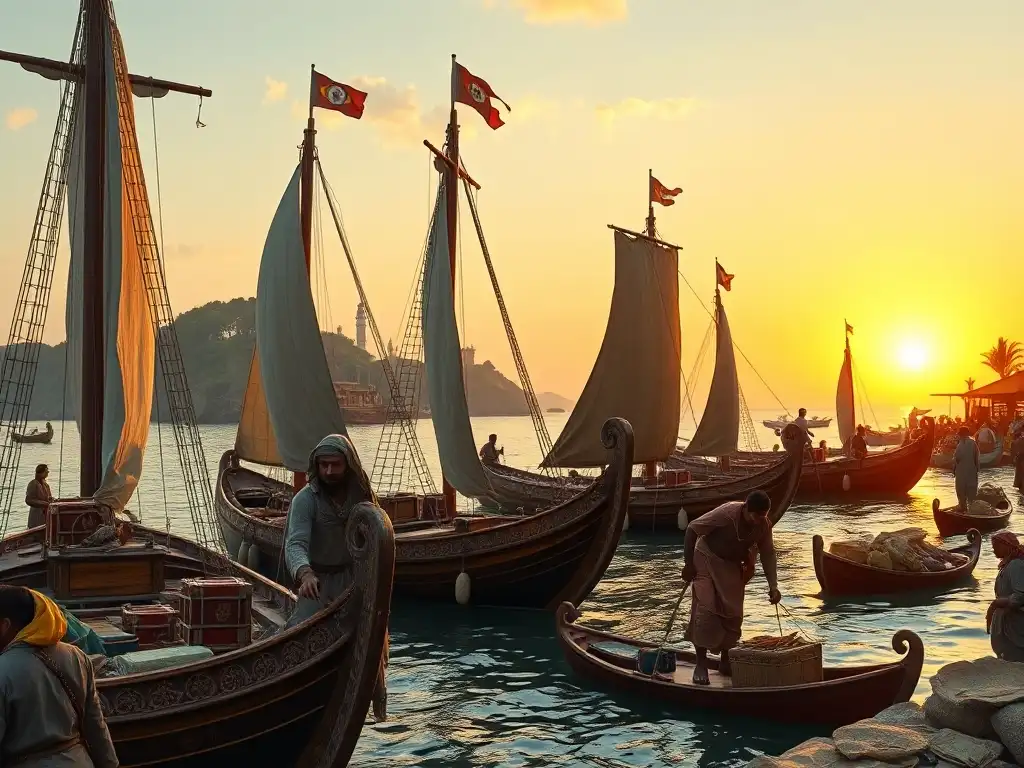
Welcome to Ancient India History, where we embark on a journey through the vibrant tapestry of India's past! Here, we delve deep into the remarkable contributions of ancient Indian civilizations, exploring their profound impact on the world. In our featured article, “The Gupta Period's Influence on Navigation: How Ancient India Contributed to Maritime Science,” we unveil the fascinating advancements in maritime science during the Gupta Empire.
Prepare to be captivated by the ingenuity and expertise that shaped navigation in ancient times, and discover how these innovations continue to resonate in our world today. Dive in and let the exploration begin!

Introduction to Ancient India's Maritime Science Contributions
The legacy of ancient Indian civilizations is rich and multifaceted, particularly in the realm of science and mathematics. Among these, maritime science stands out as a crucial area where ancient India made significant advancements. During the Gupta period (approximately 320 to 550 CE), India emerged as a hub for trade, exploration, and navigation, harnessing the vast resources of its coastal regions.
This era witnessed remarkable contributions to maritime knowledge, which not only facilitated extensive trade networks across the Indian Ocean but also influenced naval practices in other cultures. Understanding the contributions of ancient India to maritime science is essential for appreciating the intricate tapestry of global navigation history.
The Gupta period is often referred to as the "Golden Age" of India, characterized by remarkable achievements in various fields including art, literature, and science. One of the pivotal aspects of this era was the flourishing of maritime activities. The Gupta Empire played a vital role in enhancing navigation techniques and maritime trade through several key developments:
- Advancements in Navigation Techniques: The Guptas innovated navigational tools and methods, including the use of the astrolabe and compasses, which allowed sailors to traverse vast oceans with greater accuracy.
- Trade Routes and Economic Expansion: The empire established extensive trade networks that connected India with Southeast Asia, the Middle East, and beyond. This not only stimulated economic growth but also led to cultural exchanges that enriched maritime practices.
- Influence on Maritime Science: Scholars and mathematicians from the Gupta period contributed to the understanding of tides, winds, and celestial navigation, laying the groundwork for future advancements in maritime science.
The influence of the Gupta Empire on navigation remains a significant chapter in the history of ancient India's contributions to maritime science. Their innovations not only propelled trade and exploration during their time but also set precedents that would shape maritime practices in the centuries to follow.
- Introduction to Ancient India's Maritime Science Contributions
- Overview of the Gupta Period and Its Significance in Maritime Navigation
- What were the major advancements in maritime science during the Gupta Period?
- How did ancient Indian civilizations influence navigation?
- What role did the Indus Valley Civilization play in maritime activities?
- Can you explain the significance of trade routes established during the Gupta Period?
- What are some key texts or manuscripts that highlight ancient India's contributions to maritime science?
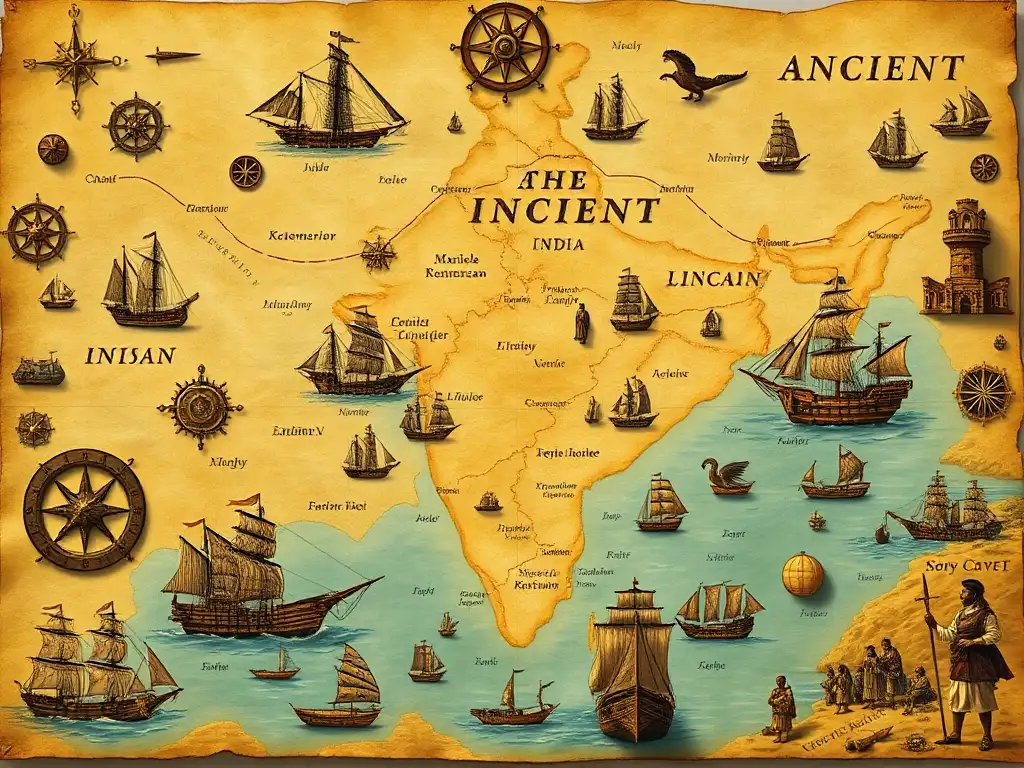
During the early phases of Indian civilization, notably around the time of the Indus Valley Civilization, maritime activities were already taking shape. The advancements in navigation and maritime trade were significantly influenced by the geographical positioning of the Indian subcontinent, which is flanked by the Arabian Sea to the west and the Bay of Bengal to the east. This strategic location facilitated trade not only within the Indian subcontinent but also with distant lands, including Africa and Southeast Asia.
The Gupta Empire, flourishing from approximately 320 to 550 CE, marked a pivotal point in the history of navigation. The Gupta rulers promoted trade and commerce, leading to the establishment of a robust maritime network. This period saw an increase in the understanding of navigation techniques, shipbuilding, and the utilization of maritime resources. The blending of local knowledge with influences from other cultures resulted in significant advancements in maritime science.
The contributions of ancient Indian civilizations to maritime navigation are often overlooked, yet they played a crucial role in shaping maritime practices in the Indian Ocean. Techniques such as celestial navigation and the use of monsoon winds were refined during this time, enabling sailors to traverse vast distances with greater efficacy.
The Role of Ancient Indian Civilizations in Maritime Trade
Ancient India was not merely a land of inland commerce; its maritime trade routes were critical to its economy and cultural exchanges. The Gupta period saw a flourishing trade network that connected India with regions such as the Middle East, Africa, and Southeast Asia.
- Trade Goods: Indian merchants traded an array of goods, including textiles, spices, precious stones, and metals. The demand for these products in international markets propelled advancements in maritime navigation.
- Shipbuilding Innovations: The Gupta Empire witnessed technological improvements in shipbuilding. Ships were constructed with sturdier materials and designed for both cargo transport and passenger travel. The introduction of larger vessels allowed for the transport of bulk goods, which was a significant advancement in maritime logistics.
- Cultural Exchanges: The maritime trade routes established during this period facilitated not only economic transactions but also cultural exchanges. Ideas, religions, and technologies spread across regions, enriching the civilizations involved. The influence of Indian mathematics and astronomy on maritime navigation is a prime example of this exchange.
- Navigation Techniques: Ancient Indian navigators developed sophisticated methods for determining their position at sea. The use of the stars for navigation, along with knowledge of ocean currents and tides, allowed sailors to travel more confidently and effectively.
Key Maritime Routes Established During the Gupta Period
The Gupta period was characterized by the establishment of several critical maritime routes that significantly enhanced trade and cultural interaction.
| Route | Description | Key Ports |
|---|---|---|
| Western Route | Connected India to the Arabian Peninsula and beyond. | Bharukaccha (modern Bharuch), Sopara |
| Eastern Route | Linked India to Southeast Asia, facilitating trade with China and the Malay Archipelago. | Tamralipti (modern Tamluk), Puhar |
| Southern Route | Enabled maritime trade with Sri Lanka and further south to Madagascar. | Kaveripattinam (modern Kaveripattinam), Nagapattinam |
- Western Route: This route was vital for trade with regions across the Arabian Sea. Goods such as textiles and spices were exported, while imports included gold and silver.
- Eastern Route: The eastern maritime route facilitated trade with Southeast Asia, where Indian spices and textiles were exchanged for local products and precious stones.
- Southern Route: This route connected India with Sri Lanka and further down to the islands of the Indian Ocean. The trade here was not only about goods but also about the spread of Indian culture and religion.
The Gupta period was a significant era for the development of ancient India's maritime science contributions. From establishing strategic trade routes to innovating navigational techniques, ancient Indian civilizations laid the groundwork for maritime practices that would influence future generations. The legacy of these advancements continues to be recognized today, showcasing the depth of ancient India's contributions to the world of navigation and maritime science.
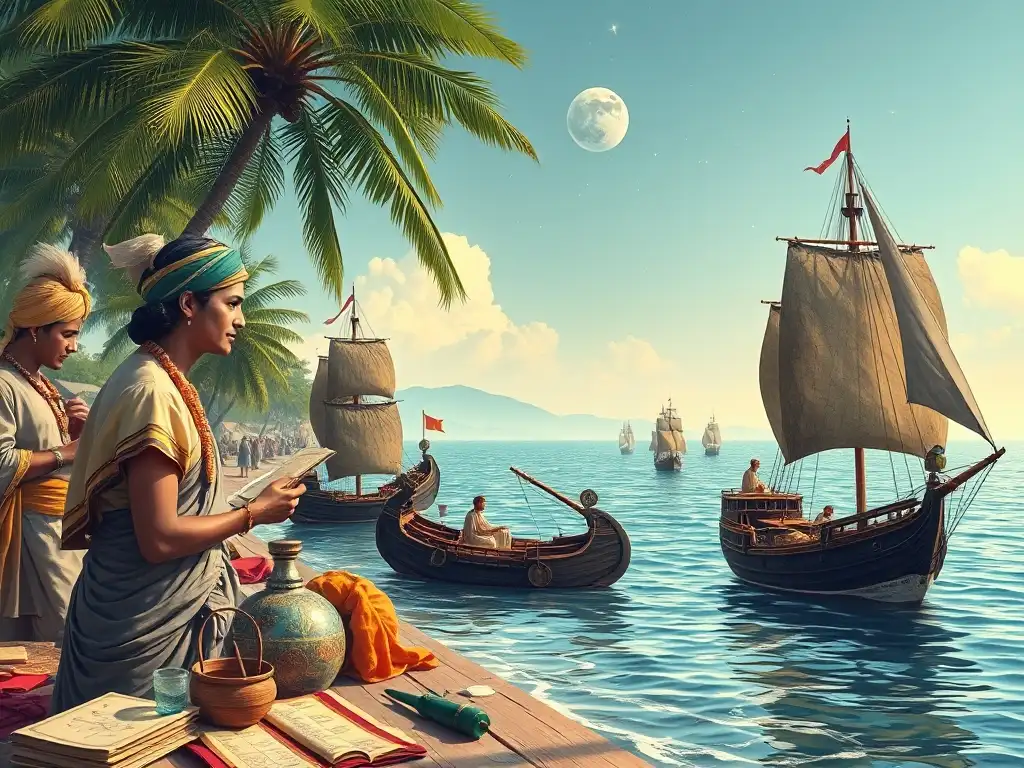
The Gupta Period, often referred to as a golden age in ancient Indian history, was marked by significant advancements in various fields, including navigation. During this time, Indian scholars and navigators made notable contributions to maritime science, which not only facilitated trade across the Indian Ocean but also influenced navigation techniques that would be utilized in later centuries.
One of the remarkable innovations of ancient India's maritime science contributions was the development of various navigational instruments. These tools were essential for guiding ships through vast and often treacherous waters. Among the notable instruments were:
- Chakra (Wheel): This device helped in determining the direction of the wind and was an early form of a compass. Its design was based on the principles of magnetism, allowing navigators to orient themselves even without visible landmarks.
- Gnomon: An ancient tool used to determine local noon by measuring the shadow cast by the sun. This instrument was crucial for understanding time and direction, especially when sailing far from land.
- Astrolabe: While its origins trace back to the Greeks, the astrolabe saw significant refinement in ancient India. Indian mariners utilized it to measure the altitude of celestial bodies, aiding them in determining their latitude while at sea.
- Sundials: These devices helped sailors keep track of time during daylight hours, which was essential for navigation and scheduling voyages.
These instruments exemplified the sophisticated understanding of geometry and astronomy that existed during the Gupta Period. Scholars like Aryabhata and Varahamihira made substantial contributions to the mathematical principles that underpinned these innovations, marking a pivotal advancement in navigation.
Celestial navigation, the practice of using stars and other celestial bodies to determine one’s position at sea, was a crucial aspect of ancient Indian maritime practices. Indian navigators were adept at reading the night sky, employing various stars for guidance.
- Polaris (North Star): This star was vital for navigation as it remained relatively fixed in the sky. Sailors used it to determine true north, which was essential for plotting their courses.
- Constellations: Specific constellations were also used as reference points. For instance, the Saptarishi, or Big Dipper, was recognized by mariners and served as a guide for navigation.
- Lunar Phases: The phases of the moon were monitored to assist in timing voyages, as certain phases indicated optimal conditions for sailing.
Ancient Indian navigators not only relied on these celestial bodies but also combined their observations with practical experiences gained from numerous voyages. This blend of empirical knowledge and astronomical observation reflects the advanced state of ancient India's maritime science contributions.
The Gupta Period was pivotal in advancing navigational techniques and tools, laying the groundwork for future maritime exploration. The innovations in navigational instruments and the skilled use of celestial navigation highlight the significant contributions of ancient India to the field of maritime science.
Contributions of Indian Scholars to Maritime Science
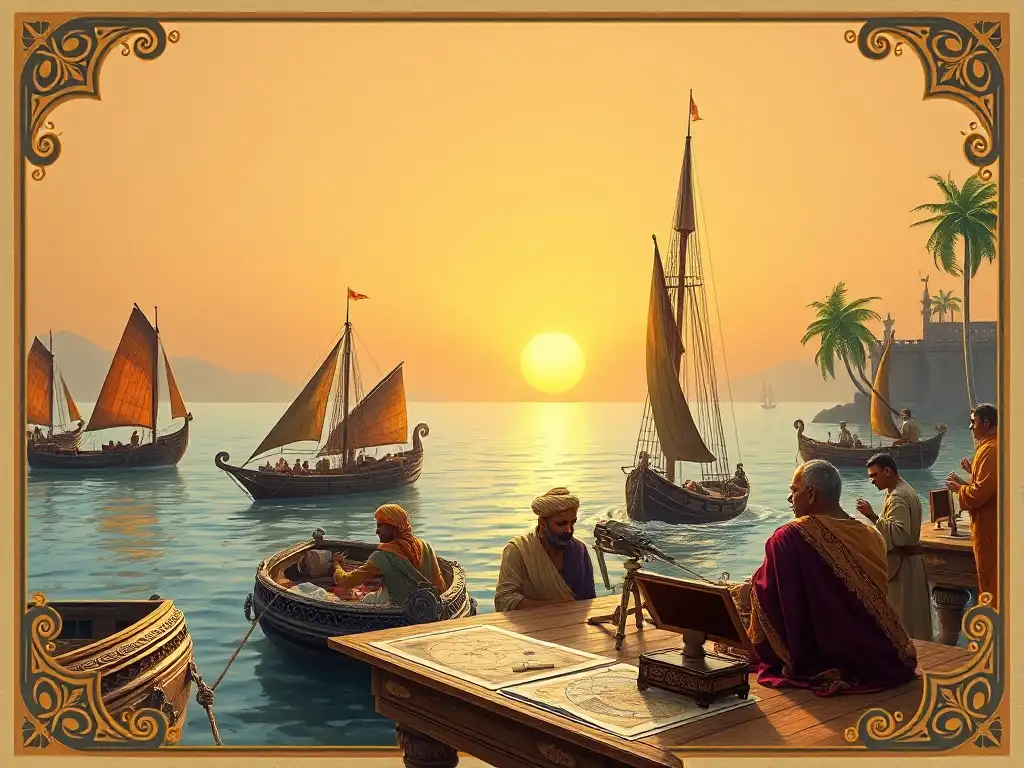
The contributions of Indian scholars to maritime science during the Gupta period were significant and multifaceted. This era, often referred to as a golden age for ancient Indian science and mathematics, saw advancements that had a profound impact on navigation techniques and maritime trade. The integration of mathematics with practical navigation methods allowed for more precise and effective sea travel, which in turn facilitated trade and cultural exchanges across vast distances.
Several renowned scholars emerged during the Gupta period, whose works laid the foundation for advancements in maritime science. Among them, Aryabhata, Varahamihira, and Brahmagupta are particularly notable.
- Aryabhata (476–550 CE):
- Known for his seminal work, the Aryabhatiya, Aryabhata introduced concepts such as the calculation of the circumference of the Earth and the use of sine tables. His work provided navigators with essential mathematical tools for understanding celestial movements, which was crucial for navigation.
- Varahamihira (505–587 CE):
- A prominent astronomer and mathematician, Varahamihira authored the Brihat Samhita, which encompassed various topics including astrology, meteorology, and navigation. He emphasized the importance of celestial observations for determining geographical directions and timings of voyages.
- Brahmagupta (598–668 CE):
- Brahmagupta's Brahmasphutasiddhanta introduced rules for arithmetic and algebra that were essential for navigation calculations. His work included methods for calculating distances and times based on the positions of celestial bodies, providing navigators with practical techniques for sea travel.
These scholars not only contributed theoretical knowledge but also practical applications that enhanced the efficiency and safety of maritime navigation. Their works reflected a deep understanding of both mathematics and astronomy, intertwined with the necessities of navigation.
Indian mathematicians developed sophisticated mathematical techniques that significantly influenced navigation. The following aspects highlight how their contributions shaped maritime practices:
- Trigonometry:
- Indian scholars advanced the study of trigonometric functions, particularly sine and cosine. These functions were crucial for calculating angles and distances at sea, enabling navigators to chart courses more accurately.
- Celestial Navigation:
- The understanding of celestial bodies was fundamental for navigation. Indian astronomers developed tables that allowed navigators to predict the positions of stars and planets, essential for determining latitude and longitude while at sea.
- Use of the Compass:
- While the magnetic compass was not invented in ancient India, Indian navigators utilized the principles of geomagnetism, understanding how to orient themselves using the natural magnetic fields. This knowledge complemented their mathematical skills, enhancing their navigation techniques.
- Mapping and Cartography:
- Indian scholars employed geometry to create maps that depicted coastal regions and maritime routes. This practice was vital for traders and travelers who navigated complex coastal waters, ensuring safer voyages.
The amalgamation of these mathematical principles with navigation practices established a robust framework for maritime science in ancient India. The innovations from this period not only influenced local practices but also set the stage for future advancements in navigation across other cultures.
The Gupta period marked a significant chapter in ancient India's maritime science contributions, driven by the intellectual rigor of its scholars. Through their groundbreaking work, they not only advanced maritime navigation but also contributed to the broader understanding of science and mathematics that would resonate through the ages.
Cultural Exchange and Its Impact on Maritime Knowledge
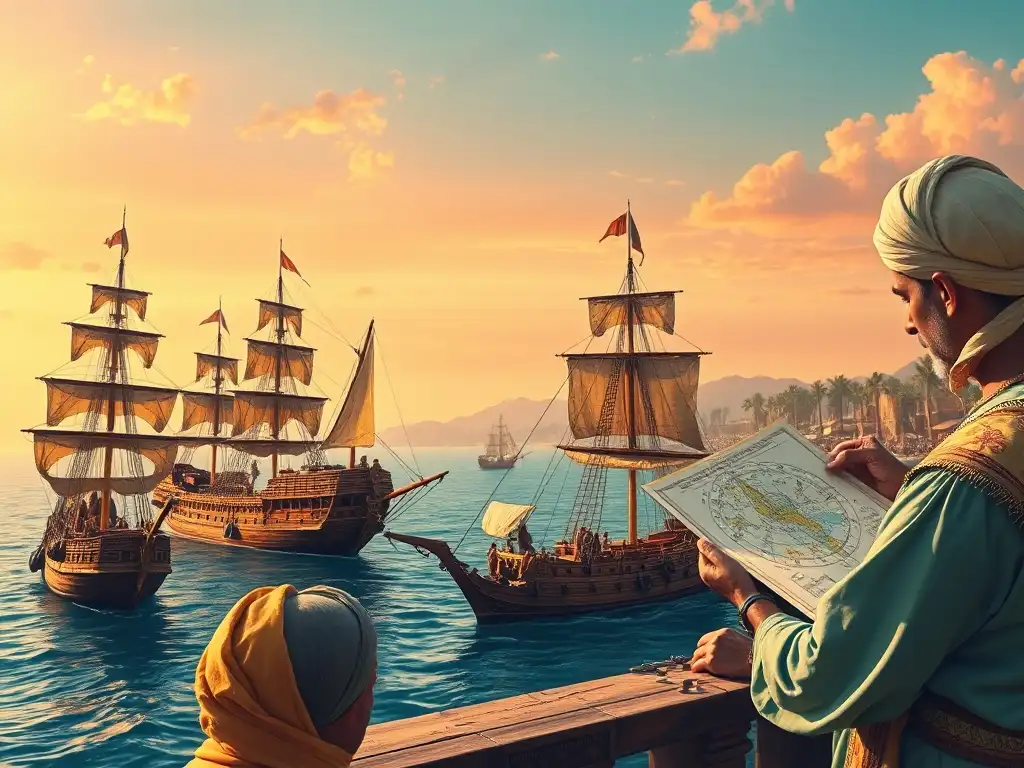
Cultural exchange during the Gupta Period played a pivotal role in the advancement of maritime knowledge and navigation techniques in ancient India. The Gupta Empire, flourishing from approximately 320 to 550 CE, was marked by significant trade relations with various civilizations, including those in Southeast Asia, the Middle East, and even parts of Africa. This interaction facilitated the exchange of not only goods but also ideas and technologies, which enriched the maritime practices of ancient Indian sailors and traders.
Trade Relations with Other Civilizations
Trade relations were the backbone of cultural exchange during the Gupta Period, with Indian merchants actively engaging in maritime trade across the Indian Ocean and beyond. Key trade routes connected Indian ports like Calicut, Cochin, and Cambay with regions such as:
- Southeast Asia: Indian traders exchanged spices, textiles, and precious stones for local products like gold and ivory. The establishment of trading posts in modern-day Indonesia and Malaysia led to the integration of Indian navigational techniques with local practices.
- Middle East: The trade of luxury goods, including silk and gems, enhanced relationships with Persian and Arabian traders, who contributed their own navigational insights and maritime technology.
- Africa: Trade with the East African coast resulted in the exchange of materials like ebony and ivory, further expanding the maritime horizons of Indian merchants.
Table 1: Key Trade Routes During the Gupta Period
| Region | Main Ports | Goods Traded |
|---|---|---|
| Southeast Asia | Calicut, Cochin | Spices, textiles, gold, ivory |
| Middle East | Cambay | Silk, gems, perfumes |
| Africa | Malabar Coast | Ebony, ivory, exotic animals |
The flourishing trade not only boosted the economy but also led to the sharing of maritime techniques, such as the use of the astrolabe and compasses, which were pivotal for navigation.
The Transfer of Knowledge Between Cultures
The Gupta Empire was a melting pot of cultures, and this diversity significantly influenced the transfer of maritime knowledge. Scholars and sailors exchanged information regarding:
- Navigation Techniques: The Indian method of using the stars for navigation was enriched by the contributions from Arab and Persian navigators. This blending of practices improved the accuracy of sea travel.
- Shipbuilding Technologies: The interaction with foreign shipbuilders introduced new designs and materials, leading to the construction of sturdier vessels capable of long voyages.
- Cartography: Ancient Indian maps, influenced by Greek and Arabic knowledge, began to incorporate more detailed geographical features, which was crucial for maritime navigation.
Block Quote: The maritime science contributions of ancient India during the Gupta period were not solely the result of domestic innovations but were significantly enriched through robust cultural exchanges with other civilizations.
The Gupta Period's trade relations and cultural exchanges fostered a vibrant environment for the advancement of maritime science. The convergence of ideas, practices, and technologies from different cultures greatly enhanced ancient India's maritime capabilities, laying the groundwork for future exploration and trade initiatives.
The Legacy of Gupta Maritime Science Contributions
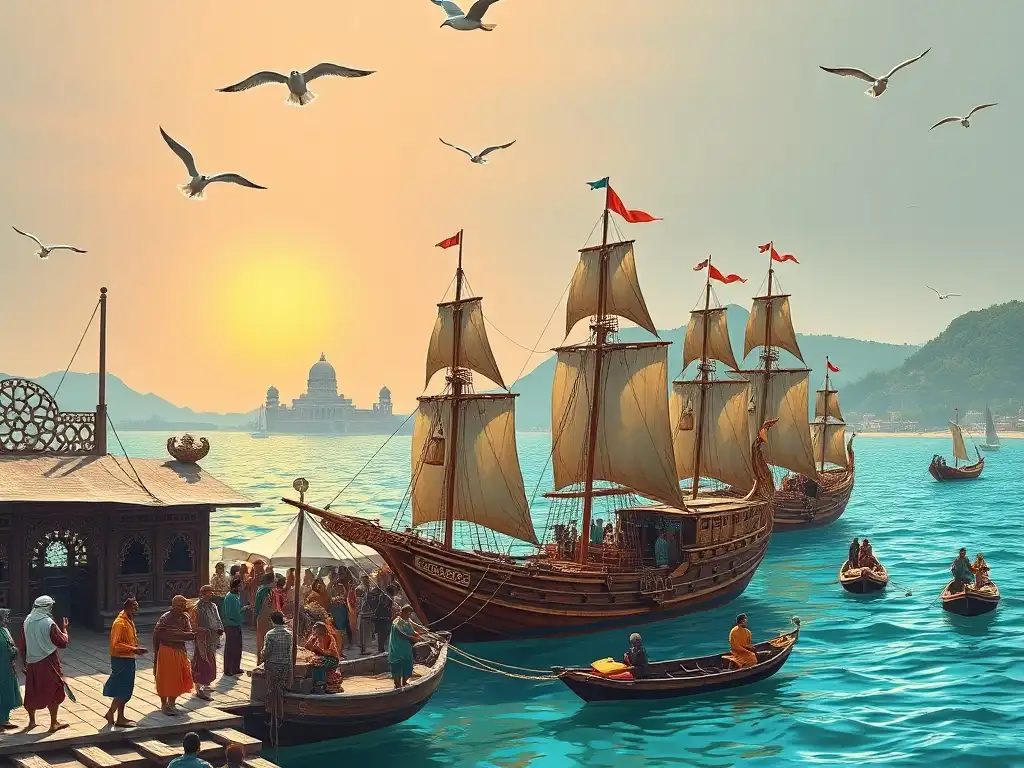
The Gupta Empire, flourishing from approximately 320 to 550 CE, marked a significant period of advancement in various fields, including navigation. The contributions of ancient India to maritime science during this era laid the groundwork for long-term effects on navigation practices both within India and across the seas.
- Development of Nautical Instruments:
- The Guptas refined existing navigational tools and introduced innovations such as the astrolabe, which allowed sailors to determine their latitude by measuring the position of stars.
- Compasses were also documented during this period, aiding in directional navigation, which was crucial for sea voyages.
- Maritime Trade Routes:
- The Gupta Empire established and enhanced extensive maritime trade routes, linking India with regions in Southeast Asia, the Middle East, and Africa.
- These routes facilitated not only the exchange of goods like spices, textiles, and precious stones but also the sharing of navigational knowledge and practices.
- Cultural Exchange:
- With the advent of more efficient navigation methods, there was an increase in cultural exchanges that influenced maritime practices.
- The blending of Indian and foreign navigational techniques led to more sophisticated maritime operations, impacting the development of shipbuilding and sea travel.
The advancements in maritime science during the Gupta period had profound implications for future explorations, both regionally and globally.
- Spread of Knowledge:
- Ancient Indian navigational techniques, such as the use of the stars for navigation and the understanding of ocean currents, were disseminated to other cultures through trade and exploration.
- This exchange of knowledge laid the foundation for the maritime practices of later civilizations, including those in the Arabian Peninsula and Southeast Asia.
- Impact on European Exploration:
- The navigational advancements from ancient India influenced European explorers during the Age of Discovery.
- Techniques derived from Indian maritime practices are believed to have contributed to the development of navigational methods that enabled explorers like Vasco da Gama to successfully navigate to India and beyond.
- Legacy in Maritime Studies:
- The Gupta period’s contributions to maritime science contributed to the establishment of maritime studies as an essential field of knowledge, influencing future generations of navigators and scholars.
- The integration of mathematics and astronomy into navigation paved the way for more accurate sea travel, which became crucial for global trade networks.
Conclusion: The Lasting Impact of the Gupta Period on Maritime Science
The Gupta period's contributions to maritime science represent a significant chapter in the history of ancient India's navigation practices. The advancements made during this era not only enhanced the efficiency of maritime trade but also established a legacy that would influence navigational techniques for centuries.
The long-term effects of Gupta maritime science contributions are evident in:
- The refinement of navigational instruments.
- The establishment of extensive trade routes.
- The cultural exchanges that enriched maritime knowledge.
As ancient India’s maritime science spread across the seas, it shaped future explorations, influencing explorers and navigators worldwide. The Gupta Empire's legacy continues to resonate today, underscoring the importance of ancient India's maritime science contributions in shaping global navigation practices.
Reflection on Ancient India's Maritime Science Contributions and Their Relevance Today
The contributions of ancient India to maritime science during the Gupta period are not only a testament to the advanced knowledge and skills of its scholars but also remain relevant in today’s context. The Gupta Empire, often referred to as a golden age of Indian civilization, saw significant advancements in various fields including astronomy, navigation, and shipbuilding. This legacy is reflected in the sophisticated understanding of maritime routes, seasonal winds, and celestial navigation methods employed by ancient Indian mariners.
One of the most notable contributions was the detailed knowledge of the monsoon winds, which allowed sailors to navigate the Indian Ocean with remarkable accuracy. This understanding of seasonal wind patterns facilitated trade with distant lands, making India a central hub in global maritime commerce. The importance of this knowledge cannot be overstated, as it laid the groundwork for future explorations and maritime activities that shaped trade networks across Asia, Africa, and beyond.
In contemporary times, the principles derived from ancient Indian maritime science continue to inform modern navigation practices. For instance, the understanding of wind patterns and ocean currents is crucial for contemporary maritime transport and fisheries management. The revival of interest in traditional navigation techniques, such as those practiced by the Polynesians and ancient Indian navigators, highlights the enduring significance of ancient wisdom in our quest for sustainable maritime practices.
Moreover, the Gupta period's advancements in shipbuilding, including the design of larger and more seaworthy vessels, have influenced modern ship engineering. The emphasis on robust construction and the use of local materials is echoed in current sustainable practices in shipbuilding. The blending of ancient techniques with modern technology can lead to innovations in maritime logistics and environmental conservation efforts.
Reflecting on ancient India's maritime science contributions reveals a rich tapestry of knowledge that not only propelled the Gupta Empire to greatness but also continues to resonate in today’s maritime endeavors. Understanding these historical contributions offers valuable insights into sustainable navigation practices and global maritime trade, emphasizing the importance of preserving ancient wisdom in the face of modern challenges.
Frequently Asked Questions
What were the major advancements in maritime science during the Gupta Period?
The Gupta Period saw significant advancements in navigation techniques and the development of maps, enhancing maritime trade and exploration.
Ancient Indian civilizations, particularly during the Gupta Empire, contributed to navigation by introducing the use of astronomy and geographical knowledge, which improved sea travel.
What role did the Indus Valley Civilization play in maritime activities?
The Indus Valley Civilization was known for its extensive trade networks and shipbuilding, laying the groundwork for future maritime practices in ancient India.
Can you explain the significance of trade routes established during the Gupta Period?
The trade routes established during the Gupta Period facilitated economic growth and cultural exchange, connecting India with Southeast Asia and beyond, showcasing ancient India's maritime prowess.
What are some key texts or manuscripts that highlight ancient India's contributions to maritime science?
Ancient texts such as the Aryabhatiya and Brahmagupta's works detail mathematical principles and astronomical observations that were essential for navigation and maritime activities.
Final Reflection: Embracing the Legacy of Ancient India's Maritime Science
The contributions of Ancient India to maritime science during the Gupta Period remain profoundly relevant today, as we navigate an increasingly interconnected world. The innovations in navigation, shipbuilding, and trade practices established by ancient Indian scholars not only laid the groundwork for future advancements but also serve as a reminder of the rich tapestry of knowledge that transcends borders and time. In an era where global trade and maritime exploration are more critical than ever, understanding these historical contributions can inspire modern practices and foster a deeper appreciation for our shared heritage.
The influence of Ancient India's maritime science is evident in the cultural and social landscapes of today, where the principles of navigation and trade continue to shape our economies and interactions. The legacy of the Gupta Period is not merely a relic of the past; it serves as a beacon for contemporary scholars and practitioners alike. As we reflect on this influence, we can recall the words of historian Romila Thapar: History is not just about the past; it is about understanding the present and shaping the future.
This perspective invites us to recognize the enduring impact of ancient knowledge on our current practices and the importance of preserving and celebrating these contributions.
As we conclude this exploration of Ancient India's maritime science contributions, I invite you to reflect on how these historical insights can inform your own life and endeavors. Consider how the spirit of innovation and collaboration that characterized the Gupta Period can inspire you to navigate your own challenges, whether in personal growth, professional pursuits, or community engagement. Let us honor the legacy of our ancestors by applying their wisdom to create a more connected and harmonious world, where the lessons of the past guide us toward a brighter future.
Embark on Your Own Journey into Maritime History!
Thank you for diving into our exploration of the Gupta Period and its significant influence on navigation. We hope you discovered how ancient India played a pivotal role in shaping maritime science and cultural exchange. Now, let’s continue this journey together!
Here's how you can further engage with this incredible history:
- Delve Deeper: Start a research project on a specific maritime innovation from ancient India, uncovering new insights and understanding its impact.
- Connect with Enthusiasts: Join a local or online history group focused on ancient civilizations to spark discussions and share your discoveries about maritime contributions.
- Share Your Learnings: Create a blog post or social media update that summarizes your insights, encouraging others to explore this fascinating subject!
What aspects of ancient Indian navigation intrigue you the most, and how do you believe they have shaped today's maritime practices?