
Exploring the Differences Between Buddhism and Other Indian Religions

Welcome to Ancient India History, where we embark on a fascinating journey through the rich tapestry of civilizations that shaped the subcontinent. In this exploration, we delve into the intriguing differences between Buddhism and other Indian religions, uncovering how these belief systems emerged, evolved, and influenced the cultural landscape of ancient India. What sets Buddhism apart? What common threads weave through its teachings and those of its contemporaries? Join us as we unravel these questions and discover the profound contributions of ancient Indian religions that continue to resonate today. Your adventure into the depths of history begins here!
Buddhism, one of the major world religions, emerged in ancient India and has since played a crucial role in shaping the spiritual landscape of the region. Understanding the distinctions between Buddhism and other Indian religions provides invaluable insights into the diverse philosophical and cultural heritage of ancient India.
This article delves into the fundamental principles of Buddhism, its historical context, and how it contrasts with other prominent Indian religions such as Hinduism, Jainism, and Sikhism. By examining the core teachings, practices, and historical developments of these belief systems, we uncover the unique contributions of Buddhism and its profound impact on Indian civilization.
Understanding Buddhism and Its Principles
The Origins of Buddhism
Buddhism traces its origins to the 5th century BCE with the life of Siddhartha Gautama, who later became known as the Buddha, meaning "the Enlightened One." Born into a royal family in the region of present-day Nepal, Gautama renounced his privileged life in search of enlightenment. After years of meditation and ascetic practices, he attained Nirvana, a profound state of liberation from suffering and the cycle of rebirth. This pivotal moment marked the beginning of Buddhism as a distinct religion.
Core Teachings of Buddhism
At the heart of Buddhism are the Four Noble Truths, which articulate the nature of suffering and the path to its cessation. These truths are:
- Dukkha: The truth of suffering, acknowledging that life is filled with dissatisfaction and distress.
- Samudaya: The origin of suffering, which is identified as craving and attachment.
- Nirodha: The cessation of suffering, achievable through the relinquishment of desires.
- Magga: The path leading to the cessation of suffering, known as the Noble Eightfold Path, which includes:
- Right understanding
- Right intention
- Right speech
- Right action
- Right livelihood
- Right effort
- Right mindfulness
- Right concentration
These teachings emphasize personal experience and ethical conduct, steering followers towards a path of wisdom and compassion.
Major Schools and Traditions of Buddhism
Buddhism is not monolithic; it comprises various schools and traditions that interpret the Buddha's teachings in different ways. The two most significant branches are:
- Theravada Buddhism: Often referred to as the "School of the Elders," it emphasizes the original teachings of the Buddha and is prevalent in countries like Sri Lanka, Thailand, and Myanmar.
- Mahayana Buddhism: Known as the "Great Vehicle," this branch introduces the concept of the Bodhisattva, a being dedicated to attaining enlightenment not only for themselves but for all sentient beings. It is widely practiced in East Asian countries like China, Japan, and Korea.
Overview of Other Indian Religions
Hinduism: Beliefs and Practices
Hinduism, one of the oldest religions in the world, is characterized by its vast array of beliefs, practices, and scriptures. It encompasses a range of philosophies, including the concepts of Dharma (duty/righteousness), Karma (action and its consequences), and Moksha (liberation). Unlike Buddhism, which emphasizes individual enlightenment, Hinduism offers various paths to the divine, including devotion (Bhakti), knowledge (Jnana), and disciplined practices (Yoga).
Jainism: Key Concepts and Philosophies
Jainism is another ancient Indian religion that arose around the same time as Buddhism. It emphasizes non-violence (Ahimsa) and the liberation of the soul through self-discipline and asceticism. Jains believe in the importance of truth, non-stealing, and celibacy as fundamental ethical principles. The ultimate goal is to achieve liberation (Moksha) by freeing the soul from the cycle of birth and death.
Sikhism: Foundations and Teachings
Sikhism, founded in the 15th century by Guru Nanak Dev Ji, incorporates elements from both Hinduism and Islam. Central to Sikh beliefs is the concept of one God, equality of all people, and the importance of community service (Seva). The teachings of the ten Sikh Gurus focus on devotion, honest living, and the remembrance of God through prayer and meditation.
By exploring these rich traditions, we can better appreciate the unique position Buddhism holds within the broader context of ancient Indian religions. Each of these faiths contributes to the complex tapestry of Indian spirituality, offering different perspectives on the ultimate questions of existence, purpose, and the nature of reality.
Buddhism vs Other Indian Religions: Key Differences
Buddhism, one of the major religions that emerged in ancient India, presents distinct differences when compared to other Indian religions such as Hinduism, Jainism, and Sikhism. One fundamental difference lies in the concept of divinity. While Hinduism is characterized by a pantheon of gods and a belief in a supreme being, Buddhism does not focus on the worship of gods. Instead, it emphasizes the individual's path to enlightenment through personal understanding and experience.
Another key difference emerges in the approach to spiritual practice and ethical behavior. For instance, while Jainism advocates for extreme non-violence and asceticism, Buddhism promotes a Middle Way that encourages balance and moderation. These contrasting teachings reflect the diverse philosophical underpinnings of these religions and highlight the various paths individuals can take in their spiritual journeys.
The Concept of God in Buddhism and Other Indian Religions
In Hinduism and many other Indian religions, the concept of God is multifaceted, encompassing a variety of deities and a belief in a supreme, all-encompassing spirit (Brahman). This divine presence is engaged through rituals, prayers, and devotion. In contrast, Buddhism is often described as non-theistic. The Buddha himself did not claim divinity nor did he emphasize the worship of gods. Instead, the focus is on the Four Noble Truths and the Eightfold Path, which guide practitioners in understanding the nature of suffering and achieving Nirvana.
Buddhism acknowledges the existence of gods but positions them as beings who, like humans, are subject to the cycle of birth and rebirth (samsara) and can be impediments to enlightenment. Therefore, while other Indian religions may prioritize devotion to deities, Buddhism encourages individuals to seek their own path to understanding and liberation from suffering.
The Path to Enlightenment: Comparing Practices
The paths to enlightenment in Buddhism and other Indian religions exhibit notable differences in practices and philosophies. Buddhism emphasizes the Eightfold Path, which includes right understanding, right intention, right speech, right action, right livelihood, right effort, right mindfulness, and right concentration. This systematic approach provides a practical framework for individuals seeking to overcome ignorance and attain enlightenment.
In contrast, Hinduism presents multiple paths to spiritual realization, including Bhakti (devotion), Karma (action), and Jnana (knowledge). Each path caters to different temperaments and inclinations, allowing practitioners to choose a route that resonates with them. Jainism, on the other hand, emphasizes strict adherence to non-violence (ahimsa) and ascetic practices as essential to liberation. Thus, while Buddhism presents a structured path, other Indian religions offer a broader spectrum of spiritual practices.
Karma and Rebirth: Similarities and Differences
The concepts of karma and rebirth are prevalent in both Buddhism and other Indian religions, yet they are interpreted differently. In Hinduism, karma is often seen as a divine mechanism that influences one's fate in future lives based on actions performed in past lives. The concept is intricately linked to the caste system, where one's social status is perceived to be a result of accumulated karma.
Buddhism, while also subscribing to the law of karma, places greater emphasis on the intention behind actions. It teaches that understanding and transforming one's intentions can lead to liberation from the cycle of rebirth. Additionally, Buddhism introduces the notion of anatta, or non-self, which contrasts with the Hindu belief in an eternal soul (atman). This difference underscores the distinct philosophical frameworks that govern the understanding of existence and moral responsibility in these religions.
Cultural and Historical Context
The Historical Development of Buddhism in India
Buddhism arose in the 5th century BCE during a period of significant cultural and philosophical transformation in ancient India. Founded by Siddhartha Gautama, known as the Buddha, the religion quickly gained followers, presenting an alternative to the prevailing Vedic traditions of Hinduism. The Mauryan Emperor Ashoka (circa 268-232 BCE) played a crucial role in the propagation of Buddhism, establishing it as a state religion and promoting its values throughout his empire.
As Buddhism spread, it evolved into various schools of thought, such as Theravada and Mahayana, each interpreting the teachings of the Buddha in unique ways. Over the centuries, Buddhism faced challenges from the increasing prominence of Hinduism and the rise of other religions, leading to its decline in India by the 12th century. Nonetheless, its historical development laid the foundation for significant cultural exchanges and philosophical dialogues in the region.
The Interactions Between Buddhism and Other Indian Religions
Throughout its history, Buddhism interacted extensively with other Indian religions, particularly Hinduism and Jainism. These interactions often resulted in both conflict and syncretism. For instance, many Buddhist concepts, such as karma and rebirth, were influenced by earlier Hindu thought. Conversely, Buddhism's emphasis on personal experience and meditation practices also left a mark on Hindu traditions.
Jainism and Buddhism share a common cultural heritage, with both advocating for non-violence and ascetic practices. However, they diverge in their philosophical outlooks, particularly regarding the nature of the soul and the approach to liberation. These interactions have enriched the spiritual landscape of India, demonstrating the dynamic and evolving nature of religious thought in the region.
Influence of Buddhism on Indian Culture and Society
Buddhism's impact on Indian culture and society is profound and multifaceted. The religion contributed to the development of art, architecture, and literature, as seen in the rock-cut caves of Ajanta and Ellora, which are adorned with intricate sculptures and frescoes depicting Buddhist teachings and narratives. Additionally, the construction of stupas, such as the Sanchi Stupa, reflects the architectural innovation inspired by Buddhism.
Moreover, Buddhism's ethical teachings on compassion and non-attachment have influenced social norms and practices in Indian society. The principles of tolerance and dialogue promoted by Buddhism fostered an environment conducive to cultural exchange and intellectual discourse. Despite its decline in India, Buddhism's legacy continues to resonate, contributing to the ethos of modern Indian society and inspiring countless individuals around the world.
The Spread of Buddhism Compared to Other Indian Religions
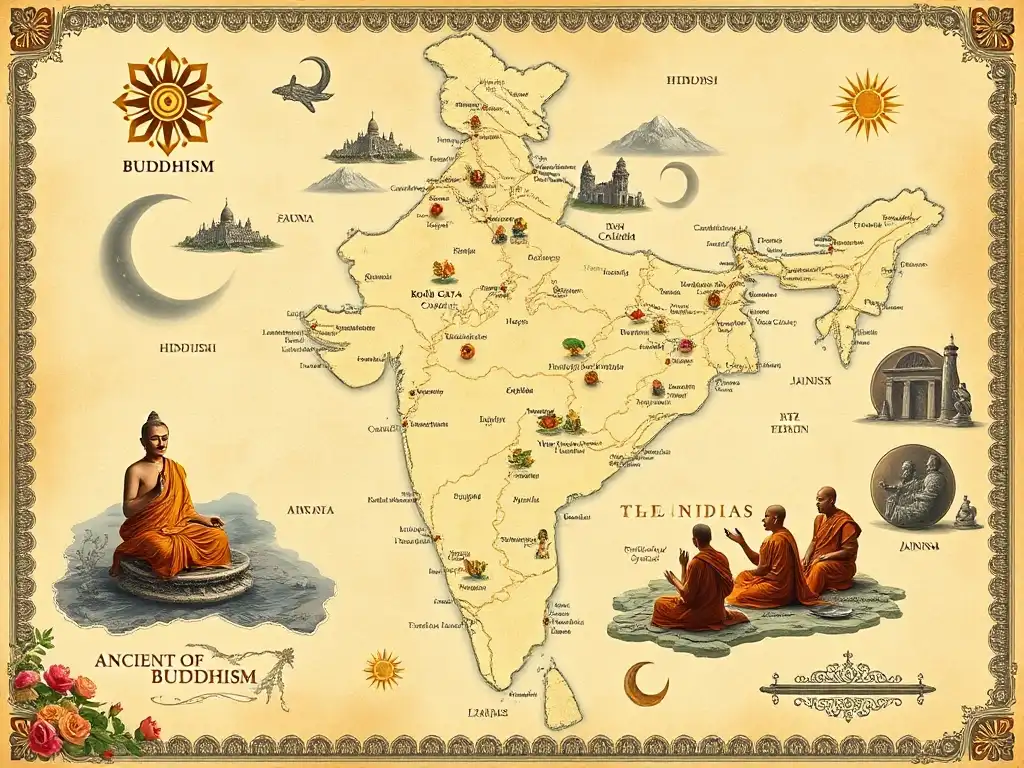
Buddhism emerged in the 5th century BCE, founded by Siddhartha Gautama, known as the Buddha. Its spread, both within and beyond India, marks a significant departure from the patterns of diffusion observed in other Indian religions, such as Hinduism and Jainism. While Hinduism has traditionally been more localized, Buddhism adopted a more universal approach, seeking followers across diverse regions and cultures. This expansion can be attributed to various factors including trade routes, royal patronage, and the appeal of its teachings.
Buddhism's egalitarian principles and rejection of the caste system resonated with a broader audience, helping to attract individuals from various social strata. In contrast, many other Indian religions often maintained more rigid social structures, which limited their appeal outside certain demographics. The unique positioning of Buddhism in this context is crucial for understanding its rapid spread compared to its contemporaries.
How Buddhism Spread Beyond India
The spread of Buddhism beyond India is intricately linked to several key historical developments. After the death of the Buddha, his teachings began to spread throughout the Indian subcontinent, primarily through oral traditions and monastic communities. However, the pivotal moment for Buddhism's expansion beyond India came during the reign of Emperor Ashoka in the 3rd century BCE.
Ashoka, after embracing Buddhism, actively promoted it through the establishment of stupas, monasteries, and inscriptions that conveyed Buddhist principles. He sent missionaries to various regions, including Sri Lanka and Southeast Asia, where Buddhism found fertile ground. The establishment of trade routes, such as the Silk Road, further facilitated the movement of Buddhist monks and texts, leading to the growth of Buddhist communities in Central Asia, China, and eventually Japan.
This transnational dimension of Buddhism contrasts sharply with the spread of other Indian religions, such as Hinduism, which largely remained confined to the Indian subcontinent until much later, often intermingling with local beliefs rather than seeking active conversion.
The Role of Missionaries in Buddhism and Other Religions
Missionaries played a crucial role in the dissemination of Buddhism, establishing new centers of learning and practice across regions. The most notable of these was the Mauryan Emperor Ashoka, who dispatched missionaries to foreign lands with the aim of promoting Buddhist teachings. These missionaries were instrumental in translating sacred texts and adapting Buddhist practices to resonate with local cultures.
In comparison, other Indian religions had varying approaches to outreach. Jainism, for instance, emphasized a more localized practice, focusing on maintaining its core doctrines within specific communities. Hinduism, on the other hand, did not traditionally emphasize missionary work in the same way, as its practices were often tied to regional customs and rituals.
The effectiveness of Buddhist missionaries can be attributed to their ability to engage with local populations, often adapting their messages to align with existing beliefs and practices. This flexibility allowed Buddhism to flourish in diverse cultural contexts, making it a significant player on the global religious stage.
Comparative Analysis of Religious Spread in Ancient India
When analyzing the spread of Buddhism in comparison to other Indian religions, several key differences emerge. Buddhism's foundational tenets, emphasizing personal enlightenment and moral conduct, appealed to a wide audience, including those disenchanted with the hierarchies of Brahmanical society. This inclusivity fostered an environment conducive to growth.
In contrast, Hinduism, with its complex pantheon and interwoven rituals, often relied on hereditary priesthoods and local traditions, which could limit its adaptability and outreach. Jainism, although founded on principles similar to Buddhism, focused on strict ascetic practices that may have deterred broader acceptance.
The geographical mobility of Buddhism, facilitated by trade routes and royal endorsement, set it apart as a religion that sought to transcend regional boundaries. While other religions may have prioritized local adherence and community practices, Buddhism's emphasis on universal truths allowed it to carve out a distinct identity in the diverse tapestry of ancient Indian religions.
Conclusion: The Legacy of Buddhism and Its Relation to Other Indian Religions
Buddhism's legacy is profound, influencing not only the fabric of Indian spirituality but also extending its reach into global contexts. Its emphasis on compassion, mindfulness, and ethical living has left an indelible mark on various cultures and philosophies, shaping moral frameworks beyond the confines of Indian civilization.
The Lasting Impact of Buddhism on Indian Civilization
The impact of Buddhism on Indian civilization is multi-faceted. It introduced innovative ideas about ethics, community living, and the nature of suffering, encouraging people to seek personal transformation. The establishment of monastic communities contributed to the preservation of knowledge and learning, leading to the proliferation of art, literature, and philosophy.
Buddhism's decline in India during the medieval period did not erase its influence; rather, it transformed into a cultural legacy that continued to inspire various reform movements within Hinduism and other Indian spiritual traditions. The synthesis of Buddhist and Hindu ideas can be seen in later philosophical developments, showcasing the enduring dialogue between these traditions.
Reflections on Religious Diversity in Ancient India
Ancient India was a cradle of religious diversity, characterized by a rich interplay of beliefs and practices. Buddhism, alongside Hinduism, Jainism, and other regional faiths, contributed to a pluralistic society that valued philosophical inquiry and spiritual exploration. This diversity fostered an environment of dialogue, allowing for the cross-pollination of ideas and practices.
The coexistence of these religions highlights the importance of mutual respect and understanding in a multicultural society. As we reflect on this rich tapestry of beliefs, it becomes evident that the legacy of Buddhism is not just in its teachings but also in its role as a catalyst for religious dialogue and transformation within the broader context of ancient Indian civilization.
Further Reading and Resources on Buddhism and Indian Religions
To deepen your understanding of Buddhism and its distinctions from other Indian religions, a range of literature and online resources is available. These materials will not only enhance your knowledge of the core teachings of Buddhism but also provide insights into the broader context of Indian spiritual traditions.
Recommended Books and Articles
-
"Buddhism: A Very Short Introduction" by Damien Keown
This concise book offers a clear overview of Buddhism's essential concepts, history, and practices. It serves as an excellent starting point for anyone new to the subject.
-
"The Heart of the Buddha's Teaching" by Thich Nhat Hanh
In this book, the renowned Zen master explores the fundamental teachings of Buddhism, providing practical insights on how to apply these teachings in daily life.
-
"Hinduism and Buddhism: An Historical Sketch" by Charles Eliot
This classic work compares the key aspects of Hinduism and Buddhism, providing historical context and insights into their development over time.
-
"Buddhism: A Modern Perspective" by Paul Williams
Williams' book examines Buddhism's evolution and adaptation in modern times, analyzing how it contrasts with other Indian religions in contemporary society.
-
Articles from the Journal of Buddhist Ethics
This peer-reviewed journal offers various articles exploring ethical issues, philosophical debates, and doctrinal differences between Buddhism and other Indian religions.
Online Resources for Exploring Buddhism and Other Indian Religions
-
The Buddhist Publication Society (BPS)
A treasure trove of resources including books, articles, and newsletters dedicated to the study of Buddhism.
-
Access to Insight
This website features a comprehensive collection of suttas (Buddhist scriptures) and related texts, making it an invaluable resource for both beginners and scholars.
-
BBC Religion: Buddhism
The BBC offers a broad overview of Buddhism, including its history, beliefs, and practices, alongside comparisons to Hinduism and Jainism.
-
The Internet Encyclopedia of Philosophy
This online resource provides well-researched articles on various philosophical aspects of Buddhism and its relationship with other Indian religions, making it suitable for those looking to delve deeper into the subject.
-
YouTube Channels such as "Buddhism Now" and "The Dhamma Brothers"
These channels provide insightful video content exploring Buddhist teachings and their interactions with other Indian religious traditions.
By utilizing these recommended books and online resources, you can gain a richer and more nuanced understanding of the differences between Buddhism and other Indian religions, enhancing your exploration of this profound topic.
- Understanding Buddhism and Its Principles
- Overview of Other Indian Religions
- Buddhism vs Other Indian Religions: Key Differences
- The Concept of God in Buddhism and Other Indian Religions
- The Path to Enlightenment: Comparing Practices
- Karma and Rebirth: Similarities and Differences
- Cultural and Historical Context
- The Spread of Buddhism Compared to Other Indian Religions
- Conclusion: The Legacy of Buddhism and Its Relation to Other Indian Religions
- Further Reading and Resources on Buddhism and Indian Religions
- What are the main differences between Buddhism and Hinduism?
- How does Buddhism view the concept of God compared to other Indian religions?
- What role do rituals play in Buddhism compared to other Indian religions?
- How do Buddhism and Jainism differ in their beliefs?
- What contributions have Buddhism and other Indian religions made to Indian culture?
Frequently Asked Questions
What are the main differences between Buddhism and Hinduism?
Buddhism differs from Hinduism primarily in its rejection of the caste system and the belief in self-enlightenment rather than reliance on gods. While Hinduism emphasizes rituals and texts, Buddhism focuses on personal experience and the Four Noble Truths.
How does Buddhism view the concept of God compared to other Indian religions?
Buddhism is generally non-theistic, meaning it does not center around the worship of a supreme deity, unlike Hinduism which involves a pantheon of gods. Jainism also shares a similar view, focusing more on spiritual practices and ethical living.
What role do rituals play in Buddhism compared to other Indian religions?
Buddhism places less emphasis on rituals compared to Hinduism, which has a rich tradition of ceremonial practices. In Buddhism, mindfulness and meditation are more significant, although some forms of Buddhism do incorporate rituals.
How do Buddhism and Jainism differ in their beliefs?
While both Buddhism and Jainism promote non-violence and the pursuit of enlightenment, Jainism emphasizes strict asceticism and the soul's liberation through self-discipline, whereas Buddhism focuses on the Middle Way and the importance of understanding suffering.
What contributions have Buddhism and other Indian religions made to Indian culture?
Both Buddhism and other Indian religions, like Hinduism and Jainism, have significantly influenced Indian culture through art, literature, philosophy, and social systems, promoting values of compassion, tolerance, and spiritual growth across various eras.
Final Reflection: Embracing the Diversity of Indian Spirituality
In exploring the differences between Buddhism and other Indian religions, we uncover a rich tapestry of beliefs that not only shapes individual identities but also influences broader societal values. Today, as we navigate a world increasingly defined by cultural exchanges and interfaith dialogues, understanding these distinctions becomes paramount. The juxtaposition of Buddhism with its Indian counterparts reveals profound insights into the nature of suffering, enlightenment, and the quest for truth, reminding us that our spiritual journeys are as diverse as humanity itself.
The impact of Buddhism and its unique philosophies continues to resonate within the cultural and social landscape of India and beyond. As we witness a resurgence of interest in mindfulness and meditation practices, the teachings of Buddhism offer a pathway to inner peace and compassion. The mind is everything. What you think you become.
This quote from the Buddha encapsulates the essence of self-awareness and transformation that is central to Buddhist practice, highlighting its relevance in today's fast-paced world where mental well-being is often compromised.
As we conclude this exploration, I invite you to reflect on your own spiritual journey and the beliefs that resonate with you. Consider how understanding the nuances of Buddhism in relation to other Indian religions can enrich your perspective on life and foster greater empathy towards others. Let this knowledge inspire you to engage with diverse philosophies and practices, cultivating a more inclusive and harmonious world. Embrace the beauty of spiritual diversity, and allow it to guide you toward a deeper understanding of yourself and the universe around you.
Unveil Your Spiritual Path: Engage with Indian Philosophies!
Thank you for exploring the rich tapestry of Buddhism and its contrasts with other Indian religions! Your curiosity not only enhances your understanding but also opens doors to a deeper appreciation of ancient philosophies. Now, let’s take the insights you've gained and put them into action!
- Explore further: Read a book or watch a documentary on a specific Indian religion that interests you.
- Join a discussion group: Engage with like-minded individuals to share insights and perspectives on these spiritual paths.
- Share your thoughts: Write a review or a blog post about the most fascinating elements you discovered and their implications for modern spirituality.
Which aspect of Indian religions resonates most with your personal beliefs or experiences? We invite you to share your thoughts below!