
How Ancient Indian Mathematicians Inspired the European Renaissance

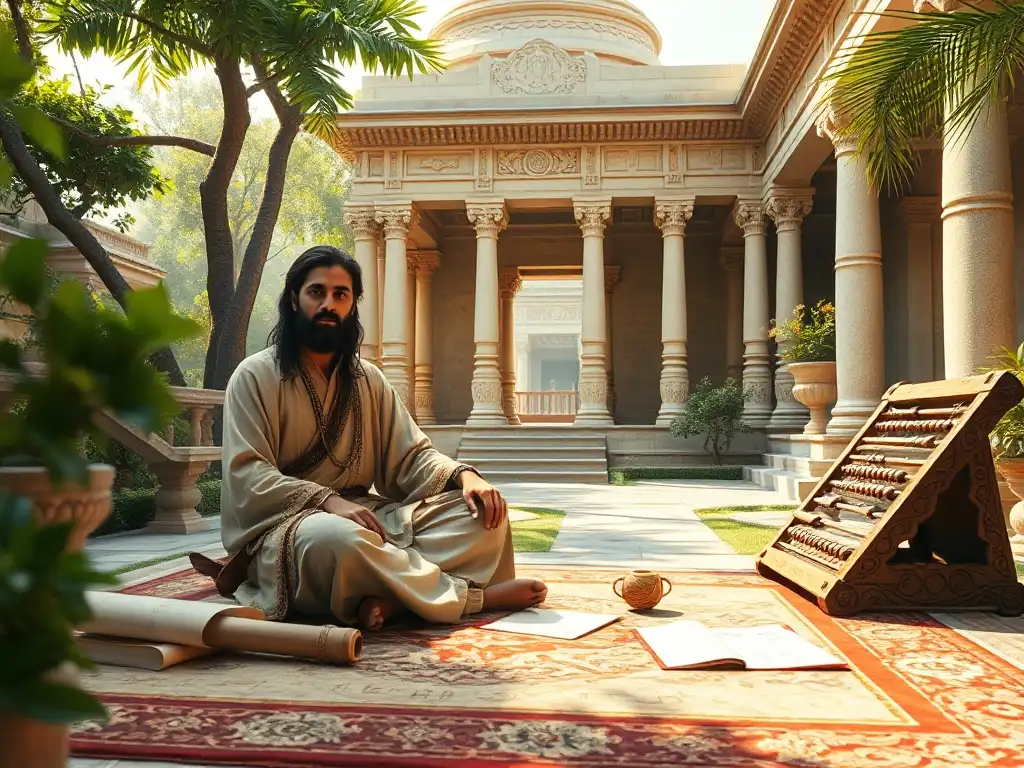
Welcome to Ancient India History, where we embark on an enthralling journey through the vast tapestry of India's remarkable past. Here, we delve into the profound contributions of ancient Indian civilizations that have shaped not only their own culture but also the world at large.
In our featured article, "How Ancient Indian Mathematicians Inspired the European Renaissance," we uncover the fascinating ways in which ancient Indian mathematics influenced Europe, sparking curiosity and innovation during a pivotal era. Prepare to be captivated as we reveal the interconnectedness of knowledge across time and space, inviting you to explore the rich legacy that continues to resonate today.
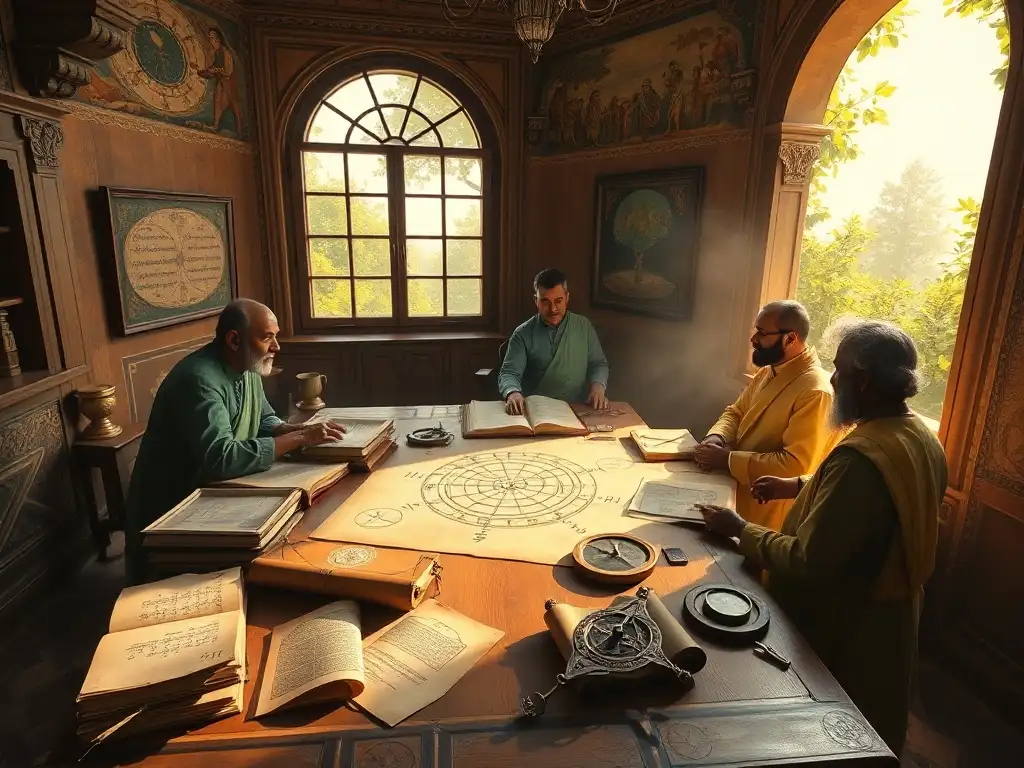
Introduction to Ancient Indian Mathematics
The journey of mathematics is deeply intertwined with the rich tapestry of ancient civilizations, and India holds a pivotal place in this narrative. The contributions of ancient Indian mathematicians not only shaped the mathematical landscape of their time but also laid the groundwork for future developments in Europe during the Renaissance.
This article delves into the profound influence of ancient Indian mathematics on European thinkers, highlighting key figures and innovations that catalyzed this exchange of knowledge. By understanding this historical connection, we can better appreciate the intricate web of cultural and intellectual exchanges that have shaped our modern understanding of mathematics.
Overview of Ancient Indian Mathematical Contributions
Ancient Indian mathematics is characterized by its remarkable advancements in various fields, including arithmetic, algebra, geometry, and astronomy. Key texts such as the Sulbasutras, Aryabhatiya, and Brahmasphutasiddhanta illustrate the depth and breadth of mathematical knowledge that flourished in ancient India.
- Notable Contributions:
- Zero as a Concept: The introduction of zero as a numeral, which revolutionized mathematical computations.
- Place Value System: Development of a decimal place value system that facilitated complex calculations.
- Algebraic Techniques: Early methods for solving quadratic equations and other algebraic problems.
These contributions not only advanced mathematical thought in India but also significantly influenced the subsequent development of mathematics in Europe.
Importance of Mathematics in Ancient Indian Culture
Mathematics in ancient India was not merely a tool for commerce or trade; it was an integral part of cultural and religious practices. From the construction of altars described in the Sulbasutras to astrological calculations used for determining auspicious times for rituals, mathematics permeated daily life and spirituality.
- Cultural Significance:
- Religious Texts: Mathematical principles were often embedded in the interpretations of sacred texts.
- Astronomy and Calendar Systems: Advances in astronomy were crucial for agricultural planning and religious observances.
This cultural reverence for mathematics fostered an environment where intellectual pursuits were nurtured, leading to significant advancements that would eventually transcend geographical boundaries.
Prominent Ancient Indian Mathematicians
The legacy of ancient Indian mathematics is embodied in the works of several prominent mathematicians whose ideas and methods significantly influenced both their contemporaries and future generations.
Aryabhata and His Innovations
Aryabhata, one of the earliest known mathematicians, made groundbreaking contributions in the 5th century CE. His seminal work, the Aryabhatiya, introduced concepts such as:
- Place Value System: Aryabhata's notation system set the stage for future mathematical notation.
- Approximation of π: He provided an approximation of π (pi) which was remarkably accurate for his time.
- Trigonometry: Innovations in trigonometric functions and sine calculations.
Aryabhata's works were later translated into Arabic and Latin, spreading his influence across continents and inspiring European mathematicians during the Renaissance.
Brahmagupta's Contributions to Arithmetic and Algebra
Brahmagupta, active in the 7th century CE, is celebrated for his pioneering work in arithmetic and algebra. His influential text, the Brahmasphutasiddhanta, addressed various mathematical principles including:
- Rules for Zero: Brahmagupta was among the first to define operations involving zero, laying the groundwork for algebraic thinking.
- Quadratic Equations: He offered methods for solving quadratic equations, which were revolutionary at the time.
His ideas resonated with later mathematicians in both the Islamic world and Europe, underscoring the interconnectedness of mathematical thought.
Bhaskara II: Advancements in Calculus and Astronomy
Bhaskara II, also known as Bhaskara the Great, lived in the 12th century CE and is recognized for his extensive contributions to mathematics and astronomy. His notable work, the Siddhanta Shiromani, includes:
- Calculus Concepts: Although not formalized as modern calculus, Bhaskara II explored concepts of derivatives and rates of change.
- Astronomy: His astronomical calculations were used to predict eclipses and planetary movements, illustrating the application of mathematics in celestial phenomena.
The impact of Bhaskara II's work extended beyond India, influencing Renaissance scholars in Europe, who drew upon his insights in their own astronomical and mathematical inquiries.
Through the lens of these ancient Indian mathematicians, we see a vibrant intellectual tradition that not only flourished in its own right but also catalyzed significant advancements in Europe. The exchange of ideas across cultures showcases the universal nature of mathematical inquiry and its vital role in the development of global knowledge systems.
The Transmission of Indian Mathematical Knowledge to Europe
The transmission of ancient Indian mathematical knowledge to Europe was a multifaceted process involving various channels of communication and cultural exchange. This exchange was not a singular event but rather a gradual and complex journey that took place over centuries, leading to significant influences on European mathematical thought. The intricate web of trade routes, the work of translators, and the intellectual curiosity of European scholars played crucial roles in this historical narrative.
Historical Context: Trade Routes and Cultural Exchange
During ancient times, trade routes such as the Silk Road and maritime pathways facilitated the movement of goods, ideas, and knowledge across continents. Indian merchants traveled extensively, bringing with them not just commodities but also cultural and intellectual treasures. These interactions allowed for the sharing of mathematical concepts, including the decimal system and the concept of zero, which were integral to Indian mathematics.
The establishment of trade routes between India and the Mediterranean regions fostered a climate of cultural exchange. Cities like Alexandria became melting pots of knowledge where Indian mathematical texts were introduced to Greek and Arabic scholars. This cross-pollination of ideas laid the groundwork for the eventual transmission of Indian mathematical advancements to Europe, particularly during the medieval period.
Translation Movements: From Sanskrit to Arabic to Latin
The translation of mathematical texts was pivotal in the dissemination of Indian mathematical knowledge. Initially, Sanskrit texts such as the Aryabhatiya and Brahmasphutasiddhanta were translated into Arabic during the 8th and 9th centuries. Scholars in the Islamic Golden Age, particularly in places like Baghdad, recognized the value of these texts and translated them into Arabic.
This process of translation not only preserved the mathematical knowledge of ancient India but also expanded upon it, as Arabic mathematicians integrated their own discoveries and insights. By the 12th century, these Arabic translations began to make their way into Europe, primarily through Spain and Sicily, which were centers of learning and cultural exchange at the time. The subsequent translation of Arabic texts into Latin further solidified the foundation of Indian mathematics within European scholarly circles.
Key Figures in the Transmission of Knowledge
Several key figures played influential roles in the transmission of Indian mathematical knowledge to Europe.
- Aryabhata: One of the first Indian mathematicians, Aryabhata's work laid the foundation for many mathematical concepts, including the approximation of pi and the place-value system. His texts were among the first to be translated into Arabic.
- Al-Khwarizmi: A Persian scholar who is often regarded as the "father of algebra," Al-Khwarizmi's works drew heavily from Indian mathematics. His writings introduced the decimal system and the concept of zero to the Western world.
- Fibonacci: While not directly translating Indian texts, Fibonacci’s introduction of the Hindu-Arabic numeral system in his work Liber Abaci in 1202 was a culmination of the earlier exchanges influenced by Indian mathematicians, thereby further embedding these concepts in European mathematics.
The Influence of Ancient Indian Mathematics on European Thinkers
The impact of ancient Indian mathematics on European thinkers was profound, shaping mathematical thought and methodology during the Renaissance and beyond. The introduction of the decimal system, along with other mathematical innovations, revolutionized European mathematics and laid the groundwork for further advancements in the field.
Impact on Notable European Mathematicians
Notable European mathematicians were significantly influenced by the principles and concepts derived from ancient Indian mathematics. For example:
- John Napier: Known for his invention of logarithms, Napier's work was inspired by the number systems that had roots in Indian mathematics.
- René Descartes: His contributions to Cartesian geometry were built upon the mathematical principles that found their way to Europe through translations of Indian works.
These mathematicians, among others, not only utilized concepts from Indian mathematics but also expanded upon them, contributing to the rich tapestry of mathematical knowledge that characterized the Renaissance.
Bridging the Gap: How Indian Mathematics Shaped European Renaissance Thought
Indian mathematics played a crucial role in bridging the gap between ancient and modern mathematical thought in Europe. The introduction of the decimal system and the concept of zero allowed for more sophisticated calculations and paved the way for innovations in algebra and geometry.
The Renaissance, characterized by a revival of learning and a renewed interest in science and mathematics, was notably influenced by the influx of ideas from the East. The application of Indian mathematical techniques in various fields, including navigation, astronomy, and commerce, showcased the practical utility of these concepts, elevating them to prominence in European intellectual circles.
The journey of ancient Indian mathematics to Europe is a testament to the interconnectedness of civilizations and the enduring legacy of Indian mathematicians. Their contributions not only enriched European thought but also laid the foundation for future advancements in mathematics and science.
Key Concepts from Ancient Indian Mathematics that Influenced Europe

Ancient Indian mathematics played a crucial role in shaping the mathematical landscape of Europe during the Renaissance. Several foundational concepts developed by Indian mathematicians not only laid the groundwork for future mathematical theories but also facilitated the transmission of knowledge across cultures. Key concepts such as the numeral system, the concept of zero, trigonometric advancements, and algebraic techniques were pivotal in influencing European mathematics. This rich mathematical heritage contributed significantly to the intellectual revival in Europe, bridging the gap between ancient civilizations and the modern world.
The Concept of Zero and Its Revolutionary Impact
One of the most significant contributions of ancient Indian mathematics is the concept of zero, symbolized by the numeral '0'. This revolutionary idea, first documented in Indian texts around the 5th century CE, transformed mathematical calculations and theories. The introduction of zero as a placeholder allowed for the development of a positional numeral system, making arithmetic operations more efficient.
The concept of zero not only simplified calculations but also paved the way for more advanced mathematical concepts such as negative numbers and the decimal system. It reached Europe through translations of Indian texts, primarily via Arabic scholars who embraced this innovative idea. This integration of zero into European mathematics marked a monumental shift, enabling mathematicians to perform complex calculations that were previously unmanageable.
Advances in Trigonometry and Their European Applications
Ancient Indian mathematicians made significant strides in the field of trigonometry, particularly through the works of scholars like Aryabhata and Bhaskara II. They developed sine and cosine functions and introduced various trigonometric tables that facilitated astronomical calculations. The sine function, known as 'jya' in Sanskrit, was particularly influential in the advancement of trigonometric understanding.
These trigonometric advances were later adopted by European mathematicians during the Renaissance. The translation of Indian astronomical texts into Arabic and then into Latin enabled European scholars to access these sophisticated techniques. Consequently, trigonometry became an essential tool in navigation, surveying, and astronomy in Europe, contributing to the age of exploration and the development of modern science.
Algebraic Techniques and Their Adoption in Europe
Indian mathematicians made remarkable contributions to algebra, particularly through the works of Brahmagupta and later Bhaskara II. They introduced systematic approaches to solving equations, methods for finding solutions to quadratic and linear equations, and rules for operations involving fractions. Brahmagupta's rules for arithmetic operations were groundbreaking, providing a framework that would later influence European algebra.
As Indian mathematical texts were translated into Arabic, these algebraic techniques were disseminated throughout the Islamic world and eventually reached Europe. The incorporation of these methods into European mathematics allowed for the evolution of algebra as a distinct field, leading to significant advancements in mathematics and the sciences during the Renaissance.
The Legacy of Ancient Indian Mathematics in Modern Context
The principles and techniques developed by ancient Indian mathematicians have left an indelible mark on modern mathematics. Their innovative approaches and concepts continue to be relevant in various fields and have laid the foundation for contemporary mathematical education and research.
Relevance of Ancient Indian Mathematical Principles Today
Ancient Indian mathematical principles are still applicable in various domains, including computer science, engineering, and physics. The decimal system, which originated in India, is now the standard numerical system used globally. Moreover, the concept of zero remains fundamental in computational mathematics and digital technology.
In education, the teaching of mathematics often reflects the logical reasoning and problem-solving techniques pioneered by ancient Indian scholars. These principles serve as a reminder of the interconnectedness of cultures and the shared evolution of mathematical thought.
Continuing Influence on Contemporary Mathematics and Science
The influence of ancient Indian mathematics extends beyond historical significance; it continues to inspire contemporary mathematicians and scientists. Research in areas such as number theory, combinatorics, and algorithm design often draws upon the foundations laid by Indian mathematicians.
Furthermore, the resurgence of interest in ancient mathematical texts and their methodologies has led to innovative approaches in modern research. The integration of historical mathematical concepts with modern techniques has opened up new avenues for exploration and discovery, ensuring that the legacy of ancient Indian mathematics remains vibrant and influential in today's scientific landscape.
Conclusion: The Lasting Impact of Ancient Indian Mathematics on European Development
The influence of ancient Indian mathematics on Europe is a profound testament to the interconnectedness of global intellectual traditions. As ideas traveled through trade routes, conquests, and scholarly exchanges, the mathematical advancements developed in ancient India laid a foundation that would later flourish during the European Renaissance. The introduction of concepts such as zero, the decimal system, and advanced arithmetic and algebra significantly transformed European mathematical practices, enhancing both scientific inquiry and practical application.
The translation of key texts, most notably the works of Aryabhata, Brahmagupta, and Bhaskara, played a pivotal role in this cross-cultural exchange. European mathematicians and scholars not only adopted these concepts but also expanded upon them, leading to innovations that would drive the scientific revolution. The impact of ancient Indian mathematics can thus be seen as a crucial link that contributed to the growth of modern mathematics and science in Europe.
Summary of Major Influences
- The Concept of Zero: The introduction of zero as a numeral was revolutionary. This concept, originating from ancient Indian mathematicians, enabled more sophisticated calculations and was critical for the development of algebra.
- Decimal Number System: The base-ten decimal system, formulated in ancient India, provided a more efficient means of calculation that became fundamental in European mathematics.
- Algebra and Arithmetic: Indian mathematicians made significant contributions to algebra, particularly in the formulation of equations and the systematic approach to solving them. These foundational ideas were crucial for later European developments in mathematics.
- Trigonometry: Indian scholars were among the first to develop concepts of trigonometry, which were later integrated into European mathematical thought, facilitating advancements in astronomy and navigation.
- Translation Movements: The translation of Indian mathematical texts into Arabic and subsequently into Latin made these ideas accessible to European scholars, cementing the influence of Indian mathematics on the continent.
Reflection on the Interconnectedness of Global Mathematical Traditions
The history of mathematics is not a linear progression confined to geographic boundaries but rather a tapestry of interconnected traditions. Ancient Indian mathematics exemplifies this interconnectedness, as its concepts traveled and transformed through cultural exchanges. The dialogue between Indian, Arab, and later European mathematicians illustrates how knowledge transcends borders, adapting and evolving in new contexts.
This interplay of ideas highlights the importance of collaboration and exchange in the development of mathematical thought. As mathematicians across the world built upon each other's work, they collectively advanced the discipline, leading to innovations that have shaped our understanding of the universe. The legacy of ancient Indian mathematicians is a reminder of how interconnected our global history is and how the contributions of one civilization can resonate across time and space, influencing generations to come.
- Introduction to Ancient Indian Mathematics
- Prominent Ancient Indian Mathematicians
- The Transmission of Indian Mathematical Knowledge to Europe
- The Influence of Ancient Indian Mathematics on European Thinkers
- Key Concepts from Ancient Indian Mathematics that Influenced Europe
- The Legacy of Ancient Indian Mathematics in Modern Context
- Conclusion: The Lasting Impact of Ancient Indian Mathematics on European Development
- What role did ancient Indian mathematicians play in the development of mathematics?
- How did the works of Indian mathematicians reach Europe?
- Who were some notable ancient Indian mathematicians?
- What specific mathematical concepts did ancient Indians introduce that influenced Europe?
- How did ancient Indian mathematics contribute to fields beyond pure mathematics?
Frequently Asked Questions
What role did ancient Indian mathematicians play in the development of mathematics?
Ancient Indian mathematicians made significant contributions, including the concept of zero, decimal system, and algebra, which laid foundational principles later adopted by European scholars.
How did the works of Indian mathematicians reach Europe?
The translation of ancient Indian texts into Arabic and Latin during the medieval period facilitated the transfer of mathematical knowledge, influencing European thinkers during the Renaissance.
Who were some notable ancient Indian mathematicians?
Prominent figures include Aryabhata, who introduced the concept of zero, and Brahmagupta, known for his work in algebra and geometry.
What specific mathematical concepts did ancient Indians introduce that influenced Europe?
Ancient Indians introduced numerical systems, calculus, and the concept of infinity, which were crucial in shaping modern European mathematics.
How did ancient Indian mathematics contribute to fields beyond pure mathematics?
Ancient Indian mathematics significantly influenced astronomy, architecture, and engineering, showcasing its multifaceted impact on various disciplines in both ancient and modern contexts.
Final Reflection: The Enduring Legacy of Ancient Indian Mathematics
The profound influence of ancient Indian mathematics on the European Renaissance is a testament to the interconnectedness of human knowledge across cultures. As we navigate an increasingly globalized world, understanding these historical exchanges reminds us that innovation and enlightenment are often born from collaboration and shared wisdom. The mathematical concepts developed by ancient Indian scholars not only laid the groundwork for future advancements but also sparked a transformative period in Europe that reshaped the course of history.
The impact of ancient Indian mathematics extends far beyond its historical context; it continues to resonate within our cultural and educational frameworks today. The principles of zero, algebra, and trigonometry, which originated in India, have become foundational elements of modern mathematics and science.
As mathematician and historian of science, Carl Friedrich Gauss, once said, "> Mathematics is the queen of the sciences and number theory is the queen of mathematics." This quote encapsulates the essence of how ancient Indian contributions have enriched our understanding of the world, shaping not only academic pursuits but also the very fabric of our daily lives.
As we reflect on the lessons from the past, let us embrace the spirit of inquiry and collaboration that defined the achievements of ancient Indian mathematicians. I invite you to explore the connections between cultures in your own life, recognizing that every mathematical problem solved or scientific breakthrough achieved is often built upon the shoulders of giants. By fostering a mindset of curiosity and openness, we can continue to inspire future generations, ensuring that the legacy of ancient Indian mathematics remains a vibrant part of our collective journey toward knowledge and understanding.
Unveil the Secrets of Ancient Mathematics!
Thank you for diving into the fascinating world of ancient Indian mathematics! Your journey through history has revealed how these brilliant minds laid the foundations for the European Renaissance. Now, it's time to take the insights you've gained and put them into action.
Here’s how you can further explore and share this rich legacy:
- Dive deeper into the works of iconic mathematicians like Aryabhata and Brahmagupta—choose one and discover their significant contributions to the field.
- Share this newfound knowledge with friends! Send them a summary of how ancient Indian innovations have shaped modern mathematics or suggest forming a discussion group.
- Engage with our community by joining forums or social media groups—connect with others who share your passion for history and mathematics.
Which aspect of ancient Indian mathematics resonates most with you, and how do you believe it continues to influence our world today?