
How Ancient Indian Mathematics Influenced Navigation and Exploration


Welcome to Ancient India History, where we embark on a fascinating journey through time to uncover the rich tapestry of ancient Indian civilizations. In our featured article, "How Ancient Indian Mathematics Influenced Navigation and Exploration," we delve into the remarkable contributions of ancient Indian mathematicians and their profound impact on navigation techniques. What secrets did they hold that shaped the course of exploration? Join us as we unravel the intriguing connections between mathematics and navigation, inviting you to explore the depths of knowledge that have influenced generations. Your adventure into the wonders of ancient India begins now!
- Introduction to Ancient Indian Mathematics and Navigation
- Key Concepts in Ancient Indian Mathematics
- Significant Mathematicians and Their Contributions
- Tools and Techniques Used in Ancient Navigation
- Case Studies: Ancient Indian Navigators and Their Journeys
- The Legacy of Ancient Indian Mathematics in Modern Navigation
- Conclusion
-
Frequently Asked Questions
- What role did ancient Indian mathematics play in navigation?
- How did the Indus Valley Civilization contribute to mathematical concepts?
- What are some key contributions of the Gupta Empire to mathematics?
- How did navigation techniques evolve through ancient Indian mathematics?
- What impact did ancient Indian mathematicians have on global navigation?
- Final Reflection: The Enduring Legacy of Ancient Indian Mathematics in Navigation
- Unleash the Secrets of Ancient Navigation!
The history of mathematics in ancient India is a fascinating journey that reveals the profound impact of Indian scholars on various fields, particularly navigation and exploration. Ancient Indian mathematics was not merely a collection of abstract concepts; instead, it was deeply intertwined with practical applications that served the needs of trade, travel, and astronomical observations.
The unique mathematical techniques developed by ancient Indian mathematicians played a pivotal role in the advancement of navigation, enabling explorers to traverse vast distances with greater precision. This article delves into the intricate relationship between ancient Indian mathematics and navigation, showcasing how these innovations facilitated explorations that shaped the course of history.
Overview of Ancient Indian Mathematics
Ancient Indian mathematics dates back to at least 3000 BCE, with the Indus Valley Civilization exhibiting early signs of mathematical understanding through their sophisticated urban planning and measurements. However, it was during the later periods, particularly in the classical era, that Indian mathematicians made significant contributions that would influence not only their own society but also cultures across the globe.
Key figures such as Aryabhata, Brahmagupta, and Bhaskara II emerged, each contributing groundbreaking concepts like:
- Zero and the Decimal System: The introduction of zero as a numeral revolutionized mathematical computations and the development of the decimal system.
- Trigonometry: Indian mathematicians advanced trigonometric concepts, which were essential for astronomical calculations.
- Algebra: The formulation of algebraic equations and rules laid the groundwork for future mathematical discourse.
These innovations were not only theoretical but were also applied in various fields, including astronomy, architecture, and, significantly, navigation.
In ancient times, navigation was crucial for trade, cultural exchange, and exploration. The vast expanse of land and sea necessitated reliable methods of travel. Ancient Indian navigators, particularly those from coastal regions, relied heavily on celestial navigation techniques, which were grounded in advanced mathematical principles.
Key points regarding the importance of navigation include:
- Trade Routes: Indian merchants engaged in extensive trade with distant lands, necessitating accurate navigation methods to enhance trade efficiency.
- Cultural Exchange: Navigation facilitated not only trade but also the exchange of ideas, technologies, and cultures among different civilizations.
- Exploration: The quest for knowledge and resources drove explorers to venture into uncharted territories, highlighting the need for reliable navigation techniques.
The mathematical tools developed by ancient Indian scholars were essential in this context, enabling navigators to determine their position and course with remarkable accuracy.
Purpose of the Article
The purpose of this article is to explore how ancient Indian mathematics influenced navigation and exploration, shedding light on the contributions of significant mathematicians and their practical applications. By examining the interplay between mathematical advancements and navigational techniques, we aim to provide a comprehensive understanding of how these ancient innovations shaped the journeys of explorers and the broader world. Through this exploration, readers will gain insights into the legacy of ancient Indian mathematics and its lasting impact on navigation practices throughout history.
Key Concepts in Ancient Indian Mathematics

Ancient Indian mathematics is renowned for its profound impact on various fields, including navigation. This section delves into the key concepts that shaped ancient Indian mathematical practices and their applications in navigation and exploration.
The foundation of ancient Indian mathematics lies in its innovative number systems, particularly the decimal system. This positional numeral system, which evolved around the 6th century CE, enabled complex calculations essential for navigation.
- Decimal System: The introduction of zero as a placeholder transformed arithmetic calculations. This allowed navigators to perform long-distance calculations more efficiently.
- Place Value Notation: The use of place value notation provided a systematic approach to record and interpret large numbers, which was vital in distance measurement and charting sea routes.
- Example: The works of mathematician Aryabhata (476–550 CE) exemplify this innovation. His computations in "Aryabhatiya" included astronomical calculations crucial for navigation, emphasizing the importance of accurate number representation.
Geometry and trigonometry played pivotal roles in ancient Indian navigation, offering tools to measure distances and angles accurately.
- Geometric Shapes: Early mathematicians utilized geometric shapes for constructing maps and understanding landforms, which were crucial for explorers.
- Trigonometric Functions: The development of sine and cosine functions facilitated the calculation of angles in navigation. Ancient texts, such as the "Surya Siddhanta," detail these functions and their applications in determining the positions of celestial bodies.
- Example: The use of sine tables allowed navigators to calculate distances and angles related to celestial navigation. This was essential for determining latitude and longitude during sea voyages.
Astronomy was integral to ancient Indian navigation, providing essential information about celestial bodies used for guidance.
- Celestial Navigation: Ancient Indian navigators relied on the positions of stars and planets. The knowledge of the stars' movements helped them navigate vast oceans and unfamiliar territories.
- Astrolabes and Instruments: Instruments like the astrolabe, developed in ancient India, were used to measure the altitude of celestial bodies. This facilitated accurate positioning during voyages.
- Example: The "Aryabhatiya" not only contained mathematical concepts but also included astronomical data that guided navigators in their journeys.
The contributions of ancient Indian mathematics to navigation are profound and multifaceted. From the decimal system to trigonometric functions and astronomical knowledge, these advancements laid the groundwork for exploration and navigation in ancient times. Understanding these key concepts highlights the significance of ancient Indian mathematics in shaping not only navigation but also the broader field of mathematics.
Significant Mathematicians and Their Contributions

Aryabhata and His Mathematical Innovations
Aryabhata, one of the most prominent mathematicians and astronomers of ancient India, made groundbreaking contributions that significantly influenced navigation and exploration. Born in 476 CE, Aryabhata’s work laid the foundation for various mathematical concepts that would be essential for navigators.
One of his most notable achievements was the introduction of the place value system, which revolutionized the way numbers were understood and manipulated. This system allowed for easier calculations necessary for navigation, such as determining distances and coordinates. Aryabhata also developed methods for calculating the area of a triangle and the volume of a sphere, which were crucial for understanding spatial dimensions in navigation practices.
Additionally, Aryabhata's work on trigonometry provided navigators with tools to calculate angles and distances accurately. His sine table, which included values for various angles, became a vital reference for sailors and explorers who relied on precise measurements to chart their courses across uncharted waters.
Brahmagupta, who flourished in the 7th century CE, expanded upon Aryabhata's ideas and introduced significant advancements in mathematics that directly affected navigation. His seminal work, the Brahmasphutasiddhanta, outlines various mathematical concepts, including rules for calculating the area, volume, and the solutions to linear and quadratic equations.
One of Brahmagupta's most important contributions was his formulation of the law of signs, which simplified the process of solving equations. This innovation allowed navigators to work with coordinates seamlessly, making it easier to plot their routes and calculate distances across the vast oceans.
Moreover, Brahmagupta emphasized the importance of zero as a number and its role in calculations. This concept was crucial for navigational computations, enabling mathematicians and explorers to perform complex calculations with greater accuracy. His works paved the way for future explorations, as they provided a more systematic approach to problem-solving in navigation.
Bhaskara II and Advanced Mathematical Techniques
Bhaskara II, also known as Bhaskara the Great, was a renowned mathematician and astronomer who lived during the 12th century CE. His contributions to mathematics further advanced the techniques used in navigation and exploration. His major work, the Siddhanta Shiromani, is divided into two parts: Lilavati and Bijaganita.
In Lilavati, Bhaskara II introduced various problems related to arithmetic and geometry, including practical applications that were directly relevant to navigators. His innovative approach to algebra allowed for the formulation of equations that could be used to solve practical navigation problems, such as determining the best routes and estimating travel times.
On the other hand, Bijaganita focused on more advanced topics, including calculus-like concepts which are essential for understanding motion and change. His work on differential calculus paved the way for calculating speeds and distances, making it simpler for sailors to account for tides and currents during their voyages.
Bhaskara II's legacy in ancient Indian mathematics navigation is profound. His techniques not only enhanced the capabilities of navigators but also laid the groundwork for mathematical advancements in later civilizations. The impact of his innovations can still be felt today in various fields, including astronomy and navigation.

Ancient Instruments and Their Mathematical Foundations
Ancient Indian navigation relied heavily on sophisticated instruments that demonstrated a deep understanding of mathematical principles. These tools not only facilitated maritime exploration but also showcased the mathematical ingenuity of ancient Indian mathematicians.
- The Yasti: Also known as the rod or stick, the Yasti was used to measure angles and distances. It was essential for determining latitude and ensuring accurate navigation. The use of this instrument reflects the geometric principles of triangulation, where angles and distances are calculated to plot a course.
- The Gnomon: This simple yet effective instrument, often a vertical stick, was used to measure the angle of the sun's shadow. By calculating the length of the shadow, navigators could determine their geographic latitude. This method involved trigonometric concepts, showcasing the application of mathematics in practical navigation.
- The Astrolabe: Although more commonly associated with Islamic scholars, the astrolabe was also utilized in ancient India. This instrument allowed sailors to measure the altitude of celestial bodies, helping them to find their position at sea. The mathematical calculations involved in using an astrolabe required a solid understanding of spherical geometry.
Celestial navigation was a cornerstone of ancient Indian maritime practices, allowing navigators to traverse vast oceans with remarkable accuracy. This method relied heavily on the observation of celestial bodies, particularly the sun, moon, and stars.
- Solar Navigation: Ancient Indians tracked the sun's movement throughout the day. They divided the day into segments and used mathematical calculations to determine the sun's position at any given time. This knowledge was pivotal for determining the time of day and was crucial for scheduling voyages.
- Lunar and Stellar Navigation: The moon and stars served as guides for nighttime navigation. Ancient Indian sailors utilized the positions of prominent stars, such as the Pole Star, to maintain their heading. The mathematical calculations for this method involved the use of spherical trigonometry, allowing navigators to accurately predict their position relative to the stars.
- Seasonal Changes: Ancient Indian navigators were also adept at understanding seasonal variations. They recognized that the sun's position changes throughout the year, which could be mathematically modeled to aid in navigation. This seasonal knowledge was crucial for planning voyages during favorable weather conditions.
Maps and Charts: The Mathematical Approach
Maps and charts were fundamental components of ancient Indian navigation, serving as visual representations of navigational routes and geographical features. The creation of these maps was deeply rooted in mathematical principles.
- Coordinate Systems: Ancient Indian cartographers developed early forms of coordinate systems that allowed for the precise plotting of locations on maps. This involved the use of grids and mathematical calculations to determine distances and angles between key points.
- Scale and Proportions: The concept of scale in map-making was essential for ancient Indian navigators. They used mathematical ratios to create proportional representations of land and sea, enabling sailors to estimate distances accurately. This mathematical approach ensured that navigators could make informed decisions based on their charts.
- Symbolic Representation: Maps also utilized a variety of symbols to represent geographical features. These symbols were derived from mathematical concepts, such as circles for ports or lines for trade routes. The ability to encode complex information in a simplified manner required a significant understanding of mathematics.
Ancient Indian mathematics played a vital role in the development of navigation tools, celestial navigation methods, and cartographic techniques. The fusion of mathematical principles with practical applications enabled ancient Indian civilizations to explore and navigate vast territories with remarkable skill and precision.
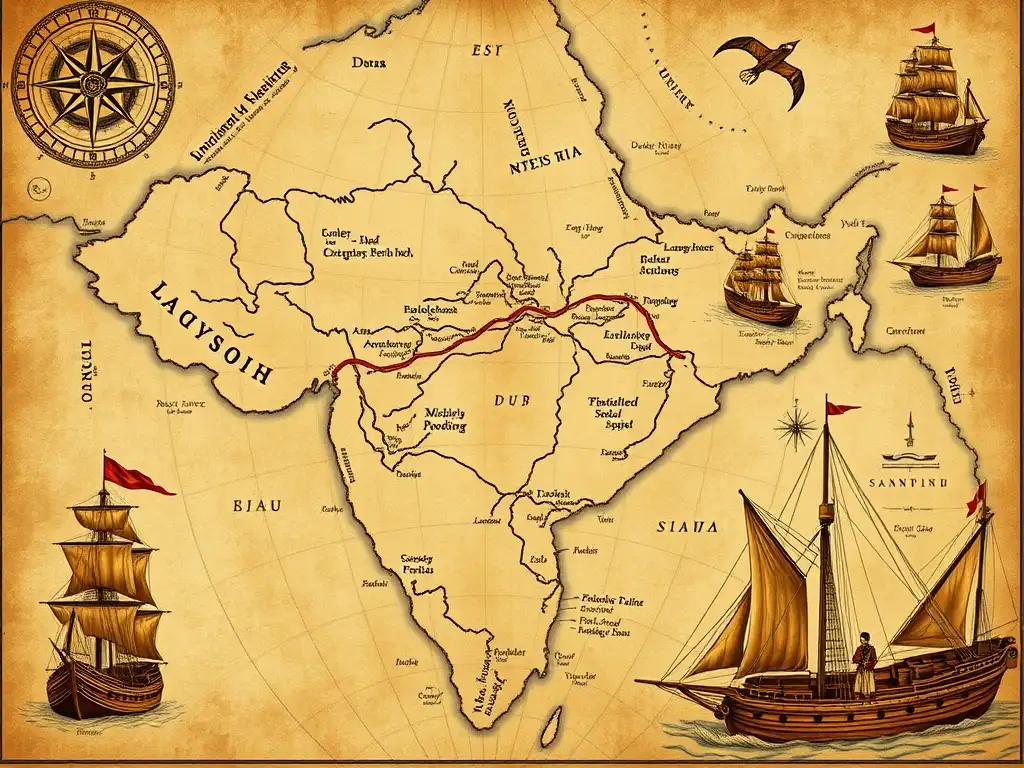
The Maritime Expeditions of Ancient Indian Traders
Ancient Indian traders were renowned for their far-reaching maritime expeditions, which not only facilitated trade but also enabled cultural exchanges across vast distances. One of the most notable examples is the expansion into the Indian Ocean. Traders from the ports of Kochi, Calicut, and Lothal set sail to establish trade routes with regions as far as Southeast Asia, Africa, and the Arab Peninsula.
The Indus Valley Civilization, dating back to around 2500 BCE, had already laid the groundwork for maritime trade. Archaeological evidence from sites like Lothal shows the presence of a dockyard, indicating a sophisticated understanding of navigation. The traders utilized a combination of stellar navigation, monsoon winds, and sea currents to traverse these waters, demonstrating an advanced grasp of ancient Indian mathematics navigation in calculating distances and times.
Exploration of the Indian Ocean: Routes and Techniques
The exploration of the Indian Ocean was marked by the use of innovative navigation techniques that stemmed from ancient Indian mathematics. Navigators employed mathematical models to chart their courses, using the positions of celestial bodies like the sun and stars as reference points. This celestial navigation was complemented by the knowledge of seasonal winds, particularly the southwest monsoon, which facilitated travel to the Maldives, Sri Lanka, and beyond.
Key Techniques Employed:
- Astrolabe and Quadrant Usage: These instruments allowed navigators to measure the altitude of stars, helping them determine their latitude.
- Dead Reckoning: This method involved calculating one's current position based on course and speed, allowing sailors to estimate their location even without visible landmarks.
- Sounding: By measuring the depth of water, sailors could identify underwater features and navigate safely.
| Technique | Description |
|---|---|
| Astrolabe | Used for measuring the altitude of celestial bodies to determine latitude. |
| Dead Reckoning | A method of estimating one's position based on speed, distance, and direction traveled. |
| Sounding | Measuring the water's depth to navigate and avoid hazards. |
The impact of ancient Indian navigation extended beyond its borders, influencing various cultures through trade and exploration. The mathematical techniques developed for navigation were adopted by traders and navigators in Southeast Asia, where Indian maritime knowledge intermingled with local practices. This exchange led to the establishment of maritime trade networks that connected India with regions such as Java, Sumatra, and the Philippines.
Furthermore, Indian navigation techniques contributed to the Arab and Persian maritime traditions. The use of advanced navigational tools and mathematical principles in charting courses found their way into Arab scholarship, significantly affecting their own maritime practices.
The richness of ancient Indian mathematics navigation not only advanced trade but also fostered cultural exchanges across continents.
Through these interactions, ancient Indian mathematics and navigational practices laid the groundwork for future explorations by other cultures, illustrating the profound legacy of these ancient navigators.
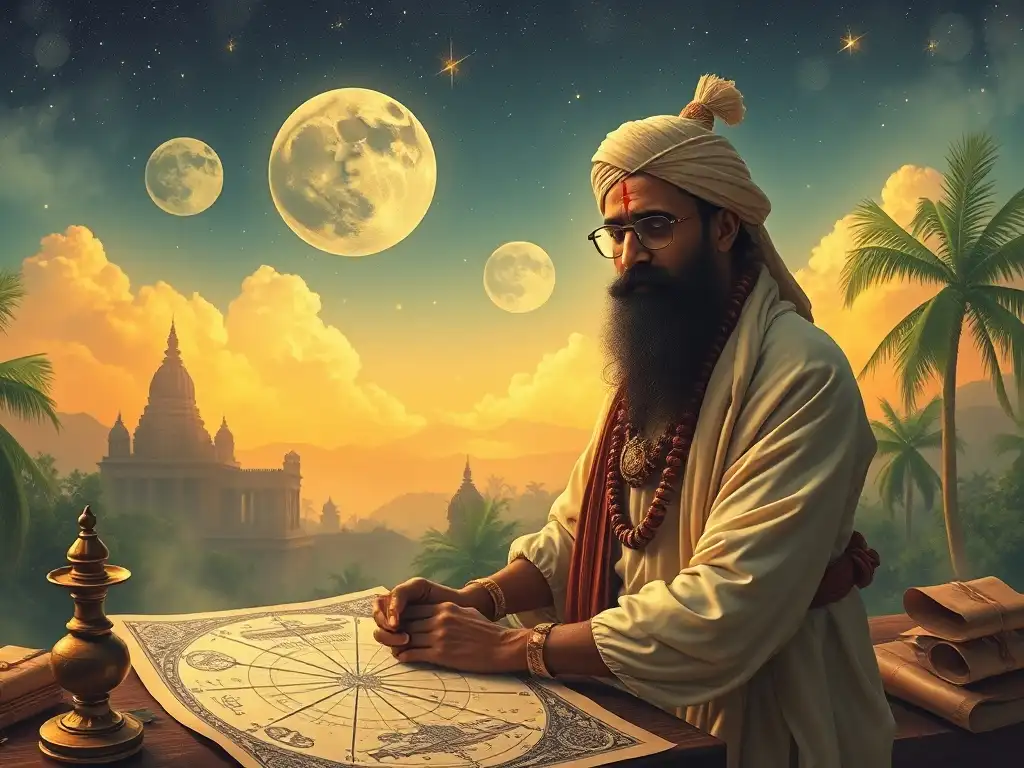
Ancient Indian mathematics has left an indelible mark on the field of navigation, shaping the way seafarers and explorers understood and interacted with the world around them. The mathematical techniques and concepts developed in ancient India provided critical tools for navigation, allowing for more accurate positioning and mapping of the seas. This legacy is not only evident in historical texts but also in the methodologies employed by modern navigators.
The mathematical contributions of ancient Indian scholars, particularly in the realms of geometry and astronomy, laid the groundwork for navigation techniques still in use today. For instance, the concept of trigonometry, as developed by mathematicians such as Aryabhata and Brahmagupta, was instrumental in the creation of navigational tools such as the astrolabe and quadrant.
- Key Techniques:
- Sine and Cosine Functions: The sine function was first documented in ancient Indian texts, which provided sailors with a means to calculate distances and angles between celestial bodies.
- Celestial Navigation: Ancient Indian mathematicians calculated the positions of stars and planets, enabling navigators to determine their latitude and longitude based on celestial observations.
These ancient techniques have been refined over the centuries, leading to modern applications such as GPS technology, which relies on sophisticated mathematical principles that can trace their roots back to these early innovations.
The Enduring Influence on Global Exploration
The influence of ancient Indian mathematics extends beyond the subcontinent and has impacted global exploration. As Indian traders and explorers ventured into distant lands, they carried with them not only goods but also mathematical knowledge. This exchange led to a rich tapestry of learning that influenced civilizations across Asia, the Middle East, and even Europe.
- Cultural Exchange: The Silk Road and maritime trade routes facilitated the diffusion of mathematical concepts. Ancient Indian texts were translated into Arabic, which subsequently influenced European mathematicians during the Renaissance.
- Notable Contributions: The works of mathematicians such as Bhaskara II included methods for calculating time and distance, which were crucial in sea voyages and land expeditions.
The integration of these mathematical principles into the navigational practices of other cultures illustrates the far-reaching impact of ancient Indian mathematics on global exploration.
Preservation of Ancient Knowledge in Modern Times
The preservation of ancient Indian mathematical knowledge has been vital in ensuring its continued relevance. Various organizations and academic institutions have dedicated efforts to study and revive these ancient texts, making them accessible to modern audiences.
- Modern Education: Curriculums that feature ancient mathematical concepts are being introduced in educational institutions, emphasizing their historical significance and applicability in today's world.
- Digital Archives: Online platforms and digital libraries have made ancient manuscripts available for research and study, promoting a greater understanding of their contributions to navigation and mathematics.
By safeguarding and disseminating this knowledge, contemporary scholars and educators play a crucial role in keeping the legacy of ancient Indian mathematics alive for future generations.
The legacy of ancient Indian mathematics in navigation is profound and multifaceted. From informing contemporary navigation techniques to influencing global exploration and preserving ancient knowledge, these contributions continue to resonate today. As we explore these connections, we uncover the rich tapestry of human ingenuity that has shaped our understanding of navigation and the world.
Conclusion
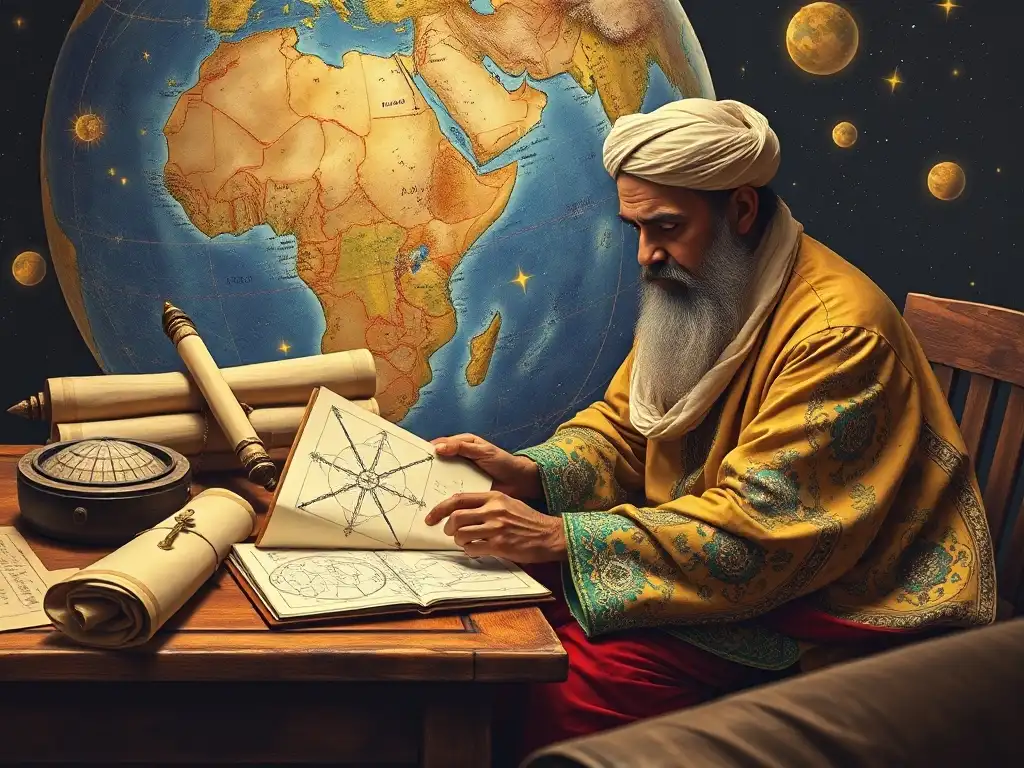
Ancient Indian mathematics played a crucial role in shaping the navigation techniques used by seafarers and explorers throughout history. The concepts developed by mathematicians such as Aryabhata and Brahmagupta provided vital tools for understanding celestial navigation, cartography, and the measurement of time and distance.
- Spherical Geometry: The development of spherical geometry allowed navigators to calculate distances across the Earth's surface efficiently. This mathematical framework was vital for determining the latitude and longitude of various locations.
- Astronomy and Navigation: Ancient Indian astronomers devised methods to predict celestial events, such as eclipses and planetary positions, which were essential for navigators. The Surya Siddhanta, a seminal astronomical text, includes sophisticated calculations that influenced navigation practices.
- Use of Zero and Decimal System: The introduction of the concept of zero and the decimal system enabled more accurate calculations in navigation, facilitating better distance measurements and mapping.
The influence of these mathematical principles extended beyond India, impacting maritime navigation in other cultures, particularly during the medieval period.
The Importance of Recognizing Ancient Contributions in Modern Contexts
Recognizing the contributions of ancient Indian mathematics to navigation is essential for several reasons:
- Cultural Heritage: Acknowledging these contributions fosters a deeper appreciation for the rich cultural heritage of India. It highlights the intellectual achievements of ancient Indian civilizations and their role in the global history of mathematics and science.
- Interdisciplinary Connections: Understanding the links between ancient mathematics and navigation encourages interdisciplinary studies, integrating history, mathematics, and maritime studies. This can lead to new insights and collaborative research opportunities.
- Educational Value: Incorporating the history of ancient Indian mathematics into modern curricula can inspire students and scholars alike, showcasing the relevance of historical knowledge in contemporary scientific and mathematical discussions.
Future research in the realm of ancient Indian mathematics and navigation can take various exciting directions:
- Intertextual Studies: Scholars can explore the connections between ancient Indian mathematical texts and those from other cultures, revealing cross-cultural influences in navigation techniques.
- Archaeological Investigations: Continued archaeological work in sites related to ancient Indian maritime activities may yield new artifacts and texts that provide further insights into navigational practices.
- Mathematical Reconstruction: Modern mathematicians and historians can work together to reconstruct ancient navigation algorithms, applying them to contemporary problems in navigation and exploration.
By pursuing these research avenues, we can enrich our understanding of how ancient Indian mathematics not only influenced navigation but also contributed to the broader narrative of human exploration and discovery.
Frequently Asked Questions
Ancient Indian mathematics provided advanced techniques and tools such as trigonometry and geometry, which were crucial for navigators in understanding celestial movements and mapping routes.
How did the Indus Valley Civilization contribute to mathematical concepts?
The Indus Valley Civilization showcased early forms of measurement and geometry, evident in their urban planning and architectural designs, laying the groundwork for future mathematical advancements.
What are some key contributions of the Gupta Empire to mathematics?
The Gupta Empire is known for significant advancements in mathematics, including the concept of zero, the decimal system, and sophisticated calculations, greatly aiding navigational methods.
Ancient Indian mathematics introduced methods that improved navigation techniques, such as using spherical geometry for calculating distances and angles, facilitating exploration beyond known territories.
Ancient Indian mathematicians influenced global navigation by sharing their mathematical knowledge with traders and scholars, which played a vital role in cross-cultural exchanges during the medieval period.
The profound influence of ancient Indian mathematics on navigation and exploration is more relevant today than ever. As we navigate an increasingly interconnected world, the mathematical principles developed centuries ago continue to guide our journeys across land and sea. The intricate calculations and innovative techniques pioneered by ancient Indian mathematicians not only laid the groundwork for modern navigation but also remind us of the rich tapestry of knowledge that transcends time and culture. The legacy of these scholars is a testament to the power of human ingenuity in overcoming the challenges of exploration.
The impact of ancient Indian mathematics extends far beyond historical significance; it has shaped our cultural and social landscapes in ways we are only beginning to appreciate. The methods of navigation that emerged from this mathematical tradition have influenced global trade, exploration, and even our understanding of the cosmos. As we reflect on this legacy, we are reminded of the interconnectedness of knowledge across civilizations. Mathematics is the language with which God has written the universe.
— Galileo Galilei. This quote encapsulates the idea that the mathematical principles developed by ancient Indian scholars are not just relics of the past but are foundational to our understanding of the world today.
As we look to the future, let us embrace the lessons of ancient Indian mathematics in our own lives. I invite you to reflect on how the principles of precision, innovation, and exploration can inspire your personal and professional journeys. Whether you are navigating the complexities of modern life or charting new territories in your career, the wisdom of the past can guide you toward new horizons. By honoring this legacy, we not only pay tribute to those who came before us but also empower ourselves to forge a path of discovery and understanding in a rapidly changing world.
Thank you for diving into the fascinating world of ancient Indian mathematics with us! You've gained valuable insights into how these brilliant thinkers shaped navigation and exploration. Now, it's time to transform your newfound knowledge into action!
Here are some exciting steps to deepen your exploration:
- Dive Deeper: Research further on ancient Indian mathematicians like Aryabhata and Brahmagupta. Discover how their innovations continue to impact modern mathematics.
- Share the knowledge! Discuss this article with friends or in social media groups focused on history or mathematics. Help spread awareness of this incredible legacy!
- Try it yourself: Experiment with navigation techniques used in ancient times. Utilize compasses and observe the stars to guide you on a small adventure.
As you reflect on these ancient contributions, we invite you to ponder: How can the ancient methods of navigation inspire your approach to exploring new ideas today? Let's get the conversation started!