
How Ancient India’s Trade Relations Influenced Its Numerical Systems


Welcome to Ancient India History, where we embark on a fascinating journey through the rich tapestry of ancient Indian civilizations. Here, we delve into the intricate connections between trade relations and numerical systems, revealing how these interactions shaped the mathematical landscape of ancient India. Have you ever wondered how the thriving trade networks influenced the development of innovative numerical concepts? Join us as we uncover the profound impact of commerce on the evolution of mathematics in one of history's most vibrant cultures. Let’s explore the legacy that continues to inspire today!
- Introduction to Ancient India’s Trade Relations and Numerical Systems
- The Historical Context of Trade in Ancient India
- The Influence of Trade on Numerical Systems in Ancient India
- Key Numerical Contributions from Ancient Indian Traders
- Case Studies: Trade-Driven Innovations in Numerical Systems
- Comparison of Ancient Indian Numerical Systems with Other Cultures
- The Legacy of Ancient India’s Trade and Numerical Innovations
- Conclusion: The Interconnection of Trade and Mathematics in Ancient India
-
Frequently Asked Questions
- What were the primary trade routes used in ancient India?
- How did trade influence the development of numerical systems in ancient India?
- What role did the Indus Valley Civilization play in ancient Indian trade?
- How did the Gupta Empire contribute to the advancement of mathematics?
- What were the main goods traded in ancient India?
- Final Reflection: The Enduring Legacy of Ancient India's Trade and Numerals
- Unlock the Secrets of Ancient Trade and Numbers!
Introduction to Ancient India’s Trade Relations and Numerical Systems
The intricate tapestry of ancient India is woven with threads of trade, culture, and innovation that collectively shaped its civilizations. Among the many contributions of ancient Indian societies, the evolution of numerical systems stands out as a remarkable achievement that not only facilitated commerce but also influenced mathematical thought across the globe.
This article delves into how ancient India’s trade relations influenced its numerical systems, highlighting the connection between the two and showcasing their significance in the broader context of mathematics. By exploring this intersection, we can better understand the profound impact of trade on the development of numerical concepts that have defined Indian culture and contributed to global mathematics.
Overview of Ancient India’s Trade Dynamics
Ancient India was a bustling hub of trade, characterized by a rich network that extended across continents. From the Indus Valley Civilization, renowned for its advanced urban planning and craftsmanship, to the thriving trade routes established during the Maurya and Gupta Empires, trade played a pivotal role in the economic and cultural exchanges of the time. Key features of ancient India's trade dynamics included:
- Geographical Advantages: The vast subcontinent was strategically located near vital trade routes, including the Silk Road and maritime paths connecting it to Central Asia, the Middle East, and beyond.
- Diverse Commodities: Ancient India was known for its high-quality textiles, spices, gems, and metals, which attracted traders from various regions. This diversity not only enriched local economies but also fostered cultural exchanges.
- Cultural Interactions: Trade facilitated the exchange of ideas, religions, and art forms. Merchants and travelers brought back knowledge of different cultures, which influenced local practices and traditions.
The Importance of Trade in Ancient Indian Civilizations
Trade was not merely an economic activity; it was a cornerstone of ancient Indian civilization that contributed significantly to its development. The importance of trade can be observed through several key aspects:
- Economic Prosperity: Trade stimulated economic growth by creating job opportunities and fostering entrepreneurship. Wealth generated from commerce allowed for advancements in various fields, including mathematics.
- Technological Innovations: The need for efficient trade practices led to the development of innovations such as standardized weights and measures, which were essential for fair transactions and influenced the formulation of numerical systems.
- Cultural Exchange and Knowledge Transfer: Trade routes were conduits for intellectual exchange, facilitating the transmission of mathematical concepts from neighboring cultures. This exchange contributed to the refinement and evolution of Indian numerical systems.
Introduction to Numerical Systems in Ancient India
The development of numerical systems in ancient India is a fascinating topic that reflects the civilization's ingenuity and adaptability. The earliest forms of mathematics in India can be traced back to the Indus Valley Civilization, where evidence of early counting systems and measurements has been discovered. As trade expanded, so did the complexity of numerical systems, leading to significant innovations:
- The Place Value System: Ancient Indians are credited with the development of the place value system, which revolutionized mathematics by allowing for the expression of large numbers with ease and clarity.
- Zero as a Concept: The introduction of zero, a groundbreaking mathematical concept, is attributed to ancient Indian mathematicians. This innovation was crucial for calculations and contributed to the overall advancement of mathematics.
- Influence on Global Numerals: The numerical systems developed in ancient India laid the groundwork for the Hindu-Arabic numeral system, which would eventually spread throughout the world and become the basis for modern mathematics.
Through an exploration of trade relations and numerical systems, we gain insight into how ancient India's contributions to mathematics were not isolated achievements but rather intertwined with its vibrant trade dynamics. This connection is vital for appreciating the rich history of ancient India and its lasting impact on the world of mathematics.
The Historical Context of Trade in Ancient India

Trade played a pivotal role in shaping ancient India's economic landscape and its numeral systems. The geographical positioning of the Indian subcontinent, surrounded by the Indian Ocean and bordered by mountain ranges, facilitated vibrant trade networks. From as early as the Indus Valley Civilization (circa 3300–1300 BCE), trade relations began to flourish, connecting India with distant lands such as Mesopotamia, Egypt, and later, Southeast Asia and the Roman Empire.
The emergence of trade not only contributed to the wealth of various kingdoms but also led to the exchange of ideas, cultures, and technologies, which significantly impacted the development of numerical systems in ancient India. The need for accurate record-keeping in trade transactions prompted innovations in mathematics, leading to the evolution of numeral systems that would influence cultures far beyond India's borders.
Major Trade Routes and Their Significance
Ancient India was crisscrossed by several major trade routes, each serving as a conduit for commerce and cultural exchange. Notable routes include:
- The Silk Road: Though primarily associated with China, the Silk Road extended into India, facilitating the trade of silk, spices, and precious stones.
- The Grand Trunk Road: This ancient highway connected the eastern and western regions of India, enhancing trade between key cities like Pataliputra and Taxila.
- Maritime Routes: The Indian Ocean trade network connected India with Southeast Asia, Arabia, and Africa, allowing for the exchange of goods such as spices, textiles, and metals.
These routes were not just vital for the movement of goods but also served as channels for the transmission of knowledge, including advancements in mathematics and numeral systems. The interactions along these trade routes led to the adoption and adaptation of various numerical concepts, demonstrating the interconnectedness of trade and mathematics in ancient India.
Key Trade Partners of Ancient India
Ancient India engaged in extensive trade relations with several key partners, each contributing to the evolution of its numerical systems. Some of these partners included:
- Mesopotamia: Trade with Mesopotamian civilizations introduced Indians to cuneiform writing and the concept of timekeeping, influencing their own systems of measurement.
- Persian Empire: The Achaemenid Empire facilitated trade routes that introduced Indian merchants to advanced Persian numerals, which further enriched Indian mathematical practices.
- Rome: The Roman Empire was a significant trade partner, exchanging goods such as spices and textiles. This interaction also led to the incorporation of Roman numerical concepts into Indian commerce.
These relationships fostered a rich exchange of ideas, resulting in the enhancement of mathematical practices and numeral systems in ancient India.
Goods Traded and Their Impact on Society
The goods traded in ancient India were diverse and had profound impacts on society, driving economic growth and cultural exchange. Key traded goods included:
- Spices: India was renowned for its spices, which were highly sought after in global markets. The spice trade enhanced India's economic stature and necessitated the development of accurate measurement systems for trade.
- Textiles: Indian textiles, particularly silk and cotton, became staples in international trade. The demand for textiles not only spurred production but also required sophisticated counting systems for inventory management.
- Metals and Gems: Trade in precious metals and gemstones contributed to the wealth of Indian kingdoms, prompting advancements in metallurgy and the need for precise numerical calculations in transactions.
The exchange of these goods not only facilitated wealth accumulation but also encouraged social stratification, technological advancements, and the eventual rise of urban centers in ancient India. This flourishing trade environment laid the groundwork for the sophisticated numeral systems that would emerge, reflecting the cultural and economic complexities of ancient Indian civilization.
The Influence of Trade on Numerical Systems in Ancient India
How Trade Necessitated Advanced Numerical Systems
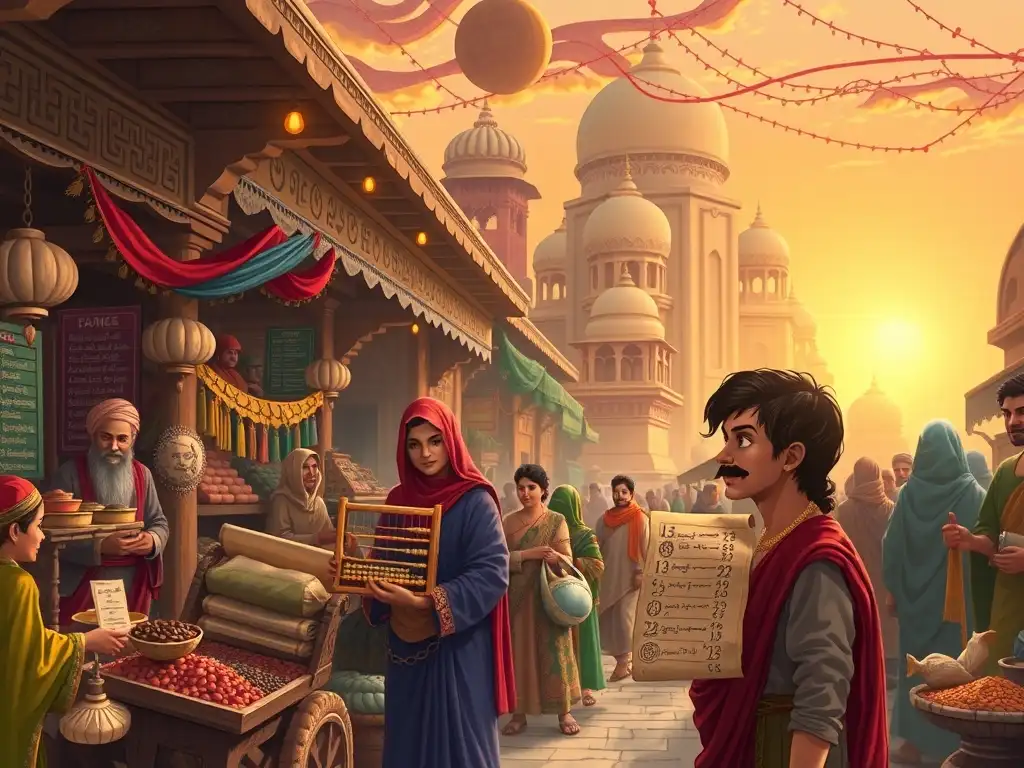
Trade was a crucial factor in the evolution of advanced numerical systems in ancient India. As commerce expanded, the need for efficient calculation and record-keeping became paramount. The bustling trade routes of the Indus Valley Civilization (circa 3300–1300 BCE) exemplify this necessity. Merchants required precise counting methods to manage transactions, assess goods, and maintain inventories.
To facilitate trade, ancient Indian traders developed a system of weights and measures, which included standardized units. This not only helped in fair trading but also encouraged the creation of numerical symbols that could represent larger quantities. The Brahmi numerals, emerging in the 3rd century BCE, were directly influenced by this commercial need. These numerals enabled merchants to perform calculations swiftly and accurately, thus enhancing trade efficiency.
The expansion of trade networks, especially with regions such as Mesopotamia and Persia, introduced new mathematical concepts and techniques. For instance, the exchange of goods necessitated the recording of transactions, leading to the gradual adoption of more sophisticated numerical systems, including the place-value system, which is foundational to modern mathematics.
The Development of Measurement Systems for Trade
The establishment of measurement systems in ancient India was significantly driven by trade activities. As commodities such as textiles, spices, and metals were exchanged, the need for standardized measurements became evident. The ancient Indian civilization crafted various units of measurement based on weight, volume, and length, which were crucial for ensuring fair trade practices.
Key Measurement Units:
- Weight: The tola and maund were commonly used units for measuring weight. The tola, which is approximately 11.66 grams, was particularly significant in trade, especially for precious metals.
- Volume: Liquid commodities were often measured using the pala, which was roughly equivalent to 10 liters.
- Length: For distance, ancient Indians used units like angula (finger breadth) and hasta (cubit), which facilitated the accurate measurement of goods.
These measurement systems not only simplified trade but also led to the documentation of calculations and transactions. The integration of these systems into daily trade practices contributed to the refinement of mathematical operations, encouraging the development of arithmetic and geometry.
Trade and the Evolution of Mathematical Concepts
The interaction fostered by trade significantly influenced the evolution of mathematical concepts in ancient India. As traders engaged with diverse cultures, they encountered various mathematical practices and ideas. This exchange led to the synthesis of knowledge, propelling advancements in mathematical thought.
One notable concept that emerged was the idea of zero as a placeholder. The necessity to express large numbers and perform complex calculations in trade contexts prompted the development of the concept of zero, which was first documented in ancient Indian texts around the 5th century CE. This innovation was revolutionary, enabling a more profound understanding of mathematics and laying the groundwork for the numerical systems we use today.
Moreover, trade practices encouraged the application of mathematical concepts such as ratios and proportions, which were essential for pricing goods, determining profit margins, and managing resources effectively. The establishment of these mathematical foundations not only streamlined trade but also enriched the intellectual landscape of ancient India, influencing future generations of mathematicians and scholars.
The interplay of trade and mathematics in ancient India was pivotal in shaping the numerical systems that emerged during this period. As trade expanded, so did the sophistication of mathematical concepts, ultimately leading to significant contributions to the field of mathematics that resonate to this day.
Key Numerical Contributions from Ancient Indian Traders

The trade practices of ancient India were not only instrumental in the exchange of goods but also played a crucial role in the development of numerical systems. The interactions with various cultures and civilizations fostered an environment conducive to mathematical innovation, particularly in the realm of commerce. As trade expanded, the need for more sophisticated numerical methods became apparent, leading to several key contributions.
The Concept of Zero and Its Trade Relevance
The introduction of the concept of zero (शून्य, śūnya) stands as one of the most significant mathematical contributions emerging from ancient India. This innovation was pivotal in simplifying calculations and bookkeeping practices among traders.
- Historical Context: The earliest recorded use of zero dates back to the 5th century CE in the work of mathematicians like Aryabhata. However, its roots can be traced back even further, as evidenced by inscriptions and texts from earlier periods.
- Trade Application:
- In trade, zero allowed merchants to record and calculate profits and losses more effectively. For instance, when determining a net gain or loss, zero served as a crucial placeholder.
- The ability to express absence in quantity enabled traders to manage inventories better, leading to more organized trade practices.
The adoption of zero transformed not only commercial transactions but also laid the groundwork for future mathematical developments in India and beyond.
Place Value System and Its Adoption in Trade
The place value system, which assigns value to a digit based on its position within a number, was another significant numerical advancement in ancient India. This system, which is foundational to modern mathematics, was particularly advantageous for traders dealing with large quantities.
- Mechanics of the System:
- In this system, the value of a numeral is determined by its position (units, tens, hundreds, etc. ), which simplifies the process of addition, subtraction, and multiplication.
- For instance, the number 345 is understood as 3 hundreds, 4 tens, and 5 units, facilitating quick calculations.
- Commercial Impact:
- The place value system enabled merchants to perform large-scale transactions with ease. When calculating bulk orders or total sales, the efficiency of this system reduced the likelihood of errors.
- The widespread adoption of this system among traders led to a standardization of numerical representation, which further streamlined trade practices across regions.
As trade networks expanded, the place value system became critical in enhancing economic interactions among the diverse cultures that ancient India engaged with.
The Use of Fractions and Ratios in Commercial Transactions
Fractions and ratios were essential tools in the daily activities of ancient Indian traders, particularly in pricing, measuring, and dividing goods.
- Application in Trade:
- Traders often dealt with goods that required division into smaller portions, necessitating a solid understanding of fractions. For example, when distributing bulk commodities like grains or textiles, fractions allowed for fair and precise divisions.
- Ratios played a vital role in pricing strategies. Traders used ratios to compare the value of different products, aiding in negotiations and ensuring equitable trade practices.
- Cultural Exchange Influence:
- The interactions with other cultures through trade networks facilitated the exchange of ideas regarding fractions and ratios. This cross-pollination of knowledge contributed to the refinement of these concepts in ancient Indian commerce.
As a result, the adeptness in using fractions and ratios not only advanced mathematical thinking but also enhanced the efficiency and fairness of trade practices, ultimately supporting the economic prosperity of ancient Indian civilizations.
The numerical innovations stemming from ancient India's trade relations reveal a profound interplay between commerce and mathematics, illustrating how the need for efficient trade practices spurred significant advancements in numerical systems. These contributions remain a testament to the ingenuity of ancient Indian civilizations and their lasting impact on mathematics.
Case Studies: Trade-Driven Innovations in Numerical Systems

The Role of the Indus Valley Civilization in Trade and Mathematics
The Indus Valley Civilization (IVC), flourishing around 2500 BCE, is known for its advanced urban planning, architecture, and social organization. However, one of its most significant contributions lies in its trade practices, which necessitated the development of effective numerical systems. The IVC engaged in extensive trade with neighboring regions, including Mesopotamia and Persia, leading to the need for standardized measurements and record-keeping methods.
Trade as a Catalyst for Numerical Development
- Weights and Measures: The IVC utilized a system of standardized weights, which were made from stone and varied in size. These weights were crucial for trade, ensuring fairness in the exchange of goods. The use of these weights indicates an understanding of units of measure, which likely influenced their numerical systems.
- Seals and Inscriptions: The discovery of seals with inscriptions suggests that the IVC developed a system of writing and numerals to document transactions. Many of these seals exhibited symbols that could represent numerical values, showcasing an early form of record-keeping that was essential for trade.
- Decimal System: Evidence suggests that the IVC may have employed a rudimentary form of the decimal system in their trade practices. This system would later be refined and expanded upon by subsequent civilizations, laying the groundwork for the more sophisticated numeral systems seen in later Indian history.
The interplay between trade and mathematics in the Indus Valley Civilization exemplifies how economic activities can drive the innovation of numerical systems, which were fundamental for their commerce.
Gupta Empire’s Contributions to Numerical Systems through Commerce
The Gupta Empire (circa 320 to 550 CE) is often hailed as a golden age of science and mathematics in ancient India. The flourishing trade during this period significantly influenced the development of sophisticated numerical systems, most notably the introduction of the concept of zero and the decimal place value system.
Innovations Spurred by Trade
- Cultural Exchange: The Gupta Empire established extensive trade networks that connected it with regions as far away as Europe and Southeast Asia. This cultural exchange facilitated the integration of mathematical concepts from various civilizations, enriching the existing numerical systems.
- Commercial Documentation: The booming trade led to the need for detailed commercial records. Merchants and traders began utilizing advanced arithmetic to calculate profits, losses, and taxes. This practical application of mathematics necessitated the use of more complex numerical systems, including the widespread adoption of the numeral system that incorporated zero.
- Mathematical Texts: Influential mathematicians like Aryabhata and Brahmagupta emerged during the Gupta period, refining numerical concepts. Aryabhata’s work on arithmetic and algebra laid the foundation for mathematical thought in India, which was heavily influenced by the trade practices of the time.
The Legacy of Gupta Innovations
The innovations in numerical systems during the Gupta Empire had a profound impact on not only ancient India but also on the world. The introduction of the decimal system, along with the concept of zero, eventually found its way into the global mathematical lexicon, revolutionizing mathematics as we know it today.
The trade relations of ancient India, particularly during the Indus Valley Civilization and the Gupta Empire, played a pivotal role in shaping the numerical systems that emerged. These developments were not merely academic; they were deeply rooted in the practical needs of commerce and trade, illustrating the symbiotic relationship between economic activities and mathematical innovation.
Comparison of Ancient Indian Numerical Systems with Other Cultures

In the broad tapestry of ancient civilizations, the numerical systems developed in India exhibit unique characteristics that both align with and diverge from those of other cultures. This section delves into the intricate relationships between ancient Indian numerals and those of other significant civilizations.
Similarities and Differences with Mesopotamian Numerals
The Mesopotamian numeral system, one of the earliest known, utilized a base-60 (sexagesimal) approach, which contrasts sharply with the base-10 (decimal) system commonly used in ancient India. However, both systems shared fundamental similarities that highlight the universal need for advanced counting and record-keeping methods.
- Similarities:
- Positional Value: Both ancient Indian and Mesopotamian systems employed positional notations, which allowed for greater efficiency in representing large numbers. For instance, in both systems, the position of a digit affects its value.
- Facilitation of Trade: The development of these numerical systems was heavily influenced by the demands of trade, as both civilizations sought effective ways to manage commerce and taxation.
- Differences:
- Base System: While Mesopotamians used a base-60 system, ancient Indian numerical systems predominantly relied on a base-10 structure. This fundamental difference shaped the complexity and usability of the systems.
- Symbols and Representation: The symbols used in Mesopotamian numerals were cuneiform, whereas ancient India developed its own unique symbols that eventually evolved into the numerals used today. For example, the numeral for '1' in Mesopotamia was represented differently than in ancient Indian texts.
The interaction between these civilizations, particularly through trade routes, allowed for the exchange of mathematical concepts, yet the distinct cultural contexts led to divergent systems that catered to their specific needs.
Influence of Ancient Indian Numerals on Islamic and European Systems
The impact of ancient Indian numerals extends far beyond its own borders, significantly influencing both Islamic and European numerical systems. The dissemination of these numerals can be traced through key historical movements and interactions.
- Adoption by Islamic Scholars: During the medieval period, Islamic scholars encountered ancient Indian numerals during their trade and conquests. The introduction of the decimal system, combined with the concept of zero (a pivotal element of Indian mathematics), transformed Islamic mathematics. Notable scholars such as Al-Khwarizmi played a crucial role in adopting and adapting these numerals, which further facilitated advancements in algebra and arithmetic.
- Transmission to Europe: The transmission of Indian numerals to Europe occurred primarily through Arabic translations of Indian texts. By the 10th century, European mathematicians began incorporating these numerals into their work, leading to a significant shift from Roman numerals to a more efficient decimal system. This transition was notably championed by figures like Fibonacci, whose work in the 13th century popularized Indian numerals in Europe.
- Legacy and Modern Usage: The influence of ancient Indian numerals persists today, as the digits 0-9 form the foundation of the modern numerical system used globally. The efficiency and simplicity of this system owe much to its ancient Indian origins, illustrating how trade and cultural exchange facilitated mathematical evolution.
The numerical systems of ancient India not only served its own civilization but also laid the groundwork for mathematical practices in other cultures, showcasing the profound interconnectedness of human innovation through trade and intellectual exchange.
The Legacy of Ancient India’s Trade and Numerical Innovations
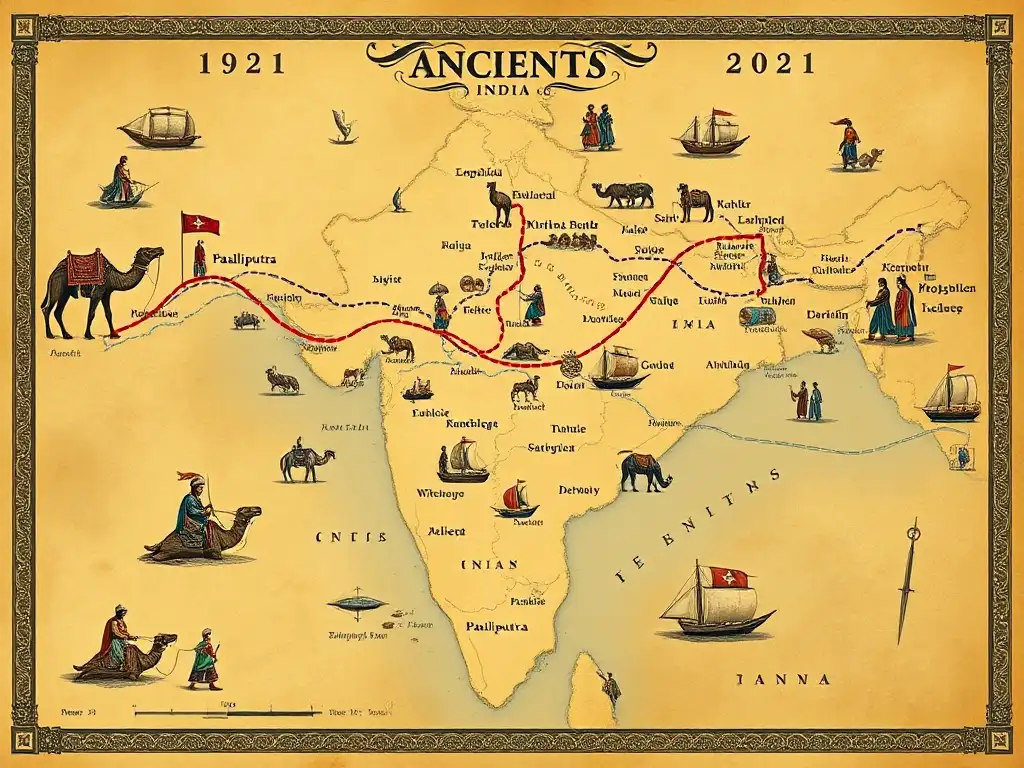
The legacy of ancient India's trade relations is deeply intertwined with its numerical innovations. The trade networks established by Indian civilizations, particularly during the Indus Valley Civilization and later periods, facilitated not only the exchange of goods but also the sharing of knowledge, including mathematical concepts. Ancient India’s trade routes connected it with diverse cultures, leading to a rich tapestry of intellectual exchange that significantly shaped its numerical systems.
The development of a sophisticated numerical system in ancient India can be attributed in part to the demands of trade. Merchants required efficient means of calculating weights, measures, and currency transactions. This necessity spurred innovations in mathematics, such as the introduction of the decimal system and the concept of zero, which were crucial for accurate accounting and record-keeping.
Moreover, the widespread use of these numerical systems in trade practices set the stage for their later adoption in other cultures. The influence of ancient Indian trade extended beyond borders, as merchants traveled along the Silk Road and maritime trade routes, disseminating mathematical knowledge and practices to areas such as Persia and beyond.
Long-term Effects on Mathematics and Trade Practices
The long-term effects of ancient India's trade on mathematics can be observed in several key areas:
- Decimal System Adoption:
- The decimal system, which includes numerals 0-9, emerged from the practical needs of merchants. Its adoption revolutionized calculations and record-keeping, leading to more complex mathematical operations.
- Spread of Zero:
- The introduction of zero as a numeral was a groundbreaking advancement. It allowed for more efficient calculations and played a significant role in the development of algebra and calculus. The concept of zero was disseminated through trade, influencing various cultures and laying the groundwork for future mathematical discoveries.
- Standardization of Measurements:
- Trade necessitated the standardization of weights and measures, which in turn required precise calculations. This standardization led to improved accuracy in trade practices and influenced mathematical teachings.
- Cultural Exchanges:
- Trade fostered cultural exchanges that enriched mathematical thought. Indian scholars interacted with Greek, Persian, and later Islamic mathematicians, leading to a cross-pollination of ideas that shaped the development of mathematics in the ancient world.
The impact of these developments is evident in later mathematical advancements in both India and abroad, showcasing how ancient Indian trade practices were pivotal in shaping the trajectory of mathematical history.
How Ancient Indian Trade Influenced Global Numerical Systems
Ancient India's trade not only affected local practices but also significantly influenced global numerical systems. The interactions between Indian traders and other civilizations facilitated the spread of Indian mathematical concepts around the world. Here are some noteworthy influences:
- Transmission to the Islamic World:
- The mathematical texts and practices of ancient India were translated into Arabic during the 8th century. Scholars such as Al-Khwarizmi built upon Indian numeral systems, which laid the foundation for modern algebra.
- Integration into European Mathematics:
- Through translations from Arabic into Latin during the medieval period, Indian numerical systems, including the use of zero and the decimal notation, were introduced to Europe. This integration was critical in the development of European mathematics, culminating in the Renaissance.
- Global Trade Connections:
- The extensive trade networks established by ancient Indian merchants facilitated the movement of not just goods but also knowledge. As traders traveled, they carried mathematical knowledge with them, enriching the numerical systems of other cultures.
- Cultural Syncretism:
- The blending of Indian mathematical concepts with local practices in the regions they interacted with led to unique adaptations. For example, the Hindu-Arabic numeral system that emerged was a product of this cultural syncretism, which is still in use today.
Ancient India’s trade relations played a crucial role in the evolution and dissemination of numerical systems. The innovations that arose from the practical needs of trade not only transformed mathematics in India but also had a lasting impact on global numerical systems, illustrating the profound connections between commerce and intellectual development in ancient civilizations.
Conclusion: The Interconnection of Trade and Mathematics in Ancient India
Summary of Key Points on Trade and Numerical Systems
Ancient India’s extensive trade networks played a pivotal role in shaping its numerical systems. The primary points highlighting this interconnection include:
- Cultural Exchange: Trade facilitated the exchange of ideas and innovations, leading to the integration of various numerical concepts from neighboring regions. This exchange enriched the existing numeral systems in ancient India, particularly through interactions with the Mesopotamian and Hellenistic cultures.
- Development of Place Value System: The necessity for efficient accounting in trade transactions contributed significantly to the development of the place value system in ancient Indian mathematics. The use of a base-10 system, which is foundational to modern numerals, allowed for the representation of large numbers and simplified calculations.
- Symbolic Representation: The emergence of symbols to represent numbers, such as the use of zero, can be traced back to the practical needs of trade. These innovations enabled merchants to conduct complex calculations and maintain accurate records.
- Influence on Trade Routes: The establishment of trade routes, such as the Silk Road, not only facilitated the exchange of goods but also the dissemination of mathematical knowledge. Indian numerals spread beyond the subcontinent, influencing mathematical systems in other cultures.
The Lasting Impact of Ancient India’s Trade Relations on Mathematics
The trade relations in ancient India had a profound and lasting impact on the development of mathematics, particularly in the context of numerical systems. Here are some key influences:
- Global Spread of Indian Numerals: The numeral system developed in ancient India ultimately spread to the Arab world and then to Europe. This transition facilitated a significant shift in mathematical practices globally, as the efficiency of Indian numerals replaced more cumbersome systems previously in use.
- Integration of Diverse Mathematical Concepts: Through trade, ancient India absorbed and integrated various mathematical ideas from cultures it interacted with, including techniques for calculation and geometry. This synthesis fostered a unique mathematical identity that not only advanced local practices but also contributed to a global mathematical heritage.
- Foundation for Future Scholars: The numerical systems established during this period laid a solid foundation for future Indian mathematicians, such as Aryabhata and Brahmagupta. Their work would later influence the fields of astronomy and algebra, further cementing India’s legacy in mathematics.
- Economic and Intellectual Growth: The symbiotic relationship between trade and mathematics facilitated economic growth in ancient India. Efficient accounting systems and innovative mathematical practices allowed for more complex economic transactions, which in turn promoted intellectual pursuits.
The interplay between ancient India’s trade relations and its numerical systems not only shaped the mathematical landscape of the region but also contributed to a broader global mathematical tradition. Understanding this relationship highlights the significance of trade as a catalyst for intellectual advancement in ancient civilizations.
Frequently Asked Questions
What were the primary trade routes used in ancient India?
Ancient India utilized several key trade routes, including the Silk Road and Maritime routes, which facilitated the exchange of goods and ideas with neighboring civilizations.
How did trade influence the development of numerical systems in ancient India?
Trade necessitated the use of efficient numerical systems for commerce, which led to the development of innovative mathematical concepts and the popularization of the Hindu-Arabic numeral system.
What role did the Indus Valley Civilization play in ancient Indian trade?
The Indus Valley Civilization was pivotal in early trade, utilizing advanced urban planning and resources, which established trade links with Mesopotamia and other regions.
How did the Gupta Empire contribute to the advancement of mathematics?
During the Gupta Empire, notable scholars like Aryabhata made significant advancements in mathematics, solidifying the use of zero and the decimal system, which were crucial for trade calculations.
What were the main goods traded in ancient India?
Ancient India was known for trading spices, textiles, precious stones, and metals, which were highly sought after in global markets and contributed to its economic prosperity.
Final Reflection: The Enduring Legacy of Ancient India's Trade and Numerals
In exploring the intricate relationship between ancient India's trade and its numerical systems, we uncover a profound connection that resonates with our modern world. The exchange of goods and ideas not only facilitated economic growth but also laid the groundwork for mathematical innovations that continue to shape our lives today. The legacy of these ancient practices reminds us that the foundations of our current systems are often rooted in the past, and understanding this lineage is crucial for appreciating the complexities of our contemporary society.
The influence of ancient trade routes on the development of numerical systems is a testament to the power of cultural exchange. As we navigate our increasingly interconnected world, we can see echoes of these ancient practices in our daily lives. The way we communicate, calculate, and conduct business has been profoundly shaped by the innovations of our ancestors. As the historian David Landes once said, The great achievements of civilization have come from the interplay of cultures.
This ongoing dialogue between different societies highlights the importance of collaboration and the sharing of knowledge, which remains vital in our globalized economy.
As we reflect on the lessons from ancient India, let us consider how we can apply these insights in our own lives. Embrace the spirit of curiosity and collaboration that fueled the trade of ideas and innovations in the past. Take a moment to reflect on how you can foster connections in your own community, whether through sharing knowledge, supporting local businesses, or engaging in cultural exchanges. By doing so, you not only honor the legacy of ancient India but also contribute to a future where collaboration and understanding continue to thrive.
Unlock the Secrets of Ancient Trade and Numbers!
Thank you for delving into the fascinating world of Ancient India’s trade and its remarkable impact on numerical systems. Your interest not only uncovers a rich history but also inspires deeper connections with how these ancient practices shape our modern lives. Now, let's take the next step together to further explore this incredible journey!
- Dive deeper: Research specific ancient trade routes and their contributions to mathematics. Consider creating a timeline to visualize their influence!
- Join the conversation: Share your thoughts on the relevance of ancient numerical systems in today’s world. Engage with our community by commenting below or on our social media!
- Be a history advocate: Introduce friends or family to the incredible stories of Ancient India. Host a casual discussion or share your findings online!
What aspect of Ancient India’s trade and numerical innovations do you find most surprising or impactful? We invite you to share your insights with us!