
The Historical Context of Mathematics in the Gupta Empire

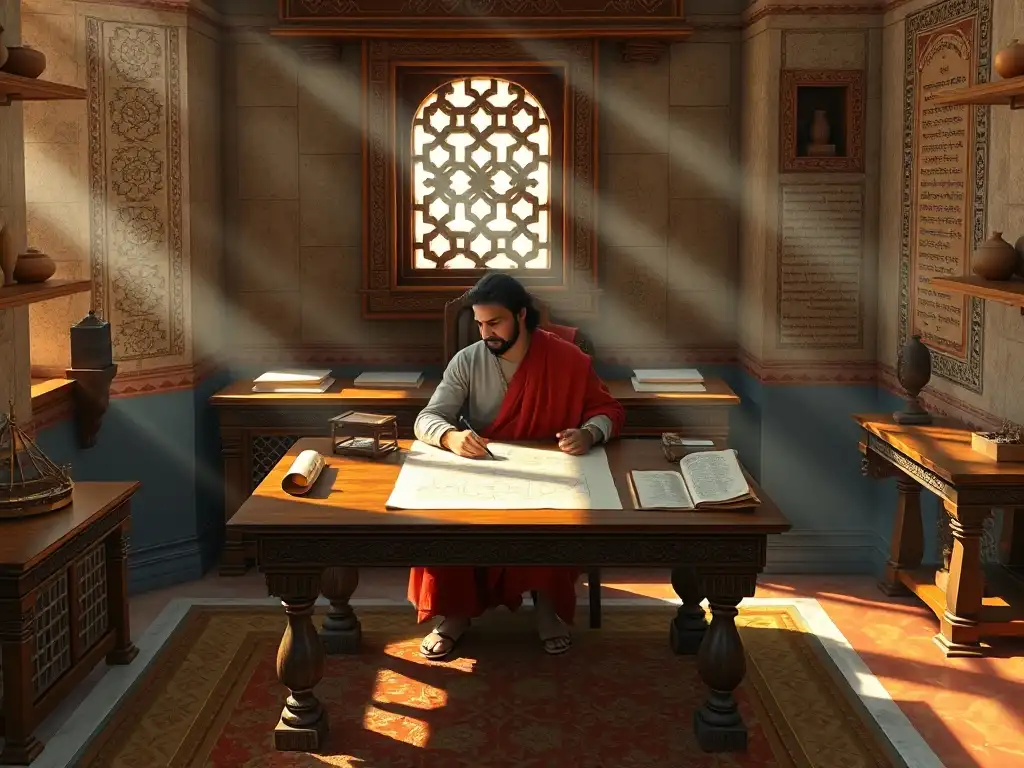
Welcome to Ancient India History, where we delve into the rich tapestry of civilizations that shaped the subcontinent. In this exploration, we shine a spotlight on an often-overlooked topic: Mathematics in Gupta Empire history. This era, renowned for its remarkable advancements, laid the groundwork for modern mathematical concepts and innovations. Are you curious about how the brilliant minds of the Gupta period transformed mathematical thought? Join us as we unravel the fascinating story behind these monumental contributions and discover the profound legacy they left behind. Your journey into the depths of ancient wisdom starts here!
- Introduction to Mathematics in Gupta Empire History
- The Cultural and Intellectual Landscape of the Gupta Empire
- Key Contributions to Mathematics in Gupta Empire History
- Prominent Mathematicians of the Gupta Empire
- The Legacy of Gupta Mathematics in Later Civilizations
- Conclusion: The Enduring Impact of Mathematics in Gupta Empire History
- Frequently Asked Questions
- Final Reflection: The Enduring Legacy of Mathematics in Gupta Empire History
- Explore the Wisdom of Ancient Mathematics!
Introduction to Mathematics in Gupta Empire History

The Gupta Empire, often referred to as the "Golden Age of India," was a period marked by remarkable advancements in various fields, including mathematics. This era, which flourished from approximately 320 to 550 CE, saw significant contributions that laid the groundwork for modern mathematical concepts. The Gupta period was not only characterized by political stability and cultural prosperity but also by a remarkable intellectual fervor that fostered innovations in mathematics.
In this article, we will explore the historical context of mathematics during the Gupta Empire, delving into the key figures who emerged and the mathematical principles they developed. Through this exploration, we aim to highlight the significance of these contributions in shaping the trajectory of mathematics in subsequent civilizations and their lasting impact on the field.
Overview of the Gupta Empire
The Gupta Empire, founded by Maharaja Sri Gupta, is known for its vast territorial expanse that included much of the Indian subcontinent. This empire is often celebrated for its achievements in art, literature, astronomy, and science, which were facilitated by a conducive environment for intellectual discourse. Some key features of the Gupta Empire include:
- Political Stability: The centralized governance provided a peaceful atmosphere for scholars and mathematicians to thrive.
- Cultural Flourishing: The era witnessed a revival of Hindu culture, which stimulated interest in various academic pursuits, including mathematics.
- Patronage of Scholars: The Gupta rulers were known for their patronage of scholars, leading to the establishment of universities such as Nalanda, which attracted students and intellectuals from across Asia.
Significance of Mathematics during the Gupta Period
Mathematics during the Gupta Empire was not merely a tool for commerce or astronomy; it was a profound discipline that encompassed various fields such as algebra, geometry, and number theory. The significance of mathematics during this period can be summarized as follows:
- Advancements in Number Systems: The Gupta period saw the development of the decimal system and the concept of zero, which revolutionized mathematical calculations.
- Influence on Astronomy: Mathematicians like Aryabhata applied mathematical principles to astronomical studies, significantly enhancing the understanding of planetary movements.
- Integration of Mathematics in Daily Life: Mathematics was used in various aspects of daily life, including trade, architecture, and agriculture, showcasing its practical relevance.
The contributions made during the Gupta Empire are pivotal in the history of mathematics, influencing not only Indian scholars but also impacting mathematical thought across the globe in later centuries. Through examining these developments, we can appreciate the profound legacy of mathematics in Gupta Empire history.
The Cultural and Intellectual Landscape of the Gupta Empire

The Gupta Empire, often referred to as the Golden Age of India, was not only a time of political consolidation but also a flourishing period for cultural and intellectual advancements. This era, spanning from approximately 320 to 550 CE, witnessed significant developments in various fields including literature, science, and particularly mathematics. The environment fostered by the Gupta rulers attracted scholars, mathematicians, and philosophers, creating a vibrant intellectual milieu that facilitated the exchange of ideas and knowledge.
The Role of Scholars and Mathematicians
Scholars and mathematicians during the Gupta Empire played a pivotal role in the advancement of mathematical concepts. Prominent figures such as Aryabhata and Brahmagupta emerged, making substantial contributions that would influence mathematics for centuries. Aryabhata, in his seminal work Aryabhatiya, introduced the place value system and the concept of zero, which were revolutionary at the time.
Brahmagupta, another luminary, expanded upon Aryabhata's works and is best known for his book Brahmasphutasiddhanta, where he discussed arithmetic and algebraic concepts. He formulated rules for manipulating positive and negative integers and provided solutions to quadratic equations. The collaborative efforts among these scholars created a rich tapestry of mathematical thought, which was disseminated through various educational institutions, or gurukuls, across the empire.
The Gupta rulers actively promoted this intellectual culture by establishing centers of learning, thus enabling scholars to thrive. These centers became hubs for mathematical discourse, leading to the formulation of concepts that would later be integral to both Indian and global mathematics.
Influence of Religion and Philosophy on Mathematics
The interplay of religion and philosophy significantly influenced the development of mathematics in the Gupta Empire. Hindu philosophy, particularly concepts like Brahman and Maya, prompted deeper inquiries into the nature of reality, which in turn affected mathematical thought. The idea of infinity and the cyclical nature of time, as expressed in Hindu cosmology, encouraged mathematicians to explore complex concepts beyond mere calculations.
Additionally, religious texts and rituals demanded precise mathematical calculations for astronomical predictions and calendar systems. This need for accuracy in timing religious festivals and agricultural cycles led to the refinement of mathematical techniques. The Gupta mathematicians often integrated these religious and philosophical insights into their work, emphasizing the harmony between mathematics and the spiritual world.
For instance, the decimal system, which is foundational to modern mathematics, was significantly influenced by the need to represent large numbers in religious texts and astronomical calculations. The seamless blending of mathematics with religious observances illustrates how the Gupta Empire's cultural context shaped its mathematical heritage.
The Gupta Empire was a crucible for mathematical innovation, driven by the contributions of distinguished scholars and the profound influence of religious and philosophical thought. The legacy of mathematics in Gupta Empire history not only laid the groundwork for future advancements but also exemplified the interconnectedness of culture, intellect, and spirituality in ancient India.
Key Contributions to Mathematics in Gupta Empire History

Development of Number Systems
The Gupta Empire, flourishing from approximately 320 to 550 CE, marked a pivotal period in the development of mathematics. One of the most significant advancements during this time was the evolution of number systems, which laid the groundwork for modern mathematics. The mathematicians of the Gupta period made substantial contributions, particularly in the areas of numeral representation and mathematical operations.
Introduction of Zero and Decimal System
A groundbreaking development of this era was the introduction of the concept of zero as a numeral. This was not merely a placeholder; it represented the absence of a quantity and thus had profound implications for arithmetic and mathematical calculations. The decimal system, which is based on powers of ten, was also refined during the Gupta period.
- Key Points:
- Zero enabled the representation of large numbers and complex calculations.
- The decimal system simplified arithmetic operations and facilitated the recording of numerical data.
The significance of these innovations is highlighted in ancient texts, such as the "Aryabhatiya" by Aryabhata, where he elaborates on the use of zero and the decimal system in mathematical computations.
The Impact of Place Value System
The place value system, an extension of the decimal system, allowed for more complex calculations and a clearer understanding of numerical relationships. Each digit's value is determined by its position, enabling mathematicians to perform operations with greater ease and accuracy.
- Advantages of the Place Value System:
- Simplified addition and subtraction.
- Enabled multiplication and division of larger numbers.
- Enhanced computational models, leading to developments in algebra.
This system not only revolutionized mathematics in India but eventually spread to other cultures, influencing global mathematical practices.
Advances in Geometry and Algebra
The Gupta Empire was also a period of remarkable advancements in geometry and algebra. Mathematicians such as Brahmagupta and later Bhaskara II contributed significantly to these fields, producing works that would influence future generations.
Notable Theorems and Concepts
Among the noteworthy contributions to geometry during this period was Brahmagupta's formula for calculating the area of cyclic quadrilaterals. His work also included rules for dealing with negative numbers, which was revolutionary at the time. Additionally, the concept of algebra was advanced with the introduction of algorithms for solving quadratic equations.
- Key Theorems:
-
Brahmagupta's rules for operations with zero and negative numbers.
-
The area formula for cyclic quadrilaterals:
\[
A = \sqrt{(s-a)(s-b)(s-c)(s-d)}
\]
where \( s \) is the semiperimeter and \( a, b, c, d \) are the sides of the quadrilateral.
-
These theorems laid the foundation for algebraic structures that would be further developed in subsequent centuries.
Influence on Future Mathematical Thought
The mathematical advancements during the Gupta Empire had a lasting impact on both Indian and global mathematics. The concepts developed during this era influenced Islamic mathematicians in the medieval period, who adopted and expanded upon Indian mathematical theories.
- Long-term Effects:
- The transmission of mathematical knowledge to the Islamic Golden Age.
- The eventual incorporation of these ideas into European mathematics during the Renaissance.
The Gupta Empire's contributions to mathematics not only shaped the discipline in their time but also established a legacy that would endure and evolve for centuries to come.
Prominent Mathematicians of the Gupta Empire

The Gupta Empire, often referred to as the Golden Age of India, was not just notable for its advances in arts and culture but also for its significant contributions to mathematics. During this period, mathematicians made groundbreaking discoveries that laid the foundation for various mathematical principles still in use today. Two of the most prominent figures of this era were Aryabhata and Brahmagupta, whose works and theories have had a lasting impact on mathematics and astronomy.
Aryabhata: The Pioneer of Indian Mathematics
Aryabhata (476–550 CE) is hailed as one of the foremost mathematicians of ancient India. His innovative approach and profound insights into mathematics and astronomy set the stage for future developments.
Major Works and Contributions
Aryabhata is best known for his seminal work, the Aryabhatiya, which encompasses a wide range of topics, from arithmetic and algebra to geometry and astronomy. The text is divided into four sections:
- Gitika: Discusses the basic calculations of time and the motion of celestial bodies.
- Ganitaka: Focuses on arithmetic and algebra, including rules for calculations.
- Kalakriya: Deals with time calculations and the concept of zero.
- Goladhyaya: Explains spherical geometry and planetary motion.
One of Aryabhata's significant contributions is his introduction of the numeral system, which included the concept of zero as a placeholder. His work on approximating the value of π (pi) and his formulations of the square and cube roots are also noteworthy.
Aryabhata's Influence on Astronomy and Mathematics
Aryabhata's influence extended beyond mathematics into the realm of astronomy. He proposed a heliocentric model, suggesting that the Earth rotates on its axis and that the apparent motion of the stars is due to this rotation. His methods for calculating the positions of planets and eclipses were remarkably accurate for his time.
Aryabhata’s work inspired subsequent mathematicians and astronomers, not only in India but also in the Islamic world, where his texts were translated and further developed. His legacy is reflected in the continued study of his works and the enduring respect he garners in the field of mathematics.
Brahmagupta: Foundations of Algebra
Following Aryabhata, Brahmagupta (598–668 CE) emerged as a significant mathematical figure in Gupta Empire history, particularly known for his contributions to algebra and arithmetic.
Key Texts and Innovations
Brahmagupta's most renowned work, the Brahmasphutasiddhanta, serves as a crucial text in the history of mathematics. This work covers various topics, including:
- Arithmetic: Introducing rules for dealing with positive and negative numbers.
- Algebra: Brahmagupta established rules for solving quadratic equations and laid the groundwork for algebraic expressions.
His systematic approach toward mathematics was revolutionary, as he provided a clear methodology for solving problems, which was a departure from the more geometric approaches of earlier mathematicians.
Brahmagupta’s Rules for Arithmetic
Brahmagupta formulated several key rules that are foundational to modern arithmetic. Some of these rules include:
- The treatment of zero: Brahmagupta defined operations involving zero, stating that any number added to or subtracted from zero is the number itself.
- Operations with negative numbers: He introduced rules for the addition and multiplication of negative numbers, marking a significant advancement in mathematical thought.
His work not only influenced Indian mathematics but also permeated into the Islamic Golden Age, where his texts were translated and further expanded upon. Brahmagupta's contributions are considered essential in the evolution of mathematics, particularly in the development of algebra.
The Gupta Empire's mathematicians, Aryabhata and Brahmagupta, made significant strides that shaped the course of mathematics. Their works continue to be studied and celebrated for their innovative approaches, establishing a legacy that resonates through centuries.
The Legacy of Gupta Mathematics in Later Civilizations

The Gupta Empire, often referred to as the Golden Age of India, has left an indelible mark on the historical context of mathematics. This period, which spanned from approximately 320 to 550 CE, witnessed remarkable advancements in mathematical concepts and practices. The legacies of Gupta mathematics not only influenced contemporary scholars but also reverberated through subsequent civilizations, shaping the mathematical landscape in profound ways.
Transmission of Mathematical Knowledge
During the Gupta period, mathematical knowledge was primarily transmitted through texts, oral traditions, and scholarly interactions. Key texts, such as Aryabhata's Aryabhatiya and Brahmagupta's Brahmasphutasiddhanta, served as foundational works that codified mathematical concepts. These texts included various topics such as arithmetic, algebra, and geometry, showcasing innovative methods and theories.
The mechanism of transmission involved several factors:
- Translation and Commentary: Gupta mathematicians often translated and commented on earlier works from the Vedic and post-Vedic periods. This practice not only preserved earlier knowledge but also expanded upon it.
- Academic Centers: Institutions like Nalanda University functioned as hubs for learning and exchange, attracting scholars from diverse regions, including Persia and China. These centers facilitated the sharing of mathematical ideas and practices, ensuring their propagation.
- Trade Routes: The vast trade networks established during the Gupta Empire played a crucial role in the dissemination of mathematical knowledge. Merchants and travelers carried mathematical texts and ideas across regions, thereby influencing other cultures.
- Cultural Exchanges: The interactions with neighboring civilizations, including the Huns and the Chinese, enabled a cross-fertilization of knowledge. Gupta mathematicians often adapted and integrated concepts from other cultures, enriching their own mathematical traditions.
Overall, the transmission of knowledge during the Gupta period laid the groundwork for future developments in mathematics, ensuring that their innovations would not be lost to time.
Influence on Islamic and European Mathematics
The contributions of Gupta mathematicians significantly impacted both Islamic and European mathematical traditions, particularly during the medieval period. This influence can be observed in several key areas:
- Numerical Systems:
- The introduction of the decimal system and the concept of zero, pioneered by Gupta mathematicians, became foundational in Islamic mathematics. Scholars like Al-Khwarizmi later adopted these concepts, which were instrumental in the development of algebra.
- Algebra and Algorithms:
- Brahmagupta's work on rules for solving quadratic equations and his formulation of algorithms significantly influenced Islamic mathematicians, who further developed these ideas and adapted them for their own purposes. This process laid the groundwork for advanced algebraic methods in Europe.
- Geometrical Theorems:
- Gupta-era contributions to geometry, particularly in the formulation of theorems and methods for calculating areas and volumes, found their way into Islamic texts. Mathematicians such as Al-Biruni and Omar Khayyam built upon these foundations, eventually transmitting this knowledge to Europe.
- Mathematical Texts:
- The translation of Indian mathematical texts into Arabic and Latin during the 9th to 12th centuries created a bridge between Eastern and Western mathematical thought. The works of Indian mathematicians were often cited in later European writings, influencing the Renaissance mathematicians.
The legacy of mathematics in Gupta Empire history is characterized by an enduring influence that transcended geographical boundaries. The mathematical innovations of this period continued to resonate in later civilizations, shaping the trajectory of mathematical thought for centuries to come.
Conclusion: The Enduring Impact of Mathematics in Gupta Empire History

The Gupta Empire, often referred to as the Golden Age of India, was a period marked by significant advancements in various fields, particularly mathematics. Scholars during this time laid the foundation for concepts that would resonate through history and influence mathematical thought across the globe. The contributions made by mathematicians in the Gupta Empire are not only remarkable for their originality but also for their enduring impact on subsequent generations of mathematicians and scientists.
Summary of Key Contributions
The mathematicians of the Gupta Empire made several groundbreaking contributions that remain pivotal in the study of mathematics. Here are some of the key contributions that highlight their innovative spirit:
- Invention of the Decimal System: The introduction of the place-value system and the concept of zero were monumental. This innovation allowed for more complex calculations and laid the groundwork for modern arithmetic.
- Advancements in Algebra: Mathematicians like Aryabhata developed algebraic methods that simplified complex computations. His work on quadratic equations and sophisticated algorithms for calculations showcased a deep understanding of mathematical concepts.
- Trigonometry and Astronomy: The Gupta mathematicians also made significant strides in trigonometry, which was integral to their astronomical studies. Aryabhata's sine tables and calculations of the Earth's circumference demonstrate their advanced understanding of geometry and spatial relationships.
- Mathematical Texts: The period produced notable texts, such as Aryabhata's Aryabhatiya and Brahmagupta's Brahmasphutasiddhanta, which compiled and detailed various mathematical theories, serving as resources for future generations.
Reflection on the Importance of Ancient Indian Mathematics
The mathematics developed during the Gupta Empire holds a special place in the broader narrative of global mathematical history. Its importance can be reflected in several key areas:
- Cultural Exchange: The mathematical innovations of the Gupta Empire facilitated trade and cultural exchange across regions, influencing not only the Indian subcontinent but also the Middle East and Europe. Through translations and adaptations, these concepts helped to advance mathematics worldwide.
- Foundational Concepts: The foundational concepts introduced during this period, particularly the use of zero and the decimal system, are essential in modern mathematics, forming the backbone of mathematical operations today. Their influence can be seen in everything from basic arithmetic to advanced calculus.
- Inspiration for Future Mathematicians: The works produced during the Gupta Empire continue to inspire mathematicians and scientists. The methodologies and problem-solving techniques established during this time laid the groundwork for future mathematical developments in both the East and the West.
- Interdisciplinary Influence: The interplay between mathematics, astronomy, and engineering during this period underscores the interdisciplinary nature of ancient Indian scholarship. This holistic approach fostered a comprehensive understanding of both theoretical and practical applications of mathematics.
The legacy of mathematics in Gupta Empire history is profound, characterized by innovative ideas and practices that have significantly shaped the development of mathematics as we know it today. The work of Gupta mathematicians serves as a testament to the brilliance of ancient Indian civilization and its lasting impact on global intellectual heritage.
Frequently Asked Questions
What was the significance of mathematics during the Gupta Empire?
The Gupta Empire is known as the Golden Age of Indian mathematics, where significant advancements in numerical systems, geometry, and algebra were made, influencing future generations.
Who were the prominent mathematicians of the Gupta Empire?
Aryabhata and Brahmagupta were two key figures, contributing extensively to astronomy and mathematics, laying foundational principles that are still relevant today.
How did Gupta mathematicians influence later civilizations?
The decimal system and concepts like zero developed during this period were crucial for mathematical progress in both Islamic and European cultures, demonstrating their global impact.
What was the role of mathematics in Gupta society?
Mathematics played an essential role in trade, architecture, and astronomy, showcasing its practical applications in daily life and governance within the Gupta Empire.
How is mathematics in Gupta Empire history relevant today?
The mathematical concepts developed during the Gupta Empire, particularly in calculation and geometry, are integral to modern science, engineering, and technology, demonstrating the lasting legacy of this rich historical period.
Final Reflection: The Enduring Legacy of Mathematics in Gupta Empire History
The exploration of mathematics during the Gupta Empire reveals not only a remarkable period of intellectual achievement but also underscores the timeless relevance of mathematical concepts in shaping civilizations. As we navigate the complexities of modern society, the foundational principles established during this golden age of mathematics continue to influence our understanding of the world, proving that the past is intricately woven into the fabric of our present.
The Gupta Empire's contributions to mathematics have left an indelible mark on both cultural and scientific landscapes, fostering a legacy that transcends time. From the invention of the numeral system to advancements in algebra and geometry, these innovations have paved the way for future generations of thinkers and creators. Mathematics is the language in which God has written the universe.
– Galileo Galilei. This quote encapsulates the profound impact that mathematical thought has had on our understanding of the universe, a sentiment that resonates deeply with the achievements of the Gupta mathematicians.
As we reflect on the lessons of the Gupta Empire, let us embrace the spirit of inquiry and innovation that characterized this remarkable period. I invite you to consider how the principles of mathematics can be applied in your own life, whether in problem-solving, critical thinking, or creative expression. By honoring the legacy of the Gupta mathematicians, we not only celebrate their contributions but also inspire ourselves to pursue knowledge and creativity in our own endeavors, ensuring that the brilliance of the past continues to illuminate our future.
Explore the Wisdom of Ancient Mathematics!
Thank you for diving into the rich history of mathematics during the Gupta Empire. You’ve uncovered how this transformative era laid the groundwork for future discoveries and innovations. Now, let’s bring that inspiration to life and deepen your engagement with this fascinating topic!
Here’s how you can take action today:
- Dive Deeper: Explore primary texts or documentaries about Gupta mathematicians like Aryabhata and their contributions. **Consider enrolling in an online course or creating a dedicated reading list** that piques your interest!
- Share Your Insights: Discuss what you learned with friends or on social media! **Post an intriguing fact or pose a thought-provoking question** that highlights the importance of mathematics in shaping our world.
- Join a Community: Connect with online forums or local groups focused on ancient history or mathematics. **Engaging in discussions can significantly enhance your understanding and appreciation** of this incredible era.
What aspect of Gupta mathematics intrigues you the most, and how do you think it has influenced modern-day mathematics? Share your thoughts below!