
The Mathematical Contributions of Ancient Indian Women Scholars

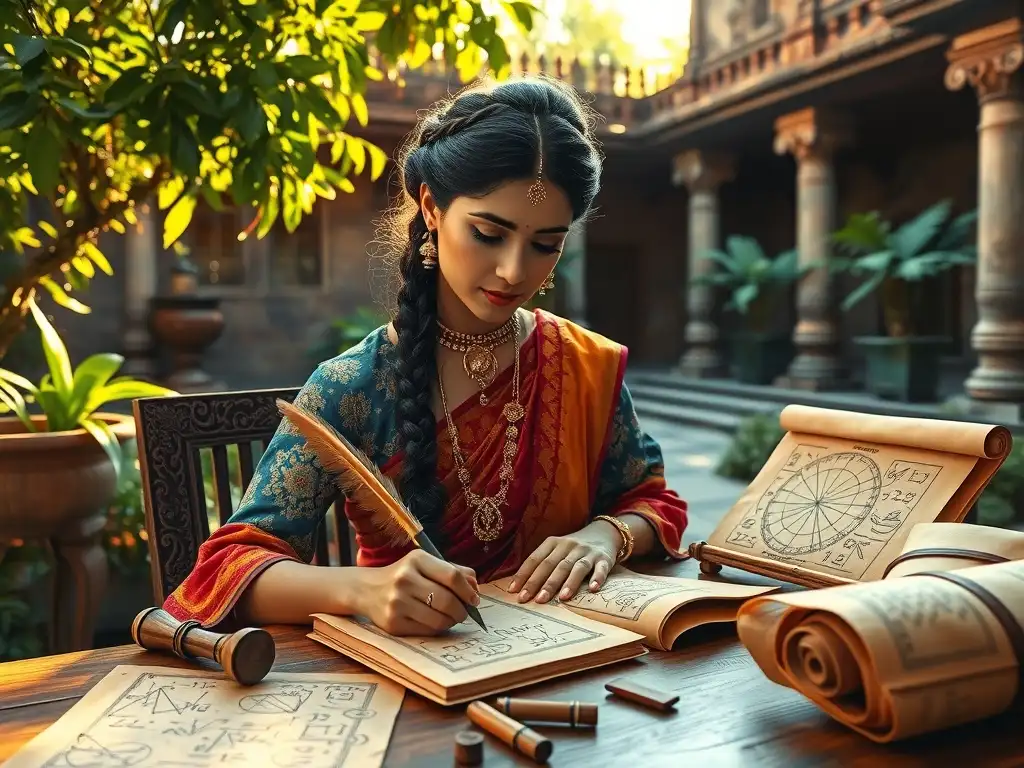
Welcome to Ancient India History, where we embark on a fascinating journey through the rich tapestry of India's past. Here, we unravel the remarkable stories of those who shaped civilization, including the often-overlooked ancient Indian women mathematicians. In our featured article, The Mathematical Contributions of Ancient Indian Women Scholars, discover how these brilliant minds not only navigated the complexities of numbers but also laid the groundwork for future generations.
Prepare to be inspired as you delve deeper into their extraordinary legacies and the vibrant culture of ancient India. Join us in exploring a narrative that promises to enlighten and captivate your imagination!
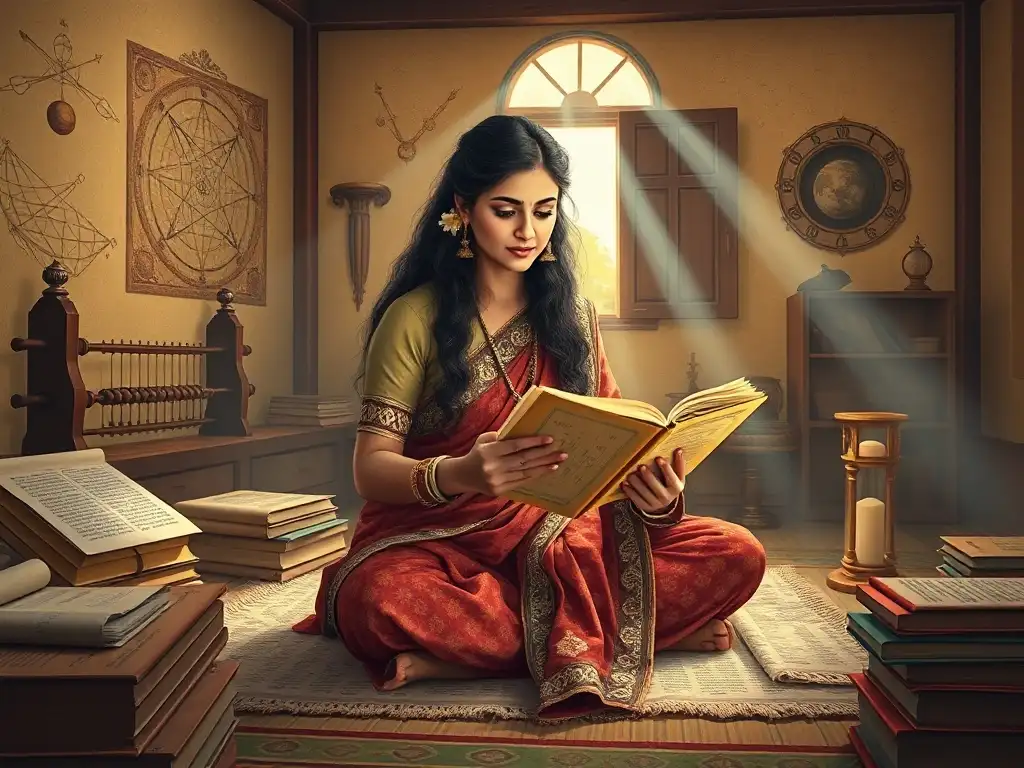
The history of mathematics is often perceived through a narrow lens, predominantly showcasing male mathematicians and their contributions. However, the story of ancient Indian mathematics is incomplete without recognizing the pivotal roles played by women scholars. Ancient Indian women mathematicians not only contributed to mathematical thought and practice but also influenced the broader cultural and scientific landscape of their time.
In this article, we will explore the rich legacy of these scholars, their innovative work in numerical systems, and the societal factors that shaped their contributions. By delving into the lives and achievements of these remarkable women, we aim to highlight the often-overlooked narrative of their impact on mathematics and the importance of inclusivity in historical scholarship.
Introduction to Ancient Indian Women Mathematicians
Overview of Women's Role in Ancient Indian Mathematics
The contributions of women in ancient Indian mathematics have been underrepresented in historical narratives. Despite societal constraints, many women emerged as formidable scholars in various fields, including mathematics. Historical texts, inscriptions, and literature reveal that women engaged in mathematical practices, often in the context of religious and astronomical studies. Scholars such as Lilavati, a name synonymous with mathematical texts, illustrate the intellectual prowess of women in ancient India. Lilavati's work not only served as an educational tool but also as a testament to the mathematical knowledge women possessed.
- Notable Women Mathematicians:
- Lilavati: Known for her treatise on arithmetic and algebra.
- Bhaskara II's commentary: Often included references to women scholars who contributed to mathematical thought.
- Others: [specific information pending].
Significance of Their Contributions to Numerical Systems
The contributions of ancient Indian women mathematicians extend beyond individual achievements; they played a crucial role in the evolution of numerical systems. Their work often encompassed:
- Arithmetic: Development of algorithms for calculations.
- Geometry: Contributions to understanding shapes, volumes, and areas.
- Astronomy: Application of mathematics in celestial calculations.
These contributions significantly influenced Indian numerals and laid the groundwork for future mathematical advancements, demonstrating how women scholars contributed to the foundation of numerical systems that are still in use today.
Historical Context of Mathematics in Ancient India
Evolution of Mathematical Thought in Ancient India
The evolution of mathematical thought in ancient India is a testament to its rich intellectual tradition. From the Indus Valley Civilization to the Gupta Empire, mathematics evolved through various phases, encompassing practical applications in trade, architecture, and astronomy. The historical context provides a backdrop for understanding how women mathematicians operated within these frameworks, often contributing to mathematical discourse through their unique perspectives.
- Key Developments:
- The introduction of the decimal system.
- The concept of zero and its mathematical significance.
- Advances in algebra and trigonometry.
The Social and Cultural Landscape for Women Scholars
The social and cultural environment of ancient India played a significant role in shaping the opportunities available for women scholars. While patriarchal structures often limited women's access to education, certain periods and regions exhibited a more progressive approach. For instance, during the Gupta period, women participated more actively in educational activities, which allowed for their mathematical contributions to flourish.
- Cultural Factors Influencing Women's Education:
- Religious institutions that promoted learning.
- Support from male scholars and family networks.
- The role of court patronage in encouraging scholarly work.
By examining these aspects, we can better appreciate the intricate tapestry of ancient Indian mathematics and the vital role women played in its development.
Notable Ancient Indian Women Mathematicians
The contributions of ancient Indian women mathematicians are often overshadowed by their male counterparts, yet their impact on the field is significant and deserving of recognition. Among the most notable figures are Hypatia of Alexandria, Gargi Vachaknavi, and Maitreyi, each of whom made strides in mathematics and philosophy, influencing generations of scholars. Their works not only contributed to mathematical knowledge but also laid the groundwork for future developments in mathematics and science.
Hypatia of Alexandria: Contributions and Influence
Hypatia, although primarily associated with Alexandria in Egypt, was of significant influence on the mathematical and scientific thought of the ancient world, including India. She was a mathematician, astronomer, and philosopher known for her work on the Almagest, which was pivotal in the development of astronomy. Hypatia taught mathematics and philosophy to many students, emphasizing the importance of logical reasoning and empirical evidence.
Her contributions are particularly noted in the realms of geometry and algebra, where she is credited with improving and popularizing the works of earlier mathematicians like Euclid. Hypatia's influence extended beyond her lifetime, inspiring mathematicians in the Indian subcontinent and elsewhere to value rigorous mathematical methods and critical thinking. Despite the challenges she faced as a woman in a male-dominated field, her legacy as a scholar continues to resonate today.
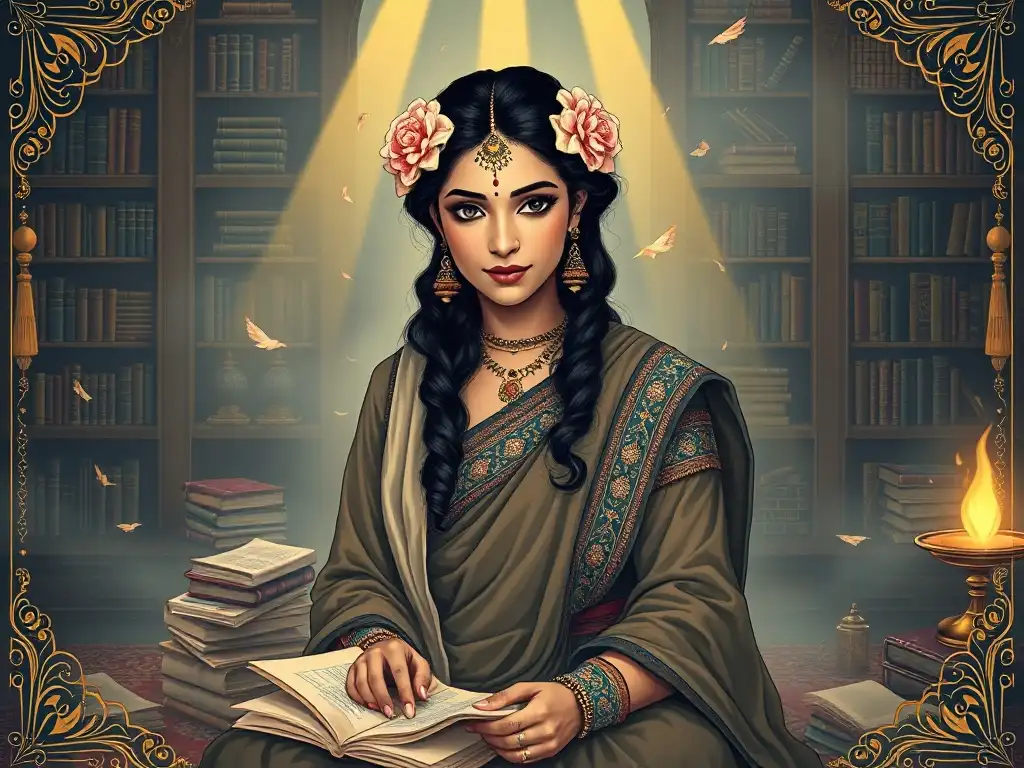
Gargi Vachaknavi stands out as one of the earliest known female philosophers in Indian history, revered in the Brahmanical texts for her intellectual prowess. She is often associated with the Brahmanas, where she engaged in debates on metaphysics, ethics, and epistemology. Gargi's philosophical inquiries often intersected with mathematical thought, particularly in the context of number theory and logical reasoning.
Her most famous contribution is seen in the Brahadaranyaka Upanishad, where she questions the nature of the universe and the concept of Brahman (the ultimate reality). Through her logical reasoning, she laid the groundwork for understanding abstract mathematical concepts, emphasizing the importance of inquiry and debate in the pursuit of knowledge. Gargi's work exemplifies the intricate relationship between philosophy and mathematics in ancient India, showcasing how women scholars contributed to both fields.
Maitreyi: Contributions to Mathematical Concepts and Theories
Maitreyi, another prominent figure from ancient Indian history, is known for her contributions to philosophical and mathematical discourse. Her dialogues, particularly in the Brahadaranyaka Upanishad, highlight her understanding of complex concepts, including the idea of infinity and the nature of reality. Maitreyi's work is significant in understanding the mathematical concepts of her time.
She engaged in discussions that hinted at algebraic principles and the relationship between numbers and philosophical ideas. Maitreyi's insights into the concept of self and the universe can be viewed as early explorations into mathematical abstractions, marking her as a pioneer in both philosophy and mathematics. Her contributions illustrate the depth of understanding that ancient Indian women possessed, challenging the conventional narratives of their time.
Mathematical Contributions of Women Scholars
The mathematical contributions of women scholars in ancient India extend beyond individual achievements to encompass a rich tradition of knowledge that influenced various mathematical disciplines. These contributions were not merely supportive but often transformative, leading to innovations that shaped mathematical thought.
While historical records may not extensively document the texts authored by women, it is known that some ancient Indian women scholars contributed to significant mathematical treatises. Works attributed to women, although often lost or overshadowed by their male counterparts, included writings on arithmetic, geometry, and astronomy. These texts often integrated practical applications of mathematics, showcasing their understanding of real-world problems.
For instance, the Aryabhatiya by Aryabhata is known to have been influenced by the discussions held by women scholars of his time, reflecting their contributions to the mathematical methodologies of the era. Although specific texts by women are not widely recognized today, the oral traditions and teachings passed down through generations played a critical role in preserving mathematical knowledge.
Innovations in Arithmetic and Geometry
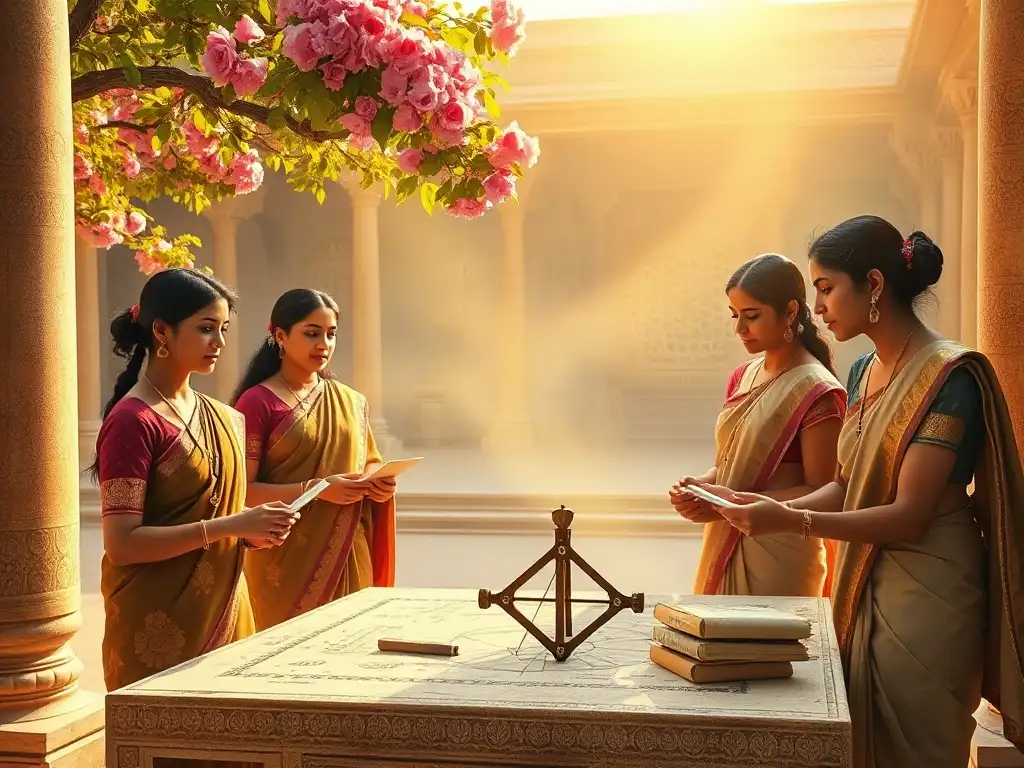
Ancient Indian women mathematicians were instrumental in various innovations within arithmetic and geometry, contributing to the development of mathematical techniques and theories. Their work often encompassed practical applications, such as in architecture and astronomy, where calculations were essential.
Women scholars contributed to the formulation of decimal systems, enhancing the efficiency of calculations. They also engaged in geometrical constructions, which were vital for both mathematical theory and practical applications like land measurement. The blending of mathematics with daily life highlighted the importance of these women's contributions, demonstrating that their influence extended into various aspects of society, culture, and governance.
Through their intellectual endeavors, ancient Indian women mathematicians fostered a legacy that continues to inspire and empower future generations in the field of mathematics. Their stories remind us of the rich tapestry of contributions made by women throughout history, urging a reevaluation of their roles in the development of mathematical thought.
The Legacy of Ancient Indian Women Mathematicians
The legacy of ancient Indian women mathematicians is often overshadowed by their male counterparts, yet their contributions have laid foundational stones in the field of mathematics. Scholars such as Brahmagupta, Aryabhata, and Bhaskara are widely recognized, but the influence of women in this domain, such as Lilavati, cannot be understated.
Lilavati, a prominent figure, is often cited in mathematical texts, particularly in Bhaskara II's work, where she is depicted not only as a mathematician but also as an embodiment of wisdom and skill. The name "Lilavati" has become synonymous with mathematics in Indian culture, often serving as a reference point for various mathematical problems. The work attributed to her reflects the high level of mathematical understanding that women possessed during that era.
Moreover, the contributions of these women extend beyond mere numbers and equations; they contributed to the broader context of mathematics as an essential element of education and culture. Their legacies inspire modern mathematicians and historians to re-evaluate the narratives surrounding the history of mathematics in India, thereby highlighting the importance of gender diversity in scholarly pursuits.
Influence on Future Generations of Mathematicians
The influence of ancient Indian women mathematicians on subsequent generations can be observed through various channels. Their works and teachings often served as foundational texts for later scholars, both women and men. For instance, the mathematical problems posed in Lilavati's text not only educated students of her time but also shaped the curricula for centuries to come.
Furthermore, the recognition of their contributions has inspired modern scholars to delve deeper into the history of mathematics, encouraging a more inclusive approach to studying historical figures. Contemporary mathematicians often reference the works of these ancient women, showcasing the timelessness of their insights and methodologies.
The impact of these women extends into modern educational systems, where their stories serve as role models for young girls aspiring to pursue careers in science, technology, engineering, and mathematics (STEM). Through initiatives that promote the achievements of women in mathematics, their legacies continue to motivate future generations to break barriers and contribute to the field.
Recognition in Historical Accounts and Texts
Despite their significant contributions, the recognition of ancient Indian women mathematicians in historical accounts and texts has often been limited. While their male counterparts were frequently celebrated in ancient manuscripts and scholarly writings, women mathematicians were often marginalized. However, recent scholarship has begun to uncover texts that acknowledge these women's contributions.
For example, references to women like Vagbhata and Lilavati can be found in various ancient texts, indicating their roles as scholars and educators. These texts not only highlight their mathematical prowess but also depict their influence on the educational system of ancient India.
In addition to mathematical texts, historical accounts of Indian society also reveal glimpses of women's involvement in scholarly pursuits. The presence of women in temples and educational institutions, often as teachers, highlights the recognition they received in their communities. While not as extensively documented as their male counterparts, these accounts serve as crucial evidence of the contributions of ancient Indian women mathematicians.
Challenges Faced by Ancient Indian Women Mathematicians
Societal Limitations and Barriers to Education
The challenges faced by ancient Indian women mathematicians were significant, largely stemming from societal limitations and barriers to education. In many cases, women were restricted by cultural norms that prioritized male education and relegated women to domestic roles. This societal structure limited access to formal education and scholarly resources, making it challenging for women to engage fully in mathematical studies.
Additionally, the lack of institutional support for women in academia meant that many talented individuals could not pursue their interests in mathematics. Education for women was often informal, relying on familial support rather than structured academic systems. Despite these barriers, some women managed to acquire knowledge through familial connections or by being part of royal courts where education was more accessible.
These societal limitations not only hindered individual progress but also contributed to a broader narrative that undervalued women's intellectual contributions, leading to their historical erasure from mathematical discourse.
The Impact of Gender on Scholarly Pursuits
The impact of gender on scholarly pursuits in ancient India was profound, affecting the opportunities available to women mathematicians. Gender biases permeated many aspects of life, including education, where women were often discouraged from pursuing intellectual endeavors. This cultural perception relegated women to the peripheries of scholarly activities, despite the existence of notable figures who defied these norms.
Women who sought to engage in mathematical studies faced skepticism and resistance from their communities. The perception of mathematics as a male domain further marginalized their efforts and contributions. However, some women, like Lilavati and others, became symbols of resistance against these gender biases, showcasing their capabilities and paving the way for future generations.
The struggle against gender-based barriers not only highlights the resilience of these women but also emphasizes the need for a more nuanced understanding of the history of mathematics. Their achievements serve as a reminder that talent and intellect are not confined by gender, and recognizing their contributions is essential for a comprehensive view of mathematical history.
Conclusion: The Enduring Impact of Ancient Indian Women Scholars
The legacy of ancient Indian women mathematicians is both profound and enduring, shaping the foundations of mathematical thought and practice not only in India but across the globe. Despite the societal constraints that often limited women's access to education, these scholars made significant contributions that have been overlooked in mainstream historical narratives. Their work not only enriched the mathematical landscape of ancient India but also laid the groundwork for future generations of mathematicians, both men and women.
By engaging in the study of mathematics, these women showed an exceptional capacity for analytical thinking and problem-solving. Their contributions spanned various areas, including geometry, astronomy, and arithmetic, showcasing their versatility and depth of knowledge. Their ability to navigate complex mathematical concepts in a predominantly male-dominated field highlights their resilience, intellect, and innovative spirit.
Reflection on Their Contributions to Mathematics
The contributions of ancient Indian women mathematicians such as Aryabhata's contemporaries and later scholars like Bhaskara's mother are testaments to the rich intellectual heritage of ancient India. Women like these not only contributed to mathematical theories and practices but also influenced the teaching methodologies of their time. Their involvement in mathematics paved the way for a more inclusive approach to learning and scholarship, setting a precedent for future generations.
Moreover, the mathematical texts that emerged during this era often reflect the collaborative nature of knowledge, where women worked alongside men, sharing insights and fostering a culture of intellectual growth. This collaboration enriched the field and allowed for a diversity of perspectives that enhanced mathematical understanding. The acknowledgment of these contributions encourages a deeper appreciation for the role that women played in shaping mathematical history.
Call to Recognize and Celebrate Their Achievements
As we continue to explore the rich tapestry of ancient Indian history, it is imperative to recognize and celebrate the achievements of women mathematicians. Their stories deserve to be told, and their contributions acknowledged within the context of mathematical history. Educational institutions, historians, and scholars should strive to include these narratives in their curricula and research, ensuring that the contributions of ancient Indian women mathematicians are not relegated to the margins of history.
Celebrating their achievements can inspire current and future generations of women in mathematics and related fields. By highlighting these remarkable figures, we can foster a greater sense of pride and motivation among young women today, encouraging them to pursue their interests in mathematics and sciences. The impact of ancient Indian women scholars is a crucial part of our mathematical heritage, and it is our responsibility to honor their legacy and ensure their recognition in the annals of history.
- Introduction to Ancient Indian Women Mathematicians
- Historical Context of Mathematics in Ancient India
- Notable Ancient Indian Women Mathematicians
- Hypatia of Alexandria: Contributions and Influence
- Gargi Vachaknavi: Philosophical and Mathematical Insights
- Maitreyi: Contributions to Mathematical Concepts and Theories
- Mathematical Contributions of Women Scholars
- Key Mathematical Texts Authored by Women
- Innovations in Arithmetic and Geometry
- The Legacy of Ancient Indian Women Mathematicians
- Challenges Faced by Ancient Indian Women Mathematicians
- Conclusion: The Enduring Impact of Ancient Indian Women Scholars
- What were the main contributions of ancient Indian women mathematicians?
- Who are some notable ancient Indian women mathematicians?
- How did the society view women mathematicians in ancient India?
- What texts or works highlight the contributions of women in mathematics?
- How can we promote awareness of ancient Indian women mathematicians today?
Frequently Asked Questions
What were the main contributions of ancient Indian women mathematicians?
Ancient Indian women mathematicians made significant contributions to fields such as geometry, astronomy, and algebra, often influencing the mathematical practices of their time.
Who are some notable ancient Indian women mathematicians?
Prominent figures include Lilavati, known for her work in arithmetic, and Brahmagupta’s sister, who contributed to algebraic concepts in ancient texts.
How did the society view women mathematicians in ancient India?
Though often marginalized, women mathematicians held esteemed positions in some scholarly circles, showcasing their capabilities in a male-dominated society.
What texts or works highlight the contributions of women in mathematics?
Key texts, such as Lilavati and Brahmasphutasiddhanta, contain insights into women's roles and contributions to mathematics during ancient times.
How can we promote awareness of ancient Indian women mathematicians today?
Encouraging research, integrating their contributions into curricula, and celebrating their achievements through publications and events can enhance awareness and recognition.
Final Reflection: Celebrating the Legacy of Ancient Indian Women Mathematicians
The contributions of ancient Indian women mathematicians are not just historical footnotes; they are vital threads in the rich tapestry of mathematics that continue to inspire and empower women today. As we delve into their remarkable achievements, we uncover a narrative that challenges the conventional understanding of gender roles in academia and highlights the importance of inclusivity in intellectual pursuits. The legacy of these scholars serves as a powerful reminder that brilliance knows no gender, and their stories deserve to be celebrated and shared widely.
The impact of ancient Indian women mathematicians resonates deeply within our cultural and social landscape, urging us to recognize and honor the often-overlooked contributions of women in STEM fields. Their pioneering work laid the groundwork for future generations, fostering an environment where women can thrive in mathematics and science. As we reflect on their influence, we are reminded of the words of mathematician Ada Lovelace: That brain of mine is something more than merely mortal; as time will show.
This quote encapsulates the spirit of innovation and intellect that these ancient scholars embodied, encouraging us to continue breaking barriers and challenging stereotypes.
As we conclude this exploration of ancient Indian women mathematicians, I invite you to reflect on their legacy and consider how you can contribute to a more inclusive future in mathematics and beyond. Let their stories inspire you to support and uplift the voices of women in your own community, fostering an environment where everyone can pursue their passions without limitation. Together, we can honor the past while paving the way for a brighter, more equitable future in the world of mathematics.
Celebrate and Amplify Ancient Wisdom!
Thank you for exploring the remarkable contributions of ancient Indian women scholars in mathematics. Their pioneering work not only shaped their time but continues to inspire generations today. Now it’s your turn to keep this legacy alive!
Here are a few actions you can take today to further engage with this vital piece of history:
- Dive deeper: Read more about the lives of these incredible scholars by exploring additional resources available on our website.
- Share the knowledge: Spread the word by sharing this article on social media to help raise awareness of these often-overlooked figures in history.
- Join the discussion: Connect with fellow enthusiasts in our community forum and exchange ideas on how these contributions can influence modern education.
What aspects of ancient Indian women's contributions to mathematics surprise you the most? Let’s discuss!