
Zero and Algorithms: Ancient Indian Techniques That Changed Mathematics

Welcome to Ancient India History, where we embark on a fascinating journey through the rich tapestry of ancient Indian civilizations. Here, we unravel the profound contributions that shaped not only Indian culture but also the world at large. In our featured article, " Zero and Algorithms: Ancient Indian Techniques That Changed Mathematics," we delve into the remarkable ancient Indian mathematics techniques that revolutionized the way we understand numbers and calculations.
Prepare to be captivated by the ingenuity and sophistication of these ancient scholars, and discover how their legacies continue to influence modern mathematics. Join us as we explore these incredible stories that await just a click away!
- Introduction to Ancient Indian Mathematics Techniques
- The Concept of Zero in Ancient Indian Mathematics
- Algorithms in Ancient Indian Mathematics
- Techniques of Calculation in Ancient Indian Mathematics
- The Influence of Ancient Indian Mathematics on Modern Mathematics
- Conclusion: The Enduring Impact of Ancient Indian Mathematics Techniques
-
Frequently Asked Questions
- What is the significance of zero in ancient Indian mathematics?
- How did ancient Indian mathematicians contribute to algorithms?
- What are some ancient Indian mathematics techniques that are still used today?
- How did the Indus Valley Civilization influence mathematics?
- What role did the Gupta Empire play in the advancement of mathematics?
- Final Reflection: The Enduring Legacy of Ancient Indian Mathematics
- Unlock the Secrets of Ancient Mathematics!
Introduction to Ancient Indian Mathematics Techniques
The rich tapestry of ancient Indian mathematics is woven with remarkable techniques and concepts that have had a profound impact on the development of mathematics as we know it today. From the early days of the Indus Valley Civilization to the intellectual flourishing during the Gupta Empire, ancient Indian scholars made significant contributions that laid the groundwork for various mathematical principles.
Among these contributions, the invention of zero stands out as a pivotal development, revolutionizing the way numbers were understood and manipulated. This article delves into the ancient Indian mathematics techniques, exploring the ingenuity behind concepts such as zero and algorithms, which not only transformed mathematics but also influenced cultures around the world.
Overview of Ancient Indian Contributions to Mathematics
Ancient India was home to a plethora of mathematicians and scholars who pioneered various mathematical concepts and techniques. The contributions can be categorized into several key areas:
-
Numerical System:
The ancient Indians developed a sophisticated numerical system, including the use of decimal notation.
- Introduced the concept of place value, which is foundational in modern mathematics.
- The numerals we use today, known as Hindu-Arabic numerals, originated from ancient Indian mathematicians.
-
Mathematical Texts:
Significant texts like the Bakhshali Manuscript and Aryabhatiya provided insights into ancient mathematical techniques.
- Aryabhata introduced methods for solving quadratic equations and calculating areas of various geometric shapes.
- The Sulba Sutras offered rules for constructing altars, showcasing practical applications of geometry.
-
Algorithms:
Ancient Indian mathematicians developed algorithms for arithmetic operations, which are still relevant today.
- These algorithms encompassed methods for addition, subtraction, multiplication, and division.
- The techniques were often formulated in a step-by-step manner, laying the groundwork for modern computational methods.
Significance of Zero in Mathematical History
The invention of zero is arguably one of the most significant achievements in the history of mathematics. This concept, originating in ancient India, transformed numerical representation and computation in several ways:
-
Placeholder Functionality:
Zero serves as a placeholder in the decimal system, enabling the representation of large numbers and precise mathematical notation.
-
Foundation for Calculus and Algebra:
The concept of zero paved the way for advanced mathematical concepts, including calculus and algebra. It allowed mathematicians to explore negative numbers and the concept of limits.
-
Global Influence:
The introduction of zero to the Western world through translations of Indian texts marked a turning point in mathematical history, influencing European mathematics and science during the Renaissance.
The ancient Indian mathematics techniques, particularly the concept of zero, have had a lasting impact on mathematical thought and practice. This exploration not only highlights the brilliance of ancient scholars but also underscores the importance of their contributions to the evolution of mathematics across cultures and eras.
The Concept of Zero in Ancient Indian Mathematics
The concept of zero is a cornerstone of modern mathematics, and its origins can be traced back to ancient Indian mathematics techniques. Zero is not just a numeral but a concept that represents the absence of quantity, making it essential for arithmetic, algebra, and calculus. Ancient Indian mathematicians recognized the utility of zero, transforming mathematical practices and paving the way for future developments in the field.
Origins and Development of the Zero Concept
The earliest recorded use of zero in India dates back to the 5th century CE, with the work of the mathematician Aryabhata. However, the roots of the zero concept can be traced even further back to the Indus Valley Civilization, where symbols that may represent zero-like concepts have been discovered on seals and inscriptions.
- Key Milestones:
- Bakhshali Manuscript (circa 200 CE): This ancient text shows the use of a dot to indicate a placeholder, demonstrating an early understanding of zero.
- Aryabhata (476–550 CE): Introduced a positional decimal number system where zero played a vital role in calculations. His work, "Aryabhatiya," included the use of zero in mathematics.
- Brahmagupta (598–668 CE): He formalized rules for arithmetic operations involving zero in his text "Brahmasphutasiddhanta," where zero was treated as both a number and a placeholder.
The development of zero was not merely a mathematical breakthrough; it signified a profound philosophical understanding of nothingness and the void, concepts deeply embedded in Indian philosophy.
Historical Figures Contributing to Zero's Invention
Several prominent figures in ancient Indian mathematics significantly advanced the concept and application of zero:
- Aryabhata:
- Pioneered the positional decimal system.
- His calculations involving zero set foundations for future mathematicians.
- Brahmagupta:
- Established rules for arithmetic operations with zero.
- Introduced the concept of zero as a number in its own right, discussing its properties and operations in detail.
- Mahavira:
- Further developed the arithmetic operations involving zero.
- His work influenced subsequent mathematicians and contributed to the spread of these ideas beyond India.
- Bhaskara II (1114–1185 CE):
- While he did not invent zero, he expanded its application in his work, "Lilavati," which included practical problems and solutions using zero.
These mathematicians collectively shaped the understanding and acceptance of zero, influencing mathematical thought across centuries and cultures.
Comparison of Zero in Indian and Other Cultures
The concept of zero was not exclusive to Indian mathematics; other cultures also developed similar ideas. However, the Indian approach to zero was unique in its depth and application.
- Indian Zero:
- Treated as a number with its own properties.
- Integral to the decimal system, allowing for more complex calculations.
- Mesopotamian Zero:
- Used a placeholder in their cuneiform numeral system but lacked a symbol for zero as a distinct number.
- Their numeral system did not allow for calculations involving zero.
- Mayan Zero:
- Developed independently in the Americas around the 4th century CE.
- Used zero in their vigesimal (base-20) numeral system, but their philosophical interpretation differed from the Indian perspective.
The Indian concept of zero profoundly influenced the development of mathematics in the Islamic Golden Age and later reached Europe, where it played a crucial role in the transition from Roman numerals to the more efficient Arabic numeral system.
The concept of zero in ancient Indian mathematics techniques is a remarkable example of intellectual advancement that not only transformed mathematics but also influenced various fields of knowledge, showcasing the profound contributions of ancient Indian civilizations to the world.
Algorithms in Ancient Indian Mathematics
Definition and Importance of Algorithms
In the context of ancient Indian mathematics, algorithms refer to a set of step-by-step procedures or formulas for solving mathematical problems. These techniques were not merely theoretical; they were practical tools that enabled mathematicians to perform calculations efficiently and accurately. The word "algorithm" itself is derived from the name of the Persian mathematician Al-Khwarizmi, but the roots of algorithmic thinking can be traced back to ancient Indian scholars.
The significance of algorithms in ancient Indian mathematics lies in their ability to simplify complex calculations, making them more accessible for scholars and practitioners alike. For example, the use of algorithms facilitated advancements in various fields, including astronomy, commerce, and architecture. The systematic approach to problem-solving that algorithms provide is a hallmark of mathematical thought that has influenced subsequent generations worldwide.
Notable Algorithms from Ancient Indian Texts
Ancient Indian texts are replete with remarkable algorithms that showcase the sophistication of mathematical thought during that era. Some notable examples include:
- The Sulba Sutras:
- These texts, dating back to around 800 BCE, contain geometric algorithms for constructing altars and fire pits. They provided precise measurements and methods for achieving specific geometric shapes, significantly influencing the fields of geometry and architecture.
- The Aryabhatiya by Aryabhata:
- Composed in 499 CE, this seminal work includes algorithms for arithmetic operations, including multiplication and division. Aryabhata's approach to the calculation of square roots and his methods for solving linear equations exemplify advanced problem-solving techniques.
- Brahmagupta's Brahmasphutasiddhanta:
- Written in 628 CE, this treatise introduced algorithms for operations with zero, which were groundbreaking at the time. Brahmagupta's work also included rules for calculating the area of cyclic quadrilaterals and solutions to quadratic equations, demonstrating a deep understanding of algebraic principles.
- The Vedic Mathematics System:
- Although formalized later, the principles derived from the Vedas laid the groundwork for numerous algorithms that enabled quick mental calculations. Techniques such as "Nikhilam Sutra" (All from 9 and the last from 10) illustrate the efficiency of these ancient methods.
Contributions of Aryabhata and Brahmagupta
Aryabhata's Innovations
Aryabhata made several significant contributions to ancient Indian mathematics, particularly through his work in the Aryabhatiya. His innovative algorithmic approaches included:
- Place Value System: Aryabhata used a positional number system, allowing for efficient calculations and the representation of large numbers.
- Trigonometry: He introduced sine and cosine functions, providing algorithms for calculating their values, which were crucial for astronomical computations.
- Time Calculation: Aryabhata developed algorithms for determining the timing of solar and lunar eclipses, showcasing the application of mathematics in astronomy.
Brahmagupta's Influence
Brahmagupta further advanced mathematical thought with his work in Brahmasphutasiddhanta, where he introduced:
- Rules for Zero: He established algorithms that treated zero as a number, providing rules for addition, subtraction, and multiplication involving zero, which were revolutionary.
- Quadratic Equations: Brahmagupta provided systematic methods for solving quadratic equations, enhancing the algebraic techniques available to mathematicians.
- Practical Applications: His algorithms were not only theoretical; they were designed for practical use, such as in commerce and taxation, highlighting the relevance of mathematics in everyday life.
The contributions of Aryabhata and Brahmagupta illustrate the profound impact of ancient Indian mathematics techniques on the development of algorithms, paving the way for future advancements in the field. These foundational ideas continue to resonate in modern mathematical practices and theories.
Techniques of Calculation in Ancient Indian Mathematics
The Role of Vedic Mathematics
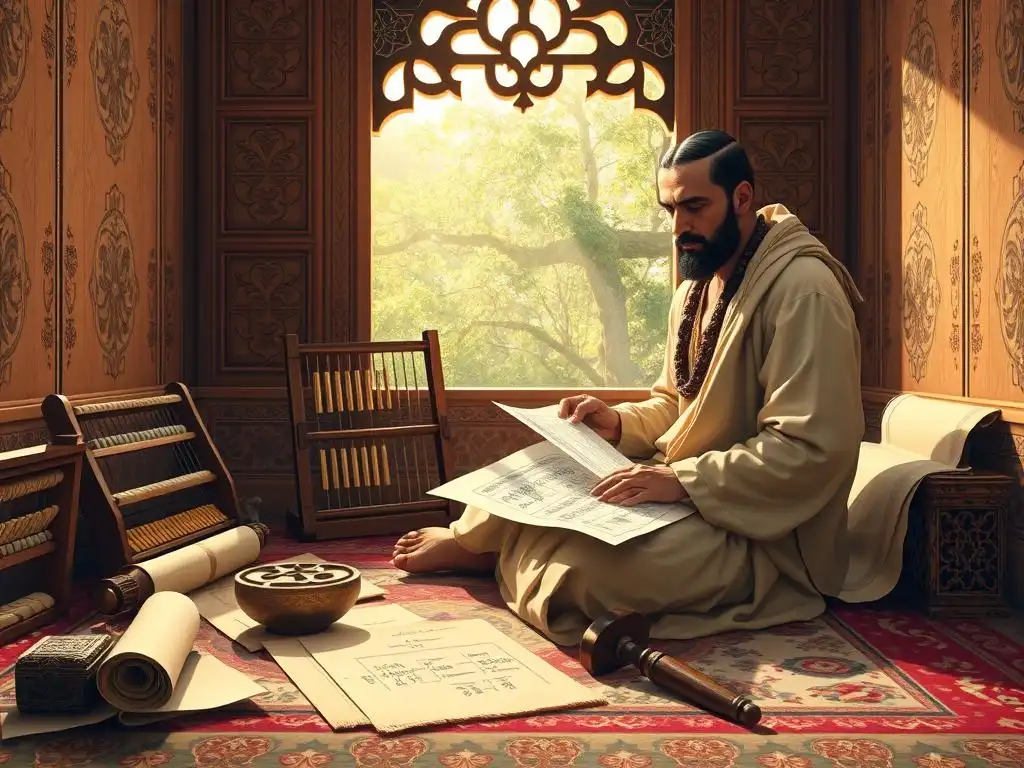
Vedic Mathematics, derived from ancient Indian scriptures known as the Vedas, comprises a set of techniques that simplify mathematical calculations. These techniques are based on sixteen sutras (aphorisms) that enable practitioners to perform complex calculations mentally or with minimal written work.
One of the key aspects of Vedic Mathematics is its emphasis on mental calculation, which enhances cognitive abilities and promotes faster problem-solving. For instance, the sutra "Nikhilam Navatashcaramam Dashatah" (All from 9 and the last from 10) allows for rapid subtraction and multiplication by simplifying the numbers involved. This method is particularly useful when dealing with numbers close to powers of ten.
Additionally, Vedic Mathematics incorporates strategies such as:
- Cross-Multiplication: An efficient way to multiply two-digit numbers.
- Vertically and Crosswise: A technique for multiplying numbers of any length.
- Base Methods: Simplifying calculations by transforming numbers into more manageable bases (like 10 or 100).
These techniques not only demonstrate the ingenuity of ancient Indian mathematics but also highlight the cultural emphasis on education and intellectual development during that era.
Methods of Multiplication and Division
Ancient Indian mathematicians employed various methods for multiplication and division that were both innovative and effective. Among these methods, the Lattice Method stands out, where the multiplication process is visualized in a grid or lattice form, allowing for easy organization of digits and efficient calculation.
The Multiplicative Algorithm was another significant advancement, particularly for multiplying large numbers. This method involved breaking down numbers into smaller, more manageable components and then applying addition and multiplication sequentially. For example, to multiply 23 by 12:
- Break it down: \( 20 + 3 \) and \( 10 + 2 \)
- Calculate separately:
- \( 20 \times 10 = 200 \)
- \( 20 \times 2 = 40 \)
- \( 3 \times 10 = 30 \)
- \( 3 \times 2 = 6 \)
- Add all results together: \( 200 + 40 + 30 + 6 = 276 \)
This systematic approach not only simplified complex calculations but also laid the groundwork for algorithms used in modern arithmetic.
For division, techniques like Partial Quotients were utilized, where the divisor is repeatedly subtracted from the dividend until the remainder is less than the divisor. This method is akin to the long division we use today but was structured in a way that made it easier to grasp.
Use of Geometry in Ancient Indian Techniques
Geometry played a vital role in ancient Indian mathematics, particularly in the context of land measurement, architecture, and astronomy. The Sulba Sutras, ancient texts attributed to mathematicians like Baudhayana and Apastamba, provide detailed instructions on geometric constructions and principles.
Key geometric techniques included:
- Construction of Altars: The Sulba Sutras detail methods for constructing altars for rituals, using geometric shapes such as squares and circles. For example, the construction of a square altar with a specific area involved intricate calculations to ensure adherence to sacred measurements.
- Pythagorean Theorem: Although primarily credited to the Greeks, the Pythagorean theorem was known in ancient India as well, evidenced by its application in the Sulba Sutras. The theorem is utilized to determine the lengths of sides in right-angled triangles, which was crucial for both architecture and astronomy.
- Astronomical Calculations: Ancient Indian mathematicians applied geometry to predict celestial events and construct astronomical instruments. This included the use of circular motion and angles to track planetary movements.
The integration of geometric principles in ancient Indian mathematics not only reflects the sophistication of the civilization but also its practical applications in daily life, spirituality, and the natural sciences.
Through these techniques, ancient Indian mathematicians laid down foundational concepts that would influence mathematical thought for centuries to come, establishing a legacy that continues to resonate in contemporary mathematics.
The Influence of Ancient Indian Mathematics on Modern Mathematics
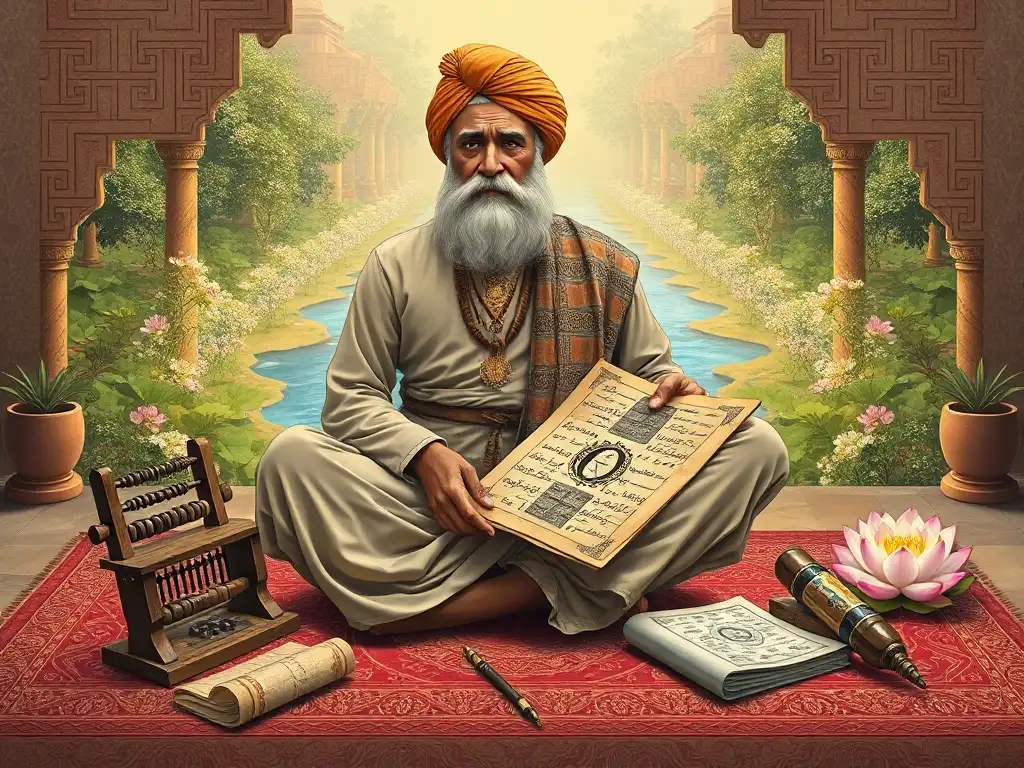
Ancient Indian mathematics has had a profound and lasting influence on modern mathematical practices, particularly through its innovations in the concepts of zero and algorithms. The contributions of mathematicians from this era laid the groundwork for many principles that are still in use today. By examining how these ancient techniques shaped contemporary mathematical practices, we can gain a deeper understanding of their significance.
How Ancient Techniques Shaped Contemporary Mathematical Practices
The development of the concept of zero as a placeholder and a numerical value transformed mathematical calculations and representations. Prior to this innovation, many cultures struggled with the idea of representing nothingness in a numeric system. Ancient Indian mathematicians, particularly in the 5th century CE, began to use zero as an integral part of their numeral system, leading to more sophisticated calculations.
One of the most notable techniques that emerged was the positional decimal system, which allowed for the representation of large numbers and complex calculations with ease. This system enabled mathematicians to perform operations like addition, subtraction, multiplication, and division more efficiently than ever before. The place value system, which relies heavily on the concept of zero, is a fundamental aspect of modern mathematics.
Moreover, algorithms developed in ancient India, particularly in texts such as the "Aryabhatiya" by Aryabhata and "Bakhshali Manuscript," provided methods for solving mathematical problems systematically. These algorithms laid the foundation for what we now recognize as arithmetic and algebraic techniques. For example, the techniques for calculating square roots and solving quadratic equations were refined and documented, influencing mathematical education and practices worldwide.
Legacy of Ancient Indian Mathematicians in Global Mathematics
The legacy of ancient Indian mathematicians extends well beyond their immediate geographical boundaries. Notable figures such as Brahmagupta and Bhaskara made significant contributions to mathematics that were transmitted to the Islamic world and later to Europe. Their works, particularly on arithmetic and algebra, were translated into Arabic and Latin, effectively bridging the gap between ancient knowledge and modern mathematics.
| Mathematician | Contribution | Influence |
|---|---|---|
| Aryabhata | Introduced the concept of zero | Fundamental in positional notation |
| Brahmagupta | Rules for arithmetic and algebra | Influenced later Islamic and European math |
| Bhaskara II | Solutions for quadratic equations | Impacted European mathematicians in the Renaissance |
The algorithmic techniques developed during ancient times have also played a crucial role in the evolution of computational mathematics. The principles behind the operations, such as multiplication and division, developed by Indian mathematicians, are still taught and used in modern algorithms.
The techniques and concepts originating from ancient Indian mathematics not only transformed mathematical thought in their time but also laid the groundwork for modern mathematical practices. The influence of these ancient innovations is evident in contemporary education, computational methods, and the overall approach to mathematics around the world. The study of ancient Indian mathematics techniques continues to inspire mathematicians and scholars, highlighting the importance of this rich historical legacy.
Conclusion: The Enduring Impact of Ancient Indian Mathematics Techniques
Summary of Key Contributions to Mathematics
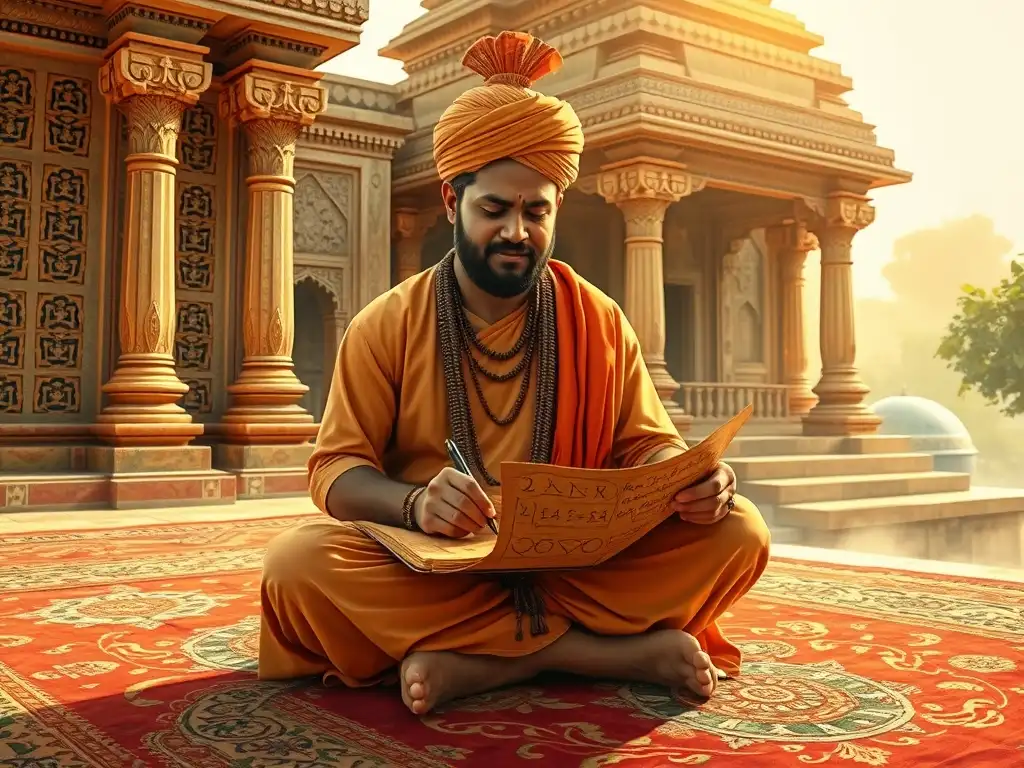
Ancient Indian mathematics techniques have left an indelible mark on the field of mathematics, shaping the foundations of various mathematical concepts that are still in use today. Some key contributions include:
- Invention of Zero (0): The conceptualization of zero as a number and its use as a placeholder revolutionized mathematics. This innovation was first documented in Indian texts like the Bakhshali Manuscript and was instrumental in the development of the decimal system.
- Decimal System: The use of a place-value system based on ten digits was refined in ancient India. This system simplifies calculations and has become the standard for contemporary mathematics.
- Algorithms: Ancient Indian mathematicians like Brahmagupta and Aryabhata formulated algorithms for arithmetic operations. Their systematic approach to problem-solving laid the groundwork for modern computational techniques.
- Geometry and Trigonometry: The works of mathematicians such as Bhaskara II propagated methods for calculating areas and volumes, as well as trigonometric ratios, which were crucial in advancements in astronomy and engineering.
- Mathematical Texts: Texts like the Lilavati and Vijaganita not only introduced mathematical concepts but also applied them in real-life contexts, showcasing the practicality of mathematics in everyday life.
These contributions highlight the sophistication and depth of ancient Indian mathematics techniques, which have significantly influenced both historical and modern mathematical thought.
The Relevance of Ancient Indian Mathematics Today
The relevance of ancient Indian mathematics techniques extends far beyond their historical context; their principles are deeply embedded in various aspects of modern mathematics and technology. Here are some ways these ancient contributions remain significant today:
- Global Mathematical Framework: The decimal system, which originated in ancient India, is universally adopted in mathematics, science, and engineering globally. Its efficiency in calculations makes it indispensable in various fields.
- Computer Science and Algorithms: The algorithms developed by ancient scholars form the basis of many modern computational methods. Understanding these historical algorithms provides insight into contemporary programming and algorithm design.
- Cultural Heritage and Education: The study of ancient Indian mathematics techniques is increasingly included in educational curricula to foster appreciation for the contributions of different cultures to global knowledge. This helps cultivate a more inclusive understanding of mathematics.
- Inspiration for Innovation: Modern mathematicians and scientists often draw inspiration from ancient techniques to solve contemporary problems. The innovative spirit of ancient Indian mathematicians encourages new perspectives in research and technology.
- Interdisciplinary Applications: The techniques and concepts from ancient Indian mathematics have found applications in various fields, including physics, economics, and even art. This interdisciplinary relevance underscores the versatility and enduring impact of these techniques.
Ancient Indian mathematics techniques are not merely relics of the past; they continue to shape contemporary mathematical practices and inspire future innovations. By recognizing and studying these contributions, we honor the rich legacy of mathematical thought that originated in ancient India while paving the way for future advancements.
Frequently Asked Questions
What is the significance of zero in ancient Indian mathematics?
The concept of zero as a number was a revolutionary idea that allowed for the development of advanced calculations and mathematical theories, significantly influencing the global mathematics landscape.
How did ancient Indian mathematicians contribute to algorithms?
Ancient Indian mathematicians, such as Brahmagupta, developed algorithms for arithmetic and algebra, which laid the groundwork for modern computational techniques and problem-solving methods.
What are some ancient Indian mathematics techniques that are still used today?
Techniques such as the decimal system, and methods for solving quadratic equations, are key contributions from ancient Indian mathematics that are still widely utilized in modern mathematics.
How did the Indus Valley Civilization influence mathematics?
The Indus Valley Civilization showcased early mathematical practices, including measuring systems and urban planning, which demonstrated their understanding of geometry and measurement techniques.
What role did the Gupta Empire play in the advancement of mathematics?
The Gupta Empire is often referred to as the Golden Age of Indian mathematics due to its scholars' contributions, including advancements in numerical systems and the formalization of mathematical concepts like zero and infinity.
Final Reflection: The Enduring Legacy of Ancient Indian Mathematics
The exploration of ancient Indian mathematics techniques reveals their profound influence on modern mathematics and technology. Today, as we navigate a world increasingly driven by algorithms and data, the foundational concepts introduced by ancient Indian scholars resonate more than ever. Their pioneering work in zero and algorithms not only transformed mathematical thought but also laid the groundwork for innovations that shape our daily lives.
The impact of these ancient techniques extends far beyond historical significance; they continue to inspire contemporary thinkers and innovators. The principles of zero and algorithmic thinking are embedded in the very fabric of our digital age, influencing everything from computer programming to artificial intelligence. As mathematician and historian of science, Kim Plofker, aptly stated, The contributions of Indian mathematicians are not just historical footnotes; they are vital threads in the tapestry of global mathematics.
This ongoing relevance underscores the importance of recognizing and celebrating the rich heritage of ancient Indian mathematics.
As we reflect on the lessons from these ancient techniques, let us embrace the spirit of inquiry and innovation that characterized their development. I invite you to consider how the principles of zero and algorithms can inspire your own problem-solving approaches, whether in mathematics, technology, or everyday challenges. By acknowledging the brilliance of our mathematical ancestors, we can cultivate a deeper appreciation for the interconnectedness of knowledge and the potential for future discoveries that honor their legacy.
Unlock the Secrets of Ancient Mathematics!
Thank you for diving into the fascinating world of ancient Indian mathematics with us! You've uncovered the brilliance of techniques that shaped the foundations of modern algorithms. Now, let's take your interest to the next level by actively engaging with these concepts.
Here are some exciting actions you can take:
- Experiment with ancient algorithms: Try applying one of the techniques discussed in your daily problem-solving, whether it's in programming or even organizing your tasks more efficiently!
- Share your insights: Connect with fellow enthusiasts by sharing this article on social media or discussing it with friends. Help spread the marvels of ancient Indian mathematics!
- Explore more: Visit our website for additional resources, articles, and interactive content that focus on ancient Indian innovations and their impact on today’s world.
Which ancient technique or algorithm do you believe holds the most relevance in our modern mathematical practices? Let's ignite a discussion in the comments!