
Ancient Maps and Routes: How India and Persia Connected Geographically

Welcome to Ancient India History, where we embark on an enlightening journey through the rich tapestry of ancient civilizations that shaped India. Dive into our featured article on Ancient India Persia trade routes, where you'll uncover the intricate connections that linked these two great cultures. Discover how geography, commerce, and diplomacy interwove the destinies of India and Persia, revealing a fascinating narrative of interaction and influence. Prepare to be captivated as you explore the maps and routes that tell the story of a bygone era, and let your curiosity lead you deeper into the wonders of our shared past!
Introduction to Ancient India and Persia Trade Routes
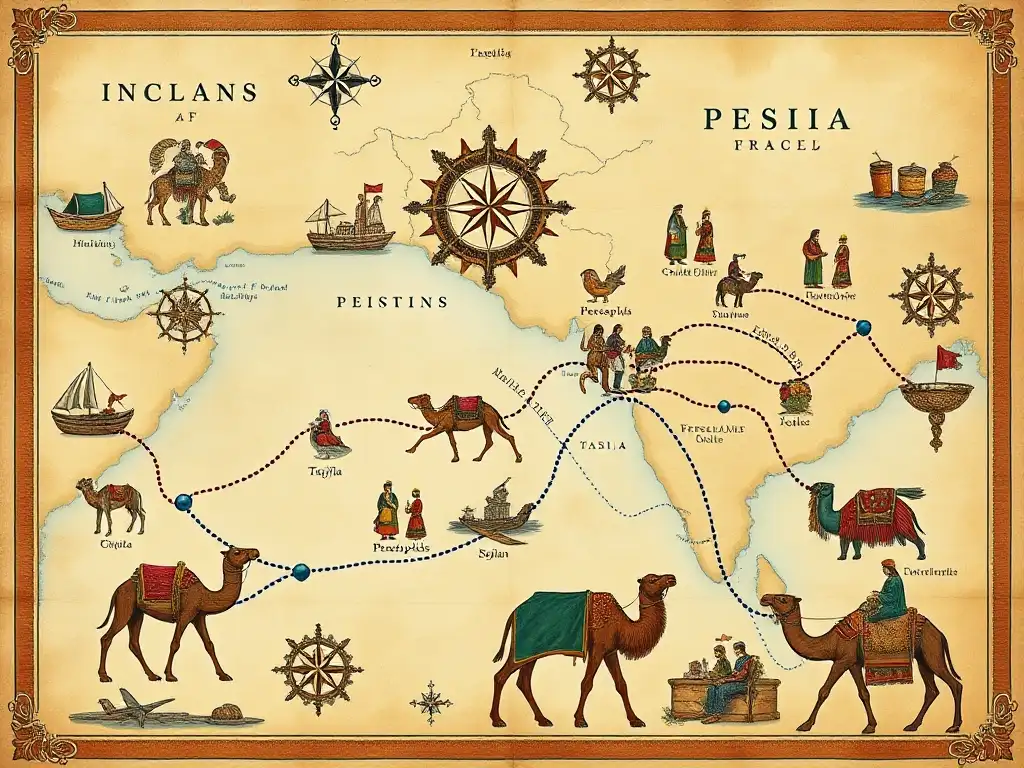
The geographical connection between ancient India and Persia played a pivotal role in shaping the cultural, economic, and political landscapes of both regions. These trade routes not only facilitated the exchange of goods but also fostered a remarkable blend of ideas and cultures. From the flourishing trade in spices, textiles, and precious stones to the spread of religious beliefs and artistic expressions, the interactions between these two great civilizations were profound and far-reaching. Understanding the ancient maps and routes that facilitated this connection provides invaluable insights into the dynamics of trade and cultural exchange that characterized the period.
Overview of Ancient India and Persia
Ancient India, home to one of the world's oldest civilizations, the Indus Valley Civilization, marked its prominence through significant advancements in urban planning, trade, and cultural practices. By the time of the Maurya and Gupta Empires, India had established itself as a center of commerce and learning, known for its rich resources and vibrant markets.
In contrast, Persia, with its vast empire spanning from the Mediterranean to the Indus Valley, was instrumental in connecting diverse cultures and facilitating trade across great distances. The Persian Empire, particularly during the Achaemenid period, created a network of roads and trade routes that not only enhanced economic interactions but also promoted diplomatic relations with neighboring territories, including India.
Significance of Trade Routes in Ancient Civilizations
Trade routes served as lifelines for ancient civilizations, enabling the flow of goods, ideas, and technologies. The ancient trade routes between India and Persia were significant for several reasons:
- Economic Prosperity: These routes allowed merchants to transport valuable commodities, such as silk, spices, and precious metals, leading to mutual economic benefits.
- Cultural Exchange: The movement of traders and travelers facilitated the exchange of cultural practices, religious beliefs, and artistic influences, enriching both civilizations.
- Political Alliances: Trade relationships often resulted in political alliances, which were crucial for maintaining stability and security along the routes.
Historical Context of India-Persia Connections
The Rise of Ancient Indian Civilizations
The rise of ancient Indian civilizations can be traced back to the Indus Valley Civilization around 2500 BCE, which showcased advanced urban planning and trade practices. Following this era, the Vedic period laid the groundwork for social and cultural development, leading to the formation of powerful kingdoms such as Magadha and later the Maurya Empire. The Mauryan dynasty, particularly under Emperor Ashoka, expanded trade networks and fostered diplomatic ties with distant lands, including Persia.
The Emergence of the Persian Empire
The Persian Empire emerged as a formidable power around the 6th century BCE under Cyrus the Great. Its strategic location and policies of tolerance and administrative efficiency enabled it to unify diverse cultures and expand its influence across the region. The establishment of the Royal Road facilitated trade and communication, creating a direct link between Persia and the Indian subcontinent.
Cultural and Economic Interactions
The cultural and economic interactions between India and Persia were characterized by a rich exchange of goods and ideas. Indian textiles and spices were highly sought after in Persian markets, while Persian gold, silver, and luxury items found their way into Indian trade networks. Moreover, the spread of religions like Zoroastrianism and Buddhism during this period exemplified the profound cultural exchanges that occurred, influencing beliefs and practices across both civilizations.
The ancient trade routes between India and Persia were not merely pathways for commerce; they were vital conduits of cultural, economic, and political interactions that shaped the historical landscape of both regions. Understanding these connections illuminates the complexities of ancient civilization interactions, highlighting the importance of trade routes in fostering cross-cultural dialogue and exchange.
Key Ancient Trade Routes Between India and Persia
The ancient trade routes between India and Persia played a crucial role in the exchange of goods, culture, and ideas. These routes not only facilitated commerce but also contributed to the cultural and social interactions that shaped both civilizations. The primary routes included overland pathways and maritime routes, each with its own significance and impact on trade dynamics.
The Silk Road: A Major Trade Artery
The Silk Road was one of the most significant overland trade routes connecting India and Persia. Spanning thousands of miles, it connected the eastern and western parts of the ancient world. This route facilitated the exchange of silk, spices, precious stones, and various other commodities.
- Cultural Exchange: The Silk Road was not solely a trade route; it also served as a conduit for cultural exchange. Religions such as Buddhism and Zoroastrianism spread along these pathways, influencing societies across regions.
- Economic Impact: The trade along the Silk Road contributed to the economic prosperity of both Indian and Persian markets. Goods from the Indian subcontinent, including textiles and spices, were highly sought after in Persia, while Persian products such as carpets and metalwork found a market in India.
The Maritime Routes and Their Importance
Maritime routes also played a vital role in connecting India and Persia, facilitating trade across the Arabian Sea and the Persian Gulf. These waterways allowed for the transport of bulk goods that were not easily transported overland.
- Ports and Trade Hubs: Key ports such as Lothal in India and Siraf in Persia became bustling trade hubs. Ships carried goods like cotton, ivory, and gemstones from India, while Persian traders exported items like glassware and metals.
- Cultural Interactions: The maritime trade routes not only helped in the exchange of goods but also promoted interactions between diverse cultures, leading to a blend of traditions, languages, and culinary practices.
Overland Trade Pathways: Connecting Cultures
Various overland trade pathways connected the Indian subcontinent to Persia. These routes traversed rugged terrains, mountains, and deserts, demonstrating the resilience and determination of ancient traders.
- The Khyber Pass: This strategic pass served as a gateway for trade and invasion, allowing merchants to travel between the two regions. It was a crucial artery for the exchange of goods and cultural influences.
- Caravanserais: Along these trade routes, caravanserais (roadside inns) provided rest and shelter for traders, facilitating longer journeys and ensuring the safety of goods transported across treacherous terrains.
Mapping the Ancient Trade Routes
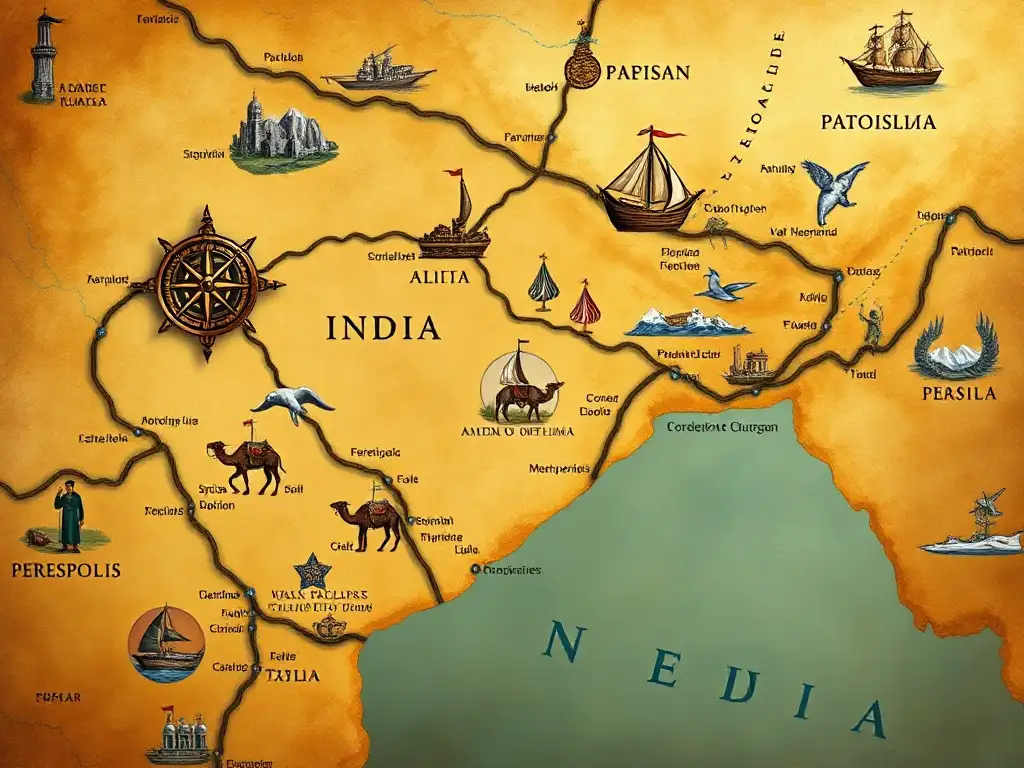
Maps from ancient times provide valuable insights into the trade networks that connected India and Persia. These cartographic representations reveal the extent of trade and the routes taken by merchants.
Notable Ancient Maps Depicting Trade Networks
Several ancient maps illustrate the intricate trade networks between India and Persia, showcasing the routes traveled by traders.
- Ptolemy's Geographia: Claudius Ptolemy's work includes references to trade routes and geographical knowledge of the time. His maps depict major cities and trade pathways, reflecting the commercial connections between regions.
- The Tabula Rogeriana: Created by the Arab geographer Muhammad al-Idrisi in the 12th century, this map provides detailed insights into the trade routes connecting the East and West, illustrating the importance of India and Persia in global commerce.
Geographic Features Influencing Trade
The geography of the regions significantly influenced trade routes and practices.
- Natural Barriers: Mountain ranges like the Himalayas and deserts such as the Thar acted as natural barriers, shaping the paths traders would take. These geographical features necessitated the development of specific routes that maximized safety and efficiency.
- Rivers and Waterways: Rivers such as the Indus and the Euphrates facilitated trade, providing natural highways for transportation. These waterways were crucial for the movement of goods, especially in regions where overland travel was challenging.
The Role of Key Cities in Trade Dynamics
Key cities along the trade routes served as vital centers of commerce and cultural exchange.
- Taxila: Located in present-day Pakistan, Taxila was an important trade center that connected various routes. It attracted merchants from both India and Persia, serving as a melting pot of cultures.
- Ctesiphon: As the capital of the Parthian Empire, Ctesiphon was a strategic trade hub where goods from India were exchanged for Persian products. This city exemplified the interconnectedness of trade networks in antiquity.
The ancient trade routes between India and Persia not only facilitated economic transactions but also fostered cultural exchanges that have left a lasting legacy in both civilizations. By understanding these routes, we gain insights into the intricate web of interactions that shaped ancient history.
Cultural Exchange Along the Trade Routes
The trade routes connecting ancient India and Persia were not just conduits for goods; they were also highways of cultural exchange. Through the movement of merchants, travelers, and diplomats, a rich tapestry of ideas, religions, and traditions flowed between these two great civilizations. The interaction along these routes fostered a deep understanding of each other's cultures, which significantly influenced social customs, religious practices, and even linguistic developments.
As trade flourished, so did the interchange of artistic and intellectual ideas. Indian philosophies, including Buddhism and Hinduism, found their way to Persia, while Persian Zoroastrianism and later Islamic beliefs influenced the spiritual landscape of India. This cultural syncretism shaped the identities of both regions, leading to a more interconnected world.
Exchange of Goods: Spices, Textiles, and Precious Metals
Goods exchanged along the ancient trade routes were varied and highly valued, with spices, textiles, and precious metals taking center stage. India, renowned for its aromatic spices like black pepper, cardamom, and cinnamon, supplied Persia with culinary delights that were essential for enhancing flavors and preserving food. These spices were not only sought after for their taste but also for their medicinal properties.
Textiles, particularly silk and cotton, were another significant export from India. Persian markets eagerly awaited Indian fabrics, which were known for their intricate designs and vibrant colors. The demand for these textiles was so high that they became a symbol of status and luxury in Persian society.
Additionally, precious metals such as gold and silver were exchanged, with Persian merchants often trading these for Indian goods. This symbiotic economic relationship not only enriched both civilizations but also contributed to the flourishing of trade networks across the broader region.
Introduction of Ideas and Innovations
The ancient trade routes also served as pathways for the exchange of innovative ideas and technologies. Indian advancements in mathematics, astronomy, and medicine found their way into Persian scholarship. For instance, Indian numerals and the concept of zero significantly influenced Persian mathematics and later, European mathematics.
Conversely, Persian innovations such as advanced irrigation techniques and architectural styles were introduced to Indian society. The melding of these ideas led to advancements in agriculture and urban planning, illustrating the profound impact of trade on development in both regions.
Furthermore, the cross-pollination of philosophical and religious ideas enriched the spiritual and intellectual fabric of both cultures. This exchange laid the groundwork for future interactions and the evolution of a shared cultural heritage.
The Impact on Art and Architecture
Art and architecture flourished as a result of the cultural exchanges fostered by the trade routes between India and Persia. The influence of Persian art is evident in Indian sculptures, paintings, and textile designs, which often incorporated intricate patterns and vibrant colors. Conversely, Indian motifs and themes began to appear in Persian art, showcasing a blend of styles that enriched both traditions.
Architectural innovations were also a significant outcome of these interactions. The use of domes and arches in Indian architecture drew inspiration from Persian designs, leading to the creation of magnificent structures such as the Taj Mahal, which reflects a harmonious blend of Persian and Indian architectural styles.
This cross-cultural influence not only enhanced the aesthetic qualities of art and architecture but also facilitated a shared identity that transcended geographical boundaries, showcasing the profound impact of ancient trade routes on cultural development.
Major Historical Figures in India-Persia Trade
The trade between India and Persia was shaped by numerous influential figures who played pivotal roles in fostering these connections. From traders to diplomats, each contributed to the rich history of economic and cultural exchanges.
Notable Traders and Ambassadors
Prominent traders and ambassadors were vital in establishing and maintaining the trade routes between India and Persia. Figures such as the Indian merchant Chandragupta Maurya and the Persian envoy Megasthenes exemplify how individuals could bridge cultural divides and promote trade.
Chandragupta Maurya, known for his role in unifying India, also established trade relations with neighboring Persian empires. His successors continued this legacy, ensuring that trade flourished under their reign. Megasthenes, the ambassador to the Mauryan court, documented the wealth and prosperity of India, encouraging Persian merchants to engage in trade, which contributed to mutual economic growth.
These individuals not only facilitated trade but also acted as cultural ambassadors, sharing knowledge, customs, and traditions between the two civilizations.
Influence of Kings and Rulers on Trade Policies
Kings and rulers played a crucial role in shaping trade policies that impacted the India-Persia trade routes. Rulers like Darius I of Persia and Ashoka of India recognized the economic potential of these connections and actively promoted trade.
Darius I established a vast network of roads that improved access to trade routes, enhancing the mobility of goods and traders. His policies encouraged the flow of resources between Persia and its neighboring regions, including India.
Similarly, Ashoka’s reign marked a significant period of trade expansion. His promotion of Buddhism and its teachings also encouraged Indian merchants to venture into Persia, creating networks that would endure for centuries.
The influence of these rulers was instrumental in the establishment of a vibrant trade system that not only enriched their respective economies but also fostered a lasting cultural exchange between India and Persia.
Challenges and Changes in Trade Routes
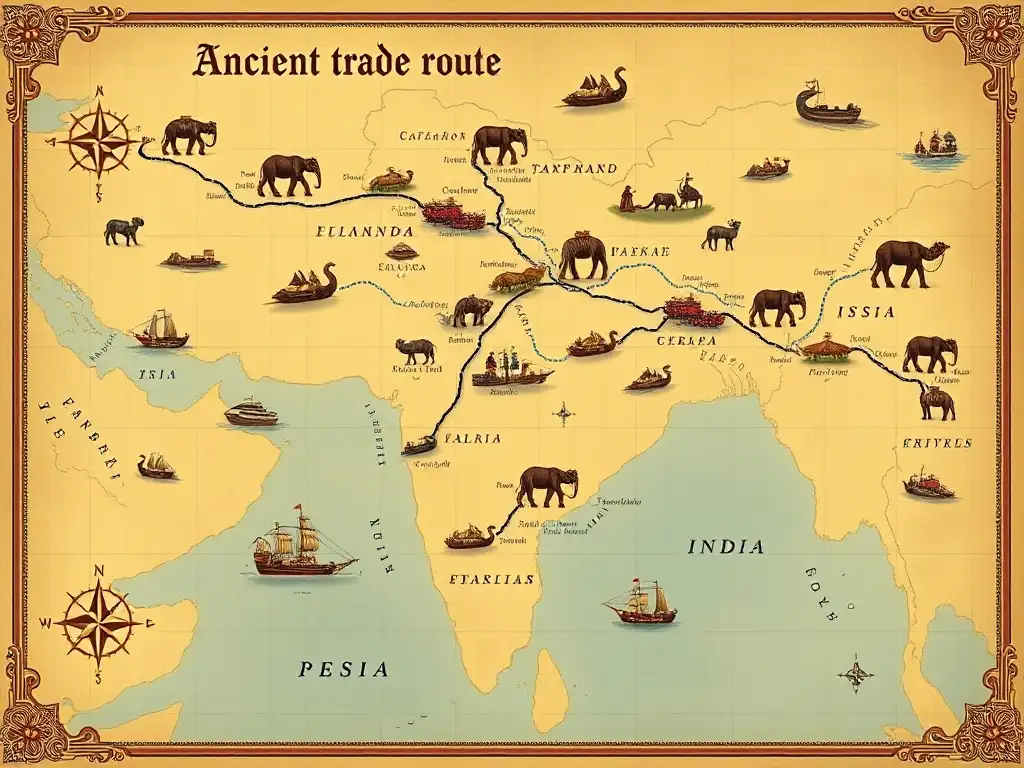
The ancient trade routes between India and Persia were not just paths of commerce but also corridors of cultural exchange and geopolitical maneuvering. Over time, these routes faced numerous challenges and changes that significantly impacted their operation. Natural obstacles such as the harsh terrain of the Iranian plateau and the expansive deserts of Central Asia posed significant risks to caravans, often leading to trade disruptions. Furthermore, seasonal weather conditions, including monsoons in India and extreme heat in Persia, necessitated careful planning and timing for safe passage.
Political instability was another major factor affecting trade routes. The rise and fall of empires, such as the Achaemenid Empire in Persia or the Maurya Empire in India, often led to changes in trade policies and the security of routes. For instance, during times of war or conflict, trade could be severely restricted or completely halted, forcing merchants to seek alternative paths. Additionally, the emergence of new powers could shift the balance of trade, leading to the development of new routes or the decline of older ones.
Trade routes also evolved with technological advancements. The introduction of new navigation techniques, cartography improvements, and the use of pack animals enhanced the efficiency of trade. However, these advancements also meant that older routes could become obsolete, as traders sought faster and safer alternatives. Such changes reflect the dynamic nature of ancient trade networks and their ability to adapt to external pressures.
Geopolitical Factors Affecting Trade
Geopolitical factors played a crucial role in shaping the trade routes between India and Persia. The strategic location of Persia as a bridge between the East and West enabled it to control significant trade flows. Persian kings often sought to expand their territories, and their military campaigns sometimes opened up new trade routes or blocked existing ones. For instance, the Achaemenid Empire's conquests allowed for the establishment of the Royal Road, which facilitated trade across vast distances.
Furthermore, the relationships between different kingdoms and empires significantly influenced trade dynamics. Alliances and treaties could enhance trade by ensuring safe passage for merchants, while hostilities could disrupt commerce. The interactions between local rulers and foreign powers often determined the security of trade routes. For example, the Maurya Empire's diplomatic relations with the Seleucid Empire strengthened trade ties between India and Persia, leading to increased commerce and cultural exchanges.
Additionally, the rise of new trading powers, such as the Greeks and later the Romans, altered the landscape of trade. Their interests in the Indian subcontinent introduced new goods and demands, shifting the focus of trade routes and creating new economic opportunities. These geopolitical fluctuations illustrate how interconnected ancient civilizations were and how trade routes served not only economic purposes but also political ambitions.
The Decline of Ancient Trade Routes
The decline of ancient trade routes connecting India and Persia can be attributed to multiple interrelated factors. As empires expanded and contracted, the once-thriving paths began to suffer from neglect and disrepair. The fall of major powers, such as the Gupta Empire in India and the Sassanian Empire in Persia, created a vacuum that led to lesser-known kingdoms taking control, often with less emphasis on maintaining trade infrastructure.
Moreover, the rise of maritime trade routes during the medieval period shifted the focus away from overland trading paths. The Indian Ocean trade, with its direct connections to Europe and Africa, became more lucrative, drawing merchants away from the arduous journeys through Central Asia and Persia. This shift not only diminished the importance of overland routes but also led to the decline of traditional caravanserais and trading posts.
Geopolitical changes, such as the emergence of the Silk Road and competition from other regions, further exacerbated the decline. The fragmentation of territories and the rise of new powers often resulted in increased tariffs and trade barriers, making it less appealing for merchants to traverse the old routes. The combination of these factors culminated in a gradual decline of the ancient trade networks that had once flourished between India and Persia.
Modern Perspectives on Ancient Trade Connections
Modern scholarship increasingly recognizes the significance of ancient trade connections between India and Persia, as they laid the groundwork for future interactions and exchanges. Archaeological discoveries, such as ancient coins and trade artifacts, have provided invaluable insights into the extent and nature of these trade routes. Research has highlighted the cultural exchanges that accompanied trade, revealing how goods, ideas, and technologies were shared along these ancient pathways.
Moreover, contemporary historians emphasize the role of trade in shaping the socio-political landscapes of both regions. The interdependence fostered by trade promoted diplomatic relations and cultural ties, suggesting that the ancient economy was not solely about commodities but also about fostering connections between diverse civilizations. Modern discussions often focus on how these interactions contributed to the rich tapestry of shared heritage that still influences India and Persia today.
The revival of interest in ancient trade routes has also led to efforts to trace their historical significance in today's geopolitical climate. As scholars analyze the historical context, they draw parallels with contemporary globalization and trade dynamics, emphasizing the lessons that can be learned from the past.
Conclusion: Legacy of India-Persia Trade Routes
The legacy of the ancient trade routes connecting India and Persia extends far beyond commerce; it encompasses a rich history of cultural exchange, diplomacy, and mutual influence. These routes facilitated not only the movement of goods but also the dissemination of knowledge, art, and ideas. The interactions that occurred along these paths contributed significantly to the development of both civilizations, shaping their identities in profound ways.
Lasting Impact on Modern India and Persia
Today, the historical connections between India and Persia continue to resonate in various aspects of life. Cultural similarities, such as language influences, culinary traditions, and art forms, can be traced back to the exchanges that occurred along ancient trade routes. The shared heritage is evident in the architecture and literature of both regions, showcasing the enduring impact of these historical connections.
Economically, the historical trade routes have inspired modern initiatives to strengthen ties between India and Iran. Trade agreements and cultural exchanges reflect a recognition of the potential benefits that can arise from rekindling these ancient connections. The legacy of cooperation and mutual respect fosters ongoing dialogue and collaboration in various sectors, from trade and commerce to science and technology.
Lessons from Ancient Trade for Contemporary Times
The ancient trade routes between India and Persia offer valuable lessons for contemporary times. They illustrate the importance of connectivity and collaboration across borders, highlighting how trade can serve as a bridge between diverse cultures. In an increasingly globalized world, the ability to foster relationships based on mutual benefit and understanding remains essential.
Furthermore, the adaptability of these ancient trade networks serves as a reminder of the need for resilience in the face of challenges. Just as merchants navigated geopolitical shifts and environmental obstacles, modern economies must remain agile and responsive to changing conditions. The historical experiences of India and Persia can inspire contemporary policymakers to prioritize trade cooperation and cultural exchange as they navigate the complexities of today's global landscape.
References and Further Reading
Understanding the ancient trade routes between India and Persia requires a deep dive into various scholarly works that explore the historical, cultural, and economic interactions between these two civilizations. Below are suggested resources that provide valuable insights into the topic.
Suggested Books and Articles on Ancient India Persia Trade Routes
-
"The Silk Roads: A New History of the World" by Peter Frankopan
This book offers a comprehensive overview of the interconnectedness of various ancient civilizations, including India and Persia, and how trade routes facilitated cultural exchanges.
-
"Trade and Traders in the Roman Empire" by A. B. A. B. D. A. M. C. K. M. A. G. P. C. R. M. D. M. T. H. N. R. T. G. T. U. E. W. W. B. Y. M. M. A. C. E. B. K. M. A. G. P. C. R. M. D. M. T. H. N. R. T. G. T. U. E. W. W. B. Y. M. M. A. C. E.
This scholarly article provides insights into the socio-economic dynamics of trade during ancient times, with a focus on the routes connecting India and Persia.
-
"India and Persia: A Historical Perspective" by R. S. Sharma
Sharma's work examines the historical ties between India and Persia, detailing the evolution of trade routes and their impact on cultural exchanges.
-
"The Indus Valley Civilization and the Persian Gulf" by Rita Lucarelli
This article discusses the connections between the Indus Valley Civilization and the Persian Gulf trade networks, offering insights into the flow of goods and ideas.
-
"Ancient Indian Trade Routes: A Historical Overview" by S. P. Gupta
Gupta explores the ancient trade routes that facilitated commerce between India and Persia, highlighting key commodities traded and their significance.
Online Resources for Further Exploration
-
Ancient Trade Routes Database
An online database that provides maps and detailed information about ancient trade routes, including those between India and Persia. This resource is invaluable for visualizing trade networks.
-
The British Museum Online Collection
The museum’s collection includes artifacts and documents related to ancient trade between India and Persia, providing a wealth of information for researchers and enthusiasts.
-
Harvard University’s Ancient India and Iran Project
This project offers various resources, including articles and research papers focusing on the interactions between ancient Indian and Persian civilizations.
-
BBC History: The Ancient World
This section of the BBC History website features articles and documentaries that explore various aspects of ancient civilizations, including trade routes connecting India and Persia.
-
The Internet Archive
A vast collection of historical texts and documents, where one can find old books and manuscripts relating to the trade routes of ancient India and Persia.
These resources will provide a solid foundation for anyone interested in further exploring the intricate web of interactions shaped by the ancient trade routes between India and Persia.
- Introduction to Ancient India and Persia Trade Routes
- Historical Context of India-Persia Connections
- Key Ancient Trade Routes Between India and Persia
- Mapping the Ancient Trade Routes
- Cultural Exchange Along the Trade Routes
- Major Historical Figures in India-Persia Trade
- Challenges and Changes in Trade Routes
- Conclusion: Legacy of India-Persia Trade Routes
- References and Further Reading
- What were the main trade routes between Ancient India and Persia?
- How did trade influence the relationship between Ancient India and Persia?
- What goods were commonly traded between India and Persia?
- Were there any significant historical figures involved in the trade between India and Persia?
- How did geography impact the trade routes between Ancient India and Persia?
Frequently Asked Questions
What were the main trade routes between Ancient India and Persia?
The main trade routes included the Silk Road and maritime paths, which facilitated the exchange of goods like spices, silks, and precious stones between the two regions.
How did trade influence the relationship between Ancient India and Persia?
Trade led to cultural exchanges and strengthened political ties between the regions, enriching both societies through the introduction of new ideas, religions, and artistic styles.
What goods were commonly traded between India and Persia?
Key traded goods included spices, textiles, jewelry, and metals. These commodities were highly sought after, making trade a profitable venture for merchants from both civilizations.
Were there any significant historical figures involved in the trade between India and Persia?
Yes, figures like Darius I of Persia expanded trade routes, while Indian merchants and traders played a crucial role in fostering economic ties and cultural interactions.
How did geography impact the trade routes between Ancient India and Persia?
The geographic location of both civilizations allowed for diverse trade routes, including land and sea, which were critical for the movement of goods and cultural exchange across regions.
Final Reflection: The Enduring Legacy of Ancient India-Persia Trade Routes
The intricate web of ancient trade routes between India and Persia not only shaped the economies of their time but also laid the groundwork for cultural exchanges that resonate today. The historical significance of these connections reminds us that trade is not merely a transaction; it is a bridge that fosters understanding, collaboration, and shared heritage among diverse civilizations.
The influence of these ancient trade routes continues to be felt in our modern world, as they have woven a rich tapestry of cultural and social interactions that define our global landscape. The exchange of goods, ideas, and traditions between India and Persia has left an indelible mark on art, language, and philosophy. As historian John Keay aptly stated, Trade routes are the veins of civilization, carrying not just goods but the lifeblood of cultural exchange.
This observation underscores the importance of recognizing and celebrating the interconnectedness of our histories.
As we reflect on the lessons from these ancient trade routes, let us embrace the spirit of connection and collaboration in our own lives. Consider how you can foster understanding and unity in your community, drawing inspiration from the past to build a more interconnected future. Whether through cultural exchanges, supporting local artisans, or simply engaging in conversations that celebrate diversity, each of us has the power to contribute to a world that honors the rich legacy of ancient connections.
Unveil the Journeys: Connect with India and Persia's Ancient Legacy!
Thank you for joining us on this intriguing exploration of how ancient maps and routes fused India and Persia together! We hope you discovered not only the rich historical context but also the vital connections that shaped civilizations. Now, it's your turn to take action and delve deeper into this captivating subject.
Here are a few ways you can continue your journey:
- Join a local history group or an online forum to share insights and connect with fellow enthusiasts interested in ancient trade routes.
- Explore ancient maps personally! Visit a museum or library that showcases historical cartography—seeing these maps in person will bring the stories to life.
- Start a blog or social media account dedicated to your favorite ancient route or artifact you've discovered—let's keep the conversation going and inspire others!
How has learning about the connections between India and Persia changed your perspective on historical trade and cultural exchange?