
The Role of Women in IndianChinese Exchanges: A Historical Perspective

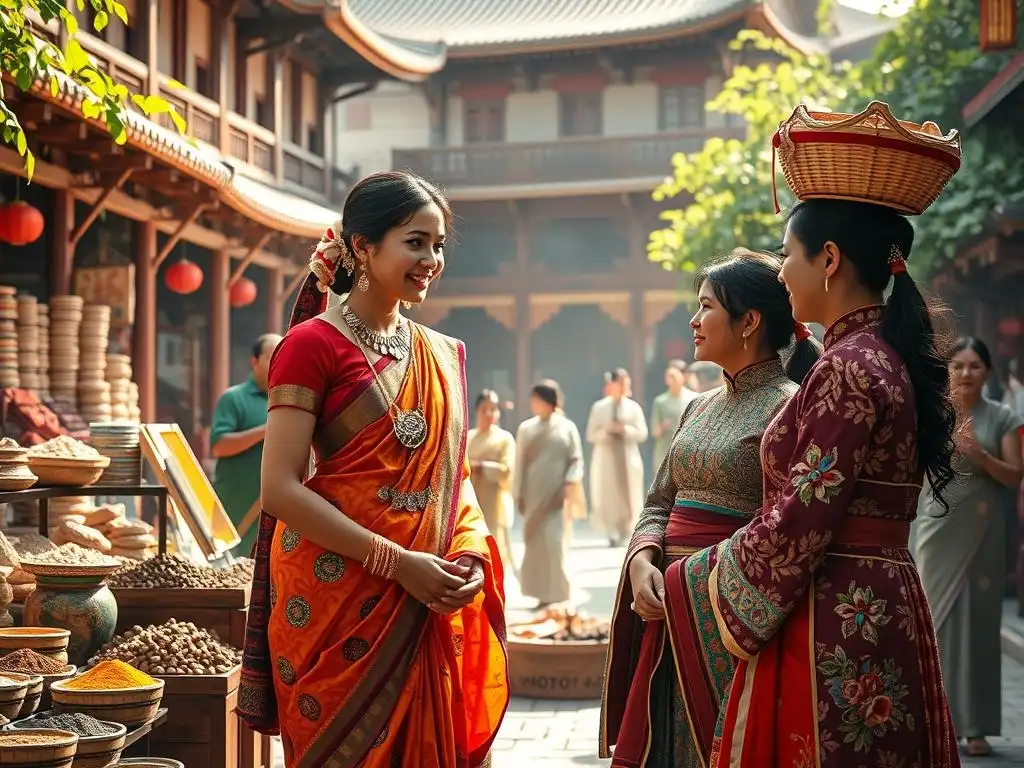
Welcome to Ancient India History, where we embark on a captivating journey through the rich tapestry of India's past. In this exploration, we dive deep into the intriguing role of women in Indian-Chinese exchanges, revealing how these remarkable figures influenced cultural interactions and shaped historical narratives. From the enigmatic stories of the Indus Valley to the sophisticated dynamics of the Gupta Empire, our content promises to enlighten and inspire.
Are you ready to uncover the untold tales that connect these ancient civilizations? Join us as we delve into this fascinating topic and discover the profound contributions of women in the annals of history.
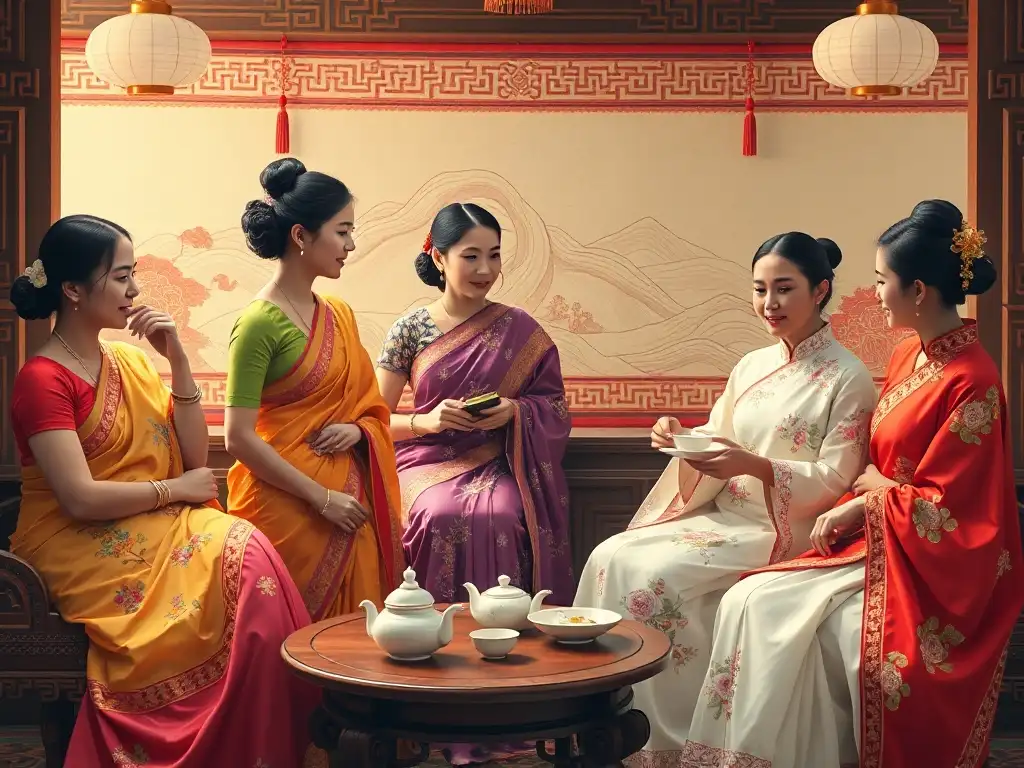
Introduction to Women in Indian-Chinese History
The intricate tapestry of Indian-Chinese relations stretches back millennia, woven with threads of cultural, economic, and social exchanges. While much attention has been given to the prominent figures and events that shaped these interactions, the role of women remains a lesser-explored yet significant aspect. Women in Indian-Chinese history played crucial roles not only as participants in trade and diplomacy but also as cultural mediators who facilitated the exchange of ideas, traditions, and innovations. Their contributions have been pivotal in shaping the narratives of both civilizations, often transcending the boundaries of gender norms prevalent in their respective societies.
Overview of Indian-Chinese Exchanges
The exchanges between India and China date back to ancient times, characterized by a rich flow of goods, ideas, and cultural practices. Key routes, such as the Silk Road, served as conduits for trade, allowing merchants and travelers from both regions to interact and share their knowledge.
- Trade Goods:
- Spices
- Textiles
- Ceramics
- Precious stones
- Cultural Exchanges:
- Buddhism's spread from India to China
- Chinese influence on Indian art and architecture
Women, often overshadowed in historical narratives, were integral to these exchanges, whether as traders, diplomats, or cultural emissaries. Their involvement facilitated not only the economic transactions but also the emotional and social connections that enriched both cultures.
Significance of Women in Historical Interactions
The significance of women in the historical interactions between India and China extends beyond mere participation in trade or diplomacy; it encompasses their roles in shaping social norms and cultural practices. Women acted as:
-
Cultural Ambassadors:
They often helped to translate and adapt ideas, making them accessible and acceptable across cultural divides.
-
Mediators in Marriages:
Intermarriages between Indian and Chinese families facilitated intimate ties that helped strengthen bilateral relations.
-
Political Actors:
Women sometimes held significant sway in political matters, influencing decisions that would affect trade agreements and diplomatic missions.
By understanding the multifaceted roles of women, we gain deeper insights into the nuanced nature of Indian-Chinese exchanges and the broader implications for historical narratives.
Historical Context of Women in Indian-Chinese Relations
Early Historical Exchanges between India and China
The earliest records of exchanges between India and China highlight a complex interplay of commerce and cultural diffusion. During the Han Dynasty (206 BCE – 220 CE), Indian merchants traveled to China, bringing with them not only goods but also religious philosophies, particularly Buddhism. Women were often involved in these exchanges, whether as traders or as guardians of cultural practices.
- Key Periods:
- Han Dynasty
- Tang Dynasty (618–907 CE)
Women from both cultures participated actively in the transmission of ideas, showcasing their agency in times when their contributions were often overlooked.
The Role of Women in Trade and Diplomacy
The role of women in trade and diplomacy was not only about facilitating economic transactions but also about establishing relationships built on trust and mutual respect. Women often took charge of family businesses, managing trade routes and negotiations while their male counterparts were away.
- Examples of Women in Trade:
- Women merchants who operated along the Silk Road
- Diplomatic wives who forged alliances through marriage
Furthermore, the narratives of these women often reflect their resilience and adaptability, characteristics that were essential for navigating the complexities of cross-cultural exchanges. Their stories, though sometimes lost to history, are vital to understanding the broader implications of Indian-Chinese interactions.
In this exploration of the role of women in Indian-Chinese exchanges, we delve deeper into their historical contributions, shedding light on their pivotal role in fostering connections that continue to resonate through time.
Prominent Women Figures in Indian-Chinese History
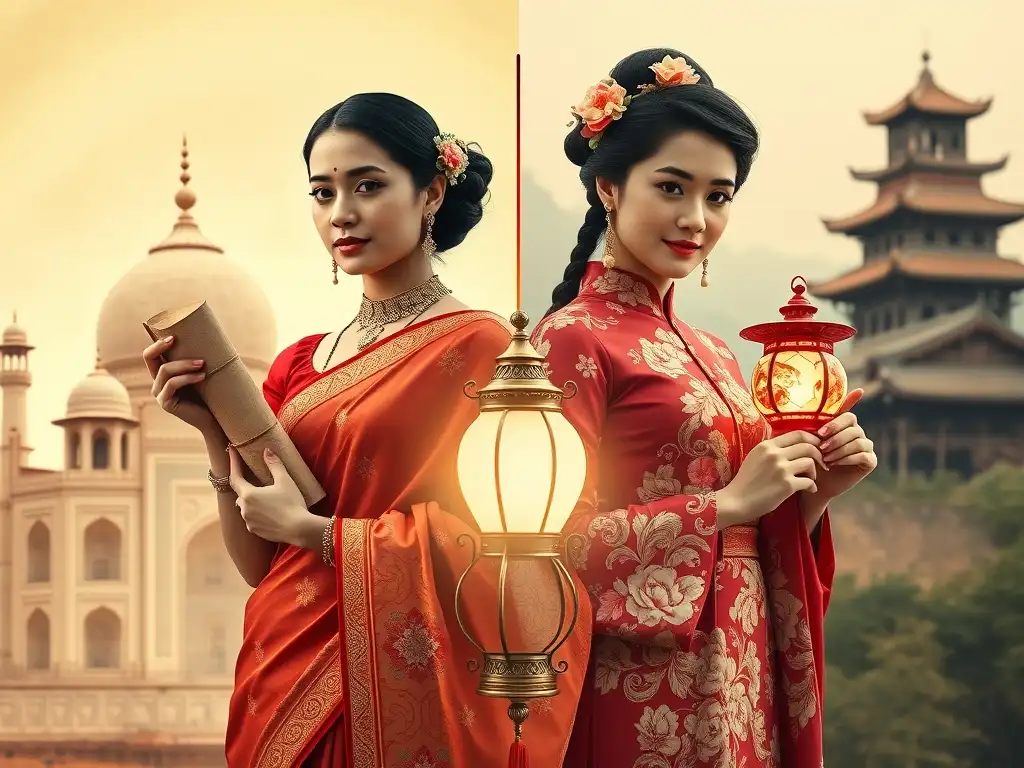
Throughout history, women have played significant roles in the exchanges between India and China, often serving as key figures in diplomacy, trade, and cultural transmission. Notable women such as the legendary princesses and diplomats emerged during periods of intensive interaction, particularly along the Silk Road. One of the most prominent figures is Princess Wencheng, who was sent from the Tang Dynasty to marry Tibetan King Songtsen Gampo, facilitating cultural exchanges that included Indian influences. This union not only strengthened political ties but also allowed for the introduction of Buddhism into Tibet, showcasing the far-reaching impacts of such matrimonial alliances.
Another key figure is the Buddhist nun, Xuanzang, who traveled to India to study Buddhism and later returned to China with invaluable texts and knowledge, influencing religious practices and philosophical thought. These women, among others, highlight the vital roles that women have played in shaping the historical narrative of Indian-Chinese exchanges.
Women as Cultural Ambassadors
Women often served as cultural ambassadors, bridging the gap between Indian and Chinese civilizations. Their roles were not merely limited to familial connections but extended into the realms of diplomacy and cultural exchange. For example, the marriages of Indian princesses to Chinese emperors facilitated not only political alliances but also the exchange of ideas, traditions, and religious beliefs. These women helped to integrate Indian cultural elements into Chinese society, thereby enriching both cultures.
Additionally, women traveling with traders and diplomats contributed to the dissemination of knowledge regarding customs, culinary practices, and artistic expressions. Through their interactions, they fostered mutual understanding and respect, laying the groundwork for future collaborations. Their active participation in these exchanges exemplifies the critical role women played in the cultural diplomacy of ancient civilizations.
Notable Contributions of Women in the Silk Road Trade
Women were integral to the Silk Road trade, often serving as traders, artisans, and facilitators of commerce. Their involvement in the trade networks was crucial, as they managed households and businesses, ensuring the flow of goods and information across vast distances. For instance, the famous Silk Road caravanserais often had women who played host, offering hospitality and sharing knowledge about local customs and trading practices.
Moreover, women artisans contributed to the production of textiles, pottery, and other goods that were highly sought after in both Indian and Chinese markets. This not only demonstrates their entrepreneurial spirit but also highlights their ability to influence trade patterns and economic conditions. Their contributions are often overlooked, yet they significantly shaped the interactions between these two ancient civilizations.
Female Scholars and Their Influence on Cross-Cultural Dialogue
Female scholars have made indispensable contributions to the intellectual exchanges between India and China. Notable among them is the figure of Ban Zhao, a Chinese historian who, although not directly involved with India, set a precedent for women's scholarship and education. Her works inspired many women in India and China to engage in scholarly pursuits, thereby fostering cross-cultural dialogue.
Furthermore, Buddhist nuns and scholars traveled extensively to exchange ideas and teachings. These women often translated texts and facilitated discussions on philosophy, ethics, and spirituality, enriching both Indian and Chinese thought. Their influence on the intellectual landscape of their respective cultures underscores the importance of women's roles in shaping historical narratives and fostering mutual understanding.
Women's Roles in Religion and Philosophy
Women have significantly influenced the religious and philosophical landscapes of both India and China. In India, women such as Gargi and Maitreyi contributed to Vedic philosophy, shaping discussions around spirituality and ethics. Their participation in philosophical debates illustrates the pivotal role women played in the intellectual traditions of ancient India.
In China, the teachings of Confucianism and Daoism also saw contributions from women. Figures like Ban Zhao not only wrote about women's education but also advocated for their involvement in philosophical discussions. These contributions helped to elevate the status of women in religious and philosophical discourse, promoting a more inclusive understanding of spirituality in both cultures.
Impacts of Women in Literature and Arts
The contributions of women to literature and the arts in Indian and Chinese civilizations are profound. In India, women poets and playwrights like Mirabai and Sarojini Naidu expressed their thoughts on love, devotion, and social issues through their work, leaving a lasting impact on Indian literature. Their writings often challenged societal norms and provided a voice for women's experiences.
Similarly, in China, women such as Li Qingzhao made significant strides in poetry and prose, reflecting the complexities of women's lives and their emotions. Through their artistic expressions, these women not only contributed to the cultural heritage of their respective societies but also fostered a greater appreciation for women's perspectives in literature and the arts.
Women in Familial and Community Structures
Women have traditionally held central roles within familial and community structures in both Indian and Chinese societies. Their responsibilities often encompassed the management of households, education of children, and preservation of cultural traditions. In India, women were seen as the backbone of the family, ensuring the continuity of cultural practices and values. Their roles in nurturing and educating the next generation were vital to maintaining societal cohesion.
In China, women also played essential roles in the family, often acting as mediators and caretakers. The Confucian ideal emphasized the importance of women in maintaining harmony within the household. As custodians of culture and tradition, women in both societies shaped the social fabric and sustained community networks, contributing significantly to the stability and continuity of their civilizations.
Challenges Faced by Women in Indian-Chinese Exchanges
The exchanges between India and China over centuries have been marked by significant cultural, economic, and intellectual interactions. However, women played a complex and often marginalized role within these exchanges. Various historical, socio-political, and cultural challenges hindered the full participation of women in these interactions, reflecting broader societal norms and restrictions that limited their agency and visibility.
Socio-Political Barriers
Women in both Indian and Chinese societies faced substantial socio-political barriers that impacted their roles in cross-cultural exchanges. In ancient times, the patriarchal structure prevalent in both civilizations dictated women's limited access to education, political power, and public life. This exclusion meant that women were often relegated to the private sphere, where their contributions to cultural exchanges remained largely unrecognized.
- Political Exclusion: Women were generally absent from formal political processes, which meant their voices and perspectives were seldom included in diplomatic or trade discussions.
- Legal Restrictions: Laws governing marriage, property rights, and inheritance often favored men, limiting women's ability to engage in economic transactions or travel independently, which were crucial for participation in exchanges.
- Cultural Norms: Social customs and traditions placed women in subordinate roles, often prioritizing their duties as wives and mothers over any potential contributions to broader cultural dialogues.
These barriers created a landscape in which women's roles were largely defined by their relationships to men, constraining their ability to influence or participate in Indian-Chinese exchanges meaningfully.
Gender Expectations and Limitations
The gender expectations in both Indian and Chinese societies further compounded the challenges women faced. Traditional roles dictated that women should primarily focus on domestic responsibilities, which often prevented them from engaging in public life or pursuing opportunities that would allow for greater involvement in cross-cultural exchanges.
- Domestic Sphere: In both cultures, women's primary roles were as caretakers and homemakers, which limited their mobility and exposure to external influences. This confinement made it difficult for women to participate in trade or cultural exchanges directly.
- Education and Literacy: Access to education for women was restricted, limiting their ability to engage intellectually in the exchanges that were occurring. While some women learned to read and write, the majority remained illiterate, further hindering their participation.
- Travel Restrictions: Social norms discouraged women from traveling alone or participating in trade missions, which were essential for fostering relationships between Indian and Chinese communities.
These expectations created a significant limitation on the potential contributions and roles women could undertake in the context of Indian-Chinese relations throughout history.
The Evolution of Women's Roles in Indian-Chinese Relations
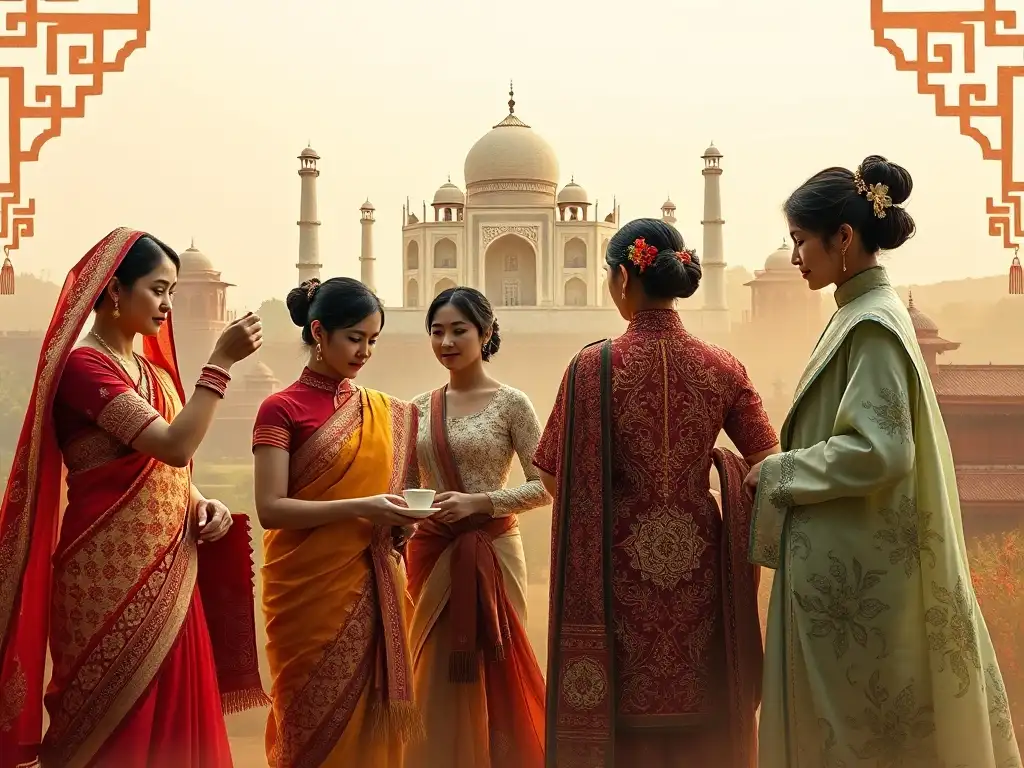
Despite the formidable challenges, the roles of women in Indian-Chinese exchanges evolved notably over time, influenced by changing socio-political landscapes, cultural shifts, and the impact of colonialism.
Changes Over Time: From Ancient to Modern Era
The historical trajectory of women’s roles in Indian-Chinese exchanges reflects a gradual evolution that transitioned from significant constraints in ancient times to more active participation in modern contexts.
- Ancient Period: In early exchanges, women often acted as cultural ambassadors through marriage alliances and familial ties, facilitating interactions between the two civilizations. However, their roles were largely peripheral and defined by their relationships with men.
- Medieval to Early Modern Period: As trade routes expanded, some women began to emerge as traders in port cities, contributing to economic exchanges. This period saw a slight increase in visibility for women in public life, although they still operated within restrictive societal norms.
- Modern Era: The 19th and 20th centuries marked a significant shift as colonial influences began to change traditional roles. Women became more involved in education, social reform movements, and political activism, leading to greater visibility and participation in Indian-Chinese relations.
This evolution illustrates the gradual loosening of rigid gender roles, allowing women to engage more actively in exchanges between India and China.
The Impact of Colonialism on Women’s Status
Colonialism played a pivotal role in reshaping the status of women in both Indian and Chinese contexts, altering their roles in cultural and economic exchanges.
- Exposure to New Ideas: The colonial period brought Western ideologies that challenged traditional gender roles. Women's education became more prioritized, leading to a gradual increase in literacy and awareness of rights.
- Involvement in Movements: Women actively participated in anti-colonial movements, which also fostered a sense of agency. Their involvement in these movements began to challenge traditional expectations and opened doors for greater participation in public life.
- Cultural Exchanges: During the colonial era, women’s participation in cultural exchanges increased, as they engaged in arts, literature, and social reform, contributing to a broader understanding and appreciation of cross-cultural dynamics.
The impact of colonialism ultimately catalyzed a transformation in women’s roles, allowing for a more significant presence in the narrative of Indian-Chinese exchanges, thereby enriching the historical tapestry of both civilizations.
Conclusion: The Lasting Legacy of Women in Indian-Chinese History
The role of women in Indian-Chinese exchanges is a testament to their significant contributions and influence throughout history. These exchanges were not merely economic or political; they were enriched by the involvement of women, who played vital roles in trade, culture, and diplomacy. Their stories reflect resilience, adaptability, and the ability to forge connections that transcended geographical boundaries. From merchants to diplomats, women have left an indelible mark on the historical narrative of both civilizations.
Summary of Contributions and Influence
Women contributed to Indian-Chinese exchanges in various capacities. In ancient times, female merchants participated actively in trade, establishing networks that facilitated the flow of goods such as silk, spices, and textiles. The accounts of travelers, like the Chinese Buddhist monk Xuanzang, highlight how women’s roles extended beyond commerce into cultural exchanges. Additionally, women acted as cultural ambassadors, sharing knowledge, art, and religious practices that enriched both societies. Notably, figures like the poetess and scholar, who engaged in cross-cultural dialogues, illustrate the intellectual contributions of women during these periods.
The Importance of Recognizing Women’s Roles in Historical Narratives
Recognizing women's roles in historical narratives is crucial for a comprehensive understanding of Indian-Chinese history. Traditional accounts often overlook the contributions of women, leading to a skewed perspective that emphasizes male achievements. By integrating women's experiences and their active participation in exchanges, we can appreciate the complexities of these interactions. This recognition not only honors their legacy but also provides a more nuanced view of history, showcasing the interconnectedness of cultures and the essential roles women played in shaping these exchanges.
Further Reading on Women in Indian-Chinese History
Recommended Books and Articles
-
"Women in Ancient India" by R. S. Sharma
This book explores the diverse roles of women in ancient Indian society, including their participation in trade and cultural exchanges.
-
"The Silk Roads: A New History of the World" by Peter Frankopan
While not exclusively focused on women, this work delves into the interconnectedness of civilizations along the Silk Roads, highlighting the roles women played in these exchanges.
-
"Gender and the Politics of History" by Joan Wallach Scott
This article discusses the importance of gender in historical narratives, providing a framework for understanding women's contributions in various contexts.
Online Resources and Archives
-
The Digital South Asia Library
A comprehensive repository of resources pertaining to South Asian history, including materials focused on women’s contributions.
-
Women in World History: A Biographical Encyclopedia
This online archive offers entries on significant women throughout history, including those involved in Indian and Chinese exchanges.
-
The Chinese Women’s History Research Network
A platform dedicated to the study of women's roles in Chinese history, providing access to research papers and articles that highlight cross-cultural exchanges.
- Introduction to Women in Indian-Chinese History
- Overview of Indian-Chinese Exchanges
- Significance of Women in Historical Interactions
- Historical Context of Women in Indian-Chinese Relations
- Prominent Women Figures in Indian-Chinese History
- Social and Cultural Contributions of Women
- Challenges Faced by Women in Indian-Chinese Exchanges
- The Evolution of Women's Roles in Indian-Chinese Relations
- Conclusion: The Lasting Legacy of Women in Indian-Chinese History
- Further Reading on Women in Indian-Chinese History
Frequently Asked Questions
What was the role of women in ancient Indian society?
Women in ancient India played crucial roles as caretakers and contributors to society, often involved in family, education, and cultural preservation. Their impact on social structures was significant, despite the limitations imposed by patriarchal norms.
How did women contribute to Indian-Chinese exchanges?
Women were instrumental in trade, diplomacy, and cultural interactions between India and China. They often acted as mediators and cultural ambassadors, influencing the exchange of ideas and goods.
What were some challenges faced by women in ancient India?
Women in ancient India faced various challenges, including social restrictions, limited access to education, and patriarchal oppression. Despite these obstacles, many women found ways to assert their influence within their communities.
How did the Gupta Empire impact women's status?
The Gupta Empire saw a blend of improvement and decline in women's status, with some women attaining educational opportunities and others facing increased restrictions. This period was marked by a complex interplay of cultural developments and societal expectations.
Are there any notable women in Indian-Chinese history?
Yes, several notable women impacted Indian-Chinese history, including traders, scholars, and diplomats. Their contributions are often underrepresented, yet they played essential roles in shaping the cultural exchanges between the regions.
Final Reflection: The Enduring Legacy of Women in Indian-Chinese History
**The exploration of women's roles in Indian-Chinese exchanges reveals a profound truth: **their contributions have been pivotal in shaping cultural, social, and economic interactions between these two great civilizations. Today, as we navigate a world increasingly defined by globalization and cross-cultural exchanges, it is essential to recognize that the voices of women have historically been at the forefront of these dialogues. Their stories, often overlooked, remind us that the past is not merely a series of events but a tapestry woven with the threads of diverse experiences.
Clearly, the impact of women in Indian-Chinese history extends beyond mere historical accounts; it resonates deeply within our contemporary cultural and social landscapes. Their roles as diplomats, traders, and cultural ambassadors have laid the groundwork for mutual understanding and respect between these nations. As we reflect on their contributions, we are reminded of the words of historian R. C. Majumdar: History is not merely a record of events; it is a reflection of the lives and struggles of those who lived it.
This perspective invites us to appreciate the nuances of history and the vital roles women have played in shaping it.
As we look to the future, let us commit to honoring and amplifying the voices of women in all spheres of life. I encourage you, dear reader, to reflect on the lessons of resilience, collaboration, and empowerment that emerge from the stories of women in Indian-Chinese exchanges. Consider how you can contribute to this legacy in your own life—whether through advocacy, education, or simply by sharing these stories with others. Together, we can ensure that the contributions of women are recognized, celebrated, and integrated into the broader narrative of history, fostering a more inclusive and equitable future for all.
Unveil the Power of Women in Cultural Exchanges!
Thank you for exploring the intricate roles that women played in the historical exchanges between India and China. The insights you've gained not only enrich your understanding of these cultures but also highlight the critical contributions of women throughout history. Now, it's time to take your newfound knowledge further!
Here are some impactful steps you can take:
- Dive deeper into the historical narratives by researching biographies of influential women from both cultures and sharing your findings in discussions or on social media.
- Join a local or online discussion group focused on gender studies or historical exchanges to connect with like-minded individuals and share perspectives.
- Explore current initiatives led by women between India and China that promote cultural collaboration and consider how you can support them.
Reflecting on the past can inspire future connections. What unique relationships do you think women today can forge between India and China? Let's spark a conversation!