
The Relationship Between Chandragupta Maurya and Alexander the Great

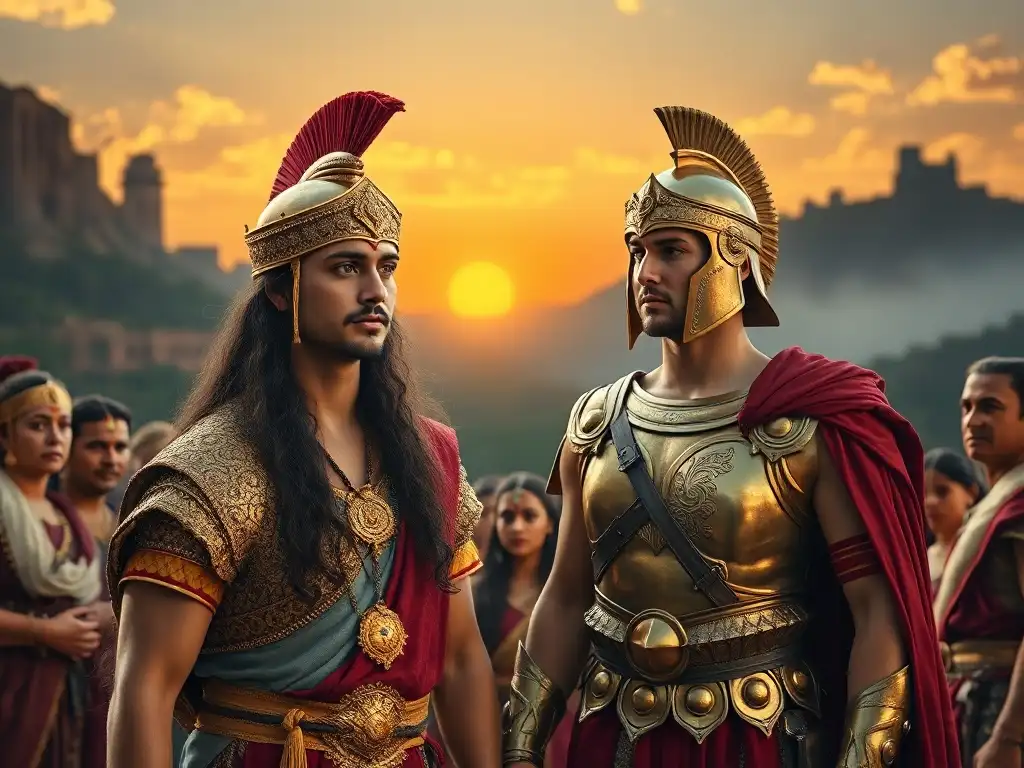
Welcome to Ancient India History, where we embark on a captivating journey through the rich tapestry of ancient Indian civilizations. Here, we delve into the intricate connections that shaped cultures and influenced the world as we know it today. In our feature article, we unravel the fascinating relationship between Chandragupta Maurya and Alexander the Great, exploring how their interactions laid the groundwork for empires and legacies that still resonate.
Prepare to unlock the secrets of history and discover how these two titans of their time navigated power, ambition, and cultural exchange. Join us as we uncover the profound impact of their alliance and its significance in the grand narrative of ancient India!
Introduction to Chandragupta Maurya and Alexander the Great
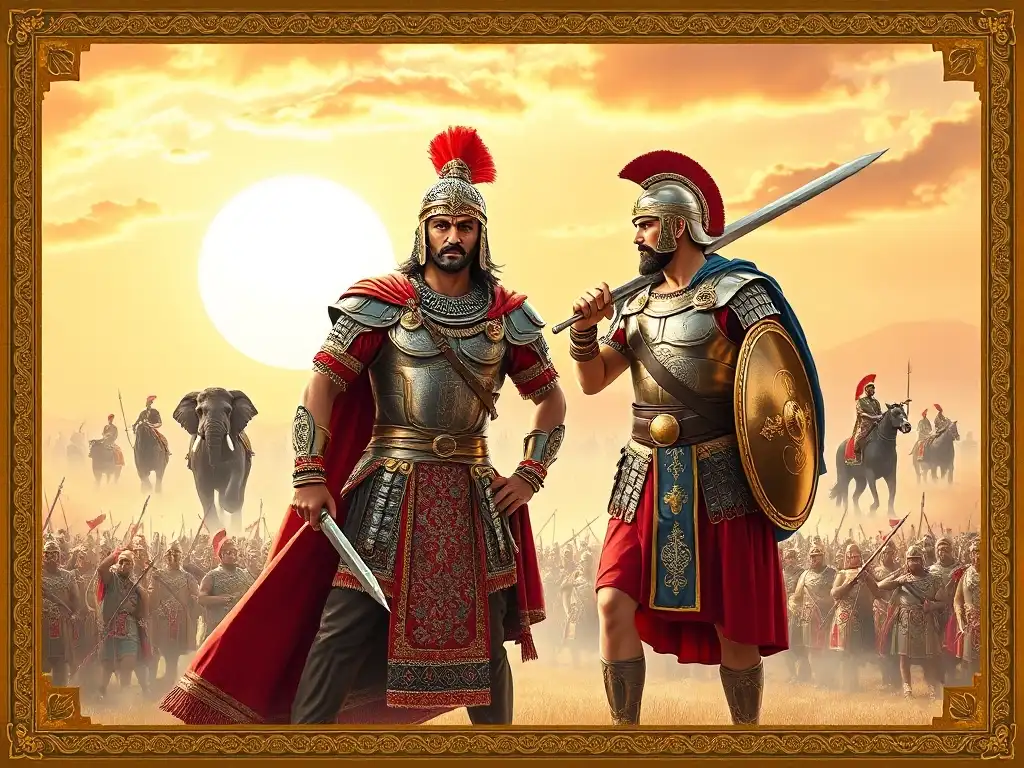
The relationship between Chandragupta Maurya and Alexander the Great stands as a fascinating chapter in ancient history, illustrating the intersection of two powerful figures whose legacies shaped the course of their respective civilizations. Chandragupta, the founder of the Mauryan Empire, emerged as a formidable ruler in ancient India, while Alexander, renowned for his unparalleled conquests, sought to expand his empire into the Indian subcontinent. Their interactions not only reveal insights into their individual characters and ambitions but also reflect the broader socio-political landscape of the time.
Understanding the dynamics of their relationship is crucial for grasping the historical narrative of the Mauryan Empire and the impact of Alexander's campaigns on Indian history. This exploration delves into their biographies, the significance of their encounters, and the historical context that framed their actions.
Overview of Chandragupta Maurya
Chandragupta Maurya (c. 340–297 BCE) was a pivotal figure in Indian history, credited with unifying the fragmented regions of northern India into a single empire. Emerging from humble beginnings, he was inspired by the teachings of Chanakya, a brilliant strategist and philosopher, who played a crucial role in his rise to power. Together, they overthrew the Nanda dynasty, establishing the Mauryan Empire, which became one of the largest empires in the ancient world.
- Accomplishments:
- Unification of India: Chandragupta laid the foundations of a centralized administration.
- Economic Reforms: He implemented policies that enhanced trade and agriculture.
- Cultural Patronage: His reign saw the patronage of arts and sciences, paving the way for future advancements.
Chandragupta's legacy is not only defined by his military conquests but also by the administrative systems he instituted that influenced subsequent Indian rulers.
Brief Biography of Alexander the Great
Alexander III of Macedon, commonly known as Alexander the Great (356–323 BCE), was one of history’s most illustrious military leaders. Born in Pella, Macedonia, he was tutored by the philosopher Aristotle, who instilled in him a love for knowledge and a passion for conquest. By the age of 30, Alexander had created one of the largest empires in the ancient world, stretching from Greece to northwest India.
- Notable Achievements:
- Military Innovations: His innovative tactics and formations revolutionized warfare.
- Cultural Exchange: Alexander's conquests facilitated the spread of Hellenistic culture across the regions he conquered.
- City Founding: He founded over twenty cities, most notably Alexandria in Egypt, which became centers of learning and culture.
Alexander's ambition to conquer the known world brought him into conflict with various kingdoms, including those in India, where he faced resistance from local rulers.
Significance of Their Relationship in Ancient History
The relationship between Chandragupta Maurya and Alexander the Great is significant for several reasons:
- Cultural Exchange: Their encounters facilitated a blend of Greek and Indian cultures, leading to a mutual influence in art, philosophy, and governance.
- Strategic Alliances and Rivalries: The interactions between their forces set the stage for future political dynamics in the region, influencing subsequent rulers and empires.
- Historical Documentation: Accounts from historians like Arrian provide valuable insights into their relationship, contributing to the understanding of ancient Indian history.
This relationship serves as a crucial point of reference for historians and scholars studying the complexities of ancient civilizations and their interactions.
Historical Context of the Mauryan Empire and Alexander’s Conquests
Understanding the relationship between Chandragupta Maurya and Alexander the Great requires a thorough examination of the historical context in which they operated. This includes the rise of the Mauryan Empire, Alexander's campaigns in India, and the broader cultural and political landscape of the time.
The Rise of the Mauryan Empire
The Mauryan Empire emerged around 322 BCE, following the overthrow of the Nanda dynasty. Chandragupta's rise marked a significant transformation in Indian politics, characterized by:
- Strong Central Authority: Chandragupta established a centralized governance model that facilitated efficient administration.
- Expansionist Policies: The empire expanded rapidly, encompassing diverse territories and cultures, which necessitated innovative governance strategies.
- Economic Prosperity: The Mauryan period witnessed advancements in trade, agriculture, and urbanization, contributing to the empire's stability.
Alexander's Campaigns in India
Alexander’s invasion of India in 326 BCE was a pivotal moment in ancient history. His campaigns included:
- Battle of the Hydaspes: A significant confrontation against King Porus, which showcased Alexander's military prowess.
- Cultural Interactions: The campaigns led to encounters with various Indian cultures, resulting in a blend of Hellenistic and Indian influences.
- Challenges and Retreats: Despite initial success, Alexander faced challenges from local rulers and the exhaustion of his troops, leading to his eventual retreat.
Cultural and Political Landscape of Ancient India
During the time of Chandragupta and Alexander, ancient India was marked by a rich tapestry of cultures and kingdoms. Key aspects included:
- Diverse Kingdoms: The Indian subcontinent was home to various regional powers, each with distinct customs and governance.
- Philosophical Developments: The period saw the flourishing of philosophical thought, including the rise of Buddhism and Jainism, which would later influence Mauryan policy.
- Trade Networks: Extensive trade routes facilitated economic exchanges between India and the Mediterranean, allowing for cultural and material exchanges.
Understanding these elements provides a comprehensive view of the backdrop against which the relationship between Chandragupta Maurya and Alexander the Great unfolded, offering insights into their mutual influences and the lasting impact on history.
The Encounter: Chandragupta Maurya and Alexander the Great
The encounter between Chandragupta Maurya and Alexander the Great is a pivotal moment in ancient history, illustrating the intersection of two significant figures from vastly different cultures. This interaction occurred during Alexander's campaign to expand his empire into the Indian subcontinent around 326 BCE. Chandragupta, a rising leader from the Maurya dynasty, was determined to establish his rule in the region. As Alexander moved further into India, he encountered a series of local rulers, including Chandragupta, who was rapidly consolidating power.
Their relationship was characterized by a blend of confrontation and negotiation. While Alexander sought to extend his influence over the territories he conquered, Chandragupta aimed to resist foreign domination and promote his vision for an independent Indian state. This dynamic led to significant developments that would shape the political landscape of ancient India.
Timeline of Their Interaction
- 327 BCE: Alexander begins his campaign in the Indian subcontinent, crossing the Hindu Kush.
- 326 BCE: The Battle of the Hydaspes River occurs, marking a major confrontation with King Porus, a neighboring ruler to Chandragupta. Chandragupta, at this time, is likely preparing for his own ambitions against Alexander's advances.
- 326 BCE: Following his victory over Porus, Alexander continues to explore the western regions of India. Chandragupta's forces may have engaged in skirmishes with Alexander's troops during this period.
- 325 BCE: Recognizing the threat posed by Alexander, Chandragupta consolidates alliances with local rulers, building a coalition against the Macedonian invaders.
- 323 BCE: Alexander dies in Babylon, leading to a decline in his empire's control over India, which ultimately favors Chandragupta.
The Initial Conflict and Diplomacy
The initial interaction between Chandragupta and Alexander was marked by both conflict and attempts at diplomacy. After Alexander’s conquest of the Punjab region, he sought to expand his influence further into northern India. Chandragupta, however, viewed Alexander as a formidable adversary.
As tensions escalated, Chandragupta's forces engaged in guerrilla tactics, leveraging their knowledge of the local terrain to outmaneuver Alexander's disciplined but unfamiliar army. At the same time, there were moments of diplomacy, as some accounts suggest that Chandragupta may have sought peace negotiations to avoid direct confrontation, possibly recognizing Alexander's military prowess.
This delicate balance between military action and diplomatic overtures illustrates the complexity of their relationship. Chandragupta's ability to adapt and respond to Alexander's strategies played a crucial role in shaping the outcomes of their encounters.
Key Figures Involved in Their Relationship
Several key figures played significant roles in the relationship between Chandragupta Maurya and Alexander the Great:
- Chandragupta Maurya: The ambitious leader of the Maurya dynasty, he aimed to establish a powerful empire in India, resisting foreign domination.
- Alexander the Great: The Macedonian king whose military campaigns sought to expand his empire into India, influencing the region's political dynamics.
- Chanakya (Kautilya): A brilliant strategist and Chandragupta’s mentor, Chanakya was instrumental in formulating strategies to counter Alexander's advances and helped Chandragupta in building alliances.
- King Porus: A contemporary ruler whose defeat at the hands of Alexander was a significant event that brought Chandragupta's ambitions into sharper focus, as it demonstrated both Alexander's strength and the vulnerabilities of Indian kings.
Impact of Alexander's Campaigns on Chandragupta Maurya
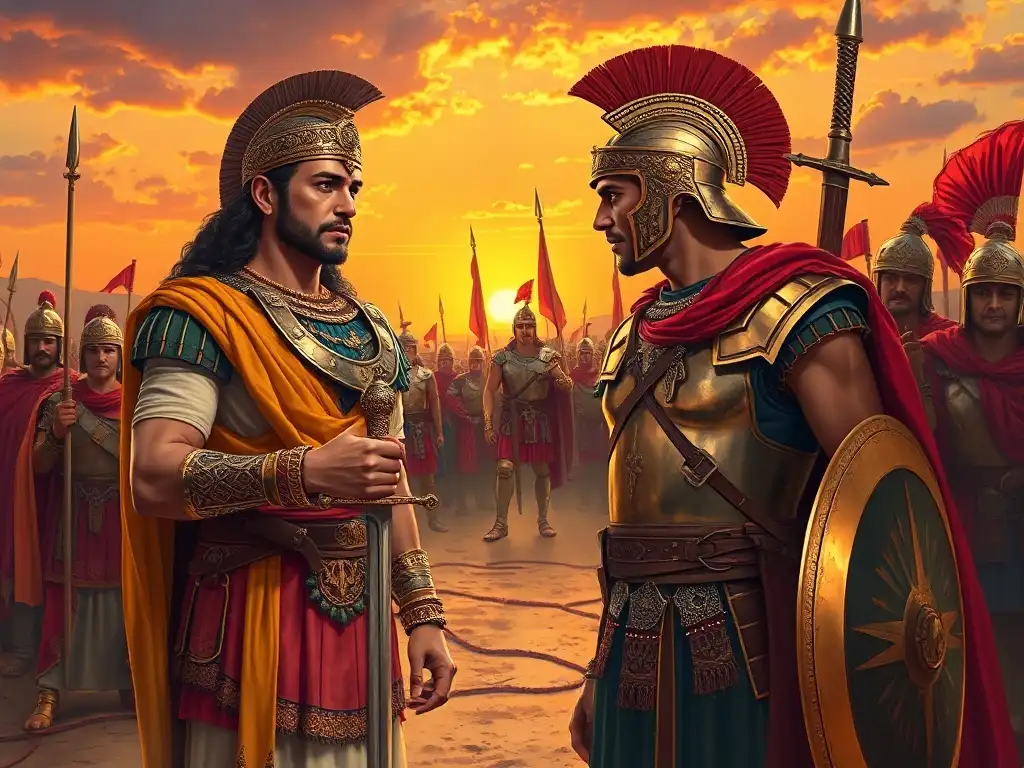
The campaigns of Alexander the Great had profound implications for Chandragupta Maurya and the broader Indian subcontinent. They not only highlighted the military capabilities of foreign powers but also catalyzed significant political and cultural changes in India.
Influence of Greek Culture on Indian Society
The brief period of Alexander's incursions into India opened the door to Greek cultural influences that permeated Indian society. This included:
- Art and Architecture: The introduction of Hellenistic styles influenced local artistic expressions, leading to a fusion of Greek and Indian artistic traditions.
- Philosophy and Science: Greek philosophy and scientific knowledge began to make their way into Indian thought, fostering a spirit of inquiry and intellectual exchange.
- Trade Relations: As a result of Alexander's campaigns, trade routes were established that facilitated cultural and economic exchanges between the East and the West.
These influences would have long-lasting effects on Indian culture, contributing to its richness and diversity.
Military Strategies Adopted by Chandragupta
Chandragupta Maurya’s military strategies were significantly shaped by the challenges posed by Alexander’s campaigns. Some of the key adaptations included:
- Guerrilla Warfare: Chandragupta employed guerrilla tactics, making use of the terrain to ambush Alexander’s forces, which were more accustomed to open-field battles.
- Alliances: Recognizing the need for a unified front, Chandragupta forged alliances with other local rulers who were also threatened by Alexander’s ambitions.
- Organized Military Structure: Learning from Alexander’s disciplined approach to warfare, Chandragupta developed a more structured military organization that emphasized training and logistics.
These strategies not only helped him resist Alexander but also laid the groundwork for his own successful military campaigns in establishing the Maurya Empire.
Political Repercussions of Alexander's Invasions
The political landscape of India was altered significantly due to Alexander's invasions. The repercussions included:
- Fragmentation of Local Kingdoms: Alexander's campaigns exposed the vulnerabilities of local rulers, leading to a realignment of power dynamics as Chandragupta emerged as a unifying force against foreign encroachment.
- Rise of the Maurya Empire: The decline of Alexander's influence following his death allowed Chandragupta to capitalize on the political vacuum, ultimately leading to the establishment of the Maurya Empire.
- Cultural Exchange and Integration: The interactions with Greek culture prompted a reevaluation of local governance and military practices, influencing future Indian rulers and states.
The relationship between Chandragupta Maurya and Alexander the Great was marked by conflict and adaptation, setting the stage for significant political and cultural transformations in ancient India.
The Legacy of their Relationship
The relationship between Chandragupta Maurya and Alexander the Great is often perceived as a pivotal moment in the history of ancient India, marking the intersection of Indian and Greek civilizations. Their interactions laid the groundwork for an exchange of ideas, cultures, and governance styles that would influence future generations. Chandragupta's rise to power was, in part, shaped by the remnants of Alexander's campaigns, as the latter's conquests fragmented the Indian subcontinent into various principalities ripe for unification.
Chandragupta's subsequent establishment of the Maurya Empire not only symbolized a shift in power dynamics but also represented a fusion of Indian and Hellenistic influences. The Mauryan administration adopted certain aspects of Hellenistic governance, such as organized bureaucracy and statecraft, which were crucial for managing a vast empire. This blend of cultures is reflected in art, architecture, and philosophy, contributing to a legacy that would endure long after both figures had passed.
Chandragupta’s Actions Post-Alexander
Following Alexander's departure from India, Chandragupta took decisive action to consolidate power. He recognized the vacuum left by Alexander’s campaign and seized the opportunity to expand his influence. Historical accounts suggest that Chandragupta engaged in military confrontations against the remnants of Alexander's forces, effectively driving them out of the Indian territories.
Chandragupta's strategic prowess allowed him to form alliances with local rulers and establish a stronghold over the Northern Indian region. He is credited with founding the Maurya Empire around 322 BCE, which marked the beginning of a new era in Indian history. His actions not only resulted in the unification of several fragmented states but also laid the foundation for the Mauryan administration, characterized by centralized authority and efficient governance.
The Spread of Hellenistic Influences in India
The encounter between Chandragupta and Alexander facilitated the introduction of Hellenistic culture into Indian society. Though Alexander's presence in India was brief, it had a lasting impact on various aspects of Indian life. Following Alexander's campaign, Greek traders and settlers began to migrate to the Indian subcontinent, bringing with them their customs, art, and philosophies.
As a result, several regions, especially in the northwest, experienced a blend of Hellenistic and Indian cultures. This cultural syncretism is evident in the art and coinage of the period, where Greek artistic styles merged with Indian motifs. Additionally, philosophical exchanges occurred, with elements of Greek thought influencing Indian thinkers, fostering a rich dialogue that would persist for centuries. The diffusion of Hellenistic influences contributed to the broader cultural landscape of ancient India, enriching its diversity.
Historical Interpretations of Their Relationship
The historical relationship between Chandragupta Maurya and Alexander the Great has been interpreted in various ways by scholars. Some view it as a conflict of civilizations, where Alexander's imperial ambitions clashed with Chandragupta's quest for sovereignty. Others argue that their interaction was more nuanced, reflecting a complex dynamic of cooperation and competition.
Ancient texts, such as those by Plutarch and Arrian, provide insights into their relationship, but they are often colored by the authors' perspectives. Modern historians, therefore, grapple with piecing together a comprehensive account that acknowledges both the military confrontations and the cultural exchanges that occurred. This layered interpretation emphasizes the importance of understanding the socio-political context of the time, allowing for a more nuanced view of how these two historical figures interacted and influenced each other.
Conclusion: Understanding the Relationship between Chandragupta Maurya and Alexander the Great
Summary of Key Points
The relationship between Chandragupta Maurya and Alexander the Great was multifaceted, marked by conflict, cultural exchange, and significant political developments. Chandragupta's rise to power in the wake of Alexander's campaigns showcases a pivotal moment in ancient Indian history. The blending of Hellenistic and Indian cultures during this period led to lasting influences on art, governance, and philosophy in India.
The Historical Significance of Their Interaction
The interactions between these two leaders not only altered the course of Indian history but also set the stage for future cultural exchanges between East and West. Alexander’s brief incursions into India and Chandragupta’s subsequent unification efforts illustrate the complexities of ancient geopolitical dynamics. Their legacies continue to be studied for their contributions to the evolution of empires and cultural identities.
Final Thoughts on Ancient Indian and Greek Relations
The enduring relationship between Chandragupta Maurya and Alexander the Great serves as a testament to the interconnectedness of ancient civilizations. Their engagement exemplifies how encounters between different cultures can lead to significant transformations. Understanding this relationship enriches our appreciation of the historical tapestry that shapes modern India and highlights the importance of cross-cultural interactions throughout history.
- Introduction to Chandragupta Maurya and Alexander the Great
- Historical Context of the Mauryan Empire and Alexander’s Conquests
- The Encounter: Chandragupta Maurya and Alexander the Great
- Impact of Alexander's Campaigns on Chandragupta Maurya
- The Legacy of their Relationship
- Conclusion: Understanding the Relationship between Chandragupta Maurya and Alexander the Great
- What was the significance of the relationship between Chandragupta Maurya and Alexander the Great?
- How did Alexander the Great's invasion impact Chandragupta Maurya?
- Did Chandragupta Maurya ever directly engage with Alexander the Great?
- What lessons did Chandragupta learn from Alexander's campaigns?
- How did their relationship influence later Indian history?
Frequently Asked Questions
What was the significance of the relationship between Chandragupta Maurya and Alexander the Great?
The relationship was significant as it marked the beginning of Indian resistance against foreign domination. Chandragupta's interactions with Alexander influenced his rise to power and the establishment of the Maurya Empire.
How did Alexander the Great's invasion impact Chandragupta Maurya?
Alexander's invasion provided an opportunity for Chandragupta to unify various kingdoms in India, which ultimately led to the downfall of the Nanda Empire and the establishment of his own rule.
Did Chandragupta Maurya ever directly engage with Alexander the Great?
While there is no direct confrontation recorded between them, their paths crossed as Chandragupta's forces began to organize against Alexander's advances in India, signaling the end of Alexander’s campaign.
What lessons did Chandragupta learn from Alexander's campaigns?
Chandragupta learned valuable military strategies and the importance of alliances, which he employed to effectively counter Alexander's forces and consolidate his power in the region.
How did their relationship influence later Indian history?
The dynamics between Chandragupta Maurya and Alexander set a precedent for future interactions between Indian rulers and foreign powers, highlighting themes of resistance, diplomacy, and the emergence of a united Indian identity.
Final Reflection: The Enduring Legacy of Chandragupta Maurya and Alexander the Great
The relationship between Chandragupta Maurya and Alexander the Great serves as a profound reminder of the complexities of power, ambition, and cultural exchange in history. Today, as we navigate a world increasingly defined by globalization and interconnectedness, the lessons from their interactions resonate more than ever. The dynamics of their relationship illustrate how leaders can shape not only their own destinies but also the fates of entire civilizations.
Clearly, the legacies of Chandragupta and Alexander continue to influence our understanding of leadership and diplomacy. Their encounters were not merely military confrontations; they were pivotal moments that shaped the cultural and political landscapes of their time. As we reflect on their stories, we recognize the intricate dance of conflict and cooperation that defines human history. History is a vast early warning system.
— Norman Cousins. This quote encapsulates the importance of learning from the past, reminding us that the lessons of these two great figures are still relevant today.
As we close this exploration of their relationship, I invite you to consider how the themes of ambition, strategy, and cultural exchange play out in your own life. Reflect on the ways in which you can foster understanding and collaboration in your interactions, drawing inspiration from the legacies of Chandragupta and Alexander. Let their stories encourage you to embrace the complexities of relationships, both personal and professional, and to seek out opportunities for growth and mutual respect in a world that often feels divided.
Unveil the Ties of History - Take the Next Step!
Thank you for diving into the fascinating relationship between Chandragupta Maurya and Alexander the Great! Your curiosity opens doors to understanding pivotal moments in ancient history. Now, let's transform that knowledge into action!
Here are some exciting ways you can engage further:
- Explore more about the Mauryan Empire by reading our detailed articles on Chandragupta's reign and his strategic initiatives.
- Join our community forum at Ancient India History to share your thoughts and insights or to learn from fellow history enthusiasts.
- Challenge yourself by examining the historical impacts of their encounters! Write a brief post or comment about what you believe was the most significant outcome of their meeting.
What aspect of the relationship between Chandragupta and Alexander intrigues you the most, and how do you think it has shaped the course of modern India?