
Sanskrit in the Context of Ancient Indian Society and Culture


Welcome to Ancient India History, where we embark on a journey through the rich tapestry of ancient Indian civilizations! Here, we delve into the profound impact of Sanskrit in Ancient Indian Culture, exploring its pivotal role in shaping society, philosophy, and the arts. As you navigate through our insights, you'll uncover how this ancient language not only influenced communication but also served as a vessel for cultural heritage. Are you ready to unravel the mysteries of Sanskrit and its enduring legacy? Dive in to discover more about the threads that bind our past to the present!
- Introduction to Sanskrit in Ancient Indian Culture
- Historical Context of Sanskrit
- Role of Sanskrit in Ancient Indian Religion and Philosophy
- Sanskrit as a Medium of Knowledge
- Social and Cultural Significance of Sanskrit
- The Decline of Sanskrit and Its Legacy
- Conclusion
- Frequently Asked Questions
- Final Reflection: The Enduring Legacy of Sanskrit in Ancient Indian Culture
- Unlock the Secrets of Sanskrit and Enhance Your Cultural Knowledge!
Introduction to Sanskrit in Ancient Indian Culture
Sanskrit, one of the oldest languages in the world, holds a pivotal role in shaping the cultural and intellectual landscape of ancient Indian society. This classical language, often referred to as the "mother of all languages," serves as a foundation for many modern languages in the Indian subcontinent.
Its rich vocabulary and intricate grammatical structure have not only facilitated the expression of profound philosophical and spiritual concepts but also played a crucial role in the preservation of ancient Indian literature, science, and art. In this article, we will delve into the significance of Sanskrit within the context of ancient Indian culture, exploring its development, usage, and enduring legacy.
Overview of Sanskrit Language
Sanskrit, derived from the root word "Samskrta," meaning "refined" or "cultured," is a language that has undergone significant evolution over millennia. It is characterized by its precise grammar, rich phonetics, and extensive lexicon. The earliest form of Sanskrit, known as Vedic Sanskrit, can be traced back to the Vedas, a large body of religious texts composed around 1500 BCE.
Key Features of Sanskrit:
- Grammatical Structure: Sanskrit boasts an intricate grammatical system with eight cases, three genders, and three numbers, allowing for nuanced expression.
- Phonetics: The language's phonetic richness is evident in its use of various sounds, which can convey different meanings and emotional tones.
- Literary Tradition: Sanskrit has an extensive literary tradition that includes epic poetry, philosophical treatises, and scientific texts.
Sanskrit's significance extends beyond mere communication; it served as a vehicle for transmitting knowledge and culture across generations. Its influence can be seen in various fields, including philosophy, mathematics, medicine, and astronomy.
Importance of Sanskrit in Ancient Indian Society
Sanskrit played a multifaceted role in ancient Indian society, influencing various aspects of life, from religion and philosophy to education and governance.
Cultural Significance:
- Religious Texts: Many of the foundational texts of Hinduism, Buddhism, and Jainism were composed in Sanskrit, including the Upanishads, Bhagavad Gita, and Puranas. These texts not only shaped religious beliefs but also provided moral and ethical guidelines for society.
- Philosophical Discourse: Sanskrit was the medium for profound philosophical discussions, fostering the development of various schools of thought, such as Vedanta, Samkhya, and Nyaya.
Educational Role:
- Centers of Learning: Ancient universities like Takshashila and Nalanda were instrumental in disseminating knowledge in Sanskrit. Students from across Asia traveled to these institutions to study subjects ranging from philosophy to mathematics, emphasizing the language's role as a scholarly medium.
- Preservation of Knowledge: Sanskrit acted as a repository for ancient knowledge, ensuring that scientific, literary, and philosophical works were preserved for future generations.
Sanskrit is not just a language but a cornerstone of ancient Indian culture and society. Its contributions to religion, philosophy, and education have left an indelible mark on the historical narrative of India, making it a subject of great interest and importance in the study of ancient civilizations.
Historical Context of Sanskrit
Origins of Sanskrit in Ancient India
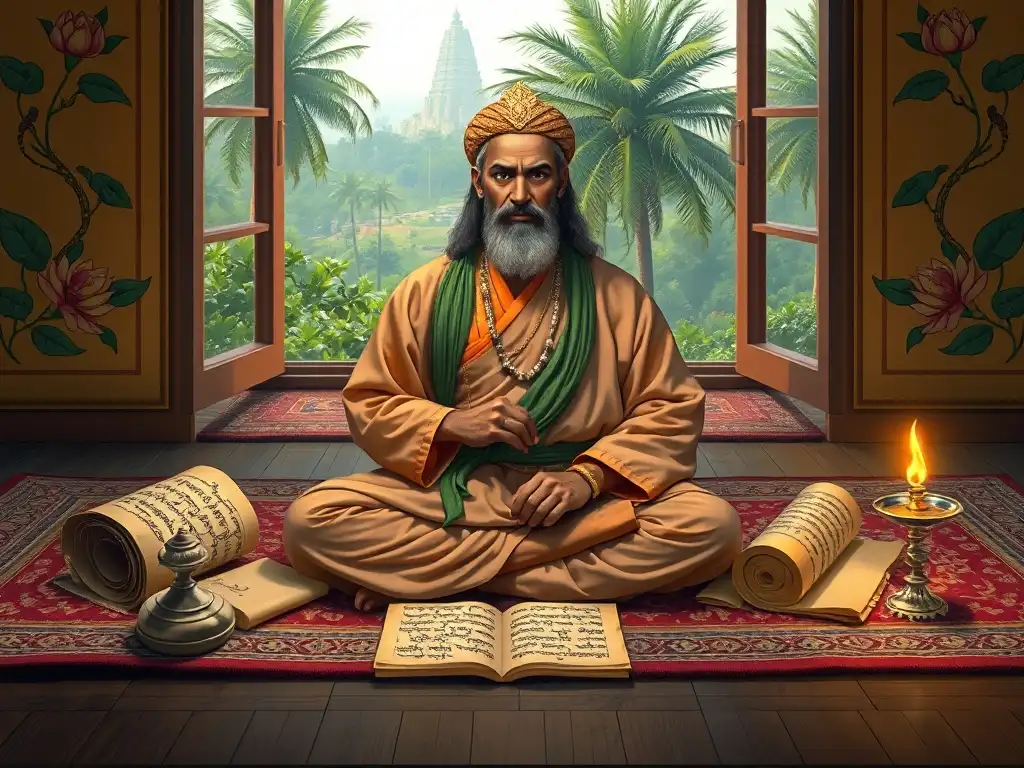
Sanskrit, one of the oldest languages in the world, finds its roots in the Indo-Aryan languages, which emerged around 1500 BCE. Its earliest form, Vedic Sanskrit, was used primarily in the sacred texts of the Vedas, which are a collection of hymns, rituals, and philosophical discourses that form the foundation of Hinduism. The antiquity of Sanskrit can be traced back to the Indus Valley Civilization (approximately 3300–1300 BCE), where some scholars argue that the seeds of this language were sown, although direct evidence is sparse.
The term "Sanskrit" itself means "refined" or "cultured," which reflects its role in ancient Indian society as a language of scholarship and religious practices. As society evolved, Sanskrit became not just a means of communication but a vehicle for transmitting culture, philosophy, and spirituality across generations. With the rise of the Brahmin class, the language gained prominence in rituals and ceremonies, further solidifying its importance in ancient Indian culture.
Evolution of Sanskrit Through Different Eras
Sanskrit underwent significant transformations throughout various historical periods, adapting to the changing sociopolitical landscapes of India:
- Vedic Period (1500–500 BCE):
- Vedic Sanskrit was primarily an oral language, rich in meter and sound.
- The composition of the four Vedas during this time laid the groundwork for subsequent Indian philosophical and literary traditions.
- Classical Sanskrit (500 BCE–1200 CE):
- The emergence of classical Sanskrit marked a shift towards a more standardized grammar and vocabulary.
- Panini, a pivotal figure in this era, codified the grammar of Sanskrit in his work "Ashtadhyayi," which remains influential in linguistics today.
- This period saw the flourishing of literary works such as Mahabharata and Ramayana, which were pivotal in shaping Indian narrative traditions.
- Medieval Period (1200–1800 CE):
- Sanskrit continued to thrive under various regional kingdoms, with scholars producing commentaries, poetry, and scientific texts.
- The influence of Buddhism and Jainism led to the creation of texts in Sanskrit that explored metaphysical and ethical themes.
- Modern Period (1800 CE–Present):
- The colonial era witnessed a decline in the use of Sanskrit as a spoken language, yet it remained a crucial part of religious and scholarly discourse.
- Today, there is a revival movement aimed at promoting Sanskrit studies, with universities and institutions dedicated to its preservation and propagation.
Key Historical Texts Written in Sanskrit
Sanskrit is the medium of numerous significant texts that have shaped the intellectual landscape of ancient India. Some of the most notable works include:
| Text | Author/Compiler | Period | Significance |
|---|---|---|---|
| Rigveda | Unknown | Vedic Period | The oldest sacred text of Hinduism, comprising hymns to deities. |
| Mahabharata | Vyasa | Classical Period | An epic narrative that explores dharma (duty/righteousness) through complex characters. |
| Ramayana | Valmiki | Classical Period | Another epic that portrays the ideals of dharma through the life of Lord Rama. |
| Puranas | Various | Classical Period | A genre of ancient texts that encompass mythology, cosmology, and genealogies of gods, heroes, and sages. |
| Ashtavakra Gita | Ashtavakra | Classical Period | A philosophical text emphasizing the nature of reality and self-knowledge. |
| Kamasutra | Vātsyāyana | Classical Period | An ancient text on human sexuality, relationships, and social conduct. |
| Charaka Samhita | Charaka | Classical Period | One of the foundational texts of Ayurveda, detailing medical knowledge and practices. |
These texts not only illustrate the richness of Sanskrit literature but also reflect the cultural, spiritual, and intellectual currents of ancient Indian society, solidifying Sanskrit's role in shaping ancient Indian culture. Through these works, the ideas of ethics, societal norms, and philosophical inquiries found expression, influencing generations to come.
Role of Sanskrit in Ancient Indian Religion and Philosophy
Sanskrit and Hindu Scriptures
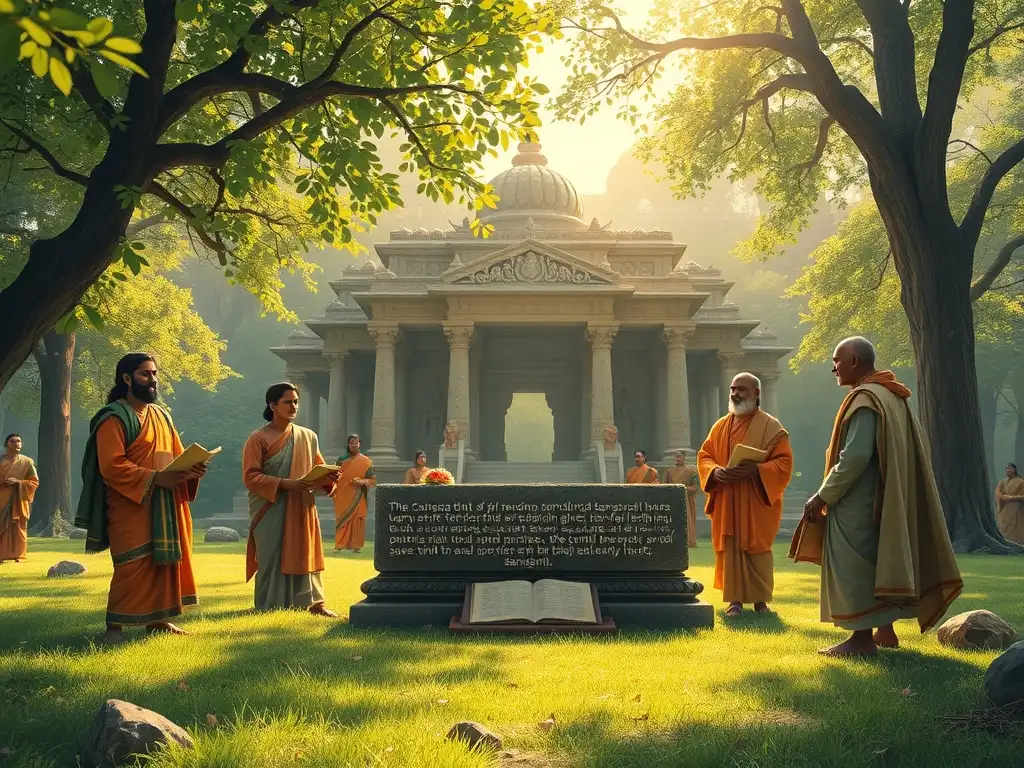
Sanskrit serves as the foundational language for many of the sacred texts that define Hinduism. The Vedas, which are some of the oldest religious texts in existence, were composed in Sanskrit and form the backbone of Hindu doctrines. These four collections—the Rigveda, Samaveda, Yajurveda, and Atharvaveda—contain hymns, rituals, and philosophical musings that have shaped religious practices for millennia.
In addition to the Vedas, other significant texts such as the Upanishads, which delve into metaphysical concepts and philosophical discussions about the nature of reality, were also written in this ancient language. The Bhagavad Gita, a 700-verse portion of the Indian epic Mahabharata, is another critical scripture that employs Sanskrit to explore themes of duty (dharma), righteousness, and devotion (bhakti).
Here’s a brief overview of key Hindu scriptures in Sanskrit:
| Scripture | Description |
|---|---|
| Vedas | Ancient religious texts that establish rituals and hymns. |
| Upanishads | Philosophical treatises that explore spiritual concepts. |
| Bhagavad Gita | A dialogue on duty and ethics within the Mahabharata. |
The use of Sanskrit in these texts not only preserves the language but also integrates complex philosophical ideas into the fabric of ancient Indian culture, making it a vital instrument in the spiritual and intellectual development within Hinduism.
Influence of Sanskrit on Buddhism and Jainism
Sanskrit's role extends beyond Hinduism into the realms of Buddhism and Jainism, where it played a crucial part in the formulation of their doctrines and teachings. Although the Buddha initially preached in Pali, the texts and commentaries that followed were often composed in Sanskrit. This transition allowed for a broader dissemination of Buddhist philosophy, enabling it to reach diverse audiences across the Indian subcontinent and beyond.
The Mahayanist texts, such as the Lotus Sutra and the Heart Sutra, were composed in Sanskrit, enriching the Buddhist tradition with intricate philosophical insights. Similarly, Jain literature also utilized Sanskrit, especially in the later texts, to articulate its principles of non-violence (ahimsa) and truth (satya).
Key Points of Influence:
- Buddhism: Sanskrit enabled the transmission of Mahayana teachings, making them accessible to a wider audience.
- Jainism: The use of Sanskrit in Jain texts helped in establishing its philosophical doctrines and ethical principles.
The adaptation of Sanskrit by these religions showcases its versatility and underscores its significance in shaping the spiritual landscape of ancient India.
Philosophical Treatises and Their Impact on Society
Sanskrit was not only a medium for religious texts but also a vehicle for philosophical inquiry. Ancient Indian philosophers, such as Adi Shankaracharya, Ramanuja, and Madhva, wrote extensively in Sanskrit, contributing to various schools of thought, including Advaita Vedanta and Dvaita. These treatises explored questions of existence, consciousness, and the nature of the universe, influencing societal beliefs and practices.
Some notable philosophical works include:
- Brahma Sutras: A foundational text in Vedanta philosophy that systematically addresses the nature of reality.
- Yoga Sutras of Patanjali: A text that outlines the practice of yoga and its philosophical underpinnings.
- Nyaya Sutras: Focused on logic and epistemology, laying the groundwork for systematic thinking in Indian philosophy.
The philosophical discourse in Sanskrit not only enriched intellectual thought but also had practical implications, shaping ethical conduct and societal norms. The ideas propagated in these treatises often influenced governance, law, and social structures, making Sanskrit a crucial element in the development of ancient Indian society.
The multifaceted role of Sanskrit in ancient Indian culture—encompassing religion, philosophy, and social thought—highlights its importance as a cornerstone of Indian civilization. As a language of scholarship and spirituality, Sanskrit continues to resonate within the cultural fabric of India today.
Sanskrit as a Medium of Knowledge

Sanskrit has long been recognized as a pivotal medium of knowledge in ancient Indian society, serving as a vehicle for the dissemination of various fields such as philosophy, science, and religion. It is not merely a language but a comprehensive system that encapsulated the intellectual and spiritual pursuits of ancient Indian civilization. As a language of scholarly discourse, Sanskrit facilitated the exchange of ideas across diverse domains, contributing to a rich tapestry of cultural and intellectual heritage.
Sanskrit in Science and Mathematics
The influence of Sanskrit on science and mathematics is profound and multifaceted. Ancient Indian mathematicians and scientists utilized Sanskrit to articulate complex theories and principles.
- Mathematics: Texts such as the Sulbasutras provided foundational concepts in geometry and arithmetic. These texts, written in a systematic manner, introduced the Pythagorean theorem long before its recognition in the West, demonstrating advanced understanding in mathematical principles.
- Astronomy: The astronomical treatise Aryabhatiya by Aryabhata, composed in the 5th century CE, is a significant work that employed Sanskrit to describe celestial phenomena, including the calculation of eclipses and the approximation of π (pi).
- Medicine: In the field of medicine, the Sushruta Samhita exemplifies the use of Sanskrit in documenting surgical techniques and medicinal practices. This ancient text remains a cornerstone in the study of Ayurveda and surgery.
The precise terminology and structured syntax of Sanskrit allowed scholars to convey intricate scientific ideas clearly and effectively, illustrating its role as a foundational language for academic inquiry in ancient India.
Contributions of Sanskrit to Literature and Arts
Sanskrit's contributions to literature and the arts are unparalleled, establishing a rich literary tradition that has influenced not just India, but the world at large.
- Epic Literature: The Mahabharata and the Ramayana are monumental epics written in Sanskrit that explore moral dilemmas, human experiences, and divine narratives. These texts serve not only as literary masterpieces but also as philosophical treatises that delve into ethics and duty (dharma).
- Drama and Poetry: Sanskrit drama, epitomized by the works of playwrights such as Kalidasa, showcases the beauty of the language through poetic expressions and intricate narratives. His play Shakuntala remains a celebrated work that highlights themes of love and loss, showcasing the artistic depth of Sanskrit literature.
- Philosophical Texts: The philosophical discourses in texts like the Upanishads and the Bhagavad Gita articulate profound existential questions and moral philosophies, influencing thought across generations. These texts are revered for their poetic form, blending spirituality and literary artistry.
The aesthetic qualities of Sanskrit, combined with its capacity for nuanced expression, enabled the creation of a vast literary heritage that continues to inspire artists and writers.
Preservation of Knowledge through Sanskrit Texts
Sanskrit has played a critical role in the preservation of knowledge, ensuring that the intellectual achievements of ancient India are transmitted across time.
- Manuscript Tradition: The extensive manuscript tradition in Sanskrit has allowed for the preservation of countless texts in various fields, from philosophy to science. Manuscripts were meticulously copied by scribes, ensuring the survival of critical works through centuries of turmoil and change.
- Commentaries and Elaborations: Scholars often wrote commentaries on original texts, further enriching the understanding and interpretation of ancient knowledge. Figures such as Shankara and Ramanuja contributed significantly to the philosophical discourse through their commentaries on the Upanishads and the Bhagavad Gita.
- Modern Relevance: Today, the revival of interest in Sanskrit texts is seen in academic circles and cultural movements. Institutions dedicated to studying ancient Indian texts continue to illuminate the relevance of Sanskrit knowledge in contemporary society, bridging the past with the present.
Through its textual heritage, Sanskrit acts as a custodian of ancient wisdom, ensuring that the insights and achievements of previous generations are not lost but rather celebrated and built upon in the ongoing quest for knowledge.
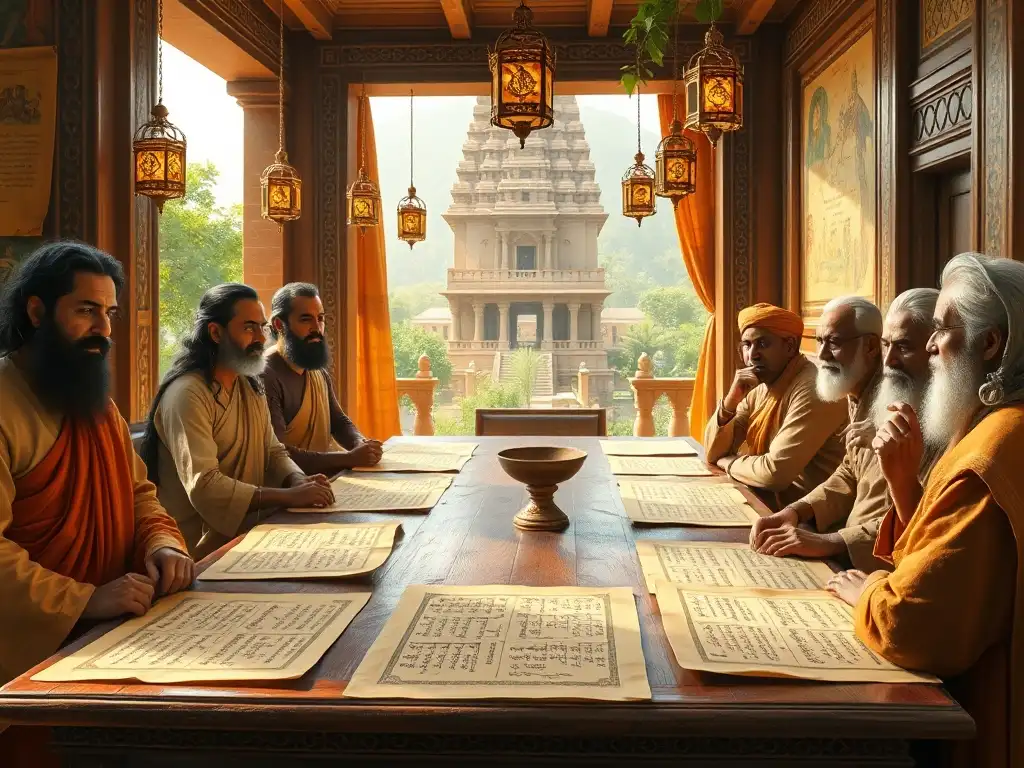
Sanskrit played a pivotal role in shaping the social structures of ancient India. As the language of the elite, it became closely associated with the Brahmin class, who were the custodians of religious texts and rituals. The usage of Sanskrit was often restricted to the upper echelons of society, creating a linguistic divide that underscored existing social hierarchies. This division is evident in various texts, where Sanskrit was employed for scholarly and religious purposes, while vernacular languages were used for everyday communication by the lower classes.
- Brahmins and Sanskrit: The Brahmins, as the priestly class, were responsible for the transmission of knowledge through sacred texts like the Vedas and Upanishads. Their exclusive use of Sanskrit reinforced their position as spiritual authorities.
- Kshatriyas and the Epics: The Kshatriya class, associated with warfare and governance, also adopted Sanskrit to record their valor and lineage in epic literature, such as the Mahabharata and Ramayana. This further cemented the language's status as a symbol of power and prestige.
- Vaishyas and Commerce: Although primarily associated with trade, the Vaishyas began to incorporate Sanskrit in their business dealings, thus enhancing their social standing and facilitating broader communication with the ruling classes.
The interplay between Sanskrit and social hierarchies led to a complex relationship where access to the language often dictated one's status in society.
The Role of Sanskrit in Education and Learning
Sanskrit was at the heart of education in ancient India, influencing all domains of knowledge, from philosophy to science. The establishment of centers of learning, such as Nalanda and Takshashila, highlighted the significance of Sanskrit in the dissemination and preservation of knowledge.
- Educational Institutions: These ancient universities flourished as hubs of intellectual activity, where students engaged in rigorous study of Sanskrit texts. The curriculum included subjects such as grammar, astronomy, mathematics, and medicine, all articulated in Sanskrit.
- The Grammar of Panini: One of the most significant contributions to education was Panini's Ashtadhyayi, a comprehensive treatise on Sanskrit grammar. This work not only standardized the language but also laid the foundation for linguistic scholarship in India and beyond.
- Oral Tradition and Memorization: The importance of oral transmission in ancient education cannot be overstated. Students were trained in the art of memorization, reciting texts in Sanskrit to preserve them for future generations. This method ensured that the language remained a living part of Indian culture.
Sanskrit's role in education was foundational, influencing the intellectual landscape of ancient Indian society and ensuring the continuity of cultural and philosophical thought.
Sanskrit in Rituals and Ceremonies
Sanskrit's use in rituals and ceremonies illustrates its deep-rooted significance in ancient Indian spirituality and religious practices. The language was not merely a means of communication but a sacred vehicle through which devotees connected with the divine.
- Vedic Rituals: The Vedic texts, composed in Sanskrit, contain detailed instructions for performing rituals that were essential for maintaining cosmic order (Rita). These rituals, such as Yajnas, were believed to appease deities and ensure prosperity.
- Chants and Mantras: The recitation of mantras in Sanskrit is a critical aspect of Hindu worship. Each syllable and sound is believed to carry spiritual potency, making the accurate pronunciation crucial in rituals. The Gayatri Mantra, for example, is a revered incantation that exemplifies the significance of sound and meaning in worship.
- Cultural Festivals: Sanskrit continued to play a vital role in various cultural festivals and ceremonies, where hymns and prayers were recited. These occasions served not only as religious observances but also as communal gatherings that reinforced cultural identity.
The embeddedness of Sanskrit in rituals and ceremonies underscores its role as a conduit for expressing devotion and maintaining the cultural fabric of ancient Indian society.
The Decline of Sanskrit and Its Legacy
Factors Contributing to the Decline of Sanskrit Usage
The decline of Sanskrit in Ancient Indian culture can be attributed to several key factors, each playing a significant role in the gradual erosion of this once-prevalent language.
- Political Changes: The advent of various foreign invasions and the establishment of different dynasties led to significant changes in the political landscape of India. The rise of regional languages became more prominent as local rulers favored vernaculars over Sanskrit for administration and literature.
- Cultural Shifts: As society evolved, there was a shift towards more accessible forms of communication. The elite class began to seek literature and texts in languages that were more relatable to the common populace, causing Sanskrit to lose its status as the lingua franca of intellectual discourse.
- Religious Developments: The emergence of new religious movements, such as Buddhism and Jainism, introduced texts in languages like Pali and Prakrit, which were more comprehensible to laypeople. This shift diverted attention from Sanskrit, diminishing its role in religious and philosophical discussions.
- Colonial Influence: The British colonial period marked a critical turning point. The imposition of English as the medium of governance and education further marginalized Sanskrit, pushing it further away from mainstream usage.
- Educational Reforms: The decline of traditional education systems that emphasized Sanskrit studies contributed significantly to its diminished presence. As modern educational frameworks were established, Sanskrit was often overlooked in favor of more practical languages.
Revival Efforts and Contemporary Relevance of Sanskrit
Despite its decline, several revival efforts have sought to re-establish Sanskrit's importance in contemporary society. These efforts reflect a growing recognition of Sanskrit's cultural and historical significance.
- Academic Institutions: Various universities and institutions have introduced courses dedicated to Sanskrit studies, aiming to train new generations of scholars in the language. These programs emphasize not just linguistic skills but also the cultural and philosophical dimensions embedded in Sanskrit literature.
- Cultural Organizations: Numerous cultural organizations actively promote Sanskrit through workshops, seminars, and public lectures. These initiatives aim to rekindle interest among the youth, fostering a deeper appreciation of ancient texts and their relevance to modern life.
- Technological Integration: The advent of digital technology has also played a crucial role in Sanskrit's revival. Online platforms and mobile applications that offer Sanskrit learning resources have made the language more accessible to a wider audience.
- Political Support: In recent years, there has been a push from various governmental bodies in India to promote Sanskrit, including its incorporation into school curricula and public events celebrating its heritage.
Legacy of Sanskrit in Modern Indian Languages
The legacy of Sanskrit is profoundly woven into the fabric of modern Indian languages. Its influence can be observed in various aspects:
- Vocabulary Enrichment: Many modern Indian languages, such as Hindi, Bengali, and Marathi, have borrowed extensively from Sanskrit, contributing to their richness and depth. It is estimated that around 70% of Hindi vocabulary derives from Sanskrit, underscoring its lasting impact.
- Grammatical Structures: Sanskrit's sophisticated grammatical structure has influenced the way modern languages are constructed. The concept of gender, number, and case in many Indian languages can be traced back to Sanskrit roots.
- Literary Traditions: The literary styles and poetic forms of contemporary Indian languages often reflect Sanskrit traditions. Epic poetry and classical literature continue to draw inspiration from ancient Sanskrit texts, ensuring that their themes and narratives remain alive in modern storytelling.
- Philosophical Concepts: Many philosophical terminologies used in modern discourse, particularly in the fields of spirituality and yoga, originate from Sanskrit. Terms such as "dharma," "karma," and "moksha" have transcended linguistic boundaries, becoming integral to global discussions on spirituality.
While the usage of Sanskrit may have declined in ancient times, its legacy endures, continuing to shape the linguistic, cultural, and philosophical landscape of modern India. The ongoing revival efforts highlight a collective recognition of its significance, ensuring that Sanskrit remains a vital part of India’s rich heritage.
Conclusion

Summary of Sanskrit's Influence on Ancient Indian Culture
Sanskrit, often referred to as the mother of many languages in the Indian subcontinent, has played a pivotal role in shaping ancient Indian culture. The influence of Sanskrit extends beyond mere communication; it is deeply interwoven with the philosophical, religious, and artistic expressions of ancient Indian society.
- Literary Contributions:
- The vast corpus of literature in Sanskrit includes epic texts like the Mahabharata and Ramayana, which not only narrate grand tales but also encapsulate moral and ethical dilemmas faced by individuals and society.
- Philosophical texts such as the Upanishads and Brahmanas provide profound insights into the nature of existence, consciousness, and the universe, significantly contributing to the spiritual landscape of ancient India.
- Religious Significance:
- Sanskrit is the liturgical language of Hinduism, Buddhism, and Jainism. Many religious rituals, chants, and scriptures are composed in Sanskrit, emphasizing its sanctity and importance in spiritual practices.
- The mantras and hymns composed in Sanskrit, such as the Gayatri Mantra, reflect deep philosophical ideas and serve as tools for meditation and spiritual growth.
- Cultural Integration:
- Sanskrit served as a lingua franca among diverse communities, facilitating the exchange of ideas and culture across different regions of ancient India.
- The development of classical dance, music, and art forms often draw upon Sanskrit literature for themes and narratives, highlighting its influence on performing arts.
- Scientific and Technical Advancements:
- Ancient Indian scholars utilized Sanskrit to document advancements in mathematics, astronomy, and medicine. Texts like Aryabhatiya by Aryabhata and Sushruta Samhita showcase the depth of knowledge that was recorded in Sanskrit, influencing subsequent generations.
Overall, the rich tapestry of Sanskrit literature and its integral role in various aspects of life in ancient India underscores its significance in shaping cultural identity.
Final Thoughts on the Importance of Preserving Sanskrit Heritage
Preserving the heritage of Sanskrit is crucial for several reasons:
- Cultural Identity: Sanskrit is not just a language; it is a repository of ancient Indian wisdom, traditions, and values. By preserving it, we maintain a connection to our historical roots and cultural identity.
- Linguistic Diversity: The study of Sanskrit enriches our understanding of the evolution of languages in the Indian subcontinent. It allows us to appreciate the linguistic diversity and the interconnections between various language families.
- Philosophical Insights: The philosophical texts written in Sanskrit continue to offer valuable insights into contemporary issues, such as ethics, morality, and the nature of existence. Engaging with these texts can inspire modern thought and dialogue.
- Educational Opportunities: Reviving interest in Sanskrit can lead to innovative educational programs that incorporate ancient wisdom into modern curricula, fostering a holistic understanding of human knowledge.
The preservation of Sanskrit heritage is vital not only for its historical significance but also for its potential to inform and enrich contemporary society. Embracing and promoting Sanskrit ensures that the legacy of ancient Indian culture continues to thrive for future generations.
Frequently Asked Questions
What is the significance of Sanskrit in ancient Indian culture?
Sanskrit played a crucial role as a liturgical language and was vital for literature, philosophy, and science in ancient India, shaping the cultural landscape.
How did Sanskrit influence ancient Indian literature?
Sanskrit served as the medium for many epic texts, including the Mahabharata and Ramayana, significantly enriching literary traditions in ancient India.
What were the main contributions of Sanskrit to Indian philosophy?
Sanskrit was the language of many philosophical schools, including Vedanta and Buddhism, allowing complex ideas to be articulated and shared across cultures.
How did ancient Indian society view the Sanskrit language?
In ancient India, Sanskrit was often associated with elite scholarship and learning, creating a distinction between the educated classes and the broader population.
Is Sanskrit still relevant in modern Indian culture?
Yes, Sanskrit continues to influence modern Indian languages and is regarded as a cultural treasure, with efforts to revive its use in education and literature today.
Final Reflection: The Enduring Legacy of Sanskrit in Ancient Indian Culture
Sanskrit, as the cornerstone of ancient Indian culture, continues to resonate profoundly in today's society. The intricate tapestry of language, philosophy, and spirituality woven through Sanskrit texts not only shaped the historical landscape of India but also laid the foundation for various cultural practices and beliefs that persist in modern times. The enduring relevance of Sanskrit underscores its role as a bridge connecting the past with the present, reminding us of the wisdom and insights that can still guide our lives today.
Sanskrit's influence extends far beyond mere linguistic significance; it has profoundly impacted the cultural and social fabric of India. From classical literature to spiritual teachings, the echoes of Sanskrit can be found in the arts, rituals, and even in contemporary dialogues about identity and heritage.
As we explore this rich legacy, we are reminded of the words of Mahatma Gandhi, who said, "> A nation's greatness is measured by how it treats its weakest members." This sentiment resonates deeply with the teachings embedded in Sanskrit literature, emphasizing compassion, knowledge, and the pursuit of truth as essential components of a thriving society.
As we reflect on the lessons of Sanskrit and its role in ancient Indian culture, I invite you to consider how these teachings can inspire your own life. Take a moment to explore the wisdom of the past and see how it can inform your present and future.
Whether through the study of ancient texts, the practice of mindfulness, or the appreciation of cultural heritage, let the legacy of Sanskrit guide you toward a deeper understanding of yourself and the world around you. Embrace this journey of reflection and action, and allow the timeless wisdom of Sanskrit to illuminate your path.
Unlock the Secrets of Sanskrit and Enhance Your Cultural Knowledge!
Thank you for exploring the rich tapestry of Sanskrit and its significance within ancient Indian society and culture! By diving into this fascinating topic, you’ve taken a crucial step in understanding the profound impact of language on civilization. Now, let’s turn that knowledge into action!
- Start learning Sanskrit today! Whether through online courses or local classes, immerse yourself in this classical language to deepen your appreciation for ancient texts.
- Share your insights with others! Discuss what you’ve learned about Sanskrit’s role in shaping culture with friends or join an online forum to connect with like-minded individuals interested in history.
- Visit local museums or cultural centers to explore exhibits related to ancient India, where you can see firsthand the artifacts and documents that reflect the language's influence.
What aspect of Sanskrit’s impact on culture most intrigues you, and how do you plan to explore it further?