
The Relationship Between Agriculture and Property Laws in Ancient India


Welcome to Ancient India History, where we embark on a fascinating journey through time to uncover the intricate tapestry of civilizations that flourished on the Indian subcontinent. In this exploration, we delve into a pivotal aspect of society—the ancient Indian agriculture property laws. How did these laws shape the agrarian landscape and influence the lives of countless individuals? Join us as we unravel the connection between agriculture and property rights, and discover the profound impact these legal frameworks had on ancient Indian culture. Prepare to be enlightened and inspired as you navigate through the stories and insights that await!
- Introduction to Ancient Indian Agriculture Property Laws
- Historical Context of Agriculture in Ancient India
- Property Laws Governing Agriculture in Ancient India
- Key Texts and Legal Codes Related to Agriculture and Property
- The Interaction Between Agriculture and Property Rights
- Evolving Agricultural Practices and Their Legal Implications
- Conclusion: The Legacy of Ancient Indian Agriculture Property Laws
- References and Further Reading on Ancient Indian Agriculture and Property Laws
-
Frequently Asked Questions
- What were the primary agricultural practices in ancient India?
- How did property laws affect agricultural practices in ancient India?
- Were there any notable ancient Indian texts on agriculture and property laws?
- How did different civilizations in ancient India approach agriculture and land ownership?
- What impact did ancient Indian agriculture have on the economy?
- Final Reflection: Understanding the Roots of Ancient Indian Agriculture Property Laws
- Uncover the Secrets of Ancient Property Laws!
Introduction to Ancient Indian Agriculture Property Laws
The intricate relationship between agriculture and property laws in ancient India forms a cornerstone of its socio-economic framework. Understanding this relationship allows us to appreciate how agricultural practices shaped legal systems and how property laws influenced the livelihood of ancient Indian civilizations.
From the fertile plains of the Indus Valley to the agricultural advancements during the Gupta Empire, the evolution of agricultural methods and the corresponding legal frameworks reveal much about the values and priorities of these societies. This article delves into the nuances of ancient Indian agriculture property laws, exploring their historical context, significance, and impact on the lives of people in these vibrant civilizations.
Overview of Agriculture in Ancient India
Agriculture in ancient India was not merely a means of sustenance but a pivotal aspect of its civilization, intricately linked with social structures, economy, and culture. The agrarian practices were diverse, reflecting the geographical and climatic variations across the subcontinent. Some key points about agriculture in ancient India include:
- Crops and Cultivation: Major crops included wheat, barley, rice, and pulses, cultivated using techniques that have evolved over millennia. The Indus Valley civilization is noted for its advanced agricultural methods, including irrigation systems that supported large-scale farming.
- Seasonal Variations: The monsoon season was crucial for agricultural success, dictating planting and harvesting times. Ancient texts highlight the importance of understanding seasonal cycles for effective farming.
- Tools and Techniques: Innovations such as the plow and other farming tools facilitated more efficient agricultural practices. Evidence from archaeological sites indicates the use of oxen for plowing, which significantly increased productivity.
- Community Involvement: Agriculture often involved communal efforts, where villagers would collaborate for planting and harvesting, reflecting a strong sense of community and mutual dependence.
Importance of Property Laws in Agricultural Practices
Property laws in ancient India played a vital role in regulating agricultural practices, ownership rights, and inheritance. These laws were foundational in determining how land was utilized, who benefited from its yields, and how disputes were resolved. Key aspects include:
- Land Ownership: Property laws delineated ownership rights, determining who could claim land and under what conditions. These laws were essential in a society where land was the primary source of wealth and sustenance.
- Inheritance Systems: The inheritance of agricultural land was governed by specific laws, often reflecting the patriarchal nature of society. These laws ensured that land remained within families, thus preserving wealth and social status across generations.
- Dispute Resolution: Property laws provided mechanisms for resolving conflicts over land. Local councils and village elders often played a crucial role in mediating disputes, thereby maintaining social harmony.
- Economic Implications: The stability provided by property laws encouraged investment in agricultural practices, allowing for the adoption of better techniques and crop diversification, which ultimately contributed to economic prosperity.
Understanding the intricate dynamics of agriculture and property laws in ancient India is essential to grasp the foundations of its legal systems and societal structures. The interplay between these elements not only fostered agricultural advancement but also shaped the legal landscape that governed ancient Indian civilizations.
Historical Context of Agriculture in Ancient India
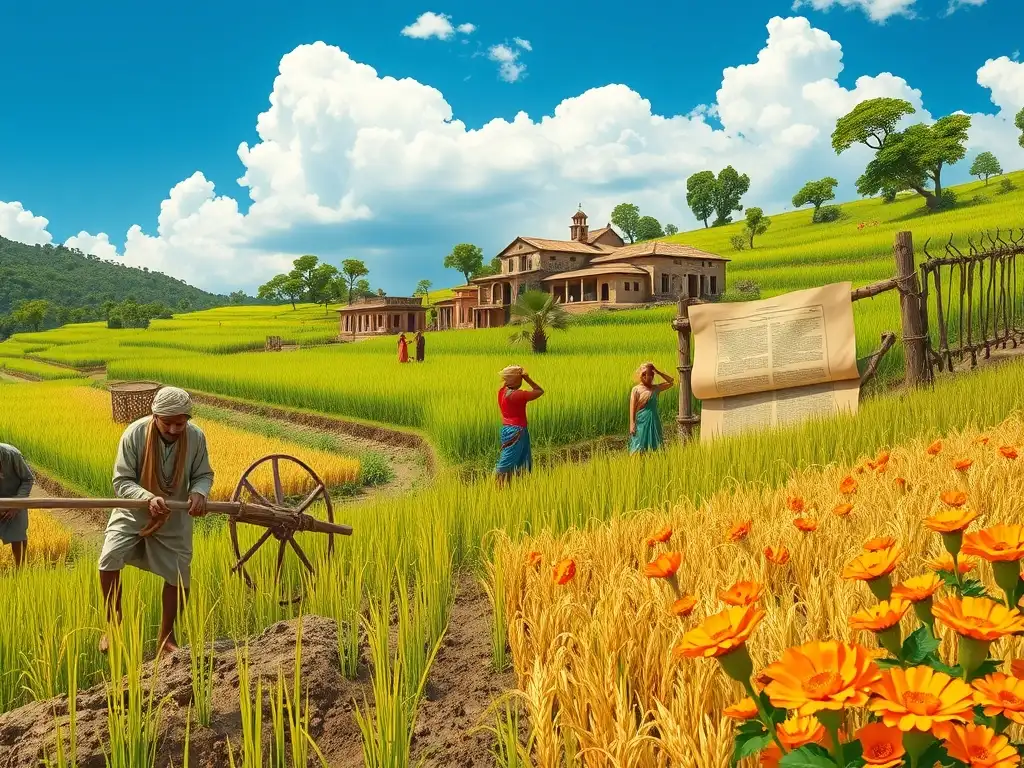
Agriculture in ancient India played a pivotal role in shaping the socio-economic landscape of the civilization. The emergence of agriculture can be traced back to the Indus Valley Civilization (c. 3300–1300 BCE), where the fertile plains of the Indus River supported early farming communities. These communities innovated various techniques that laid the foundation for agricultural practices in later periods.
The transition from a hunter-gatherer lifestyle to settled agriculture allowed for the establishment of permanent settlements. By the late Vedic period (c. 1500–500 BCE), agriculture had become a cornerstone of the economy and social structure. The cultivation of staple crops such as rice, wheat, barley, and pulses was complemented by the domestication of animals, enriching both the agricultural output and the livelihood of the populace.
Development of Agricultural Techniques
The advancement of agricultural techniques in ancient India was driven by both necessity and innovation. Farmers employed various methods to improve yield and manage resources efficiently:
- Irrigation Systems: Ancient civilizations developed sophisticated irrigation techniques, utilizing canals, wells, and tanks to harness water from rivers. This was particularly important in regions with irregular rainfall, allowing for consistent crop production.
- Crop Rotation: The practice of crop rotation was recognized for maintaining soil fertility. Farmers would alternate between legumes and cereal crops, which helped in replenishing nutrients in the soil.
- Use of Fertilizers: Organic fertilizers, derived from animal dung and decaying plant matter, were commonly used to enrich the soil. This practice not only improved crop yields but also contributed to sustainable farming practices.
- Tools and Implements: The evolution of agricultural tools, such as the plow, sickle, and hoe, facilitated more efficient farming. The iron plow, in particular, revolutionized agriculture by allowing deeper tillage, which was essential for the cultivation of heavier soils.
- Seed Selection: There was a growing understanding of seed selection and hybridization, with farmers selecting the best seeds for planting based on previous harvests. This knowledge allowed them to cultivate varieties of crops that were more resilient to pests and climatic conditions.
Role of Agriculture in Ancient Indian Society
The significance of agriculture in ancient Indian society extended beyond mere subsistence; it was deeply intertwined with social, economic, and cultural aspects:
- Economic Foundation: Agriculture served as the backbone of the economy, providing food security and supporting trade. Surplus production enabled the establishment of trade networks, both locally and with distant regions.
- Social Structure: Agricultural productivity influenced social hierarchy and land ownership. Those who controlled land and resources often held significant power, leading to the formation of agrarian elites. This dynamic was reflective in the property laws that developed over time.
- Cultural Practices: Agricultural cycles were closely linked to religious and cultural practices. Festivals, rituals, and community gatherings often revolved around planting and harvest seasons, highlighting the spiritual significance of agriculture.
- Legal Framework: The relationship between agriculture and property laws in ancient India is evident in the codification of land ownership and inheritance rights. Legal texts, such as the Manusmriti, outlined property laws that governed land distribution, emphasizing the importance of agriculture in establishing social order.
- Community and Cooperation: Agricultural communities often operated on principles of cooperation, with shared resources and communal farming practices. This fostered a sense of solidarity and collective responsibility, which was instrumental in overcoming challenges posed by nature and socio-economic pressures.
Agriculture in ancient India was not merely an economic activity but a fundamental aspect of life that shaped social structures, cultural practices, and legal frameworks. The intertwining of agricultural practices with property laws underscores the importance of land ownership and inheritance in sustaining the agrarian society of ancient India.
Property Laws Governing Agriculture in Ancient India

In ancient India, agriculture was not just a means of sustenance; it was intricately linked to socio-economic structures and property laws. The legal frameworks governing property, particularly land, greatly influenced agricultural practices and ownership. These laws were shaped by various factors, including regional customs, religious doctrines, and the evolving political landscape.
Understanding the relationship between agriculture and property laws provides insights into the socio-economic fabric of ancient Indian civilization. The various property laws established the rights to land use, responsibilities of landowners, and the distribution of agricultural produce, thereby directly impacting the agricultural productivity of the time.
Types of Property Ownership in Ancient India
Ancient Indian property laws delineated several types of ownership, which can be categorized as follows:
- Private Ownership:
- Individuals or families could own land, which was often passed down through generations. This type of ownership was common among agricultural communities, allowing them to cultivate and manage their plots independently.
- State Ownership:
- The state retained rights over certain lands, primarily for taxation and military purposes. Kings and local rulers would claim ownership of lands to ensure a steady revenue stream for their administrations. Farmers were often tenants on these lands, paying rent or a share of the produce.
- Common Ownership:
- In some regions, especially tribal communities, land was held in common. Community members had shared rights to use the land for agriculture, grazing, or gathering resources. This system fostered collective responsibility among the members.
- Religious Ownership:
- Temples and religious institutions owned vast tracts of land, which were often cultivated by local farmers. These lands were meant to support the temple's activities and were seen as a means of fulfilling religious obligations.
The differentiation of property ownership types played a crucial role in shaping agricultural practices and community dynamics.
Land Tenure Systems and Their Influence on Agriculture
The land tenure systems in ancient India were diverse and influenced agricultural productivity significantly. Below are some of the prominent systems:
- Zamindari System:
- This system involved landlords (zamindars) who were responsible for collecting taxes from peasants. While zamindars had ownership rights, the actual cultivation was done by tenant farmers. This system often led to exploitation, as zamindars would demand a large share of the harvest, leaving tenants with minimal produce for their sustenance.
- Ryotwari System:
- Under this system, individual farmers (ryots) directly paid taxes to the state without intermediaries, enabling them to retain a greater portion of their harvest. This encouraged farmers to invest in their land, leading to agricultural innovation.
- Mahalwari System:
- A collective form of land tenure where the entire village was responsible for tax payment. Each household had rights to a specified portion of land but was collectively accountable for the agricultural yield. This system promoted cooperation among villagers, fostering a sense of community.
These land tenure systems significantly influenced agricultural practices, crop choices, and the socio-economic conditions of farmers. The evolution of property laws over time reflected the changing dynamics of society and agriculture in ancient India.
Understanding these relationships sheds light on how ancient Indian agriculture property laws shaped the landscape of agricultural development and community organization, laying the groundwork for future legal systems in the region.

Manusmriti and Its Provisions on Agricultural Property
The Manusmriti, also known as the Laws of Manu, is one of the most significant texts regarding ancient Indian legal principles, including those governing agriculture and property. Dating back to around 200 BCE to 200 CE, this text establishes the framework for social order, including the rights and responsibilities related to property ownership.
The Manusmriti delineates different types of property, defining them as either movable or immovable, with agricultural land being categorized under immovable property. This distinction is crucial because it not only affects ownership rights but also the legal processes involved in transactions and inheritance. Key provisions include:
- Rights of Ownership: The Manusmriti grants landowners certain rights over their agricultural land, including the ability to cultivate, lease, and bequeath their land. This highlights the significance of agriculture as a primary source of wealth and sustenance in ancient Indian society.
- Inheritance Laws: The text stipulates that property, particularly agricultural land, should ideally be inherited by male heirs. However, provisions exist for daughters and widows, ensuring some level of protection for women in property matters. These laws reflect the patriarchal structure of ancient Indian society while also recognizing the importance of women in agricultural production.
- Land Tenure and Taxation: The Manusmriti also addresses the obligations of landowners towards the state, especially regarding land revenue. The text emphasizes that a portion of agricultural produce should be shared with rulers, underscoring the relationship between agriculture and governance.
The Manusmriti serves as a foundational text outlining how agricultural property was viewed and managed in ancient India, influencing later legal systems and practices.
Arthashastra: Insights into Property Management and Agriculture
The Arthashastra, attributed to Kautilya (Chanakya), is another essential text that provides insights into the economic and administrative aspects of ancient Indian society, particularly concerning agriculture and property management. Composed in the 4th century BCE, the Arthashastra offers practical guidelines that reflect the complexities of managing agricultural resources.
Key aspects of the Arthashastra include:
- Economic Strategies: The text discusses various methods to enhance agricultural productivity, including crop rotation, irrigation techniques, and the use of fertilizers. These strategies reveal an advanced understanding of agriculture's role in sustaining the economy and the necessity of effective property laws to support farming activities.
- Land Revenue System: Kautilya emphasizes the importance of a well-structured land revenue system, advocating for fair taxation based on agricultural yield. He advises rulers on establishing a system that is beneficial for both the state and the farmers, highlighting the need for a balance between revenue generation and agricultural sustainability.
- Conflict Resolution: The Arthashastra also addresses disputes related to land ownership and agricultural practices, offering methods for conflict resolution. It underscores the importance of legal frameworks in maintaining order and ensuring fairness in property transactions among farmers and landowners.
- Regulation of Land Transactions: The text outlines regulatory measures for buying, selling, and leasing land, which were crucial for maintaining stability in agricultural markets. Kautilya's insights into property laws emphasize the need for a structured approach to land management that would benefit the agrarian economy.
Overall, the Arthashastra provides a comprehensive view of how agricultural property laws were intricately linked with economic policies and governance, playing a vital role in the development of ancient Indian agriculture.
The Interaction Between Agriculture and Property Rights

In ancient India, agriculture was not merely a means of sustenance but also a cornerstone of socio-economic stability. The relationship between agriculture and property rights was complex and multifaceted, significantly influencing the agrarian landscape and societal structures. Property laws, which governed ownership and rights to land, played a crucial role in determining who could cultivate land, how it was used, and the distribution of agricultural surpluses.
How Property Laws Affected Agricultural Productivity
Property laws in ancient India directly impacted agricultural productivity through several mechanisms:
- Land Ownership: Ownership of land was often tied to social status. Those with higher status could exert greater influence over land, leading to disparities in agricultural output. Landowners typically employed tenant farmers, who had limited rights and often faced oppressive conditions.
- Tenancy Laws: Laws governing tenancy dictated the rights of tenants in relation to landowners. The more favorable these laws were to tenants, the more likely they were to invest in the land, thus increasing productivity. Conversely, exploitative tenancy arrangements could lead to neglect and underutilization of agricultural resources.
- Inheritance Practices: The laws surrounding inheritance determined how land was passed down through generations. In many cases, land was divided among heirs, which could lead to fragmentation of landholdings. This fragmentation often reduced the viability of agricultural operations, as smaller plots could be less productive than larger, consolidated farms.
- Regulatory Framework: Ancient Indian legal texts, such as the Manusmriti, outlined various property rights and responsibilities, which shaped agricultural practices. Regulations concerning crop sharing, land transfer, and taxation affected farmers' incentives to cultivate effectively.
- Conflict Resolution: Effective property laws provided mechanisms for resolving disputes over land, which was essential for maintaining stability in agricultural communities. Land disputes could lead to conflicts that disrupted agricultural activities and diminished overall productivity.
Overall, the interplay between property laws and agricultural practices reveals a dynamic where legal frameworks shaped economic outcomes.
Case Studies of Agricultural Land Disputes in Ancient India
Throughout ancient Indian history, numerous case studies illustrate how property laws influenced agricultural land disputes:
- Indus Valley Civilization: Evidence from archaeological findings suggests that land ownership was organized, and disputes were resolved through community mechanisms. The centralization of property rights may have contributed to the civilization's agricultural success.
- Mauryan Empire: During the Mauryan period, land revenue was a significant source of state income. Disputes often arose between the state and landowners regarding tax assessments. For instance, the Arthashastra, written by Kautilya, emphasizes the importance of fair taxation and efficient dispute resolution to ensure agricultural productivity.
- Gupta Empire: The Gupta period saw increased agrarian production due to favorable property laws that encouraged land reclamation and cultivation. However, disputes arose over land encroachments, particularly in regions where agricultural expansion was vital. Historical texts indicate that local rulers often intervened to resolve these conflicts, ensuring stability in agricultural production.
- Regional Variations: Different regions exhibited unique property laws and dispute mechanisms. In southern India, for example, the Tamil legal texts highlighted the importance of customary laws in resolving land disputes, often emphasizing mediation over litigation.
These case studies underscore the significance of property laws in shaping agricultural practices and resolving conflicts, revealing the intricate relationship between legal frameworks and agricultural prosperity in ancient India. Each instance reflects the broader socio-economic context, demonstrating how legal systems evolved to meet the challenges posed by agricultural demands and property ownership.
Evolving Agricultural Practices and Their Legal Implications

Agricultural practices in ancient India were deeply intertwined with the legal frameworks that governed land ownership and property rights. Over centuries, as societies evolved, so too did the systems that regulated agriculture, leading to significant implications for both farmers and landowners. This evolving relationship laid the groundwork for how agricultural practices adapted to changing legal landscapes.
Changes in Agriculture Due to Property Law Reforms
The evolution of property laws significantly influenced agricultural methods and practices in ancient India. As early as the Indus Valley Civilization, farming was a communal activity with shared resources. However, as property rights were codified, especially during the Vedic period, individual ownership began to take precedence. This transition had several implications:
- Individual Ownership: The shift from communal to individual land ownership encouraged farmers to invest more in their land, leading to improved agricultural techniques. Farmers began experimenting with crop rotation and irrigation methods to maximize yields.
- Legal Documentation: The establishment of written property laws led to the creation of land deeds and contracts. This documentation not only protected individual rights but also facilitated the transfer of land, allowing for the emergence of a more dynamic agrarian economy.
- Taxation and Land Revenue: With clearer delineation of property rights came the imposition of taxes. Land revenue became a significant aspect of governance, influencing farmers to optimize their production to meet tax obligations, which in turn spurred technological innovations in agriculture.
- Land Tenure Systems: Various land tenure systems emerged, such as the Zamindari and Mahalwari systems, which dictated the rights and responsibilities of landowners and cultivators. These systems affected how land was cultivated and who had access to agricultural resources.
The legal reforms not only transformed the landscape of agriculture but also redefined social structures, with landowners gaining significant power and influence over agrarian communities.
Impact of Land Reforms on Agrarian Society
Land reforms in ancient India were pivotal in shaping agrarian society, affecting both socio-economic structures and cultural practices. The impact of these reforms can be analyzed through several lenses:
- Social Stratification: As property laws evolved, they often reinforced social hierarchies. Wealthy landowners gained substantial control over agricultural production, while small farmers and laborers found themselves increasingly marginalized. This created a class of landless laborers who relied on the patronage of landowners, thereby entrenching social inequalities.
- Cultural Practices: Agricultural practices were not merely economic activities; they were also deeply embedded in the cultural and religious fabric of society. Land ownership and agricultural success became associated with social status, influencing rituals, festivals, and community gatherings.
- Migration and Displacement: Changes in property laws sometimes led to the displacement of traditional farming communities. As land became concentrated in the hands of a few, many small farmers were forced to migrate to urban areas or less fertile lands in search of livelihoods. This migration created new societal dynamics and altered the demographic landscape of regions.
- Innovation and Resistance: While some farmers adapted to the new legal frameworks, others resisted changes that threatened their traditional ways of life. This resistance sometimes manifested in revolts or movements advocating for agrarian rights, which highlighted the ongoing struggle between traditional practices and evolving legal systems.
Overall, the relationship between agriculture and property laws in ancient India reflects a complex interplay of economic, social, and cultural factors. The legal frameworks that developed not only governed land use but also shaped the very fabric of society, influencing everything from social hierarchies to cultural practices. Understanding this relationship provides valuable insights into the historical dynamics that have shaped modern Indian agrarian systems.
Conclusion: The Legacy of Ancient Indian Agriculture Property Laws
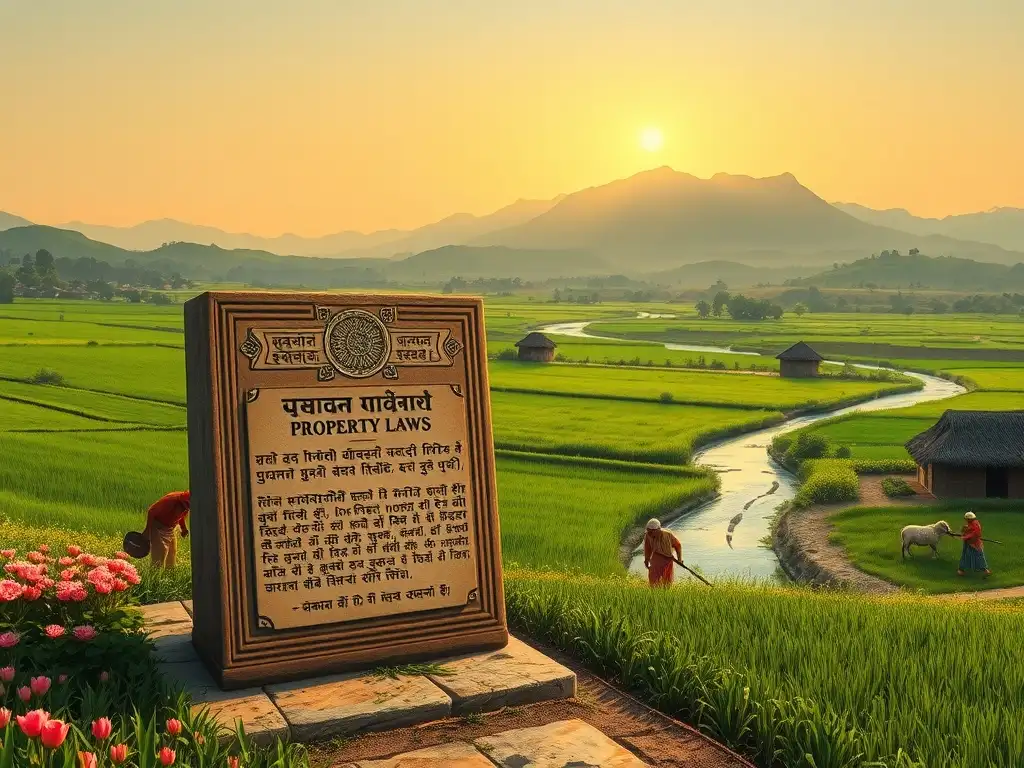
The intricate relationship between agriculture and property laws in ancient India has left a profound legacy that continues to influence modern legal frameworks. The evolution of these laws was not only a reflection of the agricultural practices of the time but also a means to address social hierarchies, economic stability, and communal welfare. Understanding this legacy provides valuable insights into how property rights were shaped in relation to land use and cultivation during various periods of ancient Indian history.
Reflection on the Historical Significance
Ancient Indian agriculture property laws were pivotal in establishing the social and economic structure of civilizations. From the Indus Valley Civilization to the Gupta Empire, these laws evolved to accommodate the needs of an agrarian society. The land was not merely a commodity; it was a vital resource that supported entire communities. Thus, property laws were intricately tied to agricultural practices, determining who could own, cultivate, or inherit land.
Key aspects of these laws included:
- Land Ownership: Initially, land ownership was communal, where the community collectively managed and cultivated land. Over time, individual ownership emerged, particularly during the Mauryan and Gupta periods, leading to more defined property rights.
- Inheritance Rules: Laws regarding inheritance reflected the patriarchal structure of society. Sons typically inherited land, while daughters were often provided with a stridhan (a form of personal property). This practice indicates the socio-economic dynamics of gender and property.
- Tenancy Agreements: Ancient texts, like the Arthashastra, discuss the rights and responsibilities of tenants, showcasing a sophisticated understanding of agricultural labor and property management.
These elements highlight the sophisticated legal frameworks that governed agricultural practices, emphasizing their importance in maintaining social order and economic stability in ancient India.
Lessons for Modern Agricultural Property Laws
The historical context of ancient Indian agriculture property laws provides several lessons applicable to contemporary legal systems:
- Promoting Sustainable Practices: The communal land management practices of ancient India illustrate the importance of sustainability. Modern agricultural policies can benefit from integrating community involvement in land-use decisions to promote environmental stewardship.
- Gender Equality in Property Rights: The historical limitations placed on women's rights to inherit land reveal ongoing disparities in property ownership today. Modern legal frameworks should strive for gender equality by ensuring equal property rights for all, regardless of gender.
- Flexibility in Tenancy Laws: The ancient practices of tenancy agreements can inform current laws by emphasizing the need for flexibility and fairness in landlord-tenant relationships. This can help protect the rights of agricultural workers and ensure equitable access to land.
- Cultural Sensitivity: Understanding the cultural significance of land and agriculture in ancient India can guide modern policymakers in creating laws that respect local customs and practices, fostering a sense of ownership and community among farmers.
The legacy of ancient Indian agriculture property laws not only shapes our understanding of historical governance but also offers critical insights for developing more equitable and sustainable agricultural policies in the present day.
References and Further Reading on Ancient Indian Agriculture and Property Laws
Recommended Texts and Resources
To gain a comprehensive understanding of the intersection between agriculture and property laws in ancient India, the following texts and resources are invaluable:
-
"The Law Code of Manu"
This seminal work provides insights into ancient Indian legal frameworks, including property ownership and agricultural practices. It serves as a foundational text for understanding property rights and social structures.
-
"The History of Indian Agriculture" by J. C. Aggarwal
This book delves into the evolution of agricultural practices in ancient India, detailing the socio-economic implications of agriculture on property laws.
-
"Agricultural and Agrarian History in Ancient India" by R. S. Sharma
Sharma's work extensively covers the agrarian systems of ancient India and how they interplayed with legal traditions, including property inheritance.
-
"Land and Law in Ancient India" by D. N. Jha
Jha’s research focuses on land tenure systems, property rights, and their legal implications, providing a nuanced view of the agricultural economy.
-
"The Indian Legal Tradition: A Historical Overview" by R. C. Tripathi
This book offers a broader perspective on ancient Indian legal systems, including a detailed examination of property laws that governed agricultural lands.
These resources can provide a solid foundation for understanding the complexities of ancient Indian agriculture and property laws, illustrating how these elements shaped social and economic dynamics.
Key Scholars in the Field of Ancient Indian Legal Studies
Several scholars have made significant contributions to the study of ancient Indian agriculture and property laws:
-
R. S. Sharma
A prominent historian, Sharma's research has been pivotal in exploring agrarian systems and their legal frameworks in ancient India.
-
D. N. Jha
Jha’s scholarship focuses on land ownership and agrarian laws, highlighting the interplay between agricultural practices and legal systems in ancient Indian society.
-
J. C. Aggarwal
Known for his work on the history of agriculture, Aggarwal has provided critical insights into how agricultural practices influenced property laws and vice versa.
-
B. D. Chattopadhyaya
Chattopadhyaya has explored the socio-economic aspects of ancient Indian law, particularly the implications of agricultural practices on property rights.
-
A. S. Altekar
Altekar's studies on the position of women in ancient Indian society include discussions on inheritance laws related to agricultural property, shedding light on gender dynamics within the legal framework.
These scholars have laid the groundwork for understanding the intricate relationship between agriculture and property laws in ancient India, contributing to ongoing discussions in the field of legal studies.
Frequently Asked Questions
What were the primary agricultural practices in ancient India?
Ancient India saw a variety of agricultural practices, including rice, wheat, and barley farming. Techniques like crop rotation and irrigation were commonly used to enhance productivity.
How did property laws affect agricultural practices in ancient India?
Property laws in ancient India played a crucial role in defining land ownership and tenancy rights, which directly influenced agricultural productivity and the distribution of resources among farmers.
Were there any notable ancient Indian texts on agriculture and property laws?
Yes, texts like the Arthashastra and various Dharmashastras provided guidelines on agriculture, land management, and property rights, emphasizing the legal framework surrounding these crucial aspects of society.
How did different civilizations in ancient India approach agriculture and land ownership?
Civilizations like the Indus Valley and the Gupta Empire developed unique systems of land ownership and agricultural management, often influenced by their cultural values and economic needs.
What impact did ancient Indian agriculture have on the economy?
Agriculture served as the backbone of the ancient Indian economy, fostering trade and contributing to wealth accumulation. The stability in agricultural production led to the growth of cities and societal advancements.
Final Reflection: Understanding the Roots of Ancient Indian Agriculture Property Laws
The intricate relationship between agriculture and property laws in ancient India remains profoundly relevant today, as it lays the foundation for our understanding of land rights and agricultural practices. In a world where food security and land ownership continue to dominate discussions, recognizing the historical context of these laws allows us to appreciate their evolution and significance. The lessons drawn from ancient practices can illuminate our path forward in addressing contemporary challenges related to land use and agricultural sustainability.
The impact of ancient Indian agriculture property laws extends far beyond their historical confines, influencing modern cultural and social landscapes. These laws not only shaped agricultural practices but also defined social hierarchies and community interactions. As we reflect on these ancient systems, we can see their echoes in current debates on land reform and agricultural policy. The past is never dead. It's not even past.
– William Faulkner. This quote resonates deeply as we navigate the complexities of land ownership and agricultural rights today, reminding us that history is a living entity that continues to inform our present and future.
As we conclude this exploration, I invite you to reflect on the lessons of ancient Indian agriculture property laws and their implications for your own life and community. Consider how understanding these historical frameworks can inspire you to advocate for equitable land practices and sustainable agriculture in your own context. Let us carry forward the wisdom of the past to foster a future where land rights are respected, and agriculture thrives in harmony with the environment and society.
Uncover the Secrets of Ancient Property Laws!
Thank you for exploring the fascinating relationship between agriculture and property laws in ancient India. Your interest not only enhances your knowledge but also underscores the significance of these historical systems that shaped society. Now, it’s time to take action and deepen your understanding even further!
Here are some engaging next steps you can take:
- Explore primary texts related to ancient property laws and agriculture to gain insight into how these systems functioned in daily life.
- Join an online forum or community focused on ancient Indian history to share your thoughts, ask questions, and connect with fellow history enthusiasts.
- Visit a local library or museum to discover resources that provide a deeper context about agricultural practices and legal frameworks of that era.
How do you think understanding ancient property laws can influence our perspectives on modern agricultural policies?