
The Concept of Brahman: Unraveling the Ultimate Reality in Indian Thought

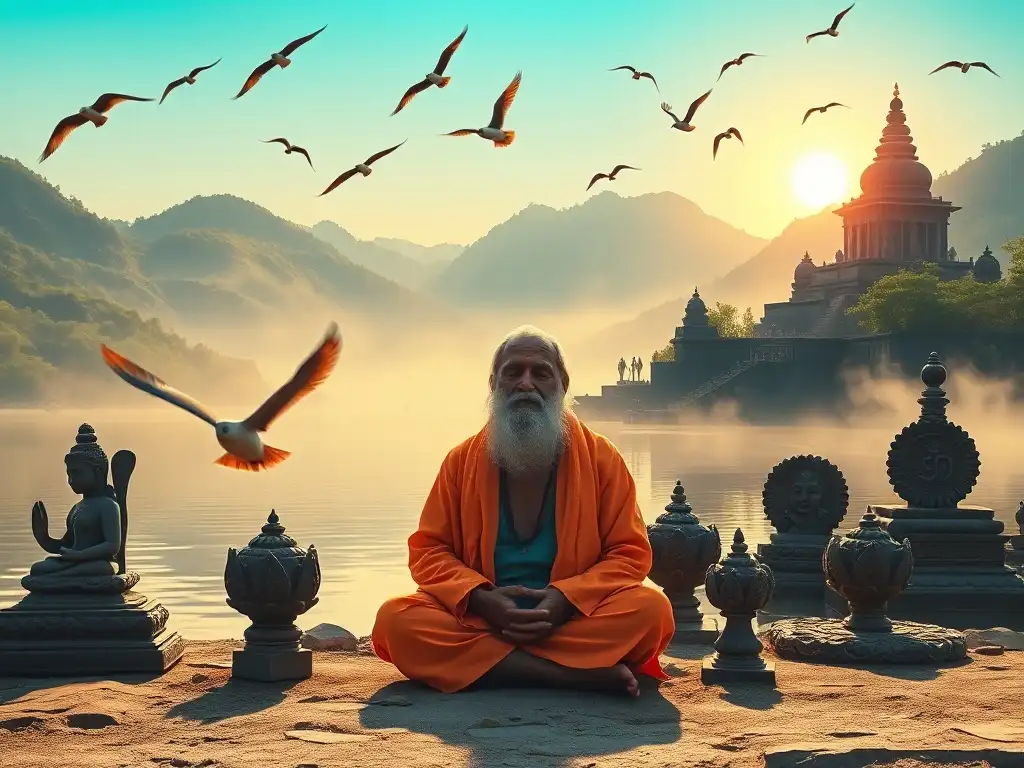
Welcome to Ancient India History, where we embark on a fascinating journey through the rich tapestry of ancient Indian civilizations. As we delve into the concept of Brahman in ancient Indian philosophy, prepare to uncover the profound ideas that have shaped spiritual thought for millennia. What exactly is this elusive ultimate reality, and how has it influenced the fabric of Indian culture? Join us as we unravel these questions and more, igniting your curiosity and inviting you to explore the depths of a philosophical tradition that continues to resonate today. Dive in and discover the wisdom of the ages!
Introduction to Brahman in Ancient Indian Philosophy
The concept of Brahman holds a pivotal role in ancient Indian philosophy, acting as the cornerstone of various metaphysical discussions that have shaped the spiritual landscape of India. This ultimate reality, often described as the source of all existence, transcends the physical world and embodies the essence of the universe.
Understanding Brahman is essential for grasping the intricacies of Indian philosophical thought, as it encapsulates the profound quest for knowledge, self-realization, and the relationship between the individual and the cosmos. This article aims to explore the multifaceted nature of Brahman, tracing its roots in ancient texts and its evolution through various philosophical schools.
Definition of Brahman and Its Significance
Brahman is often defined as the unchanging, infinite, immanent, and transcendent reality that is the source of all that exists. It is described in the Upanishads, ancient Indian texts that delve into the nature of ultimate reality and the self. Brahman is characterized by its sat (truth), chit (consciousness), and ananda (bliss), collectively referred to as satchitananda. This triad underscores the significance of Brahman in relation to both the universe and the individual soul, or Atman.
- Key Attributes of Brahman:
- Eternal: Beyond time and space.
- Impersonal: Lacking form, yet pervading all.
- Unity: The ultimate oneness of existence.
The study of Brahman is not merely academic; it is a transformative journey that encourages seekers to transcend the mundane and realize their own divine nature.
Contextualizing Brahman within Indian Thought
In the broader context of Indian philosophy, Brahman serves as a crucial point of convergence for various schools of thought, including Vedanta, Sankhya, and Yoga. Each of these traditions interprets Brahman in unique ways, but they all acknowledge its significance in the quest for understanding existence and consciousness.
- Philosophical Schools and Brahman:
- Advaita Vedanta emphasizes non-duality, teaching that Brahman and Atman are ultimately one.
- Dvaita Vedanta presents a dualistic view, positing a distinction between the individual soul and Brahman.
- Sankhya provides a framework that categorizes reality into purusha (consciousness) and prakriti (matter), ultimately connecting both to the Brahman principle.
This multifaceted approach to Brahman highlights its central role in interpreting the cosmos and the self within the rich tapestry of ancient Indian thought.
Historical Background of Brahman
Origins of Brahman in Vedic Texts
The origins of the concept of Brahman can be traced back to the Vedic texts, particularly the Rugveda and the Upanishads. These scriptures reflect a transition from anthropomorphic deities to a more abstract understanding of the divine. The term "Brahman" itself is derived from the root "brih," meaning "to grow" or "to expand," symbolizing the all-encompassing nature of this ultimate reality.
- Vedic References:
- The Nasadiya Sukta of the Rigveda speculates on the origins of the universe, hinting at a singular source of creation.
- The Upanishads articulate Brahman through meditative and philosophical inquiries, revealing its connection to the Atman.
These texts laid the groundwork for subsequent philosophical exploration and debate regarding the nature of reality.
Evolution of the Concept through Philosophical Schools
As Indian philosophy evolved, so too did the understanding of Brahman across different schools. The interpretations of Brahman became more nuanced, reflecting the diverse intellectual currents that characterized ancient India.
- Philosophical Evolution:
- Brahman in the Upanishads: Initially presented as an abstract, impersonal force.
- Bhakti Traditions: Introduced personal deities as manifestations of Brahman, making the concept more accessible to the masses.
- Later Philosophical Developments: Schools like Mimamsa and Nyaya further dissected the implications of Brahman, influencing ethical and metaphysical discussions.
This rich historical backdrop reveals how the concept of Brahman has not only persisted but also adapted to the evolving philosophical landscape of ancient India, making it a vital component of the region's intellectual heritage.
Understanding Brahman: Key Characteristics
The concept of Brahman is central to ancient Indian philosophy, encompassing a range of characteristics that define this ultimate reality. Brahman is often described as the source of all existence, transcending the physical universe and embodying the essence of all beings. It is characterized as infinite, eternal, and beyond human comprehension. This notion of Brahman serves as a foundation for various philosophical traditions within Indian thought.
Brahman is also seen as unchanging, implying that it remains constant despite the myriad transformations and phenomena observed in the material world. This quality of permanence is crucial because it contrasts with the transient nature of the physical universe. Understanding Brahman involves recognizing its attributes, which include the qualities of being (Sat), consciousness (Chit), and bliss (Ananda), forming a triadic framework that captures the essence of Brahman.
Nature of Brahman: The Infinite and Unchanging Reality
In ancient Indian philosophy, Brahman is often referred to as the infinite and unchanging reality that underlies all existence. This perspective emphasizes that Brahman is not subject to the limitations of time, space, or causation. Unlike the material world, which is characterized by constant change and impermanence, Brahman remains unaltered and eternal.
The nature of Brahman as infinite suggests that it cannot be confined to any specific form or concept. It transcends all dualities and distinctions, embodying an all-encompassing essence that connects everything within the cosmos. Philosophers such as Adi Shankaracharya elaborated on this idea by asserting that Brahman is the ultimate truth, and everything else is merely an illusion (Maya) arising from ignorance.
Relationship Between Brahman and the Universe
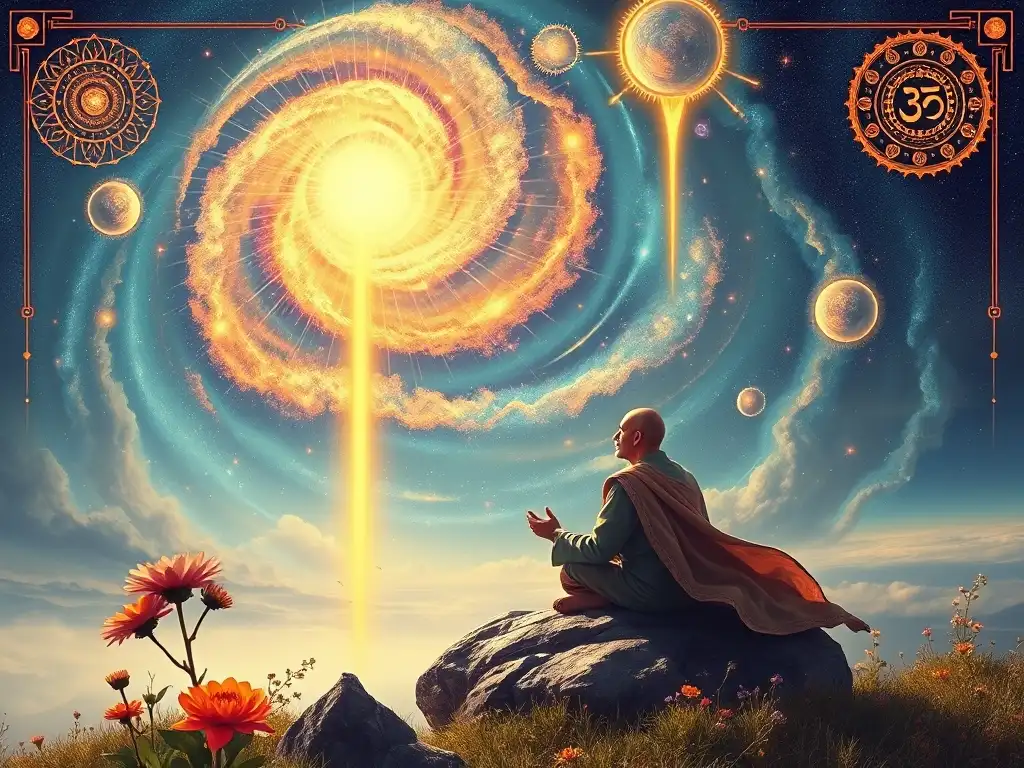
The relationship between Brahman and the universe is a profound aspect of Indian philosophical discourse. Brahman is often considered the ultimate cause of the universe, with all manifested realities being expressions of its divine essence. This ontological connection illustrates that the universe is not separate from Brahman but rather a manifestation of its underlying reality.
In various schools of thought, this relationship is interpreted differently. For instance, in Advaita Vedanta, the non-dualistic perspective posits that individual souls (Atman) are ultimately one with Brahman, suggesting an inseparable connection between the two. Conversely, in Dvaita Vedanta, a dualistic view asserts a distinction between Brahman and the individual souls, emphasizing their unique existence while still acknowledging Brahman's role as the sustaining force behind the universe.
Brahman as Sat-Chit-Ananda: Being, Consciousness, and Bliss
The characterization of Brahman as Sat-Chit-Ananda encapsulates its essential nature in ancient Indian philosophy. The term "Sat" signifies being or existence, indicating that Brahman is the very foundation of all that is. "Chit" refers to consciousness, highlighting that Brahman is not just a passive reality but an active, aware presence that pervades the universe. Finally, "Ananda" denotes bliss, suggesting that the ultimate experience of Brahman is one of profound joy and fulfillment.
This triadic formulation emphasizes that the realization of Brahman leads to an understanding of one's true nature, transcending the limitations of individuality and ego. The pursuit of knowledge and self-realization in various spiritual traditions often aims at the experience of Sat-Chit-Ananda, leading to liberation (Moksha) from the cycle of birth and rebirth (Samsara).
Brahman in Different Schools of Thought
The concept of Brahman is interpreted in various ways across different schools of Indian thought, each providing unique insights into its nature and significance.
Advaita Vedanta: Non-Dualism and Brahman
Advaita Vedanta, founded by Adi Shankaracharya, posits a non-dualistic interpretation of Brahman. In this framework, Brahman is seen as the singular, unchanging reality that is identical to the individual soul (Atman). The famous phrase "Tat Tvam Asi" (That Thou Art) encapsulates this idea, suggesting that realization of one's true self leads to the understanding that Atman and Brahman are one. This perspective emphasizes liberation through knowledge (Jnana) and the dissolution of the illusion of separateness.
Dvaita Vedanta: Dualism and the Nature of Brahman
In contrast to Advaita, Dvaita Vedanta, established by Madhvacharya, advocates a dualistic approach to understanding Brahman. Here, Brahman is perceived as a supreme personal deity distinct from individual souls. This school asserts that while Brahman is the ultimate source and sustainer of the universe, individual souls maintain their unique identities and relationships with the divine. The devotion (Bhakti) to Brahman is emphasized, fostering a personal connection that is central to the Dvaita philosophy.
Samkhya and Yoga: Perspectives on Brahman
The Samkhya and Yoga traditions offer distinct perspectives on the concept of Brahman. Samkhya, formulated by Sage Kapila, presents a dualistic framework that distinguishes between Purusha (consciousness) and Prakriti (matter). While Brahman is not explicitly defined in the same way as in Vedanta, the principles of consciousness and the ultimate reality align with the understanding of Brahman as the essence of Purusha.
In the Yoga tradition, particularly as articulated by Patanjali in the Yoga Sutras, the focus is on the realization of the self through meditation and discipline. Here, Brahman is often equated with the highest state of consciousness achieved through yogic practices, leading to liberation and union with the ultimate reality. This path emphasizes experiential knowledge and the direct realization of Brahman through inner transformation.
The Role of Brahman in Spiritual Practices
The concept of Brahman plays a pivotal role in the spiritual practices within ancient Indian traditions. Revered as the ultimate reality, Brahman is the source from which all existence emerges and to which all existence returns. This idea profoundly influences various spiritual disciplines, guiding practitioners toward self-realization and enlightenment. The exploration of Brahman is not merely an intellectual pursuit but a transformative journey that shapes the practitioner's understanding of the universe and their place within it.
In the realm of spirituality, Brahman is often approached through meditation, rituals, and philosophical inquiry. These practices create a framework for individuals to experience and comprehend the essence of Brahman. By transcending the limitations of the individual self, or Atman, practitioners seek to unite with Brahman, leading to a profound sense of peace and understanding. The intertwining of Brahman with spiritual practices emphasizes the necessity of experiential knowledge, as opposed to mere theoretical understanding.
Meditation and Brahman: Techniques for Realization
Meditation serves as a crucial technique for realizing Brahman, enabling practitioners to quiet the mind and delve into deeper states of consciousness. Various forms of meditation, such as Dhyana (focused meditation) and Samadhi (a state of meditative absorption), facilitate this journey toward self-realization.
- Dhyana: Practitioners focus their minds on a single point—often a mantra, visual symbol, or breath. This focus helps in quieting distractions, allowing for an inward journey to experience the nature of Brahman.
- Samadhi: In this advanced state of meditation, the practitioner experiences a merging with the object of meditation, leading to a profound understanding of the non-duality between Atman and Brahman.
Additionally, techniques such as self-inquiry (Atma Vichara) encourage individuals to question their true nature, promoting the realization that the individual self is not separate from the ultimate reality of Brahman.
Rituals and Brahman: Connecting with the Ultimate Reality
Rituals in ancient Indian traditions, or Puja, serve as a means to connect with Brahman. These rituals often involve offerings, chants, and specific actions that symbolize devotion and surrender to the divine. The purpose of these rituals is not merely to please deities but to recognize the presence of Brahman in all aspects of life.
Key elements of these rituals include:
- Mantras: Sacred sounds or phrases that invoke the presence of Brahman and align the practitioner’s vibrations with the cosmic order.
- Yajnas: Fire rituals that symbolize the offering of oneself to Brahman, highlighting the interconnectedness of the universe.
- Darshan: The act of seeing and being seen by the divine, fostering an intimate connection with Brahman.
Through these rituals, devotees aim to cultivate a sense of unity with the ultimate reality, reinforcing the belief that Brahman permeates all existence.
Brahman and Its Philosophical Implications
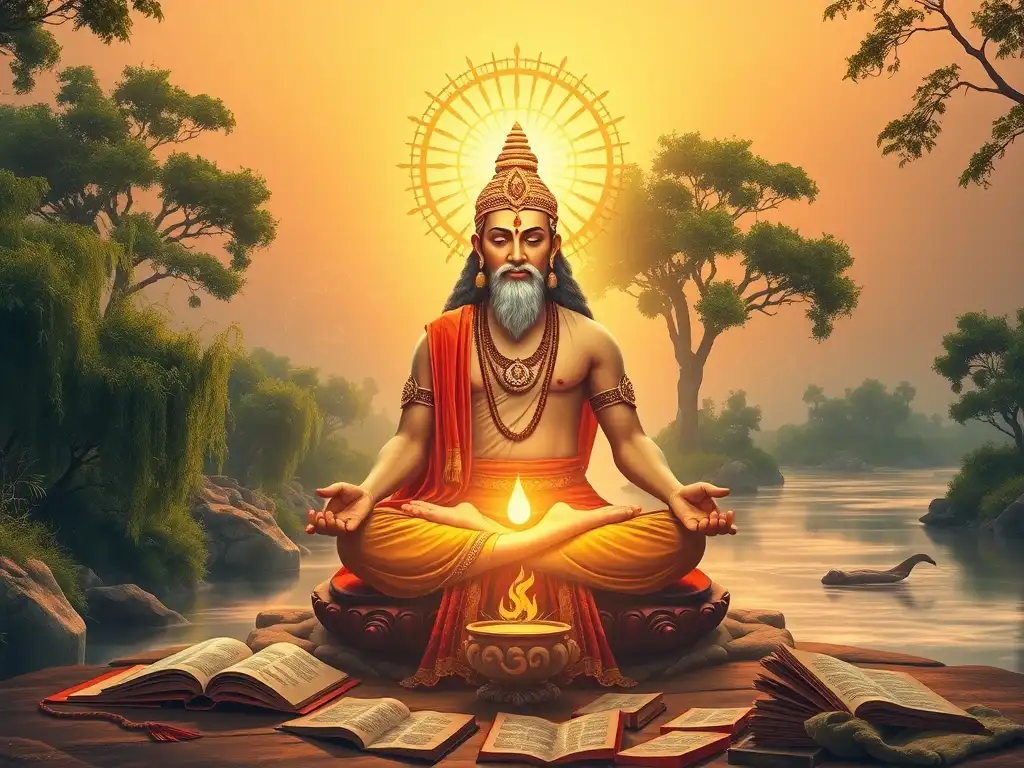
The philosophical implications of Brahman extend deeply into the understanding of reality and existence in ancient Indian thought. As the ultimate principle, Brahman raises significant questions about the nature of reality, consciousness, and the self. Philosophers have engaged in extensive discourse on Brahman, influencing various schools of thought, including Vedanta, Samkhya, and Nyaya.
The Concept of Atman and Its Relation to Brahman
Atman, the individual self or soul, is intimately connected to Brahman in ancient Indian philosophy. The relationship between Atman and Brahman is foundational to understanding the spiritual journey.
- Tat Tvam Asi: This Mahavakya (great saying) from the Chandogya Upanishad encapsulates the idea that "That art thou," suggesting that the individual self (Atman) is fundamentally the same as the ultimate reality (Brahman).
- Unity vs. Duality: Philosophical discussions often revolve around whether Atman retains individuality or merges completely with Brahman upon realization. This debate shapes the understanding of liberation (moksha) and the journey toward self-discovery.
The exploration of Atman in relation to Brahman emphasizes the interconnectedness of existence, encouraging seekers to transcend the illusion of separateness.
Brahman and the Nature of Reality: Philosophical Debates
The nature of reality as it pertains to Brahman has been a topic of extensive philosophical debate. Various schools of thought present different interpretations of how Brahman relates to the material world.
- Advaita Vedanta: Advocates that Brahman is the only reality, with the material world being an illusion (Maya). According to this view, liberation is achieved through the realization that individual experiences are ultimately manifestations of Brahman.
- Dvaita Vedanta: Contrasts this by positing a dualistic approach, where Brahman and individual souls are distinct entities. This perspective emphasizes devotion to a personal deity while acknowledging Brahman's ultimate authority.
- Samkhya Philosophy: Offers a dualistic framework separating consciousness (Purusha) and matter (Prakriti), viewing Brahman as the unifying principle that transcends both.
These philosophical debates surrounding Brahman contribute to the rich tapestry of ancient Indian thought, prompting ongoing exploration of reality, existence, and the nature of consciousness.
Common Misconceptions About Brahman
The concept of Brahman in ancient Indian philosophy is often surrounded by various misconceptions that can lead to misunderstandings about its true meaning and significance. One of the most prevalent misconceptions is equating Brahman solely with the personal deity, which can obscure its more abstract and universal nature. In reality, Brahman transcends personal characteristics and is more accurately described as the ultimate reality or cosmic principle that underlies and unites all existence.
Another common misunderstanding is the idea that Brahman is merely a philosophical concept without any practical implications. In fact, the understanding of Brahman plays a crucial role in spiritual practices and the pursuit of liberation (moksha) in Hindu traditions. The realization of Brahman is seen as the ultimate goal, allowing practitioners to transcend the illusion of separateness and achieve unity with the cosmos.
Myths Surrounding the Concept of Brahman
Several myths contribute to the confusion surrounding Brahman. One such myth suggests that Brahman is a distant, impersonal force devoid of interest in human affairs. While Brahman is indeed beyond personal attributes, many philosophical schools, such as Advaita Vedanta, describe Brahman as both immanent and transcendent, meaning it is present within all beings while also existing beyond them.
Additionally, some believe that the realization of Brahman is an exclusive experience reserved only for ascetics or advanced spiritual seekers. This myth can discourage individuals from exploring their own potential to understand Brahman. In truth, various paths—such as devotion (bhakti), knowledge (jnana), and disciplined practice (yoga)—offer accessible means for anyone to engage with and experience the essence of Brahman.
Clarifying Misunderstandings in Modern Interpretations
Modern interpretations of Brahman often simplify the concept, reducing it to a mere philosophical abstraction or a poetic idea. However, to fully grasp Brahman, one must explore the nuanced texts such as the Upanishads, where Brahman is intricately linked to the concepts of Atman (the self) and the nature of reality. The relationship between Atman and Brahman emphasizes that understanding the self is essential to understanding the greater cosmic reality.
Furthermore, contemporary discussions on Brahman sometimes lack context, failing to acknowledge the rich historical and cultural backdrop that shapes these ideas. It is vital to recognize that Brahman has been interpreted in various ways across different philosophical schools, each contributing to a more comprehensive understanding of this profound concept.
Conclusion: The Enduring Legacy of Brahman in Indian Thought
The concept of Brahman has significantly shaped Indian philosophical thought and spiritual practices over millennia. Its enduring legacy is seen in various aspects of life, influencing not only philosophical discourse but also art, literature, and cultural practices. The exploration of Brahman invites individuals to ponder profound questions about existence, the nature of reality, and the interconnectedness of all life.
Brahman’s Influence on Modern Philosophy and Spirituality
Brahman continues to influence modern philosophical inquiries and spiritual movements worldwide. Thinkers such as Carl Jung and Aldous Huxley drew upon the idea of Brahman to explore the nature of consciousness and the quest for meaning in life. The principles derived from Brahman also resonate with contemporary spiritual practices that emphasize unity and interconnectedness, highlighting its relevance beyond traditional boundaries.
The Relevance of Brahman Today in Global Perspectives
In today's globalized world, the concept of Brahman finds resonance in various philosophical and spiritual contexts. As people seek deeper understanding amidst the chaos of modern life, the teachings surrounding Brahman offer a pathway to inner peace and harmony. The growing interest in Eastern philosophies and holistic approaches to spirituality underscores the enduring relevance of Brahman, as individuals from diverse backgrounds explore this ancient wisdom to enrich their spiritual journeys and foster a sense of global interconnectedness.
Further Reading and Resources on Brahman in Ancient Indian Philosophy
The concept of Brahman is a pivotal element in ancient Indian philosophy, particularly within the frameworks of Vedanta and Upanishadic thought. For those looking to deepen their understanding of Brahman and its implications in philosophical discourse, a variety of texts and resources are available. Below are some recommended readings and online materials that provide comprehensive insights into this profound topic.
Recommended Texts and Commentaries
-
The Upanishads
Translation and Commentary by Eknath Easwaran
This collection of ancient texts serves as a foundational piece for understanding Brahman. Easwaran’s commentary provides context and clarity, making complex ideas more accessible. -
Brahman: The Ultimate Reality
By Swami Sivananda
This work delves into the nature of Brahman, discussing both its transcendent and immanent aspects. Swami Sivananda provides a thorough analysis rooted in traditional Hindu philosophy. -
The Philosophy of the Upanishads
By S. Radhakrishnan
A seminal work that explores the philosophical underpinnings of the Upanishads, focusing on the concept of Brahman and its significance in Indian thought. -
A New Introduction to the Upanishads
By Patrick Olivelle
Olivelle's modern translation offers insights into the language and meaning of these ancient texts, making them relevant for contemporary readers. -
The Essence of the Bhagavad Gita
By Swami Kriyananda
While primarily a commentary on the Bhagavad Gita, this book often references Brahman, exploring its implications within the broader context of Indian philosophy.
Online Resources and Lectures on Brahman
-
Coursera – Indian Philosophy: The Bhagavad Gita and the Upanishads
This online course offers a structured exploration of key philosophical concepts, including Brahman, with lectures from esteemed scholars.
-
YouTube – Lectures by Dr. Rajiv Malhotra
Dr. Malhotra provides various lectures that dissect the concept of Brahman and its relevance in modern contexts. His engaging style makes complex topics more digestible.
-
Stanford Encyclopedia of Philosophy – Brahman
This entry offers a scholarly overview of Brahman, detailing its philosophical significance, interpretations, and influences across different schools of thought.
-
Podcasts on Ancient Indian Philosophy
Various platforms feature episodes dedicated to discussions on Brahman, with insights from philosophers and scholars, providing a dynamic way to engage with the material.
-
Academic Journals
Explore journals such as the Journal of Indian Philosophy for peer-reviewed articles that discuss Brahman in contemporary philosophical debates.
These resources collectively provide a robust foundation for anyone interested in exploring the intricate concept of Brahman in ancient Indian philosophy. Whether through classic texts or modern interpretations, readers will find a wealth of knowledge to enhance their understanding of this ultimate reality.
- Introduction to Brahman in Ancient Indian Philosophy
- Historical Background of Brahman
- Understanding Brahman: Key Characteristics
- Nature of Brahman: The Infinite and Unchanging Reality
- Relationship Between Brahman and the Universe
- Brahman as Sat-Chit-Ananda: Being, Consciousness, and Bliss
- Brahman in Different Schools of Thought
- The Role of Brahman in Spiritual Practices
- Brahman and Its Philosophical Implications
- Common Misconceptions About Brahman
- Conclusion: The Enduring Legacy of Brahman in Indian Thought
- Further Reading and Resources on Brahman in Ancient Indian Philosophy
Frequently Asked Questions
What is the significance of Brahman in ancient Indian philosophy?
Brahman represents the ultimate reality and source of all existence in ancient Indian thought, serving as a fundamental concept in Hindu philosophy.
How does Brahman differ from Atman?
While Brahman is the universal spirit or ultimate reality, Atman refers to the individual soul. Understanding their relationship is crucial for realizing the concept of oneness in Indian philosophy.
What texts discuss the concept of Brahman?
The concept of Brahman is primarily explored in ancient texts such as the Upanishads, which delve into metaphysical discussions about the nature of reality and existence.
How did the idea of Brahman influence other Indian philosophies?
The concept of Brahman significantly influenced various schools of thought, including Vedanta, and shaped philosophical dialogues around existence, consciousness, and unity.
Can Brahman be experienced or only understood intellectually?
In ancient Indian thought, Brahman can be both experienced through meditative practices and understood intellectually through philosophical inquiry, emphasizing a holistic approach to spiritual realization.
Final Reflection: Embracing the Essence of Brahman in Our Lives
The exploration of Brahman in ancient Indian philosophy reveals a profound truth that resonates deeply in today's world: the quest for understanding our ultimate reality is as relevant now as it was millennia ago. In a time marked by rapid change and uncertainty, the concept of Brahman invites us to seek a deeper connection with the universe and ourselves. It challenges us to transcend the superficial layers of existence and recognize the interconnectedness of all beings, reminding us that we are part of something far greater than ourselves.
Culture and society are continually shaped by the philosophical underpinnings we choose to embrace. The teachings surrounding Brahman have influenced countless generations, fostering a sense of unity and purpose among individuals and communities. As we navigate the complexities of modern life, the wisdom of Brahman encourages us to cultivate mindfulness and compassion in our interactions with others. The ultimate goal of life is to realize the oneness of all existence,
a sentiment that echoes through the ages and remains a guiding principle for many seeking spiritual fulfillment.
As you reflect on the insights gained from this exploration of Brahman, I invite you to consider how this ancient wisdom can be woven into the fabric of your daily life. Take a moment to connect with the essence of Brahman within you, recognizing the divine presence that resides in all things. Let this understanding inspire you to act with intention, fostering harmony and understanding in your relationships and communities. In doing so, you not only honor the legacy of ancient Indian philosophy but also contribute to a more compassionate and interconnected world.
Unveil the Mysteries of Brahman Today!
Thank you for exploring the profound concept of Brahman with us! We hope you’ve gained valuable insights into this ultimate reality in Indian philosophy. Now, it's your turn to embody this knowledge and take meaningful steps on your spiritual journey.
Here’s how you can dive deeper and make the most of what you’ve learned:
- Reflect on your understanding of Brahman: Take a moment to meditate on this concept. Consider journaling your thoughts or feelings that arise during this practice.
- Join a discussion group: Seek out or create a community where you can share insights and perspectives about Brahman and its implications in daily life.
- Explore further: Read additional texts or resources related to Brahman, such as the Upanishads or works by esteemed scholars in the field.
What aspect of Brahman resonates with you the most, and how do you plan to incorporate this understanding into your daily life?