
Feminine Perspectives in Ancient Indian Philosophy: The Voice of Gargi and Maitreyi

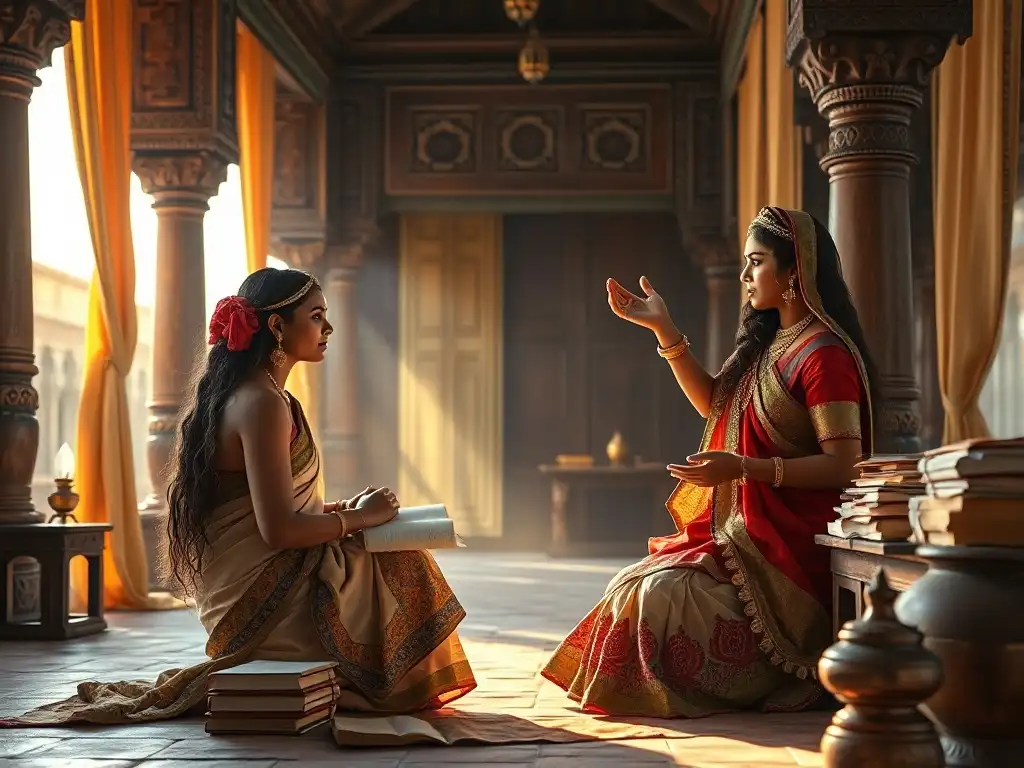
Welcome to Ancient India History, where we delve deep into the rich tapestry of ancient Indian civilizations. In our featured article, "Feminine Perspectives in Ancient Indian Philosophy: The Voice of Gargi and Maitreyi," we uncover the powerful yet often overlooked feminine voices that shaped philosophical thought in ancient times. Who were these remarkable women, and what insights did they offer to the male-dominated discourse of their era?
Join us on this enlightening journey as we explore the profound contributions of these philosophers and their lasting impact on the fabric of Indian culture. Prepare to be intrigued and inspired as you venture further into this captivating narrative!
- Feminine Voices in Ancient India: An Introduction
- Historical Context of Women in Ancient India
- Gargi and Her Philosophical Contributions
- Maitreyi and Her Influence on Philosophical Thought
- Comparative Analysis of Gargi and Maitreyi
- The Legacy of Feminine Voices in Ancient Indian Philosophy
- Conclusion: The Importance of Recognizing Feminine Voices in Ancient India
- Further Reading and Resources on Feminine Voices in Ancient India
-
Frequently Asked Questions
- What is the significance of Gargi and Maitreyi in ancient Indian philosophy?
- How did Gargi contribute to the Vedic discussions?
- What role did Maitreyi play in philosophical discourse?
- How do Gargi and Maitreyi reflect the status of women in ancient India?
- Why is it important to study feminine voices in ancient India?
- Final Reflection: The Enduring Echo of Feminine Voices in Ancient India
- Unveil the Wisdom of Ancient Feminine Voices
Feminine Voices in Ancient India: An Introduction
The exploration of Feminine Voices in Ancient India offers a profound insight into the philosophical landscape of one of the world's oldest civilizations. Ancient Indian philosophy is often perceived through the lens of its prominent male thinkers, yet women like Gargi and Maitreyi significantly contributed to the discourse, challenging prevailing ideologies and enriching the intellectual heritage.
These pioneering figures not only engaged with the philosophical questions of their time but also articulated perspectives that resonate with contemporary discussions on gender and knowledge. This article delves into the roles of Gargi and Maitreyi, examining their thoughts and the impact they had on the evolution of philosophical discourse in ancient India.
Overview of Feminine Perspectives in Ancient Indian Philosophy
The history of ancient Indian philosophy is marked by a rich tapestry of thoughts, concepts, and arguments that encompass a variety of perspectives. Among these, the contributions of women philosophers stand out, providing essential insights into the ethical, metaphysical, and epistemological debates of their time.
- Gargi Vachaknavi: Known for her sharp intellect and eloquent discourse, Gargi participated in the philosophical debates of the Brahmanas and was celebrated for her challenging questions about the nature of reality and the ultimate truth. Her inquiries into the nature of the self and the universe reflect a deep engagement with metaphysical concepts that were typically dominated by male sages.
- Maitreyi: A prominent figure in the Brihadaranyaka Upanishad, Maitreyi represents women's pursuit of knowledge and understanding. Her dialogue with her husband, Yajnavalkya, regarding the nature of immortality highlights her philosophical acumen, as she seeks to understand the essence of existence beyond material wealth and societal roles.
These female philosophers not only contributed to philosophical thought but also opened pathways for future generations to explore and articulate their own voices.
Importance of Gargi and Maitreyi in Philosophical Discourse
The significance of Gargi and Maitreyi in the realm of ancient Indian philosophy cannot be overstated. Their presence and participation in philosophical discussions indicate a more inclusive intellectual environment than traditionally perceived.
- Challenging Norms: Both philosophers challenged the patriarchal structures of their time. Gargi's participation in the Saraswati Saptapadi and Maitreyi's quest for knowledge signify a break from conventional gender roles, asserting that women, too, could engage in profound philosophical inquiry.
- Expanding Philosophical Dialogue: Their contributions introduced new dimensions to philosophical discussions, emphasizing questions of identity, existence, and the nature of knowledge. This not only enriched the philosophical landscape but also encouraged a broader understanding of the human experience.
- Legacy of Thought: The voices of Gargi and Maitreyi continue to inspire modern philosophical discourse, particularly in feminist philosophy and gender studies. Their ideas prompt a re-evaluation of historical narratives and encourage contemporary thinkers to explore the interplay between gender and philosophy.
The examination of Gargi and Maitreyi's contributions is crucial for understanding the complexity and richness of ancient Indian philosophy. Their voices exemplify the diverse intellectual heritage of ancient India and highlight the importance of inclusivity in philosophical discourse.
Historical Context of Women in Ancient India
Role of Women in Early Indian Society
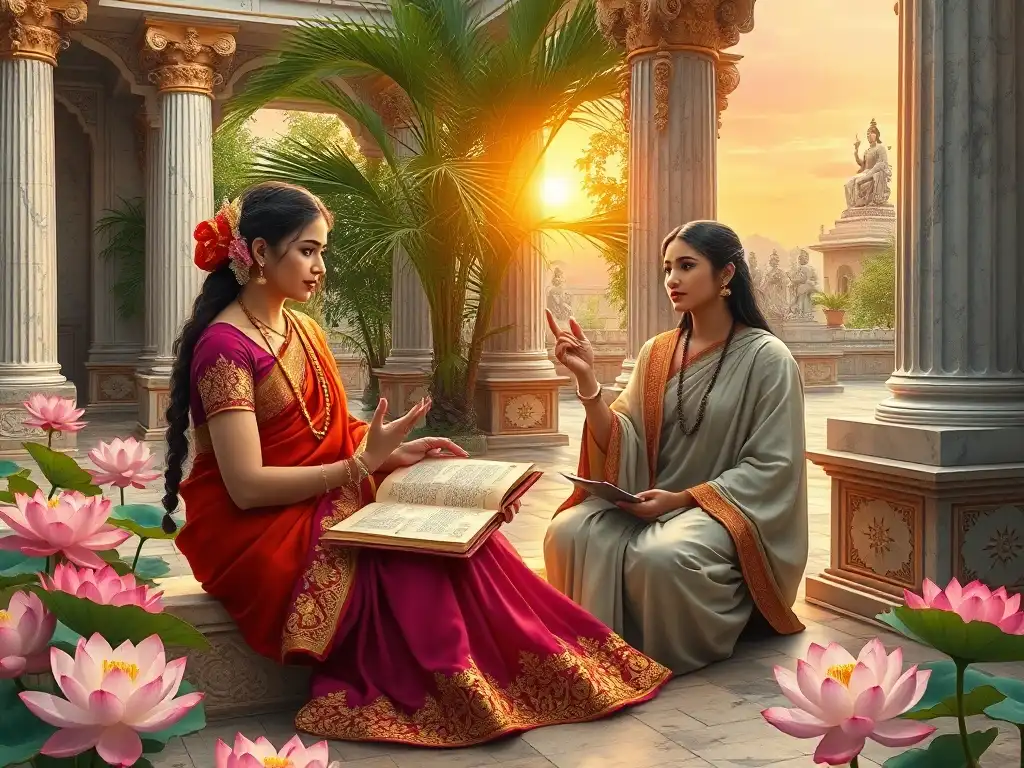
In ancient India, the role of women was multifaceted and varied significantly across different periods and regions. Women in early Indian society were often seen as integral to the family unit, with their primary responsibilities revolving around domestic duties and child-rearing. However, it is crucial to recognize that their roles extended beyond the household.
- Social Status and Gender Dynamics:
- Women enjoyed a degree of respect and autonomy, particularly in the Vedic period. Texts from this era, such as the Rigveda, mention women participating in rituals and possessing knowledge of the Vedic hymns.
- The concept of patriarchy began to solidify over time, particularly after the Vedic period, leading to a more restricted status for women in later texts, such as the Manusmriti, which emphasized a woman's subservience to male figures.
- Marriage and Family Structure:
- Marriages were often arranged, but women could exercise choice in some instances, especially among the higher classes where practices like swayamvara allowed for selectivity in choosing spouses.
- The institution of polygamy was prevalent, and in certain communities, women held significant influence and power, often managing family affairs and resources.
- Religious and Cultural Roles:
- Women were key figures in religious rituals and practices. They were often seen as the embodiment of Shakti (divine feminine power), and goddesses were revered, reflecting the value placed on femininity within spiritual contexts.
- Notable women like Gargi and Maitreyi emerged as philosophers and scholars, indicating that intellectual pursuits were accessible to women, albeit selectively.
Educational Opportunities for Women in Ancient India
The educational landscape for women in ancient India saw a gradual evolution, marked by both opportunities and limitations.
- Vedic Education:
- During the Vedic period, women had access to education, primarily in the form of oral transmission of knowledge. They were encouraged to learn the Vedas and participate in intellectual discussions, as reflected in dialogues involving Gargi and Maitreyi.
- Brahmavadinis:
- Women who were scholars and teachers were known as Brahmavadinis. They were respected for their knowledge and were allowed to engage in philosophical discourse, thereby contributing significantly to the intellectual fabric of society.
- Decline of Educational Access:
- Over time, particularly during the post-Vedic period, educational opportunities for women diminished. The rise of orthodox views led to restrictions on women's access to formal education, confining them primarily to domestic roles.
- Exceptions and Regional Variations:
- In some regions, women continued to receive education, often centered around arts and crafts, but formal philosophical and scriptural education became increasingly rare.
Contributions of Women to Ancient Indian Thought
Women in ancient India made significant contributions to philosophical and spiritual thought, challenging the notion that intellectual pursuits were solely the domain of men.
- Gargi and Maitreyi:
- Gargi, a prominent philosopher, is known for her profound questions during the Brahadaranyaka Upanishad discussions, where she posed challenging inquiries about the nature of the soul and ultimate reality.
- Maitreyi, another notable figure, engaged in dialogues with her husband, Yajnavalkya, showcasing her intellectual prowess and philosophical insights, particularly regarding the nature of knowledge and love.
- Philosophical Themes:
- The contributions of these women often revolved around themes of self-knowledge, the nature of existence, and the pursuit of truth. Their inquiries reflected a deep understanding of metaphysical concepts and showcased the potential for women to engage critically with philosophical discourse.
- Legacy and Influence:
- The voices of Gargi and Maitreyi have inspired generations, serving as early examples of feminine voices in ancient India that transcended societal norms. Their legacies continue to resonate, emphasizing the importance of diverse perspectives in philosophical discussions.
The historical context of women in ancient India reveals a complex interplay of empowerment and restriction, with significant contributions to philosophical thought that challenge modern perceptions of gender roles in ancient societies. Their voices, such as those of Gargi and Maitreyi, remain vital in understanding the rich tapestry of ancient Indian philosophy.
Gargi and Her Philosophical Contributions
Who Was Gargi? A Brief Biography
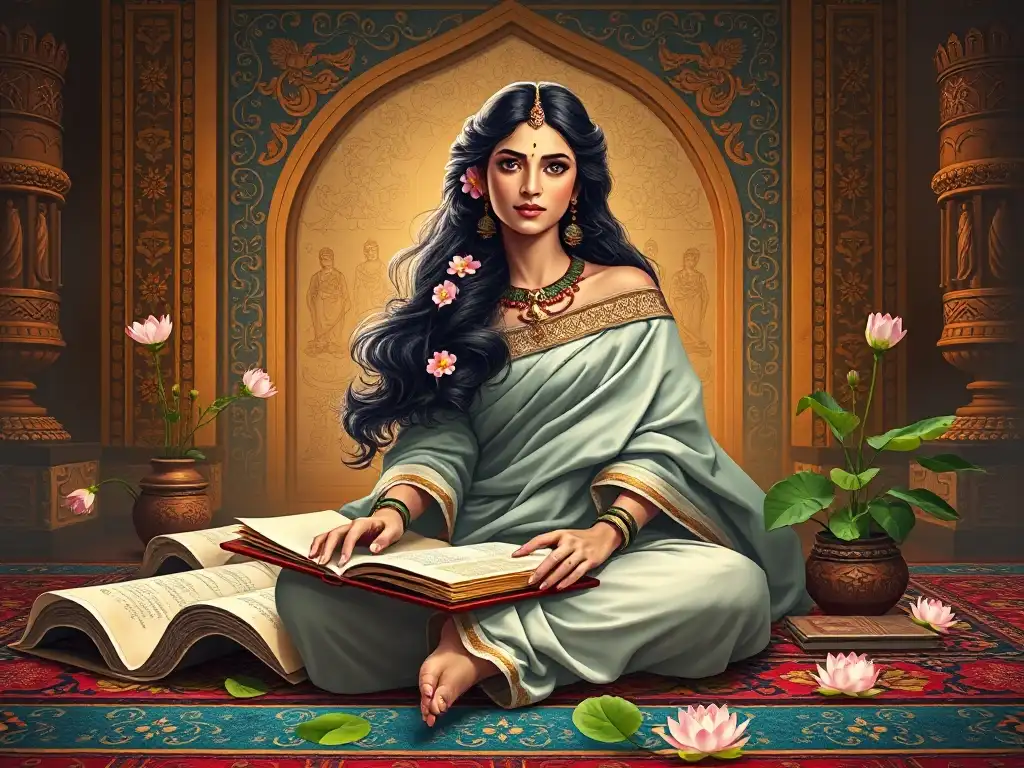
Gargi Vachaknavi, often recognized as one of the most prominent female philosophers of ancient India, is believed to have lived during the Vedic period, roughly around the 7th century BCE. Her legacy is primarily preserved in the Brahmanas, a part of the Vedic literature, where she is depicted as a learned sage and a staunch advocate of philosophical inquiry.
Gargi was born into a family of scholars; her father, Vachaknu, was known for his intellectual prowess. From a young age, Gargi displayed a keen interest in philosophy and metaphysics, participating in discussions that challenged prevailing norms and intellectual boundaries of her time. As a learned woman, Gargi was not only respected for her wisdom but also for her courage to engage in debates with male scholars, a rarity in a patriarchal society.
One of the most famous accounts of Gargi's life is her participation in the Saraswati Saptami, a philosophical debate held in the court of King Janaka of Videha. Here, she posed profound questions about the nature of reality and the ultimate essence of existence, showcasing her deep understanding of metaphysics. Her contributions to philosophy and her fearless pursuit of knowledge have solidified her status as a pioneering feminine voice in ancient Indian intellectual tradition.
Key Philosophical Ideas Presented by Gargi
Gargi's philosophical ideas primarily revolve around the concepts of Brahman (the ultimate reality) and Atman (the self). She is best known for her incisive questions that challenge the nature of existence and the relationship between the individual and the cosmos. Some of her key contributions include:
- Inquiry into the Nature of Brahman: Gargi famously questioned the nature of the ultimate reality, asking, “What is that which supports the earth?” This inquiry illustrates her understanding of the interconnectedness of all existence and the search for a singular ultimate principle.
- Concept of the Self: Gargi's teachings also delve into the nature of the self. She advocated that true knowledge comes from understanding the Atman, which transcends physical existence. According to her philosophy, realizing one's true self is essential for spiritual liberation.
- Critique of Ritualism: While the Vedic tradition was heavily focused on rituals, Gargi's philosophy encouraged moving beyond mere rituals to seek deeper truths. She emphasized that knowledge and wisdom are more significant than ritualistic practices, a progressive stance that resonated with later philosophical movements in India.
Gargi’s philosophical inquiries not only reflect a profound understanding of metaphysical concepts but also highlight her role in advocating for intellectual freedom and the pursuit of knowledge, thereby establishing a strong feminine voice in ancient Indian philosophy.
Gargi's Role in the Brahmanical Tradition
Gargi occupies a significant position within the Brahmanical tradition, serving as a bridge between ancient philosophical thought and the evolving discourse on gender and spirituality. Her contributions can be understood through various facets:
- Challenging Gender Norms: In a predominantly male-dominated intellectual landscape, Gargi’s active participation in philosophical debates challenged societal norms regarding women's roles in knowledge and discourse. Her presence in the Brahmanas symbolizes the inclusion of feminine perspectives in a tradition often viewed as patriarchal.
- Influence on Later Philosophers: Gargi’s thoughts and methodologies influenced subsequent generations of philosophers, including those in the Upanishadic tradition. Her emphasis on inquiry and rational thought laid the groundwork for future philosophical explorations, encouraging women and men alike to question and seek deeper truths.
- Symbol of Knowledge and Wisdom: Gargi is often invoked in discussions about the importance of women in philosophy and education. Her legacy serves as a reminder of the contributions women have made to intellectual traditions, reinforcing the idea that wisdom knows no gender.
Gargi's role in the Brahmanical tradition underscores her significance as a feminine voice in ancient India, paving the way for future generations to explore philosophical thought beyond conventional boundaries. Through her inquiries and challenges to the status quo, she embodies the essence of feminine voices in ancient India, advocating for knowledge, wisdom, and spiritual inquiry.
Impact of Gargi's Thoughts on Later Philosophical Discourse
Gargi, a prominent figure in the Upanishadic tradition, has left a profound mark on the landscape of Indian philosophy. Her contributions extend beyond her immediate context, influencing subsequent generations of philosophers and thinkers. Gargi's inquiries into the nature of reality, knowledge, and the self have reverberated throughout the ages, shaping the contours of philosophical discourse.
One of the most significant impacts of Gargi's thoughts is her advocacy for the pursuit of knowledge and understanding. Her famous dialogues, particularly those found in the Brihadaranyaka Upanishad, challenge the male-dominated philosophical milieu of her time. Gargi fearlessly interrogates the sage Yajnavalkya, posing questions about the ultimate nature of Brahman, the universe, and the self. This bold engagement with philosophical inquiry set a precedent for critical thinking and intellectual rigor, inspiring later philosophers to embrace a more questioning approach to existential issues.
Moreover, Gargi's emphasis on the metaphysical aspects of knowledge laid the groundwork for subsequent philosophical explorations. Her arguments regarding the nature of consciousness and the relationship between the individual soul (Atman) and the universal soul (Brahman) resonate with later Vedantic thinkers. Philosophers such as Adi Shankaracharya and Ramanuja drew from her ideas, further developing the concepts of non-duality and the essence of being. Gargi's influence can thus be seen as a catalyst for the evolution of these critical philosophical doctrines.
Gargi's legacy extends into the realm of feminist philosophy as well. By asserting her intellectual capabilities and challenging patriarchal norms, she provided a voice for women in a predominantly male philosophical tradition. Her contributions have inspired modern feminist scholars to explore the intersections of gender and philosophy, advocating for the inclusion of feminine perspectives in philosophical discourse. This ongoing dialogue continues to illuminate the importance of diverse voices in shaping our understanding of complex philosophical questions.
Gargi's thoughts have had a lasting impact on later philosophical discourse, influencing metaphysical inquiries, promoting critical thinking, and paving the way for feminist perspectives in philosophy. Her legacy serves as a reminder of the vital role feminine voices play in enriching the philosophical landscape of ancient India and beyond.
Maitreyi and Her Influence on Philosophical Thought
Who Was Maitreyi? A Brief Biography
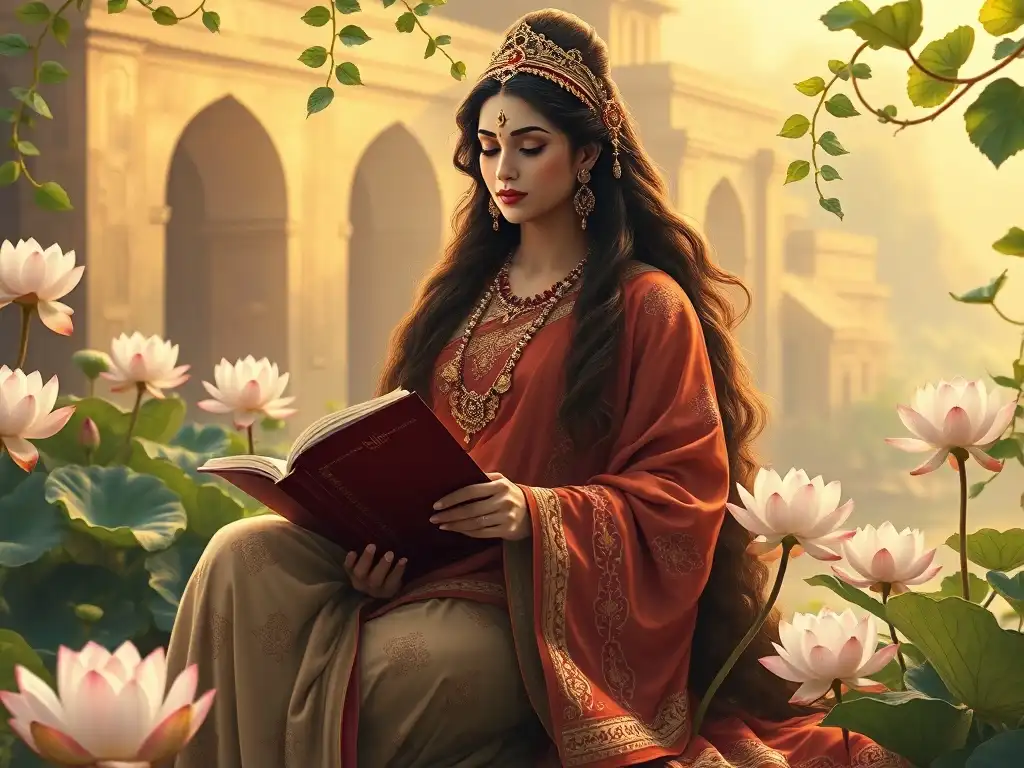
Maitreyi, a prominent figure in ancient Indian philosophy, emerged during the Vedic period, approximately around 800-600 BCE. She was the daughter of the sage Yajnavalkya, who was known for his profound contributions to the Upanishads, a collection of texts that form the philosophical foundation of Hinduism. Maitreyi is particularly celebrated for her intellectual prowess and her ability to engage in deep philosophical inquiry, traits that were not commonly attributed to women of her time.
Maitreyi's story is primarily found in the Brihadaranyaka Upanishad, where she is depicted as a learned and articulate woman who challenges societal norms. Her education and enlightenment were not limited by gender constraints, reflecting a unique aspect of Vedic society where women could partake in philosophical discussions and spiritual pursuits. This background sets the stage for her significant contributions to the discourse on self-knowledge and the nature of reality.
Maitreyi's Dialogues and Philosophical Insights
Maitreyi's philosophical dialogues are a testament to her intellectual depth and insight. One of the most notable exchanges occurs between her and her father, Yajnavalkya, when he prepares to renounce worldly life. He offers her a choice of material wealth or spiritual wisdom, to which Maitreyi responds with a profound question:
If this wealth is not eternal, what is the use of it?
This pivotal moment highlights her understanding that true knowledge and self-realization transcend material possessions. Maitreyi seeks to grasp the essence of the self (Atman) and its relationship to the ultimate reality (Brahman), which is a central theme in Vedic philosophy.
In another dialogue, Maitreyi states, "The one who knows the self becomes the self." This assertion emphasizes the importance of introspection and self-awareness, suggesting that enlightenment comes from within rather than through external validation. Her perspectives challenge the traditional view of women's roles in society, illustrating that women could be formidable philosophers and spiritual seekers in their own right.
The Influence of Maitreyi on Vedic Philosophy
Maitreyi's influence on Vedic philosophy is profound, as she serves as a precursor to later philosophical thought in ancient India. Her emphasis on self-knowledge and the pursuit of truth can be seen reflected in the teachings of various philosophical schools, including Advaita Vedanta, which advocates for the non-duality of the individual soul and the ultimate reality.
Additionally, her dialogues have paved the way for discussions on gender and philosophy in ancient texts, positioning women as active participants in philosophical discourse. Maitreyi's thoughts resonate with modern feminist interpretations of ancient texts, where her voice serves as a symbol of feminine wisdom and intellectual strength.
Maitreyi represents a significant feminine voice in ancient India, whose contributions continue to inspire contemporary discussions on gender and philosophy. Her legacy is a reminder that the pursuit of knowledge and truth transcends gender, making her an essential figure in the history of philosophical thought.
Maitreyi's Legacy in Feminine Voices in Ancient India
Maitreyi, a prominent figure in ancient Indian philosophy, embodies the essence of feminine voices that have shaped philosophical thought in India. Her contributions are particularly significant as they highlight the role of women in a predominantly male-dominated intellectual landscape. Maitreyi's legacy is not only rooted in her philosophical inquiries but also in her unique ability to question and engage with profound metaphysical concepts.
One of the most notable aspects of Maitreyi's legacy is her association with the Brihadaranyaka Upanishad, one of the oldest Upanishads in Hindu philosophy. In this text, Maitreyi is portrayed as a learned woman who engages in a dialogue with her husband, Yajnavalkya, a revered sage. During this discourse, she challenges traditional notions of knowledge and reality, asserting her own understanding of the self and its connection to the universe. This interaction underscores the importance of dialogue in philosophical exploration and illustrates how Maitreyi's inquiries contribute to the broader discourse on the nature of existence.
Maitreyi's emphasis on the pursuit of knowledge and self-realization is a defining feature of her philosophical legacy. She famously questions Yajnavalkya about the nature of immortality, demonstrating her desire for deeper understanding beyond societal expectations. This insistence on intellectual engagement not only positions her as a key figure in ancient philosophy but also serves as an inspiration for future generations of women scholars. Her legacy encourages women to seek knowledge and assert their voices in philosophical discussions, thereby contributing to a more inclusive understanding of ancient Indian thought.
Furthermore, Maitreyi's philosophical contributions have inspired various interpretations and adaptations in later texts and commentaries. Scholars have often revisited her discussions, emphasizing the relevance of her insights in contemporary philosophical debates. For instance, her perspectives on the nature of the self and its relationship with the cosmos resonate with modern existential and metaphysical inquiries, showcasing the timelessness of her thoughts.
Maitreyi's legacy in the feminine voices of ancient India represents a crucial intersection of gender and philosophy. Her role as a philosopher and a seeker of truth serves as a beacon for women in philosophy, advocating for the inclusion of diverse perspectives in the exploration of profound questions about existence, knowledge, and reality. By examining her contributions, we not only honor her legacy but also recognize the vital role that feminine voices have played in shaping the philosophical landscape of ancient India.
Comparative Analysis of Gargi and Maitreyi
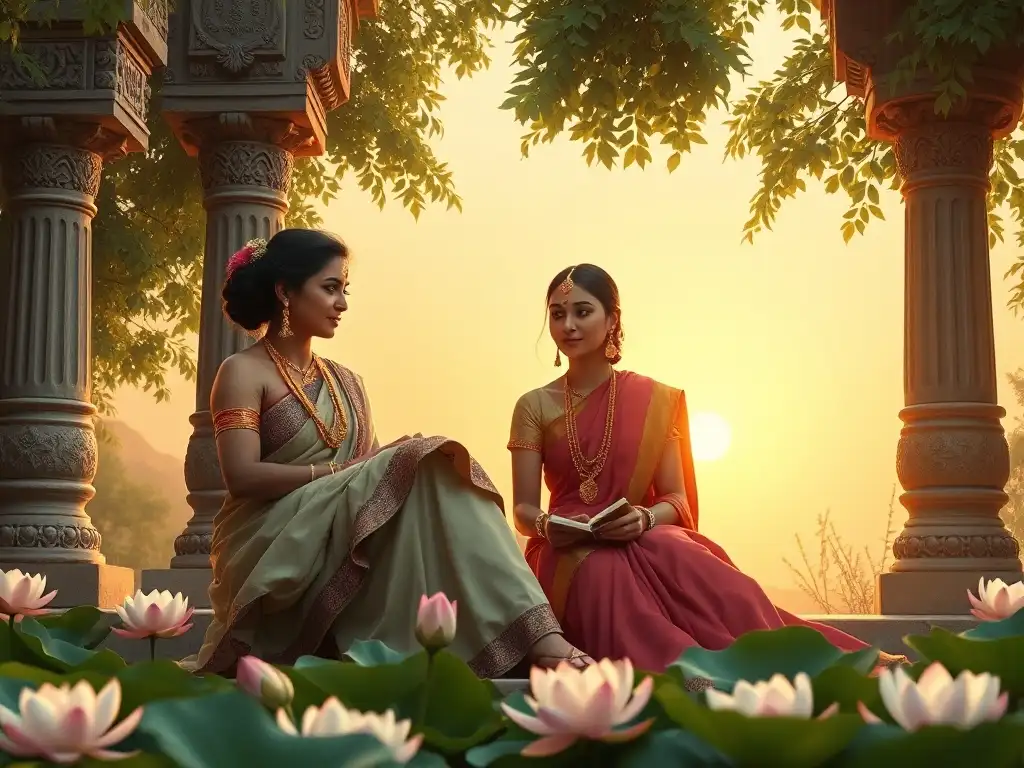
Similarities in Their Philosophical Approaches
Gargi and Maitreyi, two prominent female philosophers of ancient India, share several philosophical approaches that underline their intellectual contributions. Both women are celebrated for their profound engagement with metaphysical questions and their ability to challenge prevailing norms in a male-dominated intellectual landscape.
- Emphasis on Knowledge:
- Both Gargi and Maitreyi place a strong emphasis on the pursuit of knowledge. Gargi, known for her dialogues in the Brahmanas, often engages in discussions about the nature of reality and the ultimate truth. Maitreyi, in her conversation with Yajnavalkya, questions the essence of the self and the nature of immortality, indicating her deep philosophical inquiry.
- Challenging Patriarchal Norms:
- Both philosophers challenge the patriarchal confines of their time. Gargi’s participation in the royal court debates and her insistence on questioning the sage’s wisdom reflect her courage and intellect. Maitreyi's bold inquiries into the nature of existence and her rejection of conventional female roles highlight her independence and critical thinking.
- Exploration of the Self:
- A common thread in their philosophy is the exploration of the self. Gargi’s dialogues often revolve around the relationship between the individual and the cosmos, while Maitreyi’s philosophical inquiries focus on the nature of the self in relation to the ultimate reality, emphasizing a shared interest in metaphysics.
Differences in Their Contributions and Perspectives
While Gargi and Maitreyi share common philosophical ground, their contributions and perspectives reveal distinct nuances that enrich the discourse in ancient Indian philosophy.
- Contextual Focus:
- Gargi’s philosophical inquiries are often framed within the context of public debates and discussions, primarily focusing on cosmology and the nature of Brahman. In contrast, Maitreyi’s dialogues are more introspective and personal, centering around existential questions and the nature of love and knowledge.
- Method of Inquiry:
- Gargi employs a more argumentative and dialectical approach, challenging her interlocutors with incisive questions about the cosmos and the nature of ultimate reality. Maitreyi, however, adopts a more contemplative approach, seeking understanding through personal relationships and introspection, particularly in her famous dialogue with her husband, Yajnavalkya.
- Legacy and Influence:
- Gargi’s influence extends into the realm of public discourse, earning her a reputation as a sage among sages. Maitreyi's legacy, on the other hand, lies in her intimate exploration of philosophical concepts, influencing later thoughts on the nature of love, identity, and selfhood.
The Significance of Their Dialogues in Ancient Indian Philosophy
The dialogues of Gargi and Maitreyi hold significant importance in the landscape of ancient Indian philosophy, serving as a testament to the intellectual capabilities of women in a predominantly male-dominated society. Their contributions are pivotal for several reasons:
- Recognition of Female Voices:
- Gargi and Maitreyi's philosophies introduce and validate feminine voices in ancient texts, challenging the notion that philosophical inquiry was solely a male domain. Their presence in the Brahmanas and Upanishads indicates an inclusive approach to philosophical discourse.
- Philosophical Depth:
- The depth of their dialogues offers insights into the metaphysical and existential concerns of their time, providing a rich tapestry of thought that continues to resonate in contemporary discussions. Their inquiries into the nature of the self, knowledge, and existence lay foundational stones for subsequent philosophical exploration.
- Inspiration for Future Generations:
- The intellectual courage of Gargi and Maitreyi serves as an inspiration for future generations of thinkers, particularly women. Their ability to articulate complex philosophical ideas encourages a re-evaluation of women's roles in philosophy and the broader intellectual tradition of India.
The examination of Gargi and Maitreyi not only enriches our understanding of ancient Indian philosophy but also highlights the enduring relevance of feminine voices in shaping philosophical thought. Their legacies remind us that wisdom knows no gender, and the exploration of philosophical questions is a universal endeavor.
The Legacy of Feminine Voices in Ancient Indian Philosophy
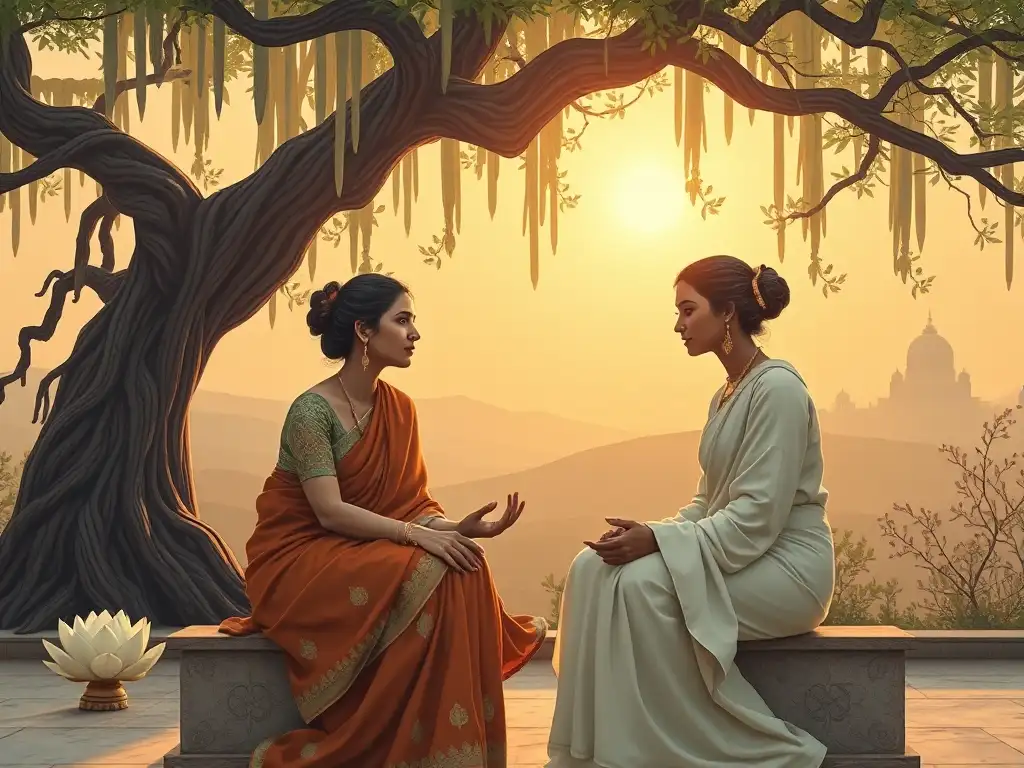
The legacy of feminine voices in ancient Indian philosophy is profound and multifaceted, with figures like Gargi and Maitreyi standing as exemplary representatives of women's contributions to philosophical discourse. These women not only challenged the prevailing norms of their time but also laid the groundwork for future generations of thinkers and philosophers. Their voices resonated through the ages, influencing various aspects of society, spirituality, and intellectual inquiry.
Gargi, known for her sharp intellect and unparalleled wisdom, engaged in philosophical debates with male scholars, most notably in the Brahadāranyaka Upanishad. Her inquiries into the nature of reality and the cosmos showcased the capability of women to participate actively in philosophical discussions. Similarly, Maitreyi, often celebrated for her profound insights into the nature of the self, presented her views in the same Upanishadic context, arguing for the importance of personal realization in understanding the ultimate truth.
These contributions are not merely historical footnotes; they represent a significant shift in how feminine perspectives were regarded in philosophy. The presence of such pivotal figures illustrates that women have always been integral to the philosophical landscape, advocating for a more inclusive understanding of knowledge and truth.
The Ripple Effect of Gargi and Maitreyi on Future Generations
The influence of Gargi and Maitreyi extends far beyond their immediate context. Their philosophical inquiries and dialogues have inspired countless scholars and thinkers throughout history, creating a ripple effect that persists in contemporary discussions. The questions they posed about the nature of existence, the self, and ultimate reality continue to resonate within modern philosophical frameworks.
- Educational Legacy: Their contributions laid the foundation for women's education in philosophy, encouraging future generations of women to pursue knowledge and engage in intellectual discussions. This educational legacy can be seen in the growing number of women philosophers and scholars in India and abroad.
- Cultural Shifts: The philosophical assertions made by Gargi and Maitreyi contributed to gradual cultural shifts in the perception of women's roles in society. Their voices validated women's intellectual capabilities, promoting a more egalitarian view of knowledge and wisdom.
- Modern Philosophical Discourse: Contemporary philosopher Judith Butler and others have drawn upon the ideas of ancient women philosophers to challenge existing gender norms and advocate for a more nuanced understanding of identity and existence. This demonstrates how Gargi and Maitreyi's thoughts resonate in modern feminist philosophy, enriching discussions around gender and society.
Modern Interpretations of Ancient Feminine Philosophers
Modern interpretations of Gargi and Maitreyi have emerged as scholars revisit their texts and ideas through contemporary lenses. These interpretations not only celebrate their contributions but also seek to contextualize their thoughts within today's philosophical discussions.
- Feminist Readings: Feminist scholars have reexamined the dialogues of Gargi and Maitreyi, extracting themes of empowerment and self-actualization that resonate with modern feminist thought. By highlighting their assertiveness in philosophical debates, these interpretations offer a fresh perspective on women's agency in ancient times.
- Interdisciplinary Approaches: The study of these philosophers has transcended traditional philosophical boundaries, incorporating insights from fields like gender studies, anthropology, and sociology. This interdisciplinary approach enriches our understanding of how their ideas interacted with the cultural and social dynamics of their time.
- Philosophical Relevance: The principles articulated by Gargi and Maitreyi regarding knowledge, identity, and existence continue to challenge and inform modern metaphysics and epistemology. Their thoughts serve as critical touchstones for ongoing discussions about the nature of knowledge and the role of the knower.
The Role of Feminine Perspectives in Contemporary Philosophy
The role of feminine perspectives in contemporary philosophy is increasingly recognized as vital to a comprehensive understanding of philosophical discourse. The legacies of Gargi and Maitreyi serve as a reminder of the importance of inclusivity in philosophical discussions.
- Diversifying Philosophical Inquiry: Embracing feminine perspectives enriches philosophical inquiry by introducing diverse viewpoints that challenge traditional narratives. This diversification encourages a broader examination of philosophical issues, from ethics to metaphysics.
- Challenging Patriarchy: Feminine voices in philosophy continue to challenge patriarchal structures within academic institutions and philosophical traditions. By advocating for gender equality in philosophical discourse, contemporary thinkers are inspired by the examples set by ancient philosophers like Gargi and Maitreyi.
- Building Future Philosophies: The contributions of women in philosophy are paving the way for new philosophical frameworks that prioritize inclusivity and diverse experiences. The ongoing exploration of feminine perspectives is essential for shaping a more equitable future in philosophical scholarship.
The legacy of feminine voices in ancient India, epitomized by Gargi and Maitreyi, remains a powerful force in contemporary philosophical discourse. Their contributions continue to inspire, challenge, and enrich our understanding of philosophy today.
Conclusion: The Importance of Recognizing Feminine Voices in Ancient India
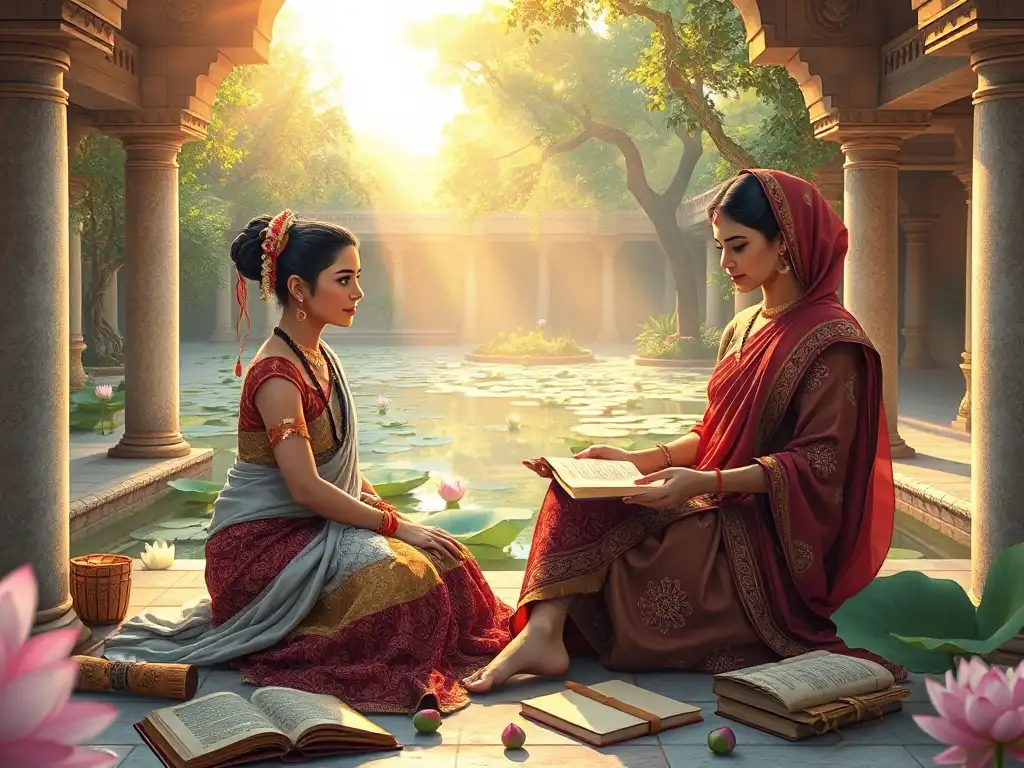
Recognizing the contributions of women in ancient Indian philosophy is crucial for a holistic understanding of the era's intellectual landscape. Feminine voices in ancient India, such as those of Gargi and Maitreyi, not only challenged the patriarchal norms of their time but also provided profound insights into metaphysical and ethical discussions. Their ideas emphasize the need to include diverse perspectives in philosophical discourses, paving the way for a richer and more inclusive understanding of human thought.
Summary of Key Contributions by Gargi and Maitreyi
Gargi and Maitreyi stand as monumental figures in ancient Indian philosophy, each contributing unique insights that resonate even today.
- Gargi Vachaknavi:
- Philosophical Inquiry: Gargi is renowned for her participation in the Brahmayajna, where she posed challenging questions about the nature of the universe and the ultimate reality, often addressing prominent sages including Yajnavalkya.
- The Concept of Brahman: Her famous question regarding the essence of Brahman highlights her deep engagement with metaphysical concepts. Gargi questioned the nature of the ultimate reality, showcasing her critical thinking and philosophical depth.
- Maitreyi:
- Dialogue on the Self: Maitreyi's discourse with Yajnavalkya in the Brihadaranyaka Upanishad reflects her profound understanding of the self. She expressed the idea that true immortality lies in understanding the self beyond material possessions.
- Philosophical Feminism: Maitreyi's assertion that true knowledge transcends wealth underscores an early form of philosophical feminism, advocating for the intrinsic value of wisdom over material wealth.
Both philosophers not only contributed to metaphysical inquiries but also emphasized the importance of women’s insights in philosophical debates, asserting their place in a predominantly male-dominated discourse.
The Continuing Relevance of Feminine Perspectives in Philosophy
The reflections and teachings of Gargi and Maitreyi resonate strongly in contemporary discussions about gender and philosophy. Their contributions underscore several critical aspects:
- Inclusivity in Philosophy: Modern philosophical discourse continues to benefit from the inclusion of diverse voices. By recognizing feminine perspectives in ancient India, we enrich our understanding of philosophical traditions.
- Challenging Norms: The courage displayed by these philosophers in questioning societal norms inspires current and future generations to challenge prevailing ideas and advocate for a more equitable discourse in philosophy.
- Relevance to Modern Issues: Their thoughts on the self, knowledge, and existence remain pertinent as contemporary societies grapple with identity, ethics, and the role of women in philosophy. The core issues they addressed, such as the quest for knowledge and the nature of reality, are still relevant, providing timeless wisdom.
The recognition and study of feminine voices in ancient India, particularly through figures like Gargi and Maitreyi, are essential for fostering a more comprehensive understanding of philosophical traditions. Their legacies invite us to explore the depth of human thought through a more inclusive lens, ensuring that diverse perspectives continue to shape philosophical inquiry.
Further Reading and Resources on Feminine Voices in Ancient India
Recommended Books and Articles
To deepen your understanding of the Feminine Voices in Ancient India, several key texts and articles provide a comprehensive exploration of the contributions of women like Gargi and Maitreyi in ancient Indian philosophy. Here are some noteworthy recommendations:
-
"Women in Ancient India" by Kumkum Roy
This book offers an in-depth analysis of women's roles in various aspects of ancient Indian society, including philosophy. It highlights the philosophical contributions of women and their significance in the broader cultural context.
-
"The Upanishads: A New Translation" by Patrick Olivelle
This translation of the Upanishads includes discussions on both Gargi and Maitreyi, providing insights into their philosophical thoughts and the impact of their voices in a predominantly male discourse.
-
"Gargi: The First Woman Philosopher" by Ananta Kumar Ghosh
An exploration of Gargi's philosophical assertions and her contributions to Vedic thought, this text emphasizes her role as a pioneering figure in ancient Indian philosophy.
-
"Philosophy of the Upanishads" by Swami Prabhupada
A detailed examination of Upanishadic philosophy that also sheds light on the contributions of significant female philosophers within these texts.
-
"Maitreyi: Women and Philosophy in Ancient India" by Sharmila Ghosh
This article focuses specifically on Maitreyi's philosophical dialogues and her contributions to metaphysical discussions in the Upanishads.
These readings not only highlight the significance of women's perspectives in ancient philosophy but also provide context to their philosophical arguments, enriching our understanding of Feminine Voices in Ancient India.
Online Resources for Exploring Ancient Indian Philosophy
In addition to books and articles, various online platforms and databases offer a wealth of information on Feminine Voices in Ancient India. Here are some valuable resources:
-
Internet Archive
A vast repository of texts, including ancient manuscripts and modern interpretations, where you can search for works related to Gargi and Maitreyi.
-
Stanford Encyclopedia of Philosophy
This resource provides scholarly articles on various philosophical topics, including entries on Indian philosophy. Look for discussions related to women philosophers and their contributions.
-
Academia.edu
A platform where researchers share papers and articles. Searching for terms like "Gargi" and "Maitreyi" can yield numerous academic discussions on their philosophical contributions.
-
Google Scholar
An excellent tool for finding scholarly articles, theses, and books. Searching "Feminine Voices in Ancient India" will lead you to critical discussions and analyses of women's roles in Indian philosophy.
-
The Philosophy of India Podcast
A resourceful podcast that delves into various aspects of Indian philosophy, including episodes dedicated to female philosophers and their impact.
These online resources are instrumental for anyone interested in diving deeper into the philosophical landscape of ancient India and understanding the voices that shaped it.
Frequently Asked Questions
What is the significance of Gargi and Maitreyi in ancient Indian philosophy?
Gargi and Maitreyi are pioneering figures who represent feminine voices in ancient Indian philosophy. Their contributions challenge gender norms and highlight women's intellectual capabilities.
How did Gargi contribute to the Vedic discussions?
Gargi is known for her profound questions during Vedic debates, particularly in the Brahadaranyaka Upanishad. Her inquiries demonstrate intellectual rigor and a deep understanding of metaphysical concepts.
What role did Maitreyi play in philosophical discourse?
Maitreyi is celebrated for her dialogue with Yajnavalkya, where she expresses profound insights on self-knowledge and the nature of reality. Her views emphasize the importance of personal experience in understanding the eternal.
How do Gargi and Maitreyi reflect the status of women in ancient India?
Their narratives illustrate that women were not only participants but also leaders in philosophical thought. This reflects a more inclusive aspect of ancient Indian society regarding women's education and intellectual pursuits.
Why is it important to study feminine voices in ancient India?
Studying feminine voices like those of Gargi and Maitreyi enriches our understanding of gender dynamics in history. It highlights the contributions of women to philosophy, thereby promoting a more balanced view of ancient Indian civilization.
Final Reflection: The Enduring Echo of Feminine Voices in Ancient India
The exploration of feminine voices in ancient India, particularly through the profound insights of Gargi and Maitreyi, resonates powerfully in today's discourse on gender and philosophy. Their contributions challenge the historical narrative that often sidelines women's perspectives, reminding us that the quest for knowledge and wisdom is not confined to a single gender. As we navigate contemporary discussions on equality and representation, the voices of these ancient sages serve as a clarion call for inclusivity and recognition in all spheres of life.
The influence of Gargi and Maitreyi extends beyond their time, shaping cultural and social landscapes that continue to evolve. Their philosophical inquiries not only enriched the spiritual fabric of ancient India but also laid the groundwork for future generations to question and redefine societal norms. As we reflect on their legacies, we are reminded of the words of Gargi herself: The one who knows the ultimate truth is the one who truly knows.
This assertion underscores the importance of diverse perspectives in the pursuit of knowledge and the necessity of amplifying voices that have historically been muted.
As we close this exploration, I invite you to reflect on how the lessons from Gargi and Maitreyi can be woven into your own life. Consider how you can champion the voices of women in your community and beyond, fostering an environment where diverse perspectives are not only heard but celebrated. Let their wisdom inspire you to seek out and elevate the feminine narratives that continue to shape our world, ensuring that the echoes of these ancient voices resonate for generations to come.
Unveil the Wisdom of Ancient Feminine Voices
Thank you for exploring the profound insights of Gargi and Maitreyi in ancient Indian philosophy. By reflecting on their contributions, you've taken a significant step toward understanding the richness of feminine perspectives that have shaped our historical narrative. Now, it's time to deepen that awareness and engage more fully!
Here are some **meaningful actions** you can take:
- Join a discussion group focused on ancient philosophy—share your thoughts on how these voices resonate in contemporary society.
- Read more works by female philosophers from various cultures. Broaden your horizons and discover diverse viewpoints that challenge traditional narratives.
- Write a blog post or share on social media about what you learned from Gargi and Maitreyi, encouraging others to recognize these influential figures.
What unique perspectives do you believe modern society can learn from the wisdom of Gargi and Maitreyi? Share your thoughts below!