
The Relevance of Nyaya in Contemporary Philosophical Discussions

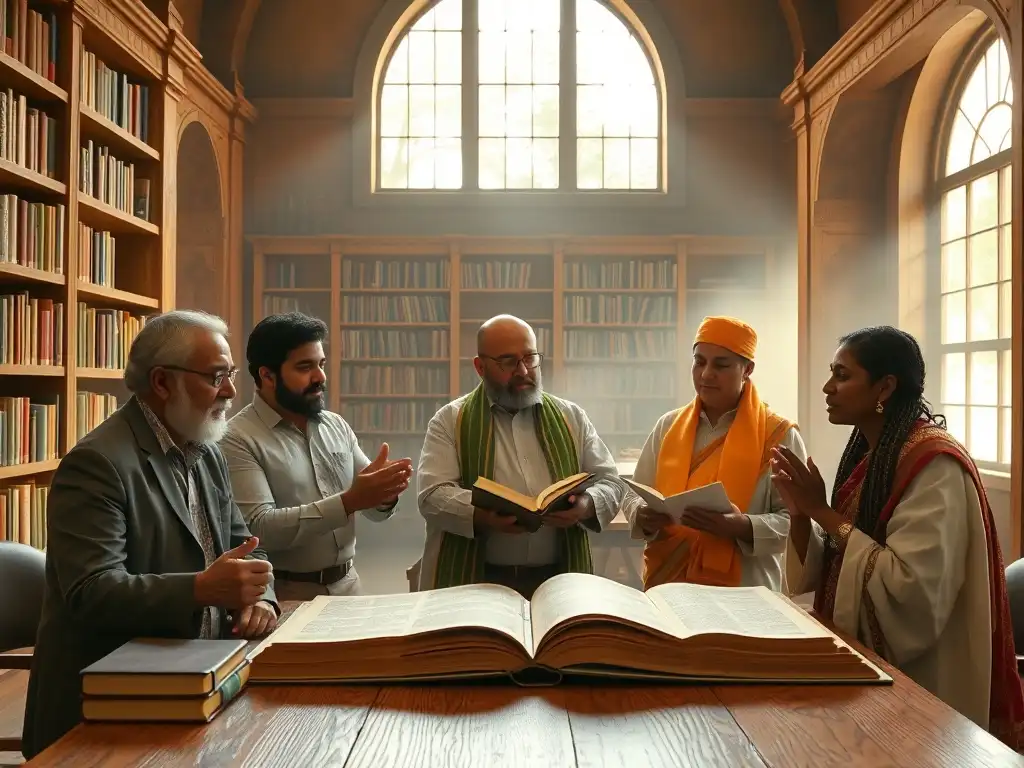
Welcome to Ancient India History, where we embark on a fascinating journey through the rich tapestry of ancient Indian civilizations. From the intricate urban planning of the Indus Valley to the profound insights of the Gupta Empire, our exploration unveils the cultural and intellectual legacy that continues to shape our world today. In this corner of our site, we invite you to delve into our featured article, "The Relevance of Nyaya in Contemporary Philosophical Discussions," which sheds light on how the ancient Nyaya philosophy remains pivotal in modern debates.
Prepare to be intrigued as we connect the wisdom of the past to the questions of the present, inviting you to uncover layers of thought that resonate even now. Your adventure into the depths of philosophy and history begins here!

Exploring the depths of ancient Indian philosophy, particularly the Nyaya school, reveals a wealth of insights that remain profoundly relevant in contemporary philosophical discourse. Nyaya, which translates to "logic" or "justice," is not merely an ancient system of thought but a living tradition that continues to shape discussions around epistemology, logic, and ethics.
As we delve into the intricate layers of Nyaya philosophy, we uncover its applications and implications within modern debates, illuminating how this age-old framework offers valuable perspectives on contemporary issues. This article will unravel the essence of Nyaya philosophy, its historical significance, and its vital contributions to modern philosophical discussions.
Introduction to Nyaya Philosophy
What is Nyaya Philosophy?
Nyaya philosophy is one of the six orthodox schools of Indian philosophy, primarily concerned with the principles of logic and epistemology. It emphasizes the importance of reasoning and debate, advocating for a systematic approach to knowledge acquisition. The Nyaya Sutras, composed by the sage Gautama, serve as the foundational texts, outlining key doctrines regarding perception, inference, and testimony as means of acquiring knowledge. Central to its teachings is the assertion that understanding the nature of reality requires rigorous logical analysis and critical thinking, making it a precursor to many modern philosophical inquiries.
Historical Context of Nyaya in Ancient India
Originating around the 6th century BCE, Nyaya philosophy developed alongside other significant philosophical schools in ancient India, such as Samkhya and Buddhism. The Nyaya scholars engaged in dialogues and debates, refining their arguments and counterarguments to establish a robust framework for understanding reality. This intellectual tradition not only contributed to the philosophical landscape of ancient India but also influenced various fields, including ethics, law, and science. The historical relevance of Nyaya is evident in its methodical approach to problem-solving and its emphasis on empirical evidence, which resonate with contemporary philosophical methodologies.
Nyaya Philosophy in Modern Debate
The Significance of Nyaya in Contemporary Philosophy
In an era marked by complex philosophical dilemmas, the relevance of Nyaya philosophy is increasingly recognized. Its rigorous analytical framework provides tools for dissecting modern debates on topics such as moral relativism, the nature of truth, and the justification of beliefs. As philosophers grapple with questions of ethics in a globalized world, Nyaya’s insistence on logical consistency and empirical verification offers a refreshing perspective that challenges dogmatic thinking. The Nyaya approach underscores the importance of dialogue and critical examination, essential for navigating contemporary philosophical landscapes.
Key Concepts of Nyaya Relevant to Modern Discussions
Nyaya philosophy introduces several key concepts that are pertinent to modern philosophical discussions:
- Pramana (Means of Knowledge): Understanding the valid means through which knowledge is acquired remains a central theme in contemporary epistemology. Nyaya identifies four primary pramanas: perception, inference, analogy, and testimony, all of which can be analyzed within modern contexts, such as scientific inquiry and legal reasoning.
- Nyaya Vada (Theory of Justice): This concept emphasizes the importance of logical argumentation in establishing truth and justice. In modern debates regarding ethics and governance, Nyaya Vada can inform discussions around justice, fairness, and the role of reason in public policy.
- Anumana (Inference): The method of inference as a means of knowledge acquisition is particularly relevant in logical reasoning and critical thinking. In an age dominated by information, understanding how to draw valid conclusions from premises is vital for informed decision-making.
By examining these concepts, we can see how Nyaya philosophy provides a rich framework for engaging with contemporary philosophical challenges, fostering a deeper understanding and appreciation of the complexities inherent in modern debates.
Comparative Analysis of Nyaya and Other Philosophical Schools
The Nyaya philosophy, one of the six orthodox schools of Hindu philosophy, is known for its systematic approach to logic and epistemology. A comparative analysis of Nyaya with other philosophical schools reveals both unique features and commonalities that contribute to its relevance in modern philosophical discussions.
Nyaya emphasizes the importance of reasoning and debate, making it distinct from other Indian philosophies such as Vedanta, which focuses more on metaphysical and spiritual aspects. While Vedanta considers the ultimate reality as Brahman, Nyaya seeks to establish a rigorous framework for understanding knowledge, perception, and inference. This logical foundation allows Nyaya to engage effectively with various philosophical traditions, fostering productive dialogue and exploration of different perspectives.
Moreover, Nyaya shares similarities with Western philosophical traditions, particularly in its commitment to logic and analytical reasoning. The emphasis on valid arguments and the structure of proof in Nyaya can be compared to the works of philosophers like Aristotle, who laid the groundwork for formal logic in the West. This intersection of ideas illustrates how Nyaya can enrich contemporary philosophical discourse by offering alternative methodologies and insights that challenge and complement Western thought.
Nyaya vs. Western Philosophy: A Comparative Perspective
When examining Nyaya philosophy in the context of Western philosophical traditions, several key contrasts and parallels emerge. Nyaya places a significant focus on the process of acquiring knowledge, categorizing sources of knowledge into perception (pratyaksha), inference (anumana), comparison (upamana), and testimony (shabda). This structured approach to epistemology finds resonance in Western thought, especially in the works of empiricists who prioritize sensory experience as the foundation for knowledge.
However, the Western tradition often engages in metaphysical debates that diverge from Nyaya's pragmatic focus on epistemology and logic. While Western philosophers like Descartes and Kant grapple with questions of existence and the nature of reality, Nyaya maintains a more practical orientation, honing in on the mechanisms of reasoning and argumentation. This practical framework provides valuable insights into contemporary discussions on knowledge, truth, and belief.
Ultimately, the comparative study of Nyaya and Western philosophy encourages a greater appreciation for diverse methodologies in philosophical inquiry. By integrating Nyaya's logical rigor with Western epistemological frameworks, modern philosophers can develop a more comprehensive understanding of knowledge and its implications for ethical, metaphysical, and practical issues.
Influences of Nyaya on Other Indian Philosophical Traditions
Nyaya's influence extends beyond its own framework, significantly impacting other Indian philosophical traditions. Schools such as Vaisheshika, Samkhya, and even certain aspects of Buddhism reflect elements of Nyaya thought, particularly in their approaches to logic, epistemology, and ethics.
For instance, the Vaisheshika school, which focuses on categorization of reality and the nature of substances, incorporates Nyaya's logical methodologies to strengthen its arguments. The emphasis on logical inference in Nyaya has also shaped the discourse in Samkhya, particularly in its dualistic approach to the material and spiritual worlds.
Moreover, Nyaya's principles have found resonance in Buddhist epistemology, where the focus on valid cognition aligns with Nyaya's commitment to rigorous reasoning. The interaction between these schools has fostered a rich philosophical environment in ancient India, where ideas were debated, adapted, and transformed.
In contemporary discussions, recognizing these influences can help modern philosophers appreciate the interconnectedness of Indian philosophical traditions. This understanding encourages a holistic view of philosophy, where insights from Nyaya can inform and enhance the study of other schools, enriching the discourse on topics such as ethics, metaphysics, and knowledge.
Application of Nyaya in Contemporary Issues

The principles of Nyaya are not merely historical artifacts; they hold significant relevance in addressing contemporary issues. The rigorous logical frameworks and epistemological insights of Nyaya can provide valuable tools for navigating modern dilemmas in various fields, including ethics and law.
Nyaya Principles in Modern Ethical Debates
In the realm of ethics, Nyaya's commitment to logical reasoning and the analysis of consequences plays a crucial role in contemporary debates. The Nyaya approach emphasizes the importance of understanding the implications of actions and decisions, aligning well with consequentialist theories in modern ethical discussions.
For instance, Nyaya's principle of "purushaartha," which refers to the pursuit of valid goals, encourages a balanced consideration of individual and societal welfare. This perspective can be applied to current ethical dilemmas, such as climate change and social justice, where the consequences of actions must be weighed against moral principles.
By integrating Nyaya's logical rigor into modern ethical frameworks, philosophers and policymakers can develop more nuanced approaches to complex issues. This application not only enriches ethical discussions but also fosters a culture of reasoned debate that is essential for addressing the challenges of our time.
The Role of Nyaya in Legal Philosophy Today
Nyaya also significantly influences contemporary legal philosophy, particularly in the areas of justice and the rule of law. The Nyaya system underscores the importance of evidence, logical reasoning, and fair argumentation in legal proceedings, principles that remain fundamental in modern judicial systems.
In current legal debates, the Nyaya emphasis on valid inference and testimony can enhance discussions around due process and the evaluation of evidence. By applying Nyaya principles, legal scholars can advocate for more rigorous standards of proof and reasoning in courts, ensuring that justice is not only served but is also seen to be served.
Furthermore, the Nyaya view of justice as a balance between rights and responsibilities can inform contemporary discussions on human rights and social justice. This perspective encourages a holistic understanding of justice that transcends mere punitive measures, advocating for a more restorative approach that considers the broader implications of legal decisions.
The application of Nyaya in contemporary issues illustrates its enduring relevance and potential to contribute meaningfully to modern philosophical and practical discussions. By harnessing the insights of Nyaya, we can foster a more reasoned and ethical approach to addressing the complexities of today's world.
Critiques and Support of Nyaya in Modern Philosophy
The Nyaya school of thought, with its rigorous approach to logic and epistemology, has garnered both support and criticism in contemporary philosophical discussions. As scholars and thinkers explore the applicability of ancient philosophies to modern dilemmas, Nyaya stands out for its analytical methods, yet it faces challenges in relevance and interpretation. This section delves into the arguments for and against Nyaya's place in today's philosophical landscape.
Arguments in Favor of Nyaya Philosophy in Contemporary Discourse
Proponents of Nyaya philosophy argue that its principles of logic and reasoning are timeless and applicable to current debates in various fields, such as ethics, law, and cognitive science. Here are some key arguments in support of Nyaya:
- Logical Framework: Nyaya’s systematic approach to logic, particularly its focus on inference (anumana), provides a robust framework for understanding arguments and establishing truth claims. This framework is invaluable in contemporary debates where logical consistency is paramount.
- Epistemological Insights: The Nyaya theory of knowledge emphasizes the importance of pramanas (valid means of knowledge), which aligns well with modern epistemological inquiries. Its categorization of different sources of knowledge, such as perception and testimony, enriches discussions on how we acquire knowledge today.
- Conflict Resolution: Nyaya’s emphasis on debate and dialectical reasoning offers strategies for resolving conflicts and misunderstandings, making it relevant in today's polarized discourse. Its method encourages respectful dialogue and the critical examination of differing viewpoints.
- Influence on Modern Philosophy: Nyaya has influenced various schools of modern philosophy, including those focused on analytical thought. Its concepts continue to inspire contemporary philosophers seeking to blend eastern and western philosophical traditions, creating a dialogue that can enhance pluralistic understanding.
Criticisms of Nyaya's Relevance Today
Despite its strengths, Nyaya philosophy also faces significant critiques regarding its applicability in modern contexts:
- Cultural Context: Critics argue that Nyaya was developed in a specific historical and cultural context that may not resonate with contemporary philosophical issues. The reliance on ancient texts and contexts can limit its relevance in addressing modern challenges.
- Complexity and Accessibility: The intricate nature of Nyaya's logical arguments can be daunting for those not well-versed in Indian philosophy. This complexity may hinder its integration into broader philosophical discussions, making it less accessible to a global audience.
- Neglect of Other Philosophical Schools: The exclusive focus on Nyaya can sometimes overshadow other important philosophical traditions, both from India and worldwide. Critics argue for a more integrative approach that considers multiple perspectives rather than prioritizing one school over others.
Conclusion
The relevance of Nyaya philosophy in contemporary debates is a nuanced topic that reflects the interplay between ancient wisdom and modern thought. While Nyaya provides valuable tools for logical reasoning and epistemological inquiries, its criticisms highlight the need for adaptation and broader integration into current philosophical dialogues.
The Future of Nyaya Philosophy in Philosophical Discussions
Looking ahead, the future of Nyaya philosophy in contemporary discussions may hinge on its ability to evolve and adapt to modern contexts. Scholars and practitioners can explore innovative interpretations that bridge ancient principles with contemporary issues, thereby enriching philosophical discourse. Initiatives that promote intercultural dialogue, workshops, and interdisciplinary studies can further enhance Nyaya's role in modern philosophy.
Final Thoughts on Nyaya's Impact on Modern Thought
Nyaya philosophy holds significant potential to contribute to modern philosophical discussions, especially in areas requiring logical rigor and epistemological clarity. As philosophers continue to engage with its tenets, Nyaya can serve as a vital link between ancient and contemporary thought, fostering a deeper understanding of reasoning and knowledge in an increasingly complex world.
- Introduction to Nyaya Philosophy
- Nyaya Philosophy in Modern Debate
- Comparative Analysis of Nyaya and Other Philosophical Schools
- Application of Nyaya in Contemporary Issues
- Critiques and Support of Nyaya in Modern Philosophy
- Conclusion
Frequently Asked Questions
What is Nyaya philosophy?
Nyaya philosophy is an ancient Indian system of logic and epistemology that emphasizes rational debate and the process of reasoning. It provides tools for evaluating arguments and understanding concepts.
How does Nyaya contribute to modern philosophical debates?
Nyaya is significant in modern discussions as it offers a framework for analyzing arguments and clarifying concepts, which can enhance the quality of dialogues in contemporary philosophy.
What are the key principles of Nyaya?
The key principles of Nyaya include perception, inference, and comparison, which are essential for establishing truth and knowledge. These principles continue to influence modern epistemology.
In what ways is Nyaya relevant to current ethical discussions?
Nyaya's emphasis on reasoning and critical thinking makes it relevant to contemporary ethical debates, where clear argumentation and logical frameworks are crucial for addressing moral dilemmas.
Can Nyaya philosophy be integrated with other philosophical traditions?
Yes, Nyaya can be integrated with various philosophical traditions, including Western philosophy. Its logical tools can complement and enhance discussions across different philosophical domains.
Final Reflection: The Enduring Legacy of Nyaya in Modern Discourse
The relevance of Nyaya philosophy in modern debate is undeniable; it serves as a bridge between ancient wisdom and contemporary thought. In an era where critical thinking and logical reasoning are paramount, the principles of Nyaya offer invaluable insights that resonate with today's philosophical discussions. As we navigate complex societal issues, the clarity and rigor of Nyaya can illuminate our path, reminding us that the pursuit of truth is both timeless and essential.
Cultural and social landscapes are continually shaped by the philosophies we embrace, and Nyaya is no exception. Its emphasis on logical analysis and epistemology has influenced not only Indian philosophy but also global discourse, fostering a deeper understanding of reasoning and argumentation. As philosopher B.K. Matilal once stated, Nyaya is not merely a system of logic; it is a way of life that encourages inquiry and debate.
This ongoing influence underscores the importance of integrating Nyaya's principles into our discussions, allowing us to engage with ideas more thoughtfully and critically.
As we reflect on the lessons of Nyaya, I invite you to consider how these ancient teachings can inform your own life and discussions. Embrace the spirit of inquiry and challenge yourself to engage with differing viewpoints. By doing so, you not only honor the legacy of Nyaya but also contribute to a richer, more nuanced dialogue in our contemporary world. Let us carry forward the torch of critical thinking, ensuring that the wisdom of the past continues to illuminate our future.
Unveil the Power of Nyaya in Your Thinking!
Thank you for diving into the depths of Nyaya and its relevance in today’s philosophical landscape! Through this exploration, you've discovered how this ancient Indian system of logic can enrich your understanding of reasoning and critical thought.
Now, let’s take the next step together! Here’s how you can engage further with the wisdom of Nyaya and apply it in your life:
- Embrace Logic: Start incorporating the principles of Nyaya into your daily reasoning. Consider how you can enhance your decision-making by utilizing logical frameworks and establishing clear definitions.
- Join the Conversation: Share your insights on Nyaya in online communities or initiate a discussion group with friends. Collaborate and challenge one another’s perspectives to deepen your understanding.
- Extend Your Learning: Explore other ancient philosophical systems! Compare and contrast Nyaya with various Western philosophies to see how they intersect or differ—this could lead to unexpected insights.
How do you envision applying the principles of Nyaya to address contemporary societal issues?