
Understanding the Nyaya Method of Debate: Techniques and Strategies

Welcome to Ancient India History, where we embark on a fascinating journey through the rich tapestry of India's past. In this corner of our website, we delve into the profound Nyaya method of debate techniques, a cornerstone of ancient Indian philosophy that shaped intellectual discourse and critical thinking. Discover how these strategies not only influenced philosophical thought but also laid the groundwork for modern debate practices. Prepare to be intrigued as we unravel the intricacies of this remarkable method—your exploration of ancient wisdom begins here!
The Nyaya method of debate is a cornerstone of ancient Indian philosophy, particularly within the Nyaya School of Thought. This systematic approach to reasoning and argumentation emphasizes clarity, precision, and logical consistency, making it a vital tool for scholars and philosophers in their quest for knowledge and truth.
The Nyaya system not only lays out the rules and techniques for effective debate but also encourages critical thinking and analytical skills. By exploring the intricacies of the Nyaya method, we can gain insights into how ancient Indian thinkers approached philosophical discussions and the significance of their contributions to the broader landscape of Indian philosophy.
In this article, we will delve into the various techniques and strategies that define the Nyaya method of debate. We will examine its historical context, key principles, and practical applications, providing a comprehensive understanding of how this ancient practice remains relevant in contemporary discourse. Join us on this intellectual journey as we uncover the profound methodologies that shaped ancient Indian thought and continue to influence modern philosophical debates.
- Introduction to the Nyaya Method of Debate
- Core Principles of the Nyaya Method of Debate
- Techniques of the Nyaya Method of Debate
- Strategies for Effective Participation in Nyaya Debates
- Comparing the Nyaya Method with Other Ancient Debate Techniques
- Conclusion: The Relevance of the Nyaya Method Today
- References for Further Study on the Nyaya Method of Debate
- Frequently Asked Questions
- Final Reflection: Embracing the Wisdom of the Nyaya Method
- Unveil the Secrets of Effective Debate!
Introduction to the Nyaya Method of Debate
The Nyaya method of debate, rooted in ancient Indian philosophy, serves as a systematic approach to reasoning and argumentation. This method emphasizes clarity, rationality, and the pursuit of truth, making it a cornerstone of the Nyaya School of thought. By understanding the techniques and strategies employed in the Nyaya method, one can appreciate its significance in shaping philosophical discourse in ancient India.
Definition of the Nyaya Method
The Nyaya method of debate, known as "Nyaya Prakriya," can be defined as a structured process of reasoning that seeks to establish valid knowledge through logical discourse. This method involves several key components:
- Pramanas (Means of Knowledge): The Nyaya school identifies four primary means of acquiring knowledge: perception, inference, comparison, and testimony. Each of these pramanas plays a vital role in constructing arguments and validating conclusions.
- Pratijna (Assertion): A clear statement of the position or claim being argued.
- Hetu (Reason): The supporting reason or evidence that justifies the assertion.
- Uddharana (Example): An illustration or example that substantiates the argument.
- Nirnaya (Conclusion): The final determination or conclusion reached after the debate.
The Nyaya method is characterized by its rigorous logical structure, which aims to eliminate ambiguity and foster a deeper understanding of philosophical concepts.
Historical Context of Nyaya in Ancient Indian Philosophy
The Nyaya school, one of the six orthodox schools of Indian philosophy, emerged around the 2nd century BCE. Founded by the philosopher Gautama (also known as Akshapada), the Nyaya school sought to address epistemological concerns and refine the process of logical reasoning. The historical context of Nyaya is significant for several reasons:
- Cultural Flourishing: The rise of the Nyaya school coincided with a period of cultural and intellectual flourishing in ancient India, marked by advancements in science, mathematics, and philosophy.
- Intellectual Rivalry: The Nyaya method of debate was often employed in intellectual confrontations with other philosophical schools, such as Buddhism and Jainism. This rivalry spurred the development of sophisticated argumentation techniques, as each school sought to establish its own doctrines and counter opposing views.
- Influence on Later Philosophers: The principles of the Nyaya method influenced subsequent Indian philosophers and scholars, contributing to the rich tapestry of Indian philosophical thought. Notably, thinkers such as Udayana and Vachaspati Mishra incorporated Nyaya techniques into their own works.
Importance of Debate in the Nyaya School
Debate holds a central position within the Nyaya school, serving as both a method of inquiry and a means of validating knowledge. The importance of debate in the Nyaya school can be highlighted in several ways:
- Pursuit of Truth: The Nyaya method emphasizes the importance of rigorous debate as a means of discovering and establishing truth. Through structured argumentation, participants can critically evaluate claims and refine their understanding of complex philosophical issues.
- Clarification of Concepts: Engaging in debate allows for the clarification of key concepts and principles within the Nyaya school. By articulating and defending positions, philosophers can identify ambiguities and misconceptions, leading to refined theories.
- Development of Logical Skills: The Nyaya method trains individuals in logical reasoning, critical thinking, and effective communication. These skills are essential not only for philosophical inquiry but also for navigating everyday challenges.
- Preservation of Knowledge: Debate serves as a mechanism for preserving and transmitting philosophical knowledge across generations. Through dialogues and discussions, the insights of ancient thinkers continue to resonate in contemporary philosophical discourse.
The Nyaya method of debate techniques is a vital aspect of ancient Indian philosophy, reflecting the rigorous intellectual tradition of the Nyaya school. By exploring its definitions, historical context, and significance, one can gain a deeper appreciation for its contributions to the broader landscape of philosophical thought.
Core Principles of the Nyaya Method of Debate

The Nyaya method of debate is rooted in the principles of logical reasoning and critical thinking, which form the foundation of this ancient Indian school of philosophy. At its core, the Nyaya system emphasizes the importance of valid inference and the use of structured arguments to arrive at truth. The following core principles guide the Nyaya method:
- Pramaṇa (Means of Knowledge): This principle underscores the significance of reliable sources of knowledge in forming sound arguments. It includes various means such as perception, inference, comparison, and testimony.
- Tarka (Reasoning): Tarka denotes the process of reasoning through logical analysis and counterarguments. This involves scrutinizing assumptions and premises, ensuring that conclusions drawn are logically sound.
- Vāda (Debate): Vāda refers to the constructive aspect of debate where participants engage in dialogue to reach a mutual understanding or truth. It encourages respectful discourse and the sharing of diverse perspectives.
- Jāti (Categories): Understanding categories is essential in the Nyaya method, as it helps in classifying arguments and determining their validity. This involves discerning the nature of the subject matter and the context of the debate.
These core principles are intertwined, creating a robust framework for engaging in meaningful discourse and promoting intellectual clarity.
The Role of Logic in Nyaya Debate Techniques
Logic plays a pivotal role in the Nyaya method of debate, serving as the backbone of its techniques. The Nyaya philosophers, particularly Gautama, highlighted the necessity of logical structures in formulating arguments. Here are some ways in which logic is integral to Nyaya debate techniques:
- Syllogism: The Nyaya method employs a structured form of syllogism known as anumana, which consists of a major premise, a minor premise, and a conclusion. This logical format ensures that arguments are systematic and coherent.
- Dialectical Engagement: The use of logic in Nyaya debate fosters dialectical engagement, where contrasting viewpoints are examined rigorously. This not only strengthens one's own position but also facilitates a deeper understanding of opposing arguments.
- Error Identification: Logical analysis helps debaters identify flaws in reasoning, such as fallacies or inconsistencies. The Nyaya school provides tools for recognizing these errors, enhancing the overall quality of the debate.
- Clarity of Expression: The emphasis on logical clarity encourages participants to articulate their thoughts more effectively. This is crucial in a debate setting, where precision and clarity can significantly impact the persuasiveness of an argument.
By prioritizing logic, the Nyaya method ensures that debates are not merely contests of opinion but rather constructive exchanges aimed at uncovering truth.
Key Components of the Nyaya Method: Pramaṇa (Means of Knowledge)
The concept of pramaṇa is central to the Nyaya method of debate. It refers to the valid means through which knowledge is acquired and validated. Understanding these components is essential for engaging effectively in the Nyaya debate. The primary means of knowledge include:
- Pratyakṣa (Perception): This is the direct knowledge gained through the five senses. It is the most immediate form of knowledge and serves as the starting point for further reasoning.
- Anumāna (Inference): Inference allows one to deduce conclusions based on available evidence. It is a critical component in constructing arguments, where premises lead to logical conclusions.
- Upamāna (Comparison): This method involves drawing knowledge through analogy or comparison. By relating an unfamiliar concept to a familiar one, debaters can clarify their arguments and enhance understanding.
- Śabda (Testimony): Testimony refers to knowledge derived from credible sources, such as scriptures or authoritative figures. It is essential in debates that require acceptance of established truths beyond direct experience.
These components of pramaṇa not only validate knowledge but also provide a robust framework for building arguments and counterarguments in the Nyaya method of debate.
Understanding the Nyaya Categories: Pratyakṣa, Anumāna, Upamāna, and Śabda
The Nyaya method categorizes its means of knowledge into four distinct types, each contributing uniquely to the process of reasoning and debate. Understanding these categories helps participants navigate the complexities of arguments effectively:
- Pratyakṣa (Perception):
- Definition: Knowledge acquired through direct sensory experience.
- Example: Seeing a tree in a garden confirms its existence.
- Anumāna (Inference):
- Definition: Knowledge derived from logical deduction based on premises.
- Example: Observing smoke leads to the inference of fire.
- Upamāna (Comparison):
- Definition: Knowledge gained by comparing known and unknown entities.
- Example: Understanding a new animal by comparing it to a familiar one.
- Śabda (Testimony):
- Definition: Knowledge accepted through reliable sources or text.
- Example: Accepting historical facts based on documented evidence.
These categories serve as essential tools within the Nyaya method, allowing debaters to construct, analyze, and critique arguments with greater precision. By mastering these categories, individuals can enhance their debate techniques and engage in more profound philosophical inquiries.
Techniques of the Nyaya Method of Debate

Techniques for Constructing Arguments in Nyaya Debates
The Nyaya method of debate emphasizes a systematic approach to constructing arguments that are both logical and persuasive. These techniques are rooted in the principles of the Nyaya school of philosophy, which seeks to establish valid knowledge and truth through rigorous reasoning. Key techniques for constructing arguments in Nyaya debates include:
- Pramanas (Means of Knowledge):
- Nyaya identifies four primary pramanas: perception (pratyaksha), inference (anumana), comparison (upamana), and testimony (shabda). Each of these serves as a foundation for constructing arguments, allowing debaters to present logically sound premises.
- For instance, using inference, a debater might argue that if smoke is present, fire must exist, provided that the relationship between smoke and fire is established as a valid inference.
- Syllogistic Structure:
- A typical argument in Nyaya follows a syllogistic format, consisting of a major premise, a minor premise, and a conclusion. This structure aids in clarity and logical flow.
- Example:
- Major Premise: All humans are mortal.
- Minor Premise: Socrates is a human.
- Conclusion: Therefore, Socrates is mortal.
- Classification of Arguments:
- Arguments are categorized into types such as direct, indirect, and counterarguments. This classification helps debaters understand the most effective approach to presenting their case.
- Direct arguments present evidence straightforwardly, while indirect arguments may involve addressing counterarguments first to strengthen the main argument.
- Use of Definitions:
- Precise definitions are essential in Nyaya debates. Clearly defining key terms prevents misunderstandings and ensures that all parties are on the same page regarding the topic being discussed.
Techniques for Refuting Opponent's Arguments
Refutation is a critical aspect of the Nyaya method of debate, as it allows debaters to dismantle opposing views effectively. Several techniques are employed to achieve this:
- Identifying Fallacies:
- Recognizing logical fallacies in an opponent's argument is vital. Common fallacies include ad hominem, straw man, and appeal to ignorance. Pointing these out can undermine the validity of the opponent’s position.
- For example, if an opponent attacks the character of the person making the argument instead of the argument itself, this would be classified as an ad hominem fallacy.
- Counterexamples:
- Providing counterexamples is an effective strategy to challenge generalizations made by opponents. By demonstrating specific instances where the opponent's argument fails, a debater can weaken their stance.
- Example: If an opponent claims that all swans are white, presenting a black swan serves as a valid counterexample.
- Refuting Premises:
- A key technique is to directly refute one or more premises of the opponent's argument. If the premises are shown to be false or questionable, the conclusion becomes less credible.
- For instance, if an opponent argues that a certain action is justified based on a faulty premise, demonstrating the inaccuracy of that premise effectively refutes their argument.
- Reconstructing the Argument:
- Another technique involves reconstructing the opponent's argument to highlight its weaknesses. By reformulating their argument in a more explicit form, debaters can expose flaws that were not initially apparent.
Use of Examples and Analogies in Nyaya Debates
The use of examples and analogies is a powerful technique in the Nyaya method of debate, as they serve to clarify complex ideas and make arguments more relatable.
- Illustrative Examples:
- Concrete examples help to ground abstract concepts in reality. For instance, when discussing ethics, a debater might reference historical figures or events that exemplify moral dilemmas, making the discussion more tangible.
- Example: Citing the case of a well-known leader who faced moral choices can illustrate the complexities of ethical decision-making.
- Analogical Reasoning:
- Analogies draw comparisons between two different situations to highlight similarities in reasoning. This technique can be particularly effective in persuading an audience by linking unfamiliar concepts to familiar ones.
- For example, comparing a government’s decision-making process to that of a family’s financial planning can elucidate the principles of resource allocation and responsibility.
- Illustration of Principles:
- By employing examples that align with the six categories of Nyaya (such as pratyaksha and anumana), debaters can illustrate principles effectively. This not only aids in comprehension but also strengthens the argument’s persuasiveness.
- An analogy like, “Just as a doctor diagnoses a patient based on symptoms and tests, a philosopher uses pramanas to diagnose truth,” can bridge the gap between abstract philosophical concepts and everyday reasoning.
- Engaging the Audience:
- Utilizing relatable examples and analogies also enhances audience engagement. When debaters present arguments that resonate with the audience's experiences, they are more likely to be persuaded by the argument's validity.
The Nyaya method of debate employs a variety of techniques for constructing arguments, refuting opponents, and utilizing examples and analogies. Mastering these techniques can significantly enhance the effectiveness of a debater in any philosophical discourse.
Strategies for Effective Participation in Nyaya Debates
Preparing for a Nyaya Debate: Research and Knowledge Gathering
To excel in the Nyaya method of debate, thorough preparation is essential. This involves extensive research and a deep understanding of the subject matter. Here are some key steps to ensure effective preparation:
- Familiarize Yourself with Nyaya Texts: Understanding foundational texts, such as the Nyaya Sutras by Gautama, is crucial. These texts outline the principles and methodologies of the Nyaya school of thought.
- Study Relevant Philosophical Concepts: Grasp the key concepts that underpin Nyaya philosophy, including:
- Pramana (means of knowledge): Knowledge can be acquired through perception, inference, comparison, and testimony.
- Anumana (inference): The process of drawing conclusions based on premises.
- Pratyaksha (perception): Firsthand experience as a basis for knowledge.
- Gather Evidence and Examples: Collect data, historical examples, or case studies that bolster your arguments. This evidence serves to illustrate your points and enhance your credibility.
- Understand Opposing Views: Anticipate counterarguments by researching alternative perspectives. This knowledge allows you to address opposing viewpoints effectively during the debate.
- Practice Articulation: Engage in mock debates to refine your delivery. Practice articulating your arguments clearly and confidently, ensuring that your points are concise and compelling.
The Importance of Clarity and Precision in Argumentation
In the Nyaya method of debate, clarity and precision are paramount. The effectiveness of your argument hinges on how well you convey your ideas. Here are several strategies to enhance clarity and precision:
- Define Terms Clearly: Begin by establishing definitions for key terms. This ensures that all participants share a common understanding, which helps prevent misinterpretations.
- Structure Your Arguments Logically: Use a clear structure, such as:
- Thesis Statement: Present your main argument succinctly.
- Supporting Evidence: Provide data or examples that reinforce your thesis.
- Counterarguments: Acknowledge and refute opposing views to strengthen your position.
- Use Simple Language: Avoid jargon or overly complex vocabulary. Aim for simplicity to ensure that your message is accessible to all participants.
- Employ Visual Aids: When possible, utilize tables or diagrams to represent complex ideas visually. This can help clarify your points and make them more impactful.
- Summarize Key Points: Throughout the debate, periodically summarize your key arguments to reinforce them in the minds of your audience and opponents.
Techniques for Engaging with Opponents Respectfully
Respectful engagement is a cornerstone of the Nyaya method of debate. It fosters a constructive environment where ideas can be exchanged freely. Here are techniques to maintain respect during debates:
- Listen Actively: Pay close attention to your opponent's arguments. Active listening demonstrates respect and allows you to respond thoughtfully.
- Acknowledge Valid Points: If your opponent makes a strong argument, acknowledge it. This shows that you are open-minded and willing to consider different perspectives.
- Avoid Personal Attacks: Focus on the argument, not the individual. Personal attacks can derail the debate and create animosity.
- Use Polite Language: Maintain a courteous tone throughout the debate. Polite language fosters a respectful atmosphere and encourages productive dialogue.
- Find Common Ground: Look for shared beliefs or values. Highlighting common ground can help bridge gaps and promote understanding.
By employing these strategies and techniques, participants can engage effectively in Nyaya debates, contributing to a rich and respectful discourse that honors the traditions of this ancient philosophical school.
Comparing the Nyaya Method with Other Ancient Debate Techniques
Nyaya vs. Buddhist Debate Techniques
The Nyaya method of debate, rooted in the Nyaya School of Thought, emphasizes logic, reasoning, and systematic analysis. In contrast, Buddhist debate techniques, particularly those found in the Tibetan tradition, focus on dialectical methods aimed at revealing the nature of reality through questioning and refutation. Here are some key distinctions and similarities:
- Objectives:
- Nyaya: Aims to establish truth through logical inference and syllogisms. The primary objective is to arrive at valid conclusions based on sound arguments.
- Buddhist Debate: Aims to cultivate wisdom and understanding of emptiness and dependent origination. The focus is less on winning an argument and more on fostering insight into the nature of existence.
- Methodology:
- Nyaya:
- Involves structured syllogisms (e.g., "Pratijna" - assertion, "Hetu" - reason, "Udaharana" - example, "Upanaya" - application, "Nigamana" - conclusion).
- Relies heavily on logical categories and classifications.
- Buddhist Debate:
- Utilizes a more fluid and dynamic process of questioning and counter-questioning.
- Engages in "tshad ma" (valid cognition) to evaluate the soundness of arguments.
- Nyaya:
- Engagement Style:
- Nyaya: Often more formal, with defined roles for debaters and a structured environment.
- Buddhist Debate: Typically more informal, allowing for spontaneous exchanges and rapid-fire questioning.
Nyaya and Its Influence on Other Indian Philosophical Schools
The Nyaya method has significantly influenced various Indian philosophical schools, particularly in how debate and reasoning are employed. Its impact can be observed in:
- Mimamsa: This school borrows from Nyaya's rigorous logical methods to interpret Vedic texts. The emphasis on sound reasoning within Mimamsa reflects Nyaya's influence in developing arguments based on textual authority and interpretation.
- Vedanta: Nyaya's logical techniques are also evident in Vedanta, where debates often revolve around the interpretation of scripture and the nature of reality. The use of Nyaya's tools helps Vedanta philosophers articulate their views on Brahman and the nature of the self.
- Buddhist Philosophy: While differing in objectives and methods, Buddhist scholars employed Nyaya's logical structures to counter arguments presented by Nyaya philosophers. This engagement led to a rich dialectical tradition that strengthened both schools.
- Jain Philosophy: Jain texts also reflect the influence of Nyaya methodology, particularly in the context of establishing the validity of perception and inference. The Jain emphasis on non-absolutism and multiple viewpoints is often articulated through Nyaya's logical frameworks.
Similarities and Differences with Western Debate Techniques
When comparing the Nyaya method of debate techniques with Western debate practices, several similarities and differences emerge:
- Similarities:
- Structured Argumentation: Both Nyaya and Western debate techniques emphasize the importance of structured arguments. The use of premises leading to conclusions is a common feature in both traditions.
- Critical Thinking: Both methods encourage critical thinking and the evaluation of evidence, promoting a systematic approach to arriving at conclusions.
- Differences:
- Cultural Context: Nyaya is deeply embedded in the Indian philosophical context, addressing metaphysical issues pertinent to its traditions. Western debate techniques, particularly in the Aristotelian tradition, often focus more on rhetorical skills and persuasion.
- Nature of Truth: In Nyaya, the pursuit of truth is often seen as objective and universal, whereas in some Western traditions, the emphasis may be on subjective interpretation and persuasive argumentation.
- Techniques:
- Nyaya: Employs formal syllogisms and logical categories.
- Western: Utilizes various styles, including formal debate, parliamentary formats, and Lincoln-Douglas debates, which may focus on values and ethical considerations.
While the Nyaya method of debate techniques shares some common ground with other debate traditions, its unique characteristics and historical influences set it apart, enriching the tapestry of philosophical discourse in ancient and contemporary contexts.
Conclusion: The Relevance of the Nyaya Method Today
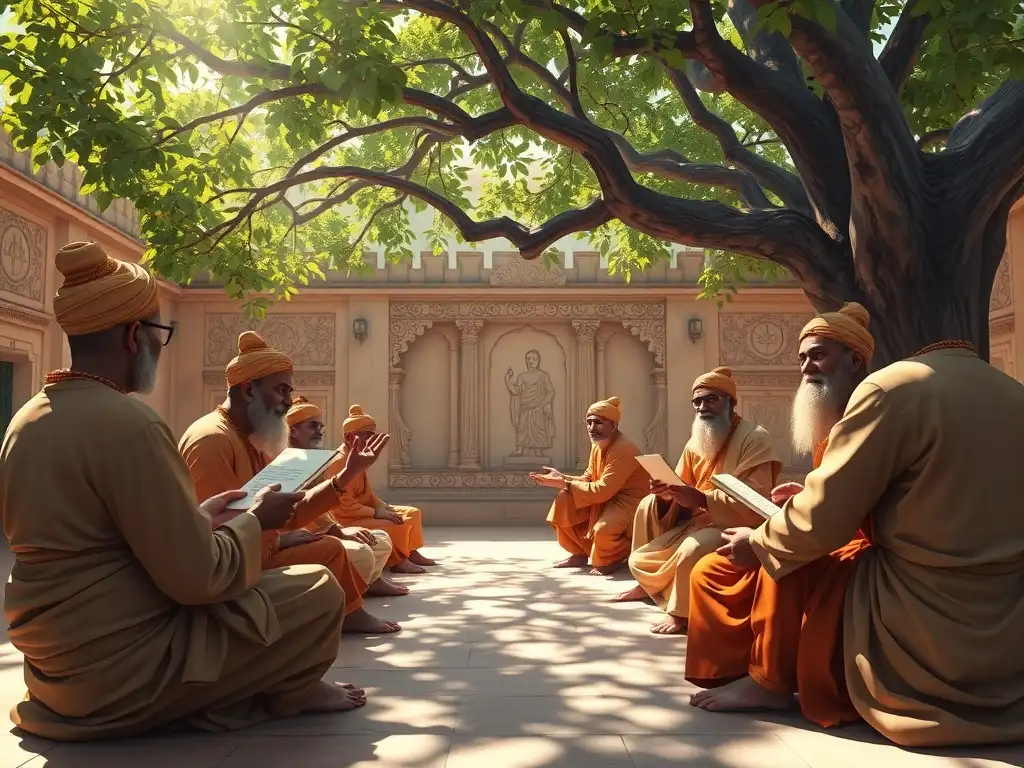
The Nyaya method of debate, originating from ancient Indian philosophy, remains a significant framework for logical reasoning and discourse. Its principles not only shaped the intellectual landscape of ancient India but also continue to influence contemporary thought. Understanding the relevance of the Nyaya method today allows us to appreciate its contributions to rational discourse and critical thinking.
Modern Applications of Nyaya Debate Techniques
The techniques of the Nyaya method find their place in various fields today, including law, education, and conflict resolution. Here are some modern applications of these techniques:
-
Legal Reasoning
The Nyaya method emphasizes clarity in argumentation and the importance of evidence, which are essential in legal contexts. Lawyers often use principles derived from Nyaya to construct logical arguments, ensuring that their reasoning is sound and well-supported.
-
Educational Methods
In contemporary educational settings, Nyaya techniques can be utilized to promote critical thinking and analytical skills among students. By encouraging structured debates and logical reasoning exercises, educators can help students develop the ability to assess arguments critically.
-
Conflict Resolution
The principles of Nyaya can aid in mediating disputes by fostering a rational dialogue between conflicting parties. By focusing on evidence and logical reasoning, mediators can guide discussions toward constructive resolutions.
-
Philosophical Discourse
Modern philosophers often engage with Nyaya techniques to analyze complex arguments about epistemology and metaphysics. The rigor of Nyaya debate methods encourages a deeper exploration of philosophical issues, enriching contemporary discourse.
These applications illustrate how the Nyaya method transcends its historical context, providing valuable tools for reasoning and debate in various modern settings.
The Legacy of the Nyaya School in Contemporary Philosophy
The legacy of the Nyaya school extends beyond its immediate contributions to logic and debate techniques. Its influence can be observed in several key areas of contemporary philosophy:
-
Logical Frameworks
Nyaya's emphasis on logic and epistemology has permeated various philosophical traditions. Concepts such as the four pramanas (means of knowledge) established by Nyaya continue to inform discussions on knowledge acquisition and validation in modern philosophy.
-
Integration with Other Philosophical Schools
The Nyaya school has interacted with various other Indian philosophical traditions, such as Vedanta and Buddhism. This cross-pollination of ideas has led to a rich philosophical tapestry that continues to inspire scholars and thinkers today.
-
Influence on Western Thought
Some scholars argue that the principles of logical reasoning developed by the Nyaya school have parallels in Western philosophical traditions. The focus on argument structure and evidence-based reasoning resonates with contemporary Western logic and critical theory.
-
Continued Relevance in Global Discourse
The principles of the Nyaya method are increasingly recognized in global philosophical discussions, particularly in debates surrounding ethics, epistemology, and the philosophy of science. As the world becomes more interconnected, the insights of the Nyaya school contribute to a broader understanding of logical reasoning across cultures.
The Nyaya method of debate techniques is not merely an ancient relic but a dynamic framework that continues to shape modern thought. Its legacy in contemporary philosophy emphasizes the importance of logical reasoning and critical engagement, making it a vital component of intellectual discourse today.
References for Further Study on the Nyaya Method of Debate
Recommended Texts on Nyaya Philosophy
To gain a deeper understanding of the Nyaya method of debate techniques, several foundational texts are essential for both scholars and enthusiasts. Here are some key works that provide insights into Nyaya philosophy and its debating practices:
-
Nyaya Sutras by Gautama (Gotama)
This ancient text is the cornerstone of Nyaya philosophy. It outlines the principles of logic and reasoning that form the basis of the Nyaya method of debate. The sutras are concise aphorisms that require careful interpretation and commentary.
-
Bhashya on Nyaya Sutras by Vatsyayana
Vatsyayana’s commentary on the Nyaya Sutras elaborates on Gautama's teachings, making them more accessible. This work is crucial for understanding the application of the Nyaya method in practical debates.
-
Tattva Chintamani by Gangesha Upadhyaya
This comprehensive text synthesizes various philosophical ideas, including Nyaya, and discusses the techniques of logical reasoning and debate in-depth. It serves as a bridge between Nyaya and other philosophical schools.
-
Pramanavarttika by Dharmakirti
Although primarily a work on epistemology, it explores the nature of knowledge and perception, which is crucial for understanding the Nyaya method of debate. It addresses the validity of arguments and counterarguments.
-
The Nyaya Philosophy: A Critical Analysis
This modern analysis provides a contemporary perspective on the Nyaya method. It critiques traditional views and explores the relevance of Nyaya techniques in modern philosophical discourse.
Online Resources for Learning about the Nyaya Method
For those seeking to expand their knowledge of the Nyaya method of debate techniques through online platforms, a variety of resources are available:
-
Online Courses
Platforms like Coursera and edX often feature courses on Indian philosophy, including modules focusing on Nyaya. These courses provide structured learning and expert-led discussions.
-
Academic Journals
Journals such as the Journal of Indian Philosophy and Philosophy East and West frequently publish articles on Nyaya philosophy. Accessing these journals can provide insights into current research and debates in the field.
-
YouTube Lectures
Many universities upload free lectures on philosophy, where professors discuss the Nyaya method and its implications. Channels dedicated to Indian philosophy can be particularly informative.
-
Podcasts
Look for podcasts focused on Indian philosophy or critical thinking. Episodes discussing the Nyaya method and its debate techniques can offer engaging perspectives and insights from various thinkers.
-
Virtual Libraries
Websites like the Internet Archive or Google Books provide access to digitized versions of classical texts and modern analyses on Nyaya. These resources can serve as a valuable reference for in-depth study.
By utilizing these texts and online resources, you can enhance your understanding of the Nyaya method of debate techniques, exploring its historical context, intellectual rigor, and lasting influence on philosophical discourse.
Frequently Asked Questions
What is the Nyaya method of debate?
The Nyaya method of debate is a classical Indian approach to logical reasoning and argumentation that emphasizes structured dialogue and the use of specific techniques to arrive at truth.
What are the key techniques of the Nyaya method?
Key techniques include definition, classification, and the use of pramanas (means of knowledge) to support arguments, ensuring that discussions are based on logical coherence and evidence.
How does the Nyaya method differ from other debate techniques?
Unlike some debate styles that focus on persuasion, the Nyaya method prioritizes truth-seeking through rational discourse, aiming to resolve disputes through logical analysis rather than emotional appeals.
Can the Nyaya method be applied in modern debates?
Yes, the Nyaya method can be effectively applied in modern contexts, providing a framework for critical thinking, structured arguments, and objective evaluation of competing claims.
What is the historical significance of the Nyaya method?
The Nyaya method has profoundly influenced Indian philosophy and legal systems, contributing to the development of rational thought and scientific inquiry in ancient Indian civilization.
Final Reflection: Embracing the Wisdom of the Nyaya Method
The Nyaya method of debate techniques remains profoundly relevant in today's world, where the art of discourse is often overshadowed by polarization and misinformation. In a time when constructive dialogue is essential for societal progress, understanding and applying the principles of the Nyaya method can empower individuals to engage in meaningful conversations, fostering clarity and mutual respect. This ancient framework not only enhances our debating skills but also cultivates a deeper appreciation for the nuances of argumentation.
The influence of the Nyaya method extends beyond academic circles, permeating our cultural and social landscapes. As we navigate complex discussions in our personal and professional lives, the techniques derived from this method encourage us to approach disagreements with a spirit of inquiry rather than hostility. The essence of debate is not to win but to reach the truth.
This perspective invites us to embrace dialogue as a pathway to understanding, reminding us that every conversation is an opportunity for growth and learning.
As you reflect on the insights shared in this article, I encourage you to incorporate the Nyaya method's techniques into your daily interactions. Consider how you can foster a culture of respectful debate in your own life, whether in casual conversations or formal discussions. By doing so, you not only enhance your own skills but also contribute to a more thoughtful and open-minded society. Let us commit to engaging with one another in ways that honor the pursuit of truth and understanding, ensuring that the legacy of the Nyaya method continues to thrive in our modern discourse.
Unveil the Secrets of Effective Debate!
Thank you for diving into the nuances of the Nyaya Method of Debate with us! By exploring its techniques and strategies, you’ve unlocked valuable insights that can enhance your critical thinking and discussion skills. Now, let's put this knowledge into action!
- Practice the Nyaya techniques you’ve learned by engaging in a debate with a friend or family member. Start with a topic that interests you both!
- Share your newfound knowledge on social media or in group discussions to inspire others to explore the art of debate.
- Join online forums or communities centered around debate and philosophy to connect with like-minded individuals and continue your learning journey.
What debate topic are you excited to explore next using the Nyaya Method? Share your thoughts with us in the comments!