
The Evolution of Nyaya Thought Through the Ages


Welcome to Ancient India History, where we embark on a fascinating journey through the intricate tapestry of India's past. In this exploration, we delve into the Evolution of Nyaya Philosophy, a profound intellectual tradition that has shaped the very foundations of Indian thought. Have you ever wondered how ancient debates on logic and epistemology continue to influence contemporary philosophy? Join us as we unravel the layers of wisdom, challenge perceptions, and ignite your curiosity about the philosophical legacy that emerged from the vibrant civilizations of ancient India. Let’s dive deeper into this captivating narrative!
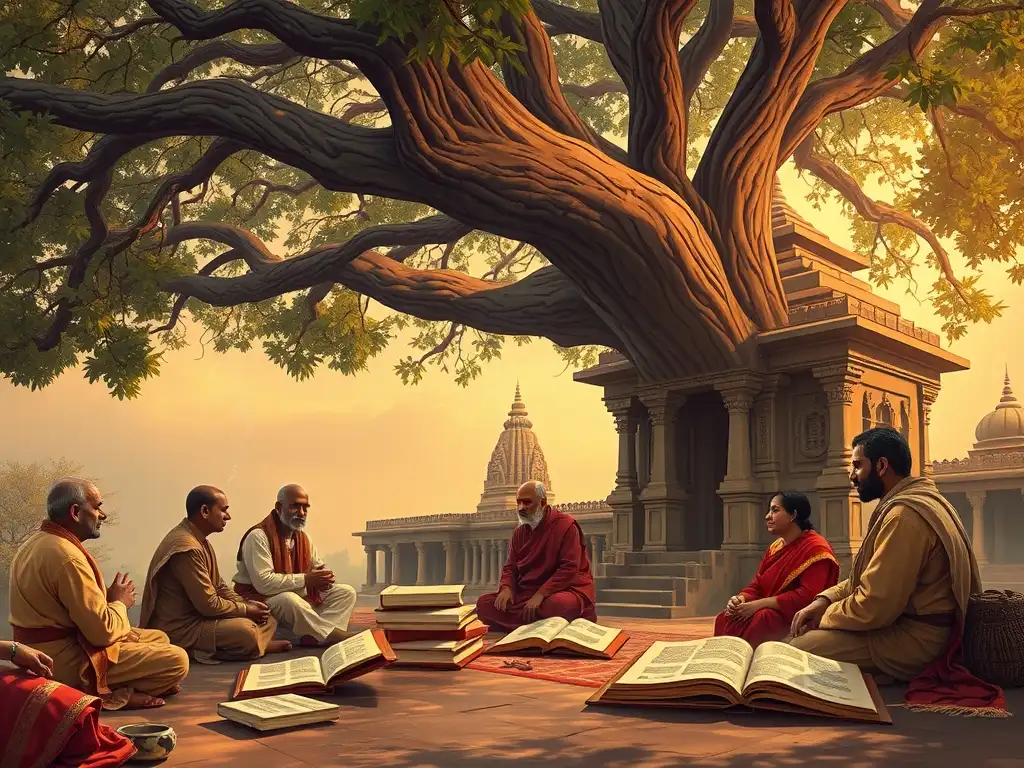
Introduction to Nyaya Philosophy
Nyaya philosophy, one of the six orthodox schools of Indian philosophy, offers profound insights into logic, epistemology, and metaphysics. Originating from ancient India, the Evolution of Nyaya philosophy reveals a rich tapestry of intellectual discourse that has shaped Indian thought for centuries.
This philosophical system emphasizes the importance of rational inquiry and the systematic analysis of knowledge, establishing a framework for understanding the nature of reality and the processes of cognition. As we explore the evolution of Nyaya thought through the ages, we will uncover the foundational principles that have influenced various aspects of Indian philosophy, jurisprudence, and even modern scientific reasoning.
Understanding the Essence of Nyaya
Nyaya, which translates to "rule" or "method," is not merely a philosophy but a comprehensive system of thought that engages with questions of perception, inference, and argumentation. Central to its discourse are the four means of obtaining knowledge (pramāṇas):
- Perception (Pratyakṣa): Direct sensory experience.
- Inference (Anumāna): Logical deduction based on premises.
- Comparison (Upamāna): Knowledge derived through analogy.
- Testimony (Śabda): Reliance on verbal communication and authoritative sources.
These pramāṇas form the backbone of Nyaya reasoning, allowing practitioners to evaluate truth claims critically and systematically.
Historical Context of Nyaya Thought
The historical backdrop of Nyaya philosophy is pivotal to understanding its evolution. Emerging in a milieu rich with cultural, spiritual, and intellectual exchanges, Nyaya philosophy was significantly influenced by the socio-political dynamics of ancient India. During the 6th century BCE, various schools of thought began to flourish, including Buddhism and Jainism, which provided both a backdrop and a counterpoint for Nyaya's development. The interplay between these philosophies not only enriched Nyaya thought but also spurred debates that shaped its principles and methodologies.
Origins of Nyaya Philosophy
The Early Foundations of Nyaya (6th Century BCE)
The inception of Nyaya philosophy is attributed to Gautama (or Akṣapāda), whose seminal work, the Nyaya Sūtras, laid the groundwork for systematic inquiry and logical reasoning. Composed in the 6th century BCE, these texts articulate the principles of Nyaya through concise aphorisms, addressing the nature of knowledge, the mechanisms of reasoning, and the criteria for valid arguments. This early foundation set the stage for subsequent philosophical developments and established Nyaya as a critical player in the intellectual landscape of ancient India.
Key Figures in the Development of Nyaya
Throughout its evolution, Nyaya philosophy has been shaped by several prominent thinkers, each contributing to its rich legacy. Some of the key figures include:
- Gautama (Akṣapāda): The progenitor of Nyaya thought, whose Nyaya Sūtras remain foundational.
- Vatsyayana: A notable commentator whose work elucidated and expanded upon Gautama’s teachings.
- Udayana: A philosopher who integrated Nyaya with other philosophical systems, enhancing its relevance.
- Jayanta Bhatta: An influential thinker who addressed critiques from rival schools, further refining Nyaya's arguments.
These philosophers not only preserved Nyaya's teachings but also engaged in dialogues with other schools, ensuring its adaptability and continued relevance in the philosophical landscape of India.
The Classical Period of Nyaya Thought

The Classical Period of Nyaya Thought, typically regarded as spanning from the 2nd century BCE to the 8th century CE, marks a significant phase in the development of Indian philosophy. This era is characterized by the formulation of systematic concepts of logic, epistemology, and metaphysics that laid the groundwork for subsequent philosophical discourse in India. The Nyaya school, founded by the sage Gautama, became a dominant force in philosophical discussions, emphasizing critical reasoning and debate.
During this time, the Nyaya Sutras were composed, establishing a comprehensive framework for understanding knowledge, perception, inference, and verbal testimony. The focus on rigorous argumentation and clarity of thought made Nyaya an essential tool for engaging with other philosophical systems, thereby influencing a wide array of intellectual traditions within ancient India.
The Influence of Gautama's Nyaya Sutras
Gautama’s Nyaya Sutras are foundational texts for the Nyaya school, encapsulating its core principles and methodologies. Composed in a succinct aphoristic style, these sutras outline various means of acquiring valid knowledge, including pratyaksha (perception), anumana (inference), upamana (comparison), and shabda (testimony).
The influence of these sutras extended beyond the Nyaya school itself, as they provided a structured approach to reasoning that resonated with other philosophical traditions. The emphasis on logical analysis and the systematic classification of knowledge forms the basis for epistemological discussions in Indian philosophy, shaping debates in schools such as Mimamsa and Vedanta. Gautama's work laid the groundwork for future commentators to explore and expand the principles of Nyaya.
Evolution of Logic and Epistemology in Nyaya
The evolution of logic and epistemology within the Nyaya school reflects a dynamic interplay of ideas and methodologies. Early Nyaya thinkers focused primarily on establishing criteria for valid reasoning and distinguishing between different types of knowledge. Over time, the exploration of inference became more sophisticated, leading to detailed classifications of syllogisms and logical fallacies.
This progression is evident in the works of later philosophers, who expanded upon Gautama's foundational concepts. They introduced rigorous analyses of perception and inference, emphasizing the importance of context and conditions under which knowledge claims can be validated. Such advancements played a crucial role in the philosophical landscape of ancient India, as they encouraged critical examination and discourse among competing schools of thought.
Major Commentators and Their Contributions
The Classical Period of Nyaya Thought saw the emergence of several prominent commentators who significantly contributed to the development of the philosophy. Among them, figures like Vatsyayana, Uddyotakara, and Jayanta Bhatta are particularly noteworthy.
- Vatsyayana: His commentary on the Nyaya Sutras, known as the Nyaya Bhashya, provided extensive explanations and interpretations of the original texts. He clarified complex concepts and addressed potential objections, thus enriching the understanding of Nyaya philosophy.
- Uddyotakara: He is credited with further refining Nyaya logic, particularly through his work, the Nyaya Varttika. Uddyotakara's emphasis on the importance of the context in logical reasoning was groundbreaking, influencing subsequent thinkers.
- Jayanta Bhatta: His contributions included the Nyayamanjari, where he integrated Nyaya principles with metaphysical inquiries, showcasing the versatility and adaptability of Nyaya thought in addressing broader philosophical questions.
These commentators not only preserved the teachings of Gautama but also expanded and enriched the Nyaya tradition, ensuring its continued relevance in philosophical discourse.
The Integration of Nyaya with Other Philosophical Schools
The integration of Nyaya with other philosophical schools highlights its significance and adaptability in the broader context of Indian philosophy. Throughout its evolution, Nyaya engaged in productive dialogues with various other traditions, leading to a rich exchange of ideas and concepts.
Nyaya and Its Relationship with Mimamsa
The relationship between Nyaya and Mimamsa is particularly noteworthy, as both schools emphasize the importance of logical reasoning and epistemology. While Nyaya focuses on the means of acquiring knowledge, Mimamsa is primarily concerned with the interpretation of Vedic texts and the principles of ritual action.
This complementary relationship allowed for a mutual exchange of ideas, particularly regarding epistemological issues. Nyaya's rigorous approach to logic influenced Mimamsa's interpretative methodologies, while Mimamsa's focus on textual authority enriched Nyaya's discussions on testimony and knowledge acquisition. Together, these schools contributed significantly to the philosophical landscape of ancient India, fostering a spirit of inquiry and debate.
Interactions between Nyaya and Buddhism
Nyaya's interactions with Buddhism were marked by both conflict and collaboration, as each tradition sought to address similar philosophical questions regarding the nature of reality, perception, and knowledge. Buddhist philosophers, particularly those from the Madhyamaka and Yogacara schools, challenged Nyaya's theories of perception and inference, pushing Nyaya thinkers to refine their arguments.
The debates between Nyaya and Buddhist scholars often revolved around the validity of perception as a means of knowledge. Nyaya proponents defended the reliability of sensory experience, while Buddhist philosophers questioned the inherent nature of perception itself. These interactions not only sharpened the philosophical inquiries of both schools but also led to a deeper understanding of epistemological concepts in ancient Indian thought.
The Impact of Nyaya on Advaita Vedanta
The influence of Nyaya on Advaita Vedanta, a non-dualistic school of thought, is another significant aspect of its integration with other philosophical traditions. Advaita Vedanta, founded by Adi Shankaracharya, drew upon Nyaya's logical frameworks to articulate its metaphysical claims and defend its positions against rival schools.
Nyaya's emphasis on logical reasoning and epistemological rigor provided Advaita Vedanta with the tools necessary to argue for the illusory nature of the material world (Maya) and the ultimate reality of the self (Atman) as identical to Brahman. The interplay between these schools enriched philosophical discussions and fostered a nuanced understanding of reality, knowledge, and liberation, showcasing the enduring impact of Nyaya thought throughout the ages.
The Medieval Period: The Flourishing of Nyaya Philosophy
The Medieval Period marked a significant era for the evolution of Nyaya philosophy, showcasing a rich intellectual environment that allowed for the expansion and refinement of its doctrines. During this time, Nyaya not only consolidated its foundational principles but also engaged in extensive interactions with other philosophical schools, such as Buddhism and Jainism. This intellectual cross-pollination led to the development of more sophisticated arguments and the integration of diverse perspectives, thus deepening the understanding of logic, epistemology, and metaphysics within the Nyaya framework.
One of the hallmarks of this period was the establishment of Nyaya as a central pillar in Indian philosophical discourse. It became increasingly relevant in discussions about epistemology and the nature of knowledge, emphasizing the importance of pramanas (means of knowledge) and the role of inference and perception. The systematic approach to logic and reasoning that emerged during this time laid the groundwork for future philosophical inquiry.
Key Developments in Nyaya during the Medieval Era
Several key developments characterized the evolution of Nyaya philosophy during the Medieval Period:
- Systematization of Logic: Nyaya scholars focused on refining the principles of logic and reasoning, categorizing different types of valid inference and argumentation. This led to a more structured understanding of logical fallacies and their avoidance.
- Integration with Other Philosophical Schools: The engagement of Nyaya thinkers with Buddhist and Jain philosophers resulted in a rich dialogue that challenged and enriched Nyaya doctrines. Debates over epistemology, metaphysics, and ethics were common, leading to the evolution of nuanced positions.
- Emergence of Textual Commentaries: This period saw the creation of various commentaries on earlier Nyaya texts, particularly the "Nyaya Sutras" by Gautama. These commentaries aimed to clarify and expand upon the original teachings, making them accessible to a broader audience.
- Development of New Concepts: Scholars introduced new concepts, such as the distinction between different types of truth and knowledge, which helped in addressing complex philosophical questions. This expansion of ideas contributed to a more comprehensive understanding of the nature of reality.
Prominent Scholars and Their Works
The Medieval Period was adorned with several prominent scholars whose contributions significantly shaped the course of Nyaya philosophy:
- Uddyotakara (c. 7th century): A pivotal figure, Uddyotakara is known for his commentary on the "Nyaya Sutras," which elaborated on the principles of inference and perception. His works emphasized the importance of logical consistency and the methodology of reasoning.
- Vatsyayana (c. 7th century): Another key figure, Vatsyayana authored the "Nyaya Bhashya," a comprehensive commentary that further clarified the foundational texts of Nyaya. His contributions were crucial in establishing a systematic approach to philosophical inquiry.
- Gangesha Upadhyaya (c. 12th century): Gangesha is celebrated for his work "Tattva Chintamani," which served as a seminal text in Nyaya philosophy. He introduced innovative ideas related to epistemology and metaphysics, influencing subsequent generations of thinkers.
- Jayanta Bhatta (c. 9th-10th century): His contributions to Nyaya include important commentaries and texts that engaged with both Nyaya and other philosophical schools. His work demonstrated the adaptability of Nyaya thought in the face of competing ideologies.
The Role of Nyaya in Debates and Discussions
During the Medieval Period, Nyaya philosophy played a crucial role in philosophical debates and discussions, becoming a central point of reference for various intellectual traditions. The rigorous logical framework established by Nyaya scholars provided tools for analyzing arguments, which facilitated constructive dialogues with other schools of thought.
- Inter-School Debates: Nyaya philosophers often participated in debates with Buddhist and Jain scholars, addressing fundamental issues related to perception, inference, and the nature of reality. These debates were instrumental in refining arguments and clarifying positions.
- Influence on Legal and Ethical Discussions: The principles of Nyaya extended beyond pure philosophy into the realms of ethics and law. The emphasis on logical reasoning and justice influenced the development of legal theories in ancient Indian society.
- Legacy of Rational Discourse: The methodologies developed during this period established a legacy of rational discourse that would resonate through subsequent generations, paving the way for future philosophical inquiries and discussions.
The Modern Revival of Nyaya Thought

The Modern Revival of Nyaya Thought reflects a renewed interest in this ancient philosophical tradition, characterized by its relevance to contemporary issues in epistemology, ethics, and logic. Scholars and thinkers have revisited Nyaya philosophy, seeking to extract insights that address modern dilemmas. This revival is not merely nostalgic but serves as a foundation for engaging with current philosophical discourses.
Contemporary Interpretations of Nyaya Philosophy
Contemporary interpretations of Nyaya philosophy have emphasized its adaptability and relevance to modern philosophical challenges:
- Integration with Western Philosophy: Modern scholars have examined how Nyaya principles can engage with Western philosophical traditions, particularly in areas such as epistemology and logic. This cross-cultural dialogue has enriched both fields.
- Focus on Practical Applications: Many contemporary interpretations highlight the practical implications of Nyaya thought, advocating for its use in addressing ethical dilemmas and social issues. The emphasis on logical reasoning provides a robust framework for problem-solving.
- Revival of Classical Texts: Scholars are revisiting classical Nyaya texts, analyzing their relevance in the context of modern philosophical questions. This revival helps in understanding the historical evolution of ideas and their applicability today.
Nyaya's Influence on Modern Indian Philosophy
Nyaya philosophy has significantly influenced the development of modern Indian philosophy:
- Foundational Framework: Nyaya's emphasis on logic and epistemology has provided a foundational framework for modern Indian philosophers, enabling them to explore complex philosophical questions with clarity and rigor.
- Engagement with Social Issues: Nyaya's principles have been applied to contemporary social and ethical issues, allowing modern thinkers to utilize its methodologies in addressing challenges faced by society today.
- Contribution to Educational Reform: The logical and systematic approach of Nyaya has influenced educational reforms in philosophy, promoting critical thinking and analytical skills in Indian academic institutions.
The Relevance of Nyaya in Current Philosophical Discourse
Nyaya philosophy remains relevant in current philosophical discourse, offering valuable insights into various contemporary issues:
- Epistemological Questions: The rigorous analysis of knowledge and belief systems in Nyaya provides a framework for addressing modern epistemological questions, particularly in the context of scientific inquiry and technology.
- Logical Reasoning in Ethics: The principles of logical reasoning derived from Nyaya are employed in discussions about ethics, helping to clarify moral dilemmas and the rationale behind ethical decision-making.
- Interdisciplinary Applications: The adaptability of Nyaya philosophy allows it to transcend traditional boundaries, finding applications in fields such as cognitive science, artificial intelligence, and legal studies, thus enriching interdisciplinary dialogue.
The evolution of Nyaya philosophy from its medieval roots to its modern revival illustrates its enduring significance and adaptability, reinforcing its position as a vital component of philosophical thought in both historical and contemporary contexts.
Conclusion: The Legacy of Nyaya Philosophy
The evolution of Nyaya philosophy has left a profound impact on the landscape of Indian thought. It has played a crucial role in shaping epistemology, logic, and metaphysics within the broader framework of Indian philosophy. By emphasizing the importance of reasoning, debate, and the methodological analysis of knowledge, Nyaya has influenced not only the development of other philosophical schools like the Vedanta and Mimamsa but also has had a lasting effect on various disciplines such as law, ethics, and even science.
Furthermore, the principles of Nyaya continue to resonate in contemporary discussions around logic and reasoning, highlighting the relevance of ancient philosophy in modern contexts. Its systematic approach to understanding reality and knowledge fosters critical thinking and analytical skills, making it an essential component of philosophical education today.
The Enduring Impact of Nyaya Thought on Indian Philosophy
Nyaya thought has significantly influenced the trajectory of Indian philosophy by introducing rigorous logical methodologies and a structured approach to epistemology. The Nyaya Sutras, attributed to Gautama, offer foundational insights into the nature of knowledge (prama) and its various sources, including perception, inference, and testimony.
The impact of Nyaya can be seen in various aspects:
- Epistemological Foundations: The emphasis on the validity of different pramanas (means of knowledge) laid the groundwork for future philosophical inquiry and debate.
- Influence on Other Schools: Nyaya's logical frameworks were adopted and adapted by schools like Vedanta and Buddhism, leading to rich dialogues and explorations of metaphysical concepts.
- Legal and Ethical Implications: The methodologies of logical reasoning developed by Nyaya philosophers have influenced Indian legal systems and ethical discourses, promoting justice and fairness.
As such, Nyaya philosophy is not merely a historical artifact but a living tradition that continues to inspire philosophical thought and practice across cultures.
Future Directions for the Study of Nyaya Philosophy
The study of Nyaya philosophy is poised for exciting developments in the coming years. Scholars are increasingly recognizing the interdisciplinary potential of Nyaya thought, particularly in areas such as cognitive science, artificial intelligence, and comparative philosophy. Future research may focus on:
- Integrating Nyaya with Modern Logic: Exploring how Nyaya's unique logical frameworks can inform contemporary debates in formal logic and reasoning.
- Cross-Cultural Comparisons: Analyzing similarities and differences between Nyaya and Western philosophical traditions, especially in epistemology and metaphysics.
- Application in Contemporary Issues: Examining how Nyaya principles can address modern ethical dilemmas and societal challenges, such as justice and moral reasoning.
Such explorations will not only enrich the understanding of Nyaya philosophy but also contribute to broader philosophical discourses, making it relevant in today's globalized world.
References
Key Texts on Nyaya Philosophy
- Nyaya Sutras by Gautama - The foundational text of the Nyaya school, outlining its principles and doctrines.
- Nyaya Varttika by Uddyotakara - A commentary on the Nyaya Sutras that elaborates on key concepts and arguments.
- Tattva Chintāmaṇi by Gangesha - A significant text that further develops Nyaya philosophy and its epistemological frameworks.
Recommended Readings for Further Exploration
- "The Nyaya Theory of Inference" by J. N. Mohanty - An exploration of Nyaya's approach to inference and its implications for philosophy.
- "Logic in Indian Philosophy" by B. K. Matilal - A comprehensive study of the logical systems in Indian philosophy, with a focus on Nyaya.
- "Indian Philosophy: A Very Short Introduction": by Sue Hamilton - An accessible overview of Indian philosophical traditions, including Nyaya, providing context and insights for further study.
- Introduction to Nyaya Philosophy
- Understanding the Essence of Nyaya
- Historical Context of Nyaya Thought
- Origins of Nyaya Philosophy
- The Classical Period of Nyaya Thought
- The Integration of Nyaya with Other Philosophical Schools
- The Medieval Period: The Flourishing of Nyaya Philosophy
- The Modern Revival of Nyaya Thought
- Conclusion: The Legacy of Nyaya Philosophy
- References
Frequently Asked Questions
What is Nyaya philosophy?
Nyaya philosophy is a significant school of thought in Indian philosophy, focusing on logic and epistemology. It aims to understand the nature of knowledge and reality through rigorous analytical methods.
How did Nyaya philosophy evolve over time?
The evolution of Nyaya philosophy spans several centuries, starting from its roots in the Nyaya Sutras by Gautama. It has integrated various influences and adapted to changing philosophical contexts, particularly during the Gupta Empire.
What are the key contributions of Nyaya philosophy?
Nyaya philosophy contributed significantly to logic, debate, and the understanding of inference. Its principles laid the groundwork for many subsequent philosophical schools and have influenced Indian thought profoundly.
How does Nyaya relate to other Indian philosophies?
Nyaya is often seen in relation to other schools of thought like Vaisheshika and Mimamsa. It interacts with these philosophies through shared concepts and debates about knowledge, perception, and reality.
Why is Nyaya philosophy important today?
Nyaya philosophy remains relevant as it offers insights into critical thinking, reasoning, and the nature of knowledge. Its analytical tools can be applied in modern contexts, such as law, science, and ethics.
Final Reflection: The Enduring Legacy of Nyaya Philosophy
The evolution of Nyaya philosophy is not merely a historical narrative; it is a living testament to the power of logical reasoning and critical thinking in our contemporary world. As we navigate the complexities of modern life, the principles established by Nyaya thinkers continue to resonate, offering frameworks for understanding and addressing the myriad challenges we face today. The relevance of this ancient philosophy underscores the timeless nature of its insights, reminding us that the pursuit of knowledge and truth is an endeavor that transcends time.
Culturally and socially, the impact of Nyaya thought is profound and far-reaching. Its emphasis on rational discourse and the importance of evidence-based reasoning has influenced various fields, from law to ethics, shaping the way we engage with one another and the world around us. As we witness a resurgence of interest in philosophical inquiry, it is essential to recognize the words of the great philosopher Gauri Ma: True knowledge is the light that dispels the darkness of ignorance.
This sentiment encapsulates the ongoing relevance of Nyaya, urging us to seek clarity and understanding in our lives and interactions.
As we reflect on the evolution of Nyaya philosophy, let us embrace its teachings and apply them to our daily lives. I invite you to ponder how critical thinking and reasoned debate can enhance your understanding of the world. Engage with the principles of Nyaya not just as an academic exercise, but as a way to foster deeper connections and cultivate a more informed society. Together, let us carry forward the legacy of Nyaya, ensuring that its wisdom continues to illuminate our paths in the future.
Embrace and Explore the Depths of Nyaya Thought!
Thank you for embarking on this fascinating journey through the history of Nyaya thought! We hope you have gained valuable insights into its evolution and significance. Now, it's time to deepen that knowledge and enhance your understanding. Here are some actions you can take:
- Dive deeper: Explore key texts on Nyaya philosophy and reflect on their influence on contemporary logic and reasoning.
- Join the conversation: Share your thoughts about Nyaya with friends or in online discussions. Your insights could inspire engaging dialogues!
- Unlock new perspectives: Attend a lecture or webinar on Indian philosophy to discover diverse interpretations and applications of Nyaya.
What revelations about Nyaya thought resonate with you, and how can they be applied to today’s moral and logical challenges?