
The Role of Logic in Nyaya Philosophy: A Study of Argumentation

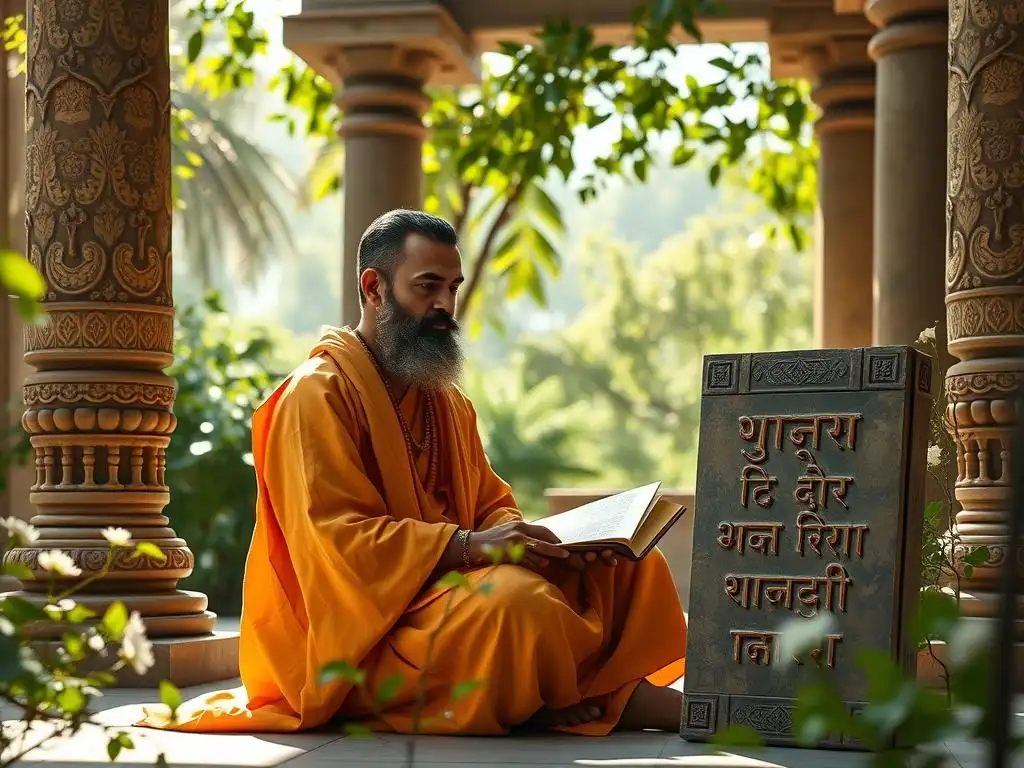
Welcome to Ancient India History, where we delve into the mesmerizing tapestry of India's past, uncovering the rich culture and profound contributions of its ancient civilizations. In this exploration, we invite you to journey through the intricate realms of Nyaya philosophy and logic, a cornerstone of Indian thought that shaped argumentation and reasoning. What role does logic play in understanding the complexities of existence? Join us as we unravel the compelling insights of Nyaya philosophy and discover how it continues to influence philosophical discourse today. Prepare to ignite your curiosity and deepen your knowledge with this captivating study!

Introduction to Nyaya Philosophy and Logic
Nyaya philosophy, one of the six orthodox schools of Indian philosophy, is renowned for its systematic approach to logic and epistemology. Rooted in ancient Indian thought, this school emphasizes the importance of reasoning and argumentation in the pursuit of knowledge. The term "Nyaya" itself translates to "rules" or "method," reflecting its foundational belief in logical inquiry as a vehicle for discerning truth.
Logic in Nyaya philosophy is not merely an abstract exercise; it serves as a practical tool for understanding the nature of reality, knowledge, and existence. This article delves into the intertwining roles of Nyaya philosophy and logic, exploring how argumentation has shaped philosophical discourse in ancient India.
Overview of Nyaya Philosophy
Nyaya philosophy originated in the early centuries of the first millennium BCE, with its roots traced primarily to the Nyaya Sutras, attributed to the sage Gautama (also known as Akshapada). The Nyaya Sutras outline the principles of debate and the methodology for logical reasoning, establishing a framework for philosophical inquiry that was both rigorous and systematic.
Key concepts in Nyaya include:
- Prama (valid knowledge): The pursuit of correct knowledge through valid means.
- Pramana (means of knowledge): The sources through which knowledge is acquired, primarily perception, inference, comparison, and testimony.
- Tarka (debate): The process of logical argumentation used to validate or refute propositions.
Nyaya philosophy lays the groundwork for critical thinking and rational discourse, influencing not only subsequent Indian philosophical traditions but also the development of formal logic itself.
Significance of Logic in Indian Philosophy
The role of logic in Indian philosophy transcends the boundaries of Nyaya, contributing significantly to the broader landscape of philosophical thought in ancient India. Logic serves several essential functions:
- Validation of Knowledge: Logic provides the means to verify the truth claims made by various philosophical schools, ensuring a robust discourse.
- Framework for Disputation: Logical structures facilitate meaningful debates, enabling philosophers to challenge and refine each other's ideas.
- Clarity and Precision: The use of logical formulations enhances clarity in philosophical arguments, allowing for a more nuanced understanding of complex concepts.
In this way, logic is not merely an accessory to philosophy but is integral to the very essence of philosophical inquiry in India.
Historical Context of Nyaya Philosophy
Understanding the historical development of Nyaya philosophy offers invaluable insights into its foundational principles and enduring impact on Indian thought.
Emergence of Nyaya School of Thought
The Nyaya school emerged against the backdrop of a rich intellectual tradition in ancient India, characterized by diverse philosophical perspectives. As one of the six orthodox schools (Astika), Nyaya sought to establish a systematic approach to knowledge that could stand in contrast to various heterodox schools such as Buddhism and Jainism. The early Nyaya philosophers aimed to articulate a comprehensive framework for understanding reality, ultimately leading to the formalization of logic as a discipline.
Key Philosophers and Texts in Nyaya
Several influential philosophers contributed to the evolution of Nyaya philosophy, each adding depth and nuance to its logical frameworks. Notable figures include:
- Gautama (Akshapada): The founder of the Nyaya school, who laid down the foundational texts in the Nyaya Sutras.
- Vatsyayana: A later commentator who expanded upon Gautama's ideas, particularly in his work, the Nyaya Bhashya, which further elucidates the principles of argumentation and reasoning.
- Udayana: A prominent philosopher who integrated Nyaya logic with theistic arguments, demonstrating the adaptability of Nyaya principles across different philosophical contexts.
These philosophers and their texts not only cemented the significance of logic within Nyaya but also influenced the broader philosophical discourse in ancient India, showcasing the intricate interplay between logic, epistemology, and metaphysics.
Core Principles of Nyaya Logic
Nyaya philosophy, originating from ancient India, is primarily concerned with the nature of knowledge and the methods of acquiring it. At its core, Nyaya logic emphasizes clarity, precision, and systematic reasoning. The main principles include the importance of valid inference, the distinction between valid and invalid reasoning, and the necessity of evidence in substantiating claims. Central to Nyaya thought is the belief that knowledge can be systematically analyzed and that logical reasoning is essential for discerning truth from falsehood.
Nyaya philosophers argue that true knowledge arises from the proper application of logical principles. This involves a rigorous examination of arguments to ensure that they are sound and based on reliable premises. The Nyaya system is not merely theoretical; it serves practical purposes in discourse, debate, and even legal contexts, facilitating effective communication and conflict resolution through reasoned argumentation.
Definition of Nyaya Logic
Nyaya logic, or "Nyaya Prakriya," refers to the formal system of reasoning developed by the Nyaya school of thought. It is defined as a methodical approach to understanding and validating knowledge through logical proofs and arguments. Nyaya logic is characterized by its analytical nature, where assertions are subjected to scrutiny based on established criteria of validity.
This system of logic not only addresses epistemological questions but also serves as a framework for philosophical inquiry across various disciplines. By establishing norms for what constitutes valid reasoning, Nyaya logic helps philosophers and scholars engage in meaningful discourse, sift through competing claims, and arrive at conclusions that are substantiated by sound arguments.
The Four Pramanas: Sources of Knowledge
In Nyaya philosophy, the concept of Pramanas refers to the means or sources through which knowledge is acquired. The Nyaya school identifies four primary Pramanas:
- Pratyaksha (Perception): This is direct sensory experience, considered the most fundamental source of knowledge. It involves observation and firsthand experience of the world around us.
- Anumana (Inference): This source relies on logical reasoning to infer conclusions from premises. For instance, if smoke is observed, one may infer the presence of fire. Anumana is crucial for drawing conclusions beyond immediate experience.
- Upamana (Comparison): This Pramana pertains to knowledge gained through analogy or comparison. It allows one to understand a new or unknown concept by relating it to something familiar.
- Shabda (Testimony): This source involves knowledge acquired through language and authoritative sources. It emphasizes the significance of verbal communication and the reliability of experts in disseminating knowledge.
Together, these Pramanas form the foundation of Nyaya epistemology, guiding scholars in their pursuit of truth through logical examination and evidence-based reasoning.
The Structure of Nyaya Argumentation

Nyaya argumentation is a systematic process that outlines how arguments should be constructed and evaluated. It emphasizes clarity, coherence, and logical validity, ensuring that discussions are productive and meaningful. The structure typically involves several stages, including the formulation of premises, the use of Pramanas, and drawing conclusions.
The Nyaya approach to argumentation is particularly valuable in philosophical debates, where participants must navigate complex ideas and often opposing viewpoints. By adhering to the structured methodology of Nyaya logic, philosophers can engage in rigorous discussions that uphold the integrity of reasoned discourse.
Components of a Nyaya Argument
A typical Nyaya argument consists of several key components:
- Pratijna (Claim): This is the initial assertion or statement that the arguer seeks to prove. It forms the basis of the argument and sets the stage for what is to be established.
- Hetu (Reason): The reason provides support for the claim, explaining why the assertion is believed to be true. It must be logically sound and relevant to the claim being made.
- Uddeshya (Context): This component refers to the broader context in which the argument is situated. It helps clarify the relevance of the claim and reason and can provide background information that strengthens the argument.
- Pratyaksha or Anumana (Evidence): Evidence is critical in substantiating the claim. It can come from direct perception (Pratyaksha) or logical inference (Anumana) and must be presented clearly to support the argument’s validity.
- Niyama (Condition): This involves any conditions or limitations that may affect the validity of the claim or the applicability of the evidence presented. Acknowledging these constraints enhances the argument's credibility.
By meticulously constructing arguments using these components, Nyaya philosophers ensure that their reasoning is robust, transparent, and conducive to effective dialogue.
Types of Logical Reasoning in Nyaya
Nyaya philosophy, one of the six orthodox schools of Indian philosophy, places a significant emphasis on the use of logic and reasoning to acquire knowledge. It categorizes logical reasoning into several distinct types, each serving a unique purpose in the pursuit of truth and understanding. The primary types of reasoning recognized in Nyaya are deductive reasoning, inductive reasoning, and analogical reasoning. Each of these methods contributes to the philosophical framework by providing structured approaches for validating claims and arguments.
- Deductive Reasoning: This method involves drawing specific conclusions from general premises. It is characterized by its top-down approach, where a general principle is applied to a particular case. If the premises are true, the conclusion must necessarily follow.
- Inductive Reasoning: Unlike deduction, induction starts with specific observations and formulates broader generalizations. This reasoning type allows for the establishment of probable conclusions based on observed patterns and trends.
- Analogical Reasoning: This reasoning draws comparisons between similar cases to infer conclusions. By establishing similarities, it helps in understanding new or complex ideas based on previously known concepts.
Each of these reasoning types is integral to Nyaya's argumentative framework, supporting its goal of achieving valid knowledge (prama) through rigorous analysis and discourse.
Deductive Reasoning in Nyaya Philosophy
Deductive reasoning, or anumana, in Nyaya philosophy is a critical aspect of establishing sound arguments. It operates on the principle that if a general statement is accepted as true, then any specific instance falling under that generality can also be concluded as true.
The structure of a deductive argument in Nyaya typically follows a syllogistic format, where:
- Major Premise: A universally accepted truth.
- Minor Premise: A specific case that falls under the major premise.
- Conclusion: A statement that logically follows from the premises.
For example:
- Major Premise: All humans are mortal.
- Minor Premise: Socrates is a human.
- Conclusion: Therefore, Socrates is mortal.
This form of reasoning is crucial in Nyaya, as it provides a rigorous mechanism for validating philosophical claims and ensuring that arguments maintain internal consistency.
Inductive Reasoning and Its Importance
Inductive reasoning, known in Nyaya as upamana, plays a vital role in the development of general principles based on specific observations. Unlike deductive reasoning, which guarantees truth, inductive reasoning provides conclusions that are probable but not definitive.
The process involves:
- Observation: Noticing particular instances or phenomena.
- Generalization: Formulating broader conclusions from these observations.
For instance, if one observes that the sun rises in the east every day, one might inductively conclude that the sun always rises in the east. This method is essential in Nyaya philosophy as it allows for the expansion of knowledge and understanding, particularly in areas where direct evidence may be lacking.
Inductive reasoning is particularly important in the fields of ethics and morality within Nyaya, where general principles about right and wrong can emerge from the analysis of specific cases and societal norms.
Analogical Reasoning in Nyaya Logic
Analogical reasoning, referred to as samanya, is another crucial form of reasoning in Nyaya philosophy that relies on the identification of similarities between different cases to draw conclusions. This method is particularly effective in providing insights into unfamiliar situations through the lens of known experiences.
The process typically involves:
- Identifying a Known Case: A situation that is well understood.
- Finding a Similar Case: A new situation that shares relevant characteristics with the known case.
- Drawing Conclusions: Inferring that the same principles or outcomes will apply to the new case based on its similarities to the known case.
An example of analogical reasoning might be comparing two legal cases where the underlying principles of justice seem analogous, allowing for the application of precedents from one case to another. In Nyaya, this reasoning is crucial for making informed judgments and decisions, especially in philosophical discourse and the application of ethical principles.
The Role of Debate in Nyaya Philosophy
Debate, or tarka, holds a pivotal place in Nyaya philosophy, serving as a method for testing ideas and arguments under scrutiny. The dialectical process of debate is not merely for winning arguments; rather, it aims to uncover truth and foster understanding. By engaging in structured dialogues, philosophers can clarify concepts, refine arguments, and expose fallacies.
The Nyaya system encourages rigorous debate, which is seen as a vital tool for philosophical inquiry. The role of debate is underscored by the emphasis on reasoned discourse, where participants are expected to present logical arguments supported by evidence, while also being open to counterarguments.
The Importance of Pramanas in Argumentation
In Nyaya philosophy, pramanas (means of knowledge) are fundamental to the process of argumentation. They serve as the criteria for validating knowledge claims and are categorized into four primary types:
- Pratyaksha: Direct perception.
- Anumana: Inference.
- Upamana: Analogy.
- Shabda: Testimony.
Each pramana plays a crucial role in shaping arguments, ensuring that they are grounded in reliable knowledge. The effectiveness of any argument in Nyaya hinges on the quality and appropriateness of the pramanas employed. By adhering to these means of knowledge, philosophers can construct robust arguments that withstand scrutiny and contribute meaningfully to the pursuit of truth.
Techniques of Argumentation Used in Nyaya
The techniques of argumentation in Nyaya are diverse and sophisticated, reflecting the complexity of philosophical inquiry. Some of the key techniques include:
- Syllogism: Utilizing structured forms of reasoning to derive conclusions logically.
- Counterarguments: Engaging with opposing views to strengthen one's position through rebuttal.
- Clarification of Terms: Ensuring that definitions and concepts are clearly articulated to avoid confusion.
- Use of Examples: Employing practical examples to illustrate abstract concepts and enhance understanding.
These techniques are not only instrumental in philosophical debates but also encourage a culture of critical thinking and open discourse. By fostering a methodical approach to argumentation, Nyaya philosophy emphasizes the importance of logic and reason in the quest for knowledge and understanding.
Comparison of Nyaya Logic with Other Philosophical Schools

Nyaya philosophy is renowned for its rigorous logical framework, which sets it apart from other philosophical schools in ancient India. The central focus of Nyaya is on the systematic analysis of arguments, leading to the establishment of valid knowledge (prama). This examination not only defines the nature of valid inference but also contrasts with the methodologies employed by other philosophical traditions. By scrutinizing the differences and similarities, we gain a deeper understanding of Nyaya's unique contributions to the field of logic.
Nyaya vs. Buddhist Logic
The comparison between Nyaya and Buddhist logic reveals intriguing contrasts in their approach to epistemology and argumentation. While both schools emphasize the importance of logical reasoning, their foundational premises differ significantly.
- Nyaya Logic: Nyaya asserts that knowledge arises from four valid means of knowledge (pramanas): perception, inference, comparison, and testimony. It emphasizes the importance of the syllogism (vyapti), which is crucial for constructing valid inferences.
- Buddhist Logic: In contrast, Buddhist philosophers, particularly Dharmakirti, focus on the notion of "pratityasamutpada" (dependent origination) and often employ a more pragmatic approach to logic. They prioritize direct experience and the role of perception over abstract reasoning.
The debates between Nyaya and Buddhist logicians often revolve around the nature of existence, the validity of inference, and the reliability of sensory perception. While Nyaya seeks to establish a robust framework for argumentation, Buddhist logic tends to challenge the premises of Nyaya, advocating for a more fluid understanding of reality that transcends rigid categorizations.
Nyaya vs. Advaita Vedanta
The interplay between Nyaya and Advaita Vedanta showcases a profound philosophical divergence concerning the nature of reality and knowledge.
- Nyaya's Position: Nyaya philosophy maintains a dualist perspective, positing that the world comprises distinct entities, including the self (atman) and the ultimate reality (Brahman). It emphasizes the importance of logical reasoning to discern valid knowledge and to understand the nature of objects in the world.
- Advaita Vedanta's Position: In contrast, Advaita Vedanta, established by Adi Shankaracharya, advocates for non-dualism (advaita), asserting that the ultimate reality is a singular, homogeneous consciousness. For Advaita, the perceived multiplicity of the world is an illusion (maya), which can be overcome through direct realization rather than through logical analysis.
The debate between these two schools often centers on the methods of attaining knowledge—Nyaya's analytical approach versus Advaita's mystical insights. While Nyaya seeks to provide a structured methodology for understanding reality, Advaita emphasizes experiential knowledge and the dissolution of dualistic distinctions.
Contemporary Relevance of Nyaya Philosophy and Logic
The principles of Nyaya philosophy and logic continue to resonate in contemporary discourse, influencing various fields such as philosophy, law, and science. Its structured approach to argumentation provides valuable insights that remain applicable today.
Impact on Modern Indian Philosophy
Nyaya's influence on modern Indian philosophy is significant. Philosophers like Radhakrishnan and J. N. Mohanty have drawn from Nyaya's logical frameworks to address contemporary philosophical issues. The emphasis on clarity in argumentation has paved the way for a more robust and analytical approach to philosophical inquiry in India.
Furthermore, Nyaya's exploration of epistemology has contributed to discussions on the nature of knowledge and belief, enriching the philosophical landscape in India. By fostering critical thinking and analysis, Nyaya philosophy encourages a deeper examination of both traditional and modern philosophical questions.
Applications of Nyaya Logic in Current Discourse
In today's world, Nyaya logic finds applications beyond philosophy, extending into areas such as law, ethics, and artificial intelligence.
- Law and Legal Reasoning: Nyaya principles underpin various legal systems, emphasizing the importance of logical reasoning in establishing proof and validity in judicial processes. The structured approach to argumentation aids lawyers and judges in constructing and evaluating legal arguments.
- Artificial Intelligence: The principles of Nyaya logic are also relevant in the development of AI systems, where logical reasoning is crucial for decision-making processes. The structured frameworks derived from Nyaya can enhance the development of algorithms that require rigorous logical inference.
- Ethics and Public Discourse: In ethical discussions, Nyaya's focus on clear reasoning promotes rational debates on moral issues, facilitating informed decision-making in public policy and societal norms.
The enduring legacy of Nyaya philosophy exemplifies its adaptability and relevance, proving that ancient wisdom can inform and enhance contemporary thought and practice.
Conclusion
The Nyaya philosophy, one of the six orthodox schools of Indian philosophy, holds a vital position in the history of logic and epistemology. Its rigorous approach to argumentation has not only shaped philosophical discourse in ancient India but has also influenced various fields, including linguistics, law, and science. The emphasis on logical reasoning and critical analysis within the Nyaya framework exemplifies the sophistication of Indian thought and its commitment to rational inquiry.
Summary of the Role of Logic in Nyaya Philosophy
In Nyaya philosophy, logic serves as a foundational element that underpins the process of acquiring knowledge. It is primarily concerned with the systematic examination of arguments and the validation of knowledge claims. The Nyaya school categorizes inference as one of the primary means of knowledge, skillfully distinguishing between valid and invalid reasoning. The Nyaya Sutras, authored by Gautama, articulate a detailed methodology for argumentation, encompassing various forms of inference, such as:
- Pratyaksha (Perception): Direct observation as a source of knowledge.
- Anumana (Inference): Drawing conclusions based on premises.
- Upamana (Comparison): Knowledge gained through analogy.
- Shabda (Verbal Testimony): Reliance on authoritative statements.
Through these methods, Nyaya philosophy rigorously critiques fallacies and erroneous reasoning, striving for clarity and precision in thought. This emphasis on logical analysis has had enduring repercussions on subsequent philosophical developments, both within and beyond Indian thought.
Final Thoughts on Nyaya Philosophy and Logic in Ancient Indian Civilization
Nyaya philosophy represents a pivotal moment in the evolution of logical thought within ancient Indian civilization. Its unique approach to argumentation and the structure of logical discourse contributed significantly to the broader intellectual landscape of the time. The methods established by the Nyaya philosophers resonate well beyond their immediate context, influencing later philosophical traditions, including Buddhist logic and the works of medieval scholars.
The commitment to reason and evidence in Nyaya philosophy serves as a reminder of the rich intellectual heritage of ancient India. As we continue to explore the complexities of Nyaya philosophy and logic, it becomes increasingly clear that these ideas not only shaped the course of Indian philosophy but also laid the groundwork for future explorations in logic and epistemology around the world. The legacy of Nyaya philosophy remains a critical area of study for anyone interested in the interconnections between logic, culture, and history in ancient civilizations.
- Introduction to Nyaya Philosophy and Logic
- Historical Context of Nyaya Philosophy
- Core Principles of Nyaya Logic
- The Structure of Nyaya Argumentation
- Types of Logical Reasoning in Nyaya
- The Role of Debate in Nyaya Philosophy
- Comparison of Nyaya Logic with Other Philosophical Schools
- Contemporary Relevance of Nyaya Philosophy and Logic
- Conclusion
Frequently Asked Questions
What is Nyaya philosophy?
Nyaya philosophy is one of the six orthodox schools of Indian philosophy that focuses on logic and epistemology. It emphasizes the importance of reasoning and argumentation in understanding reality and acquiring knowledge.
How does logic play a role in Nyaya philosophy?
In Nyaya philosophy, logic is essential for formulating valid arguments and determining the truth. The school provides a systematic method for analyzing arguments, which helps in distinguishing between valid and invalid reasoning.
What are the key contributions of Nyaya philosophy to Indian thought?
Nyaya philosophy has significantly influenced various fields, including philosophy, theology, and law. Its rigorous approach to logic and reasoning has shaped the methodologies used in other philosophical schools in ancient India.
How does argumentation function within Nyaya philosophy?
Argumentation in Nyaya philosophy involves the use of structured reasoning to support claims. The school identifies different types of arguments and their components, focusing on the importance of validity and soundness in reasoning.
What impact has Nyaya philosophy and logic had on modern philosophical discourse?
The principles of Nyaya philosophy and logic continue to influence contemporary debates in epistemology and philosophical logic, providing valuable insights into the nature of truth, knowledge, and reasoning in various contexts.
Final Reflection: The Enduring Significance of Logic in Nyaya Philosophy
The exploration of logic within Nyaya philosophy remains profoundly relevant in today's world, where critical thinking and sound argumentation are more crucial than ever. In an age characterized by information overload and polarized opinions, the principles of Nyaya provide a framework for discerning truth and fostering constructive dialogue. The ability to engage in logical reasoning is not merely an academic exercise; it is a vital skill that empowers individuals to navigate complex social and intellectual landscapes.
The influence of Nyaya philosophy extends beyond its historical roots, continuing to shape contemporary discourse in various fields, including law, ethics, and education. As we grapple with the challenges of misinformation and emotional reasoning, the teachings of Nyaya remind us of the importance of rigorous argumentation and the pursuit of knowledge. The essence of Nyaya lies in its commitment to clarity, precision, and the relentless quest for truth.
This commitment invites us to cultivate a mindset that values reason over rhetoric, encouraging a culture of inquiry and respect for differing perspectives.
As we reflect on the lessons of Nyaya philosophy, let us embrace the call to elevate our discourse and engage with others thoughtfully and respectfully. I invite you to consider how you can apply the principles of logic and argumentation in your own life, whether in personal conversations, professional settings, or broader societal discussions. By doing so, we not only honor the legacy of Nyaya but also contribute to a more rational and harmonious world, where ideas can flourish through reasoned debate and understanding.
Unlock the Secrets of Nyaya Logic Today!
Thank you for exploring the fascinating world of Nyaya philosophy with us! Your interest in the intricacies of argumentation not only enriches your understanding but also contributes to a deeper dialogue about logic in ancient Indian thought. Now, it’s time to take that knowledge further and put it into action!
Here are a few powerful steps you can take right now:
- Dive deeper into the texts: Explore core Nyaya texts such as the Nyaya Sutras. Challenge yourself to summarize a key argument and share it with others.
- Engage with the community: Join online forums or local discussion groups focused on philosophy or logic. Sharing insights and debating concepts can significantly enhance your understanding.
- Create your own argument: Choose a contemporary issue and apply Nyaya principles to formulate a structured argument. Share it on social media or write a blog post to inspire discussion.
How will you use the principles of Nyaya to enhance your daily decision-making? Your insights could motivate and inspire others!