
The Sankhya School's Perspective on Liberation: Paths to Moksha

Welcome to Ancient India History, where we embark on a fascinating journey through the vibrant tapestry of India's past! In this exploration, we delve into the profound world of Sankhya philosophy and Moksha, uncovering the intricate paths to liberation that have shaped the spiritual landscape of ancient Indian civilization.
Prepare to be captivated by the wisdom of the Sankhya School and its insights on achieving Moksha—the ultimate freedom from the cycle of life and death. Join us as we unravel the threads of philosophy that continue to inspire seekers and scholars alike, inviting you to discover the depths of thought that lie ahead.
- Introduction to Sankhya Philosophy and Moksha
- Understanding Moksha: The Concept of Liberation
- The Sankhya School’s View on Liberation
- Paths to Moksha According to Sankhya Philosophy
- Comparison of Sankhya Philosophy and Other Schools on Moksha
- Practical Applications of Sankhya Philosophy in Modern Life
- Conclusion: The Enduring Legacy of the Sankhya School on Liberation
- Frequently Asked Questions
- Final Reflection: Embracing Sankhya Philosophy on the Journey to Moksha
- Embrace Your Path to Liberation!
Introduction to Sankhya Philosophy and Moksha
The Sankhya School of Thought stands as one of the most significant philosophical traditions in ancient India, deeply influencing various aspects of Indian philosophy, spirituality, and cultural practices. Central to this school is the exploration of Moksha, or liberation, which embodies the ultimate goal of human existence according to many Indian philosophical frameworks. The Sankhya philosophy presents a dualistic approach, distinguishing between Purusha (consciousness) and Prakriti (matter), and outlines paths to attain Moksha through self-realization and understanding of these two fundamental principles.
This article delves into the intricate relationship between Sankhya philosophy and Moksha, shedding light on how this ancient thought system approaches the concept of liberation. By examining its core tenets and their relevance in the broader context of Indian philosophy, we aim to provide a comprehensive understanding of how the Sankhya School contributes to the quest for Moksha.
Overview of Sankhya Philosophy
Sankhya philosophy, attributed to the sage Kapila, is one of the oldest systems of Indian thought. It is primarily known for its analytical approach, categorizing reality into various elements and principles. The key components of Sankhya philosophy include:
- Purusha: The eternal, unchanging consciousness that transcends the physical world.
- Prakriti: The dynamic, mutable material world, characterized by three gunas (qualities) — Sattva (purity), Rajas (activity), and Tamas (inertia).
- Evolution of the Universe: Sankhya posits that the universe evolves from Prakriti, guided by the interplay of the gunas, ultimately leading to the manifestation of various forms of life.
The Sankhya system emphasizes the importance of knowledge (jnana) as a means to distinguish between Purusha and Prakriti, which in turn leads to liberation. It asserts that by understanding the true nature of reality, individuals can break free from the cycles of birth and rebirth (samsara) and achieve Moksha.
Importance of Moksha in Indian Philosophy
Moksha is a pivotal concept in Indian philosophy, representing the culmination of spiritual practice and the ultimate escape from the cycle of reincarnation. Within the context of the Sankhya School, Moksha holds particular significance for several reasons:
- End of Suffering: Attaining Moksha signifies liberation from the dualities and sufferings of life, allowing individuals to experience inner peace and eternal bliss.
- Unity with Purusha: The realization of Moksha leads to the acknowledgment of one's true self as Purusha, fostering a profound connection with the universal consciousness.
- Guiding Principle: Moksha serves as a guiding principle for various spiritual practices, encouraging seekers to cultivate self-awareness, ethical conduct, and mental discipline.
The Sankhya School's perspective on liberation encapsulates a rich philosophical tradition that continues to resonate in contemporary discussions on spirituality and self-realization. Understanding its teachings on Moksha not only enriches our appreciation of Indian philosophy but also offers valuable insights into the pursuit of a fulfilled and liberated existence.
Understanding Moksha: The Concept of Liberation
Definition of Moksha in Sankhya Philosophy
Moksha, in the context of Sankhya philosophy, is defined as the ultimate liberation of the self (Atman) from the cycle of birth, death, and rebirth (samsara). In Sankhya, this liberation is achieved through the realization of the distinction between the purusha (consciousness or spirit) and prakriti (matter or nature). The Sankhya school posits that understanding this duality is essential for attaining Moksha.
This liberation is not merely a release from physical existence; rather, it signifies a profound state of self-realization where the individual transcends worldly attachments and identifies solely with the eternal, unchanging purusha. The pathway to Moksha, according to Sankhya philosophy, involves a process of self-inquiry and knowledge (jnana), leading to the dissolution of ignorance (avidya).
Key aspects of Moksha in Sankhya philosophy include:
- Discrimination (Viveka): The ability to discern between the eternal self and the transient material world.
- Detachment (Vairagya): Cultivating non-attachment to the material experiences and desires that bind one to the cycle of samsara.
- Knowledge (Jnana): Gaining insight into the nature of reality, which is essential for achieving liberation.
The Sankhya perspective emphasizes that Moksha is not a goal to be attained through rituals or external practices but rather through internal understanding and realization.
Historical Context of Moksha in Ancient India
The concept of Moksha has deep historical roots in ancient Indian thought, evolving through various philosophical schools, including Sankhya. The idea of liberation can be traced back to the Vedic texts, where it was initially linked to concepts of ritual and sacrifice. However, as philosophical inquiry progressed, particularly during the Upanishadic period (circa 800-400 BCE), the notion of Moksha shifted towards a more introspective and metaphysical understanding.
In the Sankhya school, founded by the sage Kapila, Moksha is contextualized against the backdrop of earlier philosophical developments. The dualistic approach of Sankhya, contrasting purusha and prakriti, reflects a significant departure from the earlier monistic and ritualistic interpretations found in the Vedas. By the time of the development of the Sankhya philosophy, the emphasis had moved from external rituals to internal realization and knowledge.
Notably, the teachings of Sankhya also influenced other schools of thought, such as Yoga and Vedanta, which further elaborated on the concept of Moksha. The interactions between these schools highlight the rich tapestry of philosophical discourse in ancient India, where the quest for liberation was a central theme.
The historical context of Moksha in ancient India illustrates a transformation from ritualistic practices to a focus on self-knowledge and philosophical inquiry, marking a pivotal moment in the evolution of Indian spirituality and philosophy.
The Sankhya School’s View on Liberation
The Sankhya School of Thought offers a profound understanding of liberation, known as Moksha, through its unique philosophical lens. Originating in ancient India, Sankhya is one of the six orthodox schools of Hindu philosophy and emphasizes a dualistic approach to reality, presenting a clear distinction between the material and spiritual realms. This distinction is foundational in understanding how individuals can attain liberation from the cycle of birth and death (samsara).
Moksha, in the context of Sankhya philosophy, is not merely an escape from worldly suffering but a state of ultimate realization and unity with the true self, known as Purusha. The Sankhya perspective posits that the path to Moksha involves a deep understanding of the nature of existence, the self, and the universe.
- Dualism of Prakriti and Purusha:
- Prakriti refers to the material nature, encompassing all physical phenomena and the mind. It is characterized by three gunas (qualities): Sattva (purity), Rajas (activity), and Tamas (inertia).
- Purusha, on the other hand, is the eternal, unchanging consciousness that is the true essence of the individual. According to Sankhya, liberation occurs when one realizes their true nature as Purusha, transcending the limitations imposed by Prakriti.
- The Process of Disentanglement:
- Achieving Moksha involves disentangling the self from the influences of Prakriti. This process requires the practitioner to cultivate self-awareness and discernment (Viveka) to differentiate between what is real (Purusha) and what is transient (Prakriti).
- Knowledge (Jnana) as the Path:
- In Sankhya philosophy, knowledge is paramount. The understanding of the duality of Prakriti and Purusha leads to self-realization. By gaining insight into the nature of reality, individuals can overcome ignorance (Avidya), which binds them to the cycle of samsara.
- The Role of Meditation and Contemplation:
- Meditation serves as a practical tool to quiet the mind and facilitate the realization of the self. Through focused contemplation, individuals can experience the distinction between their true nature and the fluctuations of Prakriti, thereby progressing towards Moksha.
The Role of Prakriti and Purusha in Achieving Moksha
The interplay between Prakriti and Purusha is central to the Sankhya understanding of liberation.
- Prakriti and Its Influence:
- Prakriti is the source of all creation and existence. It is dynamic and constantly changing, influenced by the three gunas. The entanglement of Purusha with Prakriti results in the experience of suffering and ignorance, perpetuating the cycle of birth and rebirth.
- Purusha as the Ultimate Reality:
- Purusha is immutable and transcendent, representing pure consciousness. In Sankhya, the realization of Purusha as one's true self is the key to liberation. This realization allows individuals to detach from the material world and its transient pleasures, leading to a state of eternal bliss and freedom from suffering.
- The Process of Liberation:
- The journey towards Moksha involves understanding how Prakriti operates and recognizing its transient nature. By cultivating a deep understanding of both Prakriti and Purusha, practitioners can navigate their experiences and ultimately achieve liberation. This involves:
- Detachment: Learning to observe without attachment.
- Self-Realization: Realizing one's identity as Purusha.
- Transcending the Gunas: Rising above the influences of Sattva, Rajas, and Tamas.
- The journey towards Moksha involves understanding how Prakriti operates and recognizing its transient nature. By cultivating a deep understanding of both Prakriti and Purusha, practitioners can navigate their experiences and ultimately achieve liberation. This involves:
The Sankhya School provides a structured framework for understanding the concept of Moksha, emphasizing the importance of knowledge, meditation, and the discernment between the material and spiritual realms. Through the realization of one's true self as Purusha, individuals can attain liberation and experience the ultimate truth of existence.
Paths to Moksha According to Sankhya Philosophy
The Sankhya school of thought presents a unique perspective on the concept of liberation, or Moksha. Rooted in a dualistic understanding of reality, Sankhya philosophy emphasizes the distinction between Purusha (the conscious self) and Prakriti (the material world). The pathways to Moksha, as articulated by Sankhya, can be broadly categorized into three primary yogas: Jnana Yoga, Karma Yoga, and Bhakti Yoga. Each path offers distinct methodologies and philosophies that cater to different temperaments and aspirations of practitioners.
Jnana Yoga: The Path of Knowledge
Jnana Yoga is often regarded as the highest and most direct path to Moksha within the Sankhya framework. It emphasizes the pursuit of knowledge and wisdom as a means of realizing the true nature of the self.
- Understanding Purusha and Prakriti:
- Jnana Yoga begins with the intellectual comprehension of the dualistic nature of existence. Practitioners study the nature of Purusha and Prakriti, understanding that true liberation involves recognizing one's identity as the eternal self, distinct from the transient material world.
- Self-Inquiry and Discrimination:
- Central to Jnana Yoga is the practice of self-inquiry (Atma Vichara) and the development of Vairagya (detachment). This involves questioning the nature of reality, discerning the eternal from the ephemeral, which leads to deeper insights about existence.
- Meditation and Contemplation:
- Meditation practices in Jnana Yoga focus on contemplating the nature of consciousness and the realization of the self's oneness with the universe. Techniques such as neti-neti (not this, not that) help practitioners dismiss the false identities imposed by the material world.
Karma Yoga: The Path of Action
Karma Yoga presents a practical approach to achieving Moksha through selfless action. It is based on the understanding that all actions are tied to the law of karma, and liberation is attained by performing one's duties without attachment to the results.
- Selfless Service:
- Karma Yoga emphasizes the importance of performing one's dharma (duty) while remaining unattached to the fruits of those actions. This selfless approach purifies the mind and helps dissolve the ego, which is a significant obstacle to liberation.
- Equanimity:
- A key tenet of Karma Yoga is the cultivation of equanimity (Samatva), where one maintains an even-minded attitude towards success and failure. This mental stability fosters inner peace and a sense of detachment from the material outcomes of actions.
- Integration with Daily Life:
- Unlike some paths that require renunciation, Karma Yoga integrates spiritual practice with daily responsibilities. By infusing everyday actions with awareness and intention, practitioners can move closer to Moksha while engaging in the world.
Bhakti Yoga: The Path of Devotion
Though primarily associated with theistic traditions, Bhakti Yoga can also find resonance within the Sankhya philosophy, focusing on devotion as a means to achieve Moksha. This path emphasizes surrendering to a higher power or the divine.
- Cultivating Love and Devotion:
- Bhakti Yoga involves developing a deep love and devotion towards a personal deity or the universal consciousness. This emotional connection serves as a catalyst for transformation, leading to the dissolution of the ego and the realization of oneness.
- Surrender and Trust:
- A significant aspect of Bhakti Yoga is the act of surrendering one's will to the divine. This surrender is not a sign of weakness but a profound acknowledgment of the limitations of the individual self in understanding the greater cosmos.
- Community and Ritual:
- Bhakti practices often involve communal worship, chanting, and rituals, which foster a sense of belonging and collective spiritual energy. These practices help practitioners to cultivate humility and gratitude, essential qualities on the path to liberation.
The Sankhya philosophy offers diverse paths to Moksha that cater to the varied inclinations of individuals. Whether through the pursuit of knowledge, selfless action, or heartfelt devotion, each path provides unique insights and practices that guide seekers towards spiritual liberation. The synthesis of these paths can lead to a holistic understanding of the self and the universe, ultimately facilitating the experience of Moksha.
Comparison of Sankhya Philosophy and Other Schools on Moksha
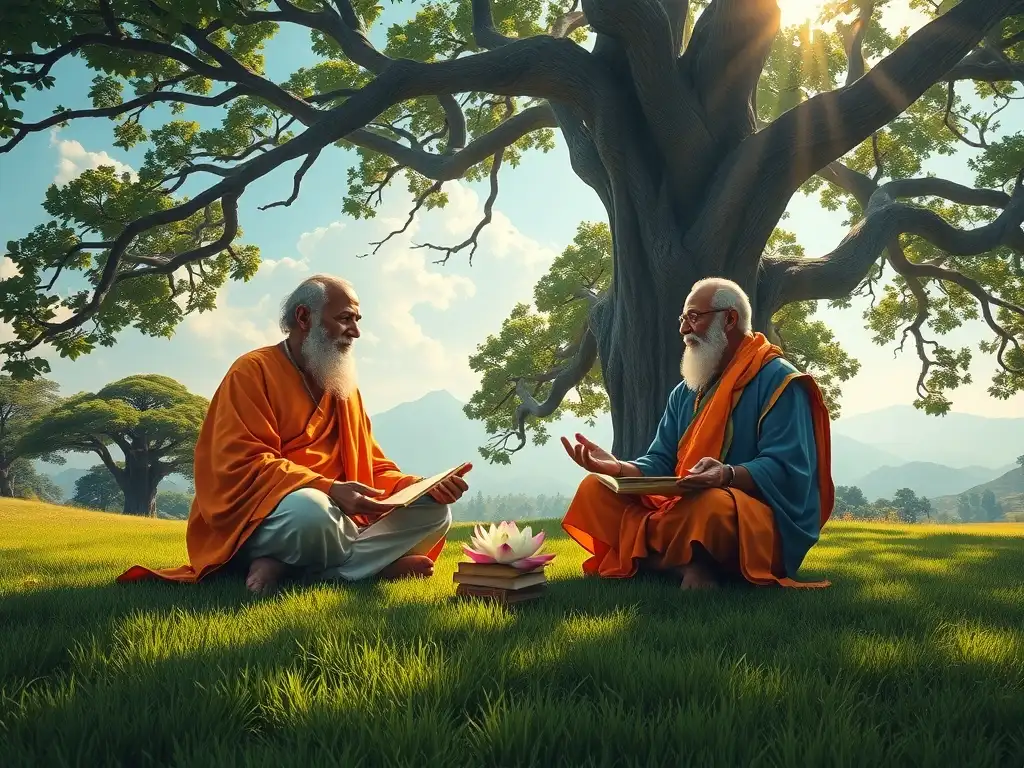
The Sankhya philosophy presents a unique perspective on Moksha, or liberation, that contrasts with other prominent Indian philosophical systems. By examining the differences between Sankhya and other schools of thought, we can gain a deeper understanding of the diverse approaches to achieving spiritual liberation.
Sankhya vs. Advaita Vedanta: Perspectives on Liberation
Sankhya and Advaita Vedanta both engage deeply with the concept of Moksha, but their interpretations and methodologies differ significantly.
- Dualism vs. Non-Dualism:
- Sankhya posits a dualistic framework where the universe is composed of two fundamental realities:Purusha (consciousness) and Prakriti (matter). Liberation is attained by realizing the distinction between the two, leading to the understanding that the self is separate from the material world.
- Advaita Vedanta, on the other hand, espouses a non-dualistic view, asserting that the ultimate reality is Brahman, and individual selves (Atman) are not separate but rather identical to Brahman. Moksha is realized through the knowledge of this non-duality.
- Path to Liberation:
- In Sankhya, the path to Moksha involves self-inquiry and knowledge (jnana) that leads to discernment, allowing individuals to detach themselves from the fluctuations of Prakriti.
- Advaita Vedanta emphasizes the importance of self-realization through meditation and scriptural study (shravana, manana, and nididhyasana) to dissolve the illusion of separateness.
- Role of Grace:
- Sankhya does not attribute Moksha to divine grace; rather, it is achieved through personal effort and understanding.
- In contrast, Advaita Vedanta often highlights the role of guru (spiritual teacher) and divine grace in facilitating the realization of one's true nature.
The contrast between these two schools illustrates the rich diversity of thought within Indian philosophy, each providing valuable insights into the nature of liberation.
Sankhya vs. Buddhism: Different Approaches to Moksha
When comparing Sankhya philosophy to Buddhism, particularly in its understanding of liberation, several key distinctions arise.
- Concept of Self:
- Sankhya maintains a belief in the permanence of the self (Purusha), which is eternal and unchanging. The ultimate goal is to recognize and realize this self, leading to liberation from material entanglements.
- Buddhism, however, teaches the doctrine of Anatta (no-self), asserting that there is no permanent self or soul. Liberation (Nirvana) is achieved through the extinguishing of desires and the cessation of suffering, not through the realization of a self.
- Nature of Liberation:
- In Sankhya, Moksha is seen as the realization of the self's true nature and its separation from the material world. This realization leads to a state of eternal bliss and knowledge.
- Buddhist liberation involves a profound transformation in perception, leading to the cessation of the cycle of rebirth and suffering (samsara). Nirvana is characterized by the absence of craving and ignorance, rather than an attainment of a state of bliss.
- Methodology:
- The Sankhya approach emphasizes intellectual discernment and philosophical analysis as key methods for achieving Moksha.
- Buddhism advocates the Eightfold Path, a practical guide that includes ethical conduct, mental discipline, and wisdom, aimed at overcoming delusion and attachment.
The juxtaposition of Sankhya and Buddhism highlights the varied pathways to liberation within Indian philosophical traditions, each offering unique tools and insights for seekers on their spiritual journeys.
By exploring these comparisons, we can appreciate how the Sankhya philosophy stands distinct yet interconnected with other philosophical systems in its approach to Moksha.
Practical Applications of Sankhya Philosophy in Modern Life
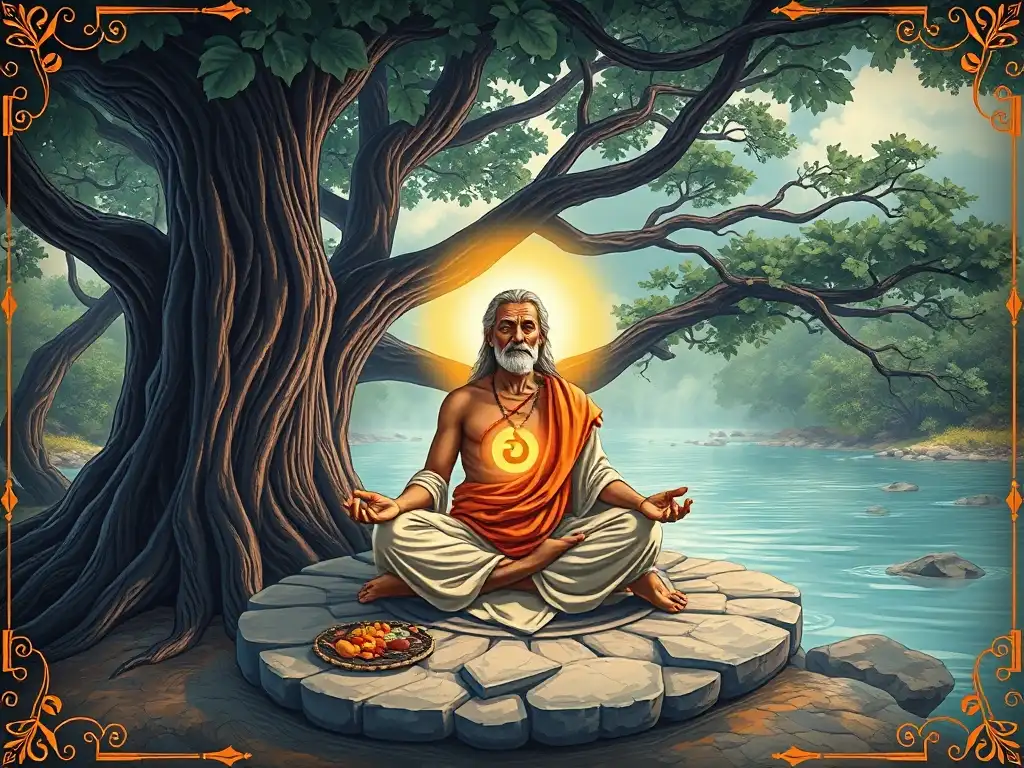
Integrating Sankhya Principles in Daily Practice
Sankhya philosophy, with its profound insights into the nature of existence and consciousness, can be integrated into daily life in various meaningful ways. Here are some practical applications:
- Mindfulness and Self-awareness
- Practicing mindfulness helps individuals become aware of their thoughts and emotions, aligning with the Sankhya emphasis on discernment (Viveka) between the self (Purusha) and the material world (Prakriti).
- Techniques such as meditation and reflective journaling can facilitate this awareness, leading to a more centered and balanced life.
- Detachment from Outcomes
- Emphasizing the Sankhya principle of non-attachment (Aparigraha) encourages individuals to focus on their actions rather than the results. This can alleviate stress and anxiety associated with everyday decisions.
- For instance, during challenging situations at work, one might focus on performing their duties to the best of their ability rather than fixating on potential promotions or recognitions.
- Balanced Living
- The Sankhya philosophy promotes a balanced lifestyle, advocating for moderation in all aspects of life, including diet, exercise, and relationships.
- Creating a daily routine that incorporates physical activity, healthy eating, and social interactions can enhance overall well-being, echoing the Sankhya ideals of harmony between body and mind.
- Philosophical Reflection
- Engaging in philosophical discussions or reading literature on Sankhya can deepen one's understanding of existence and purpose.
- Setting aside time each week for philosophical reflection, whether through group discussions or solitary contemplation, can enhance personal growth and clarity.
The Relevance of Sankhya Philosophy for Contemporary Seekers
In today's rapidly changing world, the principles of Sankhya philosophy remain incredibly relevant for seekers of truth and liberation (Moksha). Here are some key aspects of its relevance:
-
Understanding Duality
Sankhya philosophy provides a framework for understanding the duality of existence—between the eternal self (Purusha) and the transient material world (Prakriti). This perspective can help contemporary seekers navigate the complexities of modern life, fostering resilience against external turmoil.
-
Pathway to Liberation
The Sankhya school outlines a clear pathway to Moksha through knowledge (Jnana) and discrimination. In the modern context, this can translate to a quest for self-realization through education, introspection, and spiritual practices, providing seekers with tools to attain liberation from the cycles of suffering.
-
Application in Mental Health
The emphasis on self-awareness and detachment in Sankhya philosophy can be invaluable in addressing mental health issues prevalent in contemporary society. Techniques derived from Sankhya, such as mindfulness and cognitive restructuring, can aid individuals in managing stress, anxiety, and depression.
-
Holistic Approach to Life
The holistic nature of Sankhya philosophy encourages individuals to view life from multiple dimensions—physical, emotional, spiritual, and intellectual. This comprehensive perspective can guide modern seekers towards a more fulfilling and balanced lifestyle, fostering a deeper connection with themselves and the universe.
The practical applications of Sankhya philosophy enrich modern life by offering tools for self-awareness, balance, and liberation. As seekers embrace these principles, they pave their pathways toward understanding and achieving Moksha.
Conclusion: The Enduring Legacy of the Sankhya School on Liberation
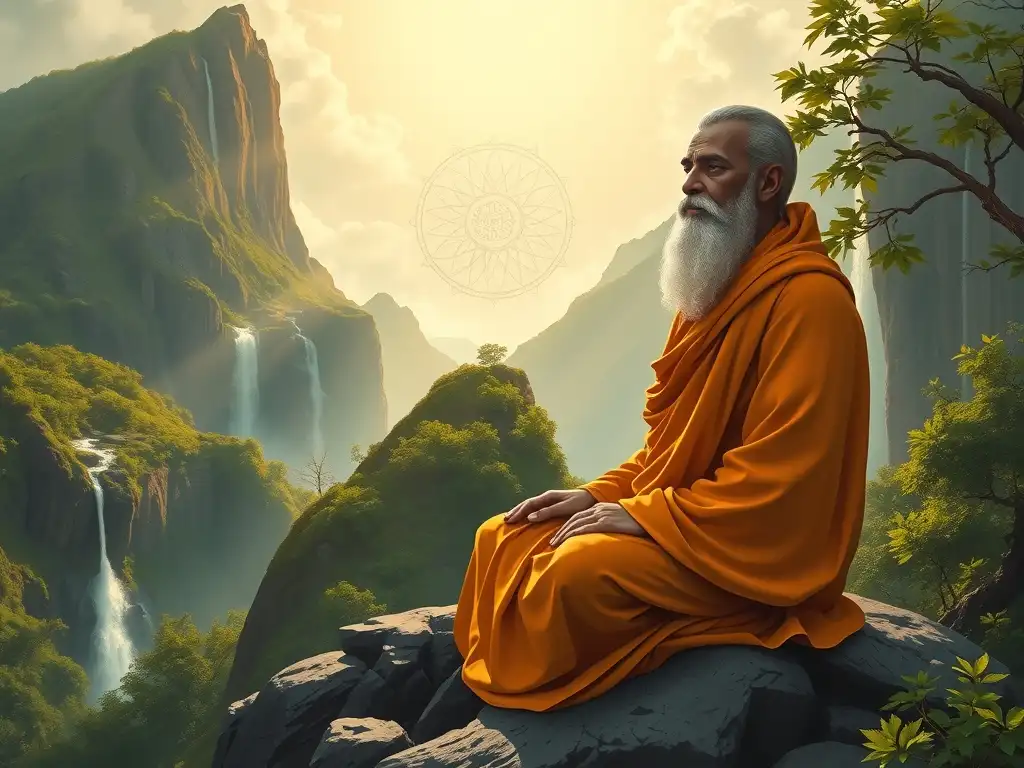
Summary of Key Insights on Sankhya Philosophy and Moksha
The Sankhya philosophy, one of the six orthodox schools of Indian philosophy, offers a unique perspective on the concept of Moksha, or liberation. At its core, Sankhya posits a dualistic worldview where reality consists of two fundamental components: Purusha (consciousness) and Prakriti (matter). This distinction is pivotal in understanding the paths to liberation outlined by the Sankhya system.
Key insights from the Sankhya approach to Moksha include:
- Recognition of Duality: The separation of Purusha and Prakriti emphasizes self-realization as the means to liberation. This understanding encourages practitioners to discern the eternal self from the transient material world.
- Knowledge as Liberation: According to Sankhya philosophy, true knowledge ( jnana) is essential for achieving Moksha. This knowledge involves realizing the distinction between the self (Purusha) and the nature of existence (Prakriti), leading to a profound understanding of one's true essence.
- The Role of Meditation: Meditation serves as a vital practice in Sankhya teachings, facilitating the experience of the self beyond physical and mental confines. Through disciplined meditation, one can achieve clarity, ultimately leading to liberation.
- Karma and Liberation: Sankhya philosophy also addresses the concept of karma, suggesting that understanding one’s actions and their consequences is crucial for attaining Moksha. By cultivating a disciplined approach to life, one can transcend the cycles of birth and rebirth.
Final Thoughts on the Pursuit of Liberation Through Sankhya Teachings
The teachings of the Sankhya School represent a profound contribution to the discourse on liberation in Indian philosophy. Its systematic approach provides a clear framework for understanding the pathways to Moksha. The emphasis on knowledge, meditation, and the discernment between spirit and matter fosters a holistic approach to liberation that resonates with many seekers.
In today's context, the principles of Sankhya philosophy can still be applied as a guide for personal development and spiritual growth. By integrating its teachings into modern practices, individuals can explore their inner selves and cultivate a deeper understanding of their place within the cosmos.
Ultimately, the enduring legacy of the Sankhya School lies in its ability to inspire individuals to pursue liberation through self-inquiry and mindful living, reinforcing the timeless quest for truth that defines the human experience.
Frequently Asked Questions
What is Sankhya philosophy?
Sankhya philosophy is an ancient Indian philosophical system that focuses on understanding the nature of reality through a dualistic framework of Purusha (consciousness) and Prakriti (matter). It emphasizes knowledge as the path to liberation.
How does Sankhya philosophy relate to Moksha?
In Sankhya philosophy, Moksha is viewed as the ultimate liberation from the cycle of birth and death, achieved through the realization of the distinction between Purusha and Prakriti. This understanding leads to freedom from suffering.
What are the main paths to achieve Moksha according to the Sankhya School?
The Sankhya School advocates for two primary paths to attain Moksha: knowledge (jnana) and meditation (dhyana). Both paths encourage an inward journey to attain self-realization and understanding of the true nature of existence.
How does Sankhya philosophy differ from other Indian philosophies regarding Moksha?
Unlike some other Indian philosophies, Sankhya emphasizes rational inquiry and the importance of knowledge over ritualistic practices. It presents a systematic approach to understanding Moksha through analytical reasoning.
Can anyone practice Sankhya philosophy to achieve Moksha?
Yes, Sankhya philosophy is accessible to anyone willing to engage with its teachings. It encourages individuals to seek knowledge and self-awareness, making the pursuit of Moksha available to all who are open to its principles.
Final Reflection: Embracing Sankhya Philosophy on the Journey to Moksha
The exploration of Sankhya philosophy and its insights into Moksha is more relevant today than ever, as individuals seek deeper meaning and liberation in a fast-paced world. In a society often driven by material pursuits, the teachings of Sankhya remind us of the importance of self-realization and understanding the nature of reality. The quest for Moksha transcends time and culture, inviting us to reflect on our own paths to liberation.
Sankhya philosophy has profoundly influenced not only spiritual practices but also our cultural and social landscapes. Its emphasis on discernment between the eternal self and the transient world encourages a deeper understanding of our existence. As we navigate through life's complexities, the wisdom of Sankhya serves as a guiding light. The greatest discovery of my generation is that a human being can alter his life by altering his attitude.
– William James. This quote encapsulates the transformative power of adopting a Sankhya perspective, emphasizing the potential for personal growth and liberation.
As you reflect on the teachings of Sankhya and their implications for your own life, consider how you can incorporate these principles into your daily existence. Embrace the journey towards Moksha by cultivating awareness, practicing discernment, and nurturing your inner self. Let the wisdom of Sankhya inspire you to seek liberation not just as a distant goal, but as a present reality that can be experienced in each moment. Your path to Moksha begins with a single step—take it today.
Embrace Your Path to Liberation!
Thank you for diving into the captivating insights of the Sankhya School on liberation and Moksha! Your interest not only enriches your understanding but also bridges ancient wisdom with your personal journey. Now, let’s take meaningful steps to explore and embody these teachings.
- Begin your journey by dedicating a few quiet moments each day to reflect on your thoughts and actions. Mindfulness can deepen your connection to your true self.
- Engage with others! Share this article with friends or family who may be interested in spiritual growth. Start a discussion group to explore the concepts of Sankhya together.
- Surprise yourself—try journaling about what liberation means to you personally. You might uncover new insights and aspirations!
What does the pursuit of Moksha look like in your life, and how do you plan to take action towards it?