
Ancient Indian Mathematics: The Secret Behind Complex Algebraic Solutions

Welcome to Ancient India History, where we embark on a fascinating journey through the rich tapestry of ancient civilizations that shaped the Indian subcontinent. In our featured article, "Ancient Indian Mathematics: The Secret Behind Complex Algebraic Solutions," we delve into the remarkable ancient Indian algebraic techniques that not only revolutionized mathematics but also laid the groundwork for modern scientific thought.
Prepare to be captivated by the ingenuity and brilliance of ancient scholars as we uncover the secrets that have influenced generations. Join us as we explore this intriguing intersection of science and culture, and discover how these timeless innovations continue to resonate in our world today.
- Introduction to Ancient Indian Mathematics
- Historical Context of Ancient Indian Algebra
- Fundamental Concepts in Ancient Indian Algebra
- Complex Algebraic Solutions in Ancient India
- Influence of Ancient Indian Algebra on Modern Mathematics
- Conclusion: The Enduring Legacy of Ancient Indian Algebraic Techniques
- References and Further Reading on Ancient Indian Mathematics
-
Frequently Asked Questions
- What are ancient Indian algebraic techniques?
- How did ancient Indian mathematicians influence modern mathematics?
- What civilizations contributed to the development of ancient Indian mathematics?
- What is the significance of zero in ancient Indian mathematics?
- Are there any famous texts on ancient Indian mathematics?
- Final Reflection: The Timeless Legacy of Ancient Indian Algebraic Techniques
- Uncover the Secrets of Ancient Mathematics!
Introduction to Ancient Indian Mathematics
Ancient Indian mathematics represents a remarkable and often underappreciated aspect of the rich tapestry of Indian civilization. From the sophisticated calculations of the Indus Valley Civilization to the elaborate theories of the Gupta Empire, the history of mathematics in ancient India is filled with innovative ideas and techniques that laid the groundwork for modern mathematical practices.
Among these innovations, ancient Indian algebraic techniques stand out as particularly influential, showcasing a deep understanding of complex problems and solutions. This article delves into the nuances of these techniques, exploring their origins, applications, and the profound impact they had on both Indian and global mathematics.
Overview of Ancient Indian Algebraic Techniques
Ancient Indian algebraic techniques were characterized by their systematic approach to problem-solving and their application in various fields such as astronomy, commerce, and architecture. Notable texts like the Aryabhatiya by Aryabhata and Brahmasphutasiddhanta by Brahmagupta provided insights into early algebraic concepts, including:
- Rules for solving equations: Ancient Indian mathematicians developed methods for solving linear and quadratic equations, often using sophisticated algorithms that predate similar techniques in the Western world.
- Place-value system: The introduction of a decimal system with a place-value notation significantly advanced mathematical calculations, making complex arithmetic more manageable.
- Zero as a concept: The conceptualization of zero not only revolutionized mathematics but also facilitated the development of algebraic expressions and equations.
These advancements were instrumental in addressing real-world problems, from calculating land areas to predicting astronomical events. The emphasis on practical applications of mathematics reflects the integral role of algebra in ancient Indian society.
Importance of Mathematics in Ancient Indian Civilization
Mathematics in ancient India was not merely an abstract pursuit; it played a vital role in various aspects of daily life and societal advancement. The contributions of mathematicians and scholars were crucial for:
- Astronomy: Accurate calculations were essential for creating calendars and predicting celestial events, influencing agricultural practices and religious observances.
- Architecture: Mathematical principles guided the construction of temples and public works, ensuring structural integrity and aesthetic harmony.
- Trade and commerce: Algebraic techniques facilitated complex calculations needed for trade, taxation, and resource management, supporting a thriving economy.
The legacy of ancient Indian mathematics is profound, influencing not only subsequent developments in India but also spreading to other cultures through trade and scholarship. As we explore the intricate world of ancient Indian algebraic techniques, it becomes evident that these contributions are a testament to the ingenuity and creativity of a civilization that continues to inspire mathematicians and scholars today.
Historical Context of Ancient Indian Algebra
Ancient Indian algebraic techniques have roots that extend back thousands of years, deeply intertwined with the evolution of mathematics in the region. The foundation of these techniques can be traced to early civilizations, particularly the Indus Valley Civilization, where rudimentary forms of counting, measurement, and even trade necessitated a mathematical system. Over time, as the societal needs grew more complex, so did the mathematical concepts.
The Vedic period, around 1500 to 500 BCE, marked significant advancements in mathematical thought. The Vedic texts introduced concepts such as arithmetic, geometry, and even rudimentary algebra. The emphasis on ritualistic calculations for astronomical observations and agricultural planning led to a formalization of mathematical practices. This enriched the intellectual landscape, paving the way for more sophisticated algebraic techniques in later centuries.
By the time of the classical period (around 400 CE to 1200 CE), ancient Indian mathematicians had developed a comprehensive understanding of numbers, operations, and algebra. The introduction of the decimal system, along with the concept of zero (a revolutionary idea), played a crucial role in simplifying calculations and algebraic expressions. This era saw the emergence of key figures who would significantly influence mathematics not only in India but across the world.
Development of Mathematical Concepts in Ancient India
The development of mathematical concepts in ancient India was a gradual process marked by significant innovations. One of the key advancements was the systematic use of symbols and notations to represent mathematical ideas. Early mathematicians began to create a notation system that allowed for more complex problem-solving.
Key Innovations:
- Place Value System: The introduction of the place value system, particularly by mathematicians like Aryabhata, allowed for more complex calculations and the representation of large numbers.
- Algebraic Manipulation: Ancient Indian scholars developed methods for solving quadratic equations and indeterminate equations, which were crucial for advancing algebra.
- Geometric Principles: The integration of geometry with algebra significantly enhanced problem-solving techniques, including the formulation of algorithms which are foundational to modern mathematics.
The combination of these innovations led to a rich tradition of mathematics that included not just practical applications but also theoretical advancements. This intellectual pursuit fostered a culture of inquiry and exploration, encouraging scholars to delve deeper into mathematical principles and their applications.
Key Texts Influencing Algebraic Techniques
The advancement of ancient Indian algebraic techniques was significantly influenced by several key texts. These texts served as foundational resources for mathematicians and scholars, providing methods, algorithms, and theories that shaped the future of algebra.
"Aryabhatiya" by Aryabhata
Written in the 5th century CE, "Aryabhatiya" is one of the most influential texts in ancient Indian mathematics. Aryabhata, the author, introduced various mathematical concepts, including:
- Place Value and Zero: Aryabhata emphasized the importance of zero and its operational capabilities.
- Algebraic Solutions: He presented methods for solving linear and quadratic equations, laying the groundwork for future algebraic techniques.
- Trigonometry: His work also encompassed trigonometry, enhancing the relationship between geometry and algebra.
Aryabhata's approach was not only practical but also theoretical, fostering a deeper understanding of mathematical relationships.
"Brahmasphutasiddhanta" by Brahmagupta
"Brahmasphutasiddhanta," authored by Brahmagupta in the 7th century CE, further advanced algebraic techniques. This text is notable for:
- Rules for Operations with Zero: Brahmagupta was among the first to articulate rules for arithmetic operations involving zero, which was critical in the evolution of algebra.
- Indeterminate Equations: He provided methods for solving indeterminate equations, especially linear equations, which had a far-reaching impact on mathematical thought.
- Practical Applications: The text emphasized the applicability of algebra in various fields, including astronomy and commerce.
Brahmagupta's work provided a comprehensive framework for understanding and manipulating algebraic expressions.
Other Notable Works
In addition to Aryabhata and Brahmagupta, several other notable works contributed to the development of ancient Indian algebraic techniques. These texts include:
- "Lilavati" by Bhaskara II: This text, written in the 12th century CE, presented problems and solutions in a poetic form, making mathematics accessible and engaging. It included various algebraic problems and their solutions.
- "Bijaganita" by Bhaskara II: Focused specifically on algebra, this work detailed methods for solving various types of equations and laid out systematic approaches to algebraic problems.
- "Ganita Sara Sangraha" by Bhaskara I: This earlier work compiled important mathematical techniques and provided guidelines for practical calculations.
These texts collectively illustrate the rich tapestry of mathematical thought in ancient India, showcasing the sophistication and depth of algebraic techniques developed during this era.
Fundamental Concepts in Ancient Indian Algebra
Numerals and Number Systems
Ancient Indian mathematics is distinguished by its sophisticated numeral system and various number representations. The decimal system, which is a cornerstone of modern mathematics, has its roots in ancient India. This system employs a base of ten, which allows for the efficient representation of large numbers through the use of place value.
The Place Value System
The place value system in ancient India was revolutionary. It enabled mathematicians to express numbers succinctly and perform complex calculations with ease.
- Structure: Each digit's position within a number signifies its value. For example, in the number 5432:
- The digit 5 is in the thousands place (5000),
- The digit 4 is in the hundreds place (400),
- The digit 3 is in the tens place (30),
- The digit 2 is in the units place (2).
This structure allows for the concise representation of large quantities and supports a variety of arithmetic operations.
The Concept of Zero
The introduction of zero (शून्य, śūnya) was a groundbreaking development in ancient Indian mathematics. It was not merely a placeholder; it represented the absence of quantity.
- Cultural Significance: The concept of zero facilitated calculations and mathematical theories, allowing for an entirely new approach to arithmetic and algebra.
- Influence on Mathematics: The usage of zero paved the way for advanced mathematical concepts, including negative numbers and complex equations. It also played a crucial role in the development of calculus and computer science.
Algebraic Operations and Techniques
Ancient Indian mathematicians developed various algebraic operations and techniques that showcased their profound understanding of mathematics. The algebraic techniques included methods for solving equations and manipulating expressions.
Addition and Subtraction Techniques
Addition and subtraction in ancient Indian mathematics were performed using methods that emphasized the significance of place value.
- Methods:
- Counting Rods: Mathematicians often used physical objects like counting rods to visualize operations.
- Written Notation: The use of written symbols simplified the addition and subtraction process, which was often taught through oral tradition.
- Example: To add two numbers, such as 257 and 468:
- Start from the rightmost digit (units place) and move left, carrying over any values as necessary.
Multiplication and Division Methods
Multiplication and division techniques were similarly advanced, featuring methods that are still recognized today.
- Multiplication Techniques:
- Doubling and Halving: This technique involved doubling one number while halving another, simplifying the multiplication process.
- Grid Method: Early forms of the grid method, which breaks down larger multiplications into smaller, more manageable parts.
- Division Techniques:
- Repeated Subtraction: The process of subtracting the divisor from the dividend repeatedly until reaching zero.
- Estimation: Ancient mathematicians employed estimation techniques to simplify division problems, leading to quicker solutions.
These methods reflect the ingenuity of ancient Indian mathematicians and their contributions to the field of algebra, laying the groundwork for future mathematical advancements.
Complex Algebraic Solutions in Ancient India
The mathematical advancements of ancient Indian civilizations laid the groundwork for many modern algebraic techniques. Among these, the methods for solving complex algebraic equations stand out as particularly sophisticated. Ancient Indian mathematicians, such as Brahmagupta and Bhaskara II, contributed significantly to the development of algebra, especially in the realm of linear and quadratic equations. Their work not only showcased their deep understanding of mathematics but also facilitated advancements in various fields, including astronomy and commerce.
Solving Linear Equations
Linear equations represent a fundamental aspect of algebra, and ancient Indian mathematicians were adept at manipulating them to find solutions.
Techniques for Solving Simple Equations
Ancient Indian texts, such as Brahmagupta's "Brahmasphutasiddhanta," describe methods for solving simple linear equations of the form \( ax + b = c \). The techniques employed included:
- Balancing Method: This method involved rearranging the equation to isolate the variable on one side. For example, to solve \( 2x + 3 = 7 \), the mathematician would subtract 3 from both sides, yielding \( 2x = 4 \), and then divide by 2 to find \( x = 2 \).
- Use of Negative Numbers: Brahmagupta was among the first to introduce the concept of negative numbers, allowing for a broader range of solutions. For instance, when encountering equations with no positive solutions, mathematicians could express results in terms of negatives.
- Proportionality: The ancient mathematicians often used proportional reasoning to solve equations, which enabled them to derive solutions without complex calculations.
Applications in Astronomy and Trade
The practical applications of these linear equation techniques were vast. For astronomers, accurately predicting celestial events required solving equations to determine planetary positions. The calculations involved could be complex, yet the underlying principles of linear equations allowed for more straightforward computations.
In trade, merchants utilized these techniques to calculate profits, losses, and pricing strategies, ensuring that transactions were grounded in precise mathematical knowledge. For instance, when determining the price of goods based on supply and demand, linear equations helped establish fair market values.
Quadratic Equations: Methods and Applications
Quadratic equations, characterized by the general form \( ax^2 + bx + c = 0 \), presented even greater challenges and opportunities. Ancient Indian mathematicians developed innovative methods to solve these equations, demonstrating their advanced understanding of algebraic concepts.
The Completion of the Square
One of the most notable methods for solving quadratic equations was the technique known as "completing the square." This method involves transforming the quadratic equation into a perfect square trinomial, which can then be solved easily.
For example, consider the quadratic equation \( x^2 + 6x + 5 = 0 \). By completing the square:
- Rewrite the equation: \( x^2 + 6x = -5 \)
- Add \( 9 \) (the square of half the coefficient of \( x \)) to both sides: \( (x + 3)^2 = 4 \)
- Take the square root of both sides: \( x + 3 = \pm 2 \)
- Solve for \( x \): \( x = -1 \) or \( x = -5 \)
This technique not only provided solutions to quadratic equations but also had implications in geometry, where the relationship between areas was explored.
The Use of Geometric Representations
Ancient Indian mathematicians often employed geometric representations to better understand and solve quadratic equations. They visualized these equations as areas of squares and rectangles, which facilitated comprehension and solution processes.
- Geometric Proofs: By demonstrating the relationships between the sides and areas of geometric shapes, mathematicians could derive solutions to quadratic equations without relying solely on algebraic manipulation.
- Connection with Astronomy: The geometric interpretations were particularly useful in astronomy, where the motion of celestial bodies could be modeled using quadratic equations. This connection between mathematics and astronomy exemplifies the integrated approach of ancient Indian scholars.
The legacy of ancient Indian algebraic techniques remains influential, showcasing a rich tradition of mathematical inquiry and application that continues to inspire modern mathematics.
Influence of Ancient Indian Algebra on Modern Mathematics
Contributions to Global Algebraic Concepts
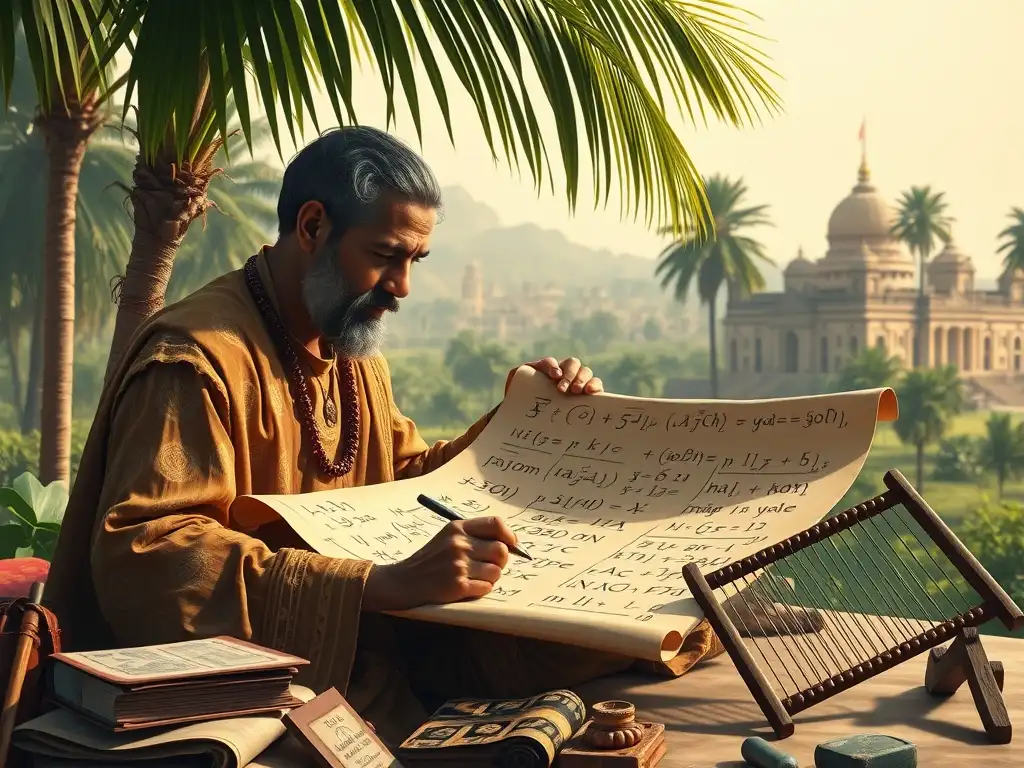
Ancient Indian algebraic techniques significantly shaped the development of mathematical concepts worldwide. One of the most notable contributions was the introduction of zero as a number, which revolutionized arithmetic and algebra. This concept, first recorded in the Bakhshali Manuscript (circa 200 AD), allowed for the formulation of equations and calculations that were previously impossible.
In addition to the concept of zero, ancient Indian mathematicians made significant strides in the field of algebraic equations. The Aryabhatiya, composed by Aryabhata in the 5th century, contains methods for solving linear and quadratic equations. Aryabhata’s work emphasized the use of algorithms, which became a foundation for future algebraic development.
- Key Concepts Introduced:
- Algebraic Notation: The use of symbols to represent numbers and operations.
- Negative Numbers: The acceptance of negative values in calculations, which laid groundwork for modern mathematics.
- Algorithmic Processes: Systematic approaches to solving equations that informed later European mathematics.
The influence of these concepts extended beyond the Indian subcontinent, as Arab scholars translated and disseminated these texts during the Islamic Golden Age. This exchange of knowledge helped shape the mathematical landscape in Europe, particularly during the Renaissance.
Legacy of Ancient Indian Mathematicians
The legacy of ancient Indian mathematicians is profound, with figures such as Brahmagupta and Bhaskara II leading the charge in algebraic advancements. Brahmagupta’s Brahmasphutasiddhanta (628 AD) provided rules for arithmetic operations on both positive and negative numbers, as well as methods for solving quadratic equations. His work emphasized the importance of clarity and systematic approach in mathematical problem-solving.
Bhaskara II, in his Lilavati and Bijaganita, further expanded on these algebraic techniques. He introduced innovative methods for calculating solutions to complex equations and offered practical applications through real-life problems. His contributions include:
- Rules for Calculating Areas: Formulas for determining areas of geometric figures.
- Advanced Quadratic Solutions: Techniques for finding roots of quadratic equations, paving the way for future mathematicians.
The teachings of these mathematicians not only contributed to the field of mathematics but also had implications in fields such as astronomy and architecture. Their works were instrumental in the development of trigonometry and calculus, influencing scholars in both the East and West for centuries.
The ancient Indian algebraic techniques laid a robust foundation for modern mathematics, characterized by innovative concepts and profound insights that continue to resonate in today’s mathematical practices.
Conclusion: The Enduring Legacy of Ancient Indian Algebraic Techniques
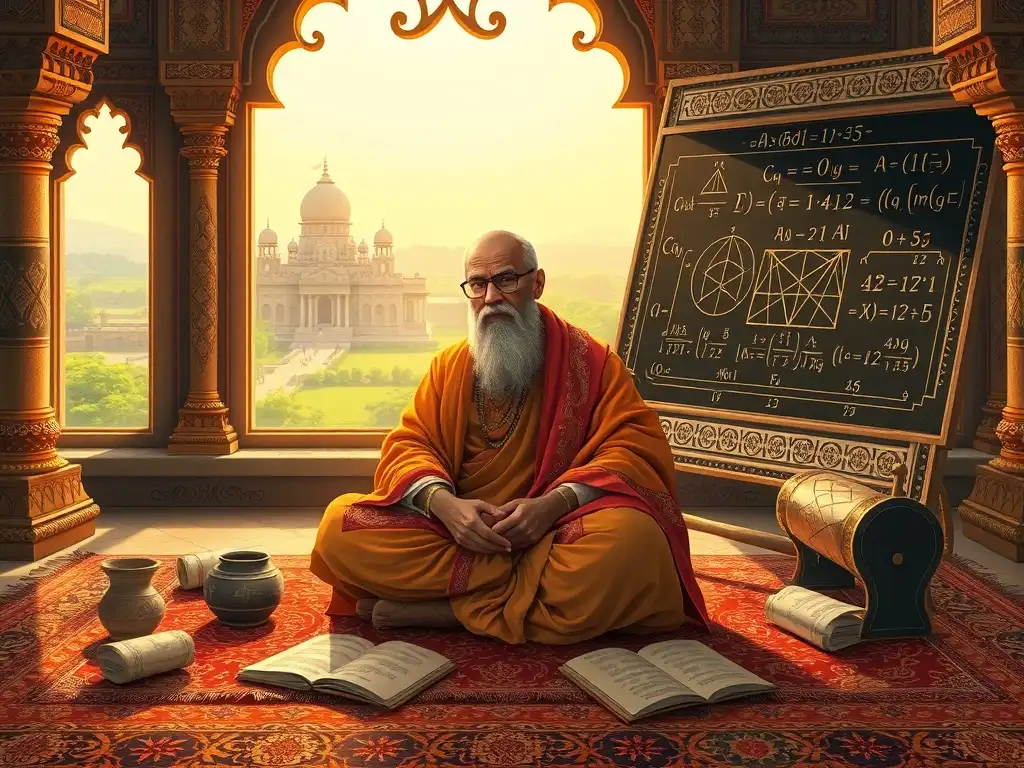
The contributions of ancient Indian algebraic techniques extend far beyond the borders of India and have significantly influenced the evolution of mathematics globally. This legacy is characterized by a blend of practical problem-solving and theoretical advancements, showcasing a sophisticated understanding of mathematical concepts. Ancient Indian mathematicians, such as Aryabhata and Brahmagupta, laid the groundwork for various algebraic methods that would later permeate through cultures and civilizations, thus shaping modern mathematics.
Significance in the Context of World History
Ancient Indian algebraic techniques emerged during a time when mathematical thought was flourishing across the globe. The work of scholars like Aryabhata (476-550 CE) introduced fundamental concepts that would be foundational for future developments. For instance:
- Zero as a Concept: The introduction of the numeral zero (0) was a revolutionary concept that facilitated the development of algebra. This allowed for the representation of large numbers and complex calculations, which was pivotal in the advancement of mathematics.
- Algebraic Equations: Brahmagupta (598-668 CE) made significant strides in formulating rules for solving equations. His work on quadratic equations laid the groundwork for future mathematicians, including those in the Islamic Golden Age, who would expand upon these ideas.
- Geometry and Trigonometry: The ancient Indians also made notable contributions to geometry and trigonometry, which were essential for astronomical calculations. These techniques were vital for navigation, land measurement, and architectural design, influencing civilizations far and wide.
The impact of these techniques can be observed in the works of later mathematicians from the Middle East and Europe, who adopted and adapted these ideas, facilitating the spread of knowledge throughout the ages.
Continuing Relevance in Contemporary Mathematics
The principles of ancient Indian algebraic techniques remain relevant in contemporary mathematics, showcasing the timeless nature of these discoveries. Modern mathematics utilizes many concepts initially developed by ancient Indian scholars:
- Algebraic Structures: Concepts like algebraic identities and the manipulation of equations are foundational in today’s mathematical curriculum, emphasizing the enduring influence of ancient techniques.
- Problem-Solving Approaches: The methodologies for tackling complex problems developed in ancient texts are still applicable in modern mathematical problem-solving. Techniques such as completing the square and using quadratic formulas find their roots in ancient practices.
- Interdisciplinary Applications: The algebraic techniques are not limited to pure mathematics; they are essential in fields such as computer science, engineering, and economics. The algorithms and computational techniques that derive from algebraic principles are integral to technological advancements today.
The ancient Indian algebraic techniques represent a monumental achievement in the history of mathematics. Their significance in world history and continuing relevance in contemporary mathematical practices reflect a rich intellectual heritage that continues to inspire and inform the study of mathematics. The legacy of these techniques serves as a reminder of the profound contributions of ancient civilizations to the advancement of human knowledge.
References and Further Reading on Ancient Indian Mathematics
Recommended Books and Articles
-
"A History of Indian Mathematics" by C. V. D. S. Murthy
This comprehensive book delves into the evolution of mathematical concepts in India, highlighting key figures and their contributions. It covers various topics, including algebra, geometry, and number systems.
-
"Mathematics in Ancient India" by Kim Plofker
Plofker's work is essential for understanding ancient Indian mathematics and its implications. The text explores sources from the Vedic period to the medieval era, providing insights into ancient Indian algebraic techniques.
-
"The Mathematics of India" by N. R. Sitaraman
This book offers an in-depth analysis of the mathematical practices in ancient Indian civilization, focusing on algebraic methods and their applications in astronomy and commerce.
-
"Indian Mathematics: A Historical Perspective" by Ramesh Chandra
Chandra provides a detailed examination of mathematical developments in ancient India, emphasizing the influence of cultural and historical contexts on mathematical advancements.
-
"The Vedic Mathematics: A Mathematical Approach" by Jagadguru Swami Sri Bharati Krishna Tirthaji
This work introduces readers to the concepts of Vedic mathematics, including various algebraic techniques that can simplify complex calculations.
Online Resources for Further Exploration
-
The Indian Mathematical Society
A platform offering access to journals, research papers, and articles related to Indian mathematics. It serves as a great resource for anyone interested in ancient Indian algebraic techniques and their historical significance.
-
The Online Encyclopedia of Integer Sequences (OEIS)
While primarily focused on sequences, this resource includes references to ancient Indian mathematics and its impact on modern mathematical theories.
-
Internet Archive
A treasure trove of digitized texts, including historical manuscripts and books on ancient Indian mathematics. Searching for specific works related to algebraic methods can yield interesting primary sources.
-
The National Digital Library of India
This repository contains a wealth of educational resources, including texts on ancient Indian mathematics. Users can find scanned manuscripts that provide insight into algebraic techniques used in ancient times.
-
YouTube Channels on Ancient Indian Science
Various educational channels explore ancient Indian mathematics and algebraic techniques through engaging videos, making complex concepts more accessible.
These resources provide an invaluable foundation for further exploration of ancient Indian algebraic techniques, enriching one's understanding of this fascinating subject.
Frequently Asked Questions
What are ancient Indian algebraic techniques?
Ancient Indian algebraic techniques refer to the mathematical methods developed in India, which include sophisticated methods for solving equations and understanding number theory.
How did ancient Indian mathematicians influence modern mathematics?
Ancient Indian mathematicians contributed significantly to algebra, geometry, and calculus, laying the groundwork for modern concepts such as the decimal system and zero.
What civilizations contributed to the development of ancient Indian mathematics?
The Indus Valley Civilization and later periods, such as the Gupta Empire, were pivotal in the advancement of mathematical sciences, fostering a rich intellectual environment.
What is the significance of zero in ancient Indian mathematics?
The concept of zero as a number was developed in ancient India, which revolutionized mathematics by allowing for the representation of nothingness and enabling complex calculations.
Are there any famous texts on ancient Indian mathematics?
Yes, texts like the Aryabhatiya by Aryabhata and the Bakhshali Manuscript are significant works that showcase the advanced mathematical knowledge of ancient Indian scholars.
Final Reflection: The Timeless Legacy of Ancient Indian Algebraic Techniques
The intricate world of ancient Indian algebraic techniques remains profoundly relevant today, as we navigate an era dominated by complex mathematical challenges and technological advancements. The brilliance of these techniques not only laid the groundwork for modern algebra but also serves as a reminder of the rich intellectual heritage that continues to influence contemporary mathematics. As we delve deeper into the complexities of our current mathematical landscape, we must acknowledge and celebrate the foundational contributions of ancient scholars who paved the way for future generations.
Cultural and social landscapes are continuously shaped by the mathematical principles that originated in ancient India, reflecting the enduring power of knowledge across time and space. The techniques developed by mathematicians such as Brahmagupta and Bhaskara not only revolutionized the understanding of algebra but also fostered a culture of inquiry and innovation. Mathematics is the language with which God has written the universe.
– Galileo Galilei. This quote resonates deeply as it underscores the universal significance of mathematical exploration, reminding us that the quest for knowledge transcends borders and eras.
As we reflect on the lessons from ancient Indian algebraic techniques, let us embrace the spirit of curiosity and innovation that characterized these early scholars. I invite you to explore the depths of mathematical knowledge in your own life, whether through study, teaching, or simply appreciating the beauty of numbers. By acknowledging the past and applying its wisdom to our present challenges, we can cultivate a deeper understanding of mathematics and its role in shaping our world. Together, let us honor this legacy and inspire future generations to continue the journey of discovery in the realm of mathematics.
Uncover the Secrets of Ancient Mathematics!
Thank you for diving into the fascinating world of Ancient Indian Mathematics with us! Your curiosity has led you to uncover invaluable insights into complex algebraic solutions that have shaped modern mathematics. Now, let’s turn that knowledge into action!
Here are a few steps you can take to further embrace the power of ancient mathematical wisdom:
- Explore unique techniques and historical figures behind these solutions by visiting our dedicated Ancient Mathematics section.
- Share your newfound knowledge with friends or on social media to inspire others to discover this rich heritage.
- Join our community of math enthusiasts; consider participating in our forums or subscribing to our newsletter for deeper insights and discussions.
What other mathematical puzzles or historical figures would you like to explore? Let us know in the comments!