
The Interplay of Religion and Astronomy in Ancient Indian Civilizations


Welcome to Ancient India History, where we embark on a journey through the rich tapestry of ancient Indian civilizations. In this captivating exploration, we delve into the profound connections between ancient Indian astronomy and religion, revealing how these two realms intertwined to shape the cultural and scientific landscape of the time. What secrets lie in the stars and scriptures of ancient India?
Join us as we uncover the remarkable contributions of these civilizations, from the Indus Valley to the Gupta Empire, and discover how their insights continue to influence our understanding today. Prepare to be intrigued and inspired as we unveil the wonders of the past!
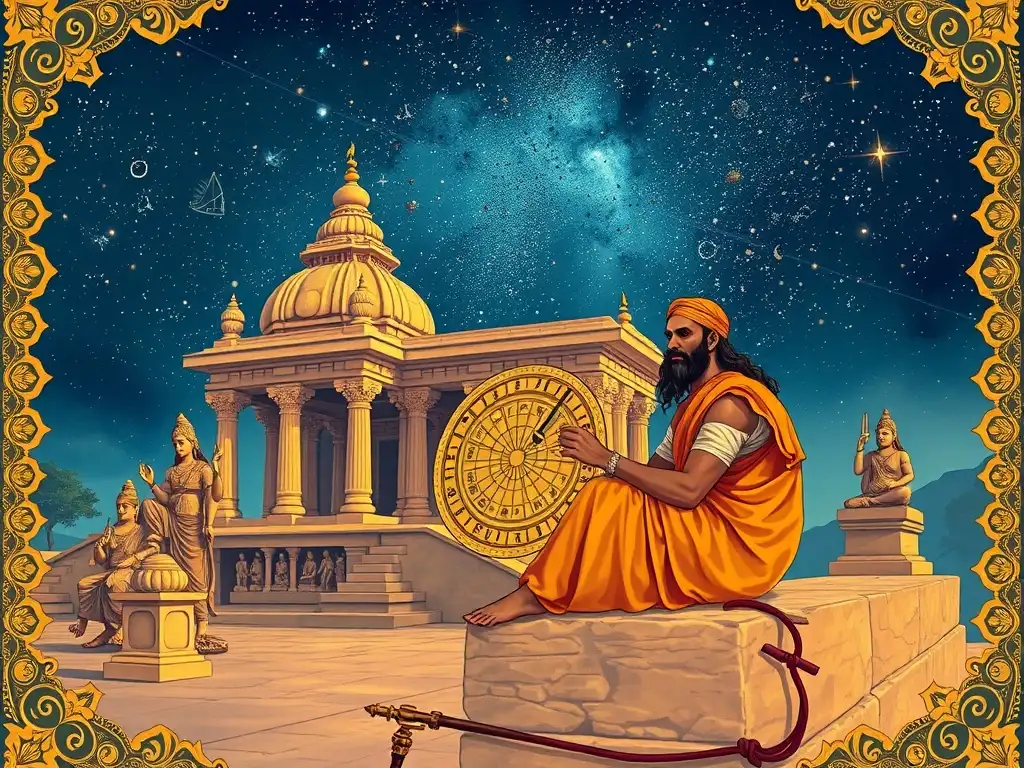
Introduction to Ancient Indian Astronomy and Religion
The intricate relationship between religion and astronomy in ancient Indian civilizations provides a fascinating lens through which we can explore their cultural and scientific advancements. Ancient Indian astronomy was not merely a scientific pursuit; it was deeply intertwined with religious beliefs, rituals, and practices.
From the Indus Valley Civilization, where celestial patterns influenced agricultural practices, to the Gupta Empire, where scholars made significant contributions to astronomical knowledge, the interplay of these two domains shaped the worldview of ancient Indians. This article will delve into the historical context of astronomy in ancient India, examining how religious beliefs guided celestial observations and the development of astronomical theories.
Overview of Ancient Indian Civilizations
Ancient India was home to several vibrant civilizations, each contributing uniquely to the tapestry of its history. Key periods include:
- Indus Valley Civilization (c. 3300–1300 BCE): Known for its advanced urban planning and trade systems.
- Vedic Period (c. 1500–500 BCE): Marked by the composition of the Vedas, sacred texts rich in cosmological insights.
- Maurya Empire (c. 322–185 BCE): A period of political consolidation and cultural flourishing, including significant advancements in science.
- Gupta Empire (c. 240–550 CE): Often referred to as the Golden Age of India, this era witnessed remarkable achievements in mathematics and astronomy.
The contributions from these periods highlight the profound influence that religion and spirituality had on the scientific inquiries of ancient Indian scholars.
Significance of Astronomy in Ancient Indian Culture
Astronomy held a central place in ancient Indian culture, serving both practical and spiritual purposes. The significance can be summarized as follows:
- Agricultural Planning: Celestial observations were crucial for determining seasonal cycles, which directly impacted agricultural practices.
- Religious Rituals: Alignments of celestial bodies often dictated the timing of rituals and festivals, embedding astronomy within the fabric of religious life.
- Philosophical Thought: Ancient texts such as the Vedas and Upanishads reflect a deep philosophical engagement with cosmic phenomena, underscoring the belief that understanding the universe was integral to spiritual enlightenment.
The fusion of astronomy and religion fostered a unique perspective on the cosmos, influencing not only scientific thought but also cultural expression throughout ancient India.
Historical Context of Astronomy in Ancient India
The Vedic Period and Celestial Observations
During the Vedic Period, astronomical knowledge was primarily oral and derived from observations. The Vedas contained hymns that referenced celestial bodies, indicating an early understanding of their movements. Noteworthy aspects include:
- Nakshatras: The 27 lunar mansions outlined in the Vedic texts, used for timekeeping and astrological purposes.
- Solstice and Equinox Observations: Rituals were often timed according to solar cycles, showcasing the practical application of celestial knowledge.
This era laid the groundwork for more structured astronomical studies in subsequent periods.
Astronomy in the Maurya and Post-Maurya Era
The Maurya Empire witnessed a significant advancement in astronomical knowledge, driven by scholars who sought to align scientific inquiry with spiritual understanding. Key developments included:
- Aryabhata: One of the first known astronomers from this period, whose work laid the foundation for later astronomical theories.
- Surya Siddhanta: A seminal text that synthesized observations with mathematical calculations, reflecting the integration of astronomy with religious and cultural practices.
The post-Maurya era continued this trend, with astronomy becoming increasingly sophisticated and intertwined with religious observance.
Contributions of the Gupta Empire to Astronomy
The Gupta Empire (c. 240–550 CE) is often celebrated as a Golden Age for science and mathematics in ancient India, especially in astronomy. Important contributions from this period include:
- Brahmagupta: His seminal work "Brahmasphutasiddhanta" provided detailed calculations of planetary motion and solar eclipses.
- Mathematical Innovations: The use of zero and advancements in algebra significantly enhanced astronomical calculations.
This era not only advanced scientific understanding but also reinforced the connection between astronomical phenomena and religious beliefs, establishing a legacy that would influence both Indian and global astronomy for centuries to come.
Religious Influences on Ancient Indian Astronomy
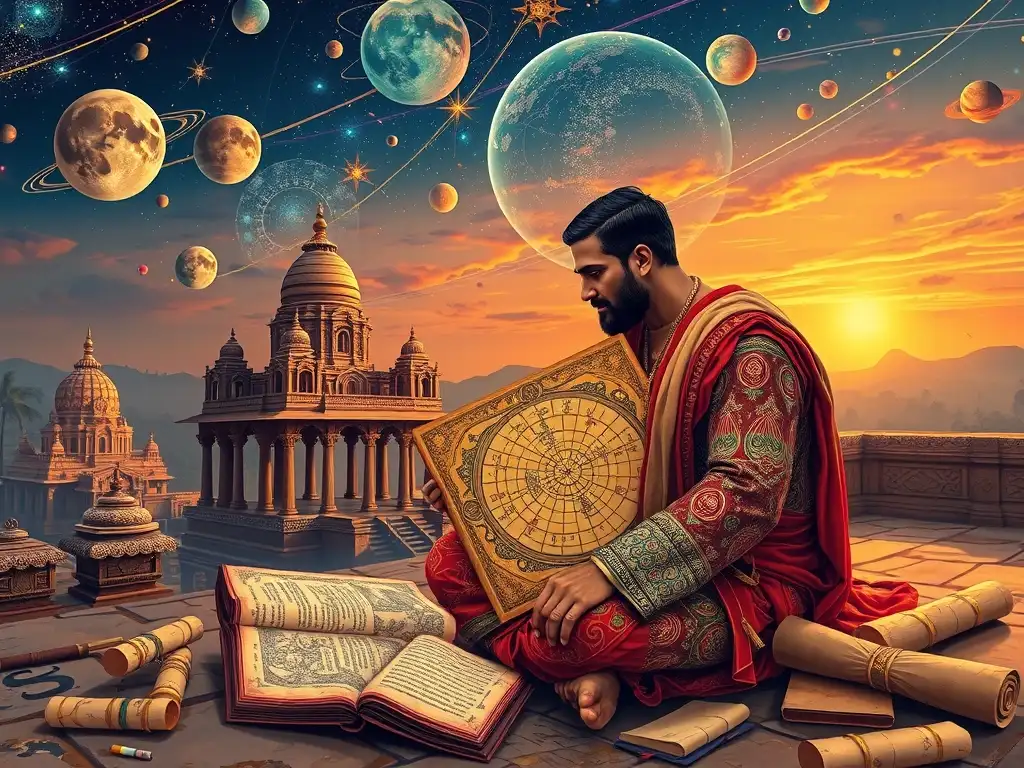
Ancient Indian astronomy was deeply intertwined with the religious beliefs and practices of the time. The celestial bodies and their movements were often perceived as manifestations of divine will, influencing not only scientific inquiry but also spiritual practices. This interplay manifests across various religions prevalent in ancient India, particularly Hinduism, Buddhism, and Jainism, each contributing uniquely to the understanding and development of astronomical knowledge. As a result, astronomical observations were not merely scientific endeavors but also held significant cultural and religious implications.
Role of Hindu Cosmology in Astronomical Understanding
Hindu cosmology plays a crucial role in shaping the astronomical perspectives of ancient Indian civilizations. The intricate relationship between the cosmos and Hindu philosophy is evident in texts such as the Vedas and Puranas, which present a cyclical view of time, known as Kalachakra. This concept posits that time is divided into vast epochs, or Yugas, reflecting the moral and spiritual state of humanity.
The celestial movements, including the course of the sun, moon, and planets, were seen as vital indicators of auspiciousness and religious significance. For instance, the positions of celestial bodies were used to determine the timing of rituals and festivals. Additionally, the notion of Vaastu Shastra, which integrates astronomical principles into architectural design, further illustrates how Hindu cosmology influenced practical applications of astronomy.
Astronomy in Buddhist Texts and Practices
Buddhism also engaged with astronomy, though its approach differed from that of Hinduism. Buddhist texts, such as the Pali Canon, contain references to celestial phenomena, emphasizing the impermanence of the material world. The concept of Anicca (impermanence) extends to the understanding of cosmic cycles, where celestial bodies are viewed as transient entities.
Moreover, Buddhist monastic calendars often incorporated astronomical observations to determine important dates for meditation and ritual practices. The influence of astronomy in Buddhism can also be seen in the construction of stupas and temples, which were aligned with celestial events, reflecting a harmonious relationship between spirituality and cosmic phenomena.
Jain Contributions to Astronomical Knowledge
Jainism has made significant contributions to the field of astronomy, particularly through its rigorous philosophical inquiries into the nature of the universe. Jain texts, such as the Samkhya Sutra and Siddhanta, delve into cosmological theories that describe the universe as an infinite space populated by various realms and celestial beings.
Jain scholars emphasized observational accuracy and mathematical precision in their astronomical calculations. They developed extensive tables for planetary positions and eclipses, showcasing their advanced understanding of celestial mechanics. The Jain perspective also incorporates ethical considerations, reflecting their beliefs in non-violence and the interconnectedness of all beings, which influenced their approach to studying the cosmos.
Key Astronomical Texts and Their Religious Context
The rich tapestry of ancient Indian astronomy is woven into several key texts that reveal the profound connections between astronomical knowledge and religious beliefs. These texts serve as a testament to the intellectual achievements of ancient Indian civilizations and their commitment to integrating spirituality with scientific inquiry.
The Surya Siddhanta: Bridging Religion and Science
The Surya Siddhanta is one of the most significant astronomical texts in ancient India, dating back to around the 4th century CE. This treatise not only provides detailed calculations for predicting celestial events, such as eclipses and planetary motions, but also embeds these observations within a religious framework.
The text is dedicated to the sun, symbolizing the divine light that illuminates both the physical and spiritual realms. It emphasizes the importance of rituals timed according to astronomical events, thereby linking scientific understanding with religious practice. The Surya Siddhanta exemplifies how ancient Indian scholars sought to harmonize their spiritual beliefs with empirical observations of the cosmos.
Aryabhata’s Contributions to Astronomy and Spirituality
Aryabhata, a pioneering figure in ancient Indian astronomy, made significant contributions through his work, the Aryabhatiya, composed in 499 CE. In this seminal text, Aryabhata introduced innovative concepts such as the Earth's rotation on its axis and the calculation of pi, demonstrating a remarkable understanding of mathematical principles.
Aryabhata's approach to astronomy was deeply connected to spirituality; he viewed the study of the cosmos as a pathway to understanding the divine order of the universe. His calculations were often framed within a context of cosmic cycles, blending scientific inquiry with philosophical reflections on existence and the nature of reality. This fusion of science and spirituality highlights the holistic worldview prevalent in ancient Indian thought.
The Role of Al-Biruni in Understanding Indian Astronomy and Religion
Al-Biruni, a Persian scholar who traveled to India in the 11th century, played a pivotal role in bridging the gap between Indian and Islamic astronomical knowledge. His works, particularly Kitab al-Hind, provided a comprehensive overview of Indian science, philosophy, and religion, including detailed observations of Indian astronomical practices.
Al-Biruni's appreciation for Indian astronomy and its religious context is evident in his analyses of Hindu and Buddhist cosmology. He documented the mathematical techniques employed by Indian astronomers and acknowledged the spiritual significance of celestial phenomena in Indian culture. By synthesizing Indian and Islamic wisdom, Al-Biruni not only enriched the global understanding of astronomy but also underscored the interconnectedness of knowledge across cultures and religions.
Rituals and Astronomy: Mapping the Skies
In ancient Indian civilizations, astronomy was intricately woven into the fabric of religious practices and rituals. The observation of celestial bodies played a crucial role in shaping spiritual beliefs, calendars, and societal norms. The movements of the sun, moon, and stars were meticulously recorded, influencing various aspects of life, including agriculture, festivals, and even architecture. The alignment of celestial events with religious observances demonstrates a profound understanding of both astronomy and its significance in the spiritual realm.
Astronomical Alignments in Temples and Sacred Sites
Many ancient Indian temples were constructed with specific astronomical alignments, showcasing the advanced knowledge of celestial movements held by architects and astronomers of the time. For instance, the famous Sun Temple at Konark is designed to align with the sun's rays during the equinoxes, illuminating the sanctum in a spectacular display of light and shadow. Similarly, the Brihadeeswarar Temple in Thanjavur exhibits precise alignments that correspond with the solstices, reflecting the deep connection between divine worship and celestial phenomena.
These alignments were not merely architectural feats; they also served to enhance the religious experience, making the worshippers acutely aware of their place in the cosmos. Such structures acted as calendars themselves, marking time through the observation of celestial events and reinforcing the belief that the heavens were an integral part of earthly existence.
Festivals and Their Astronomical Significance
Festivals in ancient India were often timed with astronomical events, reflecting the close relationship between religion and the cosmos. For example, Diwali, the Festival of Lights, is celebrated during the new moon, symbolizing the triumph of light over darkness. Similarly, Makar Sankranti marks the sun's transition into Capricorn, heralding the end of winter and the beginning of longer days, which is a period of agricultural renewal.
These festivals not only served as spiritual observances but also as community gatherings that reinforced social bonds, agricultural practices, and cultural identity. The timing of these events was crucial for agricultural societies, as they depended on celestial cues to determine planting and harvesting times.
Calendrical Systems and Religious Practices
The ancient Indian calendrical systems were highly sophisticated, integrating lunar and solar cycles into their calculations. The Hindu calendar, known as the Panchang, is a prime example, combining various astronomical observations to define the months and auspicious days for religious ceremonies. This system ensured that rituals were performed at the right time, aligning divine favor with human activities.
Religious practices were often dictated by these calendars, with specific days deemed more auspicious for rituals, ceremonies, and festivals. This synchronization of time with religious observance illustrates the ancient Indians' understanding of astronomy's role in daily life and spirituality.
Case Studies of Astronomy and Religion Interplay
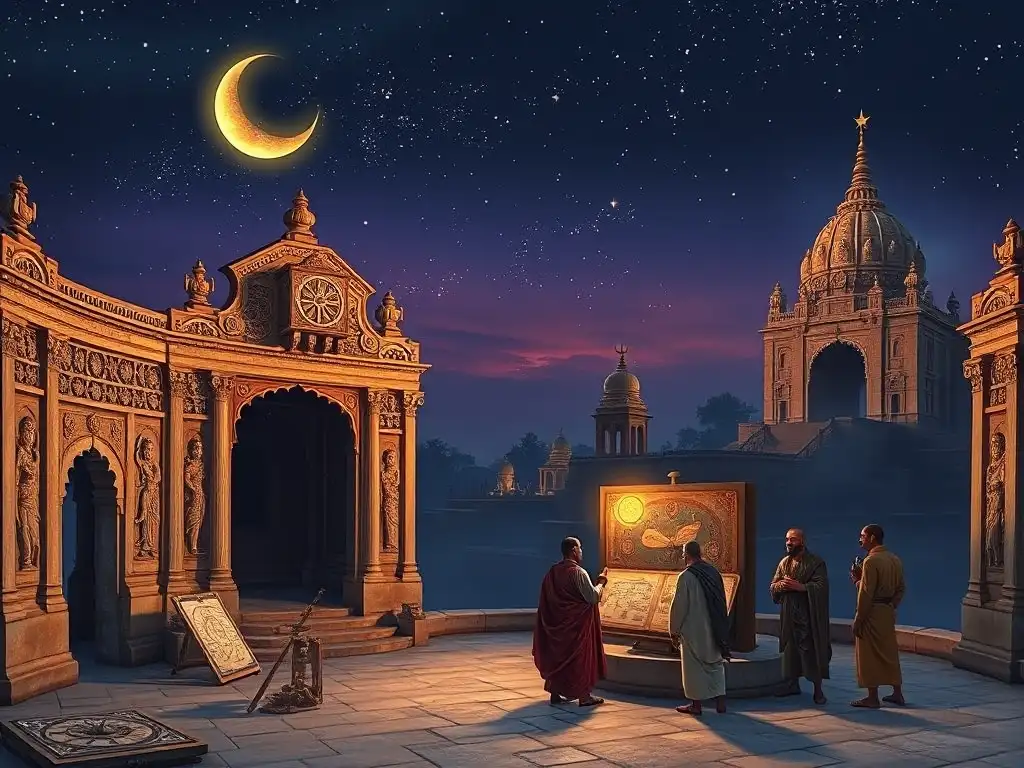
The interplay between astronomy and religion in ancient Indian civilizations is exemplified through various case studies that highlight the significance of celestial phenomena in spiritual practices.
The Significance of Eclipses in Vedic Rituals
Eclipses were viewed with great reverence and fear in ancient India, often interpreted as powerful omens. Vedic rituals during eclipses were believed to purify the soul and restore cosmic order. Special ceremonies, like the "Shraadh," were performed to honor ancestors, demonstrating the belief that celestial events had direct implications on spiritual and familial connections.
The rituals surrounding eclipses also reflected a deep understanding of astronomical cycles, showcasing how the intersection of religion and science shaped societal behaviors and beliefs. These events were meticulously calculated and observed, emphasizing the role of astronomy in determining the timing of important religious practices.
The Role of Constellations in Hindu Mythology
Constellations hold significant places in Hindu mythology, where they are often personified as divine beings. For instance, the constellation of Orion is associated with the legendary hunter "Mrigashirsha," while the Pleiades are linked to the seven divine mothers or "Saptarishi." These celestial patterns not only served as navigation guides but also enriched the mythological narratives that informed spiritual beliefs.
The stories associated with these constellations reinforced moral lessons, cultural values, and religious beliefs, serving to bridge the gap between the observable universe and human experience. The integration of astronomy with mythology illustrates how ancient Indians interpreted their world through a cosmic lens.
The Influence of Astronomy on Agricultural Practices
Agriculture was central to ancient Indian society, and astronomical knowledge directly influenced farming practices. The monsoon season, determined by celestial patterns, was crucial for crop cycles. Farmers relied on the positions of stars and planets to predict weather patterns, which in turn dictated planting and harvesting times.
Festivals celebrating the harvest, such as Pongal, were aligned with astronomical events, marking the cyclical nature of agricultural life. This connection between astronomy and agriculture ensured that communities thrived, reflecting the importance of celestial observations in sustaining ancient Indian civilizations.
Through these case studies, it becomes evident that ancient Indian astronomy and religion were not merely parallel pursuits but were deeply intertwined, shaping the cultural landscape of the time.
Conclusion: The Legacy of Ancient Indian Astronomy and Religion
The interplay between astronomy and religion in ancient Indian civilizations has left a profound legacy that continues to resonate in various fields today. The sophisticated astronomical knowledge developed by ancient Indian scholars, intertwined with religious beliefs and practices, not only shaped the cultural and spiritual landscape of the time but also laid the groundwork for subsequent advancements in science and mathematics. The meticulous observations of celestial bodies, the formulation of complex calendars, and the alignment of temples with astronomical phenomena reflect a deep understanding of the cosmos that was both scientific and spiritual.
This legacy is evident in the preservation of texts such as the Surya Siddhanta, which combines mathematical precision with cosmological insights, demonstrating how ancient astronomers viewed their work as an extension of their spirituality. The reverence for celestial phenomena is encapsulated in various religious rituals and festivals that celebrate the cycles of nature, further cementing the connection between astronomy and religion in the collective consciousness of the Indian subcontinent.
Lasting Impact on Later Indian Scientific Developments
The contributions of ancient Indian astronomy had a lasting impact on later scientific developments within India and beyond. Scholars like Aryabhata and Brahmagupta built upon the foundations laid by their predecessors, refining astronomical calculations and introducing innovative concepts such as the heliocentric theory and the use of zero as a mathematical placeholder. These advancements not only influenced later Indian mathematicians and astronomers but also made their way into the Islamic Golden Age, where they were translated and expanded upon by scholars in the Middle East.
The emphasis on empirical observation and mathematical accuracy in ancient Indian astronomy fostered a scientific spirit that permeated various disciplines, including medicine and navigation. The integration of astronomy with religious practices also encouraged communal events that aligned with astronomical phenomena, ensuring that the knowledge remained relevant and accessible to the masses.
The Continuing Influence of Ancient Beliefs on Modern Astronomy
Ancient Indian beliefs continue to influence modern astronomical practices and cultural observances. Many festivals, such as Diwali and Makar Sankranti, are based on astronomical events, showcasing the enduring link between these celestial occurrences and religious traditions. Additionally, the principles of Vedic astrology, which stem from ancient astronomical practices, still hold significant cultural relevance in contemporary Indian society.
Modern astronomers and enthusiasts often draw inspiration from the rich history of ancient Indian astronomy. The study of ancient texts not only provides insight into early scientific methodologies but also encourages a holistic approach to understanding the cosmos, one that recognizes the interconnectedness of science, spirituality, and cultural heritage. As we delve deeper into the universe, the wisdom of ancient Indian scholars serves as a reminder of the profound relationship between human inquiry and the celestial realm.
References for Further Reading on Ancient Indian Astronomy and Religion
Recommended Books and Articles
- "A History of Indian Astronomy" by C. V. Vaidya - This book provides a comprehensive overview of the evolution of astronomy in India, highlighting key figures and developments.
- "The Astronomical Traditions of India" by R. N. Iyengar - This work delves into the historical context of Indian astronomy and its integration with religious practices.
- "Cosmic Connections: The Ancient Indian View of the Universe" by A. K. Sharma: - An exploration of how ancient Indian philosophies shaped the understanding of the cosmos.
Online Resources and Documentaries
- NASA's "Ancient Indian Astronomy" - A detailed resource that discusses the contributions of ancient Indian astronomers to modern science.
- Documentary: "The Stars of India": - This documentary focuses on the celestial observations made by ancient Indian civilizations and their implications for contemporary astronomy.
- Website: Indian Astronomy Portal: - A comprehensive site offering articles, research papers, and discussions on the intersection of astronomy and religion in ancient India.
This exploration of ancient Indian astronomy and religion not only enhances our understanding of historical scientific advancements but also reinforces the enduring influence these ancient civilizations have on modern practices and beliefs.
- Introduction to Ancient Indian Astronomy and Religion
- Overview of Ancient Indian Civilizations
- Significance of Astronomy in Ancient Indian Culture
- Historical Context of Astronomy in Ancient India
- Religious Influences on Ancient Indian Astronomy
- Key Astronomical Texts and Their Religious Context
- Rituals and Astronomy: Mapping the Skies
- Case Studies of Astronomy and Religion Interplay
- Conclusion: The Legacy of Ancient Indian Astronomy and Religion
- References for Further Reading on Ancient Indian Astronomy and Religion
- What was the significance of astronomy in ancient Indian civilizations?
- How did ancient Indian astronomers contribute to the field?
- What role did religion play in the study of astronomy?
- Can you name any notable ancient Indian texts on astronomy?
- How did ancient Indian astronomy compare to other civilizations?
Frequently Asked Questions
What was the significance of astronomy in ancient Indian civilizations?
Astronomy in ancient India was closely linked to religious practices and agricultural cycles. It played a vital role in determining festivals, rituals, and the timing of agricultural activities.
How did ancient Indian astronomers contribute to the field?
Ancient Indian astronomers made significant contributions, including the development of the concept of zero, advancements in trigonometry, and accurate calculations of celestial phenomena which influenced later astronomical studies.
What role did religion play in the study of astronomy?
Religion heavily influenced astronomy in ancient India, as celestial events were often interpreted as divine messages. This led to the integration of astrology with religious beliefs, guiding both daily life and spiritual practices.
Can you name any notable ancient Indian texts on astronomy?
Yes, notable texts include the Surya Siddhanta, which outlines mathematical principles of astronomy, and the Aryabhatiya, authored by Aryabhata, which covers various astronomical concepts and calculations.
How did ancient Indian astronomy compare to other civilizations?
Ancient Indian astronomy was highly sophisticated, often rivaling that of Mesopotamia and Greece. However, it uniquely intertwined with religion, making it distinct in its cultural context and applications in daily life.
Final Reflection: The Cosmic Dance of Faith and Knowledge
The interplay of religion and astronomy in ancient Indian civilizations remains a profound testament to how spiritual beliefs and scientific inquiry can coexist and enrich one another. In a world where the boundaries between faith and reason often seem rigid, the ancient Indian perspective invites us to reconsider the harmony that can exist between these two realms. The celestial bodies were not merely objects of study; they were woven into the very fabric of religious practice and philosophical thought, illustrating a unique approach to understanding the universe.
The influence of ancient Indian astronomy and religion continues to resonate in contemporary culture, reminding us of the importance of integrating diverse perspectives. The rich tapestry of ancient texts, rituals, and astronomical observations reflects a society that revered the cosmos as a divine manifestation. As we explore these historical connections, we uncover the wisdom that transcends time. The stars are not just distant suns; they are the eyes of the divine watching over us.
This quote encapsulates the essence of how ancient civilizations viewed the universe—not as a mere backdrop but as an active participant in their spiritual journey.
As we reflect on the lessons from ancient Indian astronomy and religion, let us embrace the invitation to explore our own beliefs and knowledge systems. Consider how you can foster a dialogue between your spiritual and intellectual pursuits, allowing them to inform and enrich one another. In a rapidly changing world, the wisdom of the past can guide us toward a more harmonious future, where curiosity and reverence coexist, inspiring us to seek a deeper understanding of our place in the cosmos.
Embark on a Celestial Journey!
Thank you for exploring the fascinating relationship between religion and astronomy in ancient Indian civilizations! You've uncovered key insights into how these two realms intertwined to shape our understanding of the cosmos. Now, it's time to take what you've learned and dive deeper into this captivating subject.
Here are a few actions you can take to expand your knowledge and share the wonders of ancient Indian astronomy:
- Join a local astronomy club or participate in online forums to connect with others who share your passion for celestial observations and history.
- Read a significant ancient Indian text related to astronomy or cosmology, such as the Surya Siddhanta, to gain firsthand insight into historical perspectives.
- Share this article with friends or on social media, fostering discussions about how ancient philosophies continue to influence modern sciences.
In what other ways do you think ancient perspectives on astronomy can enrich our understanding of the universe today?