
The Mathematical Precision of Ancient Indian Temples and Architecture


Welcome to Ancient India History, where we invite you to journey through the rich tapestry of India’s past. Today, we delve into the fascinating world of ancient Indian temple architecture, a marvel of mathematical precision that reflects the ingenuity and spiritual devotion of its creators. As you explore our latest article, "The Mathematical Precision of Ancient Indian Temples and Architecture," prepare to uncover the intricate designs and profound significance that these structures hold. What secrets lie within their stones? Join us as we unravel the mysteries and celebrate the remarkable contributions of ancient Indian civilizations!

Introduction to Ancient Indian Temple Architecture
Ancient Indian temple architecture is a captivating blend of artistry, spirituality, and mathematical precision. This architectural marvel not only reflects the religious zeal of the time but also encapsulates the advanced understanding of geometry and mathematics possessed by ancient Indian architects. From the grand structures of the Indus Valley Civilization to the intricate carvings of the Gupta Empire, these temples stand as a testament to the ingenuity and cultural richness of ancient Indian civilizations.
The meticulous planning and design of these edifices reveal a profound connection between spirituality and mathematical principles that guided their construction. This article delves into the mathematical underpinnings of ancient Indian temple architecture, shedding light on how these structures continue to inspire awe and admiration in the modern era.
Overview of Ancient Indian Architecture
The architectural legacy of ancient India is remarkably diverse, reflecting the country's varied cultural influences and regional characteristics. Key architectural styles emerged over centuries, each marked by unique features and designs. Notable among these are:
- Hindu Temples: Characterized by intricate carvings, towering shikharas (spires), and a sanctum sanctorum (garbhagriha) that houses the deity.
- Buddhist Stupas: Dome-shaped structures symbolizing enlightenment, often adorned with intricate sculptures and reliefs.
- Jain Temples: Renowned for their exquisite detailing and elaborate designs, often incorporating images of Tirthankaras.
These architectural forms not only served religious purposes but also acted as centers for community gathering, education, and cultural exchange.
Importance of Mathematics in Temple Design
Mathematics played a pivotal role in the design and construction of ancient Indian temples, influencing their proportions, symmetry, and overall aesthetic appeal. Key mathematical principles utilized in temple architecture include:
- Geometry: Architects employed geometric shapes and figures to create harmonious designs, often adhering to specific ratios for aesthetic appeal.
- Astronomy: Many temples were oriented in alignment with celestial bodies, incorporating astronomical observations into their layout.
- Sacred Geometry: The use of specific geometric patterns, such as mandalas, symbolized the universe and its spiritual significance.
This mathematical precision not only ensured structural integrity but also imbued the temples with deeper symbolic meaning, reflecting the philosophical beliefs of the time.
Historical Context of Ancient Indian Temple Architecture
Understanding the historical context of ancient Indian temple architecture is essential to appreciate its evolution and significance. The development of these structures is intertwined with the broader socio-political and cultural landscape of the time, influencing various architectural styles and practices.
Evolution of Temple Architecture in Ancient India
The evolution of temple architecture in ancient India can be traced through several key periods:
- Indus Valley Civilization (c. 3300–1300 BCE): Early signs of urban planning and structured layouts, although specific temple structures are yet to be definitively identified.
- Maurya Period (c. 322–185 BCE): Introduction of rock-cut architecture and monumental stupas, such as the Sanchi Stupa.
- Gupta Period (c. 240–550 CE): Flourishing of temple architecture, characterized by elaborately carved stone temples like those at Khajuraho and Ujjain.
Each of these periods contributed to the rich tapestry of ancient Indian temple architecture, showcasing advancements in design and craftsmanship.
Influences of Regional Cultures on Temple Design
The diversity of ancient Indian temple architecture was further enriched by various regional cultures and traditions, leading to distinct architectural styles. Influences included:
- Dravidian Style: Predominantly found in Southern India, characterized by massive towers (vimanas) and elaborate sculptures.
- Nagara Style: Common in Northern India, marked by beehive-shaped towers and intricate carvings.
- Vesara Style: A hybrid of Dravidian and Nagara styles, prevalent in regions of Karnataka.
These regional styles reflect the cultural fusion and adaptability of ancient Indian architects, demonstrating how local customs and beliefs shaped the architectural landscape of the time.
Key Mathematical Principles in Ancient Indian Temple Architecture
The architectural grandeur of ancient Indian temples is not merely a result of artistic expression but is deeply rooted in mathematical precision. Various mathematical principles were employed by ancient architects to achieve structural integrity and aesthetic harmony. These principles include geometry, symmetry, proportions, and the application of sacred geometry, each of which played a crucial role in the design and construction of temples. The use of these mathematical concepts facilitated the creation of spaces that were not only visually appealing but also spiritually significant, reflecting the intersection of science and spirituality in ancient Indian civilization.
Geometry in Temple Layout and Structure
Geometry served as the backbone of ancient Indian temple architecture, informing both the layout and the structural design. Temples were often constructed using geometric shapes like squares, rectangles, and circles, which were believed to resonate with cosmic principles. The square, known as “Vastu Purusha Mandala,” was particularly significant, representing the universe and serving as a blueprint for the temple's layout.
In addition to the overall layout, geometric principles were applied in the design of specific elements, such as the shikhara (tower) and mandapa (pillared hall). Craftsmen meticulously calculated angles and dimensions to ensure stability and aesthetic appeal. For instance, the use of specific ratios, such as the golden ratio, in the proportions of temple structures contributed to a sense of balance and harmony that is visually captivating.
Symmetry and Proportions in Temple Design
Symmetry and proportions are paramount in ancient Indian temple architecture, creating a sense of order and beauty. The symmetrical design not only enhances the aesthetic appeal but also symbolizes cosmic order and balance, reflecting the belief that physical structures should mirror the divine.
Architects adhered to strict proportional systems to ensure harmony in their designs. For example, the height of the shikhara was often proportionate to the width of the temple base, creating a visually pleasing silhouette. This attention to proportion can be seen in temples like the Brihadeeswarar Temple, where the height of the main dome is precisely calculated in relation to its surrounding structures.
The use of proportional relationships extends beyond mere aesthetics; it serves a functional purpose as well. Proper proportions enhance the structural stability of the temple, allowing it to withstand the test of time, which many ancient Indian temples have successfully done.
Use of Sacred Geometry in Architecture
Sacred geometry plays a pivotal role in ancient Indian temple architecture, intertwining mathematical principles with spiritual beliefs. Sacred geometric shapes, such as the circle and square, were believed to embody spiritual truths and cosmic order. The layout of many temples is designed around these geometric forms, which are meant to invoke a sense of divine presence and connection to the cosmos.
The concept of “Mandala,” a geometric configuration representing the universe, is often used in temple layouts. The intricate designs found in temple carvings and sculptures also reflect sacred geometry, with patterns that resonate with mathematical principles, such as Fibonacci sequences and fractals, which are seen as symbols of the divine.
Furthermore, the orientation of temples often aligns with celestial bodies, incorporating astronomical considerations into their design. This integration of sacred geometry not only enhances the spiritual experience of the temple but also establishes a dialogue between architecture and the cosmos.
Case Studies of Notable Ancient Indian Temples
In examining the mathematical precision of ancient Indian temple architecture, several notable temples stand out as exemplary models of geometric and architectural excellence. These temples not only showcase the intricate application of mathematical principles but also reflect the cultural and spiritual ethos of their time.
The Brihadeeswarar Temple: A Marvel of Mathematical Precision
The Brihadeeswarar Temple, located in Thanjavur, is a stunning example of ancient Indian temple architecture that exemplifies mathematical precision. Constructed in the 11th century during the reign of the Chola dynasty, the temple features a massive granite dome that soars to a height of 66 meters, making it one of the tallest in the world.
The layout of the temple is meticulously planned, with a square design that embodies the Vastu Purusha Mandala concept. The proportions between the various elements, such as the gopuram (gateway tower) and the sanctum, are harmoniously balanced, showcasing the architects' deep understanding of geometry and proportion.
Moreover, the temple is oriented to face the cardinal directions, with its main entrance aligned perfectly with the rising sun during specific festivals, demonstrating the integration of astronomical considerations into its design.
The Kandariya Mahadeva Temple: Architectural Excellence and Geometry
The Kandariya Mahadeva Temple, located in Khajuraho, is renowned for its intricate carvings and exquisite architectural layout, which exemplify the use of geometry in ancient Indian architecture. Built in the 11th century, this temple is dedicated to Lord Shiva and reflects the architectural prowess of the Chandela dynasty.
The temple’s design incorporates a series of ascending levels, culminating in a tall shikhara that is designed with precise geometric shapes. The symmetry and proportion of the temple enhance its visual appeal, while the intricate sculptures that adorn its walls depict various deities and celestial beings, showcasing the fusion of art and mathematics.
Additionally, the temple's layout follows a carefully planned geometric pattern that aligns with celestial movements, illustrating the architects' knowledge of astronomy and their ability to incorporate it into their designs.
The Sun Temple at Konark: Alignments and Astronomical Significance
The Sun Temple at Konark, a UNESCO World Heritage Site, is a remarkable representation of ancient Indian temple architecture that highlights mathematical precision and astronomical significance. Constructed in the 13th century, this temple is designed in the shape of a giant chariot, pulled by seven horses, symbolizing the sun god Surya.
The geometrical layout of the temple incorporates a precise orientation that aligns with the sun's rays. During the equinoxes, the first rays of the sun illuminate the sanctum, creating a breathtaking spectacle. This alignment reflects the ancient Indian understanding of astronomy and the importance of solar worship in their culture.
The intricate carvings and sculptures adorning the temple walls are not only artistically significant but also embody geometric patterns that resonate with sacred geometry. The use of symmetry and proportion in the temple's design further emphasizes its mathematical precision, making it a testament to the advanced architectural knowledge of ancient Indian craftsmen.
The Role of Astronomy in Ancient Indian Temple Architecture
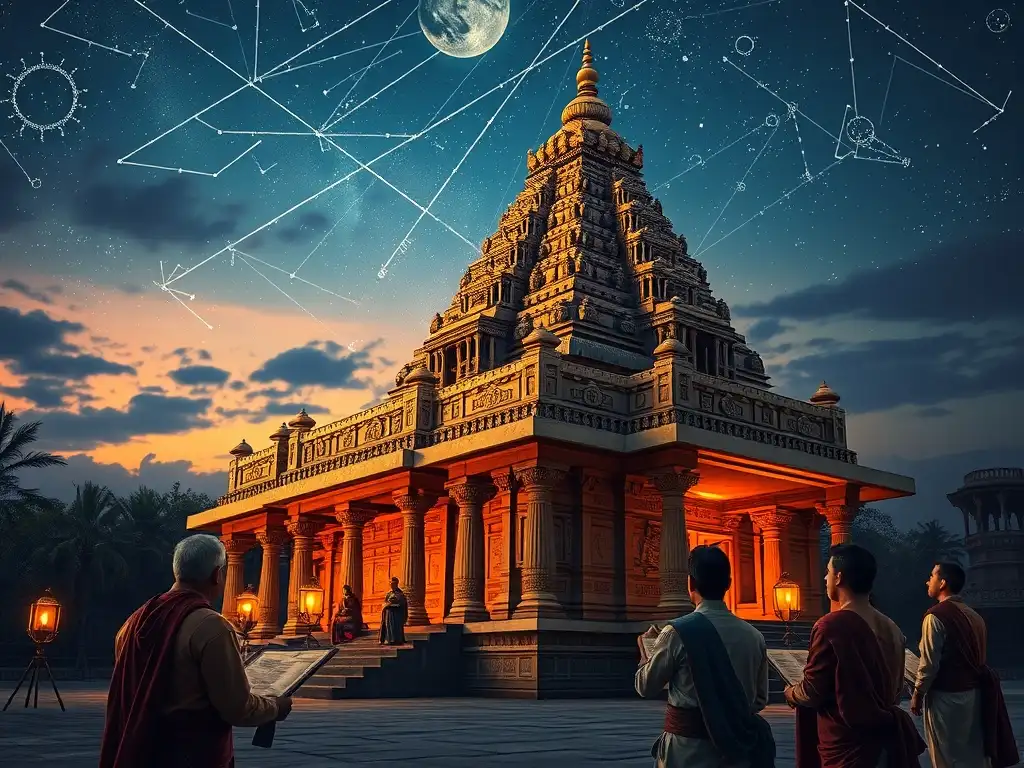
Ancient Indian temple architecture is often celebrated not only for its aesthetic grandeur but also for its remarkable mathematical precision, which is deeply intertwined with the discipline of astronomy. The architects of ancient India possessed a profound understanding of celestial movements, which they intricately integrated into the design and orientation of temples. This connection between astronomy and architecture served both practical and spiritual purposes, demonstrating the civilization's advanced scientific knowledge and reverence for cosmic phenomena.
Alignments with Celestial Bodies
One of the most striking features of ancient Indian temples is their meticulous alignment with celestial bodies, particularly the sun, moon, and various stars. Temples were often oriented in specific directions to capture the sunlight at particular times of the day or year. For instance, many temples feature sanctums designed to allow the first rays of sunlight to illuminate the deity's idol at dawn during solstices or equinoxes.
This alignment is not merely symbolic; it reflects a sophisticated understanding of the solar calendar, which was crucial for agricultural activities and religious festivals. The famous Konark Sun Temple in Odisha is a prime example, where the temple's structure is designed to resemble a chariot of the sun god, Surya, with wheels that are said to represent the days of the year. Such alignments enhance the spiritual experience for devotees, reinforcing the connection between the divine and the cosmos.
Significance of Vastu Shastra in Architectural Planning
Vastu Shastra, the ancient Indian science of architecture and design, plays a pivotal role in the mathematical precision of temple construction. Rooted in the belief that the physical environment affects human well-being, Vastu Shastra integrates principles of geometry, symmetry, and cosmology into architectural planning.
The texts of Vastu Shastra detail specific measurements and spatial arrangements that should be followed to create harmonious structures. This includes the orientation of rooms, the placement of entrances, and the use of proportions that resonate with natural elements. For example, the sacred geometry of the Mandala, a geometric figure representing the universe, is often employed in temple layouts, ensuring that all aspects of the design are in balance and aligned with cosmic forces.
The adherence to Vastu Shastra illustrates how ancient Indian architects combined empirical knowledge with spiritual beliefs, resulting in structures that are not only visually stunning but also imbued with deeper meaning.
Timekeeping and Calendar Systems Reflected in Temple Structure
Ancient Indian temples often served as sophisticated timekeeping devices, reflecting the advanced understanding of astronomical phenomena by their builders. Many temples incorporated sundials and other mechanisms to track celestial movements, thereby establishing a connection between the passage of time and religious observances.
For instance, the temple's layout might include specific markers aligned with the positions of celestial bodies at different times of the year, facilitating the calculation of seasonal changes. These features allowed priests to determine auspicious times for rituals and festivals, effectively synchronizing religious practices with astronomical cycles.
Furthermore, the use of intricate carvings and inscriptions often depicted celestial events, serving as reminders of the interrelationship between time, space, and divinity. This sophisticated integration of timekeeping within temple architecture emphasizes the significance of astronomy in ancient Indian culture and its influence on daily life.
Legacy of Ancient Indian Temple Architecture
The legacy of ancient Indian temple architecture extends far beyond its immediate cultural context, impacting various architectural practices and mathematical techniques that resonate even today. The principles established by ancient architects continue to inspire modern designs, reflecting the enduring relevance of their innovative approaches.
Influence on Modern Architectural Practices
The mathematical precision and astronomical alignments inherent in ancient Indian temple architecture have left a lasting imprint on contemporary architectural practices. Modern architects often draw inspiration from the intricate designs, spatial arrangements, and harmonious proportions of these ancient structures.
Elements such as the use of symmetry, geometric shapes, and natural materials can be seen in modern constructions that aim to create spaces reflecting balance and serenity. Additionally, the principles of Vastu Shastra are increasingly being integrated into modern architectural planning, emphasizing the importance of environmental harmony, spatial relationships, and the psychological comfort of inhabitants.
Moreover, the revival of interest in sustainable architecture has led many architects to look back at ancient practices, which often emphasized ecological balance and the use of local resources. This blending of ancient wisdom with modern techniques showcases the timelessness of ancient Indian architectural ingenuity.
Preservation of Mathematical Techniques in Contemporary Design
The mathematical techniques utilized in ancient Indian temple architecture continue to be preserved and adapted in contemporary design. Scholars and architects alike study the construction methods, geometrical principles, and alignment strategies employed by ancient builders to enhance modern architectural projects.
Workshops and academic programs are increasingly emphasizing the importance of traditional knowledge systems, including the mathematics of ancient structures. This preservation not only honors the legacy of ancient Indian architecture but also provides valuable insights into how mathematical concepts can be applied to solve contemporary architectural challenges.
Furthermore, initiatives aimed at restoring and maintaining ancient temples are also contributing to the resurgence of these mathematical techniques, ensuring that the knowledge and skills of ancient artisans are passed down through generations. The ongoing exploration and application of these techniques highlight the profound impact of ancient Indian temple architecture on the field of architecture today.
Conclusion
The mathematical precision evident in ancient Indian temples and architecture reflects the advanced understanding of geometry, symmetry, and proportion possessed by ancient Indian architects and mathematicians. These structures not only served as places of worship but also as embodiments of mathematical principles and cosmological concepts. The intricate designs, calculated alignments, and harmonious proportions found in temples like the Brihadeeswarar Temple and the Sun Temple at Konark underscore the profound connection between spirituality and mathematics in ancient India.
This synthesis of art and science contributed significantly to the architectural landscape of ancient India, showcasing a legacy that has influenced subsequent generations. The meticulous attention to detail in temple construction highlights the importance of mathematics in achieving aesthetic and structural perfection.
Summary of the Mathematical Contributions of Ancient Indian Temples
Ancient Indian temples serve as a testament to the mathematical innovations of their time. Key contributions include:
- Geometric Designs: Temples were often constructed using complex geometrical shapes, such as squares and circles, which were fundamental to their layout and design.
- Symmetry and Proportion: The principles of symmetry were meticulously applied, ensuring that each element of the temple complemented the whole, adhering to aesthetic and spiritual significance.
- Astronomical Alignments: Many temples were aligned with celestial bodies, reflecting the ancient Indians' deep understanding of astronomy. Structures were often oriented to mark solstices and equinoxes.
- Measurement Techniques: Ancient builders employed various measurement techniques, such as the use of the 'hasta' (handspan) and 'yuj' (cubit), to achieve precise dimensions in their constructions.
These mathematical contributions not only enhanced the architectural beauty of the temples but also served a functional purpose, blending spirituality with scientific inquiry.
Future Research Directions in Ancient Indian Architecture Studies
As scholars continue to explore the intricate relationship between mathematics and architecture in ancient India, several future research directions emerge:
- Interdisciplinary Studies: Incorporating insights from mathematics, astronomy, and archaeology can provide a more holistic understanding of ancient Indian temple architecture and its mathematical foundations.
- Technological Analysis: Utilizing modern technology, such as 3D modeling and simulation, can help reconstruct ancient architectural practices and understand their mathematical underpinnings more clearly.
- Comparative Studies: Analyzing similarities and differences between ancient Indian temple architecture and other contemporary architectural styles globally could yield insights into shared mathematical ideas and cross-cultural influences.
- Preservation of Knowledge: Documenting and preserving ancient texts that discuss architectural techniques and mathematical principles is crucial for future generations of researchers.
By pursuing these directions, scholars can further unravel the complexities of ancient Indian temple architecture, enriching our understanding of its mathematical precision and cultural significance.
- Introduction to Ancient Indian Temple Architecture
- Historical Context of Ancient Indian Temple Architecture
- Key Mathematical Principles in Ancient Indian Temple Architecture
- Case Studies of Notable Ancient Indian Temples
- The Role of Astronomy in Ancient Indian Temple Architecture
- Legacy of Ancient Indian Temple Architecture
- Conclusion
- What is the significance of ancient Indian temple architecture?
- How did mathematics influence ancient Indian temple design?
- What are some key features of ancient Indian temples?
- How did the Indus Valley Civilization contribute to temple architecture?
- What is the impact of the Gupta Empire on temple architecture?
Frequently Asked Questions
What is the significance of ancient Indian temple architecture?
Ancient Indian temple architecture holds immense cultural and historical significance, showcasing the artistic finesse and mathematical precision of ancient builders. It reflects the spiritual beliefs and societal values of the time.
How did mathematics influence ancient Indian temple design?
Mathematics played a crucial role in ancient Indian temple design by ensuring proportionality and symmetry. The use of geometric principles helped create structures that were not only aesthetically pleasing but also structurally sound.
What are some key features of ancient Indian temples?
Key features of ancient Indian temples include intricate carvings, towering shikharas (spires), and elaborate mandapas (halls). These elements demonstrate the artistic creativity and religious dedication of the builders.
How did the Indus Valley Civilization contribute to temple architecture?
The Indus Valley Civilization laid early foundations for urban planning and architectural techniques, influencing later temple constructions. Their use of grid layouts and drainage systems set precedents for future architectural endeavors in India.
What is the impact of the Gupta Empire on temple architecture?
The Gupta Empire is often regarded as a golden age for ancient Indian temple architecture, characterized by innovative designs and the introduction of new styles. Temples from this period reflect a blend of artistic expression and religious significance.
Final Reflection: The Enduring Legacy of Ancient Indian Temple Architecture
The mathematical precision of ancient Indian temple architecture is not merely a relic of the past; it is a testament to the ingenuity and vision of a civilization that understood the profound connection between geometry, spirituality, and aesthetics. Today, as we navigate a world increasingly driven by technology and rapid change, the principles embedded in these ancient structures remind us of the importance of harmony and balance in our own lives. The intricate designs and calculations that went into these temples serve as a striking reminder that beauty and functionality can coexist in perfect symmetry.
Cultural and social landscapes are continuously shaped by the legacies of our ancestors, and ancient Indian temple architecture stands as a powerful symbol of this influence. The meticulous craftsmanship and mathematical brilliance that characterize these temples have inspired generations of architects and artists, fostering a deep appreciation for the intersection of art and science. Architecture is the learned game, correct and magnificent, of forms assembled in the light.
– Le Corbusier. This quote encapsulates the essence of how ancient Indian temple architecture transcends mere construction; it is a dialogue between the physical and the metaphysical, inviting us to explore the deeper meanings behind our built environments.
As we reflect on the lessons of ancient Indian temple architecture, let us embrace the wisdom of our forebears and apply it to our contemporary lives. Consider how you can incorporate balance, precision, and beauty into your own endeavors, whether in your personal projects, community initiatives, or professional pursuits.
The legacy of these ancient structures is not just in their physical form but in the inspiration they provide for us to create spaces that resonate with meaning and purpose. Take a moment to reflect on how you can honor this legacy and contribute to a future where architecture continues to inspire and uplift the human spirit.
Unveil the Secrets of Ancient Indian Architecture!
Thank you for exploring the fascinating world of ancient Indian temples and their mathematical precision! You've just uncovered how architecture intertwined with the rich heritage and spirituality of the era. Now, let's take the next step in deepening your appreciation for this remarkable knowledge.
Here’s how you can dive deeper into this captivating journey:
- Explore local historical sites that exemplify these architectural principles. Consider visiting a nearby temple or museum to experience the essence of history firsthand!
- Share your newfound insights with friends or on social media. Spark discussions and inspire others to discover the beauty of ancient architecture!
- Join a local or online community focused on history or architecture. Exchanging ideas and findings can significantly enhance your understanding and appreciation.
What architectural feature from ancient Indian temples fascinates you the most, and why? Let's dive into the discussion!