
The Impact of Ancient Indian Astronomy on Navigation and Exploration

Welcome to Ancient India History, where we embark on a fascinating journey through the rich tapestry of ancient Indian civilizations. Have you ever wondered how the stars guided explorers across vast oceans and unknown lands? In our featured article, "The Impact of Ancient Indian Astronomy on Navigation and Exploration," we delve into the remarkable ways ancient Indian astronomy shaped the art of navigation, revealing insights that still resonate today. Join us as we uncover the secrets of celestial navigation and its profound influence on exploration, igniting your curiosity to learn more about this captivating chapter of history.
- Introduction to Ancient Indian Astronomy and Navigation
- Key Principles of Ancient Indian Astronomy
- Historical Context of Navigation in Ancient India
- The Influence of Ancient Indian Astronomy on Maritime Navigation
- Case Studies of Ancient Indian Explorers
- The Intersection of Ancient Indian Astronomy and Trade
- Legacy of Ancient Indian Astronomy in Modern Navigation
- Conclusion: The Lasting Impact of Ancient Indian Astronomy on Navigation
-
Frequently Asked Questions
- What was the significance of ancient Indian astronomy in navigation?
- How did ancient Indian astronomers contribute to navigation techniques?
- What are some examples of ancient texts related to Indian astronomy and navigation?
- How did the Indus Valley Civilization influence astronomy?
- In what ways did the Gupta Empire enhance astronomical knowledge?
- Final Reflection: The Enduring Legacy of Ancient Indian Astronomy in Navigation
- Unveil the Secrets of Ancient Navigation!
Ancient Indian astronomy is a fascinating and intricate field that played a pivotal role in shaping not only the scientific landscape of its time but also the cultural and practical aspects of navigation and exploration. The profound understanding of celestial bodies, coupled with sophisticated mathematical techniques, enabled ancient Indian astronomers to develop accurate calendars and navigate vast distances, both over land and sea.
This article delves into the impact of ancient Indian astronomy on navigation, highlighting its significance in the context of exploration, trade, and cultural exchange. By examining the contributions of notable scholars and the tools they employed, we will uncover how these early advancements laid the groundwork for future navigational practices and enriched the tapestry of human knowledge.
Overview of Ancient Indian Astronomy
Ancient Indian astronomy, known as "Jyotisha," dates back to the Vedic period (circa 1500-500 BCE) and encompasses a wealth of knowledge regarding celestial phenomena. Key features of this discipline include:
- Cosmology and Celestial Mechanics: Ancient texts such as the "Surya Siddhanta" articulated complex theories about the movements of celestial bodies, their influences on earthly events, and the cyclical nature of time.
- Mathematical Innovations: Scholars like Aryabhata and Brahmagupta made significant strides in mathematics, introducing concepts such as zero, algebra, and trigonometry, which were essential for accurate astronomical calculations.
- Instruments and Observations: Ancient Indian astronomers developed various instruments, including the gola (spherical model of the universe) and shanku (gnomon), to observe and record celestial movements with remarkable precision.
The integration of these principles not only advanced the understanding of the cosmos but also provided practical tools for navigation, influencing maritime and overland travel across the Indian subcontinent and beyond.
Navigation was crucial to the development of ancient Indian culture, as it facilitated trade, exploration, and cultural exchange. The significance of navigation can be highlighted through several aspects:
- Trade Networks: Ancient Indian navigators utilized their astronomical knowledge to establish extensive trade routes across the Indian Ocean, connecting India with regions such as Southeast Asia, Africa, and the Middle East. This exchange of goods, ideas, and culture enriched societies on both sides.
- Cultural Exchange: The movement of people, driven by navigation, led to the dissemination of Indian philosophies, religions, and innovations. For instance, the spread of Buddhism to East Asia was profoundly influenced by maritime routes.
- Religious Practices: Navigation also played a role in religious pilgrimages, with astronomers aiding travelers in determining auspicious timings for their journeys based on celestial alignments.
Ancient Indian astronomy not only served scientific purposes but also had profound implications for navigation, shaping the interconnectedness of cultures and civilizations throughout history.
Key Principles of Ancient Indian Astronomy
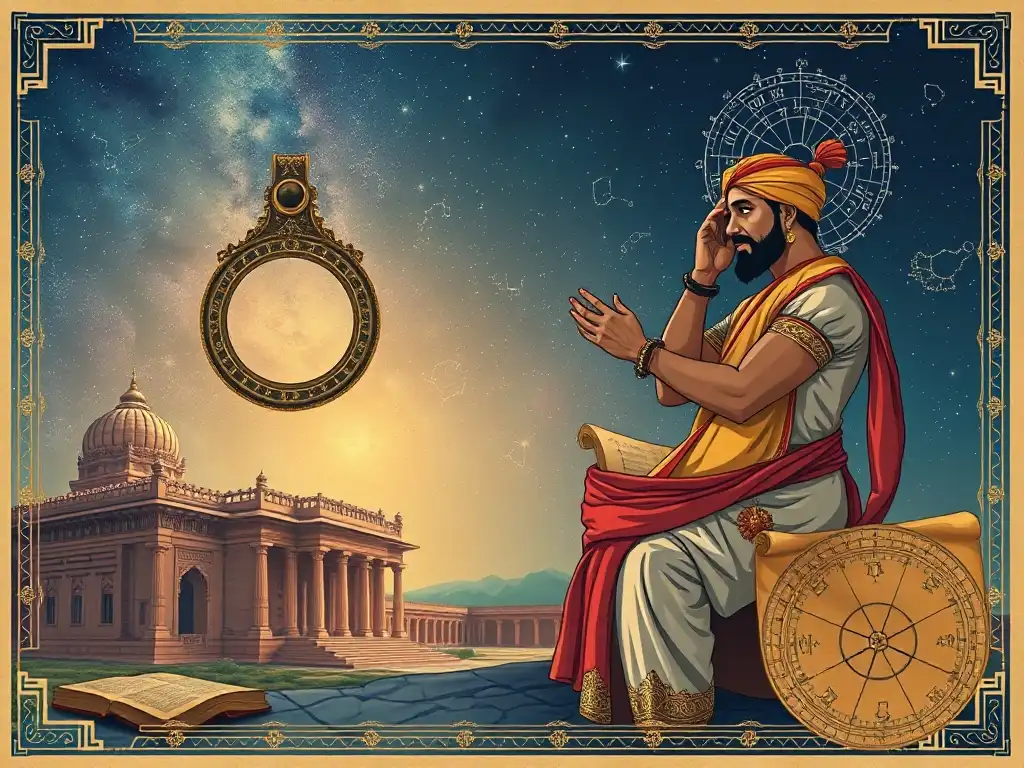
Ancient Indian astronomy was not merely a theoretical pursuit; it played a crucial role in navigation and exploration, significantly impacting maritime trade and travel across vast distances. The foundational principles of this ancient science were deeply intertwined with both spiritual beliefs and practical applications.
Astronomers of ancient India meticulously observed celestial bodies, which allowed them to develop a comprehensive understanding of the cosmos. This knowledge was not only used for calendar calculations and agricultural cycles but also served as a guiding light for navigators venturing into unknown waters. The precise alignment of stars and planets formed the basis of navigation techniques, helping sailors traverse the Indian Ocean and beyond.
The core principles of ancient Indian astronomy involved:
- Observational Accuracy: Ancient Indian astronomers utilized simple yet effective instruments, such as gnomons and astrolabes, to track the movements of celestial bodies.
- Mathematical Calculations: They employed complex mathematical formulas to predict celestial events, enabling navigators to plan their journeys based on astrological phenomena.
- Cultural Integration: Astronomy was often linked with mythology and religion, offering a holistic view of the universe that influenced navigational practices.
The celestial bodies observed by ancient Indian astronomers were vital to navigation, acting as natural compasses for mariners.
- Stars:
- North Star (Polaris): This star served as a pivotal point for navigation, providing a constant reference for direction in the Northern Hemisphere. Ancient sailors would align their vessels based on its position.
- Constellations: Groups of stars like the Ursa Major were utilized to orient directions. For instance, the "Saptarishi" or the Big Dipper was crucial for determining latitude.
- Planets:
- The visible planets such as Venus (Shukra) and Jupiter (Brihaspati) held significant astrological importance and were used for timing expeditions. Their positions in the sky indicated favorable sailing conditions.
- Moon Phases:
- The lunar cycle guided sailors in planning their voyages. The tides, influenced by the moon, were crucial for navigation along coastal routes.
- Sun:
- The sun's position during the day could help navigators ascertain their latitude. The shadow cast by a gnomon was used to determine the time of day, allowing sailors to maintain a consistent course.
Ancient Indian astronomers developed several techniques to harness celestial observations for navigation. These methods not only facilitated long-distance travel but also showcased the sophistication of Indian maritime practices.
- Astrolabe Usage:
- Astrolabes were sophisticated instruments used to measure the altitude of celestial bodies. This helped navigators determine their latitude and make necessary course adjustments.
- Sailor's Almanac:
- Compilations of astronomical data, including the positions of stars and planets, were documented in texts like the "Surya Siddhanta." These almanacs provided essential information for sailors to plan their journeys throughout the year.
- Celestial Navigation Maps:
- Maps depicting the positions of stars and constellations were essential tools for ancient navigators. These maps allowed them to chart their courses across the seas with remarkable accuracy.
- Mathematical Formulas:
- Ancient Indian mathematicians like Aryabhata and Brahmagupta formulated equations that helped in predicting celestial events, thereby aiding navigators in understanding when to set sail.
- Seasonal Patterns:
- Knowledge of seasonal changes and how they affected celestial visibility was fundamental. Sailors would align their expeditions with seasonal winds and currents, which were often predictable based on astronomical observations.
The impact of ancient Indian astronomy on navigation was profound. By understanding celestial bodies and employing various techniques, ancient Indians were able to explore vast maritime routes, paving the way for cultural exchange and trade across regions. The integration of astronomy into navigation not only reflects the scientific prowess of ancient India but also highlights its rich maritime heritage.

In ancient India, navigation was a crucial aspect of trade and exploration, particularly due to the country's extensive coastline and rich maritime trade routes. The Indian subcontinent's geographical features, including rivers, seas, and mountains, played a significant role in shaping the navigational techniques developed by ancient civilizations.
The Role of Ancient Indian Astronomers in Exploration
Ancient Indian astronomers made substantial contributions to navigation, leveraging their knowledge of celestial bodies to aid in exploration. They meticulously observed the stars, planets, and other celestial phenomena, which were essential for determining directions and time.
- Star Navigation: Ancient mariners relied heavily on the position of stars for navigation. The use of the North Star (Polaris) allowed them to find true north, providing a reliable reference point for their journeys.
- Lunar Calendars: The development of lunar calendars aided sailors in planning their voyages according to the phases of the moon. This knowledge was crucial for understanding tides and the best times for setting sail.
One notable figure in ancient Indian astronomy is Aryabhata, who provided insights into the movement of celestial bodies. His works influenced not only Indian navigation but also maritime practices in neighboring regions, such as Southeast Asia.
Ancient Indian civilizations crafted various navigational tools that significantly enhanced maritime exploration. These tools were ingeniously designed, reflecting the advanced understanding of astronomy and engineering at the time.
- The Astrolabe: This instrument was utilized to measure the altitude of stars. Ancient Indian sailors could calculate their latitude while at sea, allowing for more accurate navigation.
- The Gnomon: A simple yet effective tool, the gnomon was used to determine the time of day based on the sun's shadow. By understanding the sun's position, navigators could establish their course during daylight hours.
| Tool Name | Purpose | Description |
|---|---|---|
| Astrolabe | Measures altitude of celestial bodies | A circular instrument with a rotating arm |
| Gnomon | Determines time based on the sun's shadow | A vertical stick casting a shadow on the ground |
| Compass | Indicates direction relative to Earth's magnetic field | A magnetized pointer that aligns with the magnetic north |
The integration of these navigational tools with their understanding of ancient Indian astronomy created a foundation for not only local but also international exploration, allowing ancient Indian sailors to embark on voyages across the vast Indian Ocean and beyond. Their contributions to navigation were essential in establishing trade routes that connected various civilizations, reinforcing India's role as a hub of maritime activity in ancient times.
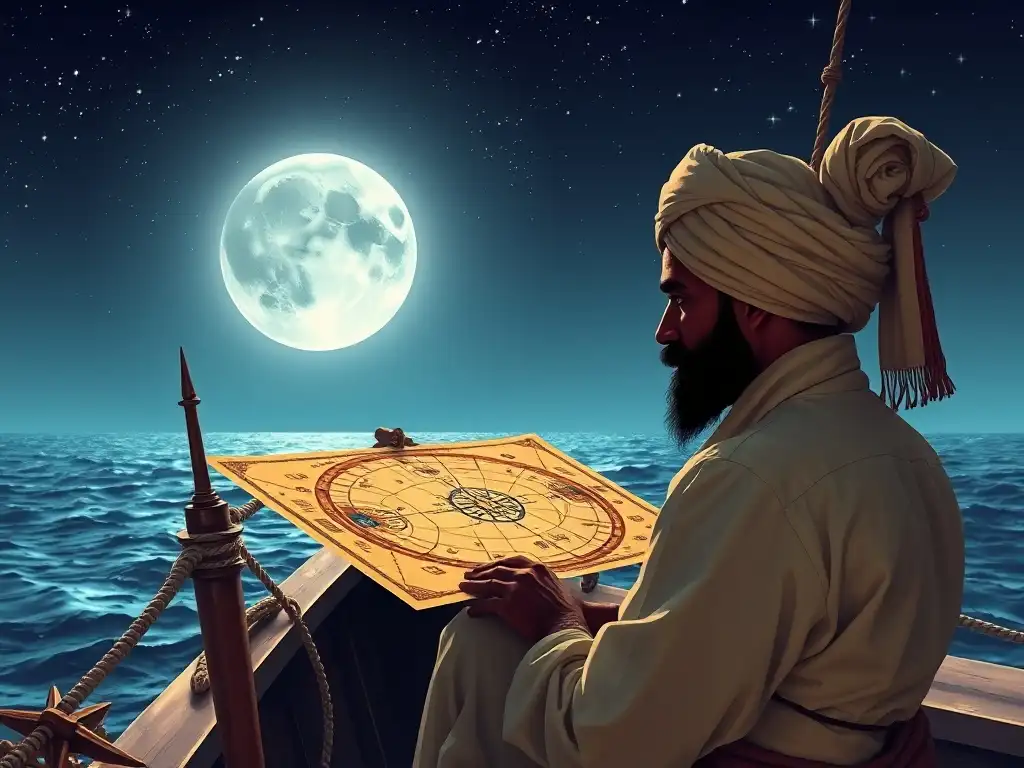
Ancient Indian astronomy played a pivotal role in the development of navigation techniques that were essential for maritime exploration. The intricate knowledge of celestial bodies and their movements enabled sailors to traverse vast oceans with remarkable accuracy. This navigational prowess was not only vital for trade and commerce but also facilitated cultural exchanges across regions.
Star-based navigation techniques were foundational to ancient Indian maritime practices. Sailors relied on the movements of stars, particularly the North Star (Polaris), which served as a constant point of reference in the night sky. Here’s how these techniques were implemented:
- Celestial Observations: Ancient mariners meticulously observed the positions of stars at different times of the year. By tracking these celestial movements, they could determine their latitude and maintain their course over long distances.
- Star Maps and Charts: Scholars developed star maps that depicted constellations and significant stars. These charts were crucial for sailors to understand the night sky and navigate effectively.
- Guidance by Constellations: Specific constellations, such as the Ursa Major, were used to help sailors orient themselves. The visibility of these constellations provided vital information about the time of year and the best routes to take.
- Cultural Significance: The reliance on star navigation was not just practical; it held cultural importance as well. Many ancient texts, including the Arthashastra, reference celestial navigation, linking it to the broader cultural and philosophical understanding of the universe.
In addition to star-based techniques, ancient Indian navigators also employed solar and lunar cycles to enhance their navigational accuracy. These cycles provided essential temporal markers for sailors:
- Solar Navigation: The position of the sun during different times of the day was crucial for determining direction. Sailors used the sun's trajectory, rising in the east and setting in the west, to orient themselves during daylight hours.
- Lunar Cycles: The phases of the moon were also significant in navigation. The full moon and new moon phases affected tidal patterns, which were critical for understanding the best times to set sail or dock.
- Calendrical Systems: Ancient Indians developed sophisticated calendrical systems that incorporated solar and lunar cycles. This knowledge enabled navigators to predict seasonal changes and plan voyages accordingly. The use of the lunisolar calendar, which aligned lunar months with solar years, was particularly beneficial for long-distance travel.
- Tidal Awareness: Understanding the lunar influence on tides allowed sailors to optimize their routes and timings. They could predict high and low tides, essential for navigating coastal waters and rivers.
Ancient Indian astronomy significantly impacted navigation techniques, combining star, solar, and lunar observations to guide explorers across uncharted waters. This rich navigational heritage showcases the advanced scientific understanding of ancient Indian civilizations, underscoring their contributions to maritime exploration.
Case Studies of Ancient Indian Explorers
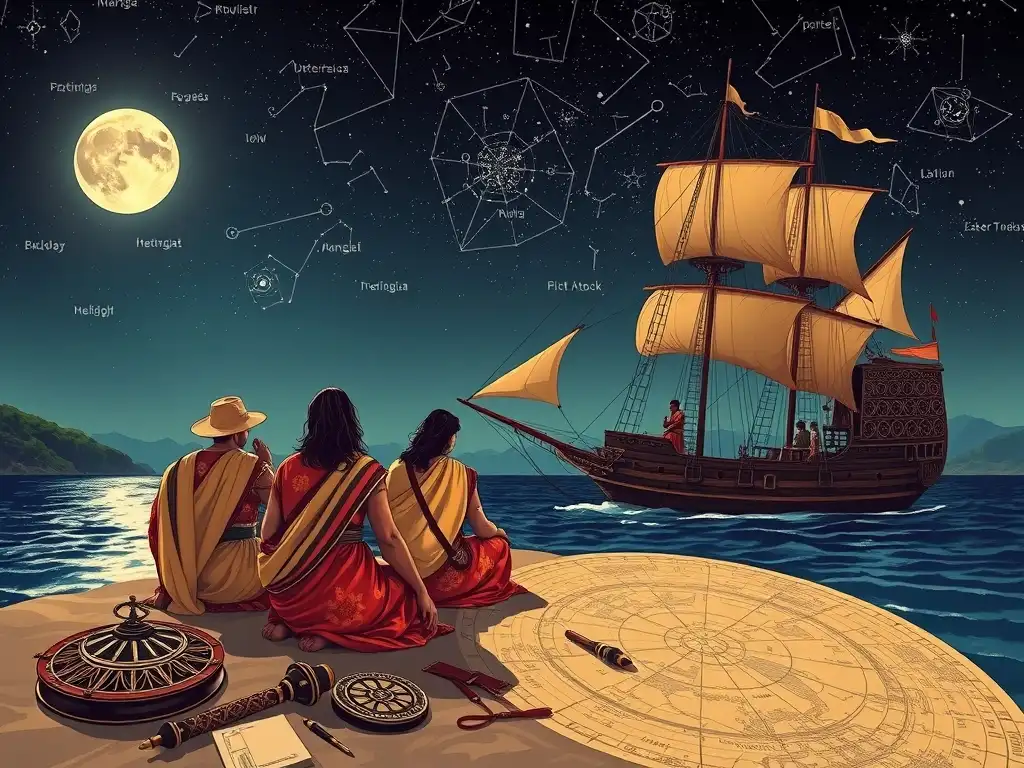
Exploration and navigation in ancient India were profoundly influenced by the advancements in astronomy. By understanding celestial bodies and their movements, ancient Indian navigators were able to traverse vast oceans and engage in trade with distant lands. Here, we delve into notable voyages and the contributions of specific ancient Indian navigators who exemplified this skillful integration of astronomy and navigation.
Notable Voyages and Their Astronomical Foundations
Ancient Indian explorers undertook several remarkable voyages that relied heavily on their astronomical knowledge. These expeditions were not merely for trade but also for cultural exchanges and the establishment of diplomatic ties.
- The Maritime Trade Routes:
- Indian Ocean Navigation: Ancient Indian sailors utilized the monsoon winds for navigation, which were well understood through astronomical observations. The predictable pattern of these winds allowed sailors to plan their voyages effectively.
- Celestial Navigation Techniques: Navigators employed techniques such as solar navigation, where the position of the sun was used during the day, and lunar navigation, utilizing the moon at night. This was akin to the principles of ancient Greek and Arab navigation methods.
- Historical Expeditions:
- The Voyage of the Yavanas: Ancient texts mention expeditions to regions like Southeast Asia and the islands of Java and Sumatra. Indian navigators would have used stars like the North Star (Polaris) to maintain their course across the vast seas.
- Trade with the Romans: Notably, during the time of the Roman Empire, Indian traders are believed to have sailed to the Mediterranean. Their knowledge of astronomy allowed them to navigate the tricky waters of the Red Sea and reach ports like Alexandria.
Several notable figures stand out in the realm of ancient Indian navigation, each making significant contributions that showcased the synergy between astronomy and exploration.
- Aryabhata:
- Astronomical Calculations: Aryabhata’s work in the 5th century CE included calculating the circumference of the Earth and understanding the movements of celestial bodies. His insights were crucial for navigators who relied on accurate measurements of time and distance.
- Influence on Navigation: His calculations and texts provided a scientific basis for navigation, influencing both Indian and Arab navigators in their maritime endeavors.
- Brahmagupta:
- Mathematics in Navigation: In the 7th century CE, Brahmagupta expanded upon Aryabhata’s ideas, providing formulas for calculating distances based on astronomical observations. His work laid the groundwork for better navigation techniques.
- Integration of Mathematics and Astronomy: Brahmagupta’s focus on the harmonic relationship between mathematics and astronomy was essential for navigators who needed precise calculations for their voyages.
- Vasco da Gama and Indian Influence:
- Although Vasco da Gama is known as a European explorer, his successful navigation to India was heavily influenced by the earlier practices of Indian sailors. The use of the stars and the knowledge of seasonal winds, honed by Indian navigators, played a crucial role in his journey.
Ancient Indian astronomy significantly impacted navigation and exploration by providing navigators with the necessary tools to traverse vast distances. The knowledge acquired and refined by astronomers like Aryabhata and Brahmagupta not only facilitated trade and cultural exchanges but also laid the groundwork for future navigation techniques across the globe.
The Intersection of Ancient Indian Astronomy and Trade
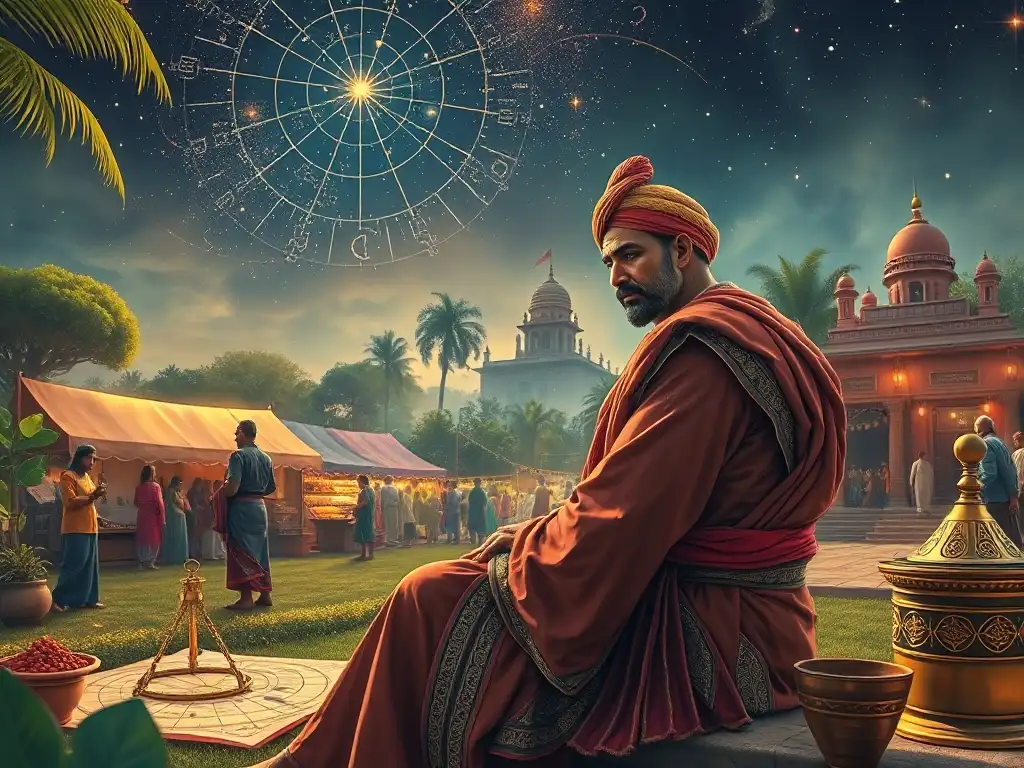
Ancient Indian astronomy played a pivotal role in shaping the navigation techniques used by traders, facilitating extensive trade networks that spanned across continents. By employing sophisticated astronomical knowledge, merchants navigated oceans and land routes with remarkable accuracy. This integration of astronomy into trade practices not only enhanced economic prosperity but also fostered cultural exchanges that enriched civilizations.
Trade Routes and Their Astronomical Guidance
The trade routes of ancient India, including both maritime and overland paths, were meticulously planned and executed, largely due to the guidance provided by ancient Indian astronomy. Key features of this astronomical guidance included:
- Celestial Navigation: Mariners utilized the positions of stars, particularly the North Star (Polaris), to determine their latitude. This allowed them to maintain a steady course across the vast Indian Ocean, which was crucial for connecting India with the East African coast, the Arabian Peninsula, and Southeast Asia.
- Seasonal Calendars: Ancient Indian astronomers developed detailed calendars based on lunar cycles and solar movements. These calendars were instrumental in determining the best times for trade expeditions, as they accounted for monsoon patterns that affected sea travel. For instance, the southwest monsoon was vital for facilitating maritime trade between India and Africa.
- Use of Instruments: Tools like the shanku (a rudimentary astrolabe) and yasti (a gnomon) enabled traders to measure the altitudes of celestial bodies, aiding in precise navigation. These instruments were essential not only for maritime traders but also for those traversing the Silk Road and other overland routes.
- Landmarks and Star Clusters: Traders often relied on the visibility of certain star clusters and constellations, which served as navigational landmarks in the night sky. This knowledge of astronomy was passed down through generations, ensuring that navigators could successfully traverse the routes.
Impact on International Trade and Cultural Exchange
The impact of ancient Indian astronomy on navigation extends beyond mere trade, as it played a significant role in fostering international relationships and cultural exchanges. Some key aspects include:
- Cultural Syncretism: As traders traveled and interacted with different civilizations, they exchanged not only goods but also ideas and cultural practices. The navigation techniques rooted in ancient Indian astronomy were shared with various cultures, influencing their own methods of exploration and trade. This exchange often led to the amalgamation of scientific knowledge across regions.
- Economic Prosperity: The effective navigation facilitated by ancient Indian astronomy greatly contributed to the economic prosperity of Indian cities such as Taxila, Ujjain, and Kanchipuram. These cities became bustling trade hubs, attracting merchants from diverse backgrounds, thereby enhancing the wealth and cultural richness of the region.
- Scientific Contributions: The interactions fostered by trade routes allowed for the dissemination of astronomical knowledge. Indian scholars shared their insights on celestial navigation with Arab and Persian traders, which later influenced the development of navigation techniques in the Islamic Golden Age.
- Legacies in Modern Navigation: The foundational principles established by ancient Indian astronomers have left a lasting legacy in modern navigation techniques. The understanding of celestial bodies as navigational aids continues to be a crucial aspect of maritime and aerial navigation even today.
Ancient Indian astronomy was not only vital for navigation but also served as a catalyst for international trade and cultural exchange, shaping the interconnectedness of civilizations and leaving an indelible mark on the history of exploration.

Ancient Indian astronomy has left an indelible mark on the field of navigation, influencing techniques and methodologies that are still in use today. As civilizations advanced, the understanding of celestial bodies and their movements allowed ancient Indian navigators to traverse vast distances with remarkable accuracy. This legacy is not only evident in historical texts but also in the principles that underpin contemporary navigation systems.
The principles of ancient Indian astronomy have been integrated into various contemporary navigation techniques, significantly enhancing their precision and reliability. Key contributions include:
- Celestial Navigation: Ancient Indian mariners utilized celestial bodies such as the Sun, Moon, and stars to determine their position at sea. Techniques such as measuring the angle of celestial bodies above the horizon using instruments like the Gnomon and later the Astrolabe have evolved into modern sextants and GPS technology.
- Coordinates and Mapping: The ancient Indian system of coordinates, detailed in texts such as the "Surya Siddhanta," laid the groundwork for modern cartography. The concept of latitude and longitude, while refined globally, has roots in ancient methods of mapping celestial and terrestrial locations.
- Star Clusters and Pathways: Navigators often referred to specific star clusters, like the Saptarishi (Big Dipper), to guide their journeys. This practice is echoed in modern navigation systems that use star references for orientation.
- Timekeeping: Ancient Indians were adept at timekeeping using astronomical observations. The use of shadow clocks and water clocks allowed for accurate time measurement, which is crucial for precise navigation. Today, atomic clocks serve a similar purpose in GPS satellites, ensuring accurate positioning.
Preservation of Ancient Knowledge in Modern Astronomy
The preservation of ancient Indian astronomical knowledge has been pivotal in shaping modern astronomy. Scholars and scientists have diligently worked to decode and interpret ancient texts, ensuring that the wisdom of the past is not lost. Some notable aspects include:
- Translation and Study of Ancient Texts: Many ancient texts, such as the "Aryabhatiya" by Aryabhata and "Brahmasphutasiddhanta" by Brahmagupta, have been translated and studied extensively. These works contain astronomical calculations, theories, and observations that are still relevant today.
- Cultural Integration: Many concepts from ancient Indian astronomy have been integrated into the curricula of modern astronomy and navigation courses worldwide. This inclusion highlights the importance of ancient contributions to contemporary scientific knowledge.
- Interdisciplinary Research: The collaboration between historians, astronomers, and mathematicians has fostered a better understanding of how ancient practices influence modern techniques. Research initiatives often focus on how ancient navigational methods can be adapted to today's technological advancements.
- Preservation of Instruments: The ancient instruments used for navigation and astronomy are preserved in museums and educational institutions, providing tangible links to the past. These artifacts serve as reminders of the sophisticated understanding that ancient Indian civilizations had regarding celestial phenomena.
Through these avenues, the legacy of ancient Indian astronomy remains vital, influencing not only the field of navigation but also the broader scientific landscape. The insights derived from ancient practices continue to inspire modern exploration and navigation techniques, ensuring that the brilliance of ancient Indian scholars is recognized and revered in contemporary society.
The legacy of ancient Indian astronomy is undeniably profound, particularly when considered in the context of navigation and exploration. The meticulous observations and sophisticated calculations made by astronomers such as Aryabhata and Varahamihira not only advanced their own scientific understanding but also laid the groundwork for navigational techniques used across the Indian subcontinent and beyond. Their work in celestial mapping, planetary motions, and timekeeping significantly influenced maritime navigation, allowing ancient Indian seafarers to traverse vast oceans with remarkable accuracy.
The integration of astronomy into practical navigation is exemplified by the use of the sidhanta texts, which provided guidelines on how to align vessels with celestial bodies. This practice was not merely theoretical; it was essential for trade routes linking India to distant lands, such as Southeast Asia, the Middle East, and even parts of Africa. Ancient Indian navigators, guided by the stars and planets, were able to establish thriving trade networks that contributed to cultural exchanges and economic prosperity.
Reflection on Ancient Contributions to Science and Exploration
Ancient Indian astronomy's contributions extend far beyond navigational techniques; it encompasses a rich tapestry of scientific inquiry and cultural development. For instance, the concept of zero and the decimal system, both pivotal in mathematics, originated in ancient India and were crucial for astronomical calculations. The Siddhanta texts, such as the Surya Siddhanta, provided not only astronomical data but also practical applications that were key to exploration.
Moreover, the use of jyotisha, or Vedic astrology, intertwined celestial observation with a spiritual and cultural dimension, influencing various aspects of daily life, including agriculture, festivals, and societal planning. This holistic approach to understanding the cosmos illustrates how ancient Indian civilizations viewed astronomy not merely as a science but as an integral part of their cultural identity.
The precision with which ancient Indian astronomers calculated solar and lunar eclipses, as well as planetary positions, demonstrates their advanced understanding of celestial mechanics. Such knowledge was indispensable for navigation, allowing explorers to determine their location and course with greater confidence.
As interest in ancient Indian astronomy continues to grow, several avenues for future research emerge. Scholars are encouraged to delve deeper into:
- Textual Analysis: Examining lesser-known texts and manuscripts that may contain unique insights into ancient navigational techniques and astronomical knowledge.
- Comparative Studies: Exploring the relationships between ancient Indian astronomy and navigational practices in other cultures, such as the Greeks, Chinese, and Arabs, to uncover shared knowledge and influences.
- Archaeological Investigations: Conducting excavations at ancient ports and trade routes to uncover artifacts and structures that illustrate the practical applications of astronomy in navigation.
- Interdisciplinary Approaches: Collaborating with experts in fields such as oceanography and history to better understand the impact of ancient Indian navigational techniques on maritime trade and exploration.
The study of ancient Indian astronomy navigation presents a rich field of inquiry that promises to enhance our understanding of how these early scientists influenced not only their contemporaries but also future generations of explorers and navigators. The interplay between celestial observation and practical navigation in ancient India is a testament to the ingenuity and sophistication of these civilizations, warranting further exploration and appreciation.
Frequently Asked Questions
Ancient Indian astronomy played a crucial role in navigation, as sailors used stellar positions and celestial events to guide their voyages across vast oceans.
Ancient Indian astronomers developed sophisticated astronomical charts and tools, such as the astrolabe, enabling more precise navigation and exploration by sea and land.
Texts like the Surya Siddhanta and Aryabhatiya contain vital astronomical calculations and navigational methods, showcasing the advanced knowledge of ancient Indian civilizations.
How did the Indus Valley Civilization influence astronomy?
The Indus Valley Civilization demonstrated early astronomical understanding through urban planning aligned with celestial bodies, indicating their reliance on astronomy for agricultural and navigational purposes.
In what ways did the Gupta Empire enhance astronomical knowledge?
During the Gupta Empire, advancements in mathematics and astronomy, such as the introduction of the decimal system, significantly improved navigational accuracy and exploration capabilities.
The profound influence of ancient Indian astronomy on navigation and exploration remains remarkably relevant today, as we continue to seek guidance from the stars in our quest for discovery. The intricate methods developed by ancient astronomers not only revolutionized maritime navigation but also laid the groundwork for modern exploration techniques. As we navigate an increasingly complex world, the wisdom of our ancestors serves as a beacon, reminding us of the interconnectedness of knowledge across generations.
The contributions of ancient Indian astronomy have shaped not only the physical journeys of explorers but also the cultural narratives that define our understanding of the cosmos. The precision with which ancient navigators charted their courses reflects a deep understanding of celestial patterns that still resonates in contemporary navigation practices. The stars are not just points of light; they are the guides of our journeys, both earthly and celestial.
This enduring legacy invites us to appreciate the rich tapestry of knowledge that has been woven through centuries of exploration.
As we reflect on the lessons of ancient Indian astronomy, let us embrace the spirit of curiosity and exploration that these pioneers embodied. I encourage you to look up at the night sky and consider how the stars have guided countless generations before us. Whether you are a seasoned traveler or simply navigating the journey of life, remember that the wisdom of the past can illuminate our paths today and inspire future explorations. Take a moment to reflect on your own journey and how the stars may guide you in your pursuits, both personal and collective.
Thank you for diving into the fascinating world of ancient Indian astronomy and its impact on navigation and exploration! We hope you've gained valuable insights that inspire you to explore this rich history further. Now, it's time to take action and connect with the wonder of our celestial heritage!
Here are some powerful steps you can take:
- Dive deeper into ancient texts and learn about the astronomical methods used by navigators—visit your local library or explore online resources dedicated to this subject.
- Join online forums or local history groups to discuss and share ideas about ancient navigation techniques with fellow enthusiasts.
- Challenge yourself by creating a simple star map using traditional methods and testing it under the night sky—this could be a fun activity for the whole family!
How do you think ancient Indian astronomical knowledge can inspire current navigation technologies? We would love to hear your thoughts!