
The Surya Siddhanta: An Ancient Indian Text Transforming Astronomy


Welcome to Ancient India History! Here, we invite you to embark on a fascinating journey through the rich tapestry of ancient Indian civilizations, where culture, innovation, and knowledge flourished. In our featured article, "The Surya Siddhanta: An Ancient Indian Text Transforming Astronomy," we delve into the profound impact of ancient Indian astronomy texts on the scientific world. Prepare to uncover the secrets of celestial navigation and mathematical brilliance that have shaped our understanding of the universe. Join us as we explore these remarkable contributions and ignite your curiosity about the wonders of Ancient India!
- Introduction to the Surya Siddhanta and Ancient Indian Astronomy Texts
- Historical Context of the Surya Siddhanta
- Key Concepts in the Surya Siddhanta
- Contributions of the Surya Siddhanta to Astronomy
- Comparing the Surya Siddhanta with Other Ancient Indian Astronomy Texts
- Legacy and Impact of the Surya Siddhanta
- Conclusion: The Enduring Importance of the Surya Siddhanta
- Frequently Asked Questions
- Final Reflection: The Enduring Legacy of Ancient Indian Astronomy
- Unlock the Secrets of Ancient Astronomy!
Introduction to the Surya Siddhanta and Ancient Indian Astronomy Texts
The Surya Siddhanta is one of the most significant texts in the realm of ancient Indian astronomy, embodying the rich intellectual tradition that flourished in India thousands of years ago. As a cornerstone of ancient Indian astronomy texts, this treatise not only reflects the astronomical knowledge of its time but also serves as a testament to the mathematical prowess of ancient Indian scholars. It provides insights into the celestial mechanics, calculations of time, and the movements of celestial bodies, which were crucial for agricultural practices and religious observances.
In this article, we will delve into the depths of the Surya Siddhanta, exploring its historical context, foundational concepts, and lasting impact on subsequent astronomical studies. By examining the evolution of astronomy in ancient India, we can appreciate the intricate blend of science, culture, and philosophy that characterized this vibrant civilization.
Overview of Ancient Indian Astronomy
Ancient Indian astronomy is a fascinating field that reveals the sophisticated understanding of the cosmos developed by Indian scholars. This discipline emerged as early as 3000 BCE, with the Indus Valley Civilization showcasing early astronomical knowledge through the alignment of urban planning with celestial events.
Key aspects of ancient Indian astronomy include:
- Celestial Observations: Ancient astronomers meticulously observed celestial bodies, including the sun, moon, planets, and stars, leading to the development of calendars based on lunar and solar cycles.
- Mathematical Innovations: The use of complex mathematical concepts, such as trigonometry and geometry, enabled astronomers to calculate planetary positions and eclipses accurately.
- Cultural Integration: Astronomy was deeply intertwined with religion and culture, influencing rituals, festivals, and agricultural practices. For instance, the timing of harvests was often dictated by celestial events.
The Surya Siddhanta is a prime example of how these various elements coalesced into a comprehensive framework of astronomical knowledge, further enriching the tapestry of ancient Indian science.
Significance of the Surya Siddhanta in Astronomical Studies
The Surya Siddhanta stands as a monumental work that has shaped the course of astronomical studies not only in India but also across the world. Composed around the 4th to 5th centuries CE, this text offers a systematic approach to understanding celestial phenomena and is often regarded as a foundational text in Indian astronomy.
Key points highlighting its significance include:
- Mathematical Formulations: The Surya Siddhanta introduced numerous mathematical concepts, including the calculation of the circumference of the earth and the distances of celestial bodies, showcasing the advanced mathematical skills of ancient Indian scholars.
- Influence on Later Texts: This text laid the groundwork for subsequent astronomical works, influencing later scholars like Brahmagupta and Aryabhata. Its ideas were assimilated into later texts, ensuring the continuation of astronomical knowledge through the ages.
- Integration of Observational Data: The Surya Siddhanta emphasized the importance of observational accuracy, encouraging astronomers to refine their techniques and methodologies, which ultimately contributed to the development of more precise astronomical instruments in later centuries.
The Surya Siddhanta is more than just a treatise; it is a reflection of the intellectual spirit of ancient India, encapsulating the quest for knowledge that has inspired generations. Its contributions to the field of astronomy are profound, making it a pivotal text in the study of ancient Indian astronomy texts.
Historical Context of the Surya Siddhanta
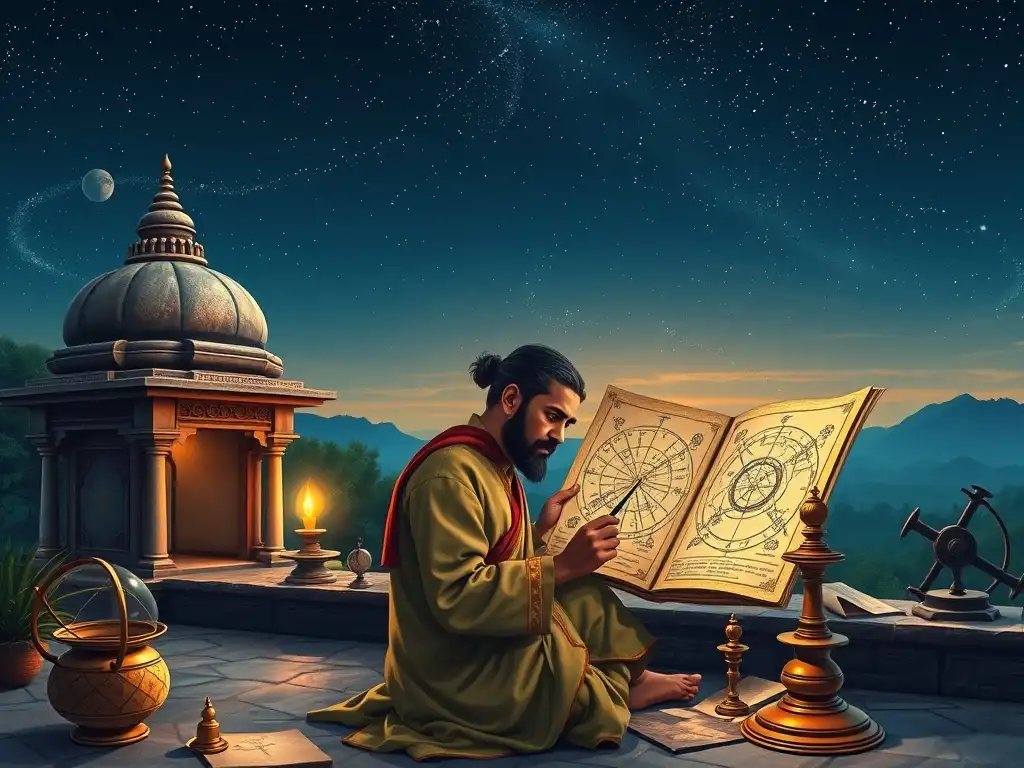
The Surya Siddhanta is a pivotal text in the realm of ancient Indian astronomy, serving as a cornerstone for the study and understanding of celestial phenomena in the subcontinent. This astronomical treatise not only encapsulates the sophisticated knowledge of the cosmos that ancient Indian scholars possessed but also reflects the rich cultural and intellectual milieu of the period.
The origins of the Surya Siddhanta are somewhat shrouded in mystery, with debates surrounding its precise authorship and dating. Most scholars agree that the text was likely composed between the 4th and 5th centuries CE, but it is believed to be based on even older traditions of astronomical knowledge.
- Authorship: Traditionally attributed to an author named Aryabhata, it is important to note that the text is likely a compilation of knowledge from various scholars over the ages. The name "Surya Siddhanta" translates to "The Doctrine of the Sun," indicating its focus on solar phenomena and calculations related to the Sun's movements.
- Structure: The text is organized into chapters that discuss various aspects of astronomy, including celestial bodies, eclipses, and methods for calculating time. It employs a systematic approach that combines observational data with mathematical formulations.
- Cultural Significance: The Surya Siddhanta is not just a scientific text; it also reflects the philosophical and religious beliefs of its time. The integration of astronomy with astrology highlights the importance placed on celestial events in ancient Indian culture.
Influence of Earlier Astronomical Texts on the Surya Siddhanta
The Surya Siddhanta did not emerge in isolation; it was significantly influenced by earlier astronomical works. This intertextuality is crucial for understanding the development of ancient Indian astronomy.
- Predecessor Texts:
- Vedanga Jyotisha: This earlier text, part of the Vedanga literature, laid the groundwork for astronomical calculations and calendar systems. The Surya Siddhanta builds upon these principles, expanding them with more sophisticated methodologies.
- Aryabhata's Aryabhatiya: Although composed around the same time, the Aryabhatiya shares several concepts with the Surya Siddhanta. Both texts emphasize the importance of mathematical precision in astronomical calculations.
- Cultural Exchange:
- The Surya Siddhanta also reflects influences from Hellenistic astronomy, particularly seen in its methods of calculating planetary motions. This exchange of ideas showcases the dynamic nature of ancient knowledge systems and their ability to adapt and evolve.
- Mathematical Innovations:
- The text introduced several mathematical innovations, including the use of sine functions for calculating angles, which would later influence both Indian and Islamic astronomical traditions.
The Surya Siddhanta represents a synthesis of ancient Indian astronomical knowledge, drawing inspiration from earlier texts while contributing to the advancement of the field. Its legacy continues to influence modern astronomy and mathematics, solidifying its place as a seminal work in the canon of ancient Indian astronomy texts.
Key Concepts in the Surya Siddhanta
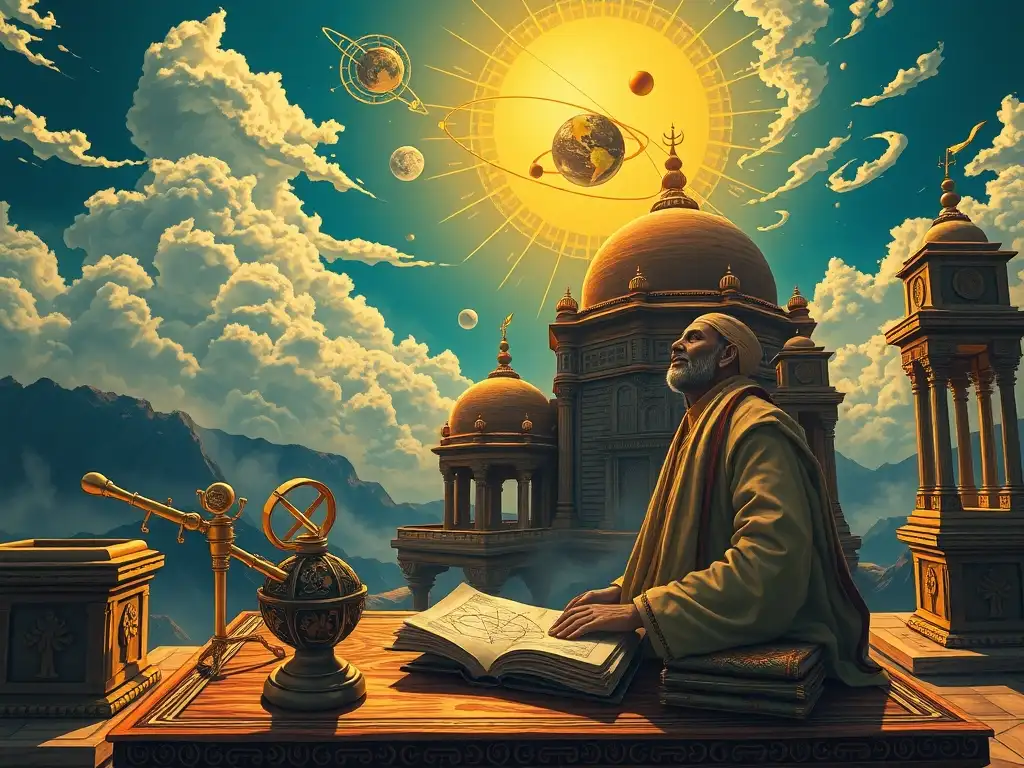
The Surya Siddhanta is a seminal text in the realm of ancient Indian astronomy, representing a confluence of mathematical prowess and astronomical observation. This text not only serves as a guide for calculating celestial phenomena but also encapsulates the philosophical and cultural ethos of its time. The principles laid down in the Surya Siddhanta have had a lasting impact on the understanding of astronomy in ancient India and beyond.
Fundamental Principles of Ancient Indian Astronomy
The Surya Siddhanta introduces several key principles that form the foundation of ancient Indian astronomy.
- The Concept of Time: Time is viewed as cyclical in the Surya Siddhanta, reflecting the natural rhythms of the cosmos. The text elucidates on the division of time into Yugas, Maha Yugas, and Kalpas, with a strong focus on the lunar and solar cycles.
- Geocentric Model: The text operates within a geocentric framework, positing the Earth at the center of the universe. This model was instrumental in early astronomical calculations and laid the groundwork for further advancements in the field.
- Mathematical Techniques: The Surya Siddhanta employs sophisticated mathematical methods, including trigonometry and spherical geometry, to describe celestial movements. The use of sine and cosine functions, though primitive compared to modern standards, was revolutionary at the time.
- Astronomical Units: The text defines various astronomical units, including the day, month, and year, correlating them with the movements of celestial bodies. The concept of the Rahu and Ketu nodes, which represent the points of intersection of the lunar and solar orbits, is thoroughly explored.
These principles not only demonstrate the text's sophistication but also its relevance to ancient Indian culture, where astronomy was intertwined with religious and agricultural practices.
Calculation of Time and Celestial Movements
The Surya Siddhanta provides intricate methods for calculating time and celestial movements, emphasizing precision and accuracy.
- Solar Year Calculation: The text defines a solar year as consisting of 365.258756 days, showcasing an impressive level of accuracy for its time. The methodology employed to arrive at this figure involved observations of the sun's position throughout the year.
- Lunar Month Definition: The lunar month is calculated as 29.530588 days, leading to the establishment of the lunar calendar. This calendar was crucial for agricultural activities, festivals, and religious observances.
- Eclipses: Detailed calculations for predicting solar and lunar eclipses are presented, reflecting the advanced understanding of celestial mechanics. The text provides formulas for determining the timings and durations of these events, which were of significant cultural and religious importance.
- Planetary Movements: The Surya Siddhanta elaborates on the movements of planets, detailing their syzygies and retrograde motions. This understanding was pivotal for navigation and astrological predictions, highlighting the interconnectedness of astronomy and daily life in ancient India.
Planetary Positions and Their Importance
The importance of planetary positions in the Surya Siddhanta cannot be overstated, as they played a crucial role in various aspects of ancient Indian society.
- Astrological Significance: The positions of planets were believed to influence human affairs. The text emphasizes the necessity of accurate planetary calculations for astrological predictions, which were integral to decision-making processes in personal and societal contexts.
- Agricultural Practices: Understanding planetary positions helped in determining the best times for sowing and harvesting crops. Farmers relied on celestial events, such as the appearance of certain stars, to guide their agricultural activities.
- Cultural Festivals: Many festivals in ancient India were timed according to specific celestial alignments. The Surya Siddhanta provided the framework for determining auspicious timings, reinforcing the text's relevance in cultural practices.
- Navigational Aids: Astronomical knowledge, as detailed in the Surya Siddhanta, was also utilized for navigation. Mariners and travelers depended on celestial bodies for orientation, making the accurate calculation of planetary positions essential for safe journeys.
The Surya Siddhanta stands as a monumental work in ancient Indian astronomy texts, revealing the profound understanding of celestial phenomena possessed by astronomers of that era. Through its fundamental principles, calculations, and emphasis on planetary positions, it not only advanced the field of astronomy but also enriched the cultural and practical lives of its contemporary society.
Contributions of the Surya Siddhanta to Astronomy
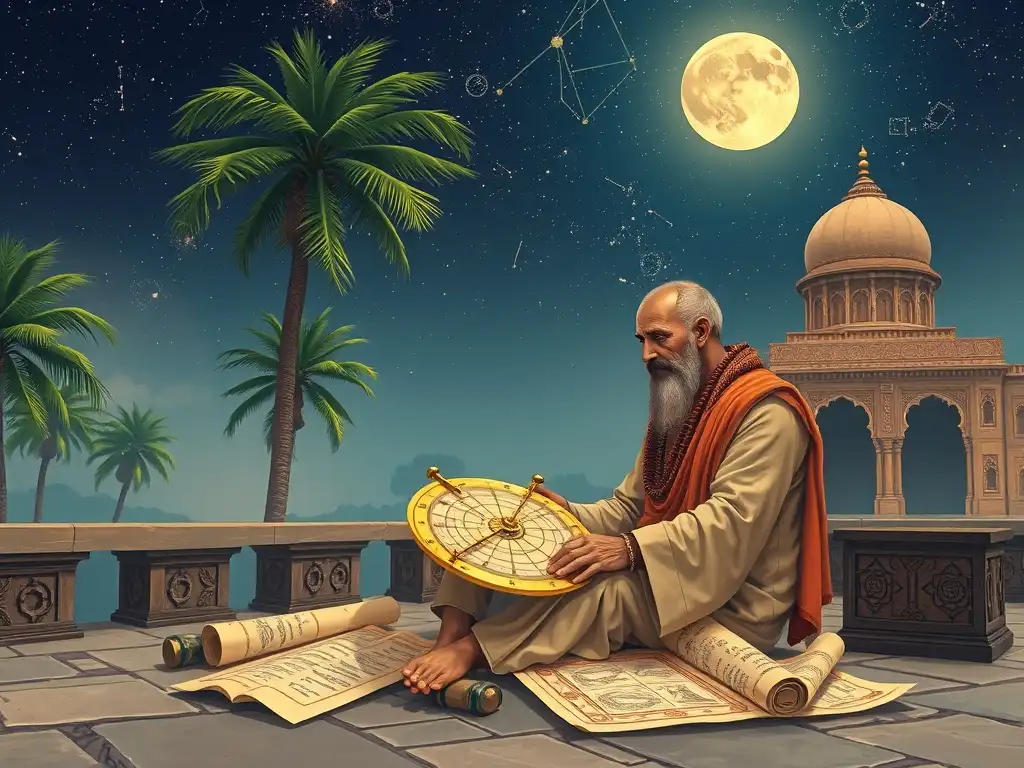
The Surya Siddhanta, a seminal text in ancient Indian astronomy, has made significant contributions that shaped the understanding and development of astronomical science. Dating back to the 4th or 5th century CE, this text encapsulates a wealth of knowledge, including mathematical principles, celestial observations, and astrological insights. Its influence extends beyond its time, impacting both contemporary and later astronomical practices.
Innovations in Mathematical Astronomy
One of the most notable features of the Surya Siddhanta is its innovative approach to mathematical astronomy. The text introduces several key concepts that were revolutionary for its time:
- Sine Functions: The Surya Siddhanta is credited with the early use of sine functions in astronomical calculations. The text provides formulas for calculating the sine of angles, which was crucial for determining the positions of celestial bodies.
- Earth's Circumference: The text presents a remarkably accurate estimation of the Earth's circumference, which is approximately 39,968 kilometers. This calculation was achieved through sophisticated geometric methods, showcasing the advanced mathematical capabilities of ancient Indian scholars.
- Time Measurement: The Surya Siddhanta also delineates methods for measuring time, including the division of the day into smaller units. This timekeeping system laid the groundwork for more precise astronomical observations.
These innovations highlight the text's role in bridging practical astronomy with mathematical theory, enabling astronomers to predict celestial events with greater accuracy.
Influence on Later Astronomical Texts and Practices
The Surya Siddhanta's influence extends well beyond its own pages, serving as a foundational reference for subsequent astronomical works:
- Integration into Islamic Astronomy: The principles and calculations presented in the Surya Siddhanta were later integrated into Islamic astronomy during the medieval period. Scholars such as Al-Biruni and Al-Khwarizmi drew upon its frameworks, spreading its ideas across the Islamic world and influencing European astronomy.
- Impact on Indian Astronomical Schools: Various Indian astronomical schools, such as the Kerala School of Astronomy and Mathematics, built upon the foundations laid by the Surya Siddhanta. They further developed its concepts, leading to advancements in trigonometry and calculus.
- Textual Commentaries: Numerous commentaries and adaptations of the Surya Siddhanta emerged, including the works of Brahmagupta and Bhaskara II. These texts not only preserved the original content but also expanded upon its mathematical and astronomical theories.
The enduring legacy of the Surya Siddhanta exemplifies its pivotal role in shaping the trajectory of both Indian and global astronomy.
In addition to its contributions to theoretical astronomy, the Surya Siddhanta played a crucial role in practical navigation:
- Celestial Navigation: The text provided essential methods for determining latitude and longitude using the positions of celestial bodies. Sailors and travelers relied on these techniques for accurate navigation across vast distances.
- Calendar Systems: The Surya Siddhanta also contributed to the development of calendar systems that were vital for agricultural planning and religious observances. By understanding celestial cycles, ancient Indians could align their activities with seasonal changes.
- Astrology and Navigation: The intertwining of astronomy and astrology in the Surya Siddhanta reflects its broader cultural significance. Navigators often consulted astrological charts for guidance, demonstrating the importance of celestial knowledge in daily life.
Through these applications, the Surya Siddhanta not only advanced the field of astronomy but also served practical purposes that were integral to the functioning of ancient Indian society. Its innovations and insights continue to resonate in the study of ancient Indian astronomy texts, underscoring the text's transformative impact on the discipline.
Comparing the Surya Siddhanta with Other Ancient Indian Astronomy Texts
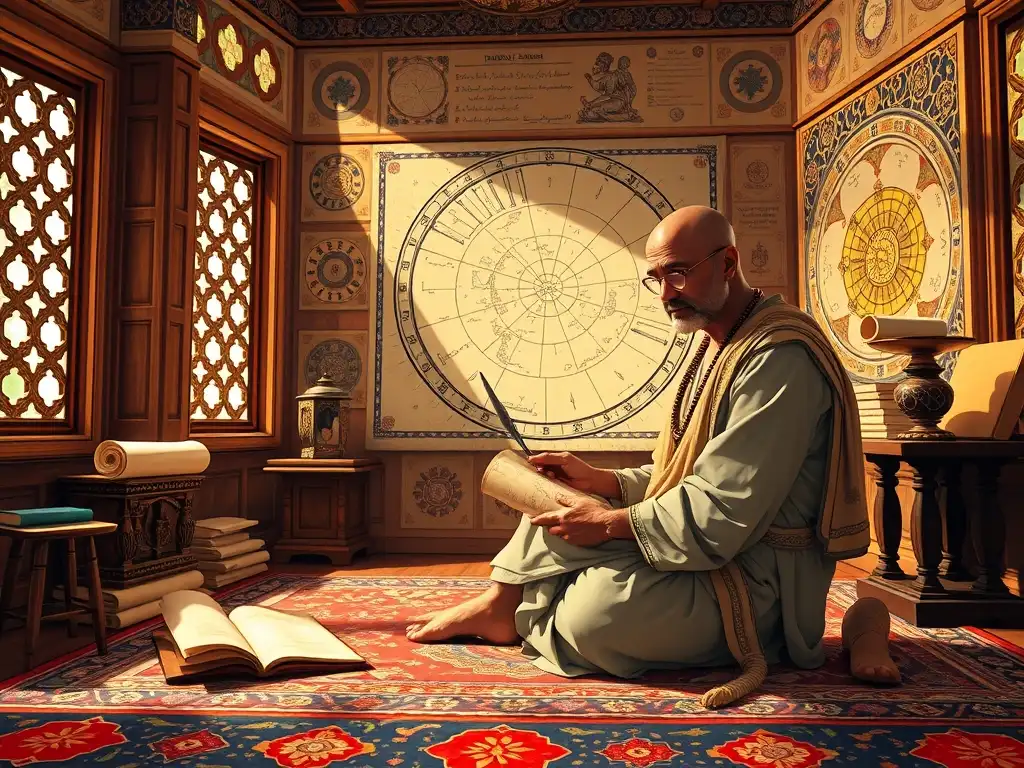
The Surya Siddhanta stands as a monumental text in the realm of ancient Indian astronomy, and a deeper examination reveals both its unique features and its connections with other significant astronomical works from the same era. This section delves into the similarities and differences between the Surya Siddhanta and other ancient Indian astronomy texts, highlighting the rich tapestry of astronomical knowledge that flourished in India.
Similarities with the Aryabhatiya
The Aryabhatiya, authored by the renowned mathematician and astronomer Aryabhata in the 5th century CE, shares several notable similarities with the Surya Siddhanta.
- Mathematical Foundations:
- Both texts utilize a robust mathematical framework to explain astronomical phenomena. The Surya Siddhanta employs intricate calculations for determining planetary positions, eclipses, and timekeeping, akin to the methodologies presented in the Aryabhatiya.
- Geocentric Models:
- Both texts adhere to a geocentric model of the universe, positioning the Earth at the center and detailing the movements of celestial bodies around it. This reflects the prevailing cosmological view of ancient Indian astronomy.
- Cyclical Time:
- The concept of cyclic time is explicitly present in both works. They emphasize the recurrence of celestial events and the importance of cycles for calendrical calculations, showcasing a shared understanding of time's nature in relation to astronomy.
- Observational Techniques:
- Both texts advocate for meticulous observational techniques for accurate astronomical predictions. They stress the importance of direct observations of celestial bodies, reflecting a scientific approach to astronomy.
Differences in Methods and Approaches
While the Surya Siddhanta and the Aryabhatiya share common ground, they also exhibit significant differences in their methodologies and approaches.
- Calculation Techniques:
- The Surya Siddhanta employs a more complex set of equations and procedures for calculations compared to the Aryabhatiya. For instance, it introduces the concepts of shadows and refractions in its calculations, which are less emphasized in Aryabhata's work.
- Focus on Eclipses:
- The Surya Siddhanta places a stronger emphasis on predicting and explaining eclipses, providing detailed methods for calculating their timings and durations. In contrast, while the Aryabhatiya mentions eclipses, it does not delve into the same level of detail.
- Cosmological Context:
- The Surya Siddhanta has a more elaborate cosmological framework that integrates mythology and astronomical observation, whereas the Aryabhatiya tends to present a more stripped-down, mathematical perspective. This difference illustrates how the Surya Siddhanta interweaves cultural narratives with scientific inquiry.
- Historical Influence:
- The Aryabhatiya has had a profound influence on later Indian mathematics and astronomy, often serving as the foundational text for future scholars. The Surya Siddhanta, while influential, is often seen as an extension of earlier traditions and was more focused on practical applications, such as calendar-making.
Cross-Cultural Influences in Astronomical Knowledge
The contributions of the Surya Siddhanta and similar texts did not exist in isolation; they were part of a broader cultural exchange that influenced and enriched astronomical knowledge across civilizations.
- Transmission of Knowledge:
- Ancient Indian astronomy, including the teachings of the Surya Siddhanta, played a crucial role in the transmission of astronomical knowledge to other cultures. This is particularly evident in the interactions with Greco-Roman astronomy, where ideas were exchanged, notably during the medieval period.
- Integration with Arabic Astronomy:
- The Surya Siddhanta’s concepts were later integrated into Arabic astronomy, which in turn influenced European astronomy during the Renaissance. The methods for calculating planetary positions and eclipses found in the Surya Siddhanta were adopted and adapted by scholars across cultures.
- Mutual Influences:
- The cross-cultural interactions also led to the introduction of new mathematical techniques in Indian astronomy. For instance, the adoption of the decimal system and trigonometric methods from Indian texts into Arabic works showcases a dynamic exchange of ideas.
- Global Impact:
- The influence of ancient Indian astronomy texts, including the Surya Siddhanta, extends beyond regional borders, contributing to a shared global heritage in the field of astronomy. This highlights the interconnectedness of human knowledge and the collaborative nature of scientific advancement.
The Surya Siddhanta not only exemplifies the richness of ancient Indian astronomy but also serves as a pivotal point of reference in understanding the development of astronomical knowledge across cultures. Its similarities and differences with texts like the Aryabhatiya illuminate the diverse methodologies within Indian astronomy, while its cross-cultural influences underscore the universal quest for understanding the cosmos.
Legacy and Impact of the Surya Siddhanta

Lasting Influence on Indian Astronomy in Later Periods
The Surya Siddhanta has had a profound and enduring influence on Indian astronomy, shaping the trajectory of astronomical studies and practices for centuries. Compiled around the 4th to 5th century CE, this ancient text is credited with laying the groundwork for subsequent astronomical research in India.
- Integration into Later Works:
- Many later astronomical texts, such as the Aryabhatiya by Aryabhata (5th century CE) and the Brahmasphuta Siddhanta by Brahmagupta (7th century CE), drew heavily from the Surya Siddhanta.
- These works expanded upon the foundational concepts presented in the Surya Siddhanta, incorporating its methods and calculations into more comprehensive frameworks.
- Influence on Regional Systems:
- The principles established in the Surya Siddhanta were not limited to northern India; they also permeated other regions, influencing astronomical practices in southern India as well.
- The text's mathematical techniques and observational methods became integral to the astronomical curricula in various institutions throughout the Indian subcontinent.
- Cultural and Ritual Implications:
- The text's emphasis on the calculation of time and celestial events had significant cultural implications, particularly in relation to Hindu rituals, festivals, and agriculture, where timing is crucial.
- The Surya Siddhanta helped standardize astronomical knowledge, facilitating a shared understanding that transcended regional differences in practice.
The Surya Siddhanta's Relevance in Modern Astronomy Studies
The Surya Siddhanta continues to be of significant interest in contemporary astronomy studies, providing insights into the advanced astronomical knowledge of ancient Indian scholars.
- Historical Contextualization:
- Modern scholars explore the Surya Siddhanta to understand the historical context of ancient Indian astronomy. The text reveals sophisticated methods of celestial observation and calculation, which were remarkably advanced for its time.
- By comparing these ancient techniques with modern astronomical practices, researchers can appreciate the evolution of astronomical knowledge.
- Mathematical Frameworks:
- The mathematical formulations found in the Surya Siddhanta, such as sine and cosine functions, have been studied for their early contributions to trigonometry.
- This has led to fruitful discussions regarding the transmission of mathematical knowledge across cultures and its influence on later developments in global mathematics.
- Interdisciplinary Research:
- The text serves as an important resource in interdisciplinary studies, linking astronomy with history, religion, and culture. It opens avenues for research that examines how ancient civilizations perceived and interacted with celestial phenomena.
- Researchers have found that the Surya Siddhanta not only provides astronomical data but also reflects the philosophical and cosmological views of ancient Indian society.
Preservation and Translation of Ancient Indian Astronomy Texts
The preservation and translation of the Surya Siddhanta and other ancient Indian astronomy texts have played a crucial role in keeping this rich heritage alive for future generations.
- Manuscript Tradition:
- Numerous manuscripts of the Surya Siddhanta have been preserved in various libraries and institutions across India. These manuscripts are invaluable for scholars aiming to study the original text and its commentaries.
- Efforts have been made to digitize these manuscripts, ensuring broader access to this vital part of India's scientific heritage.
- Translation Efforts:
- The translation of the Surya Siddhanta into various languages, including English, has facilitated its study by international scholars. This has enhanced the global understanding of ancient Indian contributions to astronomy.
- Various scholars have tackled the complexities of translating the text, aiming to maintain the integrity of its mathematical and astronomical concepts while making it accessible to modern readers.
- Modern Scholarship:
- Contemporary scholars continue to engage with the Surya Siddhanta, analyzing its contributions and understanding its role within the broader context of ancient Indian knowledge systems.
- Conferences and academic publications focusing on ancient Indian astronomy texts promote ongoing dialogue and research, ensuring the legacy of the Surya Siddhanta endures.
The Surya Siddhanta remains a cornerstone in the study of ancient Indian astronomy texts, influencing both historical and modern perspectives on astronomy and mathematics. Its preservation and ongoing relevance highlight the significance of ancient knowledge in today's scientific discourse.
Conclusion: The Enduring Importance of the Surya Siddhanta
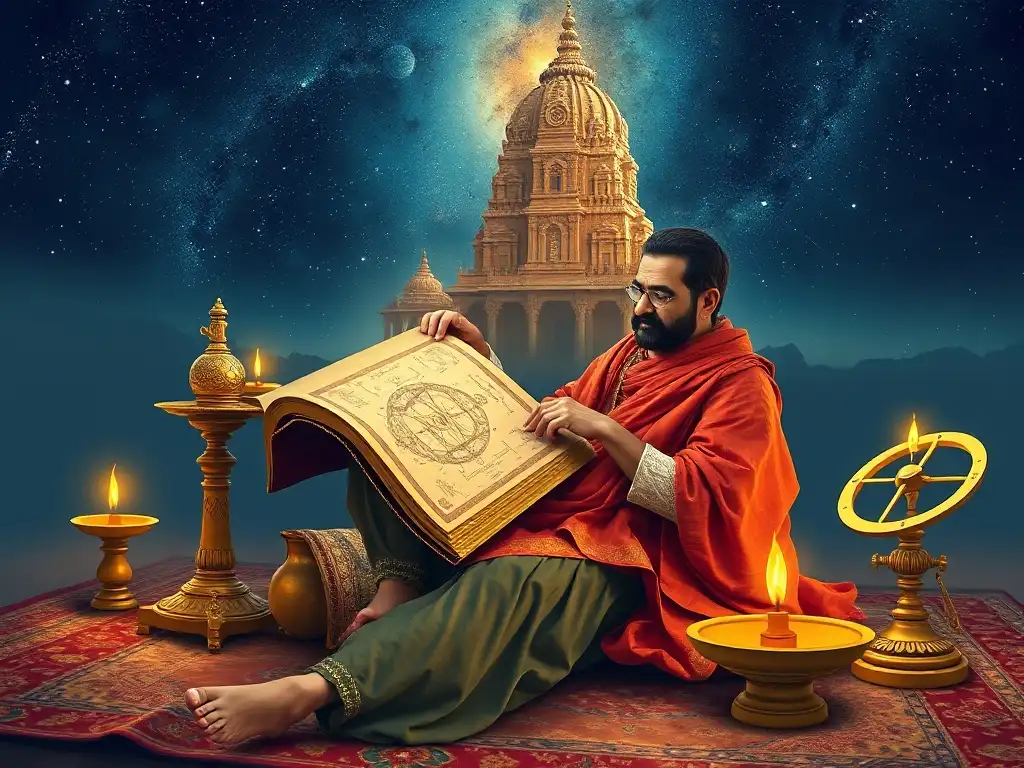
The Surya Siddhanta stands as a monumental achievement in the realm of ancient Indian astronomy texts, encapsulating not only the scientific understanding of its time but also the philosophical and cultural nuances of Indian civilization. This text, believed to have been composed in the early centuries of the Common Era, serves as a foundation for astronomical calculations and has influenced subsequent texts and scholars across generations.
The Surya Siddhanta details various astronomical phenomena, including the calculation of celestial bodies' positions, eclipses, and the measurement of time. Its methodologies reflect a sophisticated understanding of mathematics and geometry, showcasing the advanced level of knowledge possessed by ancient Indian astronomers. The text's emphasis on the cyclical nature of time and celestial movements aligns with the broader philosophical perspectives of the era, further solidifying its importance within the context of ancient Indian thought.
Summary of Contributions to Ancient Indian Astronomy
The contributions of the Surya Siddhanta to ancient Indian astronomy can be summarized as follows:
- Mathematical Innovations: The text introduced various mathematical techniques, including:
- Trigonometry: Utilization of sine and cosine functions for precise calculations.
- Geometric Principles: Application of geometric principles to celestial observations.
- Astronomical Calculations: It provided methods for calculating:
- The positions of planets and stars.
- The timing and nature of eclipses.
- The length of the solar year, which was crucial for agricultural planning.
- Integration with Other Sciences: The Surya Siddhanta not only influenced astronomy but also impacted:
- Astrology: Its calculations were essential for astrological predictions.
- Calendrical Systems: Helped in the development of accurate calendars that aligned with lunar and solar cycles.
- Cultural Significance: The text embodies the harmony between science and spirituality in ancient Indian culture, reflecting the belief that understanding the cosmos brings one closer to the divine.
- Influence on Later Texts: The Surya Siddhanta laid the groundwork for subsequent astronomical works in India, such as the Aryabhatiya by Aryabhata, which drew heavily from its principles and calculations.
The Surya Siddhanta as a Source of Knowledge and Inspiration
The enduring legacy of the Surya Siddhanta can be seen not only in its scientific contributions but also in its role as a source of knowledge and inspiration across various fields:
- Educational Influence: The text has been a vital part of the curriculum in traditional Indian educational systems, teaching students about the cosmos, mathematics, and the philosophical implications of celestial events.
- Cultural Renaissance: During the revival of interest in ancient sciences, the Surya Siddhanta inspired modern scholars and researchers to delve deeper into ancient Indian astronomy, prompting translations and commentaries that make its knowledge accessible to contemporary audiences.
- Interdisciplinary Connections: The methodologies and concepts found within the Surya Siddhanta have influenced not just astronomy but also fields such as:
- Philosophy: By exploring the implications of cosmic movements on human existence.
- Art and Literature: Inspiring artistic representations of celestial phenomena and their significance in Indian mythology.
The Surya Siddhanta remains a pivotal text in the study of ancient Indian astronomy texts, embodying the confluence of scientific inquiry, cultural depth, and philosophical richness that characterizes ancient Indian civilization. Its contributions continue to resonate, inspiring future generations to explore the profound relationship between humanity and the cosmos.
Frequently Asked Questions
What is the Surya Siddhanta?
The Surya Siddhanta is an ancient Indian astronomical text that provides detailed calculations of celestial bodies, influencing the field of astronomy significantly.
How did the Surya Siddhanta impact ancient Indian astronomy?
The text offered foundational knowledge on astronomical phenomena, including planetary motions and eclipses, serving as a reference for scholars and astronomers for centuries.
What unique features are found in Ancient Indian astronomy texts like the Surya Siddhanta?
Ancient Indian astronomy texts, including the Surya Siddhanta, often combine mathematics and philosophy, emphasizing the spiritual significance of celestial observations alongside scientific inquiry.
How does the Surya Siddhanta compare to other ancient texts?
Unlike many ancient texts, the Surya Siddhanta provides precise calculations and methods, making it a pioneering work that laid the groundwork for future astronomical studies in India and beyond.
Why is the Surya Siddhanta still relevant today?
The principles and methodologies outlined in the Surya Siddhanta continue to be studied for their historical significance and their contributions to the understanding of astronomy in a broader context.
Final Reflection: The Enduring Legacy of Ancient Indian Astronomy
The Surya Siddhanta stands as a testament to the brilliance of ancient Indian astronomy, revealing insights that resonate profoundly in today's scientific landscape. This ancient text not only laid the groundwork for astronomical calculations but also exemplified the rich intellectual heritage of India, showcasing how ancient wisdom continues to illuminate modern understanding. The principles articulated in the Surya Siddhanta remind us that the quest for knowledge is timeless, bridging the past with the present in a remarkable tapestry of discovery.
The influence of the Surya Siddhanta extends beyond its historical context, shaping contemporary discourse in both science and philosophy. This ancient text has inspired generations of astronomers and thinkers, fostering a deep appreciation for the cosmos and our place within it. As we navigate the complexities of modern astronomy, we can look back at the wisdom of the Surya Siddhanta and recognize its profound impact on our cultural and scientific narratives. In every star, there is a story waiting to be told,
a reminder that the universe is not just a collection of celestial bodies, but a canvas of knowledge and exploration.
As we reflect on the lessons of the Surya Siddhanta, let us embrace the spirit of inquiry it embodies. I invite you to explore the wonders of the universe, to seek knowledge with an open heart and mind, and to appreciate the rich tapestry of wisdom woven by our ancestors. By engaging with ancient texts and their teachings, we can cultivate a deeper connection to our history and inspire future generations to continue the journey of discovery. The stars are calling—will you answer?
Unlock the Secrets of Ancient Astronomy!
Thank you for taking the time to explore the fascinating world of the Surya Siddhanta and its transformative impact on astronomy. We hope you discovered the rich legacy of ancient Indian science and its relevance in today’s world. Now, let’s keep the spirit of exploration alive with these actionable steps:
- Dive Deeper: Read the Surya Siddhanta yourself! Look for translations or commentaries at your local library or through reputable online sources.
- Share the Knowledge: Discuss your findings with friends and family! Engage in conversations that inspire others to appreciate the wisdom of ancient texts.
- Join a Community: Find local astronomy clubs or participate in online forums to connect with like-minded enthusiasts who share a passion for ancient knowledge and its significance in modern science.
What insights will you uncover when you explore the cosmic principles laid out in the Surya Siddhanta? We’d love to hear your thoughts!