
Ancient Indian Trade Routes: Mapping the Connections Across Continents

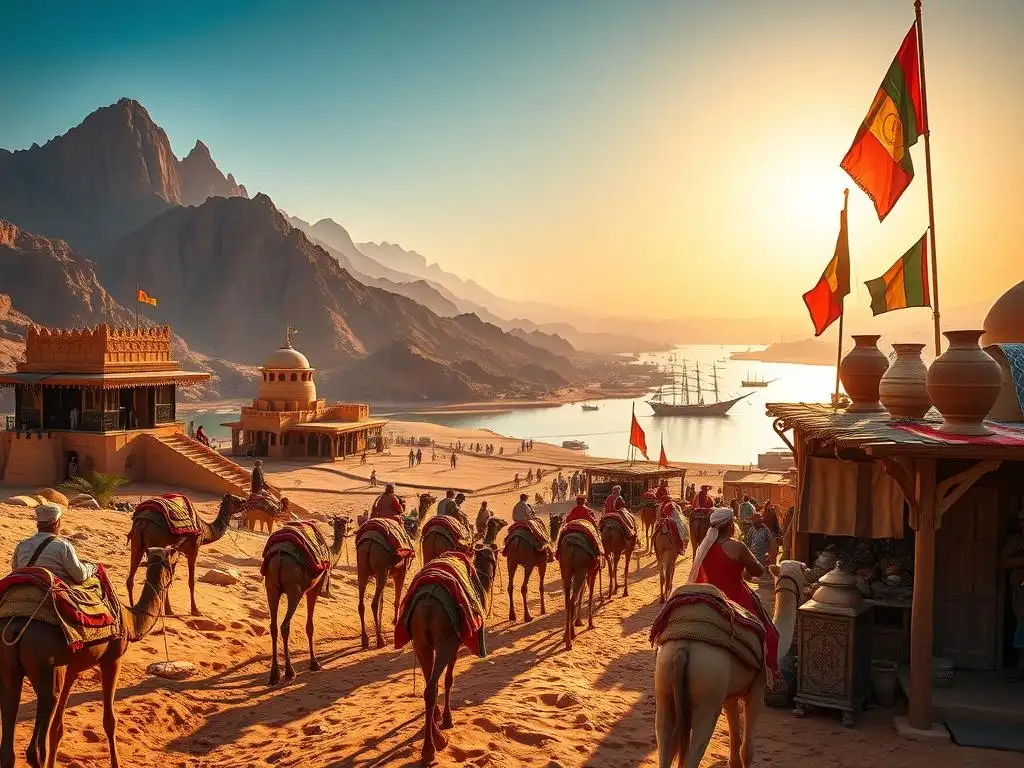
Welcome to Ancient India History, where we embark on a captivating journey through time to explore the rich tapestry of India's ancient civilizations. In our featured article, "Ancient Indian Trade Routes: Mapping the Connections Across Continents," we delve into the fascinating networks that linked India to the rest of the world, revealing how commerce shaped cultures and economies. Prepare to uncover the stories behind these trade routes that not only facilitated the exchange of goods but also ideas and innovations. Join us as we navigate the intricate connections that defined an era and continue to influence our world today!
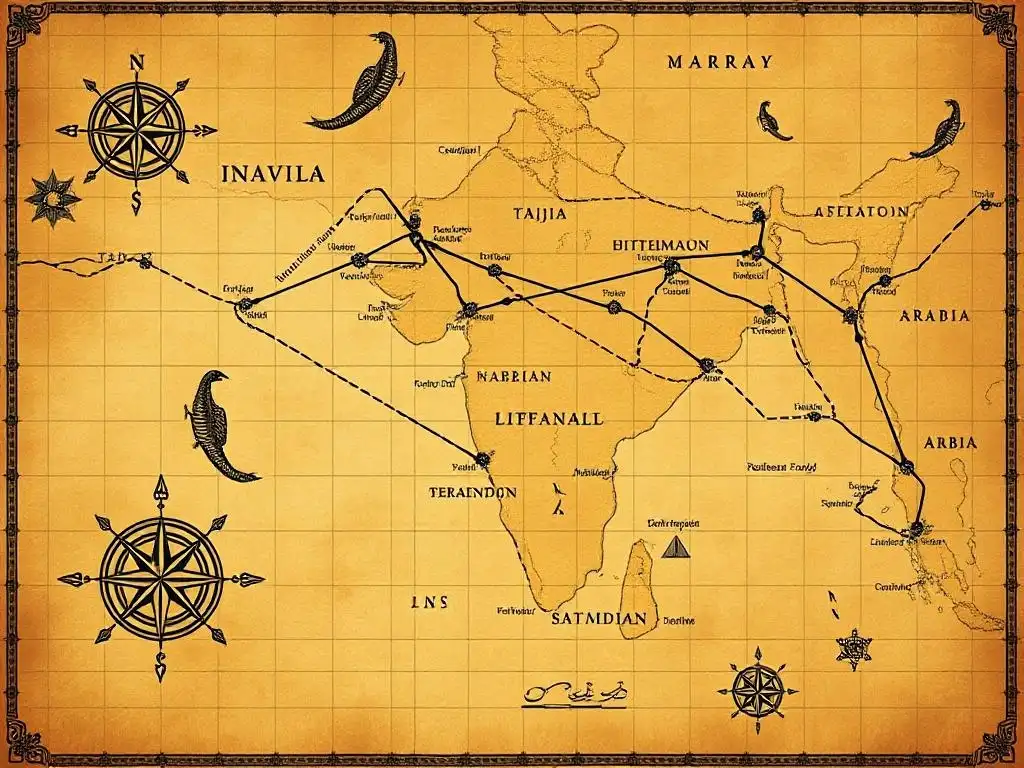
Introduction to Ancient Indian Trade Routes
The intricate web of Ancient Indian trade routes not only facilitated the exchange of goods but also served as vital conduits for cultural, technological, and ideological interactions across continents. These routes, which stretched from the bustling markets of the Indus Valley to the far reaches of the Mediterranean and beyond, played a pivotal role in shaping the early economic landscape of the Indian subcontinent.
By examining these pathways, we gain insights into how ancient Indian civilizations engaged with neighboring regions, fostering connections that would influence trade, culture, and society for centuries. This article will explore the historical significance, evolution, and impact of these trade routes, highlighting their contribution to the development of ancient Indian commerce.
Overview of Trade in Ancient India
Trade in ancient India was characterized by its diversity and complexity. The subcontinent was a hub of commerce, with its strategic geographical position enabling it to engage in trade with various civilizations.
- Goods Traded:
- Spices (e.g., black pepper, cardamom)
- Textiles (e.g., silk, cotton)
- Gems and precious metals
- Agricultural products (e.g., rice, wheat)
- Key Trading Partners:
- Mesopotamia
- Persia
- Southeast Asia
- The Roman Empire
The flourishing trade was supported by an extensive network of routes, including land paths and maritime passages, which not only facilitated economic prosperity but also led to the spread of ideas and innovations.
Importance of Trade Routes in Ancient Indian Civilizations
The significance of trade routes in ancient India cannot be overstated. They were instrumental in:
- Cultural Exchange: Trade routes served as channels for the exchange of cultural practices, religious beliefs, and technological advancements between different regions. For instance, the spread of Buddhism and Hinduism along these routes had a lasting impact on the cultures of neighboring countries.
- Economic Growth: The wealth generated from trade contributed to the rise of powerful kingdoms and empires, allowing for advancements in arts, science, and infrastructure.
- Political Alliances: Trade often led to diplomatic relationships and alliances between kingdoms, fostering stability and cooperation in the region.
Historical Context of Ancient Indian Trade Routes
To fully appreciate the complexity of ancient Indian trade routes, it is essential to delve into their historical evolution, marked by significant developments over time.
Early Trade Networks in the Indus Valley Civilization
The Indus Valley Civilization (circa 3300–1300 BCE) was one of the earliest urban cultures in the world, known for its sophisticated planning and architecture. Trade was a vital aspect of this civilization, characterized by:
- Well-defined Trade Practices: Evidence suggests that the Harappans engaged in trade with Mesopotamia, exchanging goods such as cotton textiles and crafted items.
- Standardized Weights and Measures: The use of weights indicates a structured approach to trade, facilitating transactions and promoting economic stability.
Expansion of Trade Routes During the Maurya Empire
The Maurya Empire (circa 322–185 BCE) marked a significant period of expansion for trade routes in India. Key features included:
- Centralized Administration: The Mauryan governance system promoted infrastructure development, including roads and waystations, enhancing trade efficiency.
- Trade Diplomacy: The empire established diplomatic ties with foreign kingdoms, resulting in increased trade and cultural exchange.
The Role of the Gupta Empire in Trade Development
The Gupta Empire (circa 320–550 CE) is often referred to as the "Golden Age" of India, during which trade flourished remarkably:
- Maritime Trade: The Guptas expanded maritime trade routes, connecting India with Southeast Asia and the Roman Empire, leading to a surge in trade activities.
- Cultural Flourishing: The prosperity from trade contributed to advancements in arts, literature, and sciences, leaving a lasting legacy on Indian civilization.
Understanding the ancient Indian trade routes provides a lens through which we can explore the interconnectedness of civilizations and the profound impacts of commerce on growth and cultural exchange. As we further examine these routes, we will uncover the intricate relationships and exchanges that defined the ancient world.
Major Ancient Indian Trade Routes
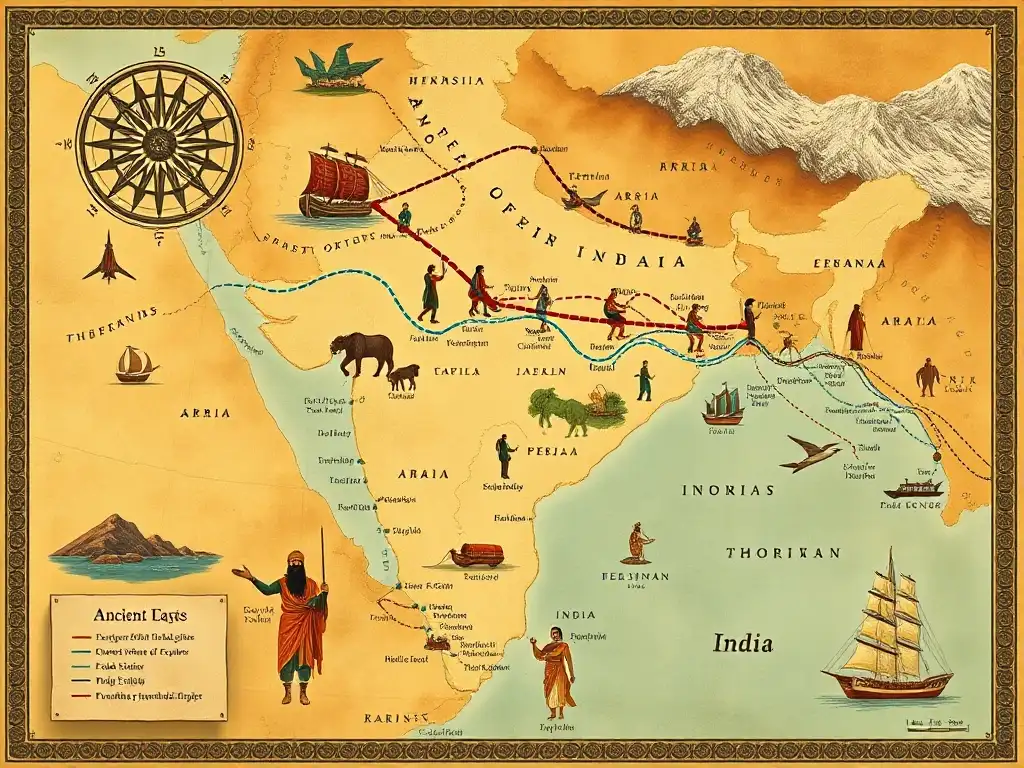
Ancient Indian trade routes were crucial channels for commerce that facilitated not only the exchange of goods but also cultural interactions across continents. These routes interconnected India with the Mediterranean, Southeast Asia, and beyond, showcasing the region's pivotal role in the global trade network. The trade routes can be broadly categorized into overland and maritime pathways, each contributing uniquely to the economic and cultural landscape of ancient India.
The overland routes primarily linked India to Central Asia and the Middle East, while maritime routes connected Indian ports to distant lands across the Indian Ocean. Each of these routes was not only vital for trade but also served as conduits for the exchange of ideas, religion, and technology. As a result, ancient Indian trade routes played a significant role in shaping the civilizations they connected and contributed to the interconnectedness of the ancient world.
The Silk Road and Its Connection to Ancient India
The Silk Road, a network of trade routes established during the Han Dynasty of China, extended to various regions, including India. This route facilitated the exchange of silk, spices, and other luxury goods between the East and West. Indian traders became pivotal players along the Silk Road, transporting valuable commodities to markets in Persia, Rome, and beyond.
The city of Taxila, located near modern-day Islamabad, served as a significant hub where Indian merchants would gather to trade goods from Central Asia and China. Additionally, the spread of Buddhism along the Silk Road is a testament to the cultural exchanges that occurred as a result of these trade interactions. The Silk Road not only enhanced India's economic stature but also fostered cultural dialogues that enriched the civilization's intellectual and spiritual heritage.
The Maritime Trade Routes of the Indian Ocean
The Indian Ocean served as a vital maritime trade route for ancient Indian commerce, connecting the subcontinent with East Africa, the Arabian Peninsula, and Southeast Asia. Indian ports such as Lothal, Surashtra, and Calicut flourished as trade centers, facilitating the exchange of spices, textiles, and other goods.
Maritime trade was further bolstered by advancements in navigation and shipbuilding techniques, enabling Indian traders to sail across vast distances. The monsoon winds were particularly advantageous, allowing for predictable travel patterns. This trade route not only brought wealth to coastal cities but also allowed for the cultural exchange of ideas, art, and religious beliefs, making it a melting pot of diverse influences.
Overland Trade Routes to Central Asia and Beyond
Overland trade routes connected India to Central Asia, facilitating the movement of goods such as textiles, spices, and precious stones. The routes through the Khyber Pass and the Karakoram Range were essential for trade with regions like Bactria and Persia. Indian merchants established trade links with the nomadic tribes of Central Asia, exchanging goods and fostering relationships that would last for centuries.
These overland routes were crucial for the exchange of not only material goods but also cultural elements, such as language and religion. The interactions along these routes contributed to the spread of Indian culture and the integration of diverse influences into the Indian civilization, enriching its history and heritage.
Key Goods Traded Along Ancient Indian Trade Routes
Ancient Indian trade routes were characterized by the exchange of various goods, each holding significant economic and cultural value. The key goods traded along these routes included spices, textiles, and precious metals, shaping the trade dynamics of ancient India.
Spices and Their Significance in Ancient Trade
Spices were among the most coveted goods traded along ancient Indian trade routes. Indian spices, such as black pepper, cardamom, and cinnamon, were highly sought after in markets across the world, particularly in Europe and the Middle East. The demand for these spices led to the establishment of trade networks that spanned continents.
Spices not only enhanced the flavor of food but also played a vital role in preserving it, making them essential for long-distance trade. The lucrative spice trade significantly contributed to India's economy and established its reputation as a key supplier in the global market, influencing culinary practices and trade policies across various cultures.
Textiles: The Fabric of Ancient Indian Commerce
Textiles were another cornerstone of ancient Indian trade, with the country being renowned for its high-quality fabrics, such as silk, cotton, and wool. Indian textiles were intricately designed and often dyed in vibrant colors, making them highly desirable in international markets.
Trade routes facilitated the export of these textiles to regions like Persia, Rome, and Southeast Asia, creating a thriving textile industry within India. The craftsmanship involved in textile production not only contributed to economic prosperity but also enabled the exchange of artistic techniques and styles, enriching the cultural fabric of various civilizations.
Precious Metals and Gemstones in Trade Transactions
Precious metals and gemstones were also significant commodities traded along ancient Indian routes. India was known for its rich deposits of gold, silver, and a variety of gemstones, including diamonds, rubies, and emeralds. These valuable resources attracted traders from across the globe, establishing India as a key player in the precious metals market.
The trade of these commodities was not just about economic gain; it also carried cultural implications, as these metals and gems were often used in religious and artistic expressions. The allure of Indian gemstones contributed to the development of trade links with distant lands, fostering long-lasting economic and cultural connections that shaped the ancient world.
Cultural Exchanges Along Ancient Indian Trade Routes
The ancient Indian trade routes were not merely pathways for the exchange of goods; they were also conduits for cultural interactions and exchanges that profoundly shaped the civilizations connected by them. From the bustling streets of the Indus Valley to the thriving markets of the Gupta Empire, these routes facilitated the movement of ideas, beliefs, and artistic expressions across vast distances.
Merchants, travelers, and pilgrims traversed these routes, bringing with them not only commodities but also the rich tapestry of their cultures. As a result, the trade routes became melting pots of diverse traditions and practices. For instance, the Silk Road connected India with Central Asia and beyond, leading to significant exchanges in art, religion, and philosophy.
The result was a dynamic cultural landscape in ancient India, where influences from Persia, Greece, and beyond mingled with indigenous traditions, fostering a rich legacy that can still be seen in modern Indian culture.
The Influence of Trade on Indian Art and Architecture
Trade had a profound impact on the art and architecture of ancient India, leading to a unique blend of styles and techniques influenced by various cultures. The influx of goods, materials, and artisans through trade routes allowed for the introduction of new artistic styles and architectural concepts.
For example, the use of imported materials such as marble and precious stones influenced the construction techniques and designs of temples and palaces. The intricate carvings and sculptures that adorn many ancient structures reflect not only local artistic traditions but also the influence of foreign styles, notably Hellenistic and Persian elements, which were integrated into Indian art.
Moreover, trading centers like Taxila and Pataliputra became hubs for artistic innovation, where craftsmen collaborated and exchanged ideas. This period saw the flourishing of Buddhist art, which was heavily influenced by cultural exchanges along trade routes, evident in the Gandhara art style that merged Indian themes with Greco-Roman aesthetics.
Religion and Philosophy: Spreading Ideas Through Trade
Ancient Indian trade routes played a crucial role in the dissemination of religious and philosophical ideas. As merchants and travelers moved along these paths, they carried with them not only goods but also their beliefs and practices.
Buddhism, for instance, spread rapidly along these routes, reaching Central Asia, China, and beyond, largely due to the efforts of traders who were both devotees and entrepreneurs. The establishment of monasteries along trade routes provided resting places for travelers and served as centers for the exchange of religious ideas.
Similarly, Hindu philosophy and practices were shared across regions, influencing local customs and beliefs. The cross-pollination of ideas contributed to a more interconnected world, where spiritual concepts transcended geographical boundaries, enriching the cultures they touched.
Language and Cultural Interactions Due to Trade
The interactions that occurred along ancient Indian trade routes also facilitated the exchange of languages and dialects, leading to a rich linguistic landscape. As traders from diverse backgrounds mingled, they often adopted elements of each other’s languages, resulting in the emergence of pidgins and trade languages that facilitated communication.
Sanskrit, for example, spread through trade relationships, influencing languages in regions like Southeast Asia. The incorporation of Indian terms into local languages can be traced back to these interactions, showcasing the impact of trade on linguistic evolution.
Additionally, the need for record-keeping in trade transactions led to the development of scripts and writing systems. This not only advanced literacy but also contributed to the documentation of cultural practices, enhancing the historical understanding of ancient Indian society.
Challenges Faced by Ancient Indian Trade Routes
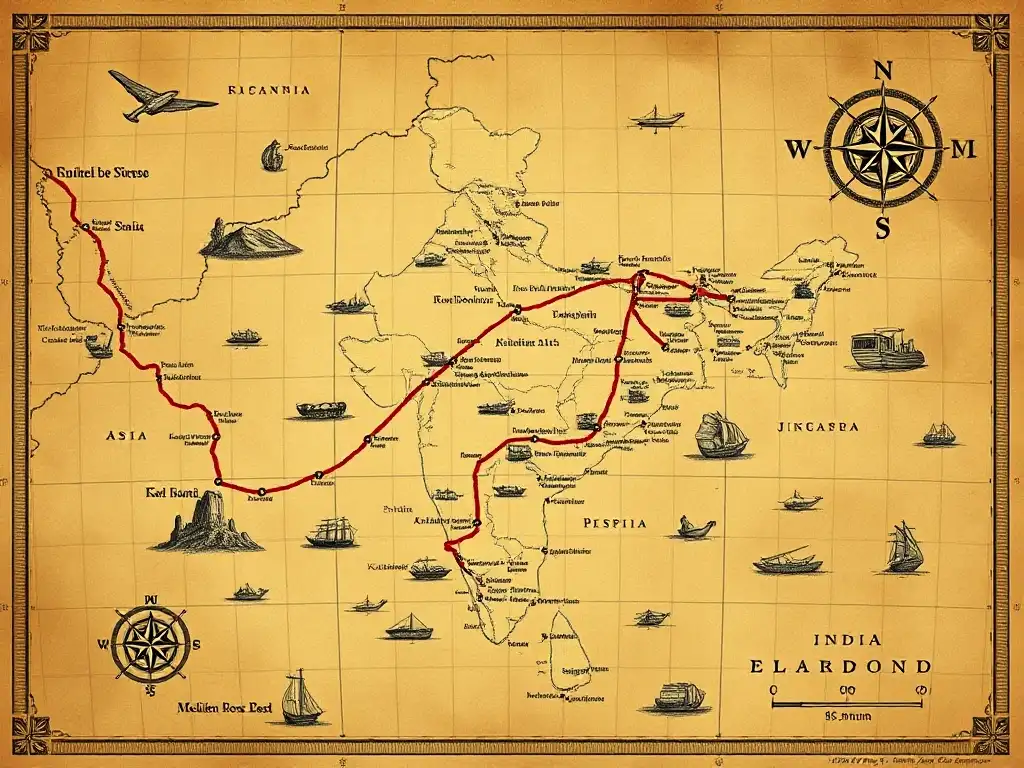
While ancient Indian trade routes were vital for commerce and cultural exchange, they were not without challenges. A variety of factors posed significant obstacles to trade, impacting the flow of goods and ideas across these routes.
Geographical Barriers and Their Impact on Trade
Geographical barriers played a significant role in shaping the dynamics of ancient Indian trade routes. The diverse landscape of India, with its mountains, rivers, and deserts, presented both challenges and opportunities for traders.
The formidable Himalayas, for instance, created natural obstacles, making certain routes difficult to traverse. While some passes, such as the Khyber Pass, became essential conduits for trade, others remained largely inaccessible, limiting trade exchanges with certain regions.
Moreover, the monsoon season influenced maritime trade, affecting the timing and safety of sea voyages. Navigating these geographical challenges required skill and resilience, as traders adapted their routes and strategies to ensure the continuity of commerce.
Political Turmoil and Its Effects on Trade Networks
Political instability and turmoil often disrupted ancient Indian trade routes, affecting the flow of goods and the safety of traders. Regions undergoing conflict or changes in power dynamics could see trade networks collapse or shift dramatically.
For instance, during periods of invasions or internal strife, traders faced increased risks, leading to a decline in commerce. The Maurya and Gupta empires' stability allowed trade to flourish, but periods of disunity often resulted in the fragmentation of trade routes.
Moreover, changes in governance could lead to new tariffs and trade regulations, impacting the profitability and viability of certain routes. The delicate balance of political relations among empires and city-states was crucial for sustaining trade networks.
The Role of Natural Disasters in Disrupting Trade
Natural disasters also posed significant challenges to ancient Indian trade routes. Events such as floods, earthquakes, and droughts could devastate infrastructure, disrupt agricultural production, and hinder travel.
For example, the monsoon rains could lead to flooding in riverine trade routes, causing damage to both natural and man-made pathways. Similarly, earthquakes in certain regions could abruptly alter the landscape, making established routes impassable.
These natural events often had a cascading effect, impacting not only local trade but also connections with distant markets. The resilience of ancient traders was tested as they navigated these unpredictable challenges, adapting their practices to ensure the survival of their commerce.
The Legacy of Ancient Indian Trade Routes
The ancient Indian trade routes played a pivotal role in shaping not only the economic landscape of the Indian subcontinent but also its cultural and social interconnections with neighboring regions and distant lands. These trade routes, which included overland paths and maritime channels, facilitated the exchange of goods, ideas, and technologies, contributing significantly to the prosperity and cultural richness of ancient Indian civilizations.
Trade routes like the Silk Road and the maritime routes of the Indian Ocean connected India with Central Asia, the Middle East, and Africa, allowing for the exchange of spices, textiles, precious stones, and various other commodities. Indian merchants became well-known for their trade in silk and spices, which were highly sought after in foreign markets. The movement of goods along these routes also led to cultural diffusion, introducing Indian art, religion, and philosophy to other civilizations, which in turn influenced Indian society.
Moreover, the establishment of these trade routes laid the groundwork for the development of major trade cities and ports such as Taxila, Ujjain, and the coastal towns of the Deccan. These urban centers became melting pots of diverse cultures, further enriching the social fabric of India and solidifying its status as a key player in global trade networks.
The Influence on Modern Trade Practices
The ancient Indian trade routes have left an indelible mark on contemporary trade practices. Many modern trade routes still echo the paths laid down by ancient traders, showcasing the continuity of commerce across centuries. Major highways and shipping lanes have been established along the same corridors that once facilitated the flow of goods between civilizations.
Furthermore, the principles of trade established during ancient times continue to influence modern practices. The importance of trade fairs and markets, for instance, can be traced back to ancient Indian practices, where merchants gathered to exchange goods, negotiate prices, and share knowledge. Today, trade fairs remain vital for networking and business development.
Additionally, the ancient practice of barter, although evolved, is mirrored in modern trade negotiations and exchanges, where parties engage in value assessments before concluding deals. This historical context helps contemporary businesses understand the significance of relationship-building and trust, which were integral to ancient trade.
Preservation of Trade Knowledge in Ancient Texts
Ancient Indian texts such as the Arthashastra, written by Kautilya (Chanakya), provide profound insights into the principles of trade, commerce, and economic governance. These texts not only discuss the logistics of trade routes but also cover topics such as taxation, trade regulations, and market dynamics, reflecting a sophisticated understanding of economic practices.
Moreover, the presence of detailed records in texts like the Periplus of the Erythraean Sea highlights the significance of maritime trade in ancient India. This document provides descriptions of ports, goods traded, and the various cultures encountered by Indian traders, serving as a vital historical source for understanding the intricate web of ancient trade connections.
The preservation of such knowledge showcases the advanced level of economic thought in ancient India and underscores the importance of documenting trade practices for future generations. These texts remain valuable resources for historians and economists alike, revealing how ancient principles can inform modern economic strategies.
The Continued Relevance of Ancient Routes in Contemporary India
The legacy of ancient Indian trade routes continues to resonate in contemporary India, particularly in the realm of international trade and economic strategies. Modern trade policies often look back to these routes as they establish new partnerships and trade agreements, aiming to revive the spirit of ancient commerce.
India's strategic location in South Asia, flanked by major trade routes, positions it as a crucial player in regional and global markets. The government’s initiatives, such as the "Act East Policy," aim to enhance connectivity with Southeast Asia, reflecting a modern revival of historical trade routes.
Additionally, the growing emphasis on the "Bharatmala" project focuses on developing road networks that mirror the ancient pathways, facilitating smoother trade flows and economic growth. This approach not only aims to boost domestic trade but also to reconnect with international markets, echoing the historical significance of India's trade routes in fostering economic relationships.
Conclusion: The Enduring Impact of Ancient Indian Trade Routes
The ancient Indian trade routes have left a profound and lasting impact on the historical, cultural, and economic landscape of the subcontinent. These routes not only facilitated the exchange of goods but also the diffusion of knowledge, ideas, and cultural practices that have shaped Indian society through the ages.
Summary of Key Points on Trade Routes
- Cultural Exchange: The routes fostered the movement of ideas, leading to the cross-pollination of religions and cultures.
- Economic Prosperity: They established India as a hub of trade, enhancing its economic stature in the ancient world.
- Historical Documentation: Ancient texts provide critical insights into the trade practices and policies of the time.
- Modern Relevance: Today's trade strategies often draw upon the historical significance of these routes, aiming to revive their legacy.
Reflection on the Importance of Understanding Ancient Trade for Modern Society
Understanding ancient Indian trade routes is crucial for modern society as it highlights the foundations of global commerce and cultural exchange. By studying these routes, contemporary societies can appreciate the interconnectedness of civilizations and the importance of trade in fostering economic development and cultural diversity.
Moreover, reflecting on ancient trade practices can inspire innovative approaches to modern trade challenges. As globalization continues to evolve, the lessons learned from ancient Indian trade routes can guide policymakers and business leaders in building sustainable economic relationships that honor historical precedents while addressing contemporary needs. In essence, the legacy of these ancient routes serves as a powerful reminder of the enduring importance of trade in shaping societies across time.
- Introduction to Ancient Indian Trade Routes
- Overview of Trade in Ancient India
- Importance of Trade Routes in Ancient Indian Civilizations
- Historical Context of Ancient Indian Trade Routes
- Major Ancient Indian Trade Routes
- Key Goods Traded Along Ancient Indian Trade Routes
- Cultural Exchanges Along Ancient Indian Trade Routes
- Challenges Faced by Ancient Indian Trade Routes
- The Legacy of Ancient Indian Trade Routes
- Conclusion: The Enduring Impact of Ancient Indian Trade Routes
Frequently Asked Questions
What were the main ancient Indian trade routes?
The primary ancient Indian trade routes included the Silk Road and maritime routes across the Indian Ocean, connecting India to regions such as Southeast Asia, Africa, and the Middle East.
How did trade routes impact ancient Indian civilizations?
Trade routes significantly influenced ancient Indian civilizations by facilitating cultural exchange, enhancing economic prosperity, and introducing new goods and ideas, which contributed to their overall development.
Which goods were commonly traded along these ancient routes?
Key commodities traded included spices, textiles, precious stones, and metals. These goods were highly sought after in global markets, boosting India's importance in international trade.
What role did the Indus Valley civilization play in trade?
The Indus Valley civilization was pivotal in establishing early trade practices, utilizing well-planned cities and a network of trade routes that connected them with neighboring regions, enhancing their economic strength.
How did the Gupta Empire influence trade?
During the Gupta Empire, trade flourished due to political stability and the establishment of safe trade routes. This period saw increased commercial activity and cultural exchanges, further expanding India's influence in the ancient world.
Final Reflection: Connecting Continents Through Ancient Indian Trade Routes
The exploration of Ancient Indian trade routes not only reveals the intricate web of commerce that flourished across continents but also highlights the enduring legacy of cultural exchange and economic interdependence that continues to shape our world today. As we navigate an increasingly globalized society, understanding these historical pathways reminds us that trade has always been a catalyst for connection, innovation, and mutual growth. The lessons learned from these ancient practices resonate profoundly in our contemporary discussions about globalization and cultural diplomacy.
The influence of these trade routes extends far beyond mere economic transactions; they have woven a rich tapestry of cultural interactions that have shaped societies across the globe. The exchange of ideas, art, and technology along these routes has fostered a sense of shared humanity that transcends borders. As historian Sanjay Subrahmanyam aptly stated, The past is not a foreign country; it is a part of our present.
This observation underscores the importance of recognizing how our historical connections inform our current identities and relationships, urging us to appreciate the diverse influences that have come together to create our modern world.
As we reflect on the significance of Ancient Indian trade routes, let us embrace the opportunity to learn from the past and apply these insights in our lives today. Consider how you can foster connections in your own community, drawing inspiration from the ancient practices of trade and cultural exchange. By engaging with others, sharing knowledge, and celebrating diversity, we can continue the legacy of these routes, creating a more interconnected and harmonious world for future generations.
Explore the Rich Tapestry of Ancient Trade Today!
Thank you for joining us on this enlightening journey through the ancient trade routes of India! You've uncovered the fascinating connections that not only shaped the economy but also fostered culture and exchange across continents. Now, it’s time to take the next step and immerse yourself even further in this rich history.
Here are a few ways you can dive deeper and make an impact:
- Start a dialogue: Share your thoughts on how ancient trade influenced modern commerce within your community or on various online platforms.
- Research local connections: Investigate how these ancient routes relate to contemporary trade in your area and seek out stories or locations that might still hold importance.
- Join a community group: Connect with others who share your passion for history, whether through online forums, local clubs, or social media networks.
As you ponder the vast implications of these historical trade routes, consider this: How do you believe the ancient practices of trade continue to influence global commerce and culture today? Share your insights and let's keep the conversation going!