
The Role of Barter Systems in Ancient Indian Societies: A Historical Perspective

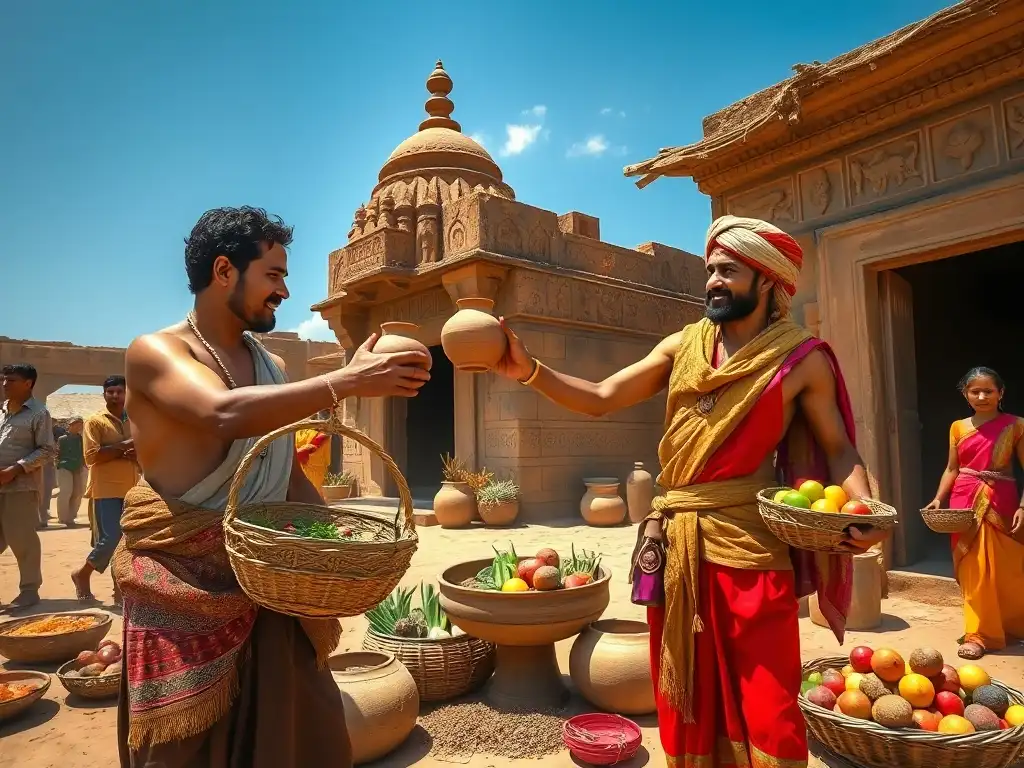
Welcome to Ancient India History, where we embark on a captivating journey through the rich tapestry of ancient Indian civilizations. From the awe-inspiring Indus Valley to the flourishing Gupta Empire, our exploration reveals the vibrant culture and profound contributions that have shaped modern society. In this article, we delve into the fascinating world of barter systems in ancient India, uncovering how these early trade practices influenced social dynamics and economic development. Prepare to be intrigued as we unravel the intricate connections between commerce and culture, inviting you to discover the hidden stories that await beyond the surface.
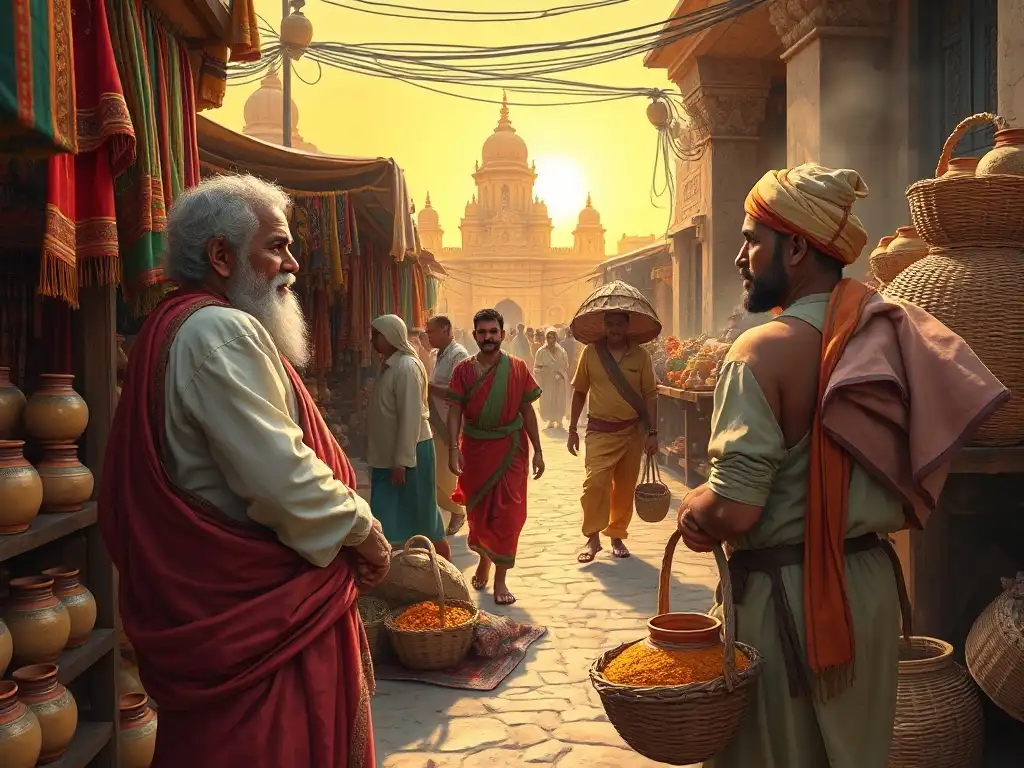
Introduction to Barter Systems in Ancient India
The concept of barter systems plays a crucial role in understanding the economic practices of ancient Indian societies. Long before the advent of currency, various civilizations relied on barter as a means of trade, facilitating the exchange of goods and services. This article delves into the intricacies of barter systems in ancient India, exploring their definitions, significance, and the historical contexts in which they thrived.
By examining the evolution of these systems from the Indus Valley Civilization through to the Vedic period, we can gain insights into how these practices shaped the socio-economic landscape of early Indian cultures. Understanding barter systems not only highlights the ingenuity of these ancient societies but also reveals the foundations upon which modern economic practices are built.
Definition of Barter Systems
Barter systems are economic mechanisms where goods and services are exchanged directly for one another without the use of money. In ancient India, this form of trade was prevalent and facilitated the movement of resources, enabling communities to meet their needs and desires. For instance, a farmer might exchange surplus grain for tools made by a blacksmith, fostering interdependence among various crafts and professions.
Key Characteristics of Barter Systems:
- Direct exchange: No intermediary currency is involved.
- Value negotiation: The relative worth of goods is determined through mutual agreement.
- Community reliance: Local communities typically engage in barter, strengthening social bonds.
Importance of Barter in Ancient Economies
The significance of barter systems in ancient Indian economies cannot be overstated. They served as the backbone of trade, allowing for the distribution of resources across regions.
Reasons for the importance of barter:
- Resource Allocation: Barter enabled efficient allocation of resources based on local needs and availability.
- Cultural Exchange: It fostered cultural interactions among diverse communities, promoting the exchange of ideas and traditions.
- Foundation for Trade Networks: Barter systems laid the groundwork for more complex economic systems, eventually leading to the introduction of currency.
Historical Context of Barter Systems in Ancient India
To fully appreciate the role of barter systems in ancient Indian societies, it's essential to consider the broader historical context. Various civilizations across different periods showcased unique economic practices that were often rooted in barter.
Overview of Ancient Indian Civilizations
Ancient India was home to several remarkable civilizations, each contributing to the evolution of economic practices. The most notable among these were the Indus Valley Civilization, the Vedic period societies, and later empires like the Maurya and Gupta. Each of these periods had distinct characteristics that influenced the way barter systems operated, reflecting the socio-economic conditions of the time.
Economic Practices in the Indus Valley Civilization
The Indus Valley Civilization, flourishing around 2500 BCE, is one of the earliest examples of organized urban life in India. Archaeological evidence suggests that barter was a predominant economic practice.
Key Features of Barter in the Indus Valley:
- Trade Centers: Cities like Harappa and Mohenjo-Daro served as trade hubs, where goods such as textiles, pottery, and metals were exchanged.
- Standardization: The presence of standardized weights and measures indicates a sophisticated system of trade, potentially facilitating barter transactions.
- Diverse Goods: Items exchanged included agricultural produce, artisan crafts, and even luxury goods, showcasing the civilization's economic diversity.
Barter Systems During the Vedic Period
Following the decline of the Indus Valley Civilization, the Vedic period (approximately 1500–500 BCE) witnessed a transformation in economic practices. Barter systems continued to thrive, albeit with some notable changes.
Characteristics of Barter in the Vedic Period:
- Agricultural Focus: The economy became increasingly agrarian, with farmers exchanging crops for various goods and services.
- Social Structure: Barter was influenced by the evolving social hierarchy, with different castes engaging in specialized trades, leading to more complex barter arrangements.
- Expansion of Trade Routes: As communities grew, the expansion of trade routes facilitated broader barter networks, connecting different regions and cultures.
The role of barter systems in ancient Indian societies is a testament to the resourcefulness and adaptability of these civilizations. By understanding the nuances of barter practices from the Indus Valley to the Vedic period, we can appreciate the historical foundations of trade and economy in ancient India.
Mechanisms of Barter Transactions
Barter systems in ancient India operated through various mechanisms that facilitated the exchange of goods and services without the use of currency. These transactions were primarily based on mutual agreement, where two parties would negotiate the terms of trade based on the perceived value of their respective goods. Key mechanisms included:
- Direct Exchange: The most straightforward mechanism, where two individuals or parties directly exchanged goods of equal perceived value. For example, a farmer might trade grains for livestock with another farmer.
- Marketplaces: Local markets served as central hubs for barter transactions. These marketplaces allowed individuals to gather and assess the availability of goods, enabling them to find potential trading partners.
- Social Networks: Barter transactions often relied on established social relationships. Trust and familiarity greatly influenced exchanges, as parties were more likely to engage in trade with known individuals rather than strangers.
- Informal Agreements: Barter often involved informal agreements based on community norms or customary practices. This flexibility allowed participants to negotiate terms that suited their immediate needs without rigid regulations.
Types of Goods Traded in Barter Systems
The types of goods traded in barter systems varied widely, reflecting the diverse needs and resources of ancient Indian societies. Common categories of goods included:
- Agricultural Products: Staples such as grains, vegetables, and fruits were frequently exchanged. These items were vital for sustenance and often formed the basis of barter transactions.
- Crafts and Artisanal Goods: Artisans traded handmade items like pottery, textiles, and metalwork. These goods were sought after for their quality and craftsmanship.
- Livestock: Animals such as cows, goats, and chickens were valuable in barter, serving both as food sources and as indicators of wealth.
- Raw Materials: Materials like timber, stone, and minerals were traded for construction and tool-making. This exchange supported various industries and crafts.
- Services: Alongside tangible goods, services such as labor, carpentry, and weaving were also bartered. This aspect of trade highlighted the interdependence within communities.
Role of Trade Routes and Markets
Trade routes and marketplaces played a critical role in the effectiveness of barter systems in ancient India. These elements facilitated the movement of goods and information, leading to:
- Increased Accessibility: Trade routes connected distant regions, allowing for a broader exchange of goods. This connectivity not only enriched local markets but also introduced new products and ideas.
- Market Dynamics: Central markets became places where goods were aggregated, and prices were established through negotiation. The presence of multiple traders created competition, enhancing the efficiency of barter transactions.
- Cultural Exchange: As traders traveled along these routes, they carried cultural practices, languages, and traditions, fostering a rich tapestry of interactions that influenced local societies.
- Seasonal Variations: Markets often operated on a seasonal basis, with specific times designated for trading certain goods, such as agricultural harvests. This cyclical nature influenced how barter transactions were organized.
Case Studies of Barter Systems in Different Regions
Analyzing specific regions provides insights into how barter systems adapted to local conditions and resources, illustrating the diversity of economic practices in ancient India.
Barter Practices in Northern India
In Northern India, barter practices were influenced by the region’s agricultural productivity and the presence of major trade routes. Farmers commonly exchanged surplus crops for essential goods such as tools and livestock. The use of local fairs and markets facilitated these transactions, where communities gathered to trade not only goods but also cultural practices. For example, the annual fairs in places like Haridwar attracted traders from various regions, creating a vibrant exchange environment.
Barter Systems in Southern India
Southern India exhibited unique barter practices shaped by its geography and the prominence of spice trade. Coastal areas engaged in extensive trade with foreign merchants, leading to the exchange of exotic spices, textiles, and precious stones. Local communities traded agricultural products like rice and coconuts with artisans who offered handcrafted goods. The significance of barter in this region is evidenced by ancient texts that describe bustling markets in cities like Madurai, where goods were exchanged amid cultural festivities.
Comparative Analysis of Barter in Urban vs. Rural Settings
The dynamics of barter systems in urban versus rural settings highlighted distinct practices influenced by population density and economic needs.
- Urban Settings: In cities, barter transactions became more complex, often involving multiple parties and a wider variety of goods. The presence of markets led to a more structured approach to barter, with fixed meeting points and established trading norms. Urban dwellers had access to diverse goods, which promoted intricate barter networks.
- Rural Settings: In contrast, rural areas relied on simpler barter exchanges based on local needs and resources. Transactions were often limited to immediate community members and focused on essential agricultural and household items. The informal nature of rural barter fostered strong social bonds, as neighbors frequently exchanged goods to meet daily needs.
This comparative analysis underscores the adaptability of barter systems, demonstrating how local contexts shaped economic interactions in ancient India.
Advantages of Barter Systems in Ancient India
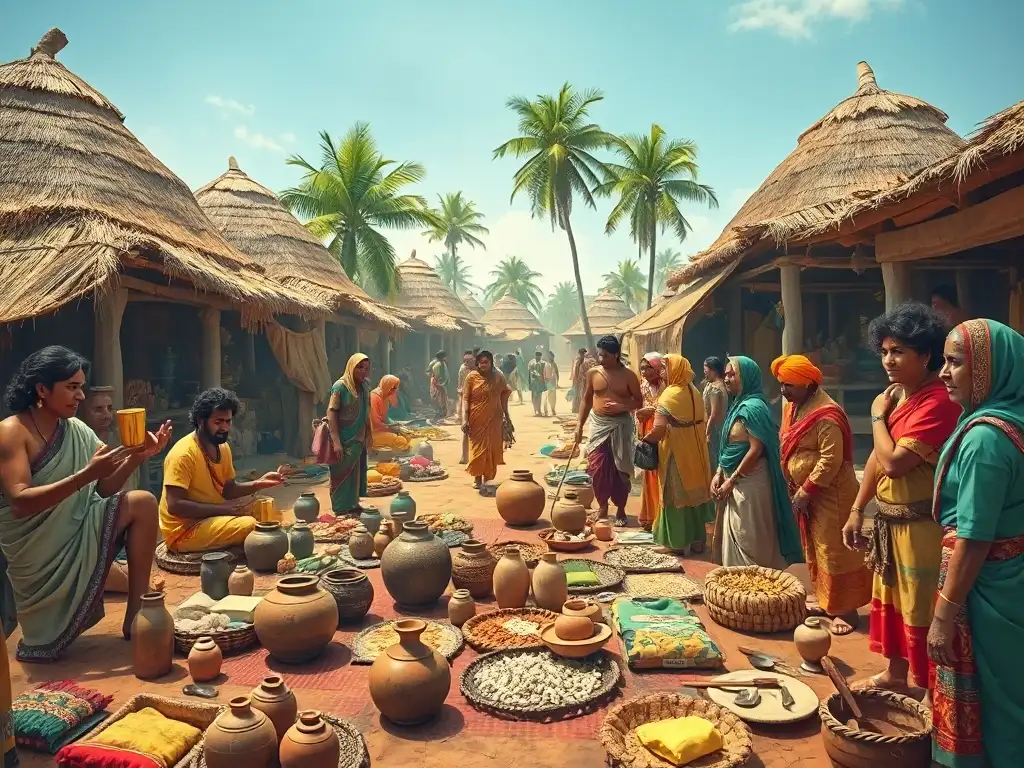
Barter systems played a pivotal role in the economic practices of ancient Indian societies, offering several advantages that facilitated trade and strengthened community ties. This system allowed for direct exchanges of goods and services, which were crucial in a time when currency was either not in widespread use or not yet developed. Understanding these advantages provides insight into how ancient Indian civilizations functioned economically and socially.
Flexibility and Direct Exchange of Goods
One of the primary advantages of barter systems in ancient India was their inherent flexibility. Participants in a barter transaction could negotiate the terms based on their specific needs and the availability of goods. This adaptability allowed for a wide range of items to be traded, from agricultural produce to crafted goods. For example, a farmer might exchange a surplus of grain for pottery or tools made by a craftsman, directly addressing their needs without the limitations imposed by a standardized currency.
Moreover, the direct exchange of goods eliminated the need for intermediaries, which often streamlined the trading process. This direct interaction between traders fostered a more personal and immediate economic relationship, enhancing trust and cooperation within communities. As a result, barter systems not only facilitated trade but also nurtured relationships essential for the social fabric of ancient Indian societies.
Strengthening Community Bonds
Barter systems inherently promoted community cohesion and interaction. Since trade was often conducted locally, it encouraged individuals to engage with their neighbors and forge stronger community ties. Festivals and market days served as social gatherings where people exchanged goods but also shared news, stories, and cultural practices, reinforcing their collective identity.
Additionally, barter transactions often relied on mutual respect and reciprocity. Individuals were more likely to engage in trade with those they knew, which fostered a sense of trust and obligation within the community. This reliance on personal relationships rather than impersonal currency helped create strong social networks that supported not only economic transactions but also cultural and social exchanges.
Reducing Dependency on Currency
In ancient Indian societies where currency was not universally accepted or available, barter systems provided a practical alternative. By relying on the exchange of goods and services, communities could thrive without the complexities associated with currency management. This was particularly advantageous in rural areas where access to coins or other forms of currency was limited.
The reduction of dependency on currency also meant that individuals could engage in trade based on immediate needs rather than fluctuating market values of money. This stability allowed households to manage their resources more effectively, ensuring that they could provide for their families without the pressure of monetary constraints.
Challenges and Limitations of Barter Systems
While barter systems offered numerous benefits, they also posed significant challenges that limited their effectiveness as economies grew more complex. Understanding these limitations is essential for comprehending the eventual transition to currency-based systems in ancient India.
Issues of Double Coincidence of Wants
One of the most significant challenges of barter systems was the requirement of a double coincidence of wants. For a successful trade to occur, both parties needed to have what the other desired at the same time. This often made transactions cumbersome and inefficient, as finding two individuals with perfectly matched needs could be difficult.
For example, if a farmer had wheat to exchange, he would need to find a craftsman who not only wanted wheat but also had a product that the farmer needed. This situation could lead to delays in trade and hinder economic activity, especially in larger communities where diverse goods and services were available.
Limitations in Trade Scale and Complexity
Barter systems were typically suited for small-scale economies and local exchanges. As societies evolved and populations grew, the limitations of barter became more pronounced. The complexity of trade increased with the advent of more specialized goods and services, making it difficult to manage exchanges without a standardized medium.
Additionally, as trade networks expanded beyond local markets, the inefficiencies of barter systems became increasingly apparent. The need for a more efficient mechanism to facilitate trade across larger distances and diverse communities led to the gradual emergence of currency systems that could accommodate the growing scale of economic interactions.
Transition from Barter to Currency-Based Systems
The limitations inherent in barter systems ultimately paved the way for the development of currency-based systems in ancient India. As commerce grew more complex, the need for a more efficient means of exchange became critical. The introduction of currency allowed for standardized values, reducing the friction associated with barter transactions.
Historical records indicate that the use of metal coins began around the 6th century BCE in India, marking a significant shift in economic practices. Currency provided a universal medium of exchange that simplified trade, allowing individuals to engage in transactions without the need for direct exchanges of goods. This transition not only enhanced economic efficiency but also facilitated broader trade networks, integrating ancient Indian societies into a larger economic framework that spanned regions and cultures.
The Evolution of Economic Practices
The evolution of economic practices in ancient India can be traced back to the early civilizations, particularly the Indus Valley Civilization, where barter systems served as the foundation for trade. In this period, goods and services were exchanged directly without the use of money, highlighting the reliance on mutual consent and necessity. This system was primarily based on the principle of reciprocity, where individuals or groups traded items they produced for those they needed, facilitating local economies.
As societies grew more complex, so did their economic interactions. The introduction of specialized crafts and agricultural surplus led to a more diversified economy, allowing for more extensive barter transactions. Artisans and farmers began to establish trade networks, exchanging goods like textiles, pottery, and agricultural produce across regions. This not only fostered economic interdependence but also paved the way for cultural exchanges that enriched the societal fabric of ancient India.
In the ensuing periods, particularly during the Vedic age, barter systems became more organized. Texts from this era indicate that goods were often standardized, which simplified transactions. However, the inherent limitations of barter, such as the need for a double coincidence of wants, necessitated the development of more sophisticated economic systems.
Influence of Barter on Later Trade Systems
The barter systems of ancient India significantly influenced subsequent trade systems by laying the groundwork for emerging market economies. One of the key impacts was the establishment of trust and social networks among traders, which became vital as commerce expanded beyond local communities. The reliance on personal relationships in barter transactions created a sense of accountability and reputation that carried over into later trade practices.
As trade routes expanded, particularly with the establishment of the Silk Road and maritime routes, the complexities of barter necessitated the development of intermediaries. Traders who specialized in facilitating exchanges became crucial, leading to the emergence of early forms of trade guilds. These guilds organized trade practices and regulated transactions, ensuring that exchanges were fair and consistent, thus fostering economic stability.
Moreover, the principles of barter informed the development of early credit systems. Merchants began to utilize promissory notes and other forms of deferred payment, reflecting an evolution from direct exchanges to more abstract forms of trade. This transition marked a significant step towards the emergence of coinage and formalized market economies.
The Shift to Coinage and Market Economies
The shift from barter systems to coinage was a transformative phase in ancient Indian economies. Coinage introduced a standardized medium of exchange, which drastically simplified transactions. The earliest coins in India, known as "punch-marked coins," appeared around the 6th century BCE. These coins facilitated trade by providing a universally accepted unit of value, thereby eliminating the challenges associated with barter, such as the need for a double coincidence of wants.
Market economies began to flourish as coinage became more widespread. Cities like Taxila and Pataliputra evolved into vibrant trade hubs, attracting merchants from various regions. The establishment of marketplaces allowed for the aggregation of goods and services, further enhancing economic interactions. The use of coins not only streamlined trade but also enabled the accumulation of wealth, leading to the rise of a merchant class that played a pivotal role in the economic landscape of ancient India.
Additionally, the introduction of coins prompted the development of banking practices. Moneylenders emerged as crucial figures in the economy, providing loans and facilitating trade. This shift from barter to coinage marked the beginning of a more sophisticated economic structure, characterized by increased trade volume and diversity in goods exchanged.
Lasting Legacy of Barter Systems in Indian Trade
Despite the eventual dominance of coinage and market economies, the legacy of barter systems in ancient India continues to resonate in contemporary economic practices. The foundational principles of barter—trust, reciprocity, and community engagement—remain relevant in various forms of trade, particularly in rural and informal markets where cash transactions may be less feasible.
Moreover, the concept of barter has seen a resurgence in modern times, particularly with the rise of barter exchanges and online platforms that facilitate direct trade without monetary transactions. This revival echoes the ancient practices, showcasing the enduring relevance of barter systems in human economic interactions.
The cultural and social dimensions of barter also left an indelible mark on Indian society. The communal nature of barter transactions fostered relationships and strengthened community ties, a trend that persists in many indigenous trading systems today. The collaborative spirit seen in barter exchanges serves as a reminder of the interconnectedness of economic practices and social structures.
Conclusion
Summary of the Role of Barter Systems in Ancient Indian Societies
Barter systems played a pivotal role in shaping the economic landscape of ancient Indian societies. They facilitated the exchange of goods and services, fostered social relationships, and laid the groundwork for subsequent trade systems. The evolution from simple barter to more complex economic structures illustrates the adaptability of ancient Indian societies in meeting their trade needs.
Final Thoughts on Economic Practices and Historical Impact
The historical impact of barter systems extends beyond mere economic transactions; they reflect the social, cultural, and political dynamics of ancient India. Understanding these practices provides valuable insights into the development of trade and economy, as well as the broader historical narrative of ancient Indian civilizations. As we explore the rich tapestry of India's past, the legacy of barter systems remains a testament to the ingenuity and resilience of its people.
- Introduction to Barter Systems in Ancient India
- Historical Context of Barter Systems in Ancient India
- Mechanisms of Barter Transactions
- Case Studies of Barter Systems in Different Regions
- Advantages of Barter Systems in Ancient India
- Challenges and Limitations of Barter Systems
- The Evolution of Economic Practices
- Conclusion
- What were the barter systems in ancient India?
- How did the barter system impact ancient Indian society?
- What were the limitations of the barter system in ancient India?
- Did ancient Indian civilizations use any form of currency alongside barter?
- How did the barter system influence later economic practices in India?
Frequently Asked Questions
What were the barter systems in ancient India?
The barter systems in ancient India were trade mechanisms where goods and services were exchanged directly without the use of currency. This system facilitated commerce among various communities and regions.
How did the barter system impact ancient Indian society?
The barter system fostered social interactions and strengthened community bonds as people relied on each other for their needs. It also contributed to the development of local economies and specialized craftsmanship.
What were the limitations of the barter system in ancient India?
One major limitation of the barter system was the lack of double coincidence of wants, meaning both parties had to want what the other offered. This often made trade inefficient and complicated.
Did ancient Indian civilizations use any form of currency alongside barter?
Yes, while the barter system was prevalent, ancient Indian civilizations eventually transitioned to using currency for trade, which allowed for greater efficiency and easier exchanges as economies grew.
How did the barter system influence later economic practices in India?
The barter system laid the groundwork for more complex economic systems, helping to establish concepts of value and trade that evolved into the use of currency, shaping India's economic history.
Final Reflection: The Enduring Legacy of Barter Systems in Ancient India
The barter systems in ancient India not only facilitated trade but also fostered social connections and community resilience. In a world increasingly dominated by digital transactions and monetary exchanges, understanding the historical significance of barter systems reminds us of the fundamental human relationships that underpin economic activities. The intricate web of exchanges in ancient Indian societies illustrates how trade was not merely about goods but also about trust, cooperation, and cultural exchange—values that remain relevant today.
The influence of barter systems extends far beyond their historical context; they have shaped the cultural and social fabric of communities. In many ways, the principles of barter continue to resonate in contemporary practices, from local farmers' markets to community-supported agriculture. These modern adaptations echo the ancient practices of direct exchange, emphasizing the importance of local economies and sustainable relationships. As Mahatma Gandhi once said, The earth provides enough to satisfy every man's needs, but not every man's greed.
This quote encapsulates the essence of barter—prioritizing need over excess and fostering a sense of community.
As we reflect on the lessons from barter systems in ancient India, let us consider how we can apply these principles in our own lives. I invite you to explore the ways in which you can engage in direct exchanges within your community, whether through local markets, skill-sharing, or collaborative projects. By embracing the spirit of barter, we can cultivate deeper connections, promote sustainability, and honor the rich legacy of our ancestors. In a rapidly changing world, let us not forget the power of human connection and the value of what we can create together.
Revitalize Your Understanding of Ancient Trade!
Thank you for engaging with our exploration of barter systems in ancient Indian societies! We hope you found valuable insights into how these early trade practices shaped social and economic structures. Now, let’s take that knowledge a step further!
Here’s how you can delve deeper and enhance your understanding:
- Explore historical case studies by visiting local museums or online archives to discover artifacts linked to barter practices in ancient India.
- Share your thoughts with friends or on social media—initiate a discussion about the similarities and differences between barter systems and modern trade methods!
- Join online forums or groups dedicated to ancient history to connect with fellow enthusiasts and share your discoveries.
Which aspects of barter systems do you believe had the most significant impact on the cultures of ancient India?