
Astronomical Advances: How Gupta Scholars Reshaped Our Understanding of the Cosmos


Welcome to Ancient India History, where we delve into the rich tapestry of ancient Indian civilizations! This week, we invite you to embark on a fascinating journey through the Gupta Empire, a time when scholars pushed the boundaries of knowledge and made remarkable astronomical advancements. Have you ever wondered how these ancient thinkers reshaped our understanding of the cosmos?
Prepare to uncover the brilliance of Gupta astronomers as we explore their groundbreaking contributions and the lasting impact they had on both science and culture. Join us as we unveil the mysteries that lie at the heart of this extraordinary era!
- Introduction to Gupta Empire Astronomical Advancements
- Historical Context of Astronomy in the Gupta Empire
- Major Astronomical Advancements During the Gupta Period
- Significant Astronomers of the Gupta Empire
- Theoretical Contributions to Astronomy
- Gupta Empire's Astronomical Texts and Their Legacy
- Conclusion: The Lasting Impact of Gupta Astronomical Advancements
- References and Further Reading
-
Frequently Asked Questions
- What were the major astronomical advancements during the Gupta Empire?
- Who were some prominent scholars in the Gupta Empire known for their work in astronomy?
- How did Gupta scholars influence modern astronomy?
- What role did mathematics play in Gupta astronomical studies?
- How did the cultural context of the Gupta Empire support these advancements?
- Final Reflection: The Lasting Legacy of Gupta Empire Astronomical Advancements
- Unveil the Wonders of Ancient Astronomy!
Introduction to Gupta Empire Astronomical Advancements
The Gupta Empire, often referred to as the "Golden Age of India," was a remarkable period from around 320 to 550 CE that fostered significant advancements in various fields, particularly in science and mathematics. Among these, the astronomical advancements made by Gupta scholars not only enriched the understanding of the cosmos at that time but also laid the groundwork for future explorations in astronomy across the globe.
This article delves into how these scholars, through meticulous observation and innovative theories, reshaped humanity's comprehension of celestial phenomena. By examining their contributions, we can appreciate the profound impact of these advancements on both ancient and modern scientific thought.
Overview of the Gupta Empire's Influence on Science
The Gupta Empire was marked by a flourishing of intellectual pursuits, and astronomy was no exception. Scholars like Aryabhata and Varahamihira played pivotal roles in this golden era of scientific discovery. Their work not only advanced astronomical knowledge but also influenced subsequent generations of scientists and mathematicians.
- Key Figures:
- Aryabhata: Known for his seminal work, the Aryabhatiya, where he introduced concepts such as the heliocentric model and the approximation of π (pi) as 3.1416.
- Varahamihira: His Brihat Samhita encompassed a wide range of topics, including astrology, planetary movements, and eclipses.
- Astronomical Instruments:
- The Gupta scholars developed various instruments such as the gnomon and the armillary sphere, which were crucial for accurate observations and calculations.
- Mathematical Innovations:
- The introduction of the decimal system and the concept of zero greatly enhanced the ability to perform complex astronomical calculations, paving the way for future discoveries.
Importance of Astronomy in Ancient India
Astronomy held a significant place in ancient Indian society, influencing both scientific inquiry and cultural practices. The study of celestial bodies was not merely an academic pursuit; it was intertwined with religious, agricultural, and navigational aspects of life.
- Cultural Significance:
- Celestial events were often linked to religious observances, and calendars were meticulously crafted based on astronomical observations.
- Agricultural Practices:
- Understanding celestial cycles allowed for better agricultural planning, which was crucial for the sustenance of the agrarian society of ancient India.
- Navigation and Timekeeping:
- Astronomical knowledge was vital for navigation and the establishment of timekeeping methods, which were essential for trade and travel.
The astronomical advancements during the Gupta Empire are a testament to the intellectual prowess of ancient Indian scholars. Their contributions not only enriched their own culture but also set the stage for future scientific developments worldwide, affirming the Gupta Empire's legacy as a cornerstone of astronomical knowledge.
Historical Context of Astronomy in the Gupta Empire
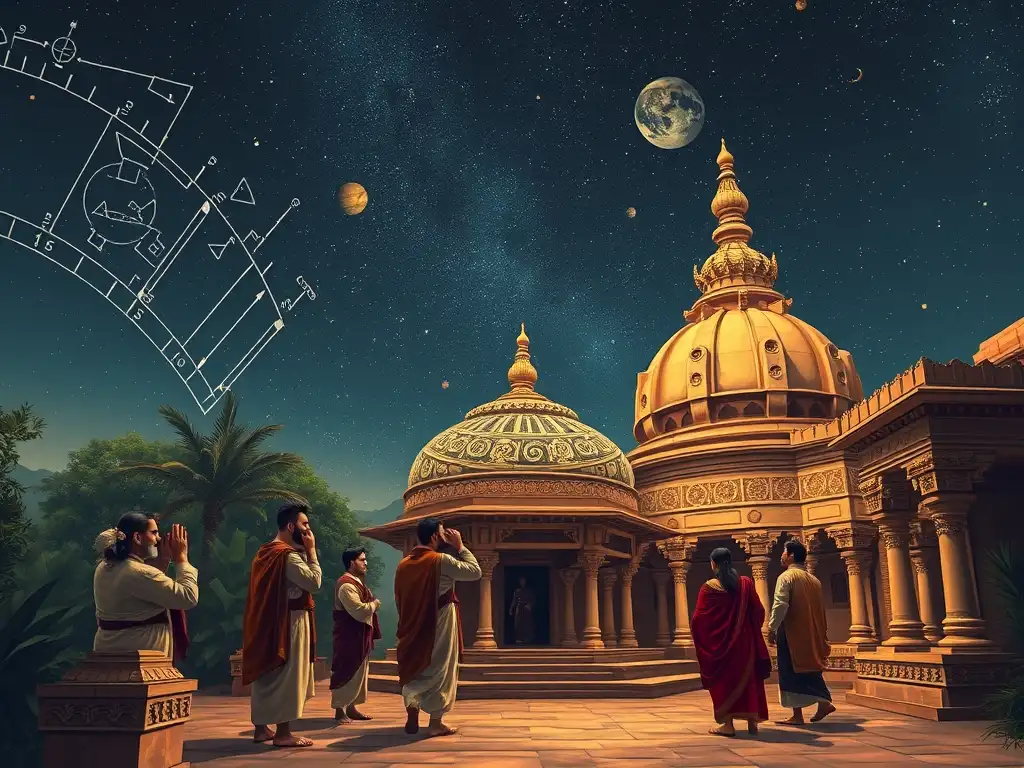
The Gupta Empire, which flourished from approximately 240 to 550 CE, is often referred to as a golden age of science and mathematics in ancient India. During this period, significant advancements were made in various fields, including astronomy. The Gupta scholars built upon earlier astronomical knowledge, refining existing theories and introducing innovative concepts that would influence future generations.
Pre-Gupta Astronomical Knowledge
Before the Gupta Empire, Indian astronomy was already well developed, shaped by contributions from various civilizations. The foundations of Indian astronomy can be traced back to the Vedic texts, where hymns and rituals often referenced celestial bodies. By the time of the Mauryan Empire, notable astronomers like Aryabhata had begun to establish key principles of astronomy and mathematics.
- Aryabhata's Contributions:
- Aryabhata (476–550 CE) is one of the most significant figures in ancient Indian astronomy. His work, the Aryabhatiya, introduced concepts such as:
- The Earth’s rotation on its axis.
- The calculation of the circumference of the Earth, which he estimated to be about 39,968 kilometers.
- The concept of zero, which was critical for astronomical calculations.
- Aryabhata (476–550 CE) is one of the most significant figures in ancient Indian astronomy. His work, the Aryabhatiya, introduced concepts such as:
- Surya Siddhanta:
- Another important text that predates the Gupta Empire is the Surya Siddhanta. This astronomical treatise laid out methods for calculating the positions of celestial bodies and provided techniques for predicting eclipses. The knowledge contained in this text was instrumental for Gupta scholars as they expanded upon these theories.
- Influence of Greek Astronomy:
- Interaction with Greek astronomy, particularly through texts translated from Greek to Sanskrit, further enriched Indian astronomical knowledge. The introduction of Ptolemaic concepts and methods contributed to a more systematic approach to astronomy during the Gupta period.
The rich tapestry of pre-Gupta astronomical knowledge set the stage for the profound advancements made by Gupta scholars, who would build upon these foundations and push the boundaries of understanding regarding the cosmos.
Key Figures in Gupta Astronomy
The Gupta Empire was home to several eminent scholars whose contributions to astronomy were pivotal in shaping the discipline. Their collective work not only advanced astronomical knowledge in India but also had a lasting impact on the field worldwide.
- Aryabhata:
- As previously mentioned, Aryabhata is often considered the father of Indian mathematics and astronomy. His key contributions included:
- Establishing a heliocentric model, suggesting that the Earth revolved around the Sun.
- Introducing sine tables, which were crucial for later mathematical developments in trigonometry.
- As previously mentioned, Aryabhata is often considered the father of Indian mathematics and astronomy. His key contributions included:
- Varahamihira:
- Varahamihira (505–587 CE) was another prominent figure whose work synthesized earlier astronomical knowledge and introduced new ideas. His notable contributions include:
- The Brihat Samhita, an encyclopedic work covering various subjects, including astronomy, astrology, and meteorology.
- Accurate predictions of eclipses and the phenomena of planetary motion, demonstrating a deep understanding of celestial mechanics.
- Varahamihira (505–587 CE) was another prominent figure whose work synthesized earlier astronomical knowledge and introduced new ideas. His notable contributions include:
- Brahmagupta:
- Brahmagupta (598–668 CE), while slightly post-Gupta, was influenced by Gupta astronomical advancements. His key contributions included:
- Formulating rules for calculating the positions of planets and predicting eclipses.
- Introducing the concept of negative numbers and their application in calculations.
- Brahmagupta (598–668 CE), while slightly post-Gupta, was influenced by Gupta astronomical advancements. His key contributions included:
The intellectual environment fostered during the Gupta Empire allowed these scholars to collaborate and share knowledge, leading to groundbreaking advancements in the understanding of the cosmos. Their work not only redefined Indian astronomy but also laid the groundwork for further developments in the Islamic Golden Age and beyond.
Major Astronomical Advancements During the Gupta Period

The Gupta Empire, often regarded as a golden age of scientific and cultural achievements in ancient India, witnessed significant advancements in astronomy. Scholars during this period made remarkable contributions that reshaped humanity's understanding of the cosmos. These advancements can be categorized into three major areas: the development of astronomical instruments, innovations in celestial measurements, and contributions to calendar systems.
Development of Astronomical Instruments
The Gupta period saw the introduction and refinement of various astronomical instruments that enhanced observational capabilities. Notable among these were the armillary sphere and the gnomon.
- Armillary Sphere: This instrument, composed of rings that represent the celestial equator and other circles, allowed astronomers to visualize the movements of celestial bodies. Gupta scholars used it to demonstrate the apparent motion of stars and planets around the Earth.
- Gnomon: A simple yet effective tool, the gnomon was used to measure the angle of the sun's shadow. This device played a crucial role in determining the time of day and was vital for observing solar movements.
Both instruments not only facilitated better astronomical observations but also laid the groundwork for future innovations in astronomy and navigation.
Innovations in Celestial Measurements
Gupta astronomers excelled in measuring celestial bodies with remarkable accuracy. They developed sophisticated methods to calculate the positions and movements of stars and planets. Among the most significant contributions were:
- Calculation of Planetary Distances: Scholars like Aryabhata proposed methods to estimate the distances of planets from the Earth, employing geometric techniques that were revolutionary for their time.
- Eclipses and Their Predictions: The ability to predict solar and lunar eclipses marked a substantial advancement. Gupta astronomers formulated theories about the mechanics of eclipses, which were documented in texts such as Aryabhata's "Aryabhatiya".
- Sidereal and Solar Time Measurement: The differentiation between sidereal time (based on the Earth's rotation relative to fixed stars) and solar time (based on the position of the sun) was established. This understanding played a crucial role in developing timekeeping methods.
These innovations not only advanced astronomical knowledge but also had practical applications in agriculture, navigation, and religious practices.
Contributions to Calendar Systems
A significant aspect of Gupta advancements was the development of accurate calendar systems. This period saw enhancements in timekeeping that were essential for both agricultural planning and religious observances.
- Lunar Calendar: The Gupta scholars refined the lunar calendar, which played a vital role in determining festival dates and agricultural cycles. They established systematic methods for calculating lunar months and intercalary months to align the lunar calendar with the solar year.
- Solar Calendar: Alongside the lunar calendar, the solar calendar was also developed, which helped in tracking solar events such as solstices and equinoxes. The combination of these calendars allowed for a more comprehensive understanding of time.
- Standardization of Calendar Systems: The Gupta period marked the beginning of a standardized calendar system that influenced various regions in India. This standardization laid the foundation for future calendrical systems used in subsequent centuries.
The astronomical advancements during the Gupta Empire were pivotal in shaping the understanding of the cosmos. The development of instruments, innovations in celestial measurements, and contributions to calendar systems not only enriched the scientific discourse of the time but also had lasting impacts on various fields, including mathematics, navigation, and cultural practices.
Significant Astronomers of the Gupta Empire
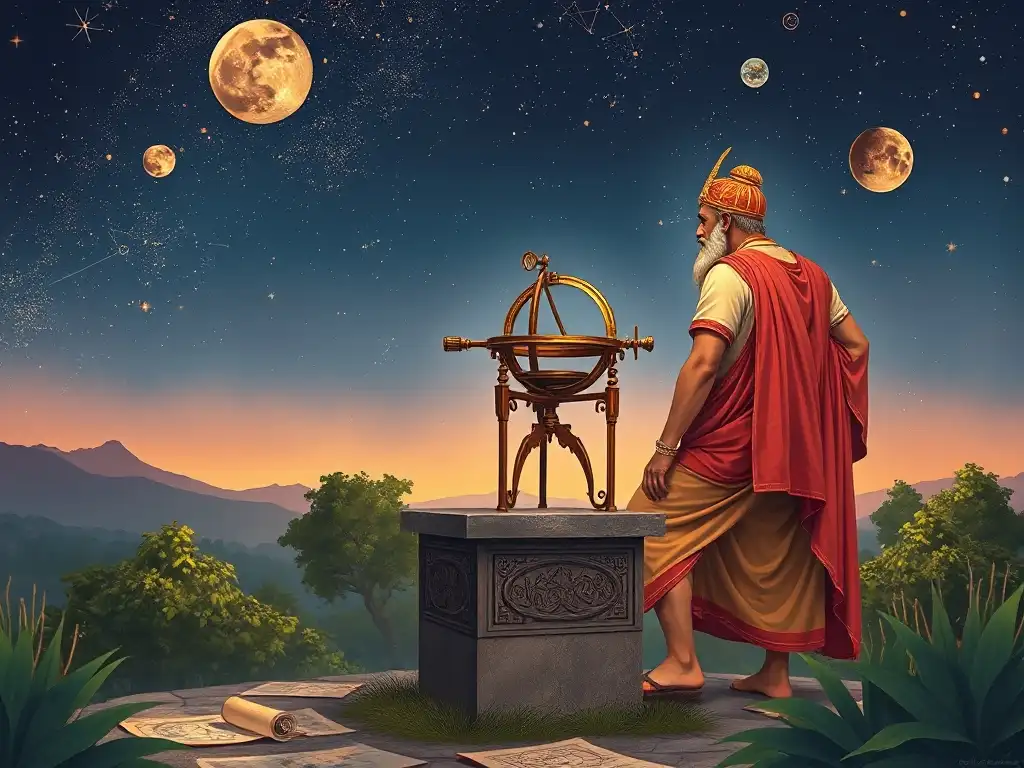
The Gupta Empire, often referred to as the "Golden Age" of India, produced some of the most influential astronomers in history. Their contributions not only advanced the understanding of astronomy but also laid the groundwork for future scientific exploration. This section delves into two of the most prominent figures: Aryabhata and Varahamihira, whose works continue to resonate in the realms of science and mathematics.
Aryabhata: The Pioneer of Indian Astronomy
Aryabhata, born in 476 CE, is perhaps the most celebrated astronomer of the Gupta Empire. His groundbreaking ideas and methodologies established a new framework for astronomical study in India and beyond.
Key Works and Contributions
Aryabhata's seminal work, the Aryabhatiya, is a comprehensive treatise that covers various topics in mathematics and astronomy. Some key contributions include:
- Heliocentric Theory: Aryabhata proposed that the Earth rotates on its axis and revolves around the Sun, a revolutionary concept that predates similar Western ideas by several centuries.
- Calculation of Pi: He provided an approximation of π (pi) as 3.1416, which was remarkably accurate for his time.
- Astronomical Calculations: Aryabhata calculated the length of the solar year to be 365.2588 days, showcasing his advanced understanding of celestial movements.
- Sine Tables: He introduced the use of sine in trigonometry, a significant advancement that facilitated calculations in astronomy.
Through these contributions, Aryabhata not only reshaped the understanding of the cosmos during the Gupta period but also influenced the development of mathematics.
Aryabhata's Influence on Future Scholars
Aryabhata's work laid the foundation for subsequent scholars, both in India and abroad. His concepts were integrated into later texts by astronomers such as Brahmagupta and Bhaskara I. His methodologies were adopted by Islamic astronomers during the medieval period, demonstrating the far-reaching impact of his ideas. Aryabhata's influence is evident in how later scholars approached astronomical calculations, ensuring his legacy endured through centuries.
Varahamihira: Bridging Astronomy and Astrology
Varahamihira, another luminary of the Gupta Empire, was born around 505 CE. He is known for his ability to integrate astronomy with astrology, creating a holistic view of celestial phenomena that appealed to both scholars and the general populace.
Notable Texts and Theories
Varahamihira's most notable work, the Brihat Samhita, is an encyclopedic text that addresses a wide array of subjects, including astronomy, astrology, and natural phenomena. Key aspects include:
- Zodiacal Constellations: He detailed the twelve zodiac signs and their significance, enhancing the understanding of celestial movements in relation to terrestrial events.
- Eclipses: Varahamihira provided detailed explanations of solar and lunar eclipses, offering predictive models that were crucial for agricultural and religious practices.
- Planetary Motion: His theories on the movements of planets laid the groundwork for later astronomical calculations, emphasizing the importance of observation and empirical data.
Through his writings, Varahamihira not only advanced astronomical knowledge but also made it accessible to a broader audience, intertwining it with daily life and cultural practices.
Impact on Later Astronomical Studies
The works of Varahamihira significantly influenced subsequent astronomical studies in India and the Middle East. His integration of astrology with astronomy provided a framework that was adopted by many later scholars, including those in the Islamic Golden Age. This blending of disciplines helped in the development of astrological calendars and predictive astronomy, demonstrating Varahamihira's lasting impact on both science and culture.
The astronomical advancements during the Gupta Empire, spearheaded by scholars like Aryabhata and Varahamihira, not only transformed the understanding of celestial phenomena but also established a legacy that influenced generations of scientists and mathematicians. Their contributions remain a testament to the rich intellectual tradition of ancient India.
Theoretical Contributions to Astronomy
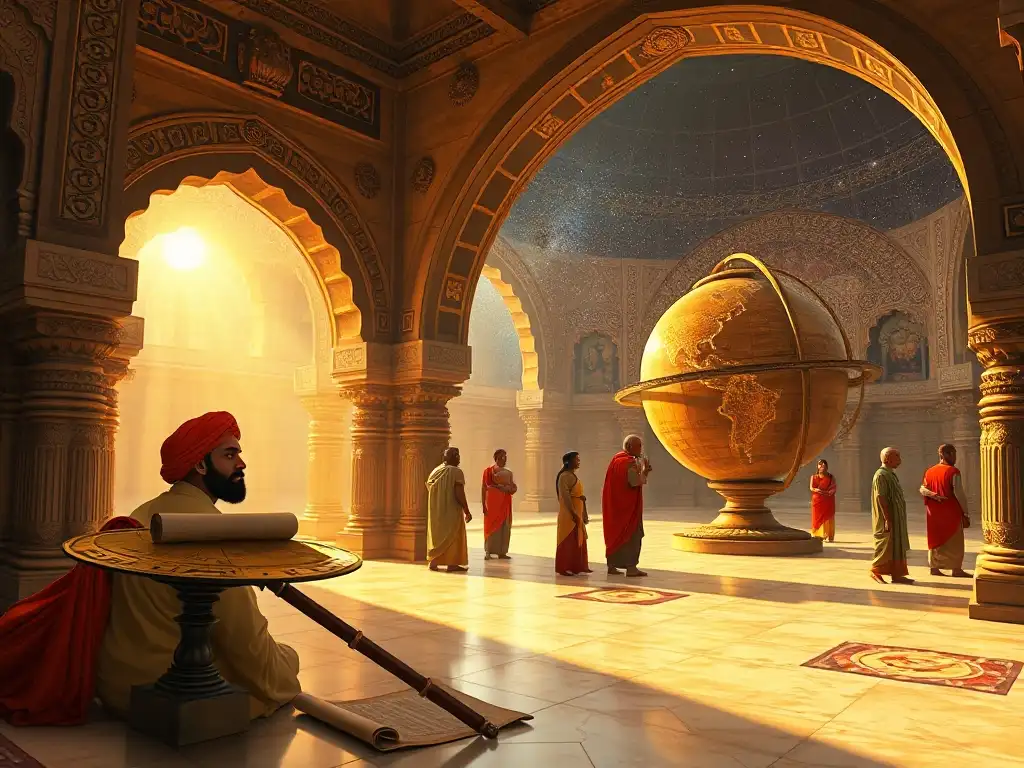
The Gupta Empire was a pivotal period in Indian history, particularly known for its remarkable contributions to science, mathematics, and astronomy. Scholars of this era engaged deeply with theoretical concepts that not only advanced their own understanding of the cosmos but also set the stage for future developments in these fields. Their work often challenged existing paradigms and paved the way for revolutionary ideas in astronomy.
The Heliocentric Theory vs. Geocentric Views
During the Gupta period, scholars began to explore the nature of the universe, leading to significant discussions around the heliocentric and geocentric models. While the ancient Greeks, such as Aristotle and Ptolemy, advocated for a geocentric view—where the Earth was considered the center of the universe—Indian astronomers were gradually moving towards alternative explanations.
Key Points:
- Aryabhata's Influence: Aryabhata (476–550 CE), one of the most prominent astronomers of the Gupta era, proposed ideas that hinted at a heliocentric perspective. His work suggested that the Earth rotates on its axis, which was a radical concept at the time.
- Opposition to Traditional Views: Gupta scholars began to question the rigidity of the geocentric model. Aryabhata's assertions that the stars and planets moved in relation to a rotating Earth laid the groundwork for future astronomers who would embrace heliocentrism.
- Comparative Analysis: The debates between heliocentric and geocentric models were not merely academic; they influenced navigation, calendar systems, and agricultural practices, showcasing the practical implications of these theoretical contributions.
Understanding Planetary Motion and Eclipses
The study of planetary motion and eclipses was a crucial aspect of Gupta astronomy. Scholars made significant advancements in understanding these celestial phenomena, which were often tied to religious and agricultural calendars.
Important Contributions:
- Siddhanta System: The Gupta astronomers developed the Siddhanta, a systematic approach that described the motion of celestial bodies. This system provided a mathematical framework for predicting planetary positions and understanding their orbits.
- Eclipse Calculations: The Gupta scholars devised intricate methods to calculate solar and lunar eclipses accurately. They recognized the importance of eclipses in understanding the alignment of celestial bodies and their effects on earthly events.
- Aryabhata’s Eclipse Theory: Aryabhata's writings contained detailed explanations of lunar and solar eclipses, emphasizing that they were natural phenomena resulting from the interplay between the Earth, Moon, and Sun, rather than supernatural events.
Mathematical Formulations in Astronomy
Mathematics played a fundamental role in the advancements made by Gupta astronomers. Their innovative use of numerical systems and mathematical formulas was essential for astronomical calculations.
Mathematical Innovations:
- Decimal System: The introduction of the decimal system, including the concept of zero, revolutionized calculations. This system allowed for more complex mathematical formulations that were crucial for astronomy.
- Trigonometry Development: Gupta mathematicians advanced trigonometric concepts, which were essential for calculating angles and distances in celestial mechanics.
- Astronomical Tables: The creation of precise astronomical tables, such as those developed by Aryabhata, enabled scholars to track the movements of celestial bodies over time, facilitating predictions of events like eclipses and planetary positions.
The Gupta Empire's astronomical advancements were characterized by a blend of theoretical innovation, practical applications, and mathematical rigor. These contributions not only reshaped the understanding of the cosmos in ancient India but also influenced later astronomical developments across the world.
Gupta Empire's Astronomical Texts and Their Legacy

Overview of Key Astronomical Texts
The Gupta Empire, flourishing from approximately 320 to 550 CE, was a period marked by significant advancements in various fields, including astronomy. Scholars during this era produced several notable astronomical texts that laid the groundwork for future astronomical studies. Among the most influential works were:
- Surya Siddhanta: Attributed to the astronomer Aryabhata, this text is one of the earliest known astronomical treatises in India. It provides a systematic approach to celestial phenomena, including the calculation of planetary positions and eclipses. Notably, it proposes a heliocentric model of the solar system, suggesting a revolutionary perspective for its time.
- Aryabhatiya: Another seminal work by Aryabhata, this text encompasses not only astronomy but also mathematics. It offers insights into the calculation of the circumference of the Earth and introduces concepts like sine and cosine, which were crucial for astronomical calculations.
- Brahmagupta's Brahmasphutasiddhanta: This text further elaborates on Aryabhata’s work and introduces methods for determining the positions of planets and moons. Brahmagupta is noted for his innovative approach to zero and negative numbers, which had profound implications for calculations in astronomy.
These texts collectively represent a synthesis of knowledge that blended observational astronomy with mathematical rigor, setting a precedent for future astronomical inquiry.
Translation and Dissemination of Knowledge
The Gupta Empire was instrumental in the translation and dissemination of astronomical knowledge. As the empire expanded, it fostered an environment of intellectual exchange that facilitated the transfer of ideas across cultures. This was particularly evident in the following ways:
- Cultural Exchanges: The Gupta period witnessed increased interactions with neighboring regions, including Persia and Central Asia. Scholars often traveled to exchange manuscripts, leading to the translation of key astronomical texts into various languages, including Arabic and Persian.
- Translation Movement: Many Gupta texts were translated into Arabic during the Islamic Golden Age, significantly impacting Islamic astronomy. Notably, the Surya Siddhanta was translated by scholars such as Al-Khwarizmi, who adapted its methodologies for Islamic astronomical practices.
- Establishment of Centers of Learning: Institutions like Nalanda University became hubs for learning, where scholars from various cultures gathered to study and expand upon Gupta astronomical texts. This cross-pollination of ideas led to innovations that would shape the course of astronomy for centuries.
The legacy of these translations is profound, as they not only preserved ancient Indian astronomical knowledge but also made it accessible to future generations of scholars.
Influence on Islamic and European Astronomy
The astronomical advancements of the Gupta Empire had a lasting influence on both Islamic and European astronomy. The integration of Gupta texts into the Islamic scientific tradition catalyzed a series of developments that would resonate throughout the Middle Ages and the Renaissance:
- Adoption of Astronomical Models: Islamic astronomers built upon Gupta concepts, refining them and integrating them into their own works. The adoption of the sine function and advanced trigonometric techniques from Aryabhata's writings played a crucial role in the evolution of Islamic astronomy.
- Translation into Latin: During the 12th century, many Arabic astronomical texts, which contained Gupta-derived knowledge, were translated into Latin. This transfer of knowledge significantly influenced European scholars, including figures such as Copernicus and Galileo, who would later challenge and expand upon existing astronomical models.
- Long-Term Impacts: The Gupta Empire's astronomical advancements laid foundational principles for subsequent scientific inquiry. The emphasis on mathematical precision and observational accuracy established standards that guided astronomers for centuries, influencing the methodologies employed in both Islamic and later European astronomy.
The Gupta Empire's astronomical advancements paved the way for a rich tradition of astronomical study that not only shaped Indian science but also reverberated across cultures, contributing to the global understanding of the cosmos.
Conclusion: The Lasting Impact of Gupta Astronomical Advancements

The Gupta Empire, often referred to as the Golden Age of India, witnessed a remarkable flourishing of science, particularly in the field of astronomy. The advancements made by Gupta scholars not only enriched the scientific landscape of their time but also laid the foundational principles that would influence future generations and various civilizations around the world.
The contributions of astronomers such as Aryabhata, Varahamihira, and Brahmagupta are pivotal in understanding how ancient Indian thought shaped astronomical practices. Their observations and methodologies, which encompassed both theoretical and observational astronomy, introduced concepts that challenged existing paradigms and fostered a deeper comprehension of the cosmos.
Reflections on the Gupta Scholars' Contributions
Gupta scholars made significant strides in various astronomical theories and practices. Aryabhata, for instance, is renowned for his heliocentric model, which postulated that the Earth rotates on its axis, a revolutionary idea for its time. His seminal work, the Aryabhatiya, includes calculations for the circumference of the Earth and methods to predict eclipses, showcasing an advanced understanding of celestial mechanics.
Varahamihira's Brihat Samhita expanded upon this knowledge by integrating astrology with astronomy, demonstrating the cultural importance of celestial phenomena in Gupta society. His methodologies for predicting weather patterns and agricultural cycles illustrate how astronomy was not merely an academic pursuit but a practical tool for enhancing daily life.
Brahmagupta further advanced the field by addressing mathematical concepts essential for astronomical calculations, including rules for zero and negative numbers, which were critical for precise celestial computations. His works laid the groundwork for future scholars and influenced both Indian and Islamic astronomy.
The Relevance of Gupta Astronomy in Modern Science
The astronomical advancements of the Gupta Empire resonate in contemporary science, as many principles established during this period remain relevant. For example, the methods of calculating planetary positions and eclipses developed by Gupta scholars are foundational techniques still utilized in modern astronomy. Their emphasis on empirical observation laid the groundwork for the scientific method, encouraging a systematic approach to understanding celestial phenomena.
Furthermore, the mathematical innovations introduced by Gupta astronomers, particularly in algebra and trigonometry, have permeated through history, influencing various mathematical advancements worldwide. The concept of zero, which was refined during this era, is now a fundamental element of mathematics and science.
The Gupta Empire's astronomical advancements are a testament to the intellectual prowess of its scholars. Their contributions not only reshaped the understanding of the cosmos in their time but also continue to inspire and inform modern scientific inquiry today. The legacy of Gupta astronomy is a rich tapestry woven with insights that transcend time, proving that the quest for knowledge is a journey without end.
References and Further Reading
Suggested Books and Articles on Gupta Astronomy
For those interested in delving deeper into the astronomical advancements made during the Gupta Empire, the following books and articles provide comprehensive insights:
- "A History of Indian Astronomy" by K. R. Subramanian
- This book offers a detailed exploration of astronomical practices in ancient India, including the significant contributions from Gupta scholars. Subramanian examines various texts and their implications for the understanding of celestial phenomena.
- "The Astronomical Treatises of Aryabhata" by Bhaskara II
- This collection contains translations and analyses of Aryabhata's work, one of the most celebrated astronomers of the Gupta era. It highlights his revolutionary approaches to mathematics and astronomy.
- "Indian Astronomy: A Historical Perspective" by T. S. B. K. Rao
- Rao's work presents a chronological overview of Indian astronomy, with a focus on the Gupta period. The book discusses various astronomical instruments and their uses.
- "Cosmology in Ancient India" by D. C. Bhattacharya
- This article provides a scholarly examination of cosmological ideas from the Gupta period, shedding light on how these concepts influenced later scientific thought.
- "Astronomy and Mathematics in Ancient India" by C. R. Rao
- Rao explores the intersections of astronomy and mathematics during the Gupta Empire, offering insights into how these disciplines evolved together.
Online Resources for Exploring Ancient Indian Astronomy
The digital age offers numerous resources to further explore the fascinating field of ancient Indian astronomy:
- Digital Library of India
- A vast repository of ancient texts and manuscripts, including works on astronomy from the Gupta period. This resource provides access to primary sources that can enhance understanding of the era’s astronomical advancements.
- Indian National Science Academy (INSA)
- INSA’s website features articles and papers on the contributions of Indian scientists, including those from the Gupta Empire. It serves as a platform for disseminating research findings and historical analyses.
- NASA’s Astronomy Resources
- Although not focused solely on ancient Indian astronomy, NASA provides educational materials that contextualize the historical significance of various astronomical discoveries, including those made by Indian scholars.
- The Cultural Heritage of India: Astronomy and Mathematics
- This online exhibit from the National Museum of India showcases artifacts and texts related to ancient Indian astronomy, offering visual and contextual insights into the Gupta Empire's contributions.
- YouTube Educational Channels
- Channels like "CrashCourse" or "TED-Ed" occasionally feature episodes on the history of science that touch upon ancient Indian advancements, providing engaging visual content to supplement reading material.
By utilizing these resources, enthusiasts and scholars alike can gain a richer understanding of the Gupta Empire's astronomical advancements and their lasting impact on the field of astronomy.
Frequently Asked Questions
What were the major astronomical advancements during the Gupta Empire?
The Gupta Empire saw significant astronomical advancements, including the development of accurate astronomical calculations and the use of observational techniques that influenced later scientific thought.
Who were some prominent scholars in the Gupta Empire known for their work in astronomy?
Key figures like Aryabhata and Varahamihira made substantial contributions, including Aryabhata's work on the rotation of the Earth and the calculation of planetary positions.
How did Gupta scholars influence modern astronomy?
Gupta scholars laid the groundwork for modern astronomy by introducing concepts such as the heliocentric theory and refining methods for calculating eclipses, which were later built upon by scientists worldwide.
What role did mathematics play in Gupta astronomical studies?
Mathematics was crucial for Gupta astronomers, enabling them to make precise calculations regarding celestial bodies, timekeeping, and the development of astronomical tables.
How did the cultural context of the Gupta Empire support these advancements?
The Gupta Empire's emphasis on education, philosophy, and the arts fostered an environment where scholars could freely explore and share their ideas, leading to remarkable astronomical innovations.
Final Reflection: The Lasting Legacy of Gupta Empire Astronomical Advancements
The astronomical advancements achieved during the Gupta Empire continue to resonate in today's scientific discourse, illustrating how the pursuit of knowledge can transcend time and cultural boundaries. The remarkable contributions of Gupta scholars not only reshaped our understanding of the cosmos but also laid the groundwork for future generations of astronomers and scientists. Their innovative spirit and dedication to inquiry remind us that the quest for knowledge is an enduring journey, one that is as relevant today as it was over a millennium ago.
The impact of Gupta astronomical advancements on our cultural and scientific landscape is profound and ongoing. From the precise calculations of planetary movements to the development of sophisticated astronomical instruments, the legacy of these scholars is woven into the fabric of modern science. As we continue to explore the universe, we can draw inspiration from their work, which serves as a testament to the power of human curiosity and intellect. The greatest discoveries are born from the questions we dare to ask.
As we reflect on the significance of these advancements, I invite you to consider how the lessons from the Gupta Empire can inspire your own journey of exploration and learning. Embrace curiosity, challenge the status quo, and seek knowledge in all its forms. By doing so, you not only honor the legacy of those who came before us but also contribute to the ongoing story of human understanding and discovery. Let us carry forward the torch of inquiry, illuminating the path for future generations.
Unveil the Wonders of Ancient Astronomy!
Thank you for diving into the fascinating world of Gupta scholars and their groundbreaking contributions to our understanding of the cosmos! You’ve uncovered the brilliance of ancient astronomy, and now it’s time to take your passion further.
Here are some inspiring ways to expand your journey:
- Dive deeper: Explore the rich array of astronomical texts crafted by Gupta scholars to gain insight into their innovative methodologies and remarkable discoveries.
- Join the conversation: Share this article with friends or on social media to ignite an engaging discussion about the profound influence of ancient scholars on contemporary science.
- Explore locally: Visit a nearby planetarium or join an astronomy club to participate in events that showcase the fascinating connection between history and astronomy.
What aspect of Gupta astronomy do you find most intriguing, and how has it transformed your perspective on the scientific advancements we enjoy today?